
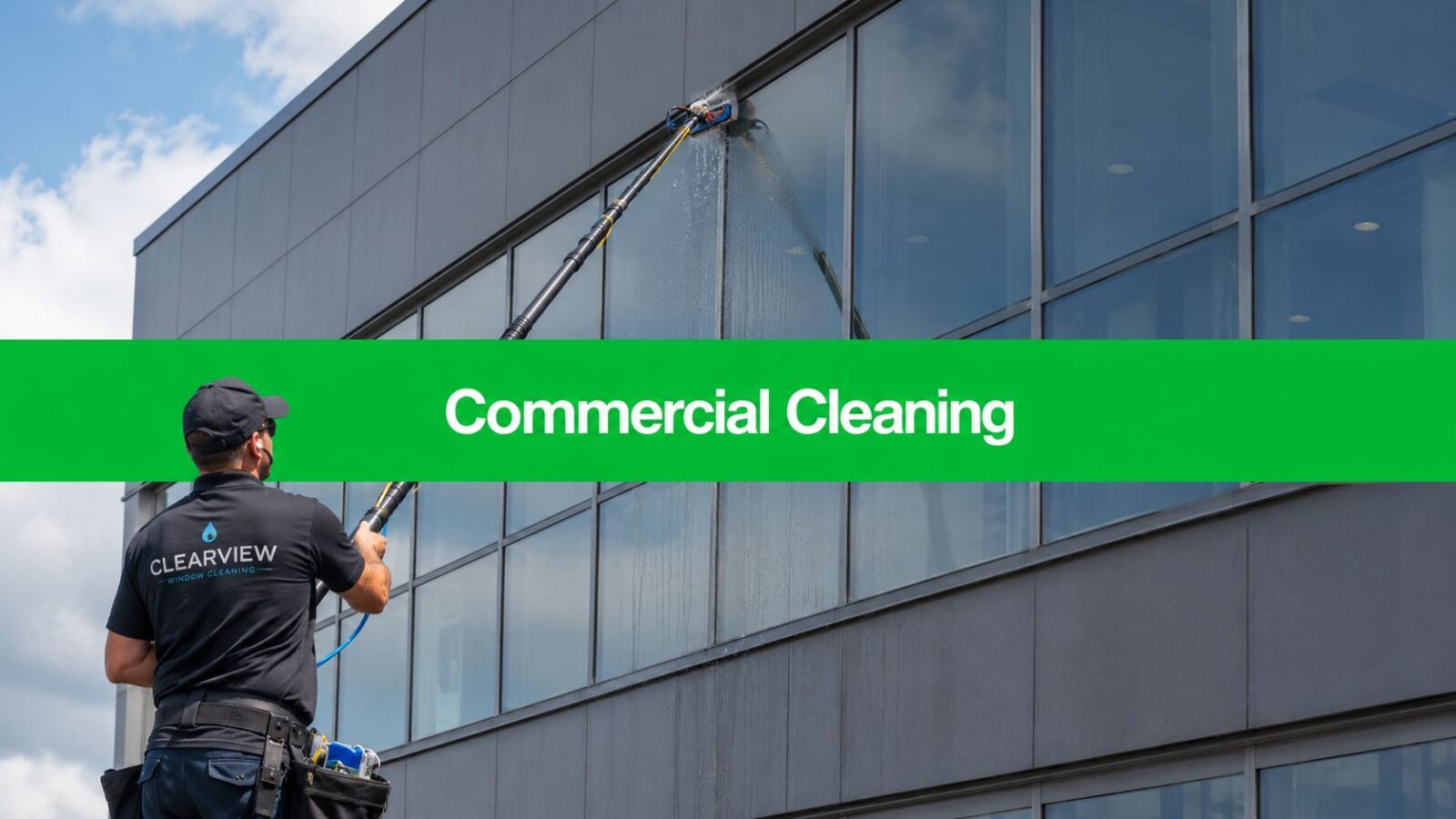
You're probably looking at a property that's still structurally sound, still occupied, and still doing its job, but the exterior has started sending the wrong message. The glass has a film on it. Entry concrete is darkened by traffic and weather. Screens look dusty. Gutters may not be overflowing yet, but you already know what the next storm will expose.
That's a common point for facility managers in Flagstaff and across Northern Arizona. A building rarely “suddenly” looks neglected. It gets there one skipped service, one rough season, and one deferred exterior task at a time. The result isn't just cosmetic. Tenants notice. Guests notice. Owners notice. People often judge how a property is managed before they ever step inside.
Commercial building cleaning services matter most when they're treated as part of property maintenance, not as an occasional rescue job. In this region, that means planning around altitude, dust, pollen, monsoon runoff, snowmelt, and the practical reality that many buildings have glass, access points, and drainage systems that need more than a basic wash-and-go approach.
Your Building's First Impression Starts at the Curb
A new facility manager often inherits two things at once. The first is the building itself. The second is everyone else's opinion of it.
That usually becomes obvious during a normal workday. A tenant mentions the front entrance looks dingy. A visitor presses a hand against the lobby glass and leaves a clean outline in the grime. The ownership group drives in, notices the streaks on the upper windows and the stains near the walkway, and starts asking whether routine care is being handled. Nothing is technically broken, but the property feels less cared for than it should.
That exterior impression affects how people read the entire site. Clean glass, bright entryways, and maintained walkways suggest order. Dirty windows, clogged gutters, and stained surfaces suggest deferred maintenance, even when the interior is well run. For commercial properties, curb appeal isn't vanity. It's part of asset protection.
Practical rule: If the first thing people notice is buildup, streaking, or runoff marks, the cleaning schedule is already behind.
In Flagstaff, that first impression can fade quickly because local conditions work against clean surfaces. Wind carries dust onto glass and frames. Pollen settles into corners and screens. Snow and slush leave residue near entrances. Monsoon season adds splash marks, sediment, and runoff staining. Buildings near pines, construction activity, or busy roads show it even faster.
That's why exterior cleaning has to be treated as a system, not as random tasks. Window cleaning affects visibility and appearance. Entrance washing affects safety and presentation. Drainage maintenance helps prevent water issues that stain facades and create avoidable repairs. Managers who put those pieces together usually avoid the cycle of complaint, scramble, and catch-up.
For buildings that need help with sidewalks, entry pads, loading zones, and other high-traffic exterior surfaces, commercial pressure washing services are often one of the fastest ways to restore a more professional look without waiting for larger maintenance projects.
Understanding the Spectrum of Commercial Cleaning Services
Many new managers use the word “cleaning” to describe everything from emptying trash to restoring multi-story glass. That's where confusion starts.
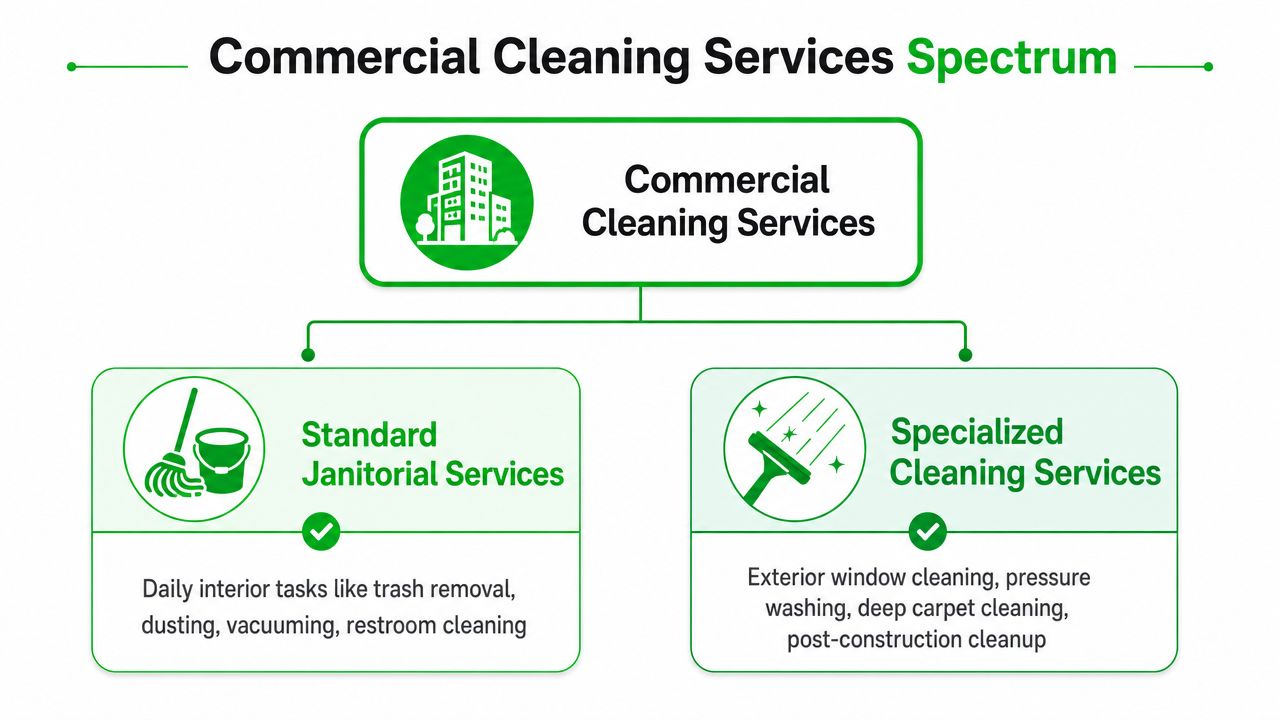
Janitorial service and commercial building cleaning services overlap, but they are not the same job. Janitorial work handles the daily interior environment. Exterior and specialty work protects the building envelope, improves appearance, and addresses surfaces and access conditions that require different tools, training, and scheduling.
What janitorial covers and what it doesn't
Think of janitorial crews as the team that keeps the building usable day to day. They handle interior floors, restrooms, common areas, touchpoints, and routine waste removal. That work matters, but it doesn't replace specialized exterior care.
Specialized commercial cleaning usually includes:
- Exterior window cleaning using squeegees, poles, ladders, lifts, and pure-water systems
- Pressure washing for walkways, entries, sidewalks, dumpster pads, and select facade materials
- Gutter and downspout cleaning to keep drainage moving
- Post-construction cleanup for adhesive, dust, paint specks, and construction debris on glass and frames
- Access-based cleaning for atriums, high glass, canopies, and other difficult elevations
If your property also has health, sanitation, or contamination concerns, a practical starting point is this property manager's contamination guide, which helps frame where disinfecting fits into the broader maintenance picture.
Why amateur glass cleaning fails on commercial buildings
Commercial glass punishes shortcut methods. That's especially true when people try to treat large exterior windows like household mirrors.
A paper towel doesn't remove exterior debris well. Household spray cleaners often leave residue. Rags can push grit around the surface and leave lint behind. On sunlit commercial glass, every missed edge and wipe mark shows up. Over time, poor technique also wastes labor because the same windows need attention again far sooner.
Professional window cleaning uses the right method for the condition and access point. That usually means a squeegee for detailed hand work, extension poles for reach, ladders or lifts where access requires them, and pure-water brushes for exterior glass that benefits from a spot-free rinse. Those systems help remove dust, pollen, mineral film, and environmental buildup without the smear pattern that do-it-yourself methods often leave behind.
Clean commercial glass should look invisible from inside and consistent from curb view. If one bank of windows catches the light differently than the next, the method was probably wrong.
The quality standard to expect
A competent exterior cleaning vendor should be able to explain:
- How they access the glass safely
- Which surfaces they clean by hand versus with pure water
- How they protect frames, seals, and surrounding finishes
- Whether they remove, clean, and reinstall screens
- How they handle hard water, construction debris, or oxidized frames when those issues are present
That baseline matters because the wrong crew can make a building look only temporarily cleaner. The right crew leaves it cleaner in a way that lasts.
Developing Your Building's Custom Cleaning Plan
A good cleaning plan starts with observation, not with a generic monthly checklist. Two office buildings in the same city can need completely different service frequencies if one faces a busy road and the other sits back from traffic under mature trees.
In Flagstaff and Northern Arizona, the schedule also changes with the seasons. Spring brings pollen and windblown dust. Summer storms push mud and debris onto lower glass and entry concrete. Fall loads gutters with needles and leaves. Winter adds slush, residue, and freeze-thaw mess around entrances. If you don't account for those cycles, your plan will always feel reactive.
What should drive frequency
Three factors usually matter more than anything else.
- Building use: A medical office, hotel, dealership, and back-office campus all present different standards to the public.
- Exposure: Properties near roads, construction, pines, parking lots, or open wind corridors collect soil faster.
- Visibility: Main entrances, lobby glass, and customer-facing walkways need tighter attention than low-traffic rear elevations.
A common mistake is applying one uniform schedule to every surface. That sounds organized, but it usually overserves quiet areas and underserves the places people see. A better plan separates highly visible areas from secondary ones.
Sample Commercial Cleaning Frequencies for Flagstaff
| Building Type | Exterior Window Cleaning | Pressure Washing (Entrances) | Gutter Cleaning |
|---|---|---|---|
| Car dealership | Frequent service for showroom glass and front-facing windows | Frequent service due to vehicle traffic and customer foot traffic | Seasonal inspection and cleaning |
| Medical facility | Regular service for patient-facing glass and main entries | Regular service for sidewalks and entrance zones | Seasonal inspection and cleaning, especially before storm periods |
| Restaurant | Regular service focused on storefront glass and grease-prone entry areas | Regular service for entry concrete and service-side buildup | Seasonal cleaning with checks after heavy debris periods |
| Hotel | Regular to frequent service for lobby glass, guest-facing elevations, and entry canopies | Frequent service for main arrival areas and walkways | Seasonal cleaning plus storm-response checks |
| Office park | Moderate routine service, adjusted by tenant expectations and visibility | As needed for shared entries and high-use walkways | Seasonal cleaning |
| Retail storefront | Frequent service for front glass and doors | Regular service for sidewalks and entry pads | Seasonal inspection and cleaning |
The table gives you a starting point, not a fixed rulebook. A dealership on a dusty corridor may need tighter window cycles than a medical office tucked into a sheltered site. A hotel with covered entries may still need more walkway attention because guests track in weather and debris all day.
How managers keep the plan realistic
The strongest schedules usually follow a simple pattern:
- Identify the complaint surfaces first. Front glass, entry pads, and visible runoff stains tend to drive the most comments.
- Add seasonal tasks on purpose. Gutters, storm cleanup, and winter residue removal shouldn't be left to memory.
- Set a quality threshold. Decide what “acceptable” looks like before the building slips below it.
If you only schedule service after someone complains, you're not managing appearance. You're managing dissatisfaction.
For managers who want fewer surprises, it helps to walk the property after weather shifts. The site will tell you what needs more frequent care long before a tenant email does.
Essential Services for High-Altitude Properties
Flagstaff properties deal with a tougher mix than many managers expect. High sun exposure, dust, pine debris, monsoon runoff, snow, and freeze-thaw cycles all leave a signature on commercial exteriors. The most effective service plans focus on the tasks that protect both appearance and function.
Window cleaning done the professional way
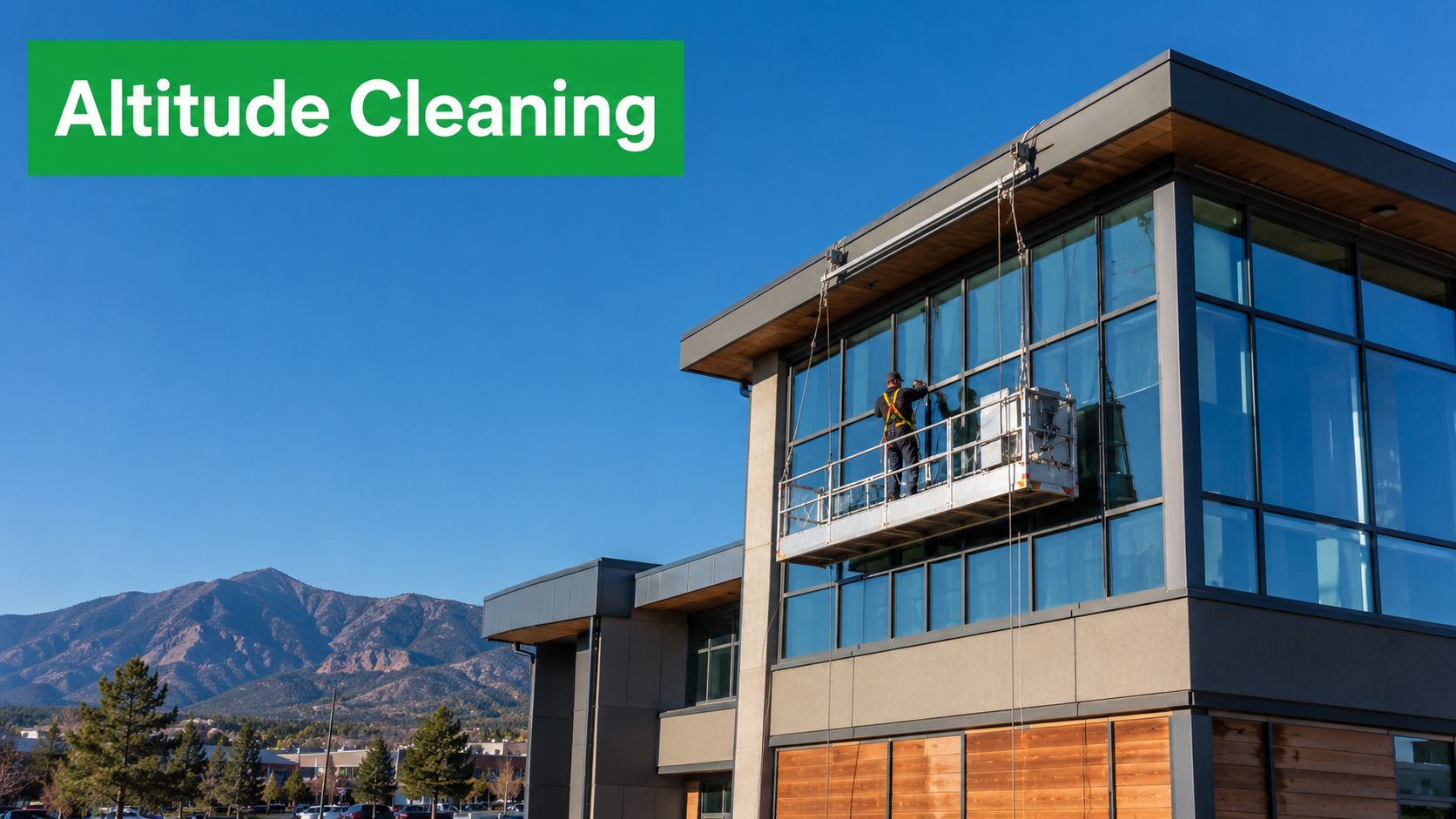
Commercial window cleaning should never be reduced to wiping accessible glass and calling it complete. On business properties, the work often includes multi-level access, deep frames, screens, hard-to-reach panes, and visibility requirements that make every streak obvious.
Professional crews use the method that fits the glass and the access challenge. That may include squeegees for close detail work, water-fed poles with pure-water brushes for exterior glass that benefits from a spot-free rinse, and ladders or lift equipment where safe access requires them. The point isn't to use one tool on every building. The point is to use the right one for each section of the building.
A detail many managers appreciate is full screen handling. Screens should be removed, cleaned, and reinstalled with every service rather than ignored or worked around. Dirty screens throw debris onto freshly cleaned glass and make a building look half-finished. They also trap dust and pollen that build up fast in Northern Arizona.
Pine Country Window Cleaning handles commercial window cleaning, pressure washing, and related exterior care for properties in the region, including sites that require lift access, high glass work, and recurring maintenance schedules.
Pressure washing where it actually helps
Pressure washing is one of the most useful exterior services when it's targeted correctly. Entrances, sidewalks, breezeways, loading areas, dumpster pads, and service corridors collect the kind of grime that sweeping can't remove. In Flagstaff, that often includes muddy splashback, winter residue, organic staining, and packed dirt at transition points.
What works is matching pressure, flow, and surface type. Concrete can often tolerate more aggressive cleaning than painted trim, stone accents, sealants, or delicate facade materials. Good crews know the difference. They pre-treat when needed, manage runoff responsibly, and avoid etching surfaces just to make the immediate result look dramatic.
Field note: The cleanest-looking properties aren't always the ones with the most washing. They're the ones where crews know which surfaces need pressure, which need brushing, and which need restraint.
Gutter and downspout cleaning for snowmelt and monsoon season
Gutters don't get much attention until they fail. On commercial properties, that failure shows up as overflow lines on walls, pooling near entrances, erosion at foundations, and winter ice trouble where drainage should be moving cleanly away from the structure.
In Northern Arizona, gutters collect pine needles, leaves, roof grit, and storm debris. If downspouts clog, water backs up and spills where it shouldn't. Snowmelt and summer rain both expose that problem quickly. Managers who schedule commercial gutter cleaning before peak weather usually avoid the messiest outcomes.
Access and safety matter as much as the cleaning itself
Some properties don't need advanced access. Others have atriums, stepped rooflines, canopies, tall glass runs, or tight approach conditions where ordinary tools aren't enough. That's where professional equipment changes the quality of the outcome. Crews can reach difficult areas safely, clean them correctly, and finish the property as a whole rather than skipping the sections that are hardest to access.
For high-altitude properties, complete service is the standard that holds up. Partial cleaning is what creates recurring complaints.
Vetting Your Vendor Safety Compliance and Insurance
Choosing a cleaning vendor is partly about appearance. It's also a risk decision. If a crew is working on ladders, lifts, roofs, wet walkways, or occupied commercial sites, the wrong hire can create liability far beyond the cleaning scope.

What to confirm before work starts
A professional vendor should be ready to discuss general liability insurance, workers' compensation coverage, site safety procedures, and how technicians are trained for the work they perform. If they hesitate, get vague, or act offended that you asked, that's useful information.
Property managers should also know whether technicians are background-checked and whether the company has OSHA safety training built into its operations. That matters any time crews work around staff, tenants, guests, or the public. It matters even more when the job involves high-level access or restricted areas.
A useful outside reference for understanding how contractor coverage is typically framed is Liberty Insurance Associates' guide to find NJ contractor coverage. The state details won't map directly to Arizona, but the coverage categories and questions are still a helpful checklist.
Red flags that should slow you down
Some warning signs show up before the first service visit.
- Unclear scope: If the quote doesn't explain access methods, surface coverage, or exclusions, expect confusion later.
- No insurance documentation: Verbal assurance isn't enough when a contractor is working at height.
- Improvised equipment: Extension tools and ladders have their place, but they shouldn't be substitutes for proper access planning.
- No site protocol: Vendors should know how they'll handle cones, pedestrian traffic, entrances, and work zones.
When your building includes upper glass, atriums, or hard-to-reach facades, experience with high-rise window cleaning services becomes especially relevant because access planning is part of the job, not an afterthought.
Ask how they protect your operation
The best vendor conversations aren't about price first. They're about what happens on your property during the workday.
Ask who supervises the job. Ask whether they work around tenant access or customer traffic. Ask how they communicate if weather changes the schedule. Ask what happens if they discover clogged downspouts, damaged screens, failed seals, or a safety issue during service.
Here's a useful example of the kind of safety mindset managers should expect vendors to bring to commercial work:
A cheap exterior cleaning bid can become an expensive management problem if the vendor creates access issues, misses safety controls, or can't document coverage when something goes wrong.
A reliable contractor lowers your workload. A risky one adds follow-up, exposure, and preventable headaches.
The Pine Country Advantage A Flagstaff Partner Since 1999
Local experience matters more in Northern Arizona than many out-of-area vendors realize. A crew can know how to clean glass and still miss what Flagstaff weather, elevation, tree cover, snow, and monsoon patterns do to commercial properties over the course of a year.
That local understanding is part of why long-established companies tend to fit this market well. Pine Country is Flagstaff's largest window cleaning company, started by Flagstaff native David Kaminski, and it has been in business since 1999. Those roots matter because regional service isn't just about driving to the property. It's about knowing how local buildings get dirty, what seasonal timing works, and how to plan access and maintenance around real conditions.
Equipment and service depth
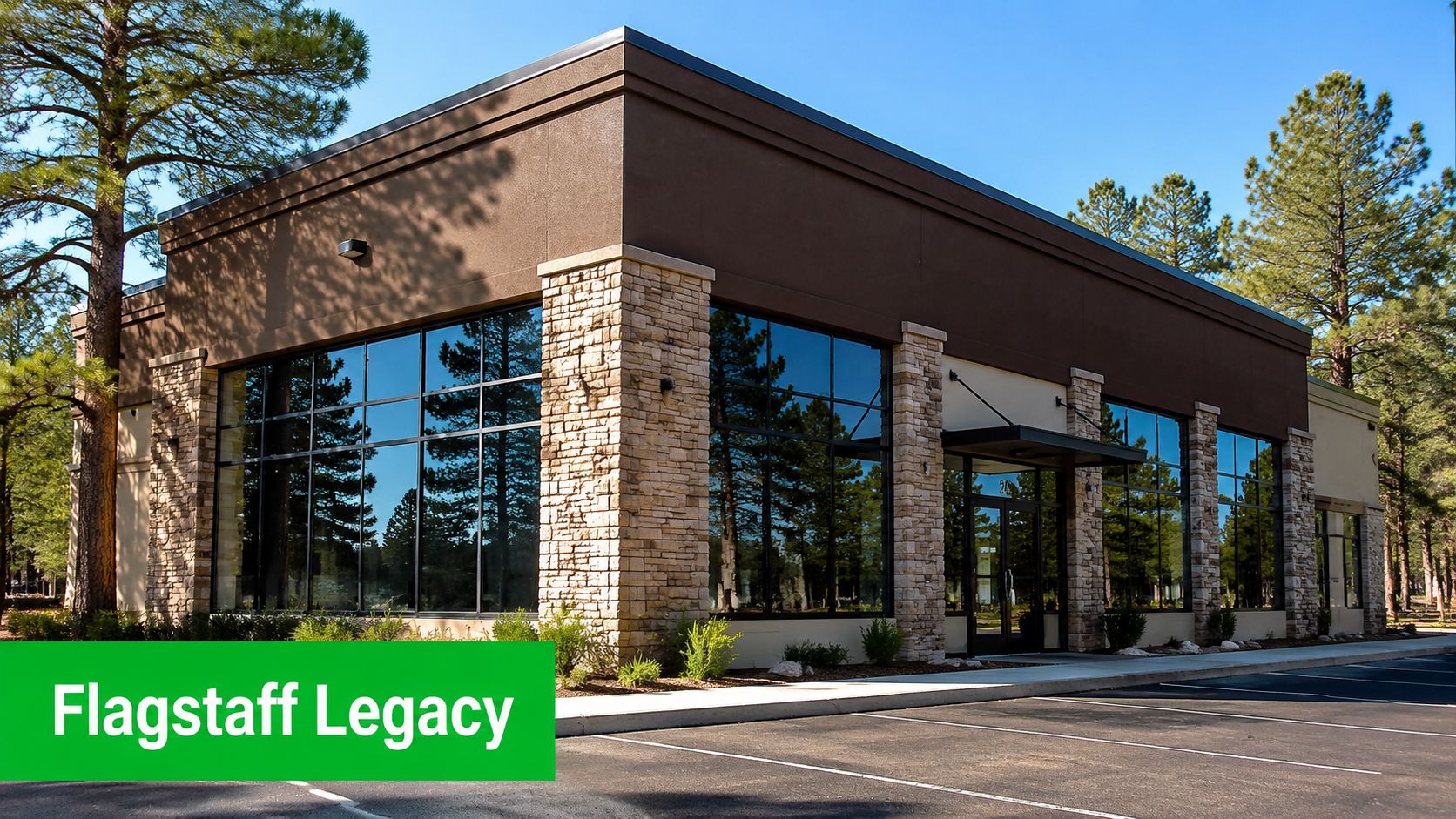
Commercial buildings in this region range from storefronts and medical offices to hotels, campus buildings, and properties with difficult atriums or high-level glass. That's where in-house equipment makes a practical difference. Boom lifts, scissor lifts, ladders, poles, squeegees, and pure-water brush systems allow crews to clean the full building rather than only the easy portions.
For complex sites, specialized high-reach access also matters. A property with an interior atrium, tall lobby glass, or unusual elevation changes needs more than standard storefront tools. When a company has the equipment to handle those conditions safely and efficiently, scheduling gets easier and service quality is more consistent.
Care for customers and care for the property
Good commercial service isn't only about the finished glass. It's also about how the crew works around the building. Managers notice when technicians communicate clearly, show up prepared, protect access points, and leave the property orderly. They also notice when details get handled without prompting, especially screen removal, screen cleaning, and proper reinstallation rather than leaving screens dusty or loosely fitted.
That care shows respect for the customer and for the property itself. It reduces callbacks, keeps tenants happier, and makes recurring maintenance far easier to manage.
If you're reviewing vendors for an upcoming service cycle, the next step should be simple. Ask for a clear scope, ask how they'll access the building, and ask how they schedule for local weather. Then compare who gives you direct answers.
Frequently Asked Questions About Commercial Cleaning
How often should a commercial building have its windows cleaned?
It depends on visibility, traffic, and exposure. Storefronts, hotels, and buildings with client-facing glass usually need more frequent attention than low-traffic office sites. In Flagstaff, dust, pollen, and weather swings also push some properties onto a tighter schedule than managers initially expect.
Are screens part of commercial window cleaning?
They should be when the building has them. A complete service removes screens, cleans them, and reinstalls them properly. If screens stay dirty, they can dull the appearance of freshly cleaned glass and keep releasing debris onto the window area.
Is pressure washing safe for every exterior surface?
No. It's effective on many concrete and durable exterior surfaces, but pressure must be matched to the material. The right contractor will identify where pressure washing works, where soft washing or brushing is better, and where aggressive cleaning could damage finishes.
Why is gutter cleaning part of commercial building cleaning services?
Because clogged gutters create visible and structural problems outside the janitorial scope. Overflow can stain walls, create slippery areas near entrances, and direct water where it doesn't belong. In snow and storm seasons, those issues get worse quickly.
What should I ask for in a commercial cleaning quote?
Ask for the service scope, access method, surface exclusions, scheduling expectations, and proof of insurance. You should also ask who performs the work, how safety is handled on occupied sites, and whether the company is prepared for difficult access areas.
Can exterior cleaning be done without disrupting tenants or customers?
Usually, yes, if the work is planned properly. Good vendors schedule around traffic patterns, isolate work zones when needed, and communicate clearly about entrances, lifts, hoses, and timing. Disruption comes more often from poor planning than from the cleaning itself.
If your property needs a clearer exterior maintenance plan, Pine Country Window Cleaning can help you evaluate windows, gutters, and exterior surfaces with local conditions in mind. Request a free estimate online or by phone, and you'll get a straightforward scope, responsive communication, and a service plan that fits how your building is used.