
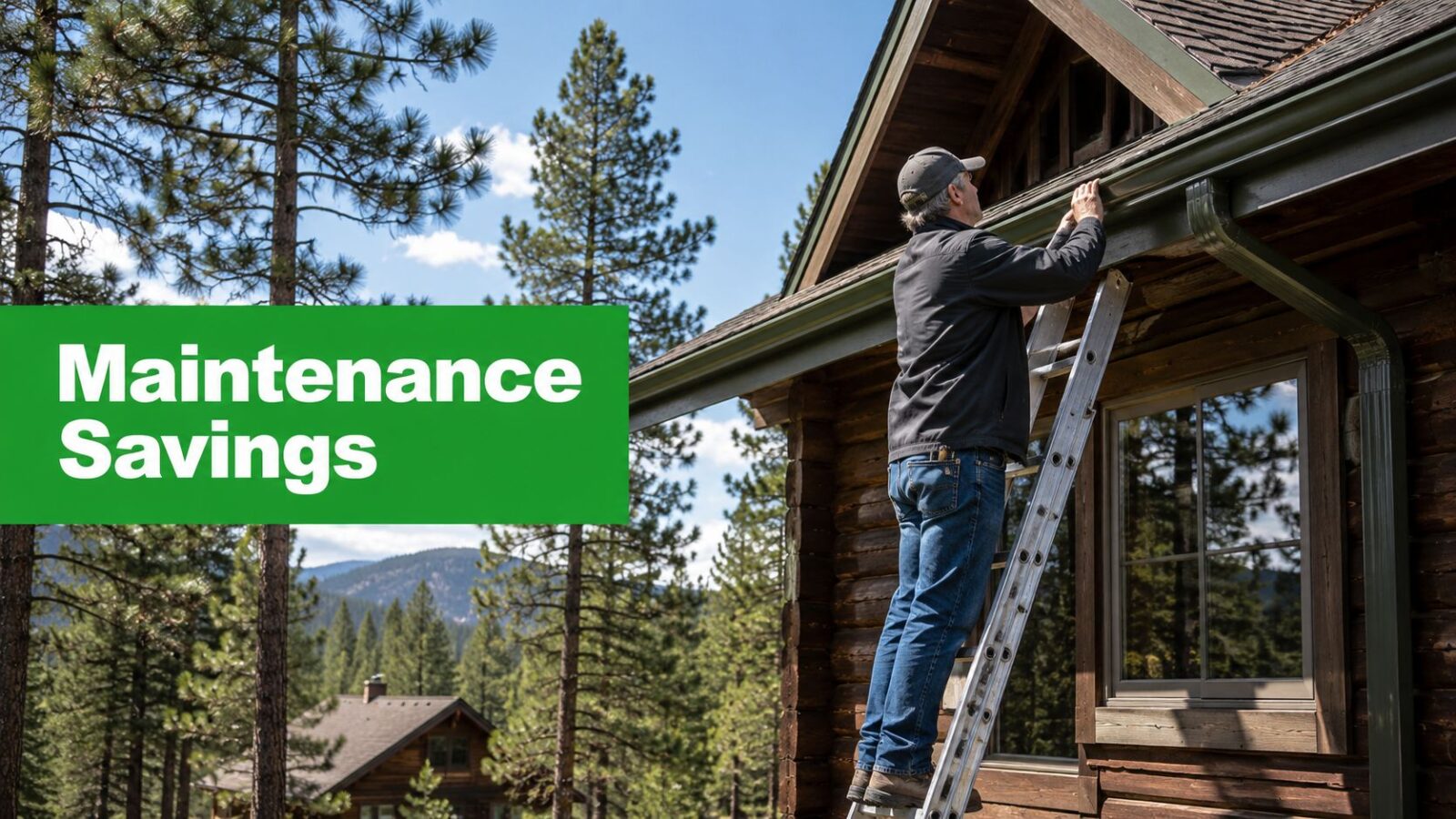
If you own a home, cabin, or commercial property in Flagstaff or Munds Park, you already know how maintenance bills show up. One hard freeze swells a gutter seam. One monsoon storm finds the weak spot around a window. One stretch of pine pollen, dust, and debris turns a small cleaning task into a drainage problem.
Most expensive repairs don't start as major failures. They start as ignored buildup, worn seals, loose fasteners, clogged gutters, dirty glass tracks, or drainage that was “fine last season.” In Northern Arizona, four real seasons put pressure on every exterior surface. Snow loads, wind, UV exposure, pine needles, hail, and summer rain all take turns working on your property.
That's why maintenance cost reduction isn't about cutting corners. It's about catching the right things early, using the right tools, and hiring the right help before small defects turn into repairs you can't postpone.
Beyond Emergency Repairs A Smarter Approach to Property Care
A common Flagstaff scenario goes like this. Winter leaves behind heavy snowpack on the roof. A few warm afternoons start the melt. Cold nights refreeze the runoff at the eaves. Then one morning, a property owner notices gutters sagging under ice, water backing up where it shouldn't, and staining that wasn't there before.
By summer, the same house gets hit from the other side. A monsoon downpour pushes water through a gutter packed with pine needles, and the owner discovers that one loose joint and one hidden leak have become fascia damage, wet trim, and a repair list.
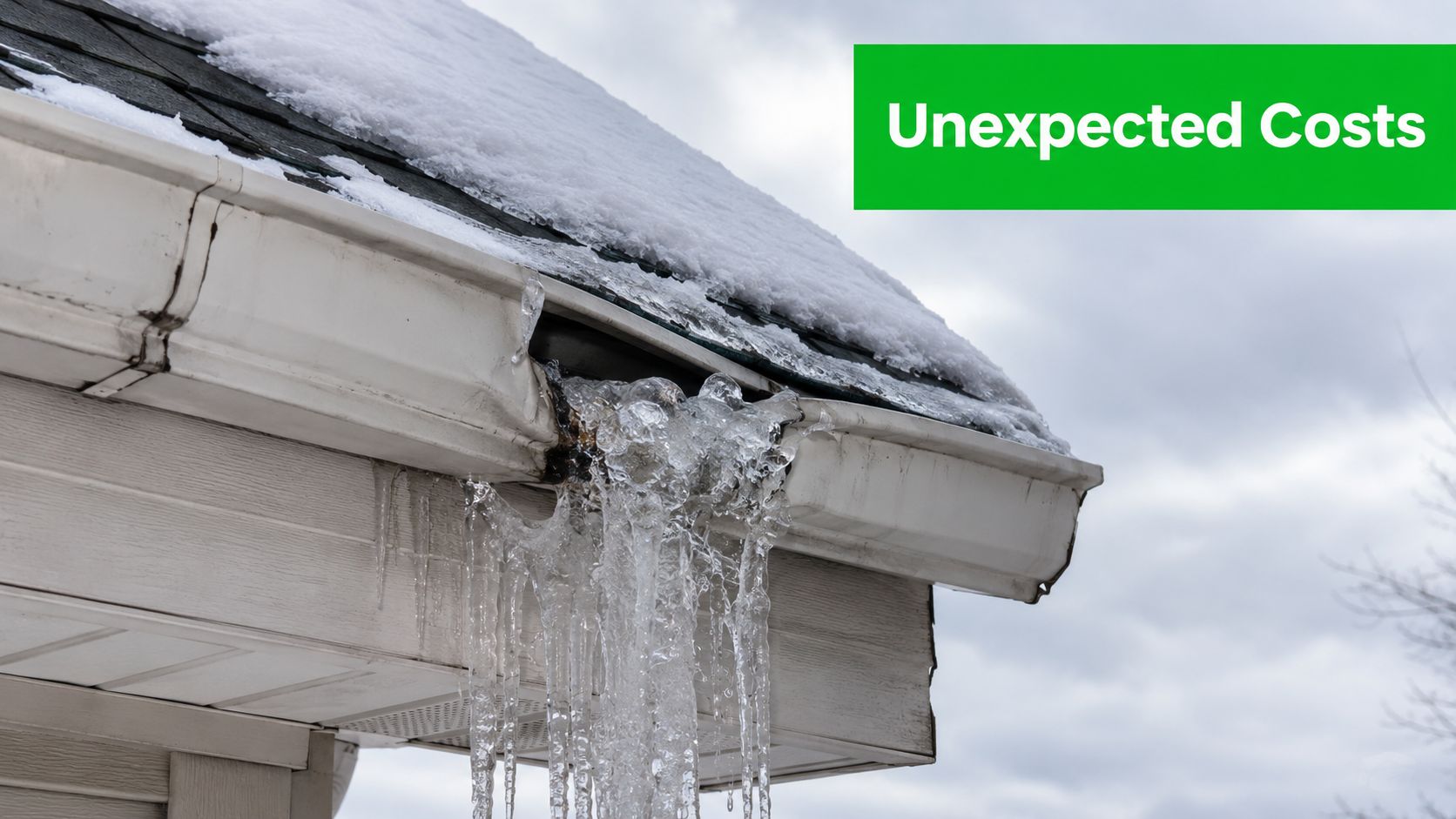
That cycle is expensive because emergency work is always the worst time to make decisions. You're rushed. Contractors are busy. Damage has already spread. You're paying to fix the failure and the collateral damage around it.
Practical rule: If weather exposes the problem, the problem was usually there before the weather arrived.
That's the difference between reactive maintenance and a property care plan. A reactive approach waits for visible failure. A smarter plan looks for the conditions that create failure in the first place. On homes in Flagstaff and cabins in Munds Park, that usually means keeping drainage open, preserving sealants, watching rooflines, protecting siding, and cleaning surfaces before debris and moisture sit too long.
The financial side is hard to ignore. Research shows that running equipment to the point of failure can cost up to 10 times as much as a regular maintenance program, and every $1 worth of maintenance deferred can quadruple to $4 in capital renewal costs later according to maintenance cost analysis from ManWinWin. That lesson applies beyond industrial equipment. Property systems follow the same pattern. Delay usually costs more.
What proactive care looks like on real properties
A practical plan doesn't mean overdoing everything. It means scheduling the right work before each season changes.
- Before winter: Clear gutters, check downspouts, inspect roof edges, and make sure drainage moves away from the structure.
- Before monsoon season: Look for failed caulk, loose trim, cracked siding, and clogged valleys where water concentrates fast.
- After major weather: Walk the property and verify what changed, not what you assume stayed the same.
Why peace of mind matters
Owners usually say they want to save money. What they often mean is they want fewer nasty surprises.
A maintained property is easier to budget, easier to schedule, and easier to protect. You stop treating upkeep like random bad luck and start treating it like part of ownership.
Your Blueprint for Savings Conducting a Maintenance Cost Audit
Most owners don't need a complicated software system to start. They need a legal pad, a phone camera, and one careful walk around the property. A maintenance audit turns vague concern into a usable list.
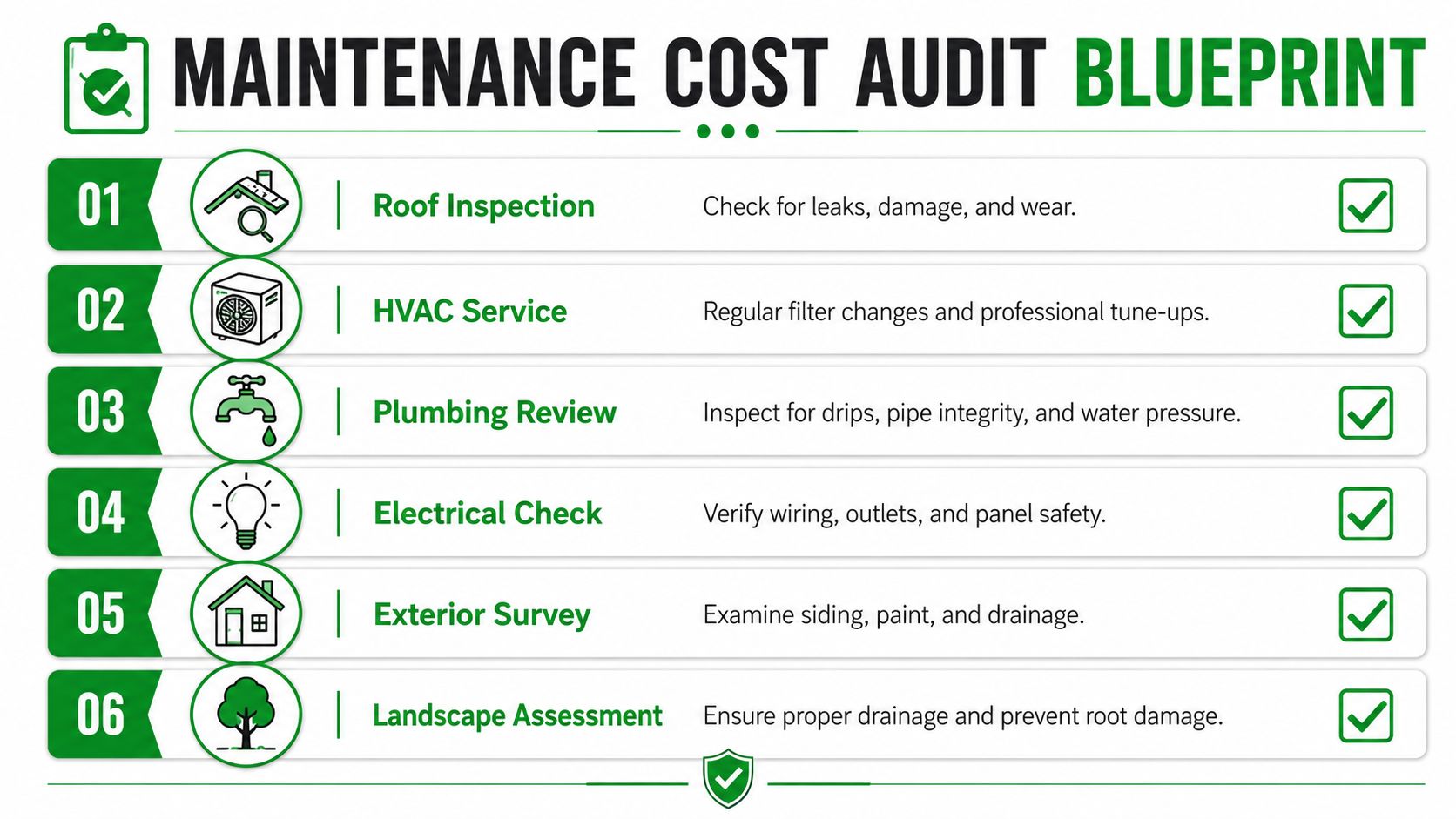
If you want a broader operations framework to reduce maintenance spend, it helps to think in systems instead of isolated tasks. That's how you stop paying for the same preventable issue twice.
Start at the top and work down
Walk the property in the same order every time. That way you don't miss obvious things.
Roofline and gutters
Look for sagging sections, overflow marks, loose brackets, and debris buildup. In this area, pine needles collect fast and hold moisture longer than people expect. If you're comparing service timing and budget, it helps to review a local gutter cleaning cost guide before debris turns into drainage damage.Siding, trim, and paint
Check south- and west-facing sides closely. Flagstaff sun is tough on finishes. Small cracks around trim, peeled paint, and open joints let in moisture during storms and snowmelt.Windows and doors
Inspect frames, seals, tracks, and screens. Cloudy buildup on glass can hide failed seals, hard water staining, and drainage issues around frames. Sticky operation usually means dirt, wear, or moisture has started affecting the assembly.
Keep notes that help you decide
Photos matter more than memory. Take the same photo angles every season if you can. A property owner who documents changes sees trends faster than one who relies on instinct.
Use three categories:
- Needs attention now for active leaks, overflow points, unsafe walking surfaces, or damaged components.
- Watch next season for aging caulk, minor wood movement, small cracks, or moderate staining.
- Plan and budget for items that still function but clearly won't last forever.
Write down location, condition, likely cause, and what happens if you leave it alone. That last part helps you prioritize.
Don't skip the ground conditions
A lot of water problems start below eye level.
Check grading, splash blocks, drainage paths, deck posts, and the soil line against siding. When landscaping traps runoff against the home, the wall gets blamed for a drainage problem it didn't create.
A good audit also looks at access. If ladders can't be placed safely, or roof edges are too steep, note that right away. DIY only saves money when it's safe and when the work gets done correctly.
Shifting from Reactive to Proactive Maintenance
The fastest way to lose money on property maintenance is to wait for proof that something failed. By the time water shows up inside, wood swells, trim stains, or a gutter pulls loose, the repair has already grown.
A proactive schedule works because it changes the sequence. You inspect, clean, adjust, seal, and service before the weather tests the property. That's the whole game.
The economics behind that approach are well established. The U.S. Department of Energy's Best Practices guide established that predictive maintenance yields savings of 30-40% compared to reactive maintenance, confirming that the shift away from breakdown-driven work is the strongest cost lever according to this predictive maintenance summary.
The sweet spot is not more maintenance
One mistake I see all the time is assuming that if some maintenance is good, more must be better. It isn't. Over-maintenance wastes labor, materials, and time. Under-maintenance creates failure.
The right schedule sits in the middle. Use the manufacturer's recommendations, the age of the component, and what your property has been through. A cabin under dense pine cover won't have the same gutter schedule as a home with open exposure. A shaded north-facing deck holds moisture differently than a sunbaked south-facing one.
That's why calendar reminders alone aren't enough. You need condition-based judgment too.
Where right-sized maintenance saves money
A practical proactive plan usually focuses on a handful of areas:
- Gutters and downspouts when pine needles, leaves, and roof grit start restricting flow.
- Window tracks and seals before dirt, water, and UV wear shorten the life of moving parts.
- Exterior surfaces when oxidation, grime, and mineral deposits start holding moisture against finishes.
- Drainage paths before runoff cuts new channels or pools near the foundation.
- Roof edges and vulnerable trim after snow season and before monsoon season.
If a task doesn't prevent damage, improve function, or extend service life, question whether it belongs on the schedule.
What doesn't work
Reactive owners often bounce between two bad patterns. They ignore routine work for too long, then overcorrect with scattered, expensive projects that don't address root causes.
That looks like replacing sections of trim without fixing the overflow above them. It looks like repainting while leaving clogged gutters in place. It looks like cleaning glass but ignoring damaged screens, dirty tracks, and failing seals around the frame.
Good maintenance cost reduction comes from sequence. Fix the water path first. Protect the exposed materials next. Clean and preserve the surfaces that help you spot change early. Then keep repeating the cycle.
A Year-Round Strategy for Flagstaff and Munds Park Homes
Northern Arizona punishes one-season thinking. The owners who spend less over time are the ones who work ahead of the next weather shift instead of recovering from the last one.
Spring reset after snow and wind
Spring is when winter damage finally becomes visible. This is the time to check roof edges, gutters, downspouts, window seals, siding joints, and decks. Dust, pollen, soot, and winter residue also build up on glass and frames, which makes inspection harder.
Professional window cleaning matters here because the method affects the result. On exterior glass, pros use squeegees, ladders, poles, and pure-water brushes, not a rag, not spray bottle shortcuts, and not newspaper tricks. Clean glass lets you inspect the condition of seals, frames, and surrounding trim. Good service also includes removing screens, cleaning screens, and reinstalling them correctly so airflow and appearance improve at the same time.
Summer preparation before monsoon season
Monsoon prep is about water control and access.
Before storms arrive, make sure gutters are open, downspouts discharge properly, and roof valleys aren't packed with debris. Check exterior caulking around windows and doors. Look at where runoff hits patios, walkways, and planted areas. If water has one bad route during a hard rain, it'll find it fast.
This is also a good time to pressure wash selected surfaces where dirt, algae, or grime are holding moisture against the material. Done correctly, pressure washing restores visibility and helps you catch defects early. Done carelessly, it can damage finishes or force water where it doesn't belong. Tool choice and pressure setting matter.
Fall cleanup before freeze cycles
Fall is one of the most important maintenance windows in Flagstaff and Munds Park. Pine needles and leaves start loading gutters just before freeze-thaw conditions return. If that debris stays put, winter moisture backs up and ice problems get worse.
For many owners, this is the season when bringing in a service company makes the most financial sense. One visit that clears gutters, checks flow, and restores visibility around windows can prevent a lot of winter damage. A local option for that kind of recurring exterior upkeep is seasonal home maintenance support, which is built around the climate issues property owners in this region face.
Winter protection and access
Winter maintenance is less about cosmetic work and more about safety, drainage, and access. Keep entries usable. Watch for snow and ice buildup that affects walkways, roof edges, and drainage exits. If a second home sits vacant part of the season, inspections matter even more because small issues can sit unnoticed longer.
A cabin doesn't care that you're not there. Snow load, freeze cycles, and backed-up drainage keep working whether the driveway is occupied or not.
Flagstaff seasonal maintenance checklist
| Season | Key Maintenance Task | Reason |
|---|---|---|
| Spring | Clean windows, screens, and exterior surfaces | Remove winter residue and make defects easier to spot |
| Spring | Inspect gutters, trim, and seals | Catch snow and wind damage before summer storms |
| Summer | Clear drainage paths and prep for monsoon runoff | Keep water moving away from the structure |
| Summer | Review caulk, siding joints, and splash zones | Reduce storm-driven moisture intrusion |
| Fall | Remove pine needles and leaves from gutters | Lower risk of overflow and winter ice issues |
| Fall | Check decks, steps, and exterior access areas | Prepare for freeze-thaw wear and slick surfaces |
| Winter | Monitor snow, ice, and walkway safety | Protect access and reduce hazard-related damage |
| Winter | Inspect vacant or second homes regularly | Catch weather-related issues before they spread |
Selecting Reliable Contractors Who Protect Your Investment
A February thaw in Flagstaff can expose a problem that looked minor in December. Water runs where ice sat for weeks, debris shifts, glass shows hard-water residue, and a crew that looked cheap on paper suddenly costs you a second visit, a repair, or a tenant complaint. Contractor selection affects maintenance cost reduction more than many owners expect.

In Flagstaff and Munds Park, local experience matters. Crews need to understand steep access, tall glass, pine sap, wind exposure, snow season scheduling, and the extra wear that comes with vacant cabins and second homes. A contractor who works well in a flat suburban tract may struggle on a sloped lot off Lake Mary Road or a cabin tucked into dense pines.
Pine Country Window Cleaning has served the area since 1999, with more than 25 years of local operating experience. That kind of longevity does not guarantee good work by itself, but it usually means the company has had time to refine systems, train crews for local conditions, and stay accountable in a small mountain market where word travels fast.
What to look for before you hire
Price still matters. Scope, method, and follow-through matter more.
A reliable contractor should be able to explain how the work will be done on your property, not just quote a number over the phone. Ask what access equipment they use, how they protect trim and landscaping, whether they remove and clean screens, and what they do when they find a problem outside the original scope. Clear answers usually signal a crew that has done this before.
Look for a few specific signs:
- Access equipment that fits the property. Ladders, extension poles, and lift capability when needed should match the height, slope, and layout of the building.
- Methods that fit the surface. Glass, frames, screens, gutters, and exterior trim do better with professional tools and the right water-fed or hand-cleaning approach than with household shortcuts.
- Care for surrounding materials. Good crews protect decking, plantings, paint, stain, and entry areas instead of treating the house like a jobsite with no finish materials to preserve.
- Defined service scope. You want to know what is included, what gets documented, and what triggers a recommendation for repair or added service.
Owners save money without cutting corners. Skilled service costs more than a casual handyman visit in some cases, but it often prevents scratched glass, bent screens, damaged gutters, missed buildup, and repeat trips. On mountain properties, one incomplete job can create two more.
For owners comparing options, it helps to review window and exterior cleaning options in Flagstaff and see how service scope is defined. The same buying logic applies across trades. This guide for smart property owners does a good job showing why preventive service usually beats deferred service on total cost.
Commercial and mixed-use properties need one more layer of scrutiny. Ask how the contractor handles access around customers, tenants, parked vehicles, retail entries, and weather delays. A low bid loses its appeal fast if the crew blocks circulation, misses appointments after a storm, or needs constant supervision from your staff.
A quick visual overview helps too.
Reliable contractors protect the asset, document what they see, and reduce the odds that a small maintenance issue turns into a repair bill next season.
Tracking Your ROI on Proactive Maintenance
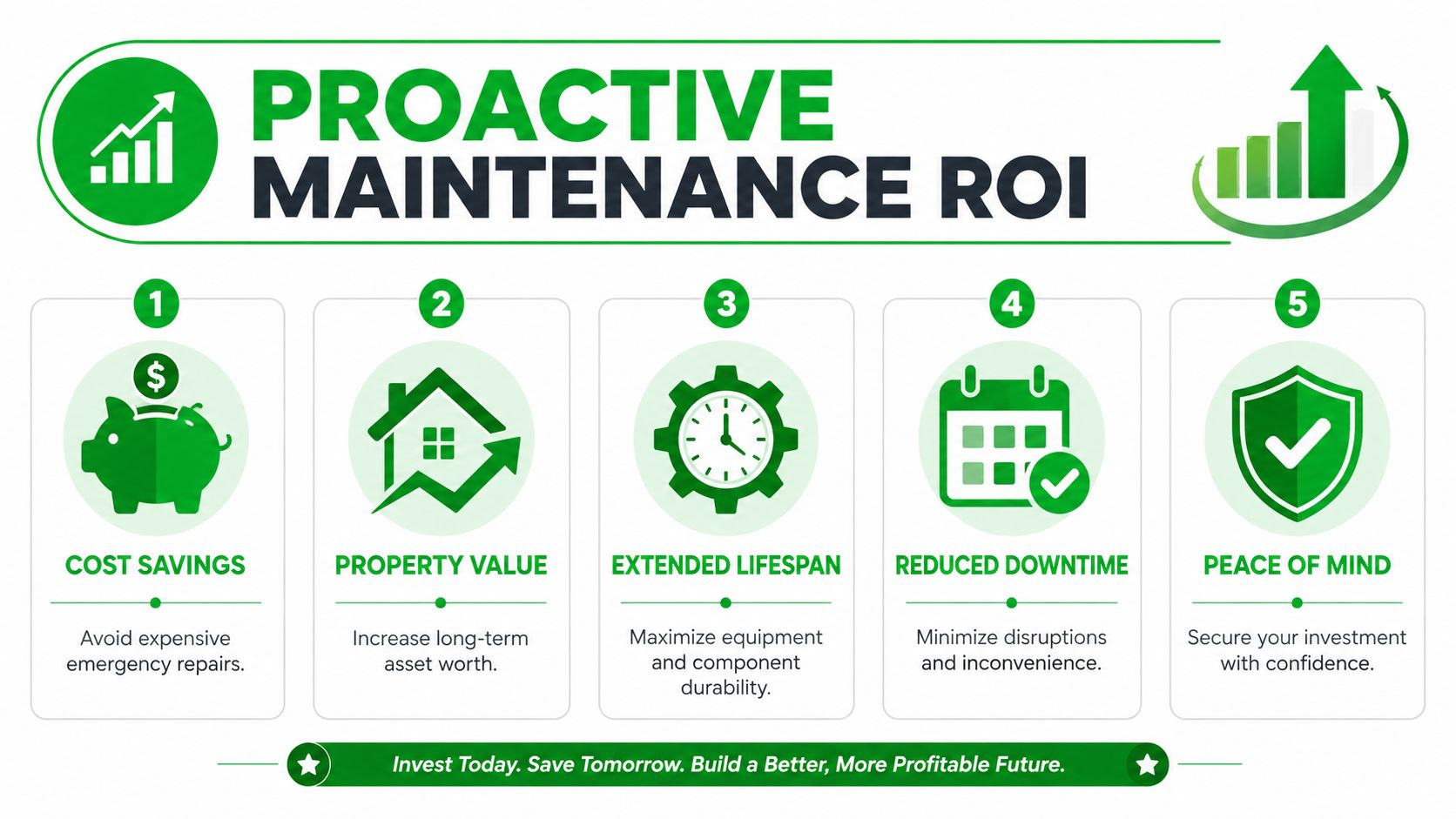
Most owners know when maintenance feels cheaper. Fewer emergency calls. Fewer disruptions. Less visible deterioration. But you should track it, not just feel it.
Start with the audit notes and photos you took earlier. Compare year over year. Did you reduce surprise repairs? Did you catch more issues while they were still minor? Did scheduled service keep windows, gutters, drainage, and exterior surfaces in better condition with less scrambling?
Use total cost, not just invoice cost
Total Cost of Operations helps. The low bid isn't always the low cost. A cheaper visit that misses debris, skips screen handling, uses the wrong tools, or leaves you with repeat work can cost more over the life of the property.
That principle shows up clearly in facility operations. Implementing a Total Cost of Operations strategy reduces maintenance costs by prioritizing quality and efficiency over the lowest initial price-per-bottle or price-per-hour, often leading to 15–30% overall cost reductions in facility operations according to Brulin's TCO overview. Property owners can apply the same thinking. Buy fewer headaches, not just fewer labor hours.
What successful tracking looks like
Keep it simple.
- Record what was done each season.
- Note what was prevented such as overflow, access problems, or recurring trouble spots.
- Watch repeat issues because repeat issues usually point to a root cause or poor-quality prior work.
- Review vendors annually based on consistency, not promises.
If you want another outside perspective on preventive upkeep, this guide for smart property owners is a useful companion read.
Maintenance cost reduction lasts when planning, timing, and workmanship line up. That's what protects the property. That's what protects the budget too.
If you want help keeping windows, gutters, screens, and exterior surfaces on a practical seasonal schedule, Pine Country Window Cleaning serves Flagstaff, Munds Park, and surrounding Northern Arizona properties with professional exterior maintenance that helps prevent small issues from turning into expensive repairs.