When you're hiring a local service company, the hard part usually isn't finding options. It's sorting through too many of them. Every listing looks polished, every website says the right things, and every truck in town claims to be reliable.
That creates a simple question with a frustrating answer. How do you tell which business is established, accountable, and invested in your community?
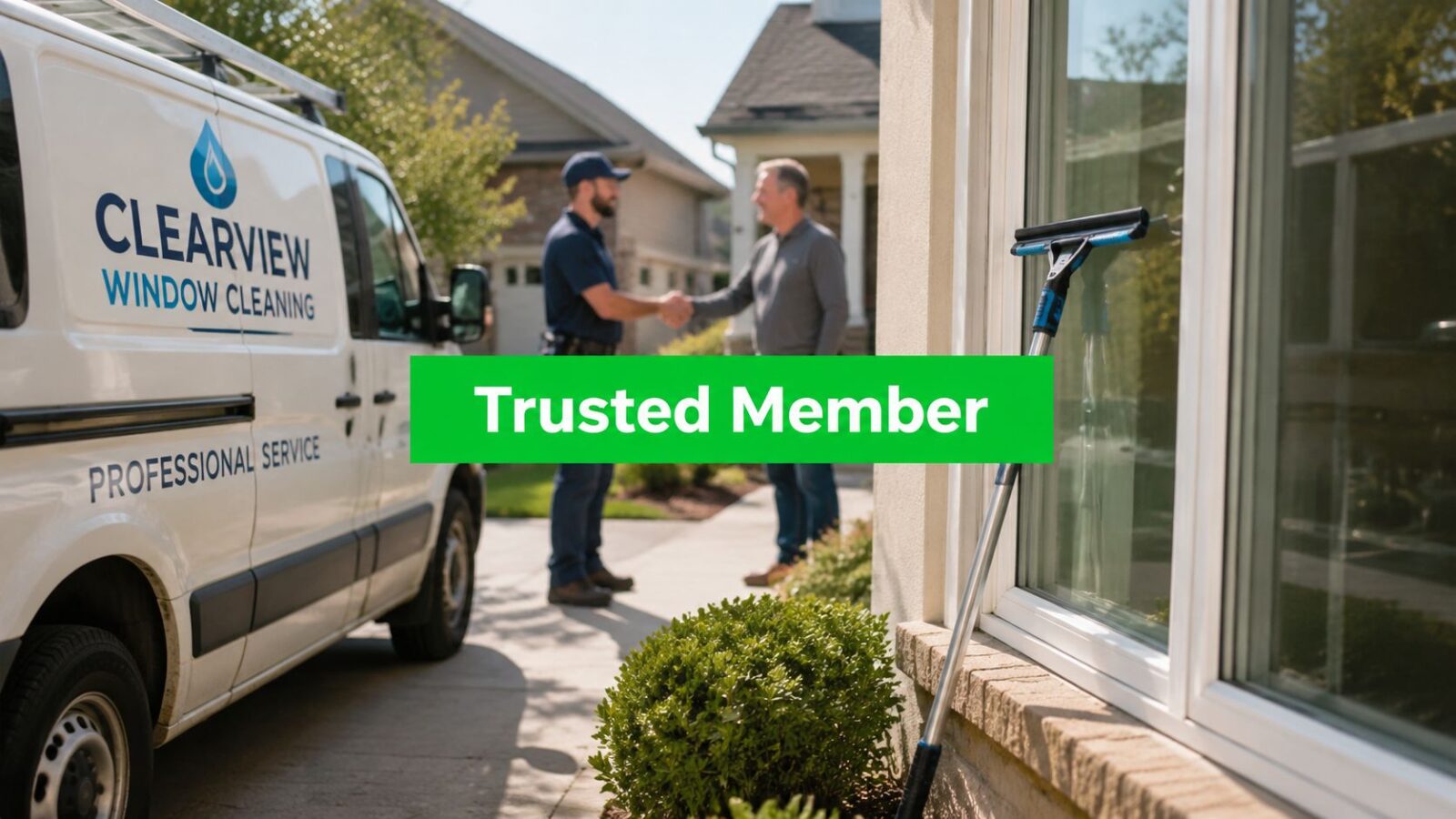
One practical shortcut is to look for a Chamber of Commerce member. That label isn't magic, and it doesn't guarantee that every member business is the right fit for every job. But it does tell you the company chose to be publicly connected to a local business organization, show up in a real community network, and put its name where neighbors, property managers, and other businesses can check it.
Choosing Local Services You Can Trust
A homeowner in Flagstaff or a cabin owner in Munds Park often starts the same way. You search for a service, open five tabs, compare reviews, and still feel unsure. One company says it handles residential work. Another says it serves commercial buildings. A third looks local, but you can't tell whether it's established here or just renting attention online.
That uncertainty matters more with service work done at your home. You're not just buying a product. You're letting a crew onto your property, trusting them around landscaping, screens, ladders, walkways, and entry points. If you're looking at window cleaning services in Flagstaff, you want more than a low quote. You want signs that the company takes workmanship and customer care seriously.
A local trust signal that means something
A chamber decal on a truck door or a chamber badge on a website helps because it narrows the field. It tells you the business didn't stay anonymous. It joined a visible local network where reputation matters.
A chamber membership doesn't replace good judgment. It gives you a faster way to identify companies that are at least participating in the local business community instead of operating as faceless listings.
For homeowners and property managers, that's useful. For local service businesses, it's even more important. When two companies seem similar on the surface, trust is often the deciding factor.
What Exactly Is a Chamber of Commerce Member
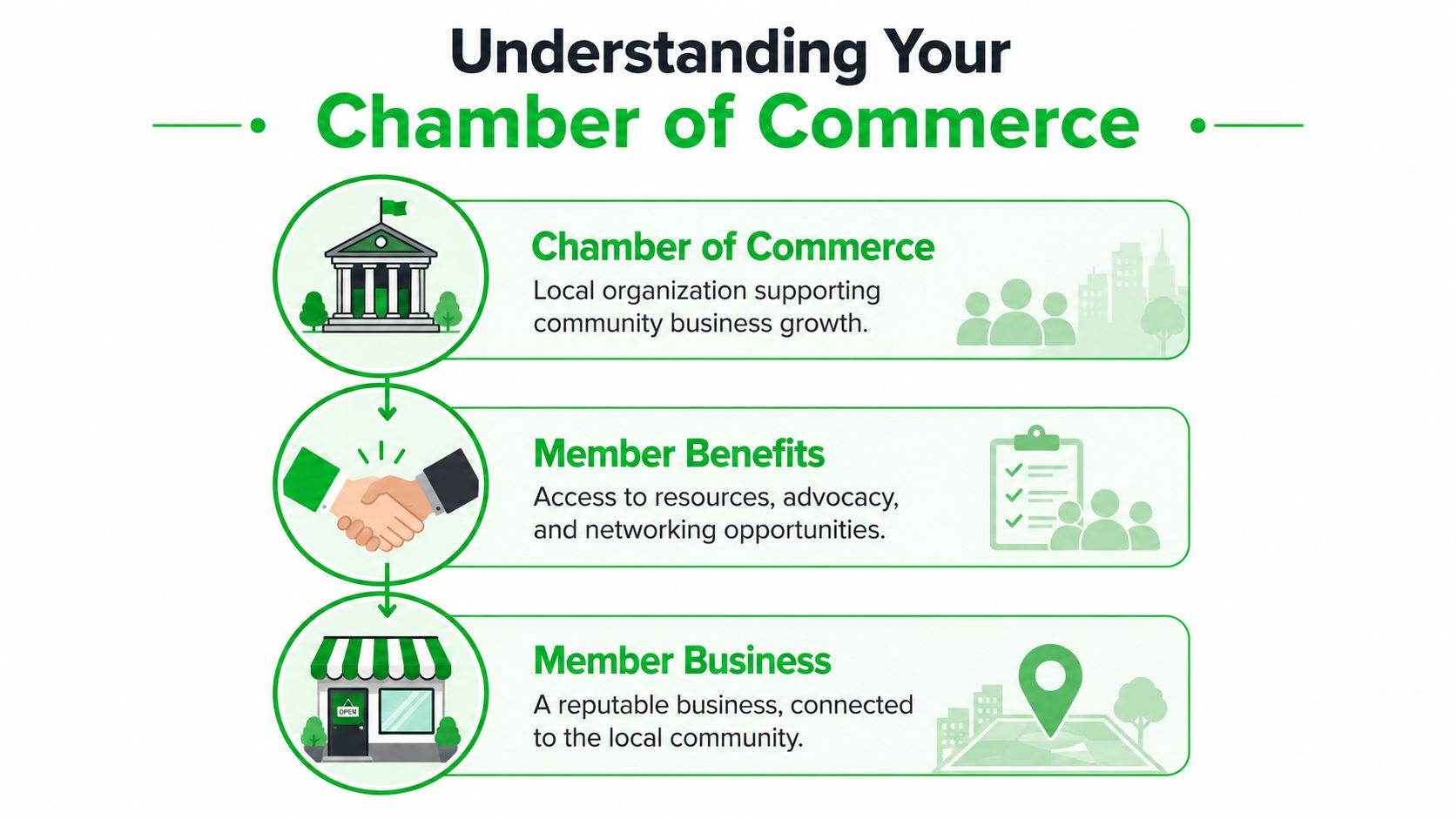
A Chamber of Commerce member is a business that has joined a local or regional chamber. The chamber itself is a business organization built to support commerce in a community through advocacy, visibility, connections, and shared business resources.
A simple way to think about it is this. A chamber is like a gym for local businesses. Members don't join because a logo alone changes their business. They join because the chamber gives them a place to build stronger local relationships, improve visibility, and stay connected to what's happening in the market around them.
What membership usually means in practice
When a company joins, it's stepping into a structured local system, not a casual social club. Chambers typically maintain member directories, business records, event registration, communication workflows, renewals, and engagement activity in a centralized system, which is part of why they function as organized business networks rather than loose mailing lists, as described in Kannect's chamber operations overview.
That matters because membership becomes visible and verifiable. Customers can often look up the business in the chamber directory. Other members can refer them. Chamber staff can connect businesses to events, outreach, or local opportunities.
These organizations can be much larger than people think
Many people picture chambers as small-town luncheon groups. Some are small and local, but the model scales far beyond that. The Wikipedia overview of chambers of commerce notes that the Paris Île-de-France Regional Chamber of Commerce has more than 800,000 members, and the Manhattan Chamber of Commerce says it connects 125,000+ businesses.
Those numbers matter because they show what chamber membership really is. It's participation in a formal economic network.
Practical rule: If a business is a chamber member, treat that as one trust indicator, not the only one. Then check whether the company also communicates clearly, shows real local presence, and has service details that make sense.
Why You Should Choose a Chamber Member for Your Home
If you're hiring someone to work around your house, the safest choice usually isn't the cheapest one. It's the company that gives you the fewest reasons to worry.
That helps explain why chamber affiliation influences customer behavior. A U.S. chamber research survey found that 64% of adults familiar with their local chamber were more likely to purchase goods or services from businesses that belonged to it. The same research also reported that consumers familiar with the chamber viewed member businesses more favorably.
Why that matters at the house level
A chamber membership doesn't tell you how clean the final glass will look. It does tell you the business has chosen public accountability in its home market. For a homeowner, that's useful because service quality is hard to judge before the work starts.
Here are the signs that usually matter most when choosing a chamber member for home service work:
- Professional methods: Look for companies that describe the actual tools and process they use, not vague promises. In window cleaning, that means equipment such as squeegees, ladders, poles, and pure-water brushes.
- Respect for the property: A serious crew doesn't rush through the obvious surfaces and leave details behind. They protect the home, work carefully around access points, and handle screens properly.
- Clear local accountability: A business tied into a chamber has another layer of public reputation to maintain in the community where it works.
For example, one practical benchmark in this market is whether the company removes screens, cleans screens, and reinstalls them as part of the service instead of treating them as an afterthought. That tells you a lot about whether the crew is doing complete work or just chasing speed.
How to verify membership quickly
You don't need to guess. Most chambers maintain an online member directory.
Use this simple check:
- Search the chamber directory for the business name.
- Confirm the listing details match the company you're considering.
- Compare that with the company's service process on its own website.
- Call with one practical question about how the crew handles your type of property.
If a company can't clearly explain its process, chamber membership won't rescue the decision. Trust comes from the combination of public accountability and professional execution.
How Local Businesses Turn Membership into Visibility
For business owners, chamber membership is most valuable when it stops being symbolic and starts becoming operational. The biggest miss I see is joining for the plaque and ignoring the assets that affect lead flow.
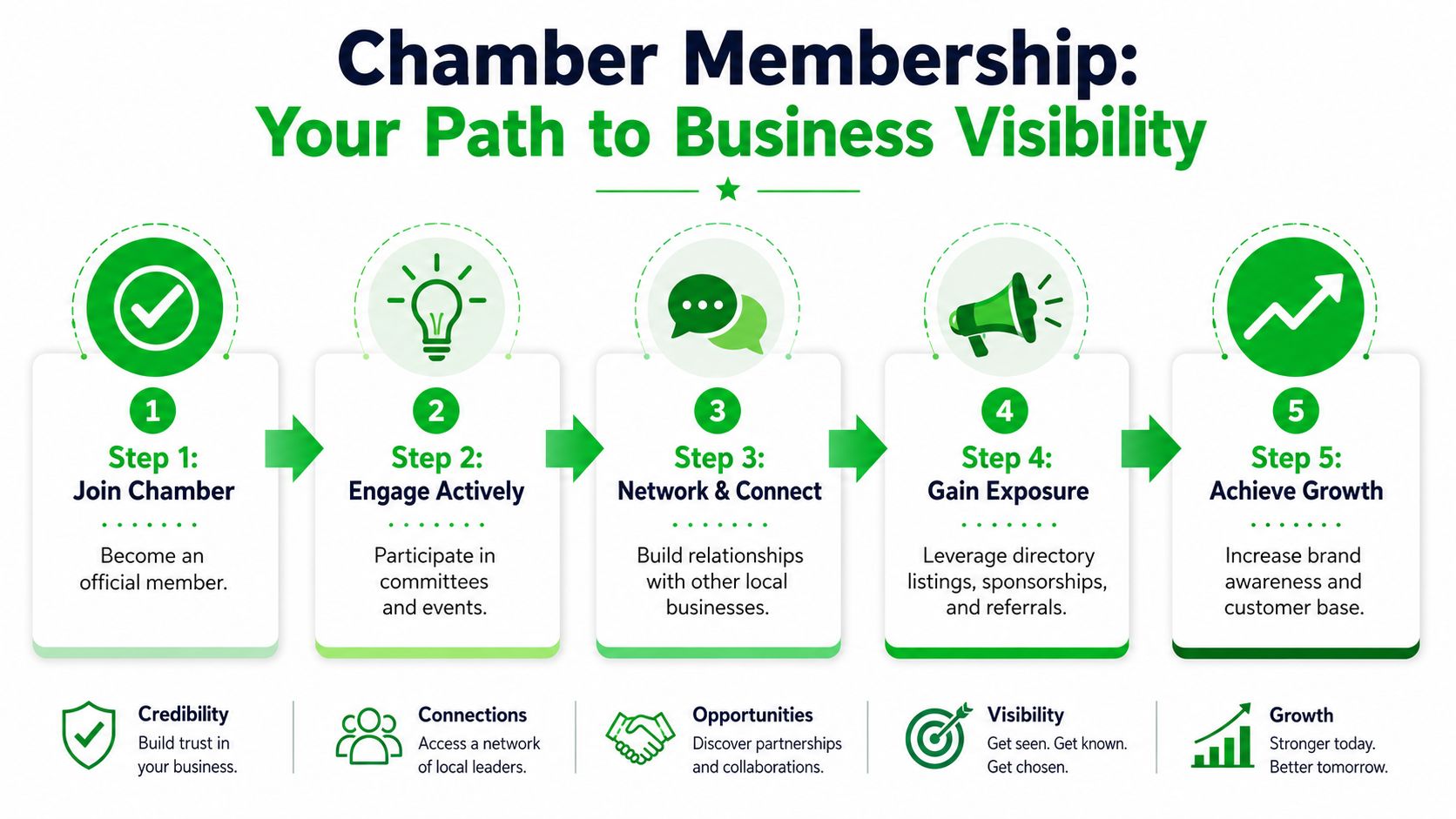
One of those assets is local search visibility. Chamber websites often act as trusted local directories, which means a member listing can function as both a citation and a backlink. That's useful because local search isn't built only on your own website. It's also shaped by how consistently your business appears across trusted local sources.
Why directory listings matter more than many owners think
Independent chamber marketing guidance from Glue Up's chamber membership article reports that chamber directory listings and backlinks can increase consumer visits to member websites by nearly 80%. Even if your exact result is different, the mechanism is easy to understand. A credible chamber profile can strengthen local entity signals, send referral traffic, and support trust with both search engines and people.
That matters a lot for service-area businesses. If you clean windows, repair roofs, install HVAC systems, or maintain commercial properties, you're competing in a crowded local intent market. Searchers often compare several businesses in minutes. Any trustworthy local signal helps.
What works and what usually doesn't
The useful part of chamber visibility is specific. The weak part is passive.
| Approach | What happens |
|---|---|
| Complete your chamber profile fully | You create a real citation source and a page people can find |
| Match your business details across web listings | You reduce confusion and strengthen local consistency |
| Attend events selectively | You meet referral partners who can send relevant work |
| Join and disappear | You pay dues and get little beyond the logo |
| Treat every event as mandatory | You burn time without tying activity to leads |
A local service brand gets the most value when chamber membership reinforces an identity that already makes sense. Longevity helps. Local roots help. Clear service pages help. For a company such as Pine Country Window Cleaning's advertising and outreach work, membership fits best when it supports a real-world brand built on local presence, not when it's used as a substitute for one.
Flagstaff native David Kaminski started the company in 1999. That kind of long-term local presence gives chamber membership context. It says the business isn't trying to borrow trust for a season. It's adding one more verifiable signal to an already established footprint.
For owners who want a broader view of what supports local visibility beyond chamber listings, Cherubini Company's local business tips are a useful companion resource because they connect local promotion to practical marketing habits instead of vague branding talk.
The chamber directory is not the whole strategy. It's one strong brick in a wall made of reputation, consistency, and visible local participation.
A Business Owners Guide to Joining and Getting Real ROI
Joining a chamber isn't complicated. Getting value from it takes more intention.
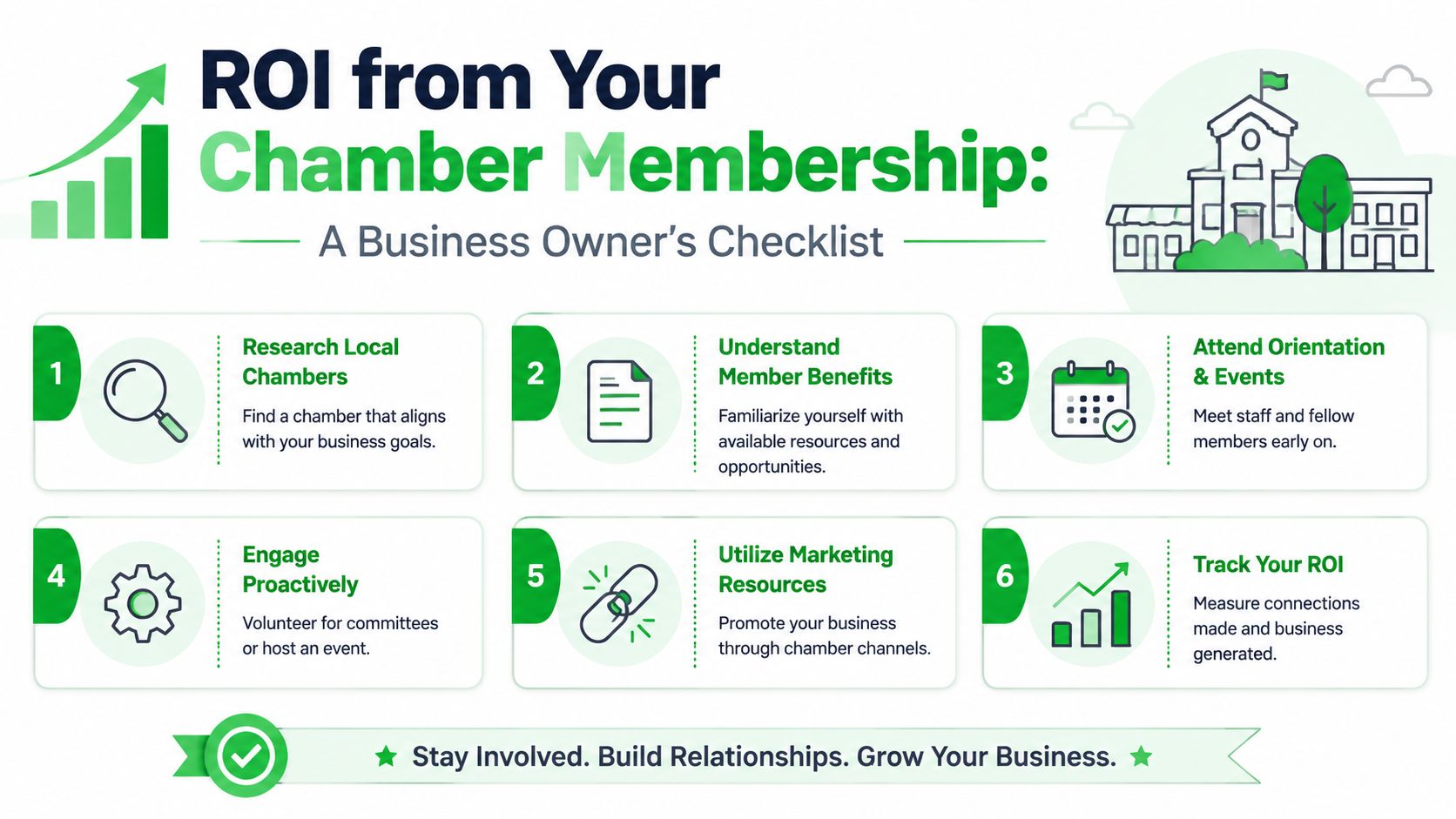
The basic steps are straightforward. Find the chamber that serves your market, review the benefits, join, complete your listing, and show up early enough to become familiar to staff and members. After that, the core question starts. What business outcome are you trying to produce?
Start with a narrow use case
Most membership waste comes from overestimating what "networking" means and underusing the tools that are already available. That's the under-usage problem. Many members don't use much of what they pay for.
A more useful approach is to choose one primary goal first:
- For home service businesses: Prioritize your directory listing, referral relationships, and local credibility.
- For commercial service providers: Focus on introductions, committee visibility, and event attendance where property managers or business operators are likely to be present.
- For seasonal businesses: Use chamber channels to stay visible when customer attention shifts.
The chamber itself is also changing. The Association of Chamber of Commerce Executives page on non-dues revenue points out that dues have been a flattening or declining revenue source for years, and many chambers are shifting toward non-dues revenue such as sponsorships, fee-for-service activities, events, and foundation models. That matters because members increasingly want proof that participation leads to measurable outcomes rather than general exposure.
A short video can help frame that mindset before you commit time and budget:
Track results like an owner, not an attendee
If you want real ROI, track actions that connect to business development.
Try a simple scorecard:
Referral conversations
Count the people who can send or influence work, not just the business cards you collected.Directory performance
Watch whether chamber traffic shows up in your website analytics and whether visitors from that source contact you.Event quality
Judge events by attendee relevance. A smaller event with the right people is worth more than a crowded one with no fit.Follow-up output
Measure the proposals, calls, inspections, or estimates that came from chamber-related activity.Search visibility support
Review whether your chamber listing is complete, current, and aligned with your site and other local listings.
For service businesses, one smart move is to connect chamber activity to a specific operating line. If you're doing recurring exterior work for offices, retail centers, or multifamily sites, tie chamber relationships to commercial property maintenance services instead of treating membership as a vague marketing expense.
Owners also need to keep one eye on the broader digital environment. That's where a resource like SleekPost's 2026 marketing outlook can help. It works well as a planning reference because it reminds you that local visibility now sits at the intersection of relationships, search, content, and reputation.
Join the chamber for access. Stay active for outcomes. Measure it so you know the difference.
More Than Just a Sticker on the Door
A chamber badge on a website or decal on a truck only matters when something real sits behind it. For customers, that "something real" is easier vetting, stronger trust, and a better chance of hiring a business that's invested in its name locally. For business owners, it's visibility, accountability, and a structured way to stay connected to the market they serve.
That's why a Chamber of Commerce member isn't just a label. It's a public signal that the business has chosen to be part of a community-facing network where reputation can be checked, reinforced, and tested over time.
In local service work, that still comes back to the basics. Show up professionally. Care for the customer's home. Use proper tools. Do complete work. Follow through. Chamber membership doesn't replace those standards. It supports them when the business is serious about living up to them.
For a long-standing local company, that connection to the community isn't extra. It's part of the identity.
If you're looking for a local company that handles window cleaning with professional tools, careful screen removal and reinstallation, and respect for the property, Pine Country Window Cleaning is one option to consider. You can review their services, request an estimate, and see whether their approach fits your home or commercial property.