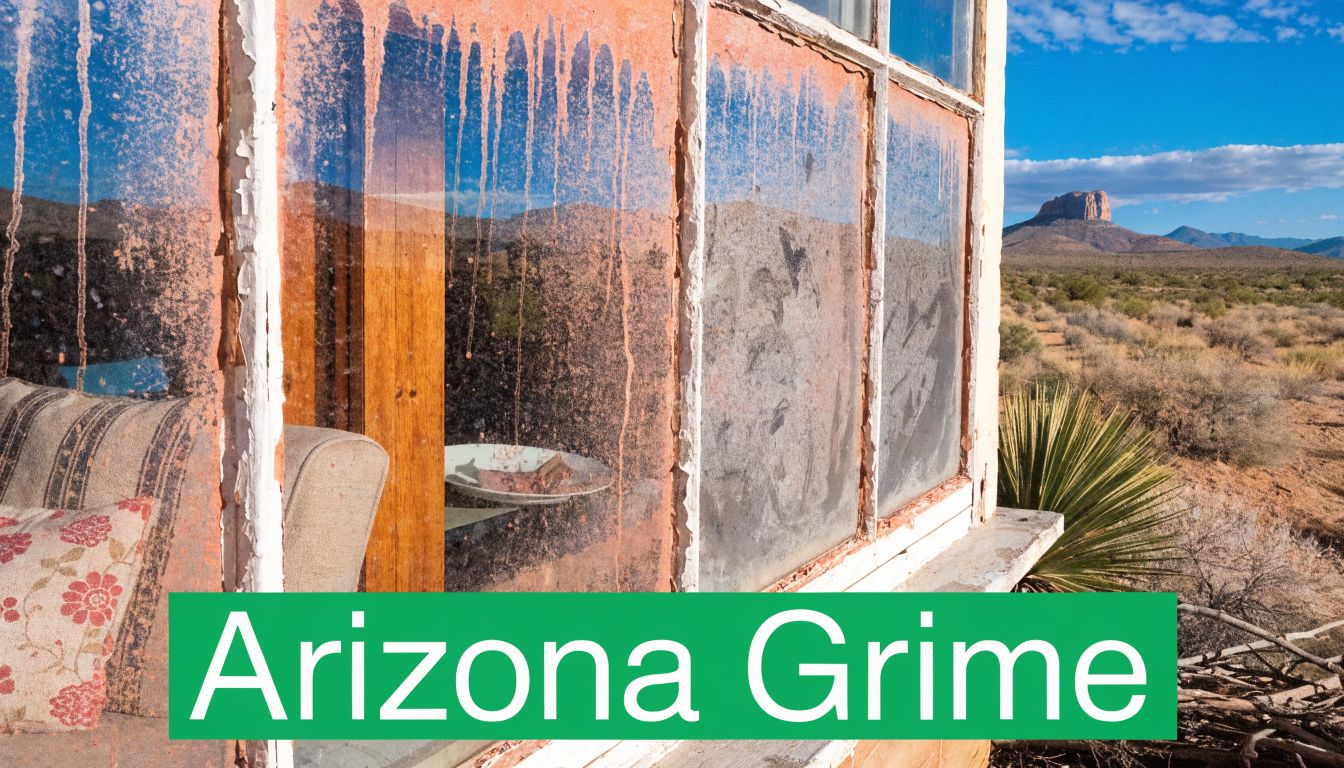
You can usually tell when a Northern Arizona property needs window cleaning before you even step onto the porch. Red dust settles after dry stretches. Pollen leaves a film in spring. Snowmelt and runoff leave spotting that looks worse when the afternoon sun hits the glass. In cabin communities and high-country neighborhoods, that buildup doesn’t just make windows look dirty. It makes the whole property feel neglected.
That’s why ad window cleaning in this market can’t follow a generic national playbook. The businesses that win here don’t just promise “clean windows.” They show they understand local conditions, protect the home, clean screens, handle height safely, and show up when seasonal demand hits.
Why Generic Window Cleaning Ads Fail in Northern Arizona
A lot of window cleaning ads sound interchangeable. They talk about low prices, fast service, and “sparkling results,” but they don’t say anything about what actually matters in Flagstaff, Munds Park, Pine Canyon, or Forest Highlands.
Northern Arizona has its own rhythm. A cabin owner coming up after a stretch of weather isn’t shopping the same way as a hotel manager, a storefront owner, or a family getting the house ready for guests. If your ad reads like it was written for Phoenix, Dallas, or anywhere else, local customers can feel it immediately.
The market is real, but local fit decides who gets the call
There’s clear room for strong operators. The U.S. window cleaning industry reached $2.9 billion in 2024 and is projected to reach $3.2 billion by 2029 according to window cleaning industry statistics from Jobber. But that doesn’t mean every ad works.
What usually fails?
- Cheap-message ads that train people to compare price before they compare professionalism.
- DIY-style language that sounds like wiping glass with household products instead of using squeegees, ladders, poles, and pure-water brushes.
- Generic service lists that ignore details homeowners care about, like removing screens, cleaning screens, and reinstalling them properly.
- Broad keyword campaigns that pull in weak traffic because the advertiser never filtered out bad searches.
One of the best outside resources on that last point is this breakdown of Google Ads expertise from Come Together Media. If you run paid search without a negative keyword strategy, you’ll waste money on clicks from people who were never looking for a professional window cleaning company in the first place.
Practical rule: A local service ad should answer one silent question fast: “Do these people understand my kind of property?”
Local trust beats loud marketing
Flagstaff clients usually aren’t looking for gimmicks. They want reliability, respect for the property, and a crew that knows how to work around mountain weather, screens, ladders, access issues, and second-home schedules.
That’s where long-term local experience matters. A company that has worked in this area since 1999 has already seen the repeat patterns. Post-monsoon dust. Spring pollen. Summer rental turns. Pre-holiday second-home prep. Commercial scheduling around campus traffic and hospitality needs. Those details should shape the ad itself, not just the service behind it.
A smart campaign also connects window cleaning to broader property care. Homeowners who think seasonally often respond well when the message fits the bigger maintenance calendar. This is why a resource like a Flagstaff seasonal home maintenance checklist fits naturally into ad strategy. It speaks the customer’s language because it starts with the way they already manage the home.
Professional work has to sound professional
People can tell when an ad was written by someone who knows the trade. Professional window cleaning language is specific. It mentions squeegee work, screen handling, safe ladder and lift access, pure-water systems for hard-to-reach exterior glass, and careful treatment of the home.
That kind of ad doesn’t oversell. It sounds credible. In Northern Arizona, that goes a long way.
Laying the Foundation with Budget and Seasonal Strategy
Most ad window cleaning campaigns fail before the first click because the owner never set a calendar or a budget that matches the way demand shows up. In Northern Arizona, timing matters almost as much as message.
You don’t need a huge budget to advertise well. You need a budget tied to the kinds of jobs you want, the season you’re entering, and the neighborhoods or property types most likely to book right now.
Build the year around real buying moments
The best schedule usually follows property behavior, not the calendar alone.
Spring tends to bring interest from homeowners who notice pollen film, winter residue, and neglected screens. Early summer often lines up with second-home openings and rental prep. After monsoon weather, many people notice spotting and dust all at once. Late fall can bring a final push from owners preparing for holiday visitors or checking on a second property before colder weather sets in.
Commercial timing is different. Hotels, retail storefronts, medical buildings, campuses, and dealerships often think in terms of appearance, traffic, and maintenance windows. A facility manager may not care about the same seasonal language a homeowner responds to, but they do care about consistency, access planning, and safe execution.
A simple planning model works well:
Choose your seasonal push
Focus on one priority at a time, such as post-monsoon cleanup, spring refresh, pre-listing cleaning, or commercial maintenance.Match the audience
Cabin owners, year-round homeowners, short-term rental managers, and facility managers don’t respond to the same offer or wording.Set the landing page first
Before spending on ads, make sure the page matches the season and service. If you’re promoting residential work, a page like residential window cleaning cost details helps frame expectations and filters weaker leads.
Start from job value, not ad platform hype
A realistic ad budget starts with what a booked job is worth. Verified industry benchmarks show professionals typically price residential work at $4 to $8 per window pane or $40 to $75 per hour according to window cleaning pricing benchmarks from Financial Model Lab. That’s useful because it keeps you from treating every lead as equal.
If your average booked job is healthy, you can afford to advertise with more patience and higher standards. If you’re chasing tiny one-off jobs with weak margins, every click feels expensive and the campaign gets unstable fast.
Here’s a practical way to think about spend:
| Planning question | What to decide |
|---|---|
| Which season are you entering | Push the service with the strongest local trigger |
| What jobs do you want more of | Residential, route work, commercial, post-construction |
| What message fits that audience | Protection, reliability, appearance, safety, scheduling |
| What page handles the lead | A page that matches the ad and sets expectations |
| How much can you spend calmly | A number tied to job value, not guesswork |
Don’t set a monthly ad budget because someone online said that’s what contractors should spend. Set it because your pricing, close rate, and schedule can support it.
If you want a broader framework for paid search budgeting, this guide to Google Ads costs for contractors is worth reviewing. Use it as a reference point, then adjust for your own service mix and local seasonality.
Don’t stay “always on” without a reason
Some businesses should advertise year-round. Others do better with focused pushes and lighter maintenance between them. The mistake is running the same ads at the same spend level every month, then wondering why results feel uneven.
In a place like Northern Arizona, demand shifts. Your ad calendar should shift with it.
Choosing Your Local Advertising Channels
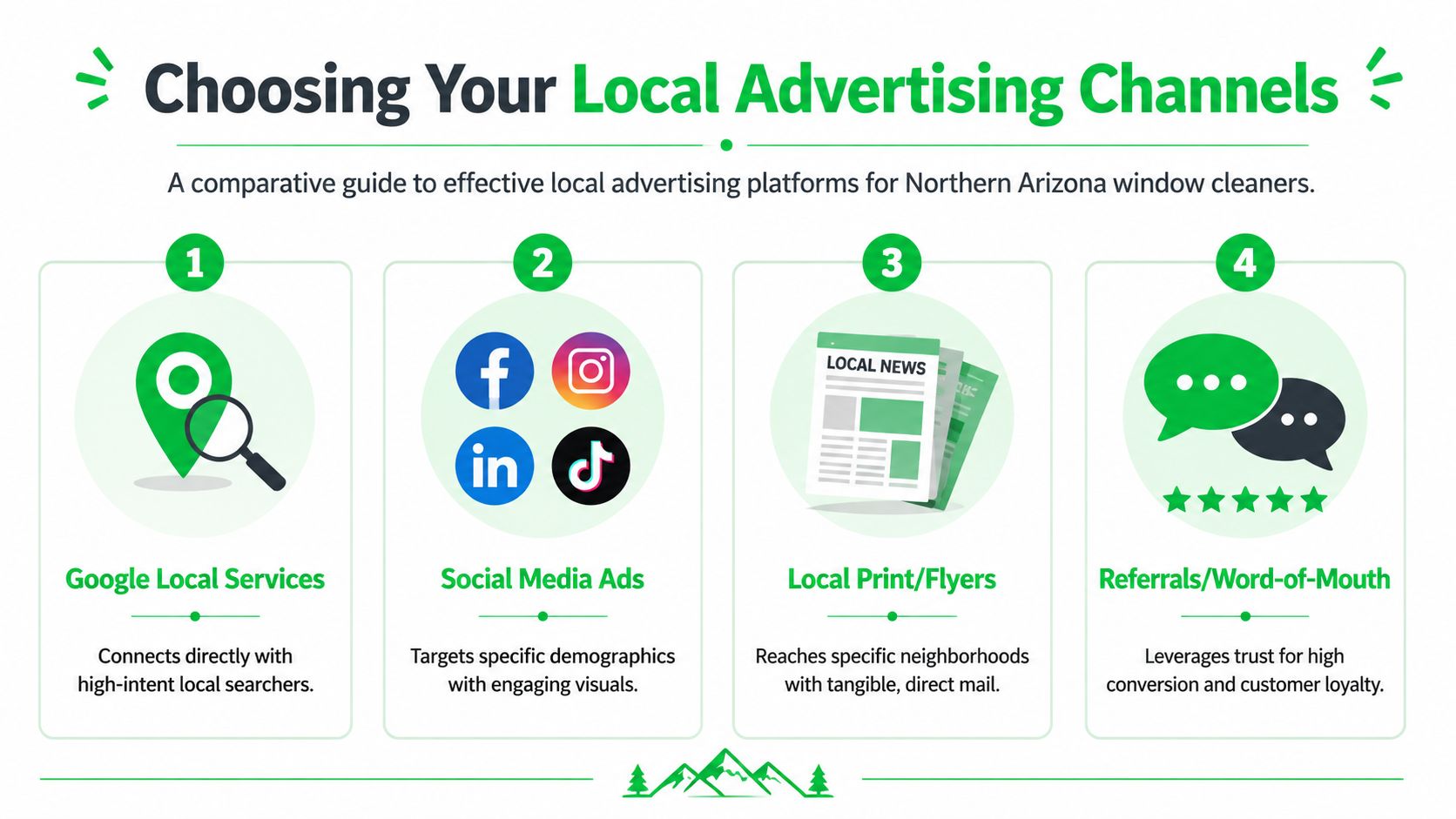
Not every channel pulls the same kind of lead. That matters in window cleaning because the wrong lead wastes office time, estimator time, and crew capacity. A homeowner searching for service today behaves differently than a second-home owner scrolling social media, and both behave differently than a facility manager looking for a dependable vendor.
The best ad window cleaning strategy usually combines intent-based channels with trust-based channels.
Google search and local service visibility
If someone searches for window cleaning in Flagstaff or a nearby community, that’s usually a high-intent lead. They already know they need the service. Your job is to show up with the right wording, the right geography, and a landing page that looks credible.
Hyper-local targeting is crucial. In seasonal markets like Northern Arizona, specific searches such as “cabin window cleaning Munds Park” can have low competition and high conversion potential, with a cited opportunity for 20 to 50 percent higher ROI when campaigns are adapted for local triggers, according to Sona’s guide on local Google Ads strategy for window cleaning.
That doesn’t mean stuffing every town name into one ad group. It means building campaigns around real service areas and property types.
Good fits for search:
- High-intent homeowners looking now
- Second-home owners planning arrival or guest visits
- Commercial buyers who need a quote from a serious provider
- Realtors and builders needing post-construction or pre-listing cleanup
Weak fits for search:
- Broad, vague keywords with weak local intent
- Ad copy that says “cheap” before it says “professional”
- Landing pages that don’t show property types, access capability, or service process
Social ads and visual trust
Facebook and Instagram are rarely the strongest channels for urgent intent, but they can work well for reminding people what a clean property looks like and what a professional company does.
This is especially useful for:
- second-home owners,
- vacation rental owners,
- upscale neighborhoods where curb appeal matters,
- before-and-after visual storytelling,
- seasonal reminder campaigns.
The key is to avoid generic glamour shots. Show real work. Screens removed and reinstalled. Tall glass handled with extension poles or pure-water brushes. Care around landscaping, decks, furniture, and entryways. Social works better when it teaches people the difference between professional service and surface-level cleaning.
Nextdoor, local groups, and neighborhood relevance
Nextdoor can work well in communities where trust travels through neighborhood conversation. That includes places where homeowners ask for vendor recommendations before they call anyone. A straightforward post with local photos, service area clarity, and respectful language often works better than polished ad-speak.
Neighborhood-specific relevance matters here. A message for Pine Canyon should feel different from one for Munds Park cabins or year-round homes in Flagstaff proper. People want to know you understand access, drive time, property style, and the kinds of maintenance issues common in their area.
In hyperlocal channels, sounding familiar beats sounding clever.
Print, door hangers, and community placement
Print still works in the right setting. Not everywhere. Not blindly. But in targeted neighborhoods and community spaces, it can support brand recall and generate calls that digital campaigns miss.
Useful print placements can include:
- Community boards in neighborhoods with heavy owner traffic
- HOA-friendly flyers with seasonal service reminders
- Direct mail pieces timed around second-home arrival periods
- Local publications where home service readers still pay attention
Print does best when it’s simple. Strong headline. Local service area. Professional equipment. Screen cleaning included. Easy contact path.
Referrals are not passive
Word-of-mouth is still one of the strongest channels in this trade, but it shouldn’t be treated like luck. It responds to follow-up, review requests, and a service process that makes customers comfortable referring you.
A happy customer who watched your crew protect the home, clean the screens, and communicate clearly is far more likely to mention you to a neighbor.
Here’s a side-by-side view:
| Channel | Best use case | Best audience | Main caution |
|---|---|---|---|
| Google search and local visibility | Capture active demand | Homeowners, managers, realtors | Broad targeting wastes spend |
| Social media ads | Visual reminders and retargeting | Second-home owners, rentals, upscale residential | Weak for urgent intent if used alone |
| Nextdoor and local groups | Build neighborhood trust | Flagstaff-area communities, cabin areas | Must sound local, not canned |
| Print and flyers | Seasonal recall in defined areas | HOA neighborhoods, second-home pockets | Needs sharp distribution, not mass drop |
| Referrals and reviews | Reinforce trust | Every segment | Requires active follow-up |
The strongest mix usually starts with search, adds social for visibility, uses neighborhood channels selectively, and treats referrals as a system instead of an accident.
Writing Ads That Resonate with Flagstaff Clients
Most bad window cleaning ads talk about the company. Good ads talk about the customer’s property, the customer’s worries, and the result they want.
In Northern Arizona, people notice language that feels careless. If the ad sounds rushed, cheap, or vague, they assume the work will be too. If it sounds specific and respectful, they’re more likely to click.
Sell care, not just clean glass
Homeowners don’t only want streak-free windows. They want a crew that treats the property correctly. That means the ad should say what professional service includes.
Mention details that signal competence:
- Screens handled properly with removal, cleaning, and reinstallation
- Professional tools such as squeegees, ladders, poles, and pure-water brushes
- Respect for the home including careful work around landscaping, entry areas, and furnishings
- Clear communication about scheduling and access
Those points separate a real service company from a casual side-hustle ad.
A strong ad makes the customer feel their property will be cared for before anyone ever answers the phone.
What to say to a homeowner
A homeowner ad should sound calm, local, and practical. Don’t overstuff it with claims. Give them the reason to trust the click.
Example approach:
Headline
Professional window cleaning for Flagstaff homes
Body copy
Dust, pollen, and weather leave glass spotted fast in Northern Arizona. We clean windows with professional squeegees, poles, and pure-water equipment. We also remove screens, clean them, and reinstall them with every service, while treating your home with care from start to finish.
That works because it speaks directly to the local condition, the professional method, and the level of care.
What to say to a commercial manager
Commercial buyers think differently. They care about reliability, access capability, appearance, and reduced hassle.
A stronger commercial ad sounds more like this:
Headline
Reliable window cleaning for hotels, storefronts, campuses, and commercial properties
Body copy
Keep your property looking sharp with scheduled professional service. Crews should be trained for larger access challenges, equipped for high glass, and able to work around traffic, guests, and operating hours with minimal disruption.
That kind of message is more persuasive than “best prices” because it reflects how commercial buyers evaluate risk.
A short visual can help reinforce that difference in professionalism:
What to say to realtors, builders, and post-construction clients
This audience is deadline-driven. They don’t need poetry. They need confidence.
Use language built around readiness:
- For realtors talk about listing presentation and clear glass before showings or photos.
- For builders mention post-construction cleanup, debris awareness, and professional finishing work.
- For property managers focus on dependable scheduling and repeat service standards.
Copy mistakes that quietly kill response
Some ads fail because they sound like every other ad. Others fail because they say too much. A few common problems show up over and over:
Leading with discounts
Price-sensitive leads click fast and disappear just as fast.Using generic claims
“We do residential and commercial” isn’t a message. It’s filler.Leaving out the process
If you clean screens with every service, say it. If you use pure-water brushes for high exterior glass, say it.Ignoring the property type
Cabin copy should sound different from storefront copy. A high-end residential ad should sound different from a post-construction ad.
The best-performing ads usually feel less like marketing and more like a capable local business speaking plainly.
Building Trust Before the First Click
Most owners think trust starts after a customer calls. In window cleaning, it starts much earlier. It starts in the ad, in the business profile, and on the landing page.
People are inviting a crew onto their property. Sometimes that means ladders around landscaping, screens removed from custom windows, or lift work near guests, tenants, or employees. If your marketing doesn’t reduce that anxiety, the click is harder to win.
Safety isn’t a side note
This trade has real risk. Safety is a major differentiator in window cleaning, especially where work at height is involved, as noted in industry safety context from Gitnux. Customers may not know the technical details, but they understand enough to ask one simple question: are these people qualified to do this safely?
That’s why serious advertisers should lead with real trust markers:
- OSHA safety training
- Proof of insurance
- Experience with high or difficult access
- Professional equipment for the job type
- Clear company identity and local roots
If you handle commercial glass, hotels, campuses, dealerships, or atrium work, those signals matter even more.
Trust signals that belong on every ad destination
A good landing page should do more than collect a form fill. It should lower friction.
Here’s what customers should be able to confirm quickly:
| Trust element | Why it matters |
|---|---|
| Locally owned company history | Shows stability and accountability |
| Background-checked technicians | Reduces homeowner concern |
| Safety training | Reassures commercial and residential clients |
| Specialized access equipment | Proves capability for complex jobs |
| Clear estimate path | Makes next step feel easy |
For a local service company, longevity counts. Being locally owned and operating since 1999 sends a strong signal because it tells the customer this business didn’t appear yesterday and disappear after a season.
A page like professional window cleaning in Flagstaff works best when it combines those proof points with straightforward service language and an easy request path.
Customers often pay more willingly when they believe they’re hiring a careful professional instead of taking a gamble on the lowest bid.
Professionalism should be visible
Trust markers shouldn’t be buried in fine print. Put them where people can see them in the ad ecosystem itself:
- in ad extensions,
- in business profile photos,
- in service-page copy,
- in review-request follow-up,
- in proposal language.
That’s especially important in Northern Arizona, where local reputation travels fast. A clean brand, a credible profile, and plainspoken proof of professionalism do more for response than flashy copy ever will.
Tracking What Matters From Clicks to Happy Customers
A lot of owners stop at clicks and impressions because that’s what the ad platform shows first. That’s not enough. In ad window cleaning, the numbers that matter are the ones tied to booked work and customer quality.
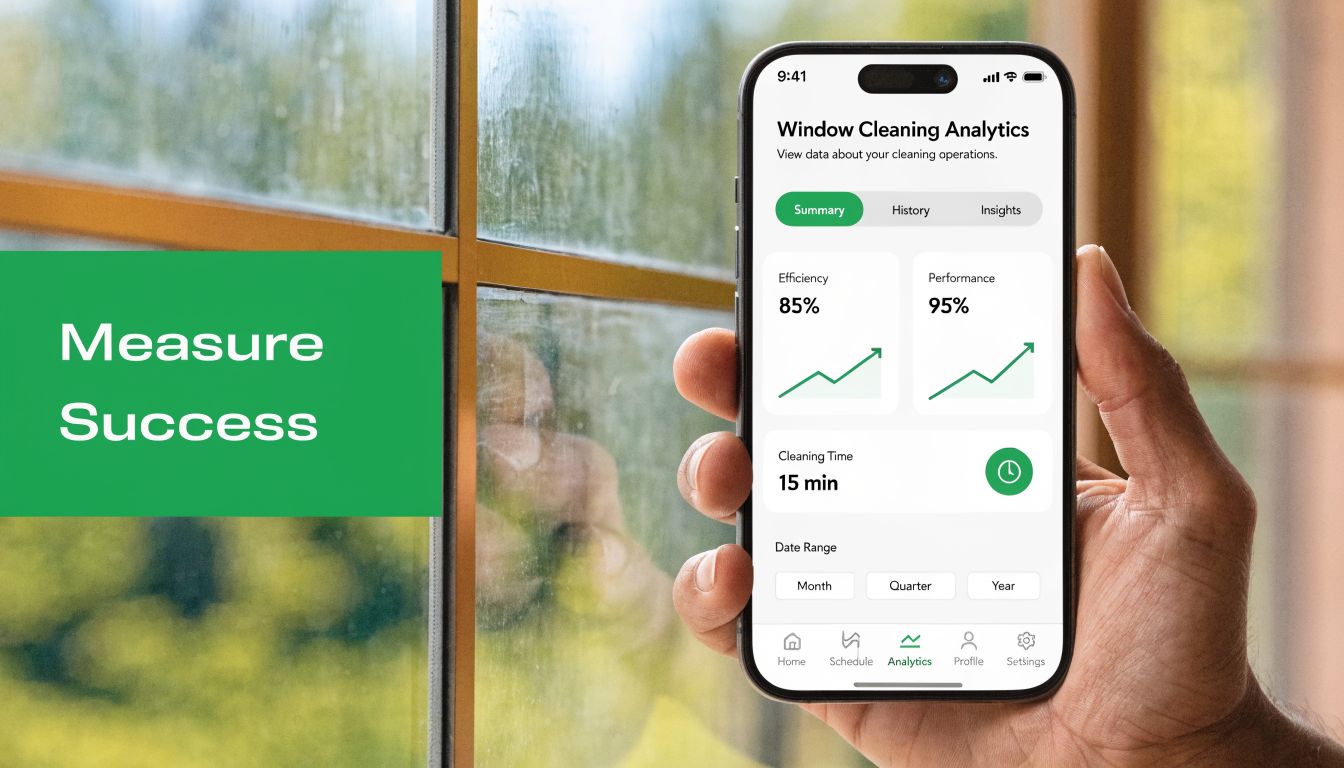
Track the path, not just the click
Start with a simple system:
- Use call tracking or clear call-source notes so you know whether the lead came from Google, social, print, or referral.
- Track form submissions by page so you can tell which service pages produce qualified inquiries.
- Record the outcome of each lead. Not just “estimate sent,” but whether it closed and what type of job it became.
Verified operating benchmarks show that top-performing businesses track average quote value and quote-to-close ratio, aiming for 35%+, and one firm saw a 27% increase in qualified leads after redirecting $1,500 per month from Facebook ads to an optimized Google Business Profile, according to Contentworks data on window cleaning growth habits.
That kind of improvement doesn’t come from guessing. It comes from tracking, then reallocating.
Keep the scorecard simple
You don’t need a fancy dashboard at first. A basic spreadsheet can work if it captures:
| Metric | Why it matters |
|---|---|
| Lead source | Shows which channel earns attention |
| Quote value | Helps measure lead quality |
| Quote-to-close rate | Shows sales effectiveness |
| Job type | Reveals what each channel attracts |
| Review outcome | Connects service quality back to future demand |
If your team needs help improving close rates after the lead comes in, these BookedIn.ai insights on closing deals are worth reviewing. Good advertising gets the phone to ring. Good follow-up turns that into revenue.
The best ad channel isn’t the one with the cheapest click. It’s the one that brings in the right jobs, at the right margins, without creating chaos in the schedule.
If you want help from a team that knows Northern Arizona, Pine Country Window Cleaning has served Flagstaff and surrounding communities since 1999. We handle residential and commercial window cleaning with professional equipment, OSHA-trained technicians, and careful service that respects your home or property. If you need a free estimate for a house, cabin, storefront, hotel, campus building, or post-construction project, reach out and we’ll make the process straightforward.