
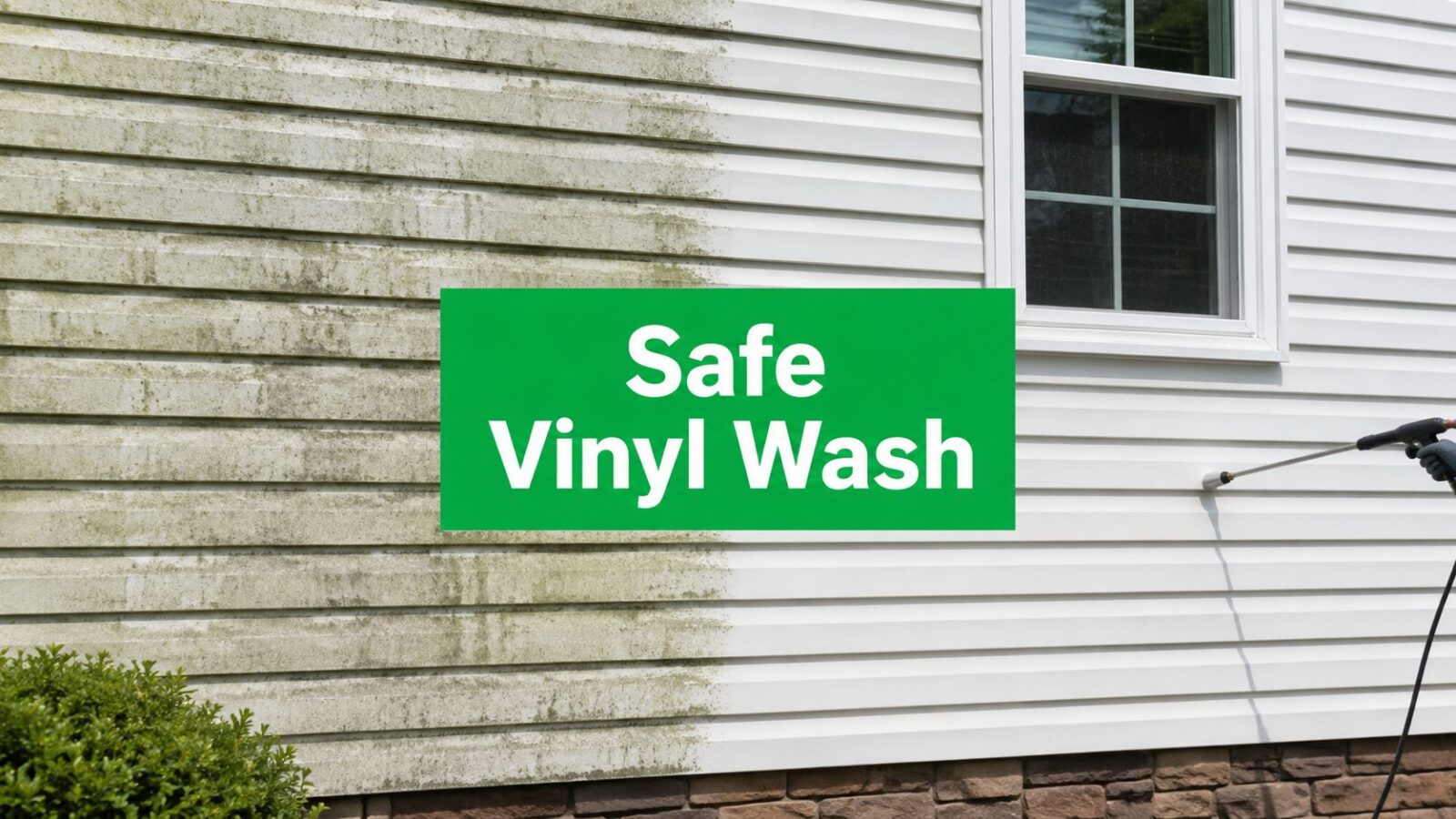
You're looking at the lower wall of a Flagstaff home after monsoon weather, and the siding has lost its clean color under a film of green algae, pine pollen, and dust. The rental pressure washer in the truck may seem like the obvious answer. It isn't always.
Vinyl siding pressure washing is less about finding the biggest machine and more about protecting the building envelope. Water can enter behind panels, brittle siding can crack, and a factory finish can lose its appearance when the operator relies on force instead of detergent, dwell time, and controlled rinsing. In pine country, wildfire ash, ultraviolet exposure, shaded walls, and seasonal moisture all change how the job should be approached.
What Most Homeowners Get Wrong About Vinyl Siding Pressure Washing
A common Flagstaff Saturday starts with good intentions. The homeowner sees green growth beneath a window, yellow pine pollen along the lap edges, and gray dust on the shaded side of the house. They rent the strongest gas-powered washer available, attach a narrow tip, and begin at the bottom because that's where the siding looks worst.
The first passes may look effective. Dirt moves, the vinyl brightens, and the machine seems to be doing exactly what it should. Then the panel flexes, water gets behind a seam, or a brittle section shows a new crack. The surface may be cleaner while the wall assembly is less protected.
Residential pressure washers commonly operate between 1,500 and 4,000 PSI, while industry guidance places a safer ceiling for vinyl cleaning around 1,000 to 1,200 PSI, with some recommendations calling for less than 500 PSI at the surface. Professional soft washing may use approximately 100 to 300 PSI, far below many consumer machines, because chemistry and dwell time remove biological growth without forcing water behind the siding. This vinyl siding pressure-washing guide explains why that gap matters.
The dirt may not be a pressure problem
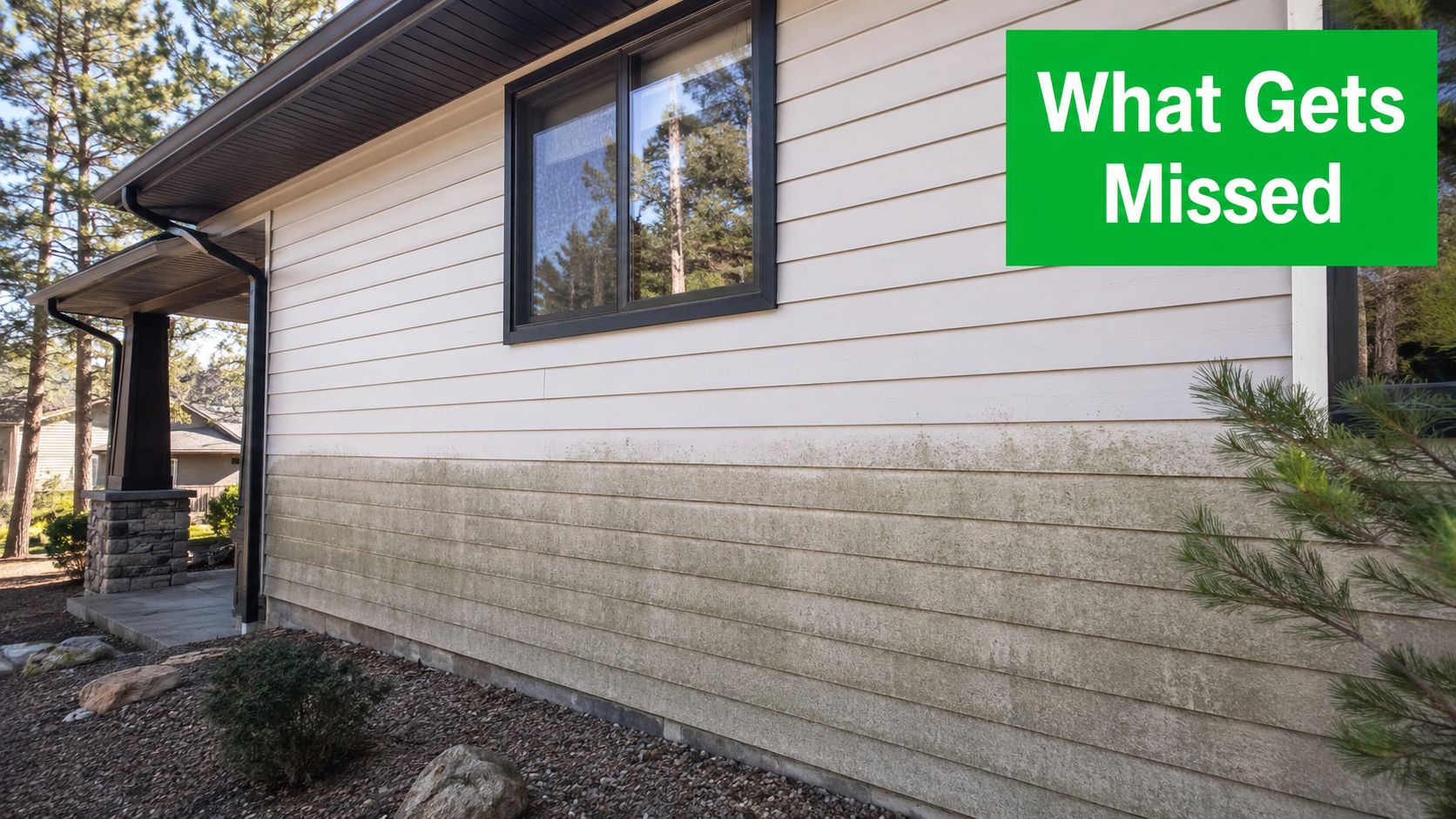
Pine pollen creates a sticky film. Monsoon humidity supports algae and mildew in shaded areas. Wildfire ash can settle into textured surfaces and window channels. These contaminants need the right treatment, not a harder stream of water.
Practical rule: If the stain is biological, start with chemistry. If the siding is damaged, start with inspection.
Manufacturers sometimes caution against power washing altogether because moisture intrusion, damage, and discoloration can create warranty concerns. A hose-based wash or soft-wash process may be safer, especially on older, cracked, loose, or poorly sealed panels. Before anyone cleans above a single story, review the property's ladder and access hazards with the same care used for the siding itself, including the guidance in Flagstaff ladder safety requirements.
Caring for a home means checking gutters, windows, vents, seams, and landscaping before washing. The equipment should serve the house, not dictate the method.
Choosing the Right PSI Nozzle and Distance
More pressure doesn't equal a better result. On vinyl, excessive force can drive water behind overlapping panels, crack weathered material, or strip the finish while leaving oxidation and embedded stains visible.
Consumer Reports says vinyl siding can typically withstand pressure washing, and commonly cited settings place the machine around 1,200 to 1,500 PSI. Consumer Reports' pressure-washer surface guide supports using that lower range rather than treating vinyl like concrete.
For many sound, modern panels, a 25-degree or 40-degree nozzle provides a broad spray pattern. Keep the wand approximately 12 to 18 inches from the wall when applying or rinsing, and begin farther away if the siding is unfamiliar or weathered. This vinyl siding operator guide recommends a 25-degree nozzle, 12 to 18 inches of standoff, low-pressure detergent application, and a controlled rinse.
Quick Reference
Quick Reference: Safe Settings for Vinyl Siding
| Siding Condition | PSI Range | Nozzle | Standoff |
|---|---|---|---|
| Sound, maintained panels | 1,200 to 1,500 PSI | 25° or 40° | 12 to 18 inches |
| Dirt with light organic growth | 100 to 200 PSI for detergent application | 25° | 12 to 18 inches |
| Rinse after detergent dwell | 200 to 500 PSI | Wide fan pattern | Keep the wand moving |
| Brittle, cracked, or loose panels | Use the lowest effective pressure, or stop | Wide fan only if appropriate | Increase distance and test first |
The operator guide recommends 1 to 2 percent on-surface sodium hypochlorite with surfactant, 100 to 200 PSI for application, and 200 to 500 PSI for rinsing. Those numbers are starting points, not permission to spray a damaged wall.
Never use a 0-degree tip or rotary nozzle on vinyl. Both concentrate force in a way that can scar the surface. If a J-channel is loose, a panel moves under a light rinse, or you can see hairline cracks, lower the pressure further or stop. The step-by-step vinyl siding guidance from wikiHow also warns against narrow tips, upward spraying, and excessive pressure.
The Detergent Mix That Actually Beats Mildew
Mildew and algae respond better to a controlled detergent application than to a high-pressure attack. The technical workflow is straightforward: apply the cleaning solution at low pressure, allow it to work, then rinse with a wider fan pattern.
A commonly cited professional mix uses 1 to 2 percent on-surface sodium hypochlorite plus surfactant. The solution should reach the wall at approximately 100 to 200 PSI, using a 25-degree nozzle. The surfactant helps the mix cling to vertical vinyl instead of breaking into droplets and running immediately into the soil.
Why surfactant matters in Flagstaff
Flagstaff's dry air can work against a plain water-based cleaner. Pine pollen and ash can create a film that resists a quick rinse, while shaded siding may hold green growth after humid monsoon weather. A surfactant gives the solution more contact with the surface, but it doesn't eliminate the need to monitor drying.
Never mix cleaning chemicals casually. Follow the product label, protect plants with clean water before and after the wash, keep pets away from the work area, and manage runoff near forested lots, gardens, and storm drains. Sodium hypochlorite can damage vegetation and discolor fabrics or nearby materials if overspray isn't controlled.
Chemistry works only while it stays wet. In direct sun or wind, watch the wall continuously and rinse before the solution dries.
Use a siding-safe detergent, an appropriately labeled sodium hypochlorite product, and a compatible surfactant. A pump sprayer can work for small areas if the label provides suitable dilution instructions. For larger walls, a downstream injector or dedicated soft-wash setup can apply the mix evenly at low pressure.
Skip abrasive powders, stiff aggressive brushes, and mystery “maximum strength” products. They may roughen the surface or leave residue without addressing the growth. If you want a broader look at lower-impact exterior methods, Pine Country's eco-friendly pressure-washing guidance provides useful context for protecting landscaping and surrounding surfaces.
The Safe Wash Sequence From Prep to Final Rinse
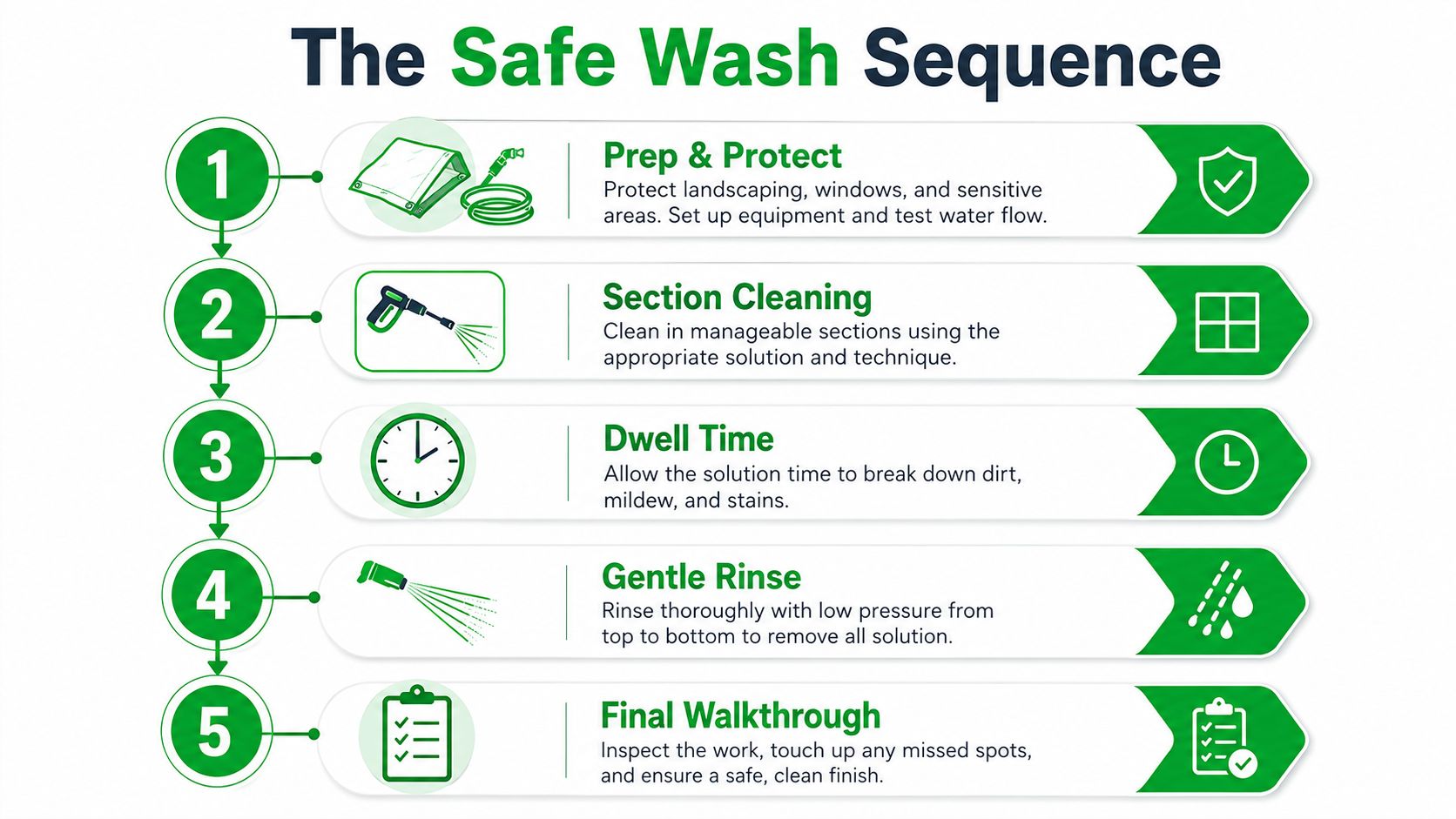
A careful wash begins before the machine starts. Walk the property, identify cracks and loose panels, check window screens and seals, and look for gutters or downspouts that may be creating recurring streaks. Close windows, cover vulnerable outlets, move furniture, and place tarps where runoff could affect delicate landscaping.
Pre-wet plants and soil with clean water. That gives leaves and groundcover a buffer before detergent reaches them. Work in 2 to 3 foot sections, so each area receives the same application, dwell, and rinse treatment instead of drying unpredictably.
Five controlled steps
Prep and protect. Secure screens, cover sensitive fixtures, and keep windows closed. A clean starting area makes it easier to see whether the solution is lifting the contamination.
Apply detergent. Use low pressure and a broad spray. Start at the bottom when applying so you can reduce uneven streaking, but keep the spray controlled and avoid forcing liquid into seams.
Allow dwell time. Let the solution sit for approximately 5 to 10 minutes, without drying. Reapply lightly if a section begins to dry.
Rinse gently. Rinse from top to bottom with overlapping passes and a wide fan pattern. Hold the wand so water travels downward across the laps. Spraying upward into seams is one of the quickest ways to send water behind the siding.
Inspect. Look from different angles for missed algae, streaks, oxidation, or runoff marks. Spot-clean rather than increasing pressure across the entire wall.
For a related example of controlled exterior washing technique, the FenceScape pressure washing guide is a useful resource because it emphasizes surface-aware application rather than treating every material like concrete.
Here's a visual demonstration of the general process:
Stop if panels warp, move, or reveal moisture behind the wall. Also stop when a finger wipe produces chalky oxidation. Pine Country's house-washing service information reflects the larger principle: the goal is a clean exterior without transferring water or chemical problems to another part of the home.
Matching the Method to the Stain on Your Siding
A pressure washer can remove loose dirt while failing completely on a stain that needs a different treatment. That's why a stubborn mark often tells you to change the chemistry, not raise the PSI.
Green algae and black mildew
Green growth and dark mildew are organic contaminants. Use a siding-compatible soft-wash solution, apply it evenly, allow dwell time, and rinse gently. If a small area remains, repeat the treatment or use careful hand cleaning rather than concentrating a narrow stream on the spot.
Gray oxidation and chalking
Oxidized vinyl often leaves a powdery residue on a finger. Higher pressure won't restore the original color. It can roughen already weathered material and make the finish look less uniform. Test a hidden area with a mild detergent and a soft cleaning method. If the color changes unevenly, stop and consider restoration or replacement advice.
Tree tannins and pollen film
Pines and oaks can leave brownish tannin marks and sticky pollen residue. A siding-safe targeted cleaner may work better than a general mildew treatment. Test first, protect nearby surfaces, and rinse thoroughly. Don't assume that a darker mark is mildew just because it appears on a shaded wall.
Rust from irrigation
Orange stains near sprinkler paths are a separate problem. Pressure alone generally won't remove rust, and a stronger stream may spread water without changing the mark. An appropriately labeled oxalic-acid product can be used for rust treatment when the label permits it, with careful protection for plants, glass, metals, and finished surfaces.
Decision rule: Identify the stain, pre-treat when appropriate, then rinse. Increase pressure only when the surface and contamination justify it.
This stain-to-method approach also helps homeowners decide whether discoloration indicates a cleaning issue or aging material. For broader siding condition and replacement considerations, the 2026 vinyl siding guide from HIBCO ROOF LLC offers useful background. A clean wall isn't necessarily a restored wall, especially when oxidation, cracking, or loose installation is involved.
When It Pays to Hire a Flagstaff Pro Instead
DIY washing makes sense when the siding is accessible, sound, and lightly soiled. The calculation changes on uneven lots, tall elevations, cabins surrounded by trees, and homes where a ladder must be repositioned repeatedly.
Height is one reason. Cornell's window-washing program says exterior windows higher than 35 feet above ground shouldn't be cleaned by the prohibited ladder-based method, and a ladder over 18 feet requires someone at the foot holding it with both hands during use. Toronto's standard calls for 3-point contact on portable ladders and says ladders longer than 9 meters must be secured or stabilized. Those rules concern window work, but they illustrate the access discipline required around exterior surfaces at height. Cornell's window-washing safety program and Toronto's window-cleaning standard provide the relevant safety context.
Call a crew when you find cracked or warped panels, moisture behind siding, extensive mildew, difficult rooflines, or oxidation that changes the appearance during testing. A professional can also use lifts where a homeowner would otherwise combine a ladder, a hose, and a pressure washer in an unstable position.

Pine Country Window Cleaning has served Flagstaff since 1999, with background-checked, OSHA safety-trained technicians, in-house lifts, and a 100% satisfaction guarantee. The company also treats home care as a complete service. Screens are removed, cleaned, and reinstalled with every window service, and the crew handles the home respectfully rather than treating siding, windows, landscaping, and fixtures as separate obstacles.
For property owners comparing exterior maintenance needs, the Richmond Tree Experts GA cleaning guide offers another perspective on why scope, access, and surface type affect professional cleaning decisions. The right time to hire isn't when a machine looks intimidating. It's when the risk of a missed seam, damaged panel, or unsafe reach outweighs the convenience of doing it alone.
Flagstaff Maintenance Rhythm and Final Takeaways
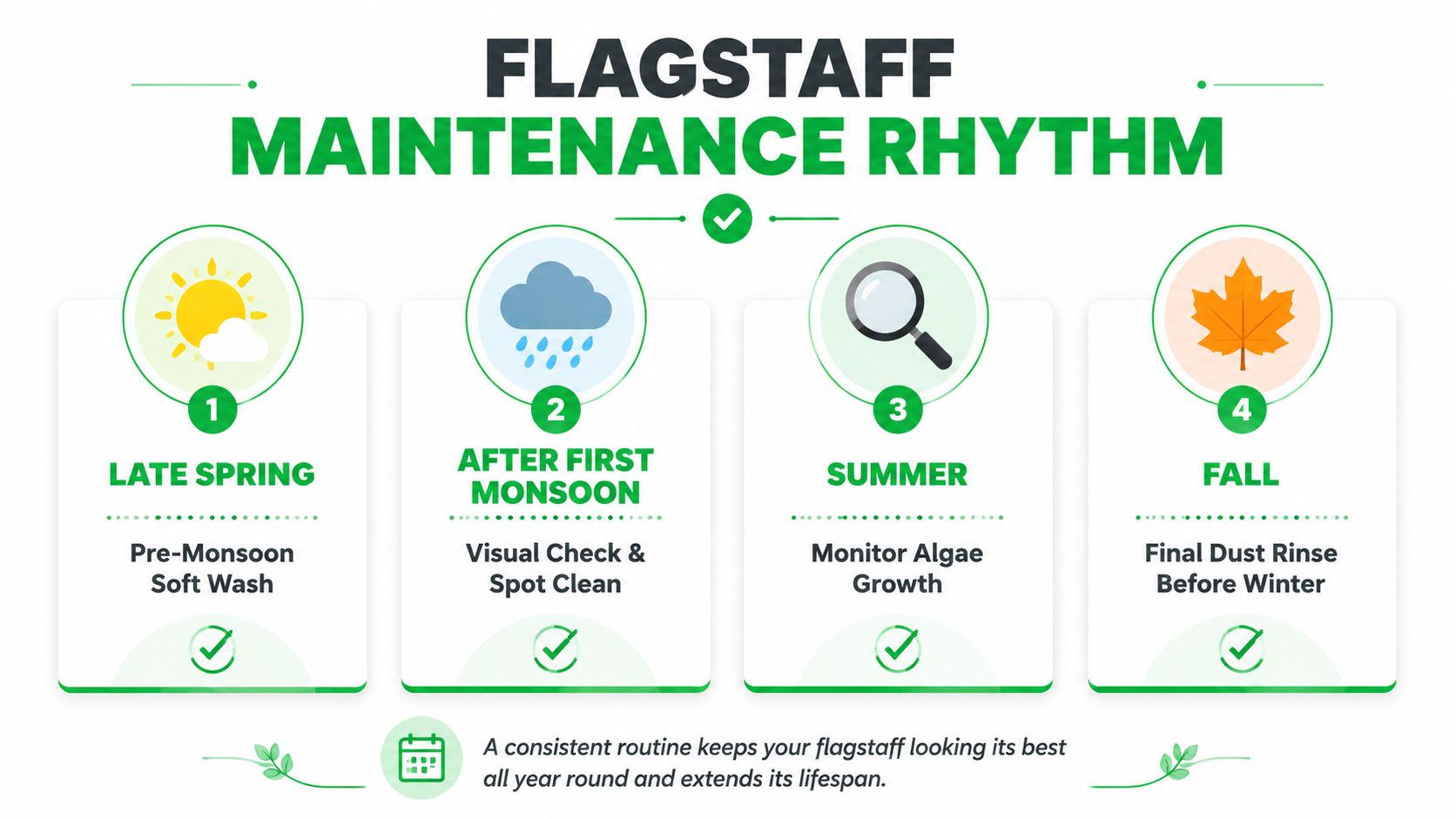
Flagstaff siding responds to a cycle, not a single cleaning day. Pine pollen arrives before monsoon moisture, shaded walls hold biological growth, intense ultraviolet exposure weathers finishes, and wildfire ash adds a fine layer that can settle into laps and textured surfaces.
Late spring is a sensible time for a pre-monsoon soft wash. Remove pollen and accumulated dust before humidity gives algae and mildew a better foothold. After the first substantial monsoon storm, walk the property and check shaded elevations, lower laps, window trim, and downspout discharge points.
Summer calls for observation rather than automatic pressure washing. If a small green area appears, treat it early and locally. Fall is a good opportunity for a final dust rinse before snow piles against the siding and keeps lower sections damp.
The building-envelope view
Safe vinyl siding pressure washing manages three things at once: water movement, biological growth, and surface aging. PSI matters, but so do siding condition, seam integrity, spray direction, detergent concentration, dwell time, runoff, and access. A lower-pressure method can still cause damage if the operator sprays upward or lets chemicals dry. A controlled rinse can still fail if the stain is oxidation or rust rather than dirt.
Saturday checklist
- Test a hidden area first.
- Keep pressure under 1,600 PSI when using a pressure-washing approach, following the lower settings discussed above. This vinyl siding guidance provides the cited range.
- Never spray upward into laps or seams.
- Let detergent dwell without drying.
- Stop when the job exceeds what a rental machine and safe access can handle.
The cleanest result is not always the one produced by the most powerful equipment. It's the result that removes contamination while leaving panels, finishes, windows, landscaping, and the wall behind the siding in good condition.
If your Flagstaff or Munds Park home needs siding, exterior, gutter, or window cleaning, Pine Country Window Cleaning can assess the surfaces and match the method to the property. Visit Pine Country Window Cleaning to request a free estimate and schedule careful, locally experienced service.