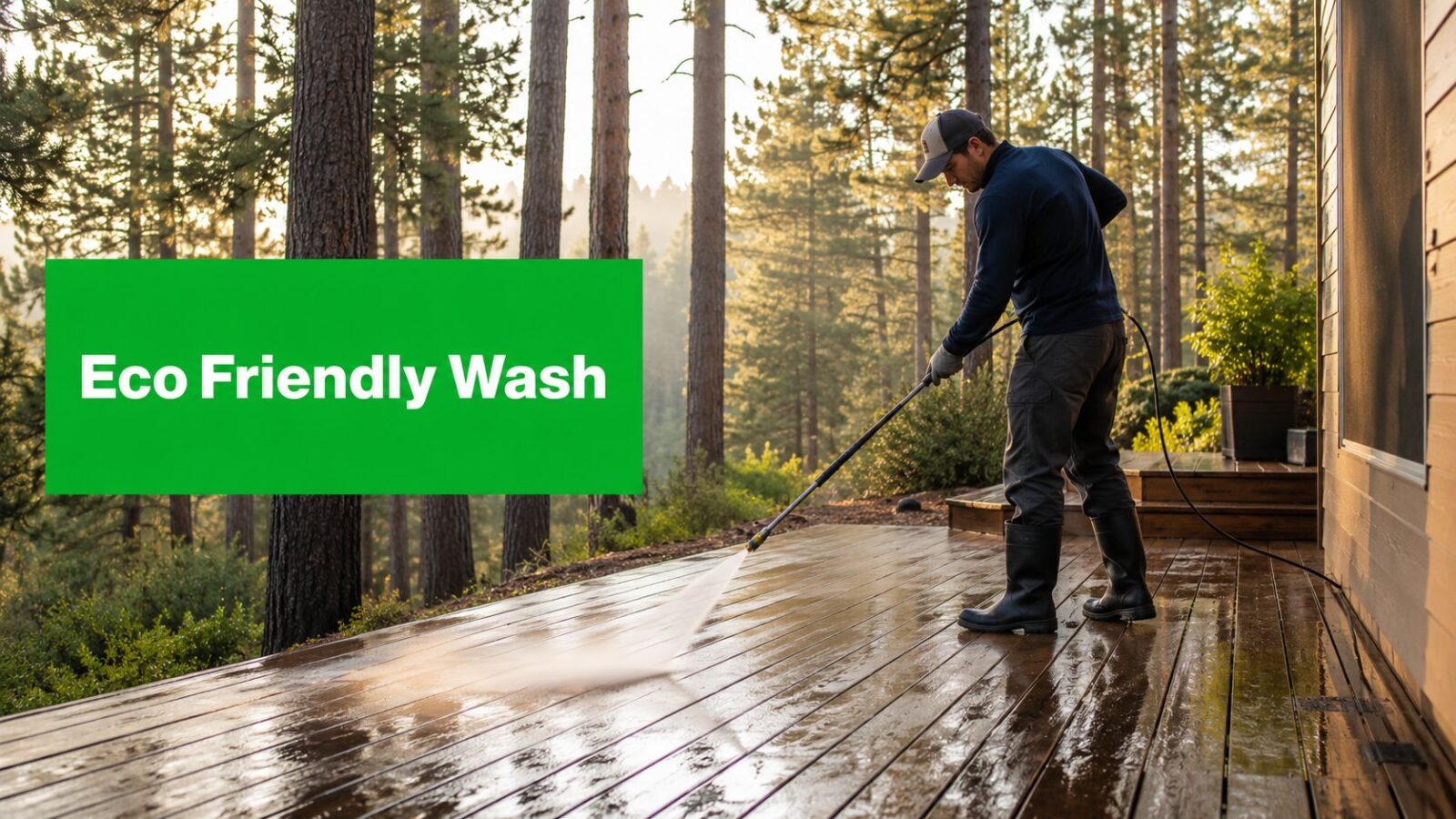
Cleaning pine sap off a deck in Doney Park without scorching the wood is a different job than rinsing dust off a patio in town. In Flagstaff, I start by looking at the surface, the residue, and where the rinse water will travel. Dry air, dusty winds, pine debris, and sensitive plants all change the way the work needs to be done.
Eco Friendly Pressure Washing is practical protection for siding, decks, stone, and the ground around them. It means choosing the least aggressive method that still gets the surface clean, then controlling water use and runoff instead of forcing the issue. That same careful approach shows up in exterior building cleaning for homes and businesses, where the goal is to clean thoroughly without pushing debris or chemicals into places they should not go.
I also think about how the job fits into the larger property plan. That includes the same kind of care reflected in North Georgia environmentally safe lawn care, where the work is aimed at protecting the yard, not just improving how it looks from the curb. For pressure washing, that means starting with the right water pressure, the right cleaner for the surface, and a clear path for runoff before the wand ever hits the siding or decking.
Protecting Your Home and Flagstaffs Environment
A dirty deck in Flagstaff usually isn't just dirt. It's windblown dust, pine debris, and whatever settled into the boards after a dry stretch or a summer storm. If you blast it with high pressure and the wrong cleaner, you can move the mess from the surface to the landscaping, the driveway, or the storm drain.
Eco friendly pressure washing starts with restraint. Sustainable methods can use 35% less water than traditional approaches, and one comparison shows modern units can use as little as 5 liters per minute versus a garden hose at 35 liters per minute, an 86% reduction in water consumption (water-use comparison). In a dry high-altitude climate, that efficiency isn't a luxury, it's part of responsible property care.
Why the local setting changes the job
Flagstaff's environment rewards careful work. Dry air can make residue set quickly, and porous surfaces can hold onto grime if the rinse is rushed. That means the most effective cleaning often comes from a controlled process, not maximum force.
A sensible approach is to think in layers. Dry debris comes off first, the surface gets tested with plain water, and chemicals stay off the job unless they're needed. That's the same practical mindset behind careful exterior maintenance, including Pine Country Window Cleaning exterior building cleaning, where protecting the structure matters as much as restoring its appearance.
Practical rule: if you need to solve a cleaning problem with more pressure, stop and check the nozzle, the distance, and the surface type first.
For a property owner, stewardship means more than avoiding damage to paint or wood. It means keeping rinse water where it belongs, choosing products that don't create a second cleanup, and respecting the plants and soil around the work area. That's the standard I use on homes and cabins around Northern Arizona, because the property never sits in isolation from its natural surroundings.
Gathering the Right Eco-Friendly Gear and Cleaners
The right setup makes eco friendly pressure washing feel controlled instead of risky. Start with the tools that reduce waste, protect surfaces, and keep you from improvising once water starts moving. A short shopping list is more useful than a trunk full of gear you won't use.
What belongs on the truck or in the garage
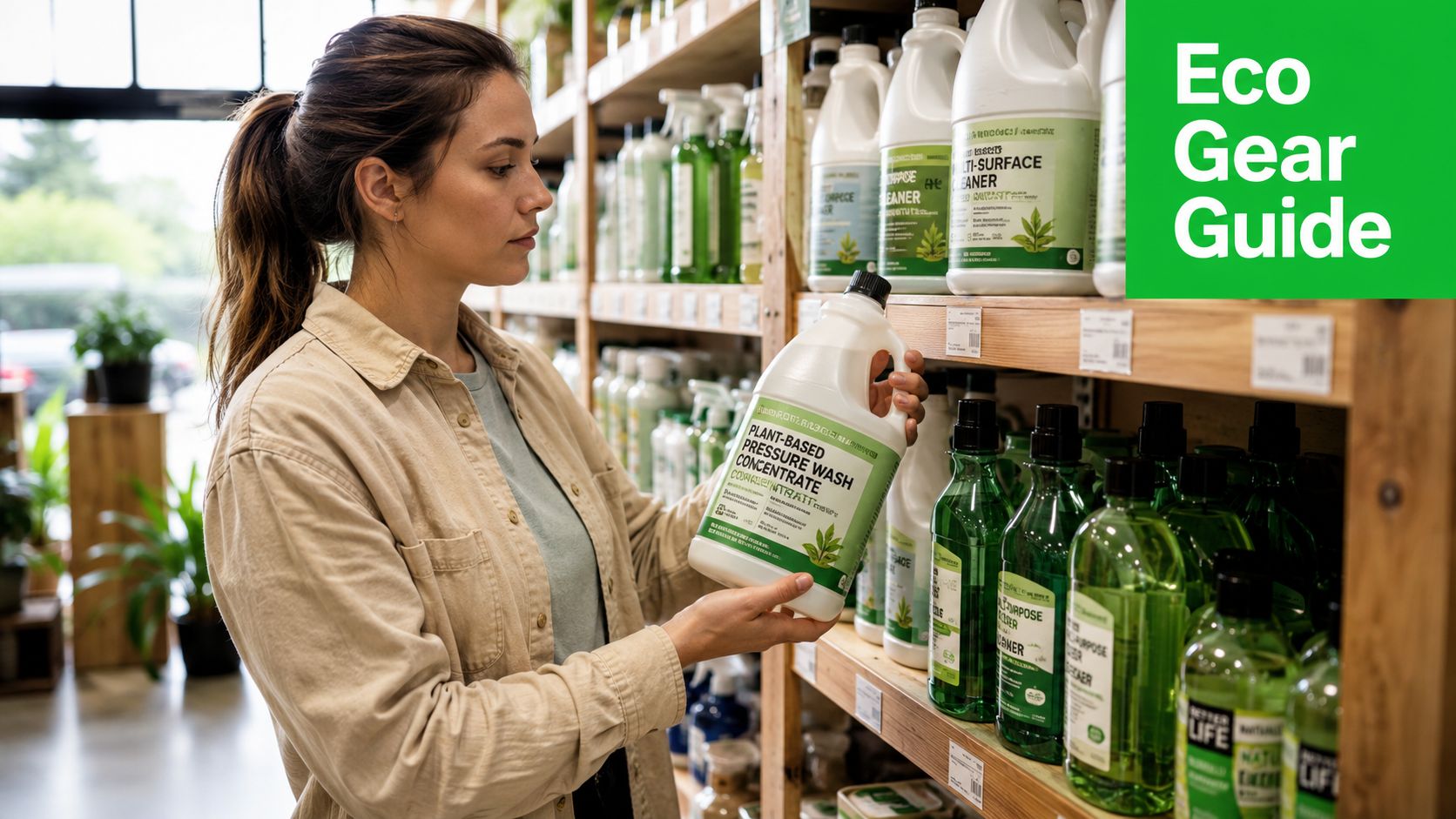
The chemical choice matters first. Non-toxic, biodegradable cleaning solutions are a key best practice because they help protect family, pets, property, plants, animals, and local waterways from dangerous runoff (biodegradable cleaner guidance). That doesn't mean every plant-safe soap is identical. Some cleaners work well on mildew, others are better for grease, and the label should match the job instead of promising to do everything.
A good kit usually includes:
- Biodegradable detergent, selected for the surface and the stain, not just for a green label.
- Surface-appropriate nozzles, because the spray angle affects both cleaning and damage.
- Hoses and fittings that don't kink easily, since interruptions waste water and create streaks.
- PPE, including eye protection and gloves, because splashback still happens even on a careful job.
- Tarps or plant covers, especially near beds, pots, and delicate shrubs.
Electric pressure washers make sense for many residential jobs because they're quiet and easier to manage around homes, while gas units can be more practical for bigger exterior work that needs more mobility. The point isn't that one is always greener. The point is to choose the machine that lets you clean once, clean well, and avoid rework.
Prepping the site before you spray
I also pre-soak nearby landscaping when conditions call for it, then cover anything fragile before the first pass. That simple step keeps soap from drying on leaves and makes cleanup easier if overspray lands where it shouldn't. If a client is comparing service options, I'll usually talk through whether they need a light rinse, a targeted wash, or a more controlled exterior service such as Pine Country Window Cleaning eco-friendly window cleaning, which follows the same care-first approach for the property.
Good gear saves water only when the operator stays disciplined. The cleaner, the nozzle, and the prep matter more than raw machine power.
The best eco setup is the one that lets you stay precise from start to finish. If you're guessing on cleaner strength or spraying without protecting the edges of the site, the “green” label won't save the lawn or the finish.
Mastering Low-Impact Pressure Washing Techniques
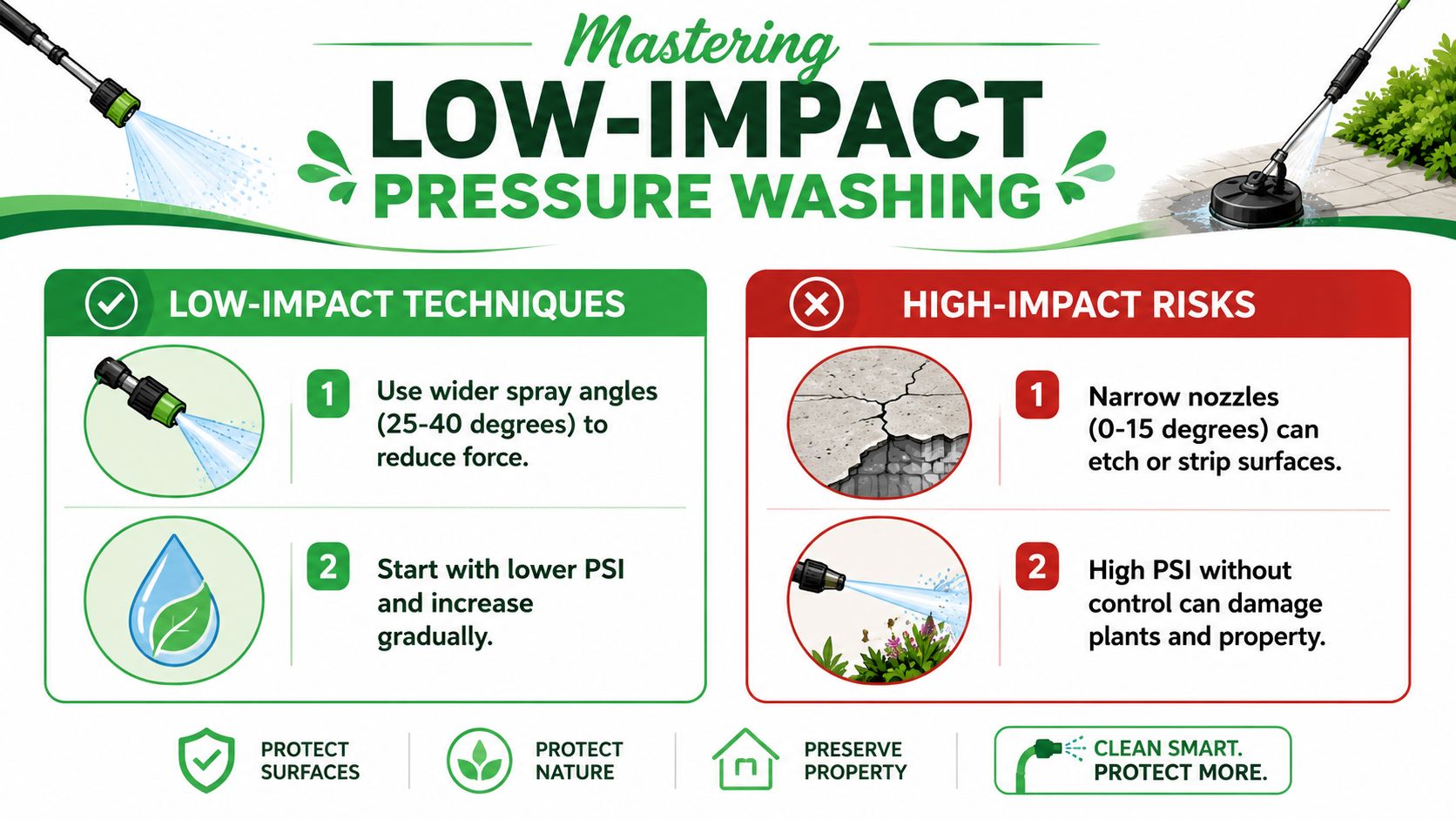
The surface decides the technique, not the other way around. On wood, painted trim, composite decking, and stucco, the wrong angle can leave marks faster than it removes dirt. For most residential eco-washes, an operating pressure in the 1,500 to 2,500 PSI range is recommended, paired with surface-appropriate nozzles like 15°, 25°, or 40° tips to prevent substrate damage (pressure and nozzle guidance).
Match the nozzle to the job
A wider fan usually comes first. Narrow tips are for stubborn buildup on tougher materials, not for guessing your way through a deck or fence panel. Constant sweeping motion matters because a fixed stream concentrates force in one spot and can leave zebra stripes, etched marks, or lifted paint.
Here's a simple field guide I rely on:
| Pressure Washer Nozzle and PSI Guide by Surface | Recommended PSI Range | Best For | Flagstaff-Specific Use Case |
|---|---|---|---|
| White, 40° | Light residential range | Siding, softer painted surfaces, rinsing | Dust removal from painted trim after a windy spell |
| Green, 25° | Moderate residential range | Vinyl, composite, general exterior washing | Cabin siding with seasonal pine dust |
| Yellow, 15° | Upper residential range | Stubborn grime on tougher surfaces | Concrete patio edges with tracked-in dirt |
Start at the widest practical tip, then move closer only if the surface can handle it. That's especially true on roofs and softer materials, where the safest move is often less pressure, not more.
Keep the motion smooth and controlled
Distance matters as much as PSI. Hold the wand far enough away that the spray fans evenly, then move in overlapping passes so you don't leave stripes. If you see the grain lifting on wood or the paint fogging, stop and back off immediately.
“Lower pressure and a wider tip beat brute force on almost every finish that matters.”
The same logic applies across the property. Concrete can take more than cedar, but it still responds better to a steady pattern than to a quick, aggressive pass. For readers who want the service side of this work handled by a crew that already does pressure washing as part of exterior care, Pine Country Window Cleaning A-1 pressure washing is one option to compare against DIY.
Knowing when to slow down is a key skill. Eco friendly pressure washing isn't just about using less water, it's about delivering a clean surface without trading one kind of damage for another.
Managing Runoff to Safeguard Water and Landscaping
Dirty water is part of the job, so it has to be planned for from the start. In Flagstaff, that means treating runoff like a material you're controlling, not a byproduct you'll figure out later. Soap, grit, oil, and sediment can all move with the rinse water, and once that flow reaches the wrong drain, the cleanup becomes a community issue.
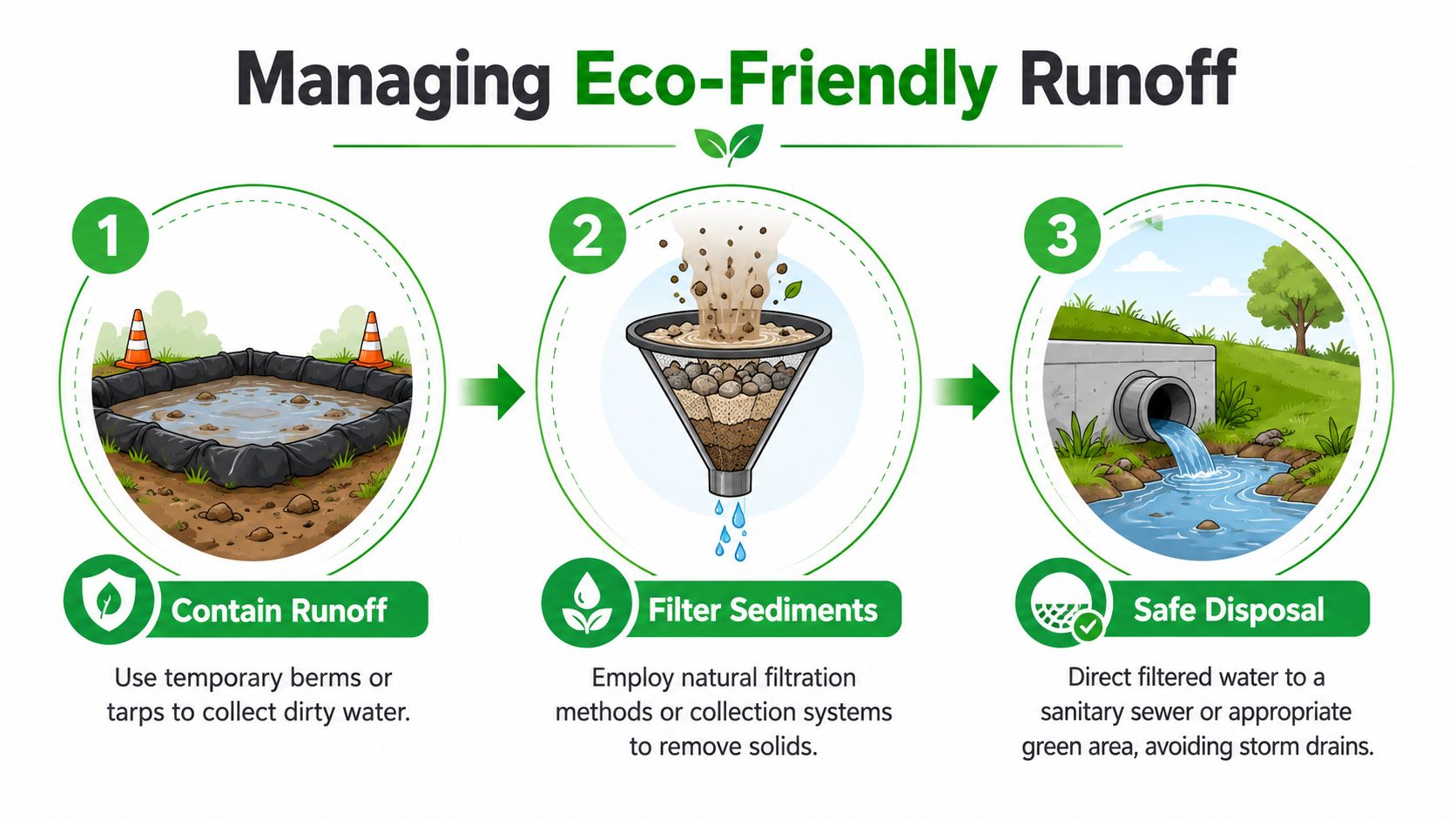
Contain first, then clean
A proper wash starts with control points in place. Block storm drains before water starts moving, use tarps or berms to direct runoff, and send wastewater to the sanitary sewer only where local rules allow, or have it hauled away. Even biodegradable soaps need the same careful handling, because “green” does not mean safe for a storm drain.
Containment can be simple when the site allows it. A temporary berm keeps water from running downhill. A drain cover keeps a wash area from feeding directly into the storm system. On larger or messier jobs, collecting the wastewater and removing it is cleaner than trying to push dirty water somewhere it doesn't belong.
Keep the soil and plants out of the splash zone
The goal is not to flood the yard and hope the soil handles it. It is to trap the waste stream before it reaches roots, flower beds, or hardscape joints. If a surface sheds heavy grime, slow the wash and recover the water instead of pushing contaminants across the property in one fast pass.
A clean wash area should look controlled from the start:
- Storm drains are blocked before spraying begins.
- Containment is in place so water does not travel under fences or into planting beds.
- Wastewater is managed separately instead of being left to soak wherever it lands.
- Planting areas stay protected, especially where runoff would collect.
That sequence keeps the property looking good after the wash instead of leaving behind a second problem. In Flagstaff, dry soil, sloped yards, and tight planting beds make runoff spread faster than many homeowners expect, so I plan for capture before I ever pull the trigger. If a client asks me what separates a careful operator from a rushed one, runoff planning is near the top of the list.
Clean surfaces shouldn't create dirty drainage. The most responsible wash is the one that leaves the site as controlled as it found it.
DIY Pressure Washing vs Hiring a Flagstaff Pro

DIY can work on a small, simple surface if the owner understands the material, the detergent, and the runoff plan. The hidden cost is usually time, because setup, masking, containment, cleaning, and the final rinse take longer than people expect. The bigger risk is a mistake that turns into repair work, especially on siding, deck boards, sealant lines, or delicate landscaping.
The pressure washing industry is projected to reach $3 billion by 2026, with growth tied to modernization and demand for sustainable methods like runoff control and water reclamation (industry projection). That growth reflects a simple reality, more property owners want the work done correctly, with less waste and fewer side effects. For many homes, that is where a professional crew earns its keep.
What a pro is buying you
A trained operator brings judgment, not just equipment. That includes choosing the right nozzle, adjusting pressure for the material, managing water capture, and knowing when a stain is not worth attacking with more force. It also means fewer surprises when the site includes plantings, slopes, or older finishes that do not tolerate casual cleaning.
The company behind this article, Pine Country Window Cleaning, has served Northern Arizona since 1999, and pressure washing is part of its exterior care work. On a project where the goal is to protect the home and the surrounding grounds, that kind of local experience matters more than a rented machine and a guess.
A simple decision rule
- Choose DIY when the surface is small, the finish is durable, and you already know how to contain runoff.
- Choose a professional when the property has sensitive materials, complex drainage, or landscaping you cannot afford to stress.
- Choose a pro again when you want one crew to handle the cleaning, the prep, and the cleanup without you managing the details.
If your priority is preserving curb appeal without creating avoidable damage, professional service is usually the safer route. Its true worth is not flashy. It is the finish staying intact, the plants staying protected, and the water going where it should. If you want to compare what that looks like in practice, Pine Country Window Cleaning's pressure washing service is a good place to start.
Eco-Friendly Pressure Washing FAQ
How often should a Flagstaff home be pressure washed
The answer depends on exposure, not a fixed calendar. A mountain home that catches dust, pine debris, and weather-driven grime may need attention more often than a protected property tucked behind trees. I look at the surface condition, the drainage, and how quickly buildup returns, then clean before grime gets embedded.
When is the best time of year to do it
Choose a stretch with stable temperatures and dry conditions so rinsing and drying happen predictably. In a high-altitude climate, sudden swings matter more than many homeowners expect, especially on painted or porous surfaces. A good wash day is one where the property can dry fully without freezing, standing water, or fast re-soiling from wind.
Are biodegradable soaps always plant-safe
No. Biodegradable does not mean harmless in every setting. Use the mildest effective detergent, protect nearby plants, and keep runoff out of storm drains, since even biodegradable soap still needs proper disposal.
Can water restrictions affect pressure washing
They can, and local rules matter more than a general best practice. Before any job, check current city and neighborhood water expectations, then adjust the wash plan so you use only what you need and capture runoff when required. Careful prep avoids wasted water and keeps the work aligned with local limits.
What's the biggest mistake homeowners make
They focus on pressure and ignore everything around it. The cleaner, the runoff path, the nozzle angle, and the plant protection all belong to the same job. If one of those pieces is missing, the wash can leave a mess even when the surface looks better for a day.
If you want the job handled with the same care I'd use on my own property, contact Pine Country Window Cleaning for a local estimate and ask about eco friendly pressure washing that protects your home, your landscaping, and the water moving through your site.