

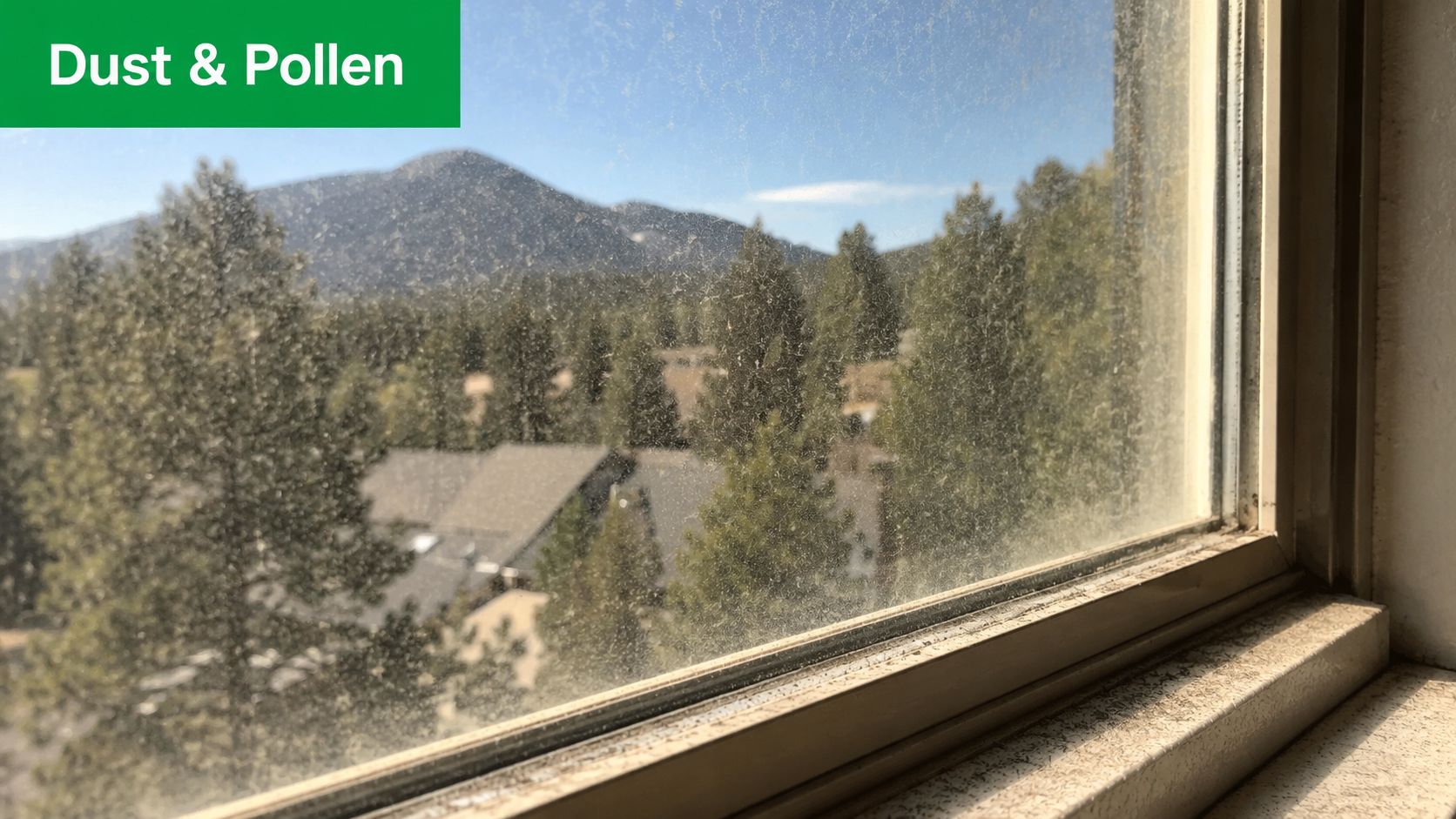
In Flagstaff, windows don't stay clean for long. Wind carries dust across the glass, pollen settles into corners, and a quick storm can leave a fine film that blocks the view more than most homeowners realize until the light hits it just right.
That's why eco friendly window cleaning matters here. It isn't just about swapping one bottle of cleaner for another. It's about how the work gets done, how much water gets used, what gets left behind on the glass, and whether the process protects the home, the screens, the landscaping, and the people living inside.
Why Green Window Cleaning Is More Than Just Vinegar
A lot of people hear “green window cleaning” and think of one thing. Vinegar in a spray bottle. That can be part of it, but professional eco friendly window cleaning is broader than a DIY recipe. It's a method built around reducing harmful chemicals, minimizing disposable waste, and conserving water while still delivering clear glass.
That shift isn't a niche trend. According to Unger Global's overview of green window cleaning, the U.S. window cleaning market was valued at over $808 million in 2025 and is projected to reach nearly $1.2 billion by 2033, with growth tied in part to demand for greener methods such as pure-water systems that can clean without any solution at all.
What homeowners usually miss
The test of an eco-friendly approach isn't the label on a bottle. It's whether the process avoids the usual problems:
- Residue on the glass that attracts dirt faster
- Excess runoff around flowerbeds, decks, and walkways
- Too much water dumped onto frames, screens, and tracks
- Disposable materials used once and thrown away
A professional method solves those issues by using the right tools. That means squeegees, extension poles, screen-removal tools, pure-water brushes, and controlled detailing with microfiber where it belongs. It doesn't mean flooding a pane and hoping it dries clean.
Eco-friendly cleaning should leave less behind, not more. Less chemical residue, less runoff, less waste, and less risk to the property.
Why this matters in Flagstaff
Flagstaff homes deal with a mix of mountain dust, pollen, insect debris, and changing weather. Cabins in Munds Park and larger homes tucked into the pines often have tall glass, divided panes, and screens that trap grime around the edges. Storefronts and commercial properties face a different problem. Frequent touch marks, road dust, and repeat service schedules.
In both cases, the best green method isn't the one that sounds homemade. It's the one that cleans thoroughly without creating a second problem.
That's why modern eco friendly window cleaning has moved away from detergent-heavy, water-hungry habits and toward low-residue techniques and purified water. The goal is simple. Clean glass, safer surroundings, and a result that looks professional instead of merely “better than before.”
The Principles of a Truly Eco-Conscious Clean
The word “green” gets used loosely in cleaning. In practice, an eco-conscious window cleaning method follows a few clear principles. Use fewer harmful ingredients. Control water instead of wasting it. Prevent runoff. Leave little or no residue on the glass and surrounding surfaces.
Start with what stays off the glass
Older window cleaning habits often relied on heavy detergent use, lots of rinse water, and equipment choices that created more impact than needed. Safer guidance has moved toward low-VOC, non-toxic products, lower-emission work methods, and reduced water use. It also points people toward labels such as Green Seal, EcoLogo, and USDA Organic when a cleaning product is necessary. The same source notes that the global glass cleaner market is projected to grow from about USD 4.1 billion in 2025 to USD 7.4 billion by 2035, reflecting a 6.2% CAGR and stronger demand for safer formulations, as explained in this guide to eco-friendly window cleaning practices.
For homeowners, that means asking a basic question before anyone starts work. Does this method rely on the least chemistry necessary, or is it just a conventional service with a “green” label attached?
Water use matters more than most people think
A careful window cleaner doesn't soak every surface. Good eco-friendly work uses controlled moisture and keeps dirty water from washing into places it shouldn't go. Around homes in Northern Arizona, that matters near mulch beds, decorative stone, wood trim, and exterior entries.
A few signs you're looking at the right approach:
- Minimal runoff so dirty water doesn't travel across patios or into drains
- Reusable tools such as microfiber, professional brushes, and durable applicators
- Method-specific cleaning based on the window, not one blanket process for every pane
- Attention to air quality indoors by avoiding stronger chemical odors where low-VOC options can do the job
Practical rule: If a cleaner uses far more liquid than needed, the method usually isn't as green as it sounds.
Green thinking applies beyond windows
If you're comparing products for other parts of your property, the same logic carries over. Ingredient safety, runoff control, and surface compatibility all matter. That's one reason it helps to discover eco-friendly boat cleaning products if you're also caring for trailers, watercraft, or equipment and want to see how other maintenance categories approach lower-impact cleaning.
On windows, the strongest eco-conscious standard is simple. Use the mildest effective chemistry. Use less water. Use better tools. And choose a method that protects the home as much as it cleans the glass.
DIY Methods with a Professional Touch
If you want to handle a few windows yourself, the biggest difference won't come from the mixture alone. It comes from the sequence, the tools, and how quickly you remove residue from the glass.
Pella recommends a 1:10 ratio of distilled vinegar to warm water for cleaning windows. That's a solid starting point for light residential maintenance. The part many people skip is the professional technique: clean the tracks and frames first, use a squeegee in a top-to-bottom motion, and buff any remaining moisture immediately with a lint-free microfiber cloth so spots and film don't set up on the pane.
The method matters more than the mix
A simple process works best:
- Start with the dry debris. Brush or vacuum loose dirt from tracks and sills first.
- Wipe frames before the glass. Otherwise, dirty drips run onto a pane you just cleaned.
- Apply a small amount of solution. Damp is enough. Overwet glass creates more mess.
- Pull the squeegee from top to bottom with steady pressure.
- Buff edges and remaining moisture fast with clean microfiber.
This is why professionals don't rely on random household wiping methods. The goal is to remove contaminants cleanly, not smear them around.
Clean tracks first. If you skip that step, grit and dirty water usually come right back onto the glass.
Simple eco-friendly DIY window cleaning recipes
| Recipe | Ingredients | Instructions |
|---|---|---|
| Vinegar wash | Distilled vinegar and warm water in a 1:10 ratio | Clean tracks and frames first, apply lightly to glass, squeegee from top to bottom, then buff dry with lint-free microfiber |
| Peroxide glass cleaner | 5% hydrogen peroxide solution | Use sparingly on glass or mirrors, clean from top to bottom, and avoid excess liquid or runoff |
The peroxide option above reflects eco-focused guidance that favors measured, low-water cleaning over flooding the surface.
What doesn't work well
Some DIY problems show up over and over:
- Too much liquid leaves drips, streaks, and runoff
- Paper towels can leave lint and fine debris
- Delayed drying lets mineral spotting and film settle back onto the pane
- Improvised tools make edges and corners harder to finish cleanly
If a pane is already damaged, cleaning won't solve that. For broken glass or sash issues, a repair-focused reference like this Bulls Eye Repair window pane guide is more useful than trying to scrub around the problem.
For homeowners who want better results with the right equipment, it also helps to review the basic setup in these home window cleaning tools. Good tools shorten the job and reduce the temptation to overwork the glass.
A DIY method can work on accessible windows in decent condition. But it only works well when the technique is disciplined. That's the line between “clean enough” and clear, professional-looking glass.
The Pro's Secret Weapon Pure Water Technology
Pure water cleaning changed the trade for a reason. It solves two problems at once. It removes the need for standard cleaning solutions on many exterior jobs, and it allows crews to clean high glass from the ground with water-fed poles instead of relying on ladders for every upper window.
How the system actually works
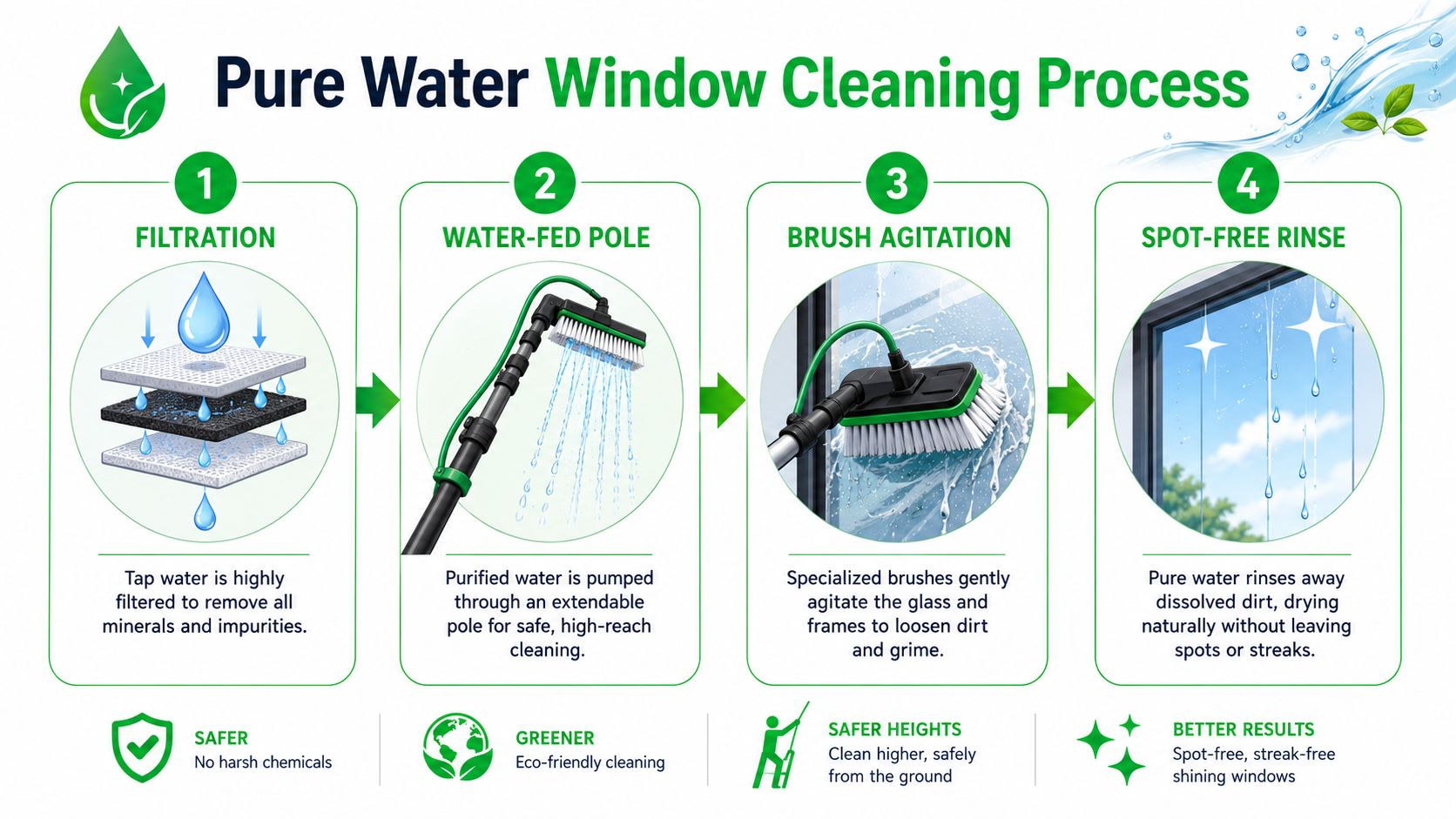
Pure-water systems filter tap water through processes such as deionization (DI) or reverse osmosis (RO) until impurities are removed. At that point, the water is clean enough to lift dirt from glass and rinse away without leaving the mineral spots you'd normally expect from ordinary hose water.
The basic sequence looks like this:
- Filtration removes dissolved minerals and contaminants
- Pumping through a water-fed pole delivers purified water to the brush head
- Brush agitation loosens dust, pollen, insect debris, and grime from glass and frames
- Spot-free rinsing lets the water dry naturally without soap residue
That's the professional edge. No detergent film. No need to wipe every pane dry by hand. No chemical smell around the home.
Why it fits eco friendly window cleaning so well
The strongest green feature of pure water cleaning is that it doesn't depend on soap to perform. It uses purified water as the cleaning medium. On exterior maintenance routes, especially where there are many panes or hard-to-reach windows, that's hard to beat.
It also improves safety because many windows can be cleaned from the ground. Less ladder movement usually means a cleaner, more controlled job around siding, flowerbeds, and walkways.
For a closer look at what a polished finish should look like after this process, see this example of a spotless window cleaner.
Here's a quick visual explanation of the process in action:
Pure water isn't a gimmick. It's one of the few methods that can be both more efficient and lower residue at the same time.
Where pure water works best
This method shines on:
- Second-story exterior windows
- Large glass runs on custom homes
- Storefront and commercial glass
- Windows with light-to-moderate buildup that need regular maintenance
- Frames and sashes that benefit from a thorough rinse
It's not about replacing every traditional tool. Skilled crews still use squeegees, detail cloths, hand tools, and ladders when the job calls for them. But for exterior eco friendly window cleaning, pure water is often the cleanest answer in every sense of the word.
A Higher Standard of Care for Your Property
Clean glass is only part of a good service. What homeowners remember is how the crew treated the house while they were there.

A professional window cleaning visit should feel organized from the first screen removal to the last walkthrough. Screens come out carefully, get cleaned separately, and go back in properly. That matters more than is often realized because dusty screens can throw debris right back onto freshly cleaned glass if they're ignored.
What respectful service looks like
Inside the home, careful crews watch floors, furniture, and window areas as closely as they watch the glass. Outside, they pay attention to trim, planters, decorative rock, and narrow paths around the house. Good technique protects the property while the work moves forward.
A reliable process usually includes:
- Screen handling with care so frames don't get bent and tabs don't get damaged
- Separate screen cleaning instead of a quick wipe while still in place
- Controlled interior work areas to keep water off walls, flooring, and furnishings
- Thoughtful ladder placement to avoid unnecessary wear on siding and garden areas
The difference customers notice
Most homeowners can tell when a crew is rushing. Screens get reinstalled loosely. Corners are missed. Tracks stay dirty. Water gets where it shouldn't. That's not just a quality issue. It also undermines the environmental side of the job because sloppy work often means more rework, more materials, and more disruption.
A clean window should never come at the expense of the frame, the screen, the sill, or the room around it.
The better standard is simple. Work carefully. Handle each part of the window system as if it belongs there for the long haul. On homes with many screens, divided lights, or hard-to-access elevations, that mindset makes as much difference as the cleaning method itself.
When to Hire a Green Window Cleaner in Flagstaff
Some windows are reasonable DIY projects. Others aren't. In Flagstaff, that line shows up quickly once you're dealing with steep grades, second-story glass, tall entry windows, seasonal homes, or commercial properties that need consistent results without disrupting the site.

The biggest reason to hire a professional isn't convenience. It's matching the method to the job. Neutral guidance on greener cleaning points out that DIY recipes may sound lower-impact, but the harder question is how they perform at scale. For large or commercial properties, professional water-fed pole systems can be a greener option for hard-to-reach windows because they optimize water use and labor efficiency compared with conventional methods that require repeated bucket refills and ladder work.
Situations where a pro makes sense
A professional green window cleaner is usually the better call when you have:
- Second-story or hard-to-reach glass on cabins, custom homes, or hillside properties
- Large glass surfaces where consistency matters across every pane
- Seasonal second homes that need to be opened up clean and ready
- Commercial storefronts, hotels, or campus buildings with repeat service needs
- Post-construction cleanup where debris, stickers, and fine dust require specialized handling
Those jobs demand more than a bottle and a weekend. They require ladders, poles, pure-water systems, proper screen handling, and the judgment to know which tool belongs on which pane.
Questions worth asking before you hire anyone
Not every company advertising green service works the same way. Ask direct questions.
- What cleaning method do you use on upper exterior windows. Listen for water-fed poles, pure water, and clear explanations.
- How do you control runoff and protect landscaping. The answer should sound specific, not generic.
- Do you remove, clean, and reinstall screens. That's part of complete window service.
- How do you protect interior floors and furnishings. Care inside the home matters.
- When do you use ladders and when do you avoid them. Safety and judgment go together.
- Do you have the right equipment for difficult access. Homes and commercial sites in Northern Arizona vary a lot.
For residential property owners comparing services, this overview of residential window cleaning is a useful way to understand what full-service work should include.
Why local experience matters in Northern Arizona
Flagstaff properties aren't generic. Pine needles, windblown dust, monsoon residue, snow season grime, and elevation all change how windows collect buildup. A crew that works locally understands the rhythm of those conditions. They know why one home needs careful pure-water exterior work and another needs more detailed hand cleaning around interior glass, screens, tracks, or post-construction debris.
That's also where company history matters. Pine Country Window Cleaning was started in 1999 by Flagstaff native David Kaminski, and the company has grown into Flagstaff's largest window cleaning company. For homeowners, property managers, and commercial clients, that kind of local foundation usually shows up in the details. Better scheduling, better site awareness, safer equipment choices, and fewer shortcuts.
A good green window cleaner should leave you with more than shiny glass. The service should feel safe, orderly, and respectful of the property from start to finish.
If you want eco friendly window cleaning done with professional tools, careful screen handling, and real respect for your home or building, Pine Country Window Cleaning is the local team to call. They've served Flagstaff and Northern Arizona since 1999, and they know how to deliver clear windows without careless methods, unnecessary chemical use, or disruption to your property.