
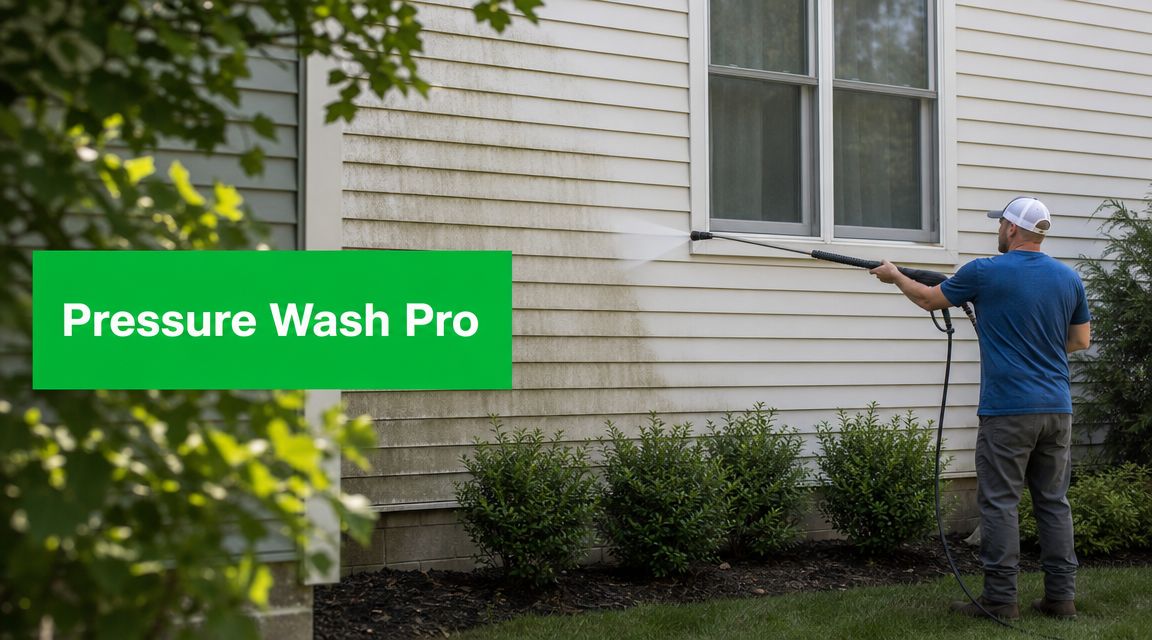
By late winter in Flagstaff, a lot of houses wear the season on their siding. Dust settles into trim lines, pollen hangs on shaded walls, and the splash marks from summer monsoons never quite leave on their own. You look at the exterior, rent prices for a pressure washer seem reasonable, and a weekend project starts to sound like a smart fix.
That instinct makes sense. Pressure washing a house can absolutely freshen up a property and bring back a cared-for look.
But using a machine and washing correctly are not the same thing.
In Northern Arizona, the margin for error is smaller than many homeowners realize. Intense sun can dry detergent too fast and leave streaks. Freeze-thaw cycles exploit any moisture that gets pushed behind siding or trim. Older paint, weathered wood, cabin logs, stucco patches, and window seals all react differently to pressure. The problem isn't just getting dirt off. It's cleaning the surface without driving water where it shouldn't go or scarring material that already has a few years of weather on it.
If you're comparing the DIY route with hiring help, it also helps to see how other siding-cleaning guides frame the basics. The SwiftJet guide to clean siding is a useful companion read for understanding how growth and staining behave on exterior surfaces before you ever pull the trigger on a washer.
A clean house exterior looks simple from the street. The work behind it isn't. The right method depends on material, condition, weather, height, and how much risk you're willing to accept around windows, trim, paint, and landscaping.
Your Guide to a Cleaner Home Exterior
A house in Flagstaff can look dirty even when it isn't neglected. That's one reason homeowners get frustrated. The grime builds slowly. A little soot near vents, dust across lap siding, runoff marks below eaves, mildew on the north side, and suddenly the home looks older than it is.
Pressure washing a house is appealing because the result feels immediate. One pass across a dirty panel and the original color comes back. That's satisfying. It's also where many people get overconfident.
What homeowners usually notice first
The first signs are rarely dramatic. They're usually things like:
- Faded-looking siding that turns out to be dust and surface film
- Dark streaks below windows and rooflines where runoff carries debris
- Green or black buildup in shade where moisture lingers longer
- Uneven appearance after storms when monsoon splash leaves lower walls spotted
Those are cosmetic problems on the surface. The risk starts when someone assumes more pressure is the obvious answer.
The goal is to remove contamination from the surface, not to overpower the material underneath it.
Why Flagstaff homes need a more careful approach
High elevation changes how exterior cleaning behaves. Water evaporates faster. Sun exposure is harsher. Materials can be dry and brittle in one area of the house and damp and porous in another. Then winter adds expansion and contraction stress that generic national advice rarely accounts for.
A house with newer vinyl on one elevation, older painted trim on another, and wood around a porch or entry can't be treated like one uniform surface. That's where DIY jobs go sideways. One nozzle setting might be safe on hardy masonry and far too aggressive on painted fascia or a window edge.
Most damage from house washing isn't dramatic in the moment. It's subtle. Water gets tucked behind siding. A seal around a window gets compromised. Wood grain lifts. Paint starts failing sooner. The exterior looks cleaner for now, but you've traded visible dirt for hidden problems.
A smarter way to think about the job
Before you decide whether to tackle it yourself, judge the house by three things:
| Surface factor | What it means for washing |
|---|---|
| Material type | Vinyl, wood, stucco, brick, painted trim, and logs all need different pressure and technique |
| Condition | Peeling paint, cracks, failed caulk, and aging seals raise the risk fast |
| Access difficulty | Slopes, ladders, second stories, and tight rooflines change the safety equation |
A simple ranch home with sound siding is one kind of project. A taller home with mixed materials and aging windows is another.
Preparing Your Home for a Pressure Wash
Preparation decides whether the wash goes smoothly or creates extra cleanup and repairs. Most bad outcomes start before the machine even turns on. A rushed inspection, an ignored crack, an uncovered outlet, or detergent drying in direct sun can turn a basic cleaning job into a problem.
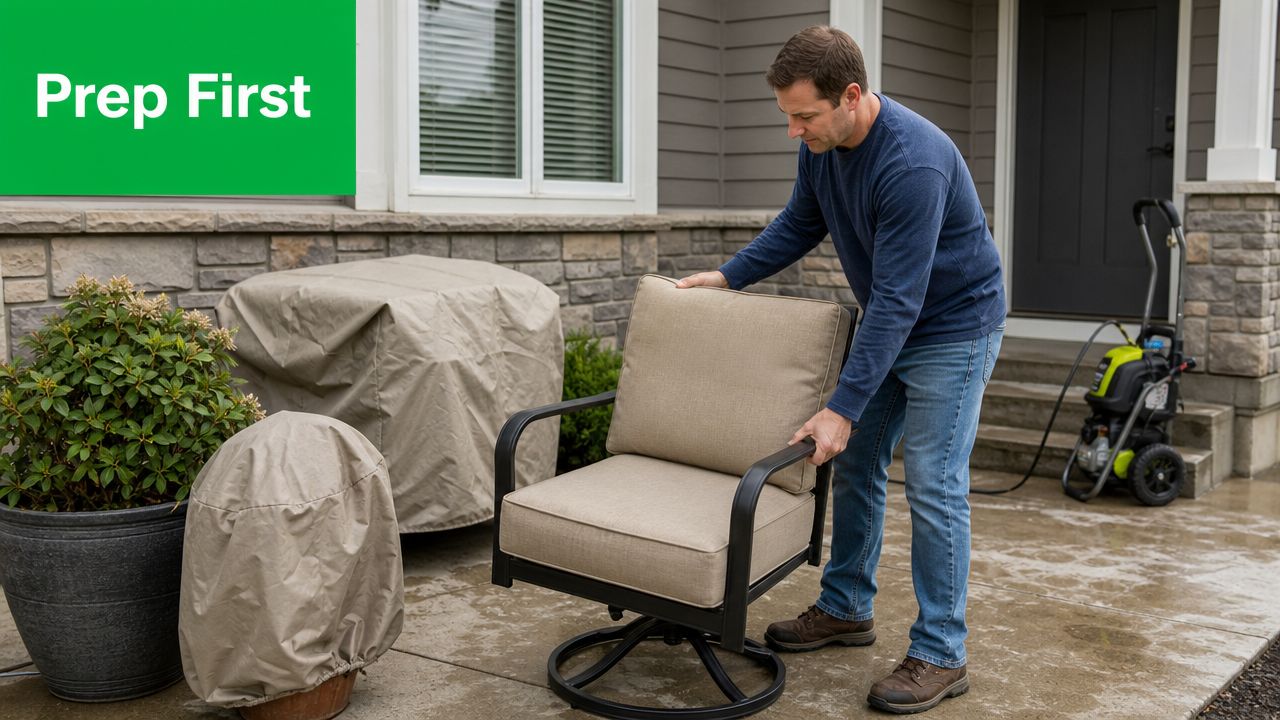
Start with a slow walk around the house
Walk the full exterior and look at it like water will. Anything loose, open, cracked, or worn deserves attention before washing.
Check these areas closely:
- Siding joints and seams where water can be driven behind the surface
- Peeling or chalking paint because pressure can strip more than dirt
- Window and door perimeters where old caulk and worn seals allow intrusion
- Light fixtures and electrical covers that need protection from spray
- Vents, dryer outlets, and exterior penetrations where direct force is a bad idea
If you find cracked boards, loose trim, or failing caulk, that's not a small detail. Those are direct entry points for water. In a climate with freeze-thaw cycles, trapped moisture has more chances to become a future repair.
Move and cover what matters
Clear the work zone first. Patio furniture, planters, grills, wood piles, and decorations should be moved far enough away that overspray won't keep hitting them while you work. If your gutter line is clogged, handle that before the wash so dirty overflow doesn't undo your work. If you need that done first, Pine Country offers gutter cleaning in Flagstaff as a separate service.
Then protect what stays in place:
- Landscaping near the walls should be gently pre-wet and shielded if detergent is in use
- Exterior outlets and doorbells should be covered appropriately
- Fragile lighting and cameras should never take a direct stream
- Windows and doors should be fully closed and checked, not assumed shut
Practical rule: If you wouldn't spray a garden hose directly into a gap, don't aim a pressure washer at it from any angle.
Pick the day carefully
Flagstaff weather matters more than people think. A hot, bright afternoon can make detergent flash-dry on the surface before it has time to work evenly. That leaves film, spotting, and extra rinsing. Wind creates another problem by carrying mist into windows, vents, and neighboring surfaces.
The best washing conditions are usually calm and cooler, with cloud cover if possible. That gives detergent enough dwell time without baking onto the siding.
A good prep window usually looks like this:
| Condition | Why it helps |
|---|---|
| Calm air | Keeps spray controlled and reduces drift |
| Moderate temperature | Slows drying and helps even cleaning |
| No immediate freeze risk | Gives surfaces time to dry properly |
| Stable light | Makes it easier to see missed areas and residue |
Think beyond siding
Pressure washing a house often splashes onto adjacent surfaces whether you intend it or not. That includes decks, railings, painted doors, screen frames, and exterior glass. If a screen is loose or already bent, remove it before work starts. That's part of protecting the home, not extra fussing.
Careful prep never feels dramatic. It just prevents the kind of damage that homeowners usually notice a week later.
Choosing Your Equipment and Detergents
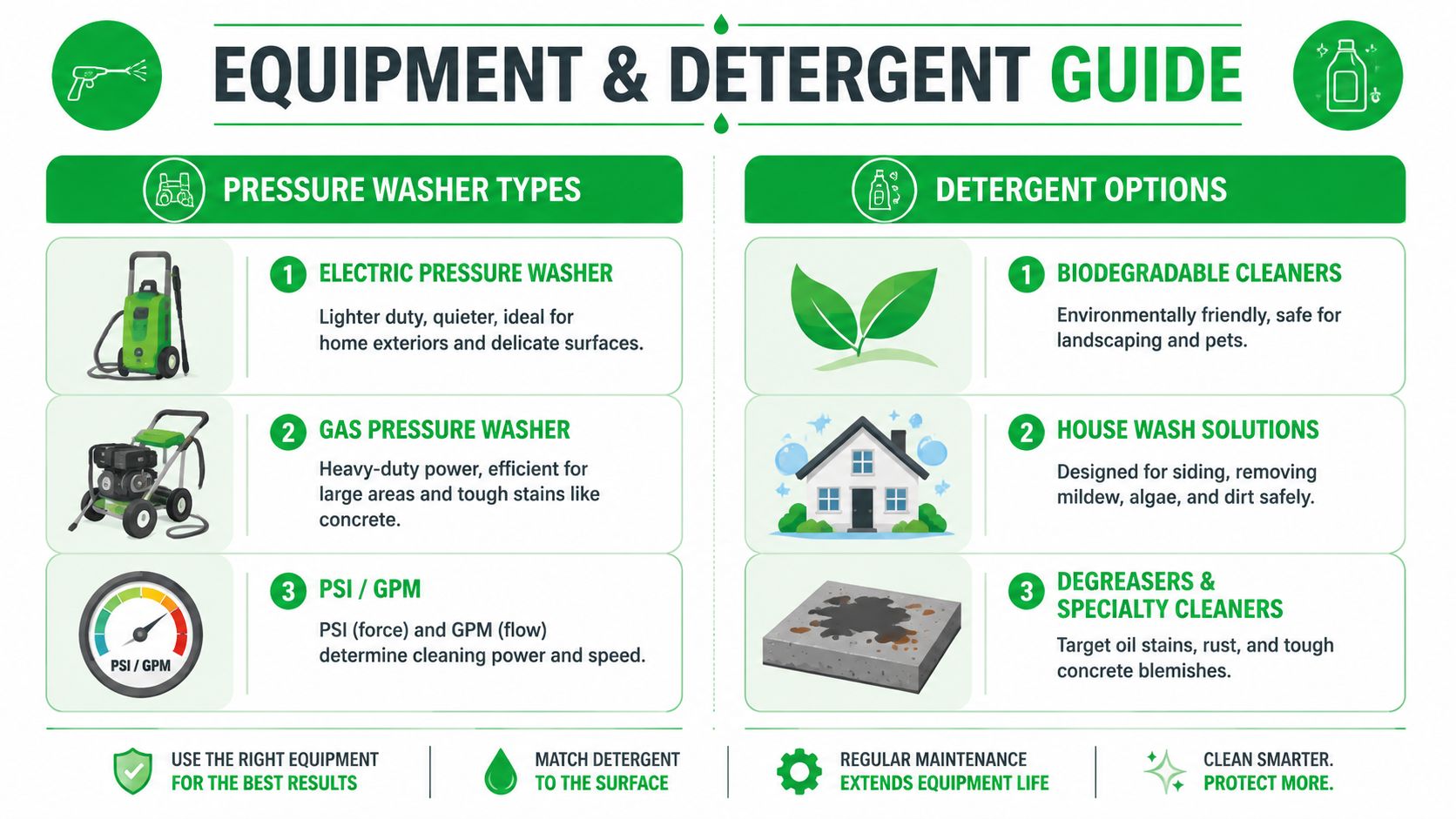
A rented pressure washer can either be a useful tool or a fast way to damage siding. The difference comes down to force, flow, spray pattern, and restraint. Most homeowners focus on raw pressure first. That's understandable, but it's incomplete. PSI tells you how hard the water hits. GPM tells you how much water moves. Together, they shape both cleaning speed and risk.
For house washing, the practical benchmark is a 1,300 to 2,400 PSI machine with a 25° to 40° spray tip, along with a workflow of pre-soaking with detergent, testing a hidden spot first, then cleaning in sections and rinsing thoroughly, as outlined in the Greenworks house washing guide.
What the machine numbers really mean
A lighter-duty electric unit often makes more sense for siding than a larger gas unit. That's because house exteriors usually reward control more than brute force. Large gas machines can be useful on hardscape, but they raise the penalty for a bad angle or a moment of hesitation on softer materials.
A few practical interpretations help:
- Lower PSI with a wider fan is generally safer for siding and painted surfaces
- Higher flow helps rinse more efficiently without relying on a narrow, aggressive stream
- Extension tools can reduce ladder use, but they also make wand control harder for beginners
If you're cleaning roofing edges or organic buildup near valleys and eaves, that's a separate skill set from siding. In those cases, many homeowners are better served by a dedicated roof cleaning service or a soft-wash setup designed for delicate materials.
Nozzle choice matters more than people expect
The nozzle determines how concentrated the water is when it lands. That's why a bad nozzle can damage a surface even if the machine itself is in a reasonable range.
Use this as a quick reference:
| Surface | Safer starting approach | Main concern |
|---|---|---|
| Vinyl siding | Wide fan, lower effective pressure | Forcing water up behind laps |
| Painted wood | Wide fan, cautious distance | Lifting paint and raising grain |
| Brick | Moderate pressure after inspection | Driving water into damaged mortar |
| Stucco | Broad spray, minimal force | Etching texture and opening weak spots |
A narrow stream invites mistakes. On a house exterior, it creates little room for error near trim, seals, and edges. A broader fan spreads the force and gives you more control over the result.
If a nozzle feels like it needs pinpoint force to get the surface clean, the detergent, dwell time, or method is probably wrong.
Use detergent as part of the cleaning system
Water alone removes loose soil. It doesn't always do much against mildew film, bonded dirt, or organic staining. That's where a proper house-wash detergent helps. The cleaner should match the contamination and the material, not just the stain color.
Think in simple categories:
- General house wash solutions for routine dirt, surface film, and mild organic buildup
- Biodegradable options when landscaping sensitivity is a concern
- Specialty products for concrete stains or problem areas that don't belong on siding
The biggest mistake with detergent in Flagstaff is letting it dry on the surface. Strong sun shortens your working time. Wash smaller sections, keep the wall wet enough for the solution to work, and rinse before residue starts baking on.
Buy or rent with your house in mind
A one-story stucco or vinyl home is one category. A taller home with dormers, gables, screened windows, and mixed trim materials is another. The right setup is the one you can control consistently. That's why many homeowners find that the machine is the easy part and the judgment is the harder part.
The Correct Pressure Washing Technique
Technique is what separates a clean result from a damaged exterior. Most DIY mistakes don't come from bad intentions. They come from a natural urge to get closer, spray harder, and move faster when a stain doesn't lift right away.
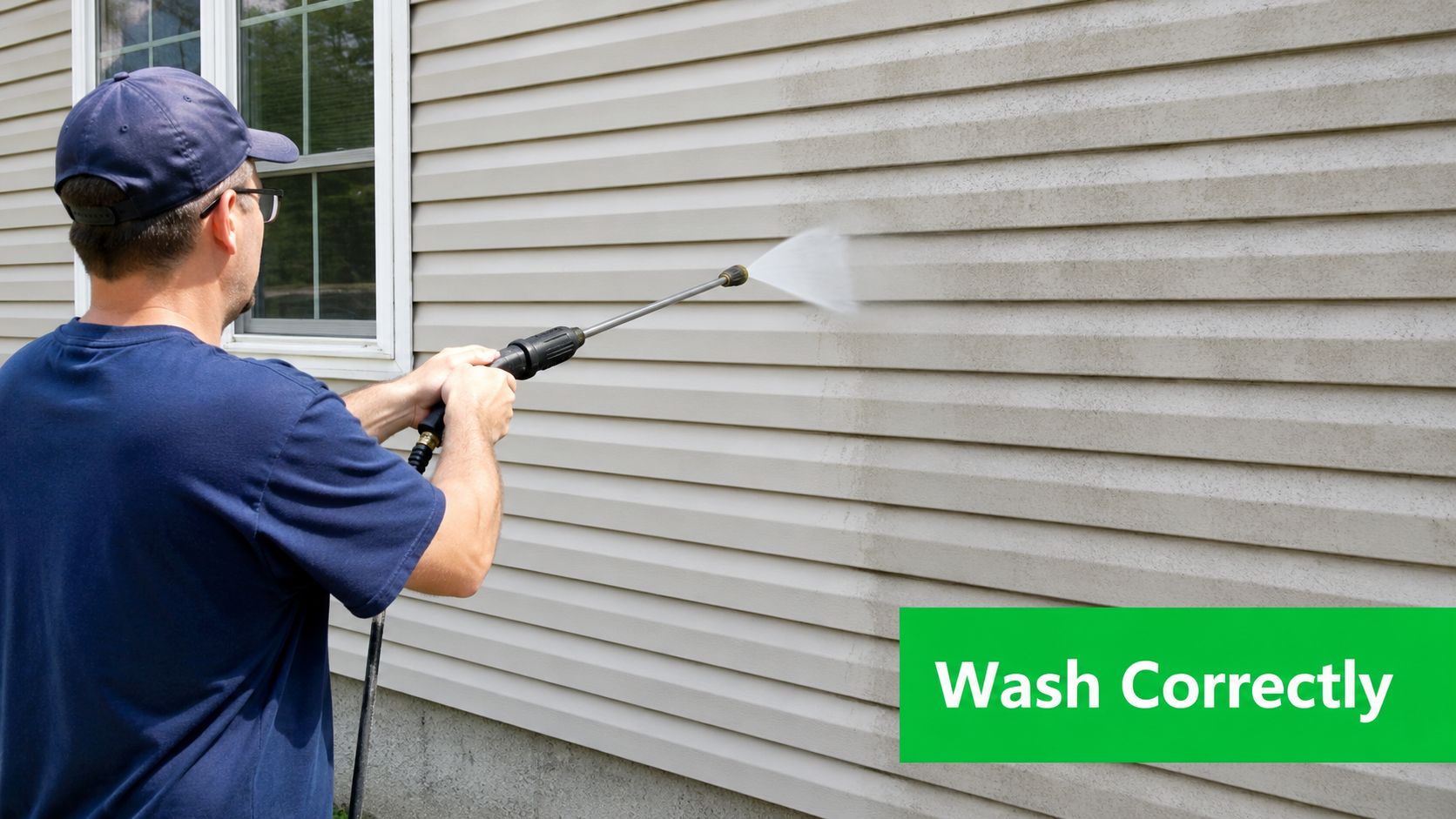
Multiple mainstream guides warn that excessive pressure can force water behind siding, crack windows, strip paint, or damage roof shingles. The smarter decision is to match the method to the material and judge the surface-specific risks first, as noted in this Nationwide overview of pressure washing your home.
Start low and test first
Always begin on a small, inconspicuous area. That tells you two things quickly. First, whether the surface can tolerate your current setup. Second, whether the staining responds to your detergent and rinse pattern.
Good technique starts with restraint:
- Back off the surface rather than crowding it
- Use a downward working angle so water doesn't chase behind laps and seams
- Keep the wand moving to avoid striping and concentrated damage
- Adjust one variable at a time instead of changing pressure, distance, and nozzle all at once
On many homes, a cautious first test will show that the surface needs chemistry and patience, not more force.
Work in a sequence that makes sense
Application and rinsing don't follow the exact same direction. That's where many weekend jobs get streaky.
A reliable pattern looks like this:
- Pre-wet or pre-soak as needed, depending on the material and cleaner.
- Apply detergent in manageable sections, usually low enough that you can keep an eye on drying.
- Let it dwell briefly without drying on the wall.
- Rinse thoroughly and methodically, clearing residue before moving on.
When detergent is involved, applying low to high helps reduce visible streaking on the wall during dwell time. Rinsing high to low then carries the loosened debris off the house.
Adjust your technique to the material
Different surfaces telegraph damage in different ways. Wood fibers can fuzz or stripe. Stucco can shed its finish texture. Vinyl can flex and let water travel where it shouldn't. Logs and rough-sawn cabin exteriors common around Northern Arizona deserve extra caution because the grain and checks can hold water and react unpredictably.
A few surface-specific reminders help:
| Material | Technique adjustment |
|---|---|
| Cabin logs or stained wood | Follow the grain visually and avoid lingering passes |
| Stucco | Use less force than you think you need and watch patched areas closely |
| Trim near windows | Reduce angle and keep spray away from seal edges |
| Older painted surfaces | Assume loose paint will fail faster under pressure |
If you want another regional perspective on how homeowners think through these variables in a different climate, this pressure washing guide for Dallas homeowners is useful as a comparison point. The conditions are different, but the principle holds. Material and technique matter more than owning a powerful machine.
A clean pass should look controlled, even, and boring. The moment the work feels aggressive, the method needs adjustment.
Keep your body position under control
This part doesn't get enough attention. If the wand is pulling you off balance, especially on a slope, near stairs, or around foundation beds, your spray quality drops right away. Stable footing matters because accurate wand control is part of property protection. That's one reason second-story work and awkward roofline areas escalate from DIY project to safety issue fast.
Common Mistakes and How to Avoid Them
The most common assumption in pressure washing a house is that stubborn dirt calls for more pressure. That's usually the wrong diagnosis. Heavy force can hide a bad method for a few seconds, then leave you with etched wood, damaged paint, blown-in water, or scarred vinyl.
The mistakes that cause the most damage
These show up again and again on residential exteriors:
- Using too much pressure on siding that needed detergent and dwell time instead
- Holding the wand too close so the water cuts, splinters, or leaves visible marks
- Spraying upward under laps or trim and pushing moisture behind the cladding
- Aiming directly at windows and seals where water intrusion and seal failure become real risks
- Letting detergent dry in full sun, leaving film and uneven cleaning
- Skipping eye protection and basic safety gear because the job seems routine
One issue deserves a direct warning. Windows should never be treated like a target for a high-pressure wand. Professional window cleaning is a different service with different tools. At Pine Country, exterior glass is cleaned with squeegees, poles, and pure-water brushes, not rags, Windex, or pressure from a house-wash wand.
What people misread during the job
DIY washers often see a dark patch that doesn't lift on the first pass and assume it's bonded grime. Sometimes it is. Sometimes it's oxidation, failing paint, old stain, or moisture variation in the material itself. More force won't fix those conditions. It only increases the chance of damage.
If the only way to make progress is to blast the surface, stop. The cleaning approach is wrong.
Another common mistake is incomplete rinsing. The wall may look clean while wet, then dry with a dull film or visible runoff lines. That's not just cosmetic. Residue left behind can hold dirt faster and make the job look uneven in a few weeks.
A better correction pattern
When a section isn't cleaning well, don't react by getting aggressive. Use a checklist:
- Check the material again. Is it suitable for pressure washing?
- Reassess the detergent. Some stains need chemistry more than force.
- Increase dwell time carefully. Don't let products dry.
- Widen the spray pattern or increase distance.
- Decide whether the stain is beyond a safe DIY approach.
That last step matters. Not every ugly area should be chased with a wand until it gives up.
When to Call a Professional Like Pine Country
There comes a point where the smart decision isn't about effort. It's about risk. If the house is tall, the surfaces are delicate, the stains are stubborn, or the windows and trim are older, the odds of turning a cleaning project into a repair project go up quickly.
One practical way to judge the job is by access and complexity. Professional pressure washing in the U.S. averages about $52 per hour, with typical residential pricing often around $0.08 to $0.50 per square foot. A 2,000-square-foot home is commonly estimated at $200 to $300, while a two-story home can range from $120 to $1,600 because labor and access challenges vary so much. On three-story homes, specialized access like a scissor lift may be needed, and costs can reach $2,800 in some cases, according to the Taskrabbit pressure washing cost guide. That spread tells you something important. Height, reach, and job difficulty matter as much as house size.
The jobs that usually justify professional help
Homeowners should strongly consider professional service when the property involves:
- Second- or third-story access
- Older siding, paint, or seals
- Mixed materials such as stucco, wood, and masonry on one exterior
- Heavy buildup near rooflines, dormers, or window clusters
- Cabins and custom homes where wood character is easy to scar
If you're weighing the cost side carefully, this piece on understand pressure washing investments for homes is a useful read for framing what you're paying for when access and difficulty increase.
What professional exterior care should include
A professional service should protect the property, not just rinse it fast. That's where experience, safety training, and the right equipment matter. Pine Country Window Cleaning has served Flagstaff since 1999 and was started by Flagstaff native David Kaminski. For homeowners who also need glass and screens addressed, their Flagstaff window cleaning service includes the kind of details many homeowners value most: careful work around the home, screen removal, screen cleaning, and screen reinstallation.

For delicate surfaces, a professional may also choose soft washing over high pressure. That's often the safer call on painted trim, aging siding, and areas near windows and roof edges. Pine Country Window Cleaning is one local option for homeowners who want exterior cleaning handled with that kind of judgment, along with OSHA safety-trained technicians and equipment suited for challenging access.
On a complex house, the value of professional work isn't just a cleaner result. It's avoiding the damage that a rushed DIY wash can leave behind.
If your home in Flagstaff, Munds Park, Pine Canyon, Forest Highlands, or Flagstaff Ranch needs careful exterior cleaning, Pine Country Window Cleaning can help. Since 1999, the team has focused on protecting homes, communicating clearly, and delivering complete service that respects your property from screens to siding to exterior glass.