
A facility manager comparing high rise window cleaning prices for a Flagstaff hotel can quickly find quotes that look unrelated. One contractor may price by pane, another by story, and a third may submit a single project fee with equipment listed separately. The difference usually isn't hidden profit. It comes from the building's height, facade layout, access method, safety planning, glass condition, and the time required to mobilize a trained crew.
A residential window cleaner can often work with squeegees, ladders, poles, and pure-water brushes from the ground or a stable ladder position. High rise work can require rope access, suspended scaffolding, building-mounted platforms, lifts, certified anchors, fall-protection procedures, and detailed coordination with tenants or guests. Pine Country Window Cleaning has served Flagstaff since 1999, and its work includes homes, cabins, commercial properties, hotels, campuses, and difficult-access glass. The company also removes, cleans, and reinstalls screens with every service because caring for the home or building means more than leaving the glass streak-free.
Understanding High Rise Window Cleaning Prices
A property manager budgeting for a Flagstaff hotel may begin with the window count. That number helps, but it rarely explains the full quote. Two buildings with similar glass areas can have different costs when one has usable roof anchors and the other has setbacks, ledges, sloped sections, landscaping, or public space that limits equipment placement.
Published guides place high-rise or specialty work at about $5–$15 per pane, while whole-building cleaning may range from $1,000 to $5,000 or more. Exterior cleaning for a 12–20-story building is commonly estimated at $2,500–$6,000, according to the commercial window washing cost guide. These figures provide context, not a guaranteed Flagstaff bid. Pine Country Window Cleaning has worked in Flagstaff since 1999, and its 25-year history includes access problems that a simple pane count cannot show.
Access and compliance shape the quote
The contractor first determines how workers can reach each elevation and return safely. Rope access may suit a straightforward facade with compatible anchors. A suspended system or lift may be required where projections interrupt a descent, anchors cannot be used, or the ground cannot support equipment. A hotel near downtown Flagstaff may also require pedestrian controls and work scheduling around guests, while a sloped site or property with gardens can add staging time.
A professional estimate may list:
- Crew mobilization: Travel, setup, equipment delivery, staging, and daily teardown.
- Access equipment: Rope systems, suspended platforms, boom lifts, scissor lifts, or building-mounted devices.
- Safety planning: Site review, fall-protection gear, training records, rescue planning, and supervision.
- Anchor documentation: Inspection, testing, certification, and compatibility checks.
- Property coordination: Barricades, pedestrian control, tenant notices, work windows, and cleanup.
- Glass condition: Mineral deposits, construction debris, pollen, dust, paint, or neglected frames.
OSHA's final rule limits rope-descent systems to 300 feet above grade, about 30 stories, unless the employer can show another access method is not feasible or would create a greater hazard, as explained in this high-rise window-washing safety overview. Buildings above that threshold may require more specialized access planning and equipment.
Practical rule: A low quote that does not explain how the crew will reach the glass is not a complete high rise estimate.
How Pricing Structures Work for High Rise Jobs
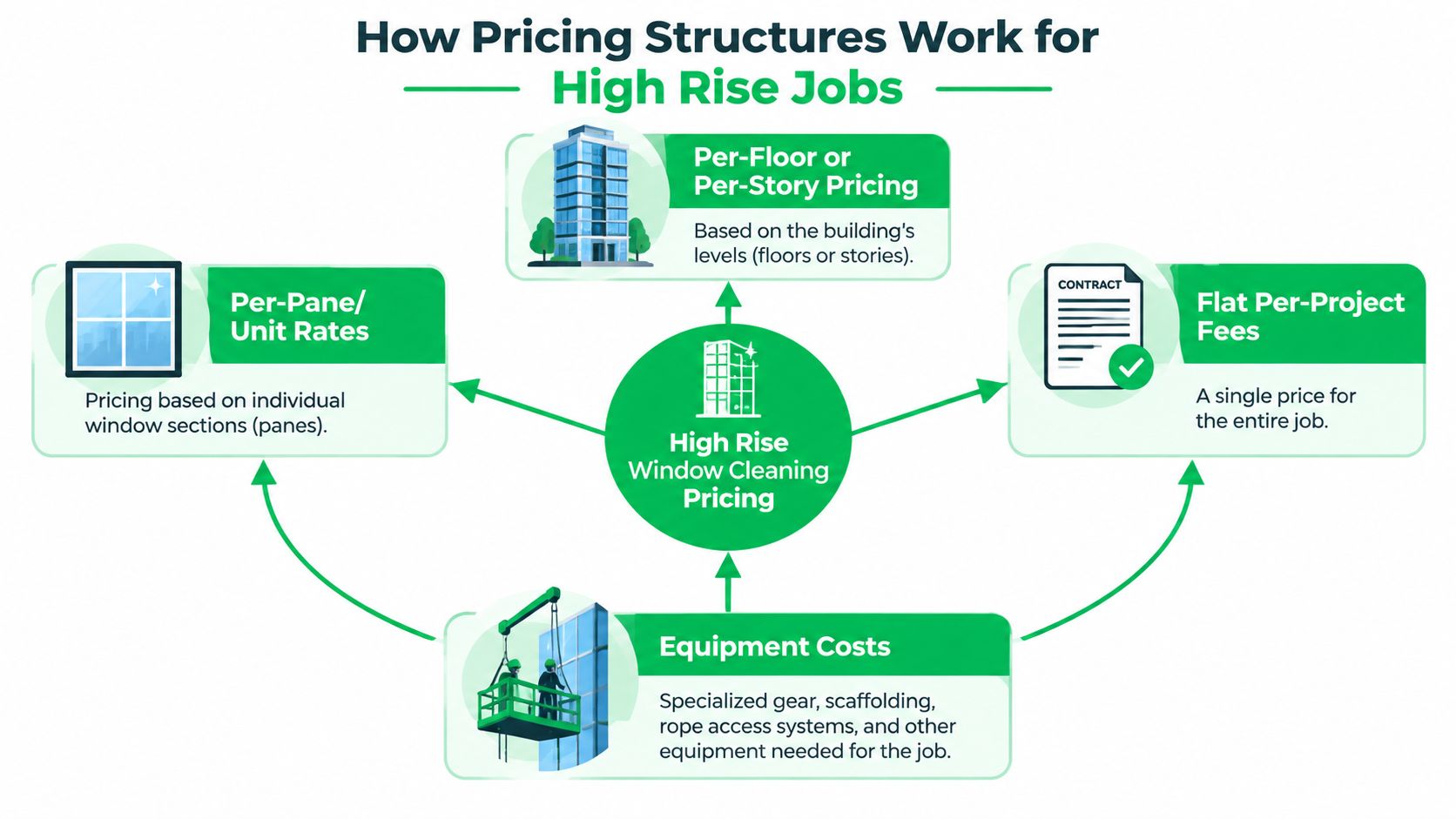
A repeatable apartment facade and a hotel with setbacks should not be priced the same way. Per-unit or per-story rates work when the glass, access method, and work sequence remain consistent. A hotel, campus, or office tower may need a flat project price because staging, interior work, tenant coordination, and changing access conditions cannot be reduced to a window count.
Per-pane and per-unit pricing
Per-pane pricing fits buildings where the contractor can count the glass and apply the same cleaning method across each elevation. Published guides cite $5–$15 per high-rise specialty window. That category may reach $40–$90 or more per window above the sixth floor in New York, compared with a national range of $10–$40, as outlined in the high-rise commercial pricing guide. Those figures provide context, not a Flagstaff quote.
The main benefit is a clear unit rate. The risk is an incomplete scope. Confirm whether the price includes screens, frames, interior glass, mineral-stain removal, equipment mobilization, safety documentation, and the access work required for the building.
Per-floor or per-story pricing
Per-floor pricing suits towers with similar layouts on each level. It helps a property manager compare the effect of adding or removing a story, while the contractor still accounts for wind exposure, staging, crew size, and changing conditions between elevations.
A taller section can cost more even when its glass area is similar. One independent guide estimates ₹8–₹20 per square foot for buildings up to 15 stories and ₹12–₹30 per square foot for taller structures, citing added safety procedures and crew requirements in this facade-cleaning pricing reference.
Flat project and hourly pricing
A flat project fee gives the owner a defined budget when the scope is documented. The proposal should state whether it includes access setup, equipment, screens, interior glass, water, travel, permits, and restoration work.
Hourly pricing fits irregular assignments, inspection-stage cleaning, or glass requiring careful stain removal. The quote should identify the crew, equipment, minimum charge, and expected tasks. For a Flagstaff property, Pine Country Window Cleaning's long experience with local weather, slopes, and older buildings helps identify time that a simple pane count can miss.
Compare the total delivered price, not only the rate beside each pane or floor. A lower unit rate can become expensive when access preparation, compliance records, or return visits are billed separately.
Key Cost Drivers in High Rise Window Cleaning
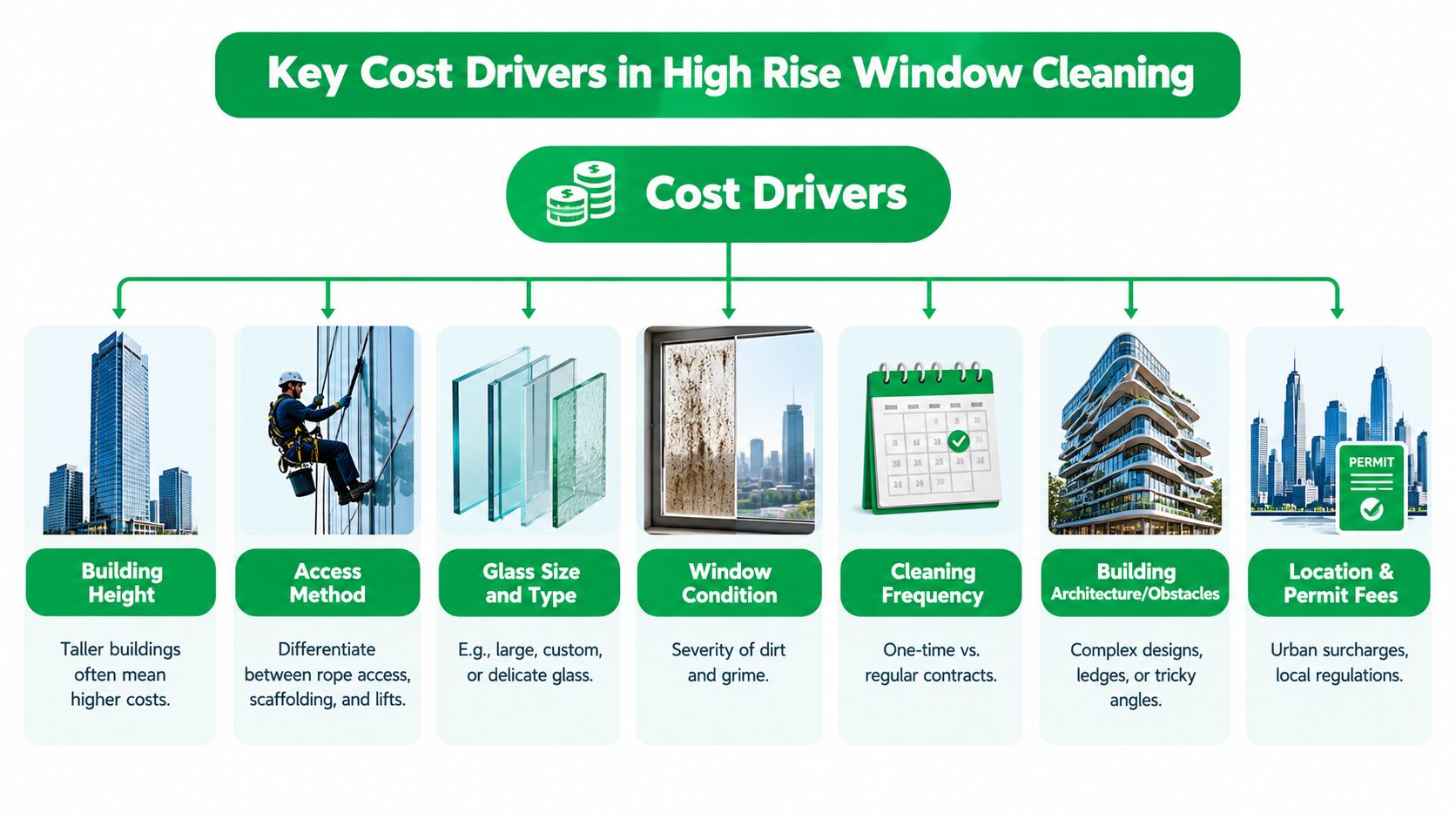
High rise window cleaning prices are built from several interacting variables. Height matters, but it isn't the only factor. A lower building with difficult setbacks can cost more to service than a taller building with clean, certified access points and a repetitive facade.
Height and access method
Rope access can be efficient when the roofline, anchors, and facade allow safe descent. A guide estimates that cleaning a 10-story building by rope access may cost about £800–£2,500, while scaffolding for the same building can cost approximately £15,000–£30,000 for erection, hire, and dismantling, according to this rope-access window-cleaning guide. The access decision can therefore change the project price before labor or glass condition is considered.
Boom lifts and scissor lifts can work well where the ground surface, reach, and pedestrian controls cooperate. They become less practical when the building has steep terrain, restricted parking, landscaping, overhead obstacles, or a facade that extends beyond the lift's safe operating zone. More information about equipment choices is available in this guide to high rise window cleaning equipment.
Glass, condition, and architecture
Large panes take more time to wet, scrub, squeegee, detail, and inspect. Curved, tinted, coated, delicate, or irregular glass may require a slower technique and careful product selection. Construction dust, paint, adhesive, mineral deposits, and long-neglected grime can turn routine cleaning into restoration work.
Architecture also affects production. Recessed windows, balconies, awnings, ledges, interior courtyards, and angled walls create extra repositioning and make some access systems unusable. On a Flagstaff property, pine pollen, dust, and mineral residue may require more preparation than a quick exterior rinse.
Frequency, permits, and insurance
Regular service keeps the crew working on current soil instead of restoration-level buildup. A recurring schedule can also make staffing and mobilization easier to plan, although the exact savings depend on the building and contract scope.
Permits, traffic controls, insurance requirements, and building rules add administrative work. For owners budgeting several property services together, a broader resource such as this guide to the average Airbnb cleaning fee can help separate general turnover expenses from specialized exterior-access work.
OSHA requires rope-descent anchorages to be permanent, sound, rigid, and capable of supporting the intended load. The cited safety guidance also states that anchorages must support 5,000 pounds in any direction per attached worker, so inspection and testing can become a real project cost, not a footnote.
A serious contractor should explain which of these drivers applies to the property and which are already included in the proposal. If the estimate only says “high rise cleaning” without describing access, condition, safety, and scope, it isn't detailed enough to compare.
Sample Local Price Ranges and Example Quotes
A four-story Flagstaff lodge and a 20-story office tower can both have upper-level glass, but their quotes are built around different access and compliance demands. The comparisons below are planning examples for Northern Arizona property managers, not verified prices for specific buildings. A contractor should inspect the site before promising a total.
Local high rise window cleaning sample quotes
| Scenario | Stories | Access Method | Price Range |
|---|---|---|---|
| Flagstaff cabin or lodge building | 4 | Ladders and pure-water poles where practical | Site-specific quote |
| Apartment or hospitality building | 8 | Lift, ladders, or poles depending on facade | Site-specific quote |
| Office tower | 20 | Rope access, lift, or suspended system after inspection | Within the relevant high-rise benchmark when scope aligns |
A four-story cabin should not be priced like a tower merely because both have high windows. Extension ladders or water-fed poles may reach accessible elevations, while screens, interior access, steep ground, decks, landscaping, and roof edges can change the labor plan. The access method must also fit the site's safety requirements.
Pure-water equipment can reduce ladder work in suitable locations. One industry example describes three purification stages and 0 ppm outgoing pure water, while another indicates paired water-fed poles can reach windows up to five stories high. Those tools do not replace specialized access where balconies, projections, setbacks, or unsafe ground prevent a stable setup.
An eight-story apartment or hospitality building usually requires more coordination. Tenant notices, parking restrictions, lift placement, canopies, balconies, and work-hour limits can affect the quote. A building manager may also need to confirm where equipment can be staged and whether pedestrians require barricades. Glass quantity matters, but setup and compliance time can matter just as much.
For a 20-story office tower, the proposal should show how the contractor will address roof access, anchors, facade geometry, wind exposure, rescue procedures, interior exclusions, and equipment changes between elevations. Compliant anchors and a straightforward facade may make rope access practical. If those conditions are absent, suspended equipment or another access system can control the budget.
Pine Country Window Cleaning's 25-year history serving Flagstaff properties reinforces the local trade-off: snow, steep sites, historic building details, and restricted staging areas can add planning work that generic price tables miss. Review this commercial window cleaning cost calculator guide before requesting bids. Ask every bidder to itemize access, screens, interior glass, condition work, mobilization, and safety documentation so the quotes compare the same scope.
Tips to Get Accurate Estimates and Save on Costs
Accurate high rise window cleaning prices begin before the contractor arrives. Give the estimator enough information to identify access problems, glass condition, and scheduling restrictions. That reduces the chance of receiving a low initial number followed by unexpected additions.
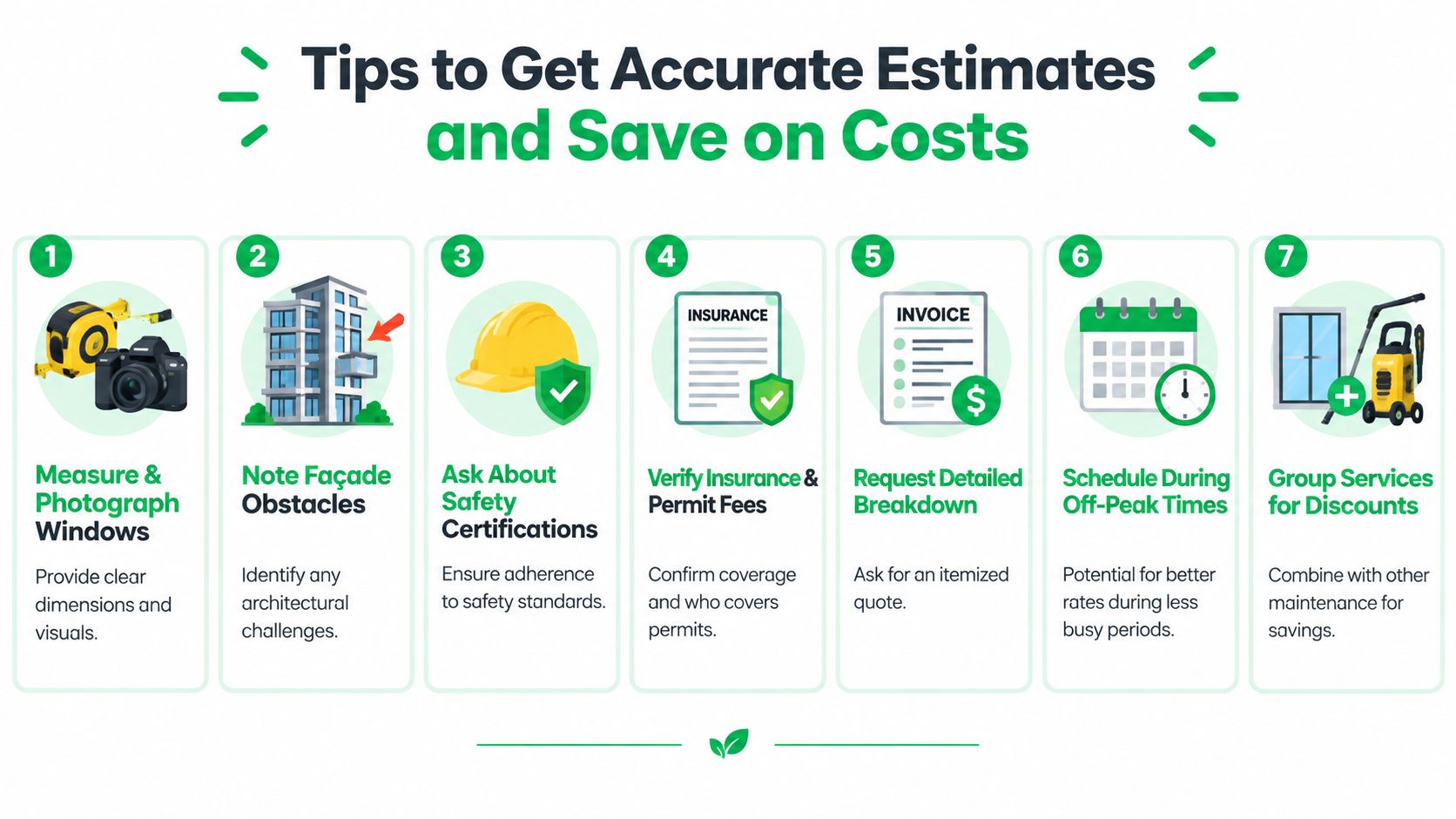
Measure and photograph the glass. Provide elevations, approximate pane sizes, window counts, and clear photos from the ground. Include balconies, atriums, skylights, doors, transoms, and interior courtyard glass.
Mark facade obstacles. Note awnings, canopies, trees, roof setbacks, slopes, decorative projections, restricted parking, and areas where a lift can't be positioned. A simple site plan can save an estimator a second visit.
Ask about safety credentials. Ask who will perform the work, what training they hold, how rescue planning is handled, and which fall-protection procedures apply to the building.
Verify insurance and permit responsibility. Get the coverage details in writing and ask whether the owner, property manager, or contractor handles permits, barricades, traffic control, and building approvals.
Request an itemized scope. The proposal should identify exterior and interior glass, screens, frames, sills, access equipment, mobilization, stain removal, water, cleanup, and exclusions.
Ask this directly: “What condition or access issue could change this price after work begins?”
Schedule around the property. Coordinate with occupancy, tenant traffic, hotel operations, weather exposure, and lift availability. A practical schedule can reduce disruption and prevent rushed work.
Group compatible services. Ask whether window cleaning can be coordinated with gutter and downspout cleaning, pressure washing, or post-construction work. Bundling may reduce repeated setup, but don't combine services if doing so creates unsafe staging or scheduling conflicts.
Screen handling deserves a specific question. Professional workflows include screen removal, cleaning, and reinstallation with every service, which adds labor but helps protect frames and supports a complete result, as explained in this pure-water window-cleaning workflow reference. Confirm whether that work is included or billed separately.
Choosing a Reputable High Rise Window Cleaner
A reputable provider should explain the access method, carry appropriate insurance, document safety procedures, and show experience with the building type. Look for crews trained for work at height, equipment suited to the site, clear communication, and a written satisfaction policy.
Pine Country Window Cleaning is a Flagstaff company founded by Flagstaff native David Kaminski and operating since 1999. Its service capabilities include boom lifts, scissor lifts, pure-water systems, screen care, gutter cleaning, pressure washing, and post-construction window cleaning. The company also describes background-checked, OSHA safety-trained technicians and a 100% satisfaction guarantee. For property managers evaluating a specialized provider, the high rise window cleaning services page provides a place to review the relevant offering.
The right contractor won't only quote a low per-window number. They'll inspect the building, explain the safety and access plan, define the finished scope, and treat the surrounding home, business, tenants, and landscaping with care.
For a Flagstaff or Northern Arizona property, Pine Country Window Cleaning can evaluate access, glass condition, screens, equipment needs, and recurring maintenance options before preparing a clear estimate. Visit Pine Country Window Cleaning to request a free estimate for high rise, commercial, cabin, or residential window cleaning, with courteous service and a 100% satisfaction guarantee.