

Americans spend about six hours each week cleaning, adding up to more than 300 hours per year, or nearly 13 full days of cleaning time, according to a survey summary of household cleaning time. That workload becomes harder to manage in Northern Arizona, where snow, pine debris, pollen, dust, mineral-rich water, and freeze-thaw conditions affect glass, screens, gutters, siding, and walkways in different ways.
Flagstaff properties need more than an occasional surface clean. A cabin in Munds Park, a short-term rental in Pine Canyon, a storefront near downtown, and a large facility near NAU each need a maintenance rhythm suited to occupancy, access, weather, and building materials.
These cleaning tips and tricks focus on practical property care rather than improvised shortcuts. Professional squeegees, pure-water brushes, extension poles, lifts, safe ladder practices, screen handling, gutter service, pressure washing, snow removal, and clear customer communication all have a place. Pine Country Window Cleaning has served Northern Arizona since 1999, founded by Flagstaff native David Kaminski, with a focus on protecting the customer's home or business while delivering dependable service.
1. Professional Squeegee Technique for Streak-Free Results
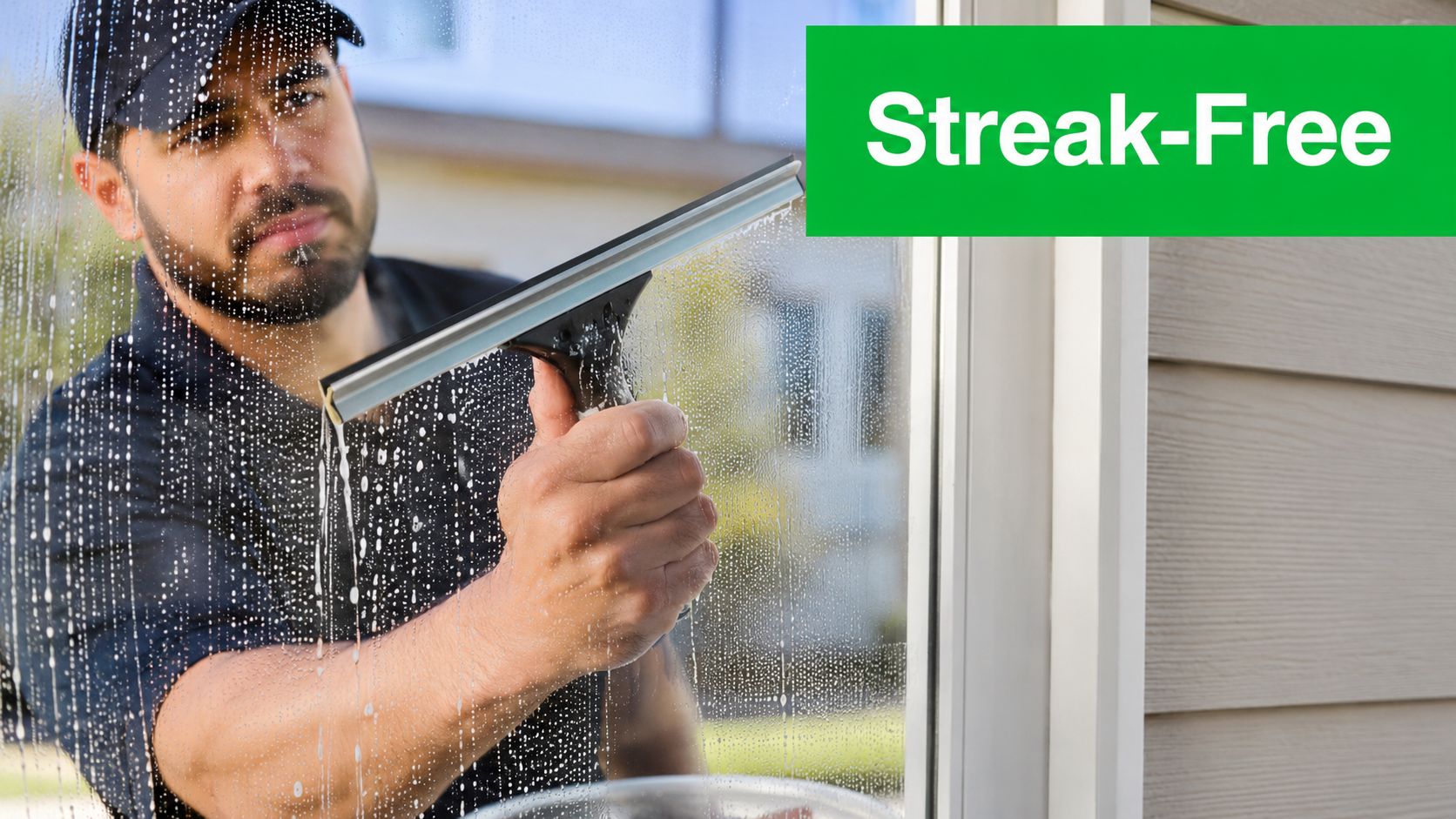
A professional squeegee does more than move water across glass. Its rubber blade creates controlled contact with the pane, lifting away cleaning solution, dust, and loosened residue without leaving lint behind. That's why professional window cleaning doesn't rely on a rag, Windex, or newspaper as the primary finishing method.
The technique matters as much as the tool. A cleaner needs consistent pressure, a stable angle, and overlapping passes that cover the entire pane. If the blade skips over dry spots, turns during a stroke, or carries grit from one section to another, streaks and missed edges are likely.
Pine Country Window Cleaning uses commercial-grade squeegees for homes, cabins, storefronts, and larger commercial properties. The blade should be wiped between passes, especially when working on dusty exterior glass. Regularly washing and inspecting the rubber also helps prevent nicked edges from dragging lines across the window.
How to keep each pass clean
Use overlapping strokes rather than stopping short at each section. On broad panes, a controlled top-to-bottom pattern can be efficient. On divided windows, smaller passes give the cleaner better control around muntins, corners, and seals.
Practical rule: A clean blade, steady pressure, and complete coverage matter more than applying more solution.
Pure-water technology can support the process by reducing mineral residue before a squeegee finish. For a closer look at the method, see this guide to cleaning windows streak-free with professional technique.
The video below shows the kind of controlled movement that separates a professional finish from repeated wiping.
2. Pure-Water Brush Cleaning Systems
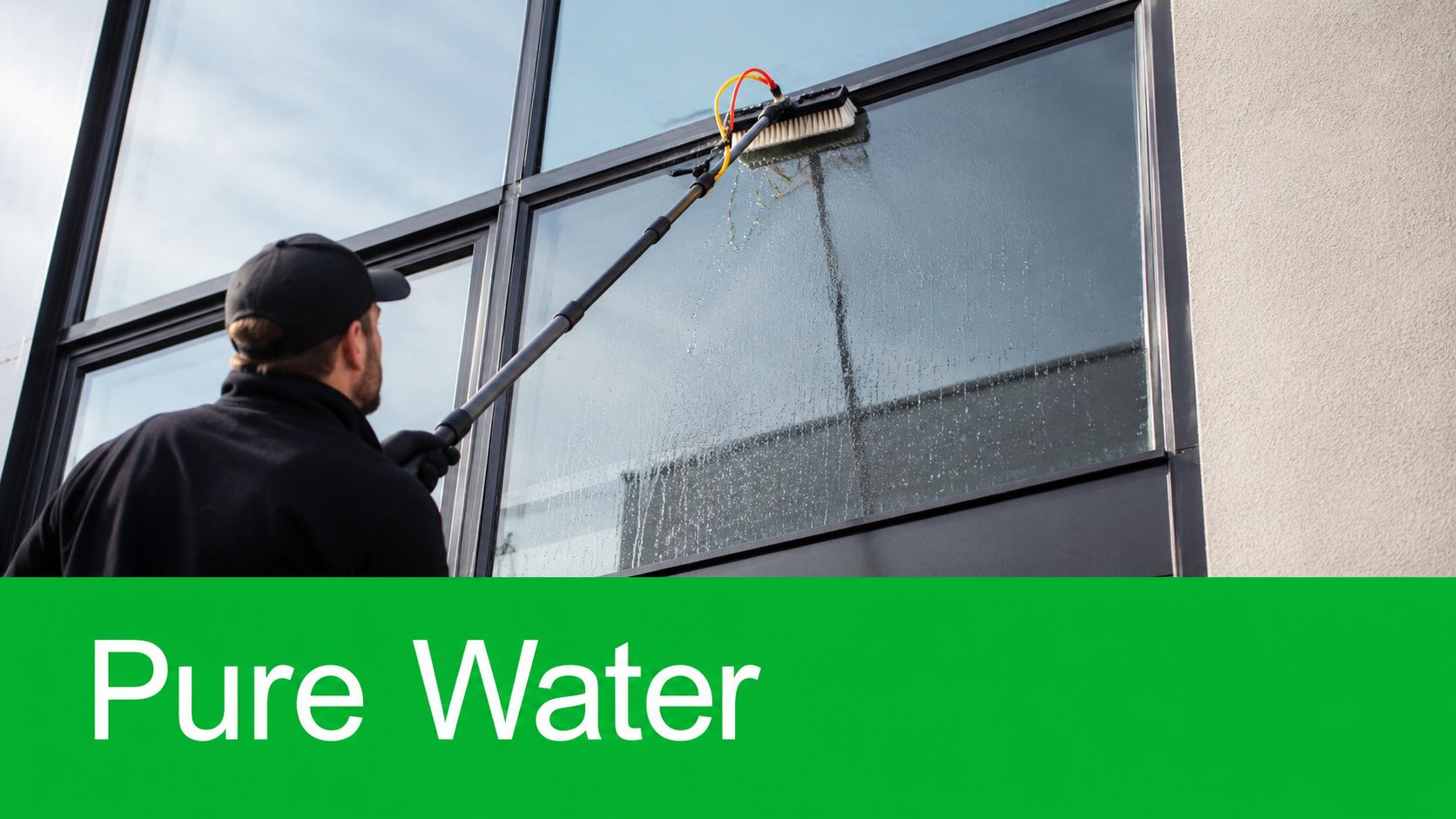
Pure-water brush systems are especially useful when windows are high, wide, or difficult to reach from inside. Filtered or deionized water passes through a brush, loosening dirt on the glass and frames. Because the water contains fewer dissolved minerals, it can dry with less spotting than ordinary tap water, an important consideration in areas affected by hard water.
The brush does more than scrub the pane. It can agitate dust around frame edges, wash exterior surfaces, and reach glass from the ground or a safer working position. Professional poles extend that reach without forcing a technician to lean from a ladder or work directly over landscaping.
Pine Country Window Cleaning combines pure-water brushes with professional poles and other access equipment. The best choice depends on the window, the soil level, the height, and the required finish. A brush system can be highly effective for recurring exterior maintenance, while a squeegee finish may be appropriate where the glass needs detailed hand work.
Match the system to the property
Pure-water work is useful for second homes, office buildings, hotels, and homes with windows above patios or planted areas. It also reduces the temptation to overapply chemical solution, which can create extra runoff and repeat work.
Brushes and hoses still require care. Operators need to maintain the brush, inspect the pole, control water flow, and avoid directing water into vulnerable openings. For an explanation of professional options, review this professional window cleaning solution guide.
The system works best as part of a complete service, not as a universal replacement for inspection, screen cleaning, frame detailing, or interior glass work.
3. Professional Window Screen Removal, Cleaning, and Reinstallation
Screens collect pollen, pine dust, insects, and fine debris that can move onto freshly cleaned glass. Removing them before window service allows the exterior pane to be cleaned properly and gives the screen its own wash instead of treating it as an afterthought.
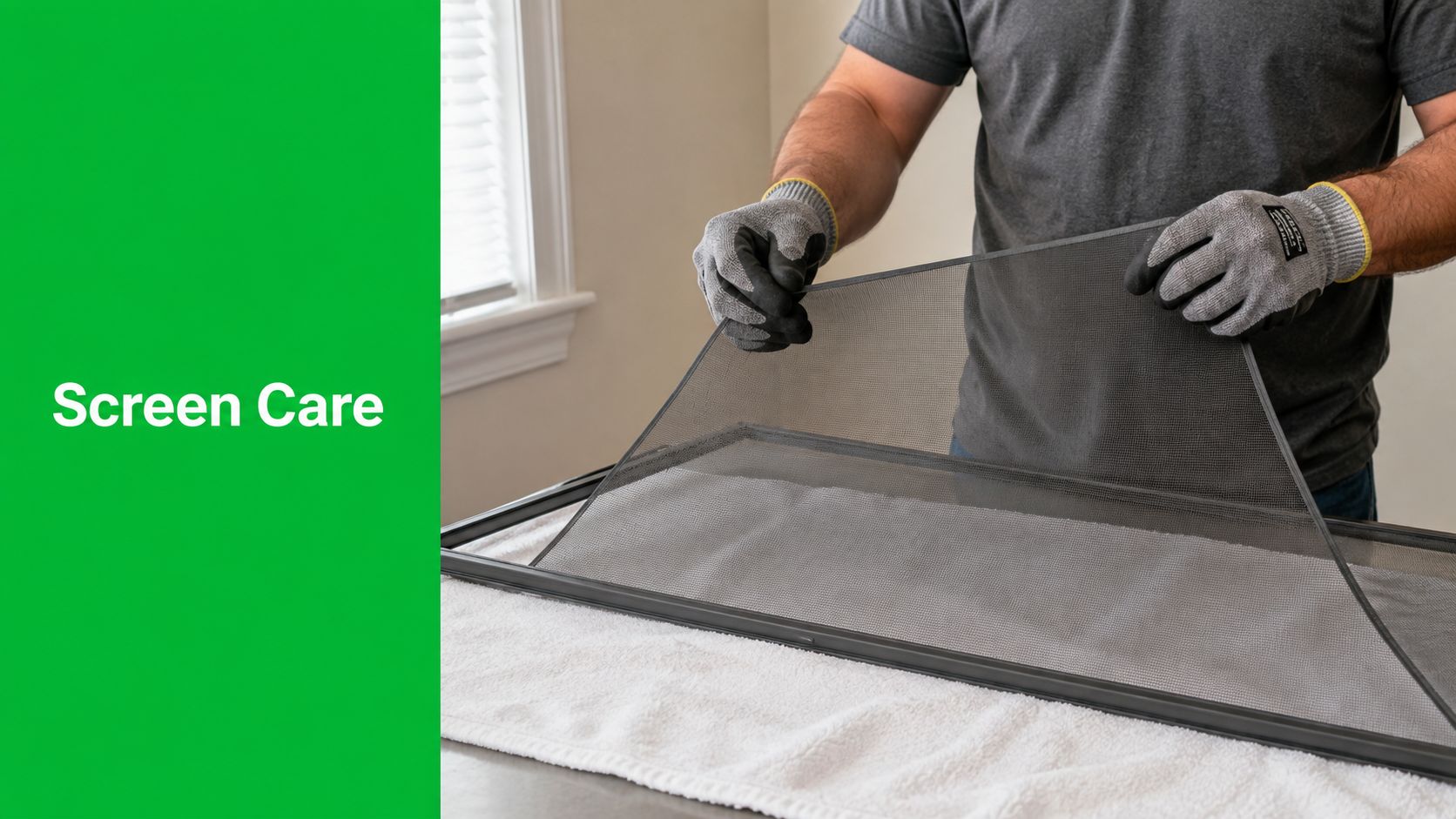
Pine Country Window Cleaning removes, cleans, and reinstalls screens with every service. The process should be deliberate. Each screen needs to be handled without bending the frame, placed where it won't be stepped on or blown away, washed with an appropriate method, fully dried, and returned to the correct window.
A manufacturer maintenance guide recommends removing screens, washing them with mild soap and warm water, gently scrubbing with a soft-bristle brush, rinsing, drying completely, and tracking which screen belongs to which window before reinstallation. That identification step is easy to overlook, especially on larger homes with similar openings.
Protect the screen while cleaning
Aggressive brushing can stretch mesh or damage a weakened frame. Technicians should note tears, bent corners, loose spline, or corrosion before reinstalling the screen. A customer may prefer repair or replacement rather than putting a damaged screen back into service without discussion.
Seasonal timing helps. Screens often deserve attention before periods of high window use, after pollen-heavy conditions, or when a property changes from vacant to occupied. For cabins and rentals, clean screens can improve the guest experience while also helping owners identify damage before the next booking.
Screen cleaning is one of the clearest examples of property care beating a quick cosmetic pass. The pane may look clean, but the window system is incomplete if the screen is dirty, misplaced, or forced into the wrong opening.
4. Safe Access Equipment for High-Altitude and Commercial Window Cleaning
Difficult windows aren't a good place to improvise. A tall atrium, commercial facade, sloped roof, or second-story window over a stairwell may require equipment that a homeowner doesn't have and shouldn't attempt to substitute with unstable furniture or an overextended ladder.
Pine Country Window Cleaning maintains access equipment that includes boom lifts, scissor lifts, and a 95-foot atrium lift. That capability helps the team plan work around height, reach, ground conditions, pedestrian movement, and the customer's finished surfaces.
A free estimate should cover more than pane count. Site access, overhead obstructions, slopes, gates, landscaping, parking, interior furnishings, and weather can all change the safest method. Commercial work may also require coordination with building managers, tenants, security personnel, or facilities staff.
Ladder work still demands discipline
When a ladder is appropriate, it needs a stable setup and three points of contact. Safety guidance also calls for inspecting ladders before use and removing damaged or worn components from service, including feet, levelers, rungs, ropes, and locks.
Height changes the job. The right question isn't how quickly someone can reach the glass, but how the work can be completed without exposing people or property to unnecessary risk.
Pine Country's technicians are OSHA safety-trained, and complex access should be planned rather than rushed. Weather matters in Flagstaff, too. Wind, ice, snow, wet surfaces, and changing temperatures can affect equipment setup and glass-cleaning conditions.
For rope-descent work, building owners also have responsibilities. OSHA-related guidance says owners must inform the employer in writing that each anchorage has been identified, tested, certified, and maintained to support 5,000 pounds in any direction for each attached worker, with annual inspection and certification and recertification at least every 10 years, as detailed in this window-cleaning anchorage safety guidance.
5. Seasonal Window Maintenance for Northern Arizona Climate
Flagstaff's seasons leave distinct maintenance problems behind. Winter snow and ice can strain exterior systems. Spring pollen and dust settle on screens and glass. Summer sun and dry air can bake residue onto panes, while fall brings pine needles, leaves, and preparation for snow.
A useful schedule follows exposure, occupancy, and access rather than treating every window the same. Primary residences may need routine service around daily activity. Second homes and short-term rentals benefit from inspections before arrival, after vacancy, or before guests check in.
Pine Country Window Cleaning has served Flagstaff since 1999. Founder David Kaminski is a Flagstaff native, giving the company local experience with neighborhoods, cabins, commercial buildings, and mountain conditions.
Build the schedule around exposure
Plan spring cleaning after the strongest pollen period when practical. Schedule fall service before winter weather makes exterior access harder. After winter, inspect screens, seals, frames, and drainage areas for damage or buildup.
Routine maintenance also reduces the time owners spend managing accumulated household tasks. A household cleaning time summary estimates that household tasks take around 42 hours per month, supporting a repeatable service plan instead of occasional heavy cleaning.
Pair seasonal window work with gutter and downspout inspection when conditions allow. Snow, pine needles, leaves, and sediment can obstruct drainage, so checking these systems alongside exterior glass helps protect the property from avoidable runoff problems.
For cabins, rentals, commercial buildings, and managed properties, record service dates in a written maintenance calendar. Include occupancy changes, storm exposure, snow removal, exterior cleaning, screen repairs, and follow-up work. Clear scheduling helps owners coordinate vendors and keeps small defects from being missed between visits.
6. Post-Construction Window Cleaning for New and Renovated Properties
Construction dust is only one part of post-project window cleaning. New glass may also have paint flecks, adhesive, labels, joint compound, sealant residue, and other material from nearby trades. A routine household cleaning method may spread the residue, scratch the pane, or damage a frame finish.
Timing matters. The cleaning should be scheduled near project completion, after the most disruptive work has ended but before the builder, agent, owner, or tenant needs the space presented as finished. The contractor should provide information about materials used around the glass, including coatings, sealants, films, and overspray risks.
Professional cleaners need to identify the residue before choosing a tool or solution. A razor, scraper, pad, chemical, or abrasive that's safe for one surface may be wrong for another. The same principle applies to stains elsewhere in the building. Consumer Reports warns that rough tools such as stiff brushes and steel wool can spread stains and damage fibers, while Iowa State Extension stain-treatment guidance emphasizes that treatment depends on the stain type and surface.
Protect finished work
Post-construction service should include protection for flooring, cabinetry, painted walls, landscaping, and hardware. Workers need to control runoff and debris instead of allowing removed material to settle onto completed surfaces.
Developers and builders can also request documentation of completed work, note areas requiring follow-up, and coordinate window cleaning with other final-cleaning tasks. Real estate agents may benefit from scheduling the service before photography or showings, particularly when dust and residue obscure views.
The goal isn't bright glass. It's a clean, market-ready property without trading construction residue for new scratches, damaged seals, or avoidable cleanup elsewhere.
7. Gutter and Downspout Cleaning as Part of Complete Home Care
Windows get attention because people see them, but gutters and downspouts protect the building every time rain or melting snow moves across the roof. Pine needles, leaves, sediment, and compacted debris can restrict that path. When water overflows, it can affect siding, trim, walkways, landscaping, and the ground near the foundation.
Flagstaff's snow and pine debris make roof drainage part of a broader seasonal plan. A gutter that appears open at one point can collect new debris after storms or become difficult to inspect once snow and ice arrive. Downspouts deserve equal attention because a clean gutter can still fail if the outlet or extension is blocked.
Pine Country Window Cleaning offers professional gutter cleaning in Flagstaff alongside other exterior services. Combining appointments can reduce scheduling friction for homeowners, rental owners, and property managers.
Use inspection as part of the service
Gutter cleaning should remove debris and include a visual check for loose sections, separated joints, damaged hangers, and downspout problems. Technicians should report repair concerns rather than working around them.
A practical schedule includes:
- Spring service: Clear winter debris and inspect drainage before wetter conditions.
- Fall service: Remove leaves and pine needles before snow and ice add load.
- Storm checks: Look for overflow, displaced sections, or debris after heavy weather.
- Guard evaluation: Consider gutter guards when they suit the roof and maintenance plan, understanding that guards don't eliminate inspections.
The right frequency depends on trees, roof design, weather exposure, and building conditions. A second home may need service before seasonal closure, while a commercial property may need a documented maintenance cycle coordinated with facilities staff.
8. Commercial Property and Facility Maintenance Cleaning
Commercial window cleaning has to fit the operation. A hotel lobby, medical building, dealership, retail storefront, or educational facility such as NAU may have high pedestrian traffic, restricted access, security requirements, and surfaces that need attention without disrupting employees, guests, patients, students, or customers.
The best schedule begins with communication. Facility managers should provide business hours, loading areas, access restrictions, alarm procedures, tenant requirements, and sensitive locations before the crew arrives. Cleaning during lower-traffic periods can reduce interruptions, but the plan still needs clear communication if weather or site conditions require a change.
Pine Country Window Cleaning handles residential and commercial properties, including hotels, car dealerships, medical buildings, high-rise properties, and campus facilities. Consistent service helps managers maintain appearance while keeping maintenance easier to track.
Treat appearance as an operating task
Storefront glass may need more frequent attention because fingerprints, road dust, and public contact show quickly. A hotel may prioritize entrances, lobby glass, and guest-facing views. A medical facility may need strict movement and safety protocols. A dealership may need large panes and showroom glass cleaned without disturbing vehicles or displays.
Property managers can document service dates, areas completed, access issues, and reported defects. They can also coordinate window cleaning with gutters, pressure washing, snow removal, and other exterior work where the sequence makes sense.
For readers comparing regional maintenance practices, this resource on commercial property maintenance in Georgia offers a related perspective, although Northern Arizona schedules must account for local snow, dust, and high-elevation conditions.
9. Professional Pressure Washing to Complement Window Cleaning
Exterior cleaning should follow the surface, not a one-setting-fits-all idea of “more pressure.” Concrete, siding, painted trim, decks, masonry, and delicate finishes respond differently to water pressure, distance, temperature, and cleaning solution.
Pressure washing can remove dirt, algae, mold, and traffic grime from surfaces that make clean windows look less impressive by comparison. It can also create problems when operators direct excessive pressure at fragile siding, window seals, screens, painted surfaces, or landscaping.
Pine Country Window Cleaning offers pressure washing as part of broader property care. During an estimate, customers should identify problem areas and explain the materials involved. That information helps determine whether pressure washing, a gentler soft-wash approach, hand cleaning, or no water-based treatment is appropriate.
Sequence the work carefully
In many cases, exterior washing should happen before final window cleaning so airborne dirt and runoff don't redeposit on freshly finished glass. In other situations, the property layout or surface requires a different sequence. The crew should protect plants, outdoor furniture, lighting, doors, and vulnerable openings before starting.
Useful planning points include:
- Surface review: Identify siding, masonry, painted areas, wood, and sensitive finishes.
- Problem mapping: Point out stains, algae, mud lines, and areas near downspouts.
- Runoff control: Keep dirty water away from finished entrances and plant beds.
- Window protection: Check seals, screens, and closed openings before washing.
- Seasonal timing: Plan around weather, drying conditions, and snow or ice.
For hospitality properties comparing cleaning approaches, this overview of soft washing versus pressure washing explains why surface and method need to be considered together.
10. Professional Background-Checked Technicians and Customer Care Standards
A cleaning crew enters a customer's home, cabin, business, or managed property. Trust isn't separate from the service. It includes how technicians arrive, communicate, protect flooring and furnishings, handle screens, discuss damage, and respond when a customer has a concern.
Pine Country Window Cleaning uses background-checked, OSHA safety-trained technicians and maintains professional certifications and industry training. The company was founded by Flagstaff native David Kaminski in 1999 and serves properties ranging from single-family homes and cabins to hotels, medical buildings, dealerships, NAU facilities, and high-rise sites.
Customer care also depends on reliable information. A home-service customer-experience guide recommends communicating appointment details, technician arrival information, and project progress, while also maintaining a clear history of interactions and responding to negative feedback. Pine Country emphasizes dependable communication, clear pricing, fast scheduling, and a 100% satisfaction guarantee.
Respect is visible in the small actions
Customers should share access instructions, pets, alarm information, delicate furnishings, water concerns, parking restrictions, and areas that need special attention. Technicians should explain what they found, identify damaged screens or exterior components, and report issues rather than hiding them.
The same standard applies after the work. Customers should report concerns promptly so the company can investigate and resolve them. Feedback and referrals are useful when a crew has treated the property carefully and communicated well.
A clean window is only part of a successful service. The property should also be left secure, respected, and clearly accounted for.
10-Point Cleaning Tips & Services Comparison
| Item | Implementation complexity | Resource requirements | Expected outcomes | Ideal use cases | Key advantages |
|---|---|---|---|---|---|
| Professional Squeegee Technique for Streak-Free Results | Moderate, requires practiced technique | Commercial-grade squeegees, replacement blades, trained techs | Streak-free, fast drying, consistent clarity | Routine residential and commercial window cleaning, large surfaces | Superior streak-free finish; efficient for large jobs; durable equipment |
| Pure-Water Brush Cleaning Systems | Moderate to high, needs water treatment and technique | Deionized/filtered water system, soft-bristled brushes, extension poles | Spot-free drying with no mineral residue or chemicals | High/reachable windows, delicate or specialty glass, maintenance between squeegee jobs | Chemical-free, water-spot free drying; eco-friendly; safe for delicate glass |
| Professional Window Screen Removal, Cleaning, and Reinstallation | Low to moderate, procedural and time-consuming | Labor time, basic tools, safe storage for screens | Completely clean screens and windows; extended screen lifespan | Seasonal maintenance and regular residential/commercial cleanings | Ensures comprehensive cleaning; preserves screen function; integrated service |
| Safe Access Equipment for High-Altitude and Commercial Window Cleaning | High, requires certified operators and planning | Boom/scissor/atrium lifts, safety harnesses, trained operators, insurance | Safe, efficient access to high or awkward locations; timely completion | High-rise buildings, commercial facades, interior atria | Enables complex/high-altitude work; reduces safety risk; faster than ladders |
| Seasonal Window Maintenance for Northern Arizona Climate | Moderate, needs scheduling and climate knowledge | Recurring service plan, season-specific techniques and inspections | Prevents weather-related damage; maintains performance year-round | Flagstaff/Northern AZ homes and businesses with seasonal exposure | Local climate expertise; protects windows from seasonal wear |
| Post-Construction Window Cleaning for New and Renovated Properties | High, specialized techniques and timing coordination | Specialized tools/solutions, possible multiple visits, careful scheduling | Removes paint/adhesive/debris; protects new materials; market-ready windows | New builds, renovations, developers, real estate staging | Safely removes construction residues; improves presentation; reduces liability |
| Gutter and Downspout Cleaning as Part of Complete Home Care | Moderate, safety considerations and access required | Access equipment, debris disposal, inspection skills | Improved drainage, reduced water damage and pest risk | Homes in foliage-heavy or snowy regions; seasonal property care | Prevents water damage; integrates with window services; identifies repairs |
| Commercial Property and Facility Maintenance Cleaning | High, coordination, safety, and consistency required | Large crews, scheduling systems, safety protocols, commercial equipment | Consistent professional appearance with minimal business disruption | Hotels, medical buildings, dealerships, campuses, retail centers | Scalable, facility-focused service; flexible scheduling; minimal disruption |
| Professional Pressure Washing to Complement Window Cleaning | Moderate to high, requires surface-specific technique | Pressure-washing units, trained operators, runoff management | Restored exterior surfaces; removal of mold, algae, and stains | Siding, driveways, decks, and exterior areas needing deep cleaning | Dramatically improves curb appeal; preventive maintenance; one-provider convenience |
| Professional Background-Checked Technicians and Customer Care Standards | Moderate, HR processes, training, and quality systems | Background checks, OSHA and technical training, customer service systems | Trusted, safe, consistent service with accountability and satisfaction guarantee | All clients and service types, especially occupied homes and businesses | Builds trust and safety; ensures quality and customer satisfaction; strong local reputation |
Turn Cleaning Into a Property-Care Routine
The most useful cleaning tips and tricks reduce repeat work without lowering the standard of care. For windows, that means using professional squeegees for controlled finishing and pure-water brushes for appropriate exterior access. It means removing screens before service, washing them carefully, drying them fully, and reinstalling each one in the correct opening.
Northern Arizona properties also need a wider sequence. Spring can combine window cleaning with gutter and downspout service after winter conditions. Fall can focus on removing pine debris, checking drainage, and preparing exterior systems before snow. Pressure washing can be planned around surface type, runoff, drying conditions, and the final window-cleaning pass.
Snow removal belongs in the same conversation because it affects access and property safety. Walkways, entrances, loading areas, and equipment staging locations may need attention before exterior work can begin. A schedule that accounts for snow, dust, pollen, and freeze-thaw changes is more useful than a generic annual reminder.
Homeowners and cabin owners in Flagstaff, Munds Park, Pine Canyon, Forest Highlands, and Flagstaff Ranch can adapt the plan to occupancy and exposure. A second home may need a pre-arrival inspection, while a short-term rental may need service coordinated between guests. An owner of an Airbnb or VRBO property should consider screens, glass, entry areas, gutters, and visible exterior surfaces together, because guests experience the property as one system.
Property managers have a different priority. They need repeatable service, access coordination, documentation, and minimal disruption. Hotels, retail storefronts, dealerships, medical buildings, and campus facilities may need cleaning during low-traffic periods, with safety plans suited to visitors and employees. Builders, developers, and real estate agents may need post-construction or pre-listing work that addresses residue without damaging new materials.
Professional access becomes especially important when windows are high, over delicate landscaping, inside atriums, or positioned near active operations. Ladders, poles, boom lifts, scissor lifts, and the 95-foot atrium lift each have a place, but the choice should follow a site assessment. Technicians need to inspect equipment, maintain safe contact and positioning, and account for wind, ice, snow, and other local conditions.
Cleaning also protects long-term ownership value. A method that uses too much water can create runoff and rework. A rough tool can damage a surface. A neglected gutter can turn routine debris into a drainage problem. A rushed technician can create access or communication issues that matter as much as the visible finish. For difficult stains and sensitive materials, targeted chemistry and patient blotting generally make more sense than aggressive scrubbing, a point consistent with guidance on choosing the right cleaning method.
Pine Country Window Cleaning's approach connects these details to customer care. The company serves residential and commercial properties, provides window cleaning, screen service, gutter and downspout cleaning, pressure washing, post-construction window cleaning, and seasonal snow shoveling and removal. Customers can request a free estimate, explain property-specific concerns, and build a schedule that respects the building, its occupants, and the season.
A practical starting plan is simple. Identify the property's most exposed surfaces, note when the building is occupied, review access and safety concerns, and group compatible services into seasonal visits. Then keep communication open so the plan can change when a storm, renovation, tenant schedule, or maintenance issue changes the property's needs.
Pine Country Window Cleaning provides professional window cleaning, screen removal and reinstallation, gutter and downspout cleaning, pressure washing, post-construction service, and seasonal snow removal for Northern Arizona properties. For a maintenance plan built around your home, cabin, rental, commercial building, or campus facility, visit Pine Country Window Cleaning to request a free estimate or schedule service online.