
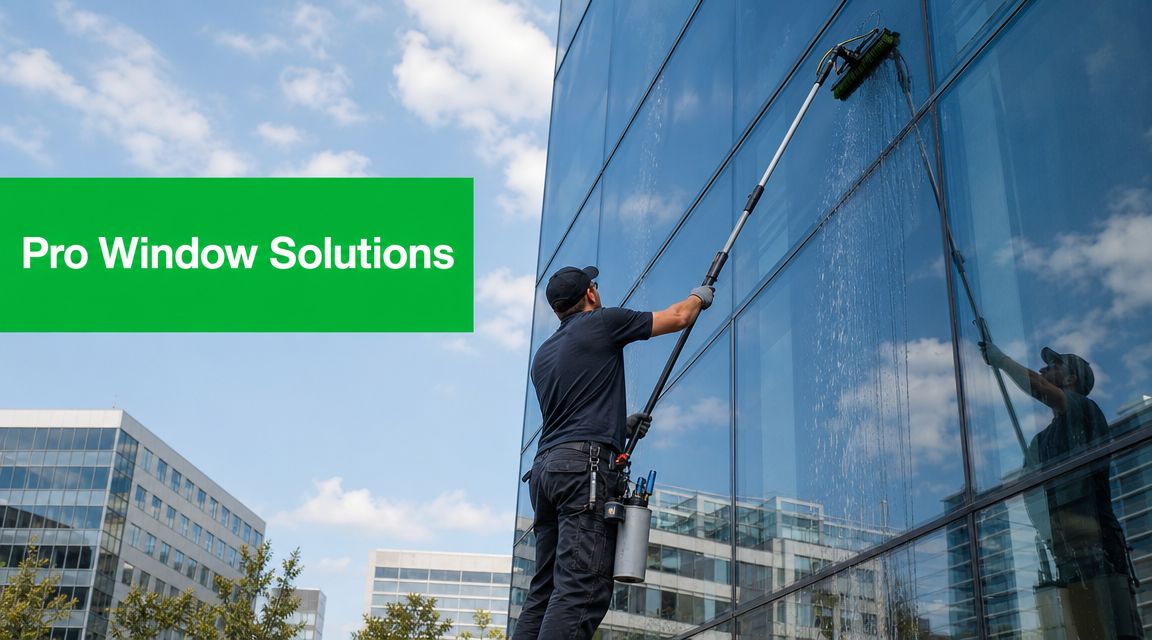
When searching for the best professional window cleaning solution, it's common to start in the wrong place. They look for a magic liquid. That's not how professional results happen.
A streak-free window doesn't come from a blue spray bottle, a wad of paper towels, or a rag dragged across hot glass. It comes from a system. The solution matters, but so do the tools, the glass type, the soil on the surface, the water quality, and the person using the equipment.
In Northern Arizona, that matters even more. Flagstaff windows deal with hard water, dust, pine pollen, sap, snow residue, and post-construction grime. A formula that works on one storefront might be the wrong choice for a cabin in Munds Park or a low-E window in Pine Canyon.
That's how we've always approached it. Pine Country Window Cleaning has been serving Flagstaff since 1999, founded by Flagstaff native David Kaminski, and the work has never been about dumping more chemical on the glass. It's about choosing the least aggressive solution that will solve the problem, then pairing it with the right tools and careful technique.
The Truth About a Streak-Free Window Cleaning Solution
The industry has done homeowners a disservice on this point. A streak-free result is not tied to one miracle liquid, and the companies that know what they're doing do not all carry the same mix in every bucket.
In the field, the best professional window cleaning solution is usually a simple, controlled formula matched to the glass, the soil, and the equipment in use. A basic soap solution can clean well on the right pane with a scrubber and squeegee. The wrong mix on hot glass, low-E glass, or mineral-heavy buildup can leave drag, haze, or residue that shows up the minute the sun shifts.
That matters more in Northern Arizona than it does in milder markets. Around Flagstaff, we deal with hard water deposits, fine dust, pine pollen, sap, and seasonal debris that do not respond the same way. Exterior glass that cleans up well with a pure-water window cleaning service may need a different approach than interior glass with fingerprints, cooking film, or smoke residue.
Why the bottle-first mindset fails
Store-bought window sprays train people to judge the product before they judge the method. That is backwards.
Professional results come from residue control and tool control. If too much soap stays on the glass, it streaks. If the mop is overloaded, the edges bleed. If the rubber is worn, the blade leaves lines. If the glass is hot, even a decent mix can dry before the technician closes the pass.
Before choosing a solution, a pro is sizing up the job in practical terms:
- Glass type, because tinted, coated, and low-E surfaces can be damaged or hazed by the wrong chemistry
- Type of buildup, because dust, sap, bug marks, and hard water do not release the same way
- Temperature and sun exposure, because fast drying changes how much slip and working time the solution needs
- Equipment choice, because a hand-squeegee setup calls for a different solution strategy than a water-fed pole system
Practical rule: If a cleaner leaves anything behind, morning or afternoon sun will expose it fast.
What Produces a Clear Finish
Clear glass comes from clean removal. The solution has to wet the surface and break the bond with the soil. After that, the dirty water has to be removed cleanly, with good rubber, controlled edges, and dry detailing where it belongs.
That is why experienced cleaners do not obsess over stronger chemical mixes. More soap is not better. More solvent is not better. In a lot of cases, stronger mixes create more cleanup, more residue, and more risk on specialty glass.
The same logic applies to the rest of the window. Dirty screens, dusty tracks, and contaminated sills can throw debris right back onto clean glass. Good service deals with the full window area, not just the center pane.
The best professional window cleaning solution is the one that solves the soil problem without creating a new residue problem. That answer changes from one property to the next, especially in Flagstaff.
Why Professionals Use Pure Water and Advanced Detergents
The bucket is not the secret. Water quality and tool choice do more to determine the result than any miracle soap.
Professional window cleaning usually runs on two tracks. Pure water is paired with a water-fed pole for exterior glass. Detergent-based solution is paired with a scrubber and squeegee for hand work. In Northern Arizona, that split matters because hard water, dust, and pine residue do not behave the same way on every property.
Pure water for exterior glass
Pure water earns its place because it removes one of Flagstaff's biggest problems before the cleaning even starts. Tap water here carries minerals. Leave those on the glass during rinse and drying, and spotting follows.
A water-fed pole system filters those minerals out first, then uses a brush to break loose dirt while the purified water rinses the glass clean. If the frame and glass are scrubbed well, the window can dry clear without a squeegee pass. That is a major advantage on multi-story homes, storefront glass, and exterior windows with awkward access.
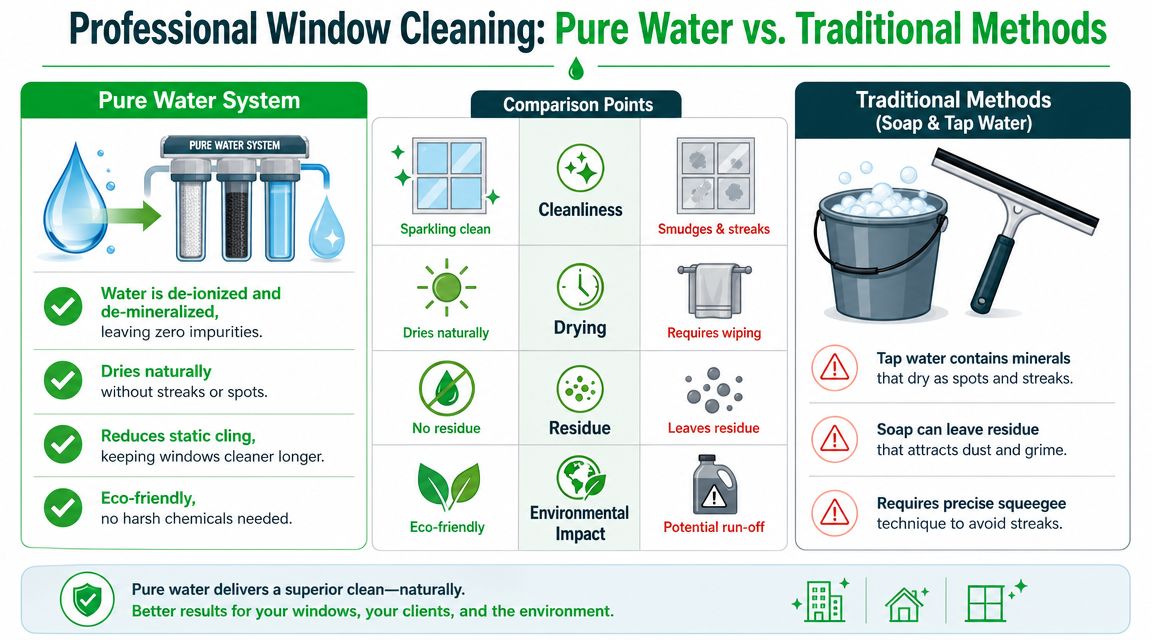
It also cuts down ladder work. That improves safety and keeps production moving on larger jobs. For homeowners who want to see how that method is used on actual exterior glass, our spot-free pure water window cleaning service shows the process in practice.
Pure water is not a cure-all, though. It handles routine exterior soil well. It is less effective when the glass is carrying sticky sap, greasy residue, or heavy first-time buildup that needs more hand pressure and more controlled chemistry.
Detergent solutions for traditional work
Hand cleaning still solves problems pure water does not. Interior glass, French panes, storefront touch-ups, and windows with stuck-on debris often clean better with a mop, a squeegee, and a low-residue detergent mix.
The formula does not need to be fancy. In the field, the goal is simple. Good glide on the glass, enough cleaning power to release soil, and as little residue as possible. If the soap is too heavy, the blade drags and detailing time goes up. If the mix is too weak, the cleaner works harder than necessary and starts compensating with pressure, which is inefficient and rough on tired rubber.
A workable professional mix needs to:
- break loose dust, fingerprints, and light film
- give the squeegee smooth travel
- stay low-foam
- rinse and detail without leaving a haze at the edges
That balance matters more in Flagstaff than many homeowners realize. Fine dust builds fast, and pine sap can turn a routine pane into hand-cleaning work in a hurry.
The trade-off pros actually manage
Pure water is usually the better exterior maintenance choice. Traditional detergent cleaning gives better control on interiors and on glass that needs close detailing.
Experienced cleaners switch methods based on the glass, the buildup, and the access. A commercial route with upper-story exterior panes may call for purified water all day. A home with divided lights, interior touch points, and sap near tree lines may need mostly hand work. On plenty of jobs, both methods are used on the same property because that is what gets the glass clean with the least risk and the least wasted motion.
That is how professionals choose a window cleaning solution in practice. The liquid matters. The equipment matters just as much.
A Breakdown of Professional Cleaning Formulas
A professional doesn't ask only, “What cleans fastest?” The better question is, “What cleans safely, leaves low residue, and won't create problems for the glass, film, seal, or frame?”
That's where formula choice becomes more important than most homeowners realize.
Ammonia-free versus aggressive cleaners
For modern windows, aggressive chemistry is often the wrong move. Pella's cleaning guidance for windows notes that manufacturers may require special handling for coated glass such as low-E, and ammonia-free solutions are preferred to avoid damage concerns or streaking. That changes the conversation immediately.
If a home has specialty glass, decorative film, or energy-efficient coatings, the best professional window cleaning solution is usually a mild, ammonia-free mix with as little residue as possible.
If a cleaner is stronger than the glass needs, it isn't better. It's just riskier.
Comparing solution types
| Solution Type | Best For | Pros | Cons |
|---|---|---|---|
| Mild dish soap and water | Routine residential and commercial glass | Simple, practical, low-cost, easy to control with squeegee work | Wrong soap choice or too much soap can leave residue |
| Distilled water with mild ammonia-free soap | Coated glass, low-E windows, specialty tints | Lower residue, safer for sensitive glass types | Not ideal for every heavy-soil problem |
| Vinegar and warm water | Heavy buildup and pre-treatment work | Useful on stubborn grime when used appropriately | Too aggressive for routine use on every surface and not the answer for all specialty glass |
| Pure water with no added detergent | Exterior maintenance cleaning with water-fed poles | No soap residue, ideal for spot-free drying | Doesn't replace hand detailing or specialty stain removal in every case |
What pros avoid
Professionals tend to avoid one-size-fits-all thinking. A formula can clean glass and still be the wrong choice if it harms a tint, leaves soap film in the edges, or creates extra detailing work.
In practice, that means avoiding:
- Harsh ammonia-heavy products on modern coated or tinted glass
- Over-soaping the bucket because more soap usually means more residue
- Kitchen-sink mixes where multiple additives create unpredictable results
- Blind product switching without checking the manufacturer's care guidance
Performance isn't the only standard
A lot of cleaners can remove visible dirt. Fewer cleaners protect the customer's property while doing it.
That's the difference between a temporary clean and professional care. On higher-end homes and commercial properties alike, the formula has to respect the material, not just attack the grime.
Choosing Solutions for Your Home vs Your Business
Residential and commercial work may both involve glass, but they rarely call for the same workflow. The right solution changes with access, window style, traffic exposure, and how much detailing the finished job requires.
Homes need precision and property care
A home in Flagstaff, Forest Highlands, or Munds Park often has a mix of challenges on the same property. You may have pine pollen on one elevation, hard water on another, insect debris around screens, and delicate interior glass that needs careful hand work.
That's where traditional squeegee cleaning usually shines. It gives the technician tighter control around divided panes, interior edges, woodwork, and specialty windows. It also allows a gentler approach when the property includes low-E glass or other sensitive surfaces.
For residential work, the decision usually comes down to:
- Exterior maintenance glass that may be ideal for pure-water pole work
- Interior glass and detail-heavy panes that benefit from scrubber-and-squeegee cleaning
- Screen handling because a clean pane won't stay clean long if the screen is dirty
Commercial buildings need scale and safe access
A retail storefront, hotel, medical building, dealership, or campus facility often demands speed, consistency, and safe access over a larger footprint. In that setting, pure-water systems and long-reach equipment can make more sense for broad exterior runs, while hand detailing stays important for entry glass and customer-facing areas.

The “best” solution for a commercial property isn't just about cleaning power. It's about how the cleaning method fits the building:
- Large exterior elevations often favor pure-water pole systems
- Lobby glass and first-floor entries often need traditional detailing
- Higher or complex access areas may require lifts, poles, or specialized access equipment
Two common Northern Arizona scenarios
A cabin near the pines may need careful removal of sap haze, dust film, and debris trapped around screens. That calls for a gentler process and close attention to frames, tracks, and surrounding finishes.
A downtown commercial property may collect traffic film, fingerprints, and environmental grime on a repeat schedule. That calls for an efficient maintenance system with the right mix of pole work, hand work, and route consistency.
The common thread is simple. The best professional window cleaning solution depends on the building's needs, not on what happens to be in one bottle.
Solutions for Flagstaff's Unique Climate and Grime
Northern Arizona is hard on windows. That's not marketing talk. It's just what the glass sees every season.
Flagstaff properties collect hard water minerals, fine dust, pine pollen, sticky sap, insect residue, and post-construction debris. Each one changes the cleaning plan. A cleaner that works fine on light dust won't necessarily handle mineral spotting or baked-on grime without extra steps.
Hard water changes everything
If the rinse water itself leaves minerals behind, your cleaning solution can become part of the problem. That's why pure-water systems matter so much here for exterior maintenance cleaning. They remove the mineral issue at the source instead of trying to wipe away spotting after it dries.
Hard water stains are a separate issue. Once minerals have bonded to the glass, you're no longer doing routine cleaning. You're doing restoration work, which requires a more targeted process. Homeowners dealing with that problem can get a clearer sense of the issue in our guide on removing hard water stains from windows.
Dust, sap, and construction residue need different responses
Fine dust is abrasive if it's dragged around dry. Pine sap is sticky and localized. Construction debris can include stubborn film and bonded contamination. Treating them all the same wastes time and increases risk.
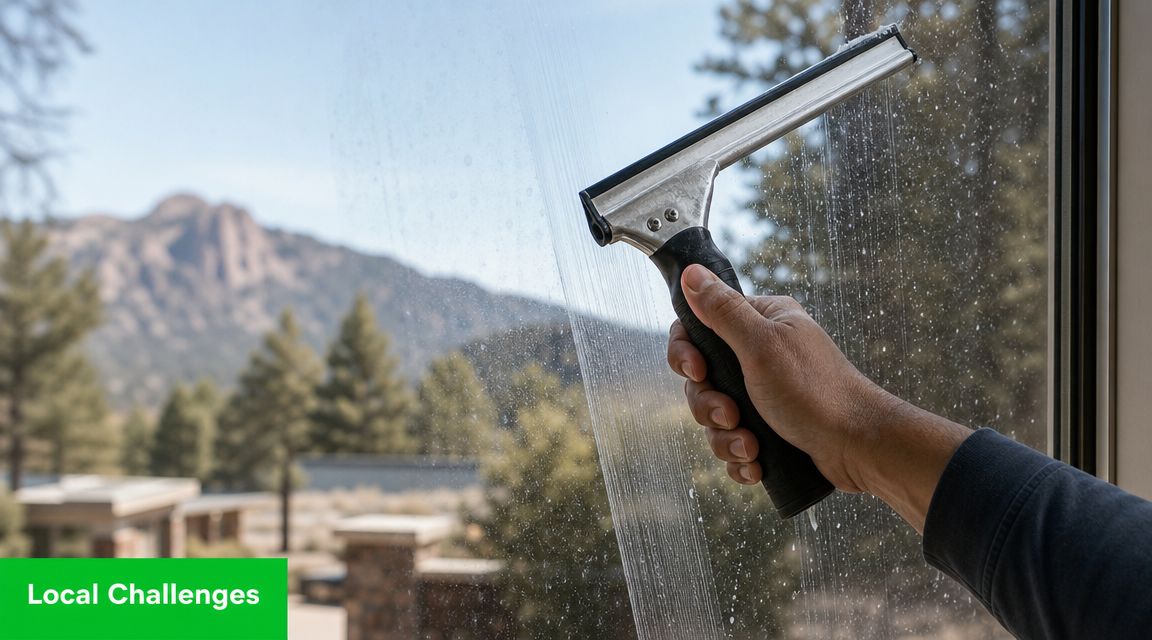
For heavy grime, pros often pre-treat instead of trying to muscle through it. Marvin's window washing advice recommends a 1:1 mix of white vinegar and warm water for extensive buildup, with the cleaning pass still done from the top down. That kind of pre-wash can help break loose baked-on soil before the final cleaning method is applied.
What local experience changes
A technician who works in Flagstaff regularly doesn't just know how to clean glass. They know what's likely to be on the glass before they unload the tools.
That affects real decisions:
- Whether to start with pure water or a hand-cleaned solution
- Whether the glass needs a pre-treatment for bonded grime
- Whether the job is standard maintenance or stain-removal work
- Whether sap, pollen, or mineral deposits are the actual culprit
Local window cleaning isn't only about geography. It's about recognizing the residue patterns that repeat from one season and neighborhood to the next.
That's why local knowledge matters so much in Northern Arizona. The climate decides part of the cleaning plan before the technician ever touches the glass.
It's More Than the Mix It's the Method
The solution in the bucket matters. The method is what separates professional work from amateur work.
A proper window cleaning job follows a sequence. The glass gets assessed. Surrounding areas get protected. The right pre-treatment is applied when needed. The cleaning pass is made with the right equipment. Frames, sills, and edges are detailed. Then the technician checks the finished result from multiple angles.

The trade standard is a tool system
Professional window cleaning is not “spray and wipe.” The trade standard uses multiple tools for specific tasks. Phoenix Window Cleaning's description of pro glass cleaning notes the use of #0000 super-fine steel wool to remove microscopic debris, along with a squeegee and microfiber cloth for a clear, lint-free finish.
That matters because one tool rarely does everything well.
A professional method might include:
- Assessment first to identify coatings, damage risks, and grime type
- Screen removal and cleaning so debris doesn't fall back onto clean glass
- Targeted agitation with the correct scrubber or pad
- Controlled water removal with a squeegee or pure-water rinse
- Edge and sill detailing so the whole window looks finished, not just the center of the pane
For readers who want a closer look at finish quality, our article on how to clean windows streak free explains the detailing side of the process.
Here's a quick visual on how professional technique comes together:
Respect for the property is part of the method
Customers notice the glass. They also notice everything around the glass.
A real professional protects flooring, works cleanly around furniture, respects landscaping, handles screens carefully, and leaves frames and sills in better condition than they were found. That's not an add-on. It's part of the job.
Clean windows should never come with wet floors, bent screens, dirty tracks, or drips left on trim.
Experienced crews distinguish themselves by their methods. Good results come from choosing the right chemistry. Trusted results come from applying that chemistry with care, control, and repeatable technique.
Trust Flagstaff's Window Cleaning Experts Since 1999
By the time someone asks about the best professional window cleaning solution, they're really asking a bigger question. They want to know what will work on their property without risk, mess, or wasted effort.
The answer is rarely a single product. It's a service approach that matches the glass, the grime, the access, and the environment. In Flagstaff, that means understanding hard water, pine residue, seasonal dust, post-construction cleanup, and the difference between a pure-water exterior cleaning and a detailed hand-cleaned finish.
That kind of judgment only comes from doing the work, over and over, on the kinds of homes and buildings found in Northern Arizona. Pine Country Window Cleaning has been serving the area since 1999, and that local experience matters when a technician has to decide whether a window needs a mild maintenance clean, a pre-treatment, a restoration process, or specialty handling for modern glass.
The service standard matters too. Customers want responsive communication, careful technicians, protected interiors, clean screens, secure screen reinstallation, and a crew that treats the property with respect from start to finish.
For business owners who are curious how service companies build trust and stay visible in a competitive local market, it's worth taking a look at Pipeline On's marketing insights. It's useful context for understanding why strong window cleaning companies focus so heavily on communication, reputation, and consistency.
The bottom line is straightforward. If you want a lasting result, don't chase a miracle bottle. Choose a company that knows which solution to use, when to use pure water, when to switch to hand-cleaning, and how to care for the home or building while the work is being done.
If you want windows cleaned the right way in Northern Arizona, contact Pine Country Window Cleaning for a free estimate. We handle residential and commercial window cleaning with the right mix of pure water systems, traditional squeegee methods, careful screen service, and property protection from start to finish.