

You notice it first when the afternoon light hits the living room. The view across Flagstaff looks muted, the lower panes carry pale water marks, and the screens seem to add another layer of dust. A quick household wipe may remove a little surface dirt, but it won't address mineral deposits, gritty tracks, dirty screens, or glass that sits several feet above the ground.
Window cleaning for homes in Northern Arizona is property maintenance, not just a cosmetic touch-up. Dry conditions, pine dust, pollen, rain residue, and sprinkler overspray all place different demands on the glass. Homeowners who want broader exterior maintenance guidance can also use this Utah exterior home maintenance checklist as a practical reference, even though Flagstaff properties have their own high-altitude conditions.
The Reality of Residential Glass Maintenance
Residential glass has changed along with residential architecture. Larger panes, divided-light designs, skylights, tall entry windows, and cabin-style homes create more surface area and more difficult access points. A spray bottle and household cloth can't reliably clean those areas without leaving lint, haze, or drips behind.

The problem becomes more noticeable in places such as Flagstaff, Munds Park, Pine Canyon, Forest Highlands, and Flagstaff Ranch. Dust settles on exterior panes, pollen collects on screens, and rain or irrigation water can dry into mineral spotting. If the glass is cleaned without addressing the screen and frame, the window may look better briefly while the assembly still holds the residue that makes the room feel dim.
Why a quick wipe falls short
A professional cleaner evaluates the complete window, not only the transparent center. That means checking the glass, frame, sill, screen, track, surrounding trim, and the safest way to reach each pane. The tools change with the location. Interior glass and reachable exterior panes usually call for a squeegee, while hard-to-reach exterior glass may require a water-fed pole and pure-water brush system.
The distinction matters because excess soap can leave a film, dirty rubber can drag residue across the pane, and a contaminated cloth can redistribute grit. On older glass, aggressive scrubbing may also create scratches or worsen existing mineral damage. Good window cleaning depends on controlled agitation, clean water, correct pressure, and a final inspection from changing angles of light.
Practical rule: Clean glass is only one part of a clean window. Screens, tracks, sills, and frames determine how long the result lasts.
Residential service has become a formal maintenance category rather than an occasional household chore. One industry estimate places U.S. window-washing revenue at $2.9 billion in 2024, with a projection of $3.2 billion by 2029, and counts more than 35,344 businesses offering window-cleaning services nationwide, according to Fortune Business Insights. That scale reflects a practical reality. Modern homes need equipment and methods designed for the property, the exposure, and the access conditions.
Inside the Professional Cleaning Workflow
A reliable crew follows a sequence because each stage protects the next one. Skipping preparation often creates the very streaks, drips, and damaged screens homeowners are trying to avoid.

Step one begins before the glass gets wet
The technician first checks the condition and access of each window. Furniture, rugs, wall coverings, landscaping, and delicate objects receive appropriate protection. The crew also looks for damaged seals, loose screens, brittle glazing, paint, construction residue, and mineral buildup that may require a different treatment from ordinary soil.
Screens come out before the glass is cleaned. They're washed separately, inspected, and set aside safely so the crew can reach the full pane and the surrounding frame. The screen is then reinstalled after the glass and window area are complete. This sequence is documented in the company's post-construction cleaning workflow, which includes removing screens, washing them separately, cleaning and squeegeeing the glass, and reinstalling the screens.
Tracks deserve the same attention. Dust, grit, dead insects, and other debris collect in the channel where the sash moves. Removing that material helps the window operate more cleanly and prevents loose grit from being dragged back onto freshly cleaned surfaces.
The equipment changes with the pane
For interior glass and easily reachable exterior panes, the traditional squeegee method gives the technician direct control. The glass is wetted with a measured amount of solution, the squeegee is pulled from the top downward or across in controlled passes, and the rubber edge is wiped clean between strokes. The goal isn't a heavy layer of suds. Too much detergent can leave residue and make the final inspection harder.
Higher exterior windows are handled with water-fed poles and pure-water brush systems. The brush loosens dust while purified water rinses away dissolved material, reducing the mineral residue that ordinary tap water can leave as it dries. That approach also allows the technician to work from a safer position on the ground where the property and access conditions permit it.
A homeowner comparing tools or methods may find it useful to watch this glass cleaner review video for a visual look at professional glass-cleaning equipment. The important point isn't the brand of a tool. It's whether the method matches the pane, the residue, and the access requirements.
Inspection closes the job
After the glass dries, the crew checks it from inside and outside where possible. They look for lines, missed edges, drips on frames, screen fit, track debris, and water on nearby surfaces. Touch-ups happen before equipment leaves the property.
Pine Country Window Cleaning describes a service approach using traditional squeegees for interior and reachable exterior glass, with water-fed poles and pure-water brush systems for higher or harder-to-reach windows. That combination reflects how professional crews adapt the process instead of forcing every window through the same method.
Tackling Hard Water and High Altitude Dust
Flagstaff's environment can produce two very different types of residue on the same pane. Windborne dust and pine material may sit loosely on the surface, while dried water can leave a bonded mineral film. Treating both with the same household soap often produces a disappointing result.
Hard water needs the right chemistry
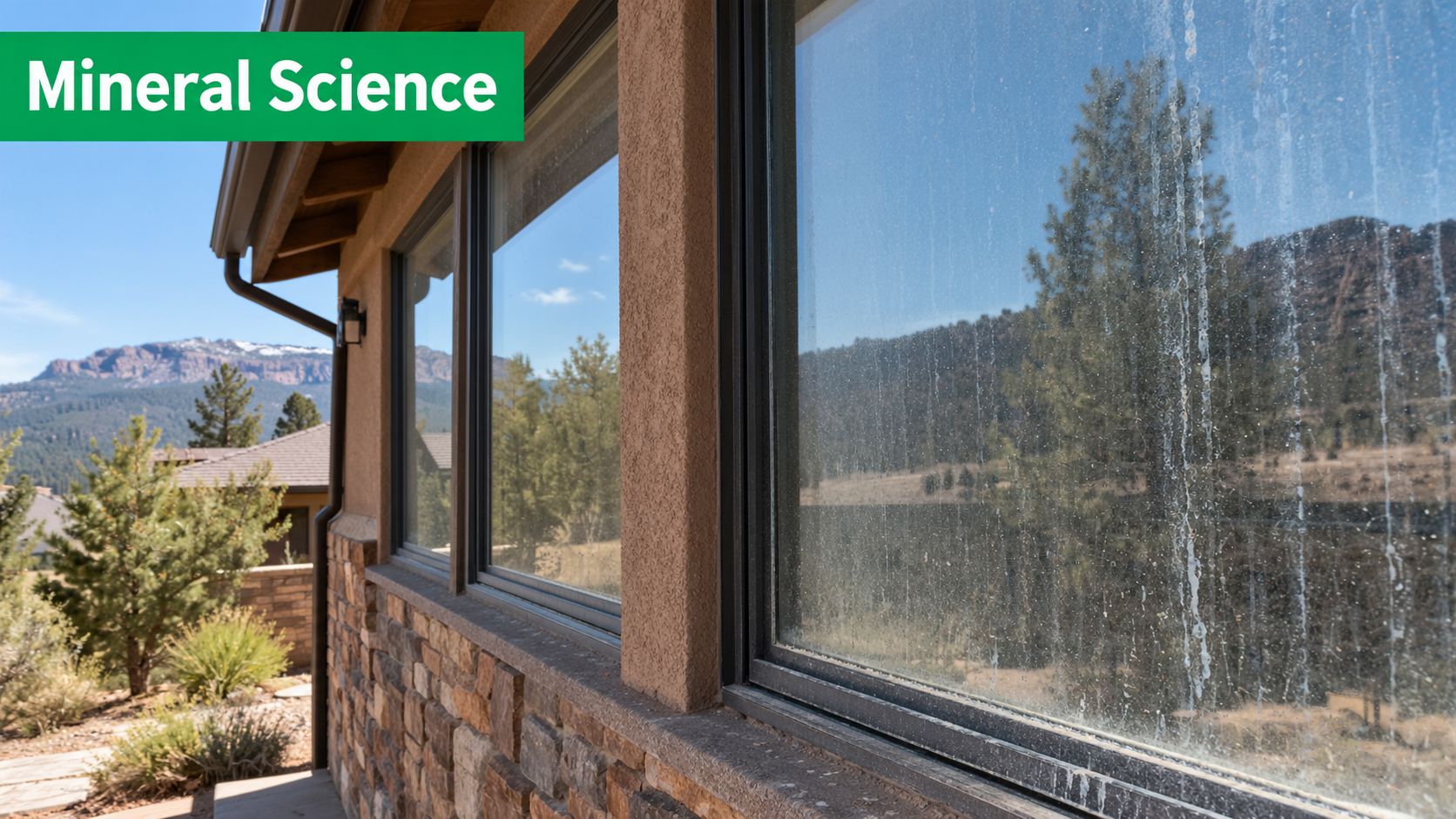
Hard-water spotting is primarily a mineral-deposition problem, not ordinary dirt. When water evaporates, dissolved calcium and magnesium salts remain on the pane. Over time, those deposits can form the white haze or chalky film homeowners often see around sprinklers, exterior hose work, and rain-dried areas.
Soap and water may remove loose dust around the spot, but they won't necessarily release mineral scale that has bonded to the surface. Light deposits generally respond better to an acid-side cleaner, such as a vinegar or citric-acid-based solution, because the acid reacts with alkaline carbonate scale and helps loosen it. This chemistry is described in the guidance on hard-water stains on windows.
The technician still has to judge the glass first. Stronger treatment, excessive dwell time, or abrasive work can damage surfaces, seals, coatings, or surrounding materials. A careful cleaner tests an inconspicuous area, controls the chemical, rinses thoroughly, and distinguishes removable deposits from glass that has already been etched.
For a more focused treatment discussion, homeowners can review how to remove hard-water stains from windows. The practical lesson is simple. Mineral spotting is a restoration question, not merely a washing question.
Dust requires clean rinsing
Pine dust and wildfire residue behave differently from mineral scale. They may form a fine film over broad exterior areas, settle into screen mesh, and collect along the lower edge of the frame. Scrubbing dry dust across glass can drag grit over the surface. A controlled wetting stage loosens the material before the brush or squeegee does the finishing work.
Pure-water systems are valuable because the rinse water has been treated to reduce dissolved minerals. When the pane dries, the cleaner isn't deliberately leaving ordinary tap-water residue behind. The system is especially useful for exterior panes that are too high to detail comfortably by hand, provided the brush, pole, and rinse technique are used correctly.
On dusty properties: Rinse first, agitate with control, and inspect the glass after it dries. Dry wiping turns loose grit into a risk.
The same principle applies in cabins and second homes around Munds Park or forested developments. A property that sits closed for part of the year may accumulate dust, pollen, insect residue, and water marks together. The cleaning plan should identify which material is present instead of assuming one solution will solve everything.
Evaluating Safety and Access Considerations
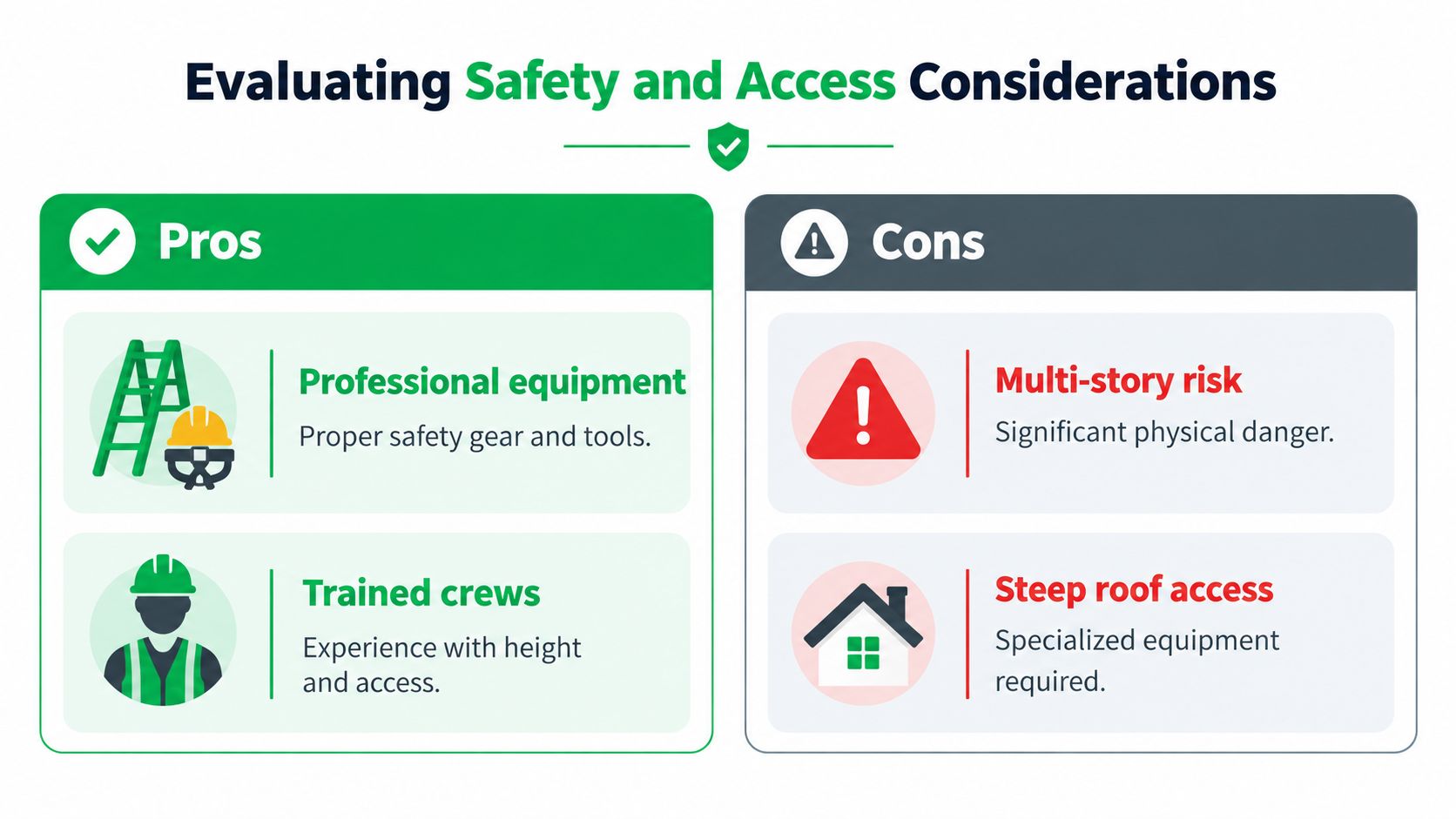
A clean window can still be unsafe to reach. Multi-story homes, steep roofs, atriums, hillside lots, decks, and uneven ground can change the access plan before a ladder is opened. In Flagstaff, gravel, sloped sites, snow residue, and dusty surfaces add complications that are easy to underestimate.
DIY access versus trained access
Owning a ladder does not guarantee a safe setup. It needs stable footing, the correct angle, sufficient height, and enough room to work without leaning sideways while carrying a bucket or controlling a pole. Wet ground, loose gravel, landscaping, and sloped driveways can make an apparently simple job unstable.
Workplace ladder guidance offers a useful safety baseline. Portable ladders should support the intended load, stand on stable surfaces, and be positioned at a suitable angle. The practical principles described in this guide to cleaning high-rise windows also show why access requires planning, not improvisation. Household work still demands the same judgment about footing, reach, tool control, and fall exposure.
A ladder is the wrong choice if the operator must stretch, step onto an unstable surface, or work around roof edges. In those conditions, pure-water cleaning from the ground or professional access equipment can reduce exposure while still allowing controlled work on the glass, frames, screens, and tracks.
Height changes the equipment decision
Professionals select equipment according to reach, pane position, surface conditions, and the room available around the property:
- Ground-based poles: Water-fed poles can clean suitable exterior panes while the technician remains on the ground. Proper rinsing matters in dusty, high-altitude conditions because poor technique can leave grit or mineral residue behind.
- Ladders: A ladder may suit a reachable, stable section when the surface supports it and the technician can maintain secure positioning.
- Lift equipment: Atrium lifts, boom lifts, and scissor lifts provide controlled access when poles cannot deliver enough reach or detail.
Pine Country's service information describes in-house equipment that includes boom lifts, scissor lifts, and a 95-foot atrium lift. The appropriate method depends on the building, ground conditions, overhead clearance, and pane configuration.
Professional service also includes safety training, insurance, communication, and protection for the customer's property. If a job requires leaning outside a window, placing a ladder on a roof, or building a makeshift platform, choose a trained crew instead. Keep both feet secure and maintain control of the tool throughout the work.
Determining the Right Cleaning Frequency
There isn't one correct calendar for every Northern Arizona home. A house near open soil, trees, traffic, active construction, or frequent irrigation exposure will soil its glass differently from a protected property with limited exterior exposure.
Cleaning frequency should respond to traffic, debris, and environmental conditions, rather than a universal schedule. That principle is also reflected in this window-cleaning frequency guidance, which treats local exposure as the deciding factor.
A practical decision matrix
| Property Type | Environmental Factors | Recommended Frequency |
|---|---|---|
| Primary residence in a settled neighborhood | Ordinary dust, pollen, weather, and regular daily use | Schedule based on visible buildup and the condition of screens, tracks, and exterior glass |
| Forested cabin or home near pine cover | Pine dust, pollen, needles, insects, and seasonal exposure | Use a recurring maintenance plan that responds to the local debris load |
| Second home | Long unoccupied periods, accumulated dust, and preparation before arrival | Schedule service before regular occupancy or major visits, then adjust after observing buildup |
| Short-term rental | Frequent guest turnover, presentation standards, and exterior exposure | Coordinate service with property turnover and visible glass condition |
| Home near construction or open soil | Fine dust, residue, and increased exterior contamination | Inspect more often and clean before residue bonds to the glass |
| Home with hard-water exposure | Sprinkler overspray, rain residue, or mineral-rich water | Address spotting early and use a method suited to mineral deposits |
This table is a starting point, not a promise that every property will need the same interval. The useful decision rule is to watch the rate of visible change. If the view becomes hazy soon after cleaning, identify whether screens, dust, water spots, or interior condensation are responsible before ordering more frequent washing.
Signs that the schedule needs adjusting
Check the outside panes in direct and indirect light. Look for white rings near irrigation zones, a gray film on broad panes, darkened screen mesh, debris in the track, and streaks that remain after ordinary washing. A window that feels gritty when opened also needs attention beyond the center glass.
Recurring service can make sense for homes with consistent exposure because light maintenance is easier than waiting until deposits and debris become difficult to remove. For a seasonal property, timing around arrival, departure, listing photography, or guest turnover may matter more than a fixed routine.
The goal is a schedule that preserves visibility, keeps screens and tracks from becoming neglected, and catches mineral buildup before it becomes a restoration problem.
Why Local Expertise Matters in Flagstaff
Local knowledge shows up in small decisions. A technician who understands Flagstaff homes knows that a mountain cabin, a newer subdivision property, and a large home in a forested community may present completely different combinations of glass size, access, dust, screens, and exterior water exposure.
Pine Country Window Cleaning was founded by Flagstaff native David Kaminski in 1999 and describes itself as Flagstaff's largest window cleaning company, according to its company history and local service page. That operating history matters because repeated work in the same region builds familiarity with local housing styles and recurring access challenges.
Local conditions shape the service
Northern Arizona properties often combine features that demand more than a standard ground-level wash:
- Cabin architecture: Exposed wood, decks, screens, and tall panes require careful protection and controlled access.
- Large residential glass: Broad windows show streaks and mineral residue quickly, especially in strong mountain light.
- Hillside placement: Sloped ground and retaining walls can make a ladder setup unsuitable.
- Second-home use: Windows may need a careful reset after a long period without regular occupancy.
- Forest exposure: Screens, tracks, and sills can collect material even when the glass itself looks only lightly soiled.
A local crew also understands that customer care includes the property around the window. Technicians should protect floors and furnishings, move deliberately through finished spaces, communicate about fragile screens or existing glass conditions, and leave the work area orderly. Respect for the home is part of the trade, not an optional courtesy.
Equipment should support judgment
Pine Country's service descriptions identify the traditional squeegee method for interior and easily reachable exterior glass, along with water-fed poles and pure-water brush systems for higher or harder-to-reach panes. Its broader equipment information includes access solutions for challenging heights. The value isn't just having more tools. It's knowing when a squeegee, pole, ladder, or lift is appropriate for the property.
A local provider can also coordinate window cleaning with related property needs such as gutters, pressure washing, post-construction cleanup, or seasonal preparation. Homeowners still need to ask clear questions about scope, screen handling, access, insurance, and what happens when the technician finds existing damage.
Understanding Pricing and Preparing Your Home
A window-cleaning quote reflects the work required at your property, not glass area alone. Pane count, interior and exterior access, height, screen condition, track debris, mineral deposits, and specialty equipment can all change the price.
For a national comparison, Fortune Business Insights reports that cleaning a 1,500-square-foot house usually costs about $260, with a typical range of $150 to $370, or roughly $4 to $8 per window. Treat those figures as reference points rather than a Flagstaff quote. A single-story home with clear access requires a different scope from a mountain property with steep ground, heavy dust, mineral spotting, or screens and tracks that need detailed cleaning.
Review these factors affecting residential window-cleaning cost before comparing estimates. Ask whether each company is pricing the same work.
Prepare the interior
Make the windows accessible before the crew arrives:
- Move small furniture, lamps, décor, and fragile objects away from the sill.
- Pull back curtains, blinds, and interior shutters where practical.
- Secure pets in a quiet room so doors and windows can open safely.
- Point out delicate flooring, sensitive finishes, or known glass damage.
- Confirm which rooms and panes the service includes.
Clear toys, hoses, planters, and loose items from exterior work areas. Tell the crew about blocked windows, locked gates, or narrow paths. Do not remove screens unless the provider requests it. They can bend, tear, or become difficult to match when stacked separately.
Ask whether the quote includes screen removal, screen cleaning, reinstallation, tracks, sills, frames, and both sides of the glass. Clean glass beside dusty tracks still leaves the job unfinished, particularly in Northern Arizona's dry, high-altitude conditions.
Pine Country Window Cleaning provides residential service for Flagstaff and Northern Arizona homes, including squeegee work, water-fed pole cleaning, pure-water brush systems, screen removal and cleaning, and reinstallation. Visit Pine Country Window Cleaning to request a free estimate for careful work on glass, screens, tracks, and surrounding surfaces.