

You're standing inside a Flagstaff home, looking through windows that were clear a few months ago. Pine pollen has settled on the screens, monsoon dust has dried along the lower glass, and the high-desert sun has made every streak visible. Outside, the gutters are holding needles and grit. The tempting solution is a bottle of cleaner and a roll of disposable towels, but sustainable cleaning practices start with a better question: What method will remove the soil thoroughly while using the least water, chemistry, material, and risk?
After 27 years working in Northern Arizona conditions, the practical answer is usually better equipment, better timing, and more careful work. Squeegees, pure-water brushes, extension poles, properly selected ladders, lifts, screen removal, and runoff control often matter more than whether a label says “natural.” The cleanest process is the one that prevents repeat work, protects the property, and keeps usable materials and harsh chemicals out of the workflow.
Why Northern Arizona Needs a Different Cleaning Approach
Flagstaff windows live through a demanding cycle. Pine and juniper pollen settle into screens and tracks during spring. Summer monsoon storms push fine dust and muddy splash onto lower panes. Strong ultraviolet exposure bakes residue onto exterior surfaces, while winter freeze-thaw cycles test seals, frames, gutters, and already-weakened finishes.
A rustic cabin in Munds Park may look quiet from the road, yet its window ledges can collect pollen, grit, and decomposed needles for months. A downtown commercial building faces a different version of the same problem. Storefront glass picks up road dust and splash, and visible buildup changes quickly after storms. In both cases, the wrong technique creates more work. Scrubbing dry grit across glass can mark the surface, while repeated spray-and-wipe cleaning leaves residue that attracts more dust.

Climate changes the maintenance equation
Sustainable cleaning here means matching the service to the soil and season. A lightly dusty interior pane may need a controlled squeegee pass, not a heavy chemical application. An exterior window with baked-on mineral spotting may need specialized assessment rather than repeated household spraying. A gutter packed with pine needles needs removal before water backs up, not a last-minute rinse after overflow has already reached the fascia.
That's why a local maintenance plan can reduce resource use more effectively than a generic “green” product swap. Clean the surface when the buildup warrants it, choose a tool that removes the material in one pass, and avoid creating damage that demands premature replacement or repeat cleaning. Property owners can use seasonal property maintenance guidance for Flagstaff homes to coordinate windows, gutters, exterior surfaces, and access before small problems become larger jobs.
Local rule: In Northern Arizona, sustainability is often a scheduling decision before it's a product decision.
The Real Principles Behind Sustainable Cleaning
Sustainable cleaning has three practical pillars: precision over volume, tool quality over chemical strength, and disciplined water use. These principles apply to glass, screens, gutters, siding, and pressure-washed surfaces.
Precision over volume
Start by identifying what's dirty. General-purpose cleaning across every surface can waste water and product, especially when only pollen, cobwebs, or storm splash needs attention. EPA greener-cleaning guidance recommends low-VOC content, cold-water formulas where possible, and limiting disinfectants to high-touch or contaminated surfaces rather than using them for every general cleaning task. The EPA guidance on identifying greener cleaning products supports a shift toward targeted use.
On a window job, that means removing loose cobwebs and excess dirt before wet cleaning. It means addressing screens because trapped debris can make clean glass appear dirty. It also means protecting carpeted interiors with drop cloths instead of accepting avoidable water damage as part of the process.
Tool quality over chemical strength
A properly fitted squeegee blade channels water and soil into a controlled path. Working top to bottom and wiping the blade after each stroke prevents dirty water from being redistributed. Pure-water brush-fed poles use filtered, deionized water to loosen exterior soil and rinse it away without leaving ordinary tap-water minerals behind.
The tool should match the surface. A durable brush, a clean sleeve where appropriate, a sharp scraper used only under suitable conditions, or a pole system for high glass can reduce repeated passes. The same logic applies to eco-friendly pressure washing methods, where controlled application and runoff management matter as much as the cleaning solution.
Water discipline and repeat prevention
Use only the water needed for the soil, avoid overloading laundry or rinse systems, and prevent dirty runoff from reaching storm drains. Screen removal is part of that discipline. Removing, cleaning, drying, and reinstalling screens during every service addresses a hidden source of repeat soil instead of asking the glass cleaning step to compensate for neglected mesh.
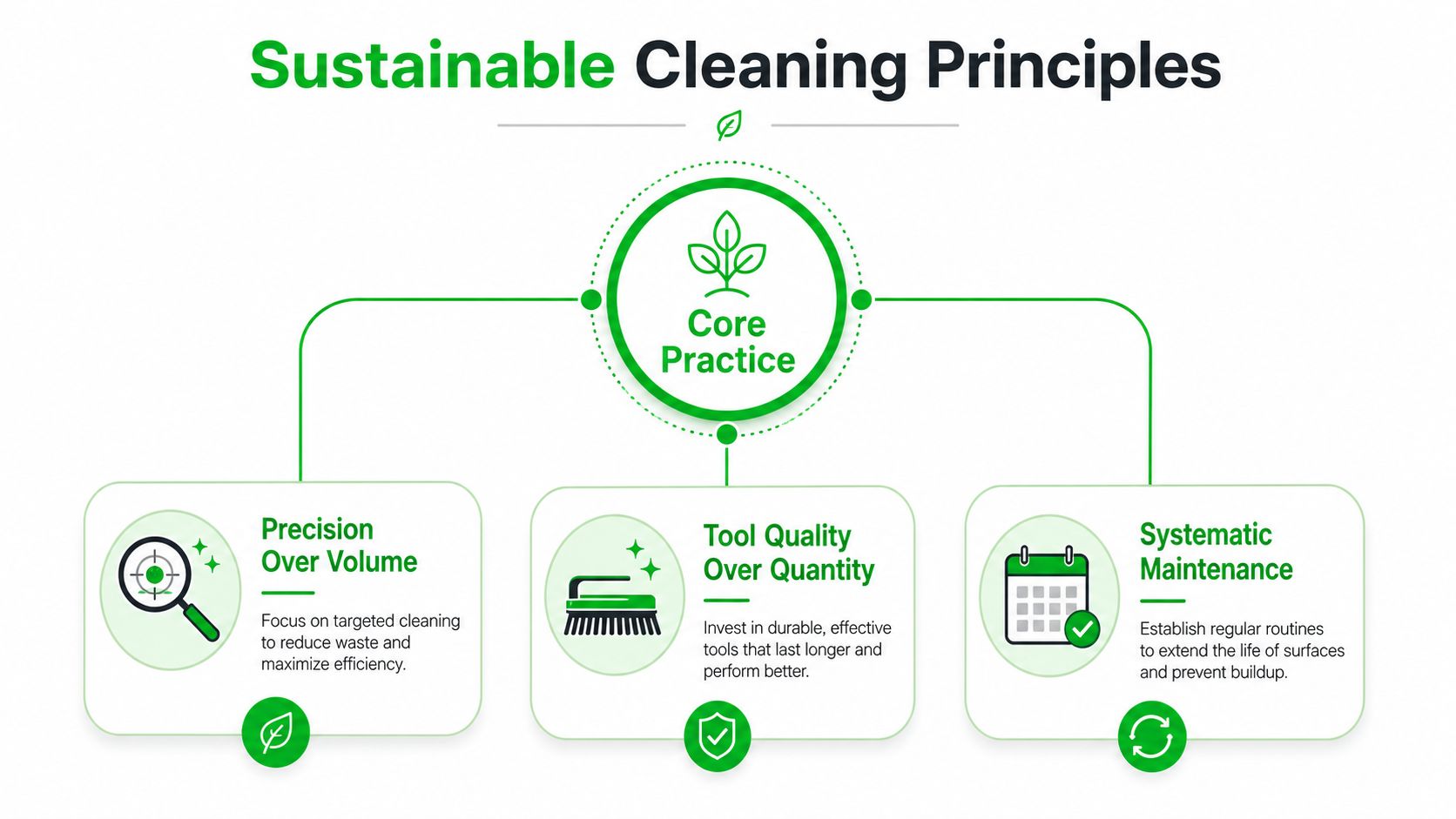
A useful checklist for any cleaning task is simple:
- Target the soil: Remove only what needs attention.
- Select the right tool: Use mechanical action before reaching for stronger chemistry.
- Control water and runoff: Apply, rinse, and dispose deliberately.
- Protect the property: Drop cloths, careful access, and screen handling prevent secondary damage.
- Extend the interval: Leave the surface clean so repeat visits aren't caused by incomplete work.
DIY Methods Versus Professional Methods
Homeowners can handle some cleaning safely and effectively. Ground-floor interior glass, light dusting, and small spot treatments may not need a crew. The trouble starts when a familiar household method is applied to high glass, gritty exterior soil, screens, gutters, or surfaces that require controlled pressure.
A rag, spray bottle, or newspaper trick can make a pane look better temporarily, but these methods often move soil around rather than removing it efficiently. Paper products also create ongoing waste, and dry wiping can drag abrasive grit across glass. A fitted squeegee, proper washer, and measured solution give the operator more control. For exterior work, a pure-water brush-fed pole can reduce chemical use and eliminate the need to repeatedly wet and wipe high panes from an unstable position.
| Task | DIY Method | Professional Method | Resource Trade-off |
|---|---|---|---|
| Windows | Rag, household spray, or newspaper on accessible panes | Squeegee, fitted blade, pure-water brush-fed pole, ladder, or lift | DIY can suit small ground-floor work, while professional tools reduce repeat passes and access risk on larger jobs |
| Screens | Leave screens installed or wipe them in place | Remove, clean, dry, inspect, and reinstall | Complete screen handling prevents trapped pollen and debris from making clean glass look dirty |
| Gutters | Leaf blower from a ladder or ground level | Controlled removal, gutter cleaning, and downspout cleaning | Blowing can scatter debris, while extraction and flushing focus waste collection and flow verification |
| Pressure washing | Consumer electric unit with improvised detergent | Commercial equipment with controlled pressure, measured detergent, and runoff planning | A stronger machine isn't automatically greener. Correct pressure avoids surface damage and repeat work |
| High or difficult glass | Extension attempt from an unsafe position | Extension pole, ladder system, scissor lift, boom lift, or atrium lift | Professional access reduces fall exposure and lets the crew complete the job in a planned sequence |
A professional glass-cleaning SOP calls for protective covers over carpeted floors, removal of cobwebs and excess dirt before washing, extension poles for high windows, top-to-bottom squeegee work, blade wiping after each stroke, and cleaning, drying, and refitting screens. Those details are not cosmetic. They prevent water damage, cross-contamination, and repeat labor. The eco-friendly window cleaning approach used by Pine Country centers on the same equipment-first logic.
Pine Country has serviced Flagstaff properties since 1999 with squeegees, ladders, poles, and pure-water brushes. The important point isn't the soap. It's the equipment, the sequence, and the judgment about when a homeowner should stop climbing and call a trained crew.
A Sustainable Schedule for Windows, Gutters, and Exteriors
A seasonal schedule prevents emergency cleaning, avoids unfavorable weather, and puts each tool to work when it makes sense. Flagstaff properties don't need the same treatment in every month.
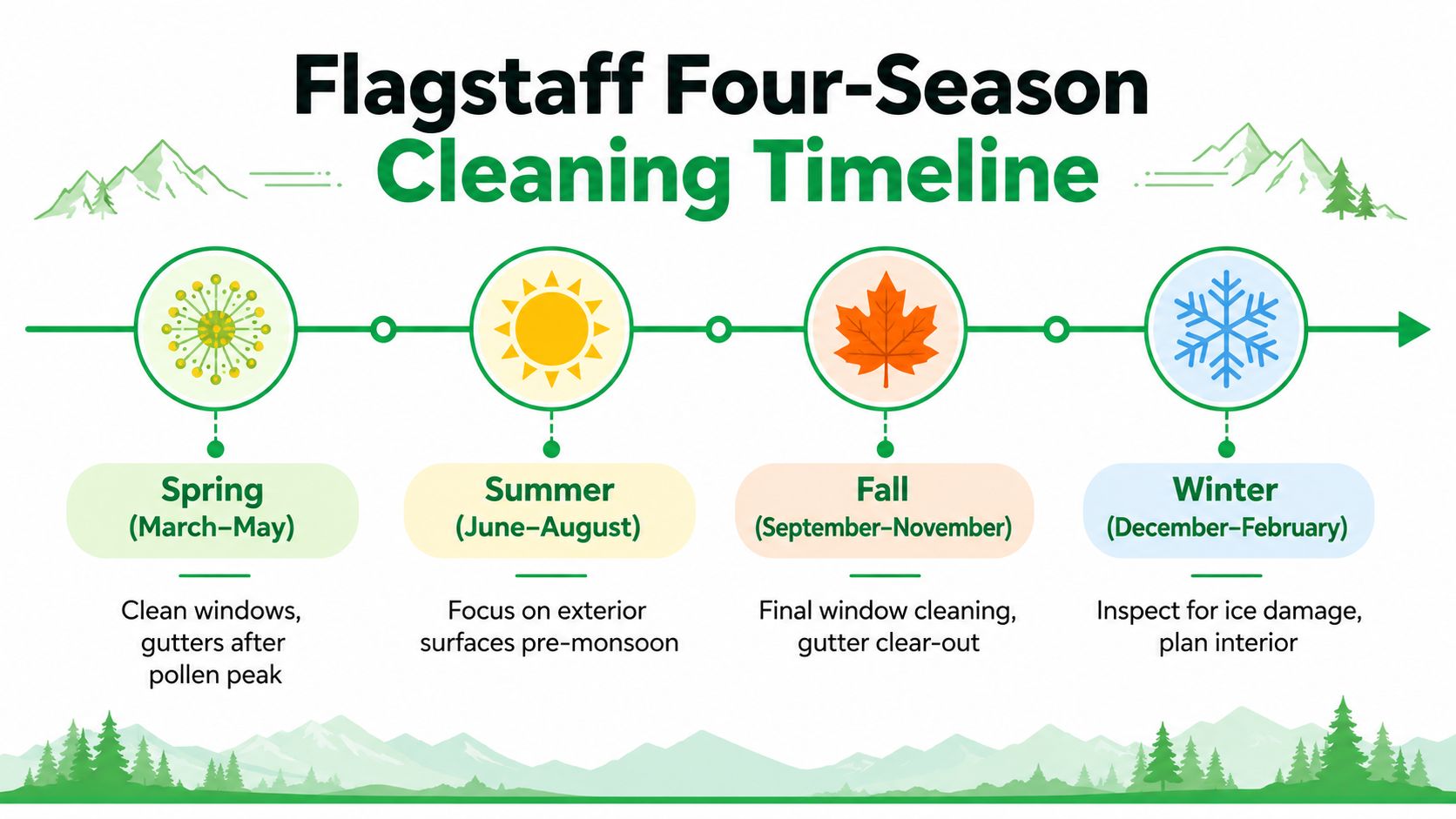
Spring from March through May
Spring is the time to deal with pollen, dust, screens, and winter residue. Clean windows after the heaviest pollen has settled, inspect tracks and frames, and prepare gutters before monsoon runoff arrives. Gutter cleaning and downspout cleaning are especially useful before storms test the drainage system.
Pressure washing can address suitable exterior surfaces after evaluating the material and finish. If a builder has completed a renovation, post-construction window cleaning may require careful removal of construction debris and residue rather than routine maintenance methods.
Summer monsoon from June through September
Monsoon storms leave mud splatter on lower panes, entry glass, and storefronts. Check that gutters flow correctly and that downspouts discharge away from vulnerable areas. A spot service may be more sustainable than washing every window when only storm-facing elevations are dirty.
For commercial properties, scheduled visits keep visible glass from reaching the point where aggressive restoration is needed. Storefronts, hotels, dealerships, and campus buildings benefit from a defined route and scope rather than scattered emergency requests.
Fall from October through November
Leaf drop and pine-needle accumulation make gutter clearing the priority. Remove organic debris before it compacts, then verify downspout flow. A final window cleaning improves visibility before winter and removes residue that can become harder to address after repeated freezing.
Second-home owners should schedule ahead, especially when a property needs to be guest-ready without an emergency visit. Forest Highlands, Pine Canyon, and Munds Park cabins often benefit from a quarterly service schedule that accounts for the changing exposure instead of relying on a single annual cleanup.
Winter from December through February
Exterior cleaning largely pauses during freeze-thaw conditions because water can create ice, streaking, and access hazards. Interior window work, inspection, and planning are more sensible. Seasonal snow removal and snow shoveling can keep entrances and walking routes usable while owners wait for safer exterior conditions.
California window-cleaning rules illustrate the broader safety principle: windows shouldn't be cleaned unless safe means are provided for the work, with specific methods for inside and outside access outlined by California's window-cleaning safety requirements. Northern Arizona owners should apply the same judgment even when local conditions differ.
Use the seasonal timeline as a planning aid, then adjust for shade, tree cover, construction, tenant activity, and storm exposure.
Safer Products and How to Verify Them
“Green,” “natural,” and “non-toxic” are marketing descriptions until someone verifies what stands behind them. A credible purchasing decision starts with a recognized certification, a current Safety Data Sheet, ingredient information where available, and a clear understanding of what the product does and doesn't claim.
Start with recognized certification
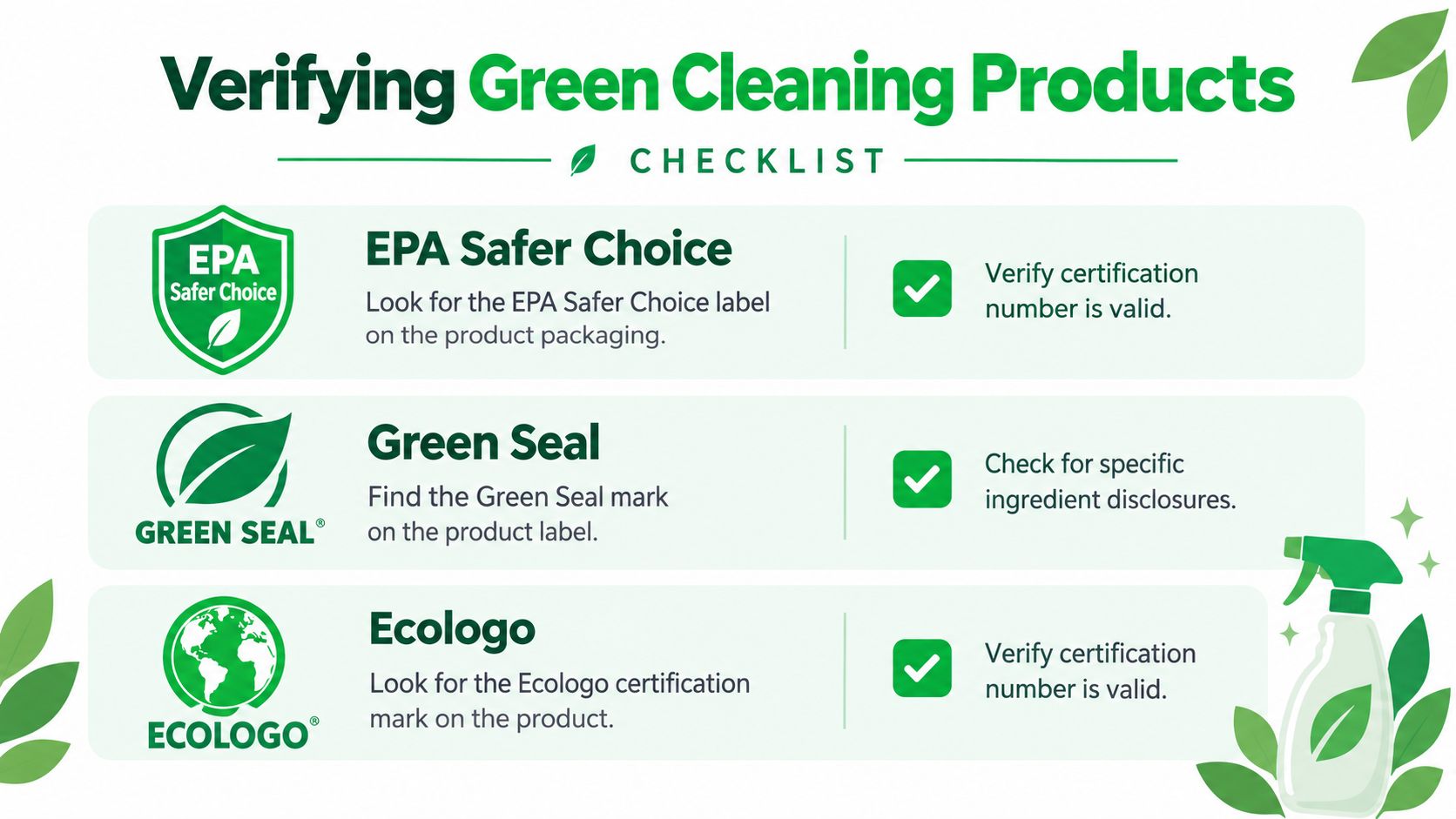
EPA's Safer Choice program gives purchasers a vetted standard for products made with safer chemical ingredients without abandoning performance. The program has expanded to more than 2,000 certified products, including all-purpose cleaners, window cleaners, tub-and-tile cleaners, laundry detergents, floor-care products, pet-care products, and car-care products. Buyers can review the EPA Safer Choice product categories and searchable lists instead of relying on an unverified logo.
Green Seal and Ecologo can also help narrow procurement options, but a logo shouldn't end the review. Ask for the certification number, confirm that it applies to the exact product, request the Safety Data Sheet, and check the last re-audit date. A facility manager should also document approved uses, dilution requirements, storage rules, and whether the product is intended for cleaning or disinfection.
Match the claim to the task
EPA guidance supports low-VOC choices, cold-water use where practical, and reserving disinfectants for high-touch or contaminated surfaces. That distinction matters in hotels, NAU buildings, car dealerships, and medical offices, where purchasing teams may standardize products across many locations.
Pine Country technicians are background-checked and OSHA safety-trained. The company is an International Window Cleaning Association-recognized team and a Flagstaff Chamber of Commerce member. Those markers don't replace product verification, but they give buyers useful questions to ask about training, documentation, access, and scope.
For property owners evaluating how protective finishes fit into a broader maintenance plan, sustainable coating technology explained offers useful context on coatings and surface longevity. A coating still needs to match the substrate and cleaning method, so treat it as part of a system rather than a shortcut.
Common Sustainable Cleaning Mistakes to Avoid
Good intentions can create waste when the method doesn't match the surface. The following mistakes appear often in homes, cabins, and commercial properties.
Mistake one using paper products on glass
Symptom: The pane looks smeared, and disposable towels disappear quickly.
Cause: Paper towels and newspaper leave lint, require repeated wiping, and can drag grit across the surface. They also encourage the operator to keep adding spray instead of removing soil mechanically.
Replacement: Use a proper washer and squeegee with a clean, fitted blade. For high exterior glass, use a pure-water brush-fed pole when the conditions and equipment are appropriate.
Mistake two using excessive pressure
Symptom: Wood siding, roof surfaces, or painted finishes show damage after washing, and the property needs repair or earlier recoating.
Cause: Pressure is treated as a substitute for technique. A high setting can strip protective material, force water into vulnerable areas, and create a cleaning cycle based on damage rather than maintenance.
Replacement: Match pressure, distance, nozzle, detergent, and runoff controls to the surface. Some materials need soft washing or another low-impact process, while others can tolerate controlled pressure.
Mistake three ignoring screens
Symptom: Windows look dirty again soon after cleaning.
Cause: Pollen and dust remain in the mesh and frames, then transfer visually back into the window area. The owner cleans the glass more often without addressing the source.
Replacement: Remove, clean, dry, inspect, and reinstall screens as part of the window service. Pine Country follows that sequence on every service, including the step many crews skip.
Mistake four leaving needles in gutters through winter
Symptom: Water overflows, fascia stays wet, and ice forms where drainage should be clear.
Cause: Organic debris compacts and blocks the path that carries storm and snowmelt away from the structure.
Replacement: Clear gutters before winter and verify downspouts. A planned visit is more controlled than an emergency response after overflow.
Mistake five trusting “natural” without verification
Symptom: A facility assumes a green cleaner also kills pathogens.
Cause: Cleaning and disinfection are different functions. In a survey of 27 Green Seal-approved hard-surface cleaners, 26 made no antimicrobial claim and only one was EPA-registered as an antimicrobial, as reported in this comparative analysis of green cleaning protocols.
Replacement: Read the label, confirm registration when pathogen kill is required, and keep cleaning separate from disinfection unless the product's verified claims support both.
When to DIY and When to Hire a Pro
DIY cleaning works when the task is accessible, controlled, and low risk. Ground-floor interior windows are reasonable if you can maintain a stable stance, avoid stretching, protect nearby finishes, and recognize when glass needs specialized restoration. Routine dusting between professional visits and small storefront spot treatments can also reduce unnecessary full-area washing.
The decision changes with height, difficult access, electrical hazards, fragile surfaces, or the need for consistent results.
Keep these tasks within reach
- Ground-floor interior glass: Use a squeegee and suitable solution instead of abrasive dry wiping.
- Light screen maintenance: Remove screens only when you can label, clean, dry, inspect, and reinstall them without bending frames.
- Small spot treatment: Address isolated storm splash or fingerprints rather than washing an entire elevation.
- Routine observation: Check for failed seals, damaged screens, blocked downspouts, and mineral spotting before conditions worsen.
A homeowner should stop before climbing onto a roof, leaning out of a window, or placing a ladder near a power line. Two-story gutters, multi-story glass, atriums, post-construction windows, and commercial properties requiring consistent quarterly service need a trained access plan.
Professional crews bring more than reach. They choose between squeegees, pure-water poles, ladders, scissor lifts, and other access equipment based on the surface and site. They also follow fall-protection procedures and a sequence that protects the property. Cornell's window-washing program requires workers to attach harness terminals to anchor points before or immediately upon climbing out, illustrating the specific mechanics high-access work demands. California ladder rules restrict ladder use for window cleaning when other safe and practical methods are available and address setup and assistance in defined situations. California's ladder rules for window cleaning show why reaching a pane does not establish a safe cleaning method.
Pine Country Window Cleaning was founded by Flagstaff native David Kaminski and has operated since 1999. Its background-checked, OSHA safety-trained technicians use in-house boom lifts, scissor lifts, and a 95-foot atrium lift for difficult access. The company serves homes and cabins, hotels, dealerships, medical buildings, campuses, gutters, downspouts, pressure washing, post-construction projects, and seasonal snow removal.
Choose one practical step this week: schedule gutter clearing before the next weather cycle, clean screens instead of repeatedly re-cleaning glass, or use a proper squeegee on accessible panes.
Call Pine Country Window Cleaning for a free estimate or schedule online for window cleaning, screen removal and reinstallation, gutter and downspout cleaning, pressure washing, post-construction work, or seasonal snow removal. Ask for a maintenance plan matched to your Flagstaff, Forest Highlands, Pine Canyon, Flagstaff Ranch, or Munds Park property, using the right tools, water, access method, and timing.