
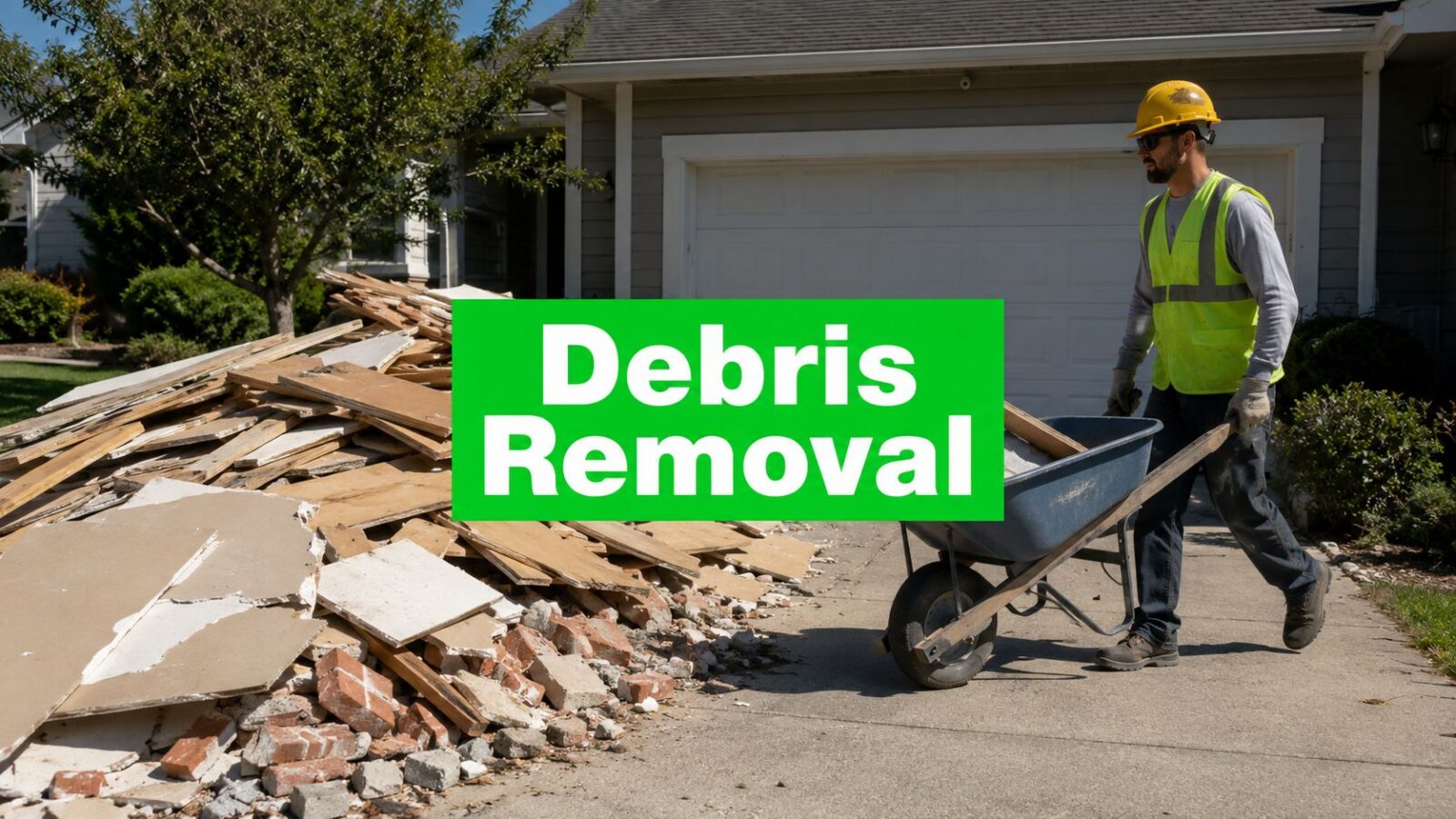
You open the door on a finished remodel and get hit with the part nobody celebrates. A pile of broken drywall in the corner, tile shards under the saw station, cardboard stacked by the garage, and old fixtures waiting for a ride out. The new work looks good, but the property still feels like a jobsite.
Construction debris removal is a separate phase of the project, not a quick cleanup item at the end. Standard curbside service usually will not take loaded buckets of tile, cut lumber, glass, insulation, or demolition waste. The reason is practical. These materials are heavy, awkward to carry, hard on trucks, and often sorted differently at the landfill or transfer station.
In Flagstaff, the decision gets more complicated than "haul it yourself or call someone." Weight adds up faster than homeowners expect. Access can be tight in older neighborhoods. Wind turns loose dust and packaging into a mess across the yard and street. If the property is a rental, second home, or cabin, debris left in place can create trip hazards, weather damage, and code complaints long before the owner gets back.
That is why smart cleanup starts with a simple question. Is this a one-load job you can safely sort, lift, cover, and dispose of correctly, or is it cheaper to pay for labor, hauling, and local disposal knowledge up front?
This guide focuses on that decision. It covers what kinds of debris drive cost, where DIY stops making financial sense, and how Flagstaff disposal and recycling rules affect the actual price of getting the site clean and safe.
Your Renovation Is Done Now What
The contractor has packed up. The new kitchen or bath looks finished. Then you step into the garage or driveway and realize the job is only partly done.
Leftover renovation debris changes the project from a design win into a handling problem. Wood offcuts, broken tile, drywall scraps, brick, old fixtures, metal, and glass all need different treatment once they leave the house. Some loads can go out in one trip. Some need sorting, floor protection, dust control, and a disposal plan before anyone starts lifting.
That difference is what catches property owners in Flagstaff. A pile that looks manageable can turn into half a day of labor, a truck loaded past comfort, and a disposal stop that will not take mixed material the way you expected. If the home sits in a tighter neighborhood or on a sloped lot, the work gets slower and the risk of damage goes up.
Cost follows that reality. You are paying for more than hauling. You are paying for labor, loading order, safe carry paths, vehicle capacity, disposal fees, and knowing what should be separated before it ever hits the truck. Hazardous or restricted material pushes the price higher fast, so a quick visual estimate from the driveway is rarely enough.
The first decision should be practical, not optimistic. Is the pile light, clean, and easy to sort, or is it heavy, mixed, and spread through finished parts of the home?
A simple job usually stays simple. One material type, short carry distance, clear access, and no fragile finishes nearby. A harder job has tile in buckets, torn-out vanities, glass, fasteners, cardboard, and dust tracked across rooms that are already ready for move-in. In that second case, debris removal and final cleaning start to overlap, especially if you also need post-construction dust cleaning for windows and interior surfaces.
What tends to surprise homeowners after the work is "done"
Weight is the first surprise. Tile, mortar, plaster, and concrete get heavy long before the pile looks big.
Time is the second. Debris is rarely staged in one clean stack. It is usually tucked into corners, spread across rooms, or piled where it blocks parking, access, or the next trade.
The third is damage risk. One careless trip with sharp metal or broken masonry can scratch new floors, chip a doorway, tear up a driveway, or leave dust all over a space you thought was finished.
A better first check before you touch the pile
Walk the site once and sort the mess mentally into three groups:
- Heavy material: tile, concrete, masonry, countertops, toilets, sinks, and dense fixtures
- Sharp or dirty material: broken glass, metal, fastener-filled lumber, insulation, and drywall dust
- Clean recyclable material: flattened cardboard, some metals, and separated wood if the load is not contaminated
That quick review gives you a real decision framework. If the debris is light, easy to reach, and accepted locally in sorted form, DIY may pencil out. If it is mixed, heavy, dusty, or still inside finished spaces, professional construction debris removal usually costs less than the time, injury risk, cleanup, and disposal mistakes that come with doing it twice.
Understanding Construction Debris Types and Hazards
The EPA definition of construction and demolition debris covers waste from the construction, renovation, and demolition of buildings, roads, and bridges, including heavy materials like concrete, asphalt, wood, and metals that require specific handling to facilitate recycling, as described by the North Central Texas Council of Governments C&D debris management guidance. On a real jobsite, that broad definition matters because different materials fail in different ways.
A pile of demo debris isn't one hazard. It's several hazards stacked together.
Heavy materials that injure people and damage property
Concrete, brick, asphalt chunks, and old countertops create the most obvious risk. They overload wheelbarrows, crack pavers, gouge driveways, and strain backs fast. Even when the volume looks manageable, the weight often isn't.
Wood is easier to underestimate. Framing scraps, sheathing, trim, and pallets don't just weigh more than expected once wet or bundled. They also carry protruding nails, screws, staples, and splinters that turn loading into a puncture hazard.
Sharp and brittle materials
Metal flashing, cut studs, duct pieces, and old hardware can slice gloves and forearms in a second. Broken glass from windows, mirrors, and shower enclosures creates a similar problem, especially when mixed inside bags where the sharp edge isn't visible.
Drywall and tile are different. They break into smaller fragments that spread everywhere, which makes the site look cleaner than it really is. You'll still find those shards in gravel, flower beds, and along baseboards if the cleanup is rushed.
Mixed debris is where injuries happen. You reach for wood and grab hidden metal, or step on cardboard covering broken tile.
Dust and residue that linger after hauling
Concrete dust, drywall dust, and fine sawdust don't stop at the debris pile. They move into window tracks, settle on ledges, cling to screens, and leave a film on glass and frames. On occupied properties, that fine residue is often what homeowners notice most after the big material is gone.
If your project created that kind of lingering mess, it helps to separate debris hauling from detailed construction dust cleaning. They solve different problems, and treating them as the same task usually leaves one of them half-done.
Materials that deserve extra caution
Some debris shouldn't go into a mixed load without verification from the right local authority or disposal facility.
- Painted or treated material: It may limit recycling options.
- Adhesive-covered flooring and drywall: It contaminates otherwise recyclable loads.
- Insulation, solvents, or unknown older materials: These need a more careful disposal decision than general debris.
When homeowners get into trouble, it's usually not because they had too much debris. It's because they treated all debris as if it could be handled the same way.
The Professional Debris Removal Workflow
The U.S. Army Corps of Engineers treats debris removal as a logistics problem where materials are measured in cubic yards or tons, and disposal-site selection is a critical part of mission planning, according to the USACE debris management fact sheet. That's exactly how experienced crews approach residential and commercial cleanup in Flagstaff.
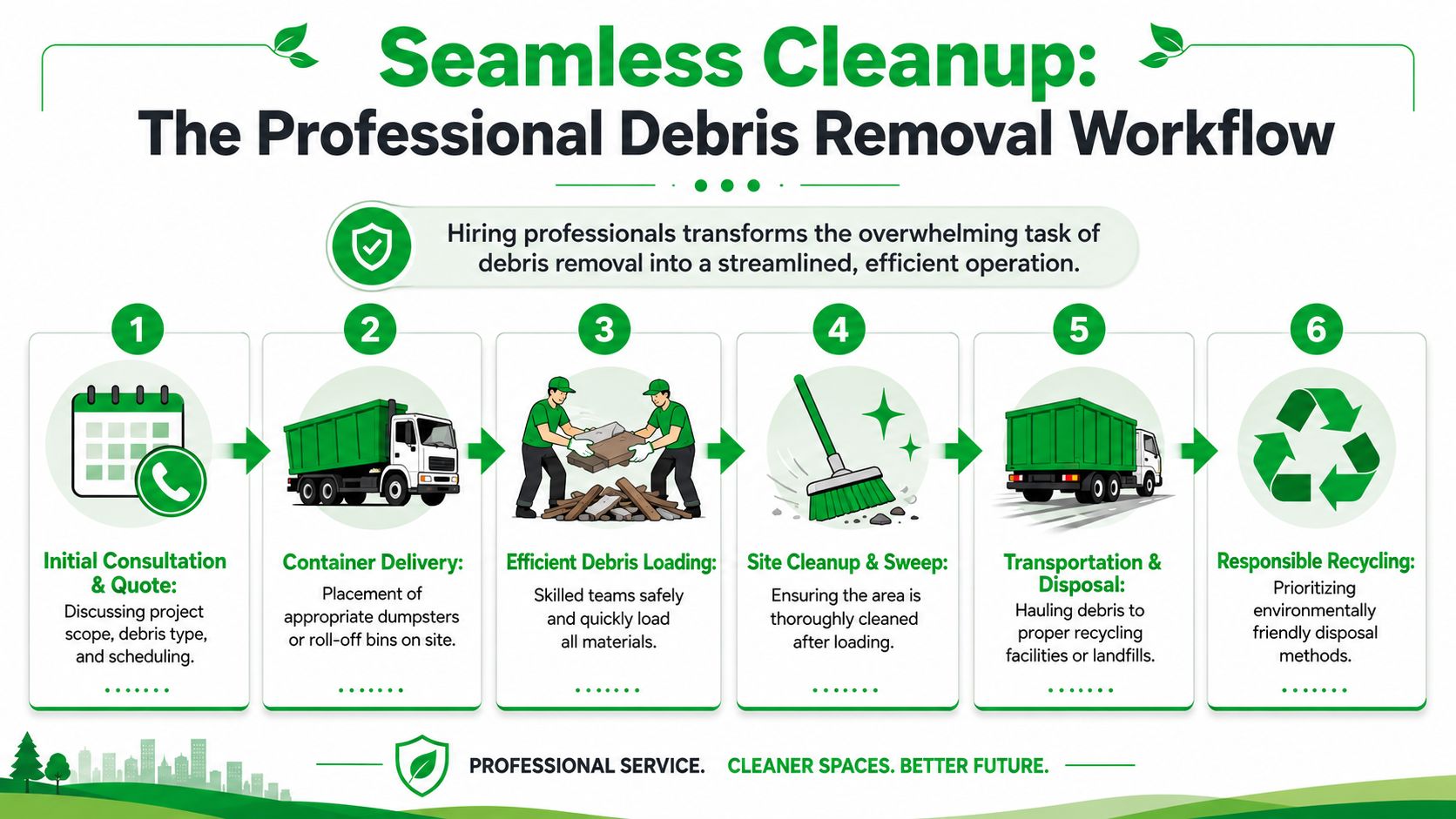
On a small job, the process may look simple from the curb. In practice, good removal work is a sequence. Each step affects speed, cost, and whether the site is cleaner when the truck leaves.
How the job is scoped
A pro starts by looking at material type, access, and loading path. A driveway load-out is one thing. A backyard pile behind a narrow gate or a second-floor bathroom demo is another.
Crews also decide early whether material should be separated on site. That matters because clean concrete, metal, or wood can follow a different disposal path than mixed debris. Once everything gets blended together, your options narrow.
Before any heavy cleanup, some owners also schedule a separate post-construction cleaning service to handle the dust, residue, and detail work left after the hauling is finished.
What the removal sequence looks like
A solid workflow usually includes:
Site walk and quote
The crew identifies what's being removed, where it sits, and what access challenges will slow the job.Protection of finished areas
Floors, trim, doorways, and exterior surfaces get attention before loading starts.Material grouping
Heavy masonry, lumber, metal, packaging, and mixed waste are separated where practical.Controlled loading
Teams use the right containers, lifting methods, and loading order so sharp or dense material doesn't damage lighter debris or the truck.
Here's a useful visual of how that process typically unfolds.
What works and what doesn't
What works is staging. Keep debris near the best exit path, use containers that match the material, and avoid remaking the pile multiple times.
What doesn't work is random loading. Homeowners often bag heavy debris that should stay loose, overfill containers that tear, or bury recyclable material under trash and dust. That creates extra handling, more breakage, and a slower unload at the final site.
Crews save time by making decisions before they touch the pile. Most delays come from sorting too late.
A key benefit of professional construction debris removal is that it shortens the ugly middle of the project. The site goes from cluttered and risky to clear and controllable without turning your driveway, landscaping, or freshly finished rooms into collateral damage.
DIY vs Hiring a Pro A Practical Decision Guide
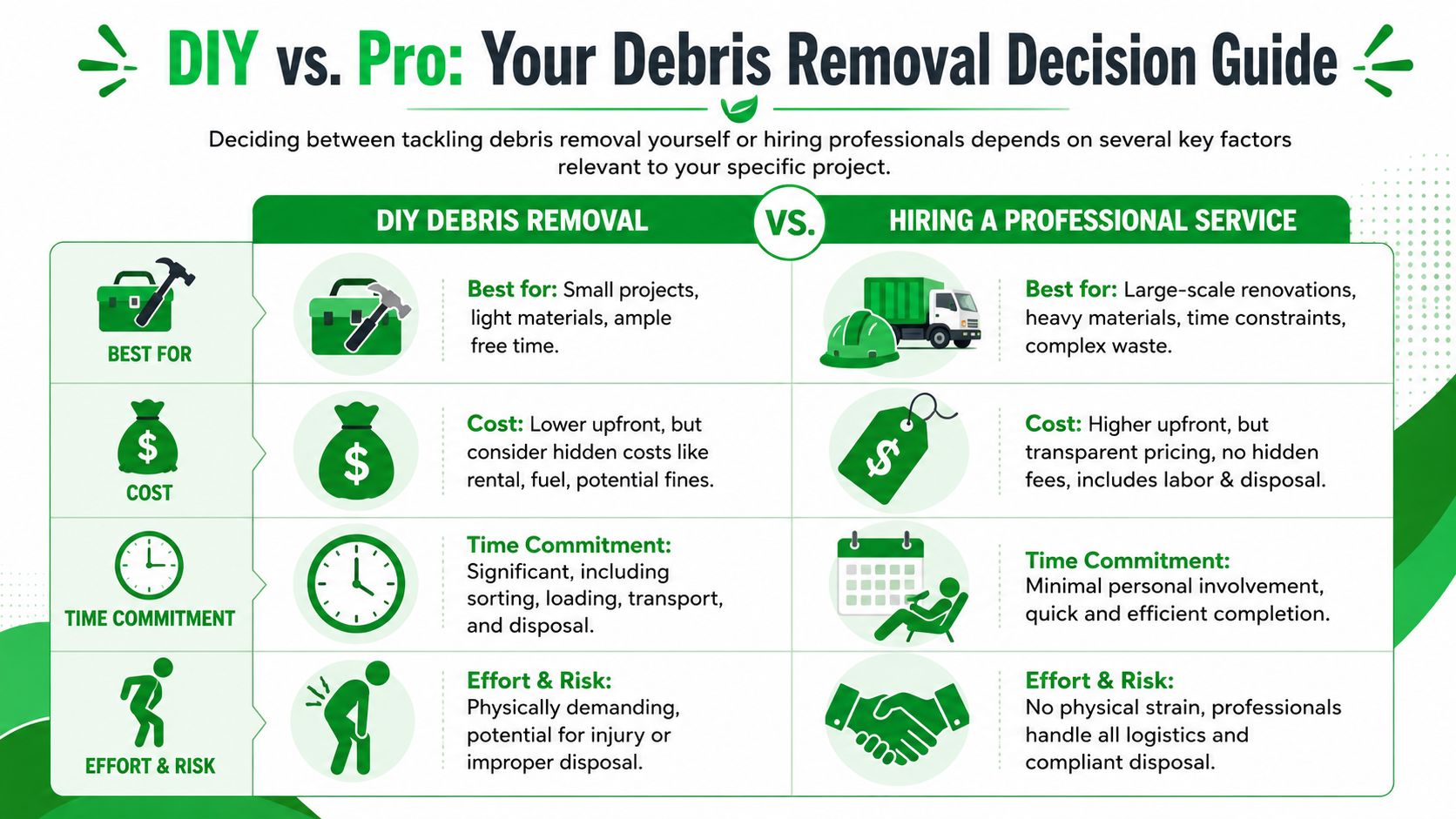
Most homeowners don't need help understanding their options. They need help deciding which option fits the actual job in front of them. That's where most online advice falls short.
One practical guide notes a common gap: people see options like a $300 to $800 weekly dumpster rental or $20 to $100 self-haul truckloads, but they still don't know which route makes sense for a specific remodel or cleanup, as described in The Green Dumpster's debris disposal guide.
When DIY makes sense
DIY can work if the project is small, the material is light, and you have time. Think packaging, a limited amount of trim, a few cabinet pieces, or clean wood scraps from a minor repair.
It can also work if access is easy. A ground-floor job with debris already stacked near a driveway is very different from carrying broken tile through a finished hallway or down stairs.
When a pro is the better call
Professional help makes more sense when the debris is dense, mixed, sharp, dusty, or spread across multiple areas. It also makes sense when you need the site cleared quickly for the next trade, an inspection, a tenant turn, or a move-in.
For larger cleanup jobs, some owners compare a dumpster to a full-service hauling crew, while others pair debris hauling with services like 1-800-YOU-GOT-JUNK for broader site cleanup planning. The right fit depends on whether you want labor included or just a container parked on site.
Side-by-side comparison
| Factor | DIY self-haul | Dumpster rental | Professional removal |
|---|---|---|---|
| Best fit | Small, light, clean loads | Ongoing projects with steady debris | Heavy, mixed, urgent, or awkward loads |
| Your time | Highest | Moderate | Lowest |
| Physical effort | Highest | High | Minimal for owner |
| Risk of damage or injury | Highest | Moderate to high | Lower when handled by trained crew |
| Sorting responsibility | You | You | Usually handled by crew |
| Driveway impact | Personal vehicle wear | Container placement issues possible | Shorter on-site footprint |
A simple way to choose
Use this filter before you decide:
- Choose self-haul if the pile is small, dry, easy to lift, and already separated.
- Choose a dumpster if the project will generate debris over several days and you have room for placement.
- Choose a crew if the pile includes masonry, glass, demolition waste, old fixtures, or material inside the structure that still needs to be carried out.
Field note: If you're asking friends to help because the material is “too much for one person,” you're already in pro territory.
The hidden DIY cost isn't only money. It's time, wear on your vehicle, repeat loading, disposal uncertainty, and the chance that you still need to hire help after doing the hardest part yourself.
Navigating Flagstaff Disposal and Recycling Rules
In Flagstaff, good intentions don't guarantee a recyclable load. Local disposal and recycling outcomes depend on what's in the pile, how it's separated, and whether contamination has already happened before the truck leaves the property.
That's the part many homeowners miss. A mixed load may contain recyclable material in theory, but local acceptance rules are based on condition, not just category. Painted wood, adhesive-covered drywall, broken glass mixed into lumber, and general trash blended with demo waste can push a load toward landfill instead of recovery.
Why sorting matters more than people expect
A recent industry explanation points out a critical issue: mixed or contaminated debris drastically lowers recycling rates, and a key limitation is the on-site sorting needed to meet facility rules and keep materials like wood or drywall out of landfill once they're mixed with paint or adhesives, as noted in this construction site debris removal overview.
In practical terms, that means sorting starts before loading, not after. Once debris gets piled together in the truck bed or dumpster, there's usually no easy way to recover clean streams without extra labor.
What works well in Northern Arizona
Flagstaff-area projects tend to go smoother when owners and contractors separate debris into a few simple categories on site.
- Clean heavy material: Concrete, brick, and similar masonry should stay apart from general waste.
- Metal: Keep it out of dusty mixed piles where it becomes harder to recover.
- Wood: Untreated, cleaner wood has a better chance of following a different path than painted or adhesive-covered scraps.
- True mixed debris: Reserve one area or container for the material that can't be cleanly separated.
This matters at cabins and second homes even more. Debris often sits longer between workdays, and weather can turn a sorted pile into a contaminated one if it's left exposed, blown around, or used as a catch-all by multiple trades.
Local rule of thumb
Call ahead before assuming a facility will accept a material the way you've packed it. In Flagstaff and Coconino County, disposal rules, accepted categories, and load preparation standards can change by facility and by material type.
A clean pile is easier to move, easier to quote, and easier to place correctly. A mixed pile creates guesswork, and guesswork is what raises hauling cost and lowers recycling success.
How to Vet and Hire the Right Contractor
Hiring a debris removal contractor shouldn't feel like a gamble. A good company will answer direct questions clearly, put the scope in writing, and explain how the material will be handled without getting vague.
If a contractor avoids details, that's the signal. Construction debris removal has too many liability, safety, and disposal variables for fuzzy answers.
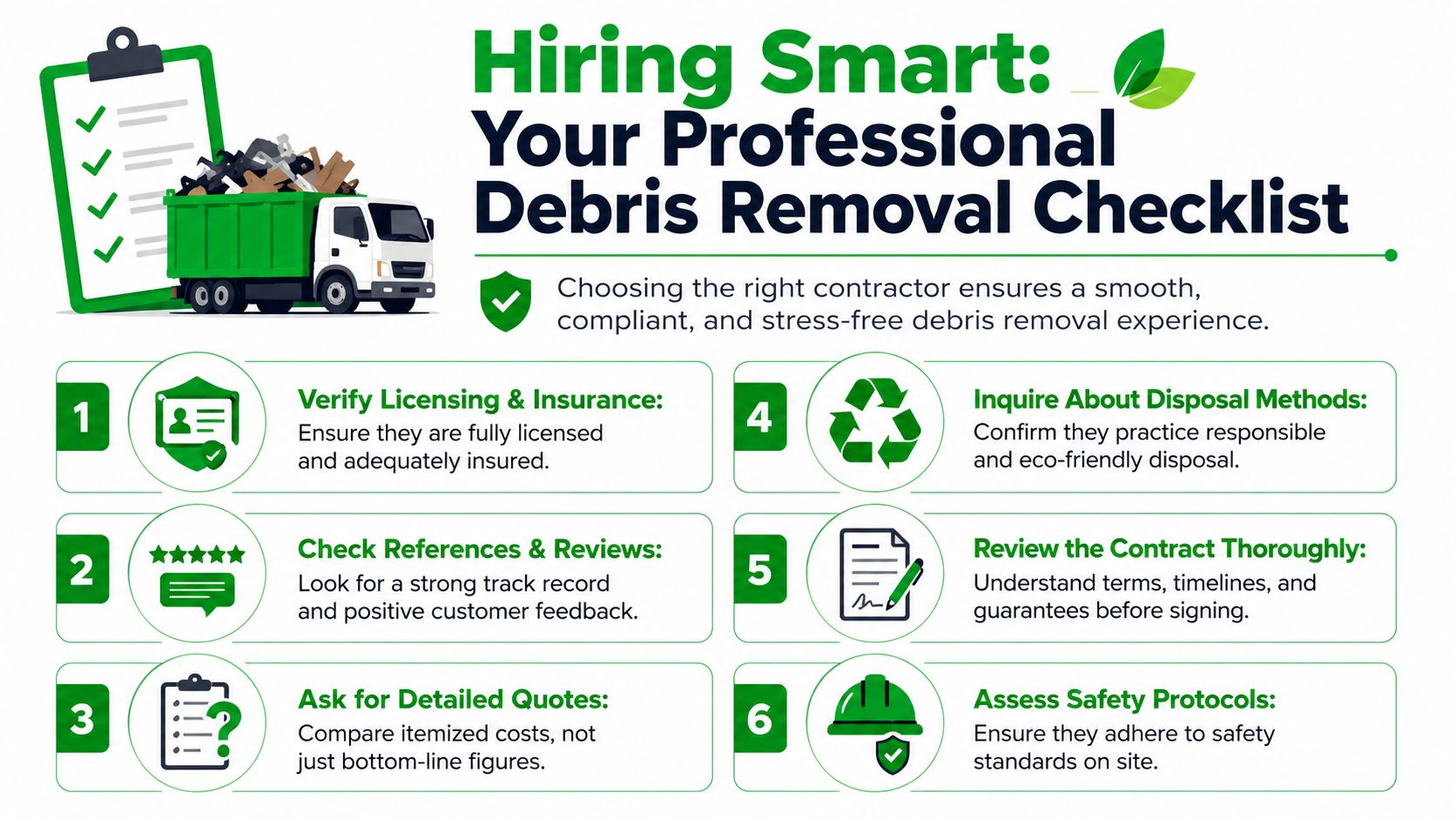
Questions worth asking before you book
Use this checklist when you call:
Are you licensed and insured for this kind of work
You want confirmation that the company is operating legitimately and carrying appropriate coverage.What exactly is included in the quote
Ask whether labor, loading, haul-away, disposal, and final sweep are all part of the price.How do you handle mixed debris
This tells you whether they've thought through sorting, recycling, and disposal site requirements.What won't you take
A serious contractor should identify excluded or special-handling materials without hesitation.How will you protect the property
Ask about floor protection, driveway care, gate access, and cleanup of small fragments after loading.
What a solid estimate looks like
A usable estimate should describe the material, access conditions, and expected scope in plain language. It doesn't need to be complicated, but it does need to be specific enough that both sides know what's being priced.
Look for line-of-work clarity, not sales language. “Debris removal from garage and rear patio, includes loading and haul-away of non-hazardous renovation waste” is far more useful than “cleanup package.”
Hiring tip: The cheapest quote is often the least complete quote.
Red flags to watch
Some warning signs show up fast:
- No discussion of disposal method: That usually means they haven't planned the back end of the job.
- Cash-only with no paperwork: That leaves you exposed if there's property damage or a dispute.
- No site questions: If they don't ask about stairs, access, material type, or weight, they may be underestimating the job.
- Pressure to book immediately: Reliable operators don't need to rush you past basic due diligence.
Reviews and referrals matter, but they work best when paired with a detailed conversation. For a job involving sharp, dusty, heavy waste around your home or building, professionalism should be visible before the crew ever arrives.
Your Post-Construction Finishing Touches
The truck has pulled away, the dumpster is gone, and the remodel should feel finished. Then the afternoon sun hits the glass and every bit of fine dust, adhesive smear, and paint speck shows up at once. That last stage is what separates a cleared jobsite from a home or rental that actually feels ready to use.
A lot of owners in Flagstaff underestimate this part because the big mess is already gone. The remaining work looks minor, but it is the part you keep seeing every day.
A few practical questions homeowners still ask
What about a small leftover amount of debris?
A small pile can still be a nuisance if it contains broken tile, glass shards, fasteners, or scraps with adhesive on them. If the material is clean, separated, and light enough to handle safely, a self-haul run may pencil out. If not, the time, vehicle wear, dump fees, and cleanup afterward often cost more than expected.
Can I just bag everything and set it out over time?
Regular trash service usually is not built for renovation waste. Weight limits, volume limits, and prohibited materials can turn a simple plan into several weeks of half-finished cleanup. Small debris also has a way of breaking through bags and ending up in the driveway, garage, or landscaping.
What if there is questionable material left over?
Stop before loading it. Older coatings, solvents, and certain treated materials need the right disposal path. Guessing is how homeowners end up handling something they should have left alone.
The cleanup many owners miss
Post-construction dust behaves differently from ordinary household dust. It settles into window tracks, screen frames, trim joints, and exterior ledges. Drywall powder, masonry residue, silicone, paint overspray, and sticker adhesive can all sit on glass at the same time.
That mix creates a real trade-off. A basic wipe-down is cheaper, but it can grind grit into the glass, smear residue across the pane, or damage screens and finishes. Professional post-construction window cleaning is often the smarter choice once you factor in replacement risk and the time needed to do it carefully.
One local option is Pine Country Window Cleaning, which handles post-construction window cleaning with tools built for the work, including squeegees, ladders, poles, and pure-water brushes. The company has served Flagstaff since 1999, was started by Flagstaff native David Kaminski, and includes screen removal, cleaning, and reinstallation with each service.
Why this final step matters
Owners usually judge the project by the surfaces they touch and see up close. Windows, sills, screens, and ledges carry the evidence of the job long after the debris is hauled away. If those details are still dirty, the property still feels under construction.
For homeowners, cabin owners, and property managers, the practical sequence is straightforward. Get the heavy debris removed safely. Keep recyclable material separate before it gets contaminated. Follow Flagstaff disposal rules. Then finish with detail cleaning that makes the space feel complete, not just emptied out.