
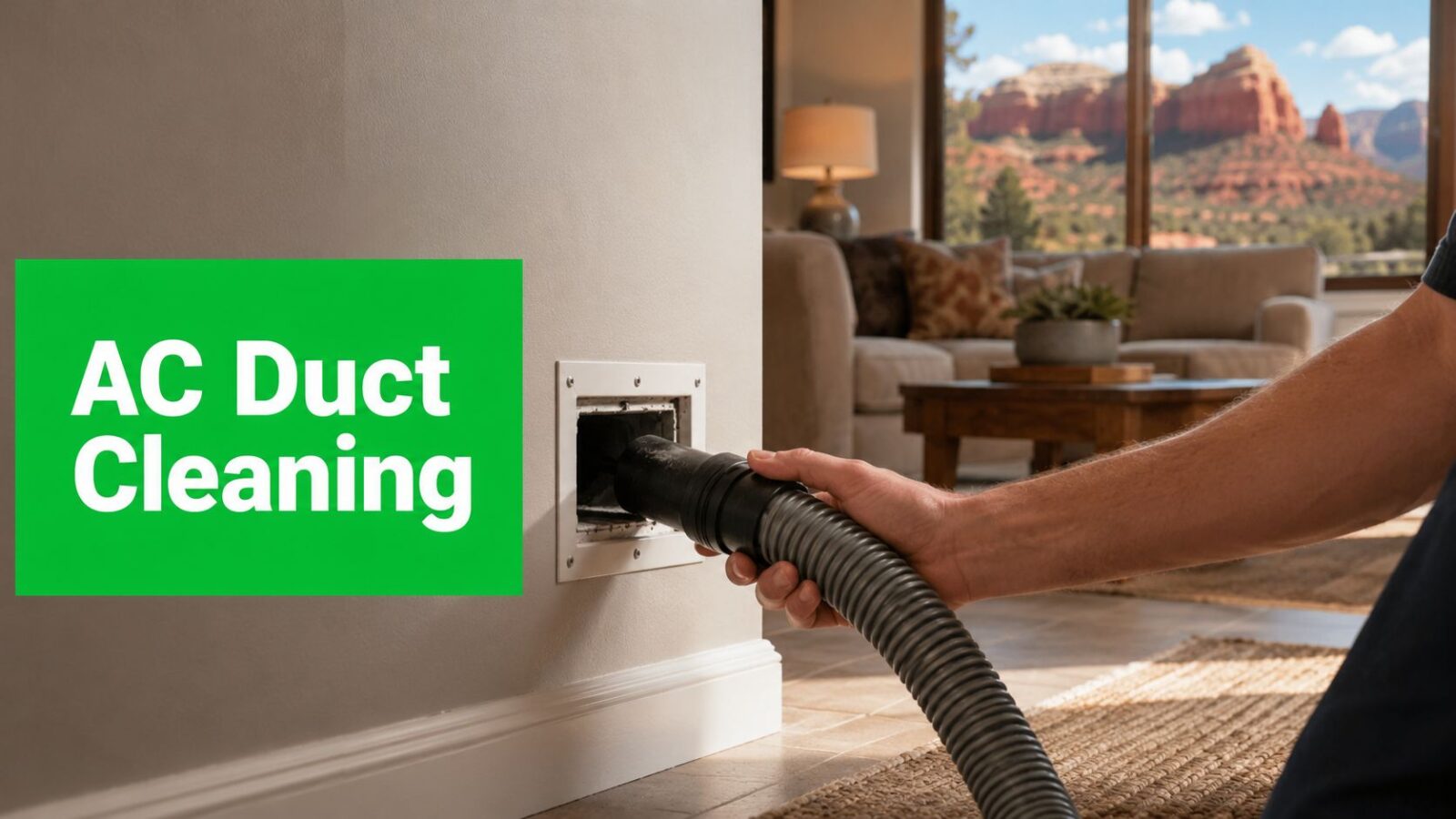
If you live in Flagstaff, Munds Park, or one of the higher-elevation neighborhoods outside town, you already know how fast dust shows up. One windy spring day, one round of pollen, one monsoon season, one smoky stretch in fire season, and suddenly you're wondering what's sitting inside your vents.
That's where a lot of homeowners start asking about AC duct cleaning. Fair question. But the honest answer isn't “yes, everyone needs it.” It's “sometimes.” And if a contractor can't say that plainly, be careful.
We're a window cleaning company, not an HVAC outfit, but we spend our days inside Northern Arizona homes and businesses. We see what high-altitude weather does to screens, sills, glass, tracks, vents, and interior dust levels. So this guide is straight advice: when a C duct cleaning makes sense, when it doesn't, what a real professional job looks like, and how to avoid paying for a service you never needed.
Is AC Duct Cleaning a Necessity or a Myth
For most homes, routine duct cleaning is not something I'd put on an automatic yearly maintenance list. The strongest neutral guidance says the evidence is limited. The U.S. EPA says duct cleaning has not been shown to prevent health problems in most cases, and the broader guidance around the service points back to visible mold, vermin, or substantial dust and debris as the situations where it's most useful, as explained in this overview of benefits of clean air ducts.
That matters in Northern Arizona because local conditions can fool people into thinking every dust problem starts in the ducts. Often it doesn't. A lot of what lands on furniture comes from daily living, open doors, foot traffic, pets, dry air, and outdoor dust tracked into the house. Ducts can contribute, but they aren't automatically the villain.
What's normal and what isn't
Light dust in ductwork isn't a crisis. It's normal. The bigger issue is whether you have a specific contamination problem or a clear reason to believe the system is redistributing debris into the home.
A better mindset is this:
- Routine dusting problem: Start with filters, housekeeping, entry control, and vent covers.
- After contamination: Consider professional duct cleaning.
- After a remodel or heavy debris event: Inspect first, then decide.
Local rule: Don't pay for duct cleaning just because someone showed you dust. Pay when they show you a problem.
If you're trying to prioritize ventilation-related maintenance overall, it's also smart to understand why dryer vent cleaning is important. Homeowners often ignore that system even though it's a more direct safety and performance issue than routine duct cleaning.
My opinion for Flagstaff-area homes
In this market, AC duct cleaning is a targeted service, not a default service. High-altitude dust, pine pollen, and wildfire smoke make people understandably sensitive about indoor air. But that doesn't mean every home needs the ducts cleaned on a schedule. It means you need a practical inspection standard and a contractor who'll tell you no when no is the right answer.
What a Professional Duct Cleaning Involves
A real duct cleaning is not a guy with a shop vacuum at the register. If that's the setup, send him away.
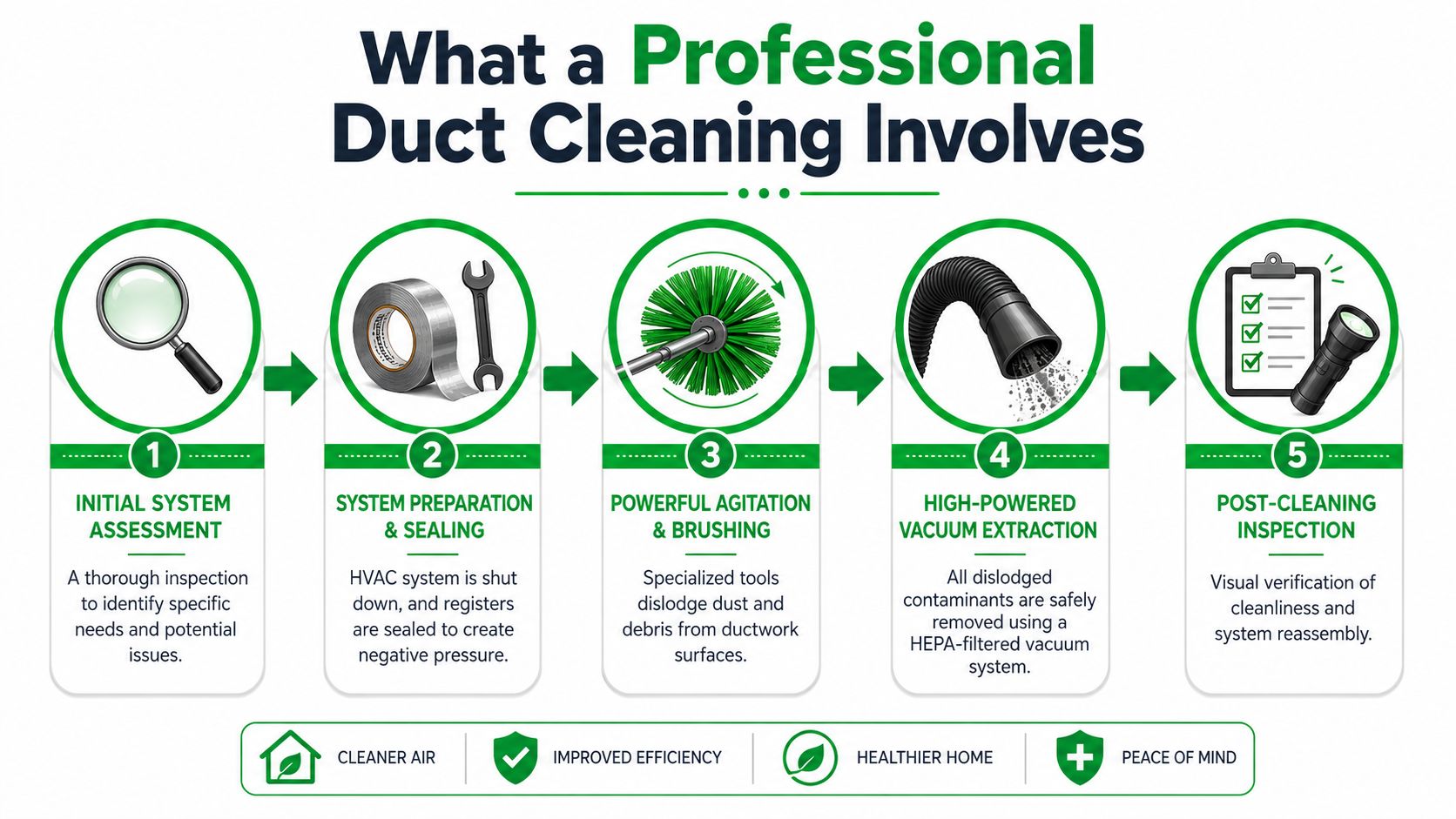
To meet NADCA Cleaning Verification Standards, HVAC duct systems have to be cleaned using Source Removal mechanical methods that physically extract contaminants. That means the contractor creates constant negative pressure so loosened debris gets pulled into HEPA-filtered vacuum collection equipment instead of blown back into the house.
What source removal actually means
The process is similar to cleaning a chimney with containment. The contractor doesn't just knock debris loose. They create controlled suction through the system first, then use agitation tools to dislodge buildup while the vacuum captures it.
A legitimate process usually includes:
Inspection first
They check supply and return runs, registers, accessible components, and any obvious signs of contamination or damage.System prep and sealing
Registers are sealed or controlled, and the system is set up to maintain negative pressure.Mechanical agitation
Brushes, air tools, or similar equipment break debris free from the duct surfaces.Vacuum extraction
The loosened material is removed through a collection system with HEPA filtration.Verification
The system should be visually clean when the job is done.
What separates a serious contractor from a cheap one
Northern Arizona homeowners should be especially careful after construction, tenant turnover, cabin reopening, or any dusty event. The wrong crew can make a mess worse by stirring up debris without proper containment. That's one reason I tell people to read a few practical outside perspectives, including this summary on the benefits of duct cleaning, then compare those claims to the actual cleaning method being offered.
Use this quick screen when you talk to a company:
| What to ask | What you want to hear |
|---|---|
| How do you clean the system | Source removal, not just vent vacuuming |
| How do you contain dust | Constant negative pressure with HEPA-filtered collection |
| What parts are included | More than just visible vents |
| How do you verify it's clean | Visual verification and a clear scope |
If a company spends more time talking about fragrances, fogging, or “sanitizing the whole house” than mechanical cleaning, they're dodging the main issue.
For homes coming out of a remodel, I'd also look at broader cleanup planning. Fine debris doesn't stay in one place, which is why post-project construction dust cleaning matters far beyond the floor and countertops.
Why process matters in high-altitude homes
Homes in Flagstaff and nearby mountain communities often cycle between dry dust, pollen, and seasonal closure. That means any contamination sitting in ductwork can linger for a long time before someone notices. A proper process prevents the cleaning itself from becoming another indoor air problem.
Five Clear Signs Your Ducts Need Cleaning
The EPA's position is the right starting point here. Routine air duct cleaning has never been shown to prevent health problems, and the agency treats it as a situational service, recommending it when ducts are badly contaminated, such as after water damage, visible microbial growth, or pest infestation, according to the EPA's guidance on when air duct cleaning makes sense.
So don't think in terms of calendar-based cleaning. Think in terms of triggers.
The signs that justify a real inspection
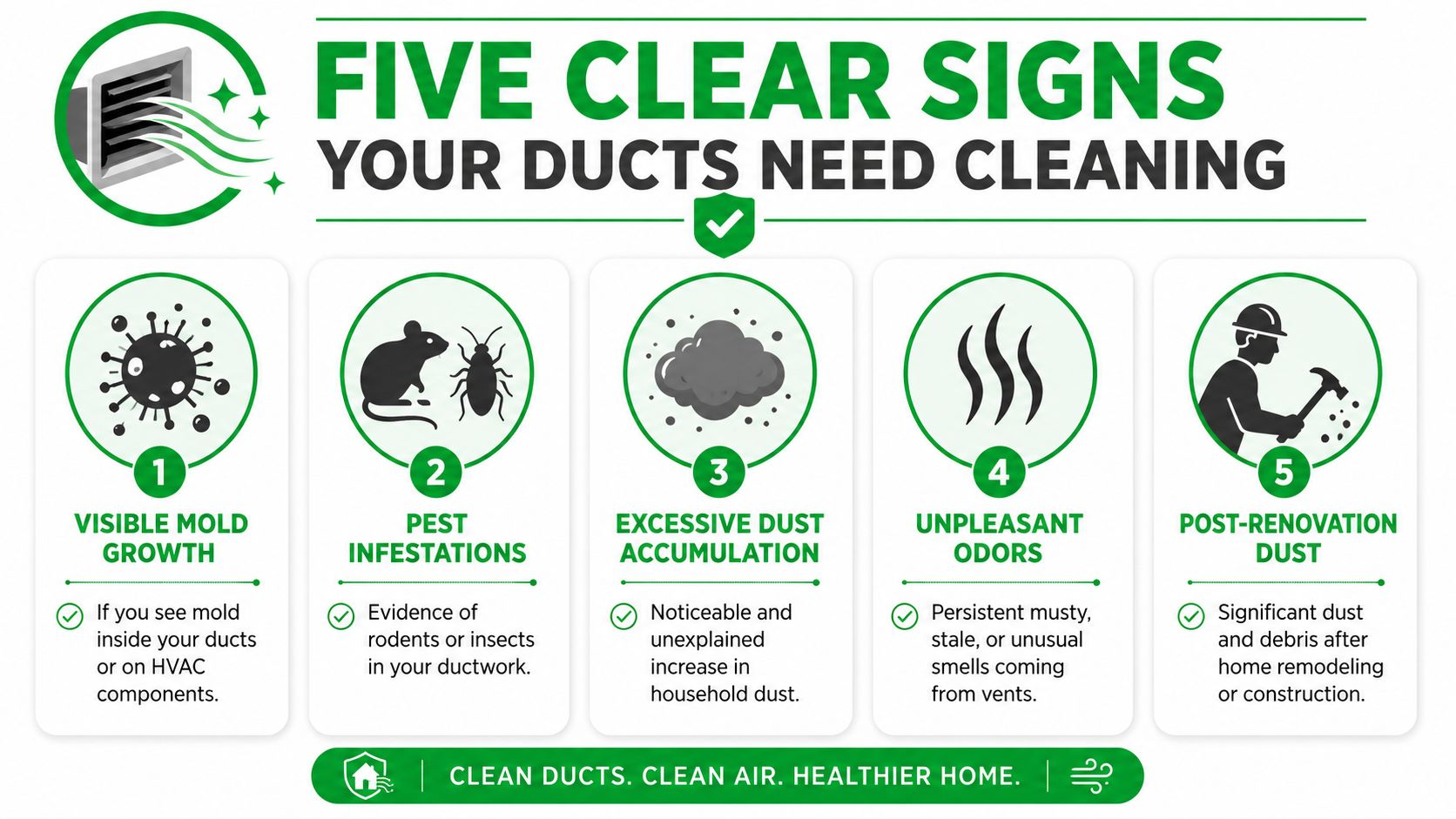
Here are the five situations where I'd stop debating and start calling:
Visible growth around vents or inside accessible duct areas
If you can see suspect microbial growth, don't ignore it. The answer isn't perfume or fogging. It's inspection, source correction, and proper cleaning or replacement where needed.Evidence of rodents or insects
Droppings, nesting material, scratching sounds, or dead pests near duct runs all move this from “maybe” to “deal with it.”Dust or debris blowing out when the system starts
Not a little settled dust on a register. I mean material that clearly enters the room when air starts moving.Persistent musty or stale odors from vents
Odors don't prove the ductwork is the only issue, but they do justify investigation, especially after moisture events.Recent renovation, drywall work, or new construction
This is a big one in newer subdivisions, custom homes, and cabin remodels. Fine construction debris gets everywhere.
Here's a quick video that gives homeowners a useful visual sense of what duct issues can look like in the field:
Northern Arizona situations that often trigger duct problems
Flagstaff homes deal with a different mix than lower-elevation desert properties. A few common local examples:
After wildfire smoke season
Smoke odor that lingers long after outdoor conditions improve can justify looking at the HVAC system. I wouldn't assume the ducts are the whole problem, but they may be part of it.
After winter vacancy
Second homes and cabins that sit closed up can develop odor, pest, or moisture issues. Open the place, change the filter, inspect visible areas, and don't guess if something smells off.
After spring dust and pollen buildup
Dry, windy weather can leave homeowners convinced they need cleaning when what they really need is a better filter routine and more aggressive dust control at doors and windows. But if debris is visibly entering rooms through the vents, that's different.
Don't clean ducts because your house is dusty. Clean them when the duct system is contaminated.
Understanding Duct Cleaning Costs in Northern Arizona
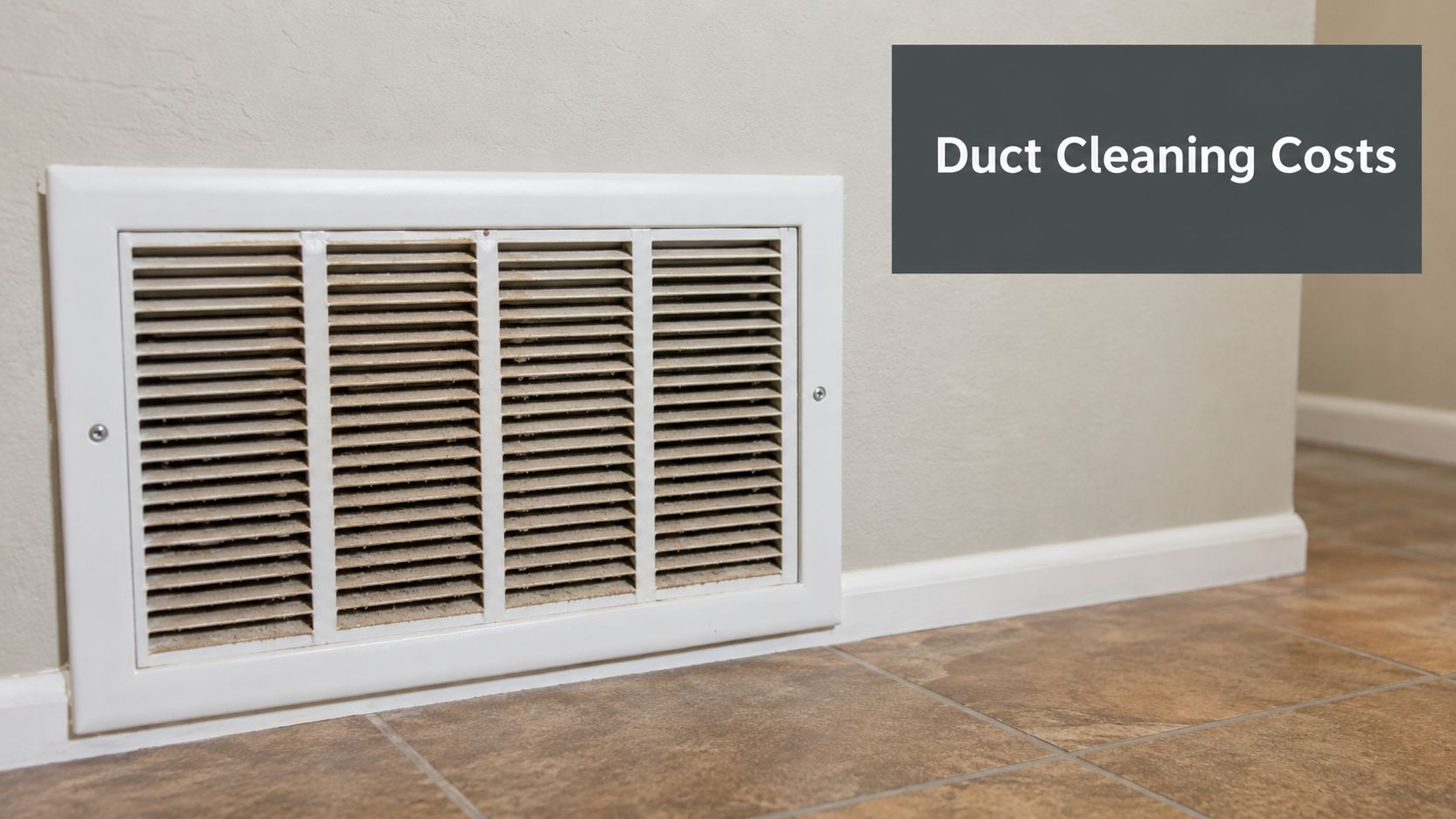
Most homeowners want the price first, and that's fair. Industry pricing data suggests that average air duct cleaning costs commonly fall between $450 and $1,000 for a typical home, and the same pricing guidance warns that advertised “$99 whole-home duct cleaning” offers are often misleading and may be priced per vent rather than for the whole system, according to this summary of air duct cleaning cost ranges.
Why price swings so much
The final quote usually depends on the size of the system, the layout, and how many vents and components are included. That's why the cheapest ad is often the least useful one. A low headline number can leave out registers, grilles, coils, the air handler housing, or other parts that matter.
Ask for a written scope of work. If they won't put it in writing, move on.
Here's the fast way to read a quote:
| Quote feature | Good sign or warning |
|---|---|
| Clear list of included components | Good sign |
| One flat teaser price with no detail | Warning |
| Explains cleaning method | Good sign |
| Heavy upsell pressure at the door | Warning |
When the cost is worth it
Duct cleaning makes the most sense when it solves a defined problem. A few examples:
- Post-remodel debris in the system
- Pest contamination
- Visible contamination tied to moisture or poor housekeeping during construction
- Heavy dust discharge from registers
If none of those apply, I'd spend money elsewhere first. Filters, sealing obvious leaks, cleaning interior living surfaces properly, and fixing moisture issues usually rank ahead of routine duct cleaning.
Practical budget advice: If the company can't tell you exactly what problem the cleaning is solving, don't approve the job.
For Northern Arizona homes, especially second homes, you're better off treating this as a corrective service. Not a subscription.
Hiring a Reputable Contractor vs DIY Risks
DIY duct cleaning sounds simple until you think through what happens when you shove a hose or brush into the system. You loosen debris. Then what? If you don't have proper negative pressure and collection equipment, a lot of that material ends up airborne in the house.
That's why I don't recommend DIY beyond light cleaning of the vent cover itself. Deep system cleaning belongs to a trained contractor with the right containment setup.
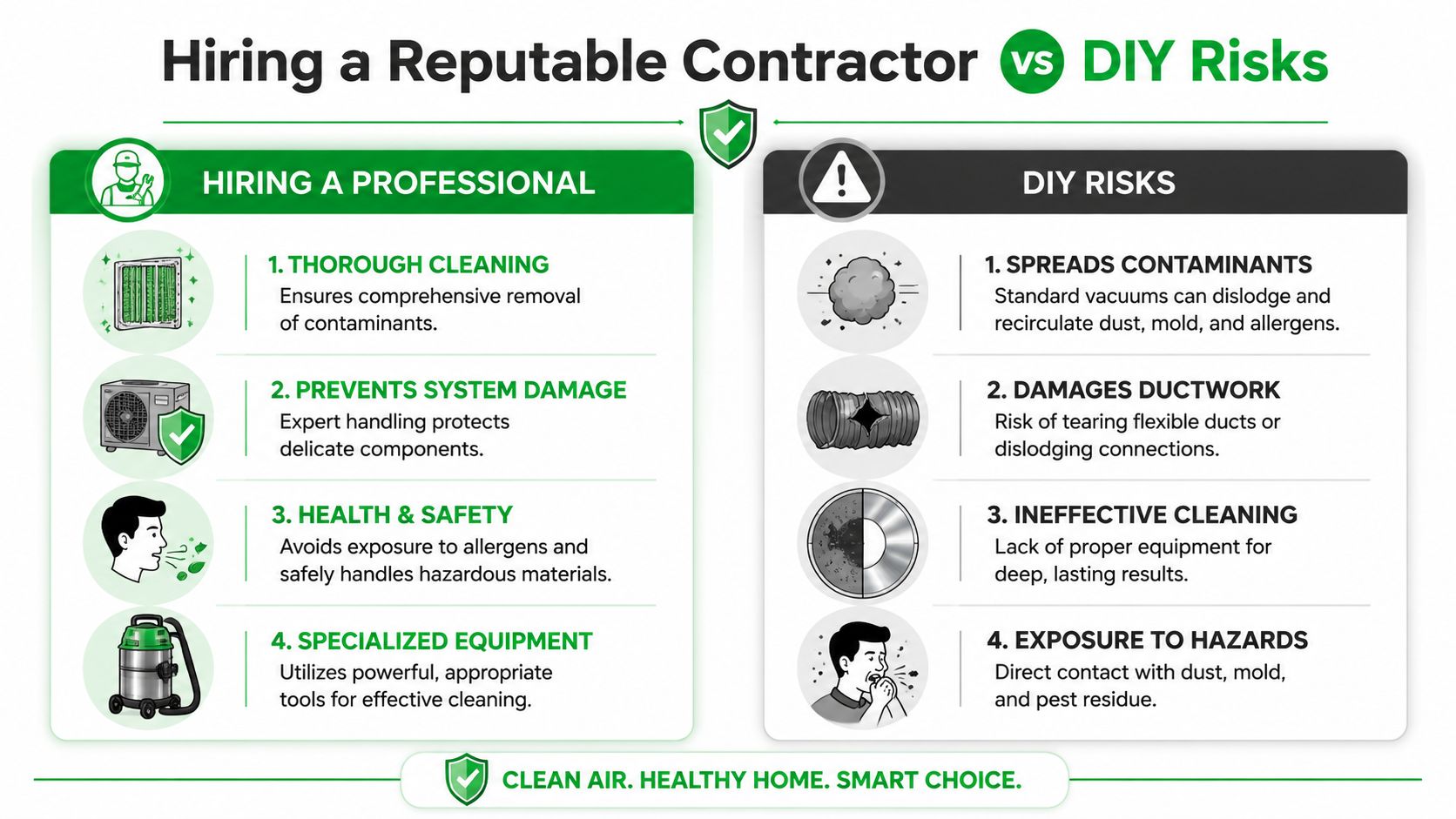
DIY goes wrong in predictable ways
Here's what homeowners underestimate:
Dust gets redistributed
A household vacuum doesn't create the same controlled conditions as professional collection equipment.Flexible ducting can be damaged
Aggressive brushing in the wrong place can tear, detach, or crush sections.Insulated duct materials need special handling
If fibrous glass insulation is damaged, it should be replaced, not “cleaned back to normal.”Chemical use gets sloppy fast
When antimicrobial agents are used, they must be EPA-registered for HVAC use, and professionals should only apply them when microbial growth is visually confirmed. Indiscriminate use can irritate eyes, nose, and skin.
Questions to ask before you hire anyone
Don't ask, “How cheap are you?” Ask better questions.
Ask about cleaning method
You want source removal and negative pressure. If they say they “blow everything down” or “vacuum out the vents,” that's not enough.
Ask what's included
Get a written description of which parts of the HVAC system they'll clean. Vague promises are where bait-and-switch pricing starts.
Ask about antimicrobial use
Bad contractors reveal themselves when you ask:
- Is the product EPA-registered for HVAC systems
- Will you use it only if microbial growth is visually confirmed
- How is it applied
- What happens if internal insulation is damaged
A competent answer should be calm and specific. If they pitch chemical treatment as automatic, that's a red flag.
Any contractor who wants to spray first and inspect later is solving the wrong problem.
Ask how they treat your home
This matters more than people think. Good home service work isn't just technical. It's operational. The crew should protect floors, contain debris, communicate clearly, and leave the house in better condition than they found it. That's true whether you're hiring an HVAC company, a carpet cleaner, or a window crew. At Pine Country Window Cleaning, for example, our technicians remove screens, clean them, and reinstall them with every service because details and care for the home are part of the job, not extras.
A Smart Maintenance Plan for Your Ductwork
The smartest plan is simple. Don't treat AC duct cleaning like routine medicine. Treat it like a targeted repair. Use it when there's contamination, a clear trigger, or visible evidence that the system needs attention.
For most homeowners in Flagstaff, Munds Park, Forest Highlands, Pine Canyon, and similar areas, the better ongoing strategy is basic prevention.
What you should do yourself
These habits matter more than generally realized:
Change HVAC filters on a regular schedule
Dusty, windy conditions and seasonal pollen load filters faster here than many homeowners expect.Keep registers clean and open
Vacuum the covers, wipe away visible buildup, and don't block airflow with furniture or rugs.Watch for moisture and pests
Water intrusion and rodents create the kind of contamination that justifies professional duct work.Control dust at the source
Clean entries, screens, tracks, and high-dust areas before debris keeps circulating through the house.
What to schedule professionally
If you've had a remodel, pest issue, visible contamination, or a strong odor problem linked to the HVAC system, schedule an inspection with a reputable duct cleaner. If not, focus on a broader home upkeep routine and stay consistent with it. A good seasonal checklist helps, especially for second homes and mountain properties with weather swings, and this seasonal home maintenance checklist is a solid place to start.
The honest bottom line is this: a C duct cleaning is worth doing when there's a reason. It's a waste of money when there isn't. Northern Arizona homeowners do best when they ignore the scare tactics, insist on real evidence, and choose contractors who explain the problem before they sell the fix.
If you want practical help keeping your Northern Arizona home cleaner and easier to maintain, Pine Country Window Cleaning is a local option worth considering. We've served Flagstaff since 1999, and as Flagstaff native David Kaminski's company, we focus on careful, professional service that respects your home. We clean windows with professional tools, remove and clean screens, reinstall them with every service, and help homeowners reduce the dust and buildup that make mountain homes harder to keep comfortable year-round.