

If you live in Flagstaff, Munds Park, Forest Highlands, or Pine Canyon, you've probably had the same moment. The light hits the glass just right, and what looked fine yesterday suddenly shows every dust line, every dried raindrop, every winter streak. The view is still there, but it's filtered through Northern Arizona.
That's why window cleaning in Arizona changes once you get up into the mountains. Desert advice only goes so far here. High elevation homes deal with spring dust, summer monsoon residue, long winter buildup, and stretches when a second home or short-term rental sits empty. The job isn't just making glass look better. It's protecting screens, tracks, frames, skylights, and the parts of the home that collect grime long before the owner notices.
More Than Just Dust A Northern Arizona Problem
A lot of Arizona window cleaning advice is written for Phoenix or Tucson. That leaves out a real Northern Arizona problem. Winter and shoulder-season care for cabins, second homes, and short-term rentals is still underexplained, even though many owners need a plan for preventing mineral staining and debris buildup while properties sit vacant for part of the year, as noted in this review of Arizona window-cleaning coverage from Phoenix Window Cleaning.
In Flagstaff, dirty windows usually aren't caused by one thing. It's a layered mess. Spring winds push fine dust against the glass. Monsoon rain turns that dust into a film. Then winter leaves behind residue from snowmelt, grime near roads, and long periods where nobody opens the place up and notices what's building around the windows.
I've seen this most often on mountain homes with big view glass. Owners spend good money to frame the trees, the golf course, or the Peaks, then the glass slowly goes dull because the buildup happened a little at a time. The same homes often have dusty interiors too, which is why broader home maintenance matters. If you've been wondering why your house is so dusty, it often connects to the same dry conditions that leave windows and screens coated.
Clean glass in Northern Arizona starts with understanding what's landing on it, and when.
For many local homes, the right answer isn't “clean them when they look bad.” It's to clean them before seasonal buildup hardens. A practical place to start is this guide on how often windows should be cleaned, then adjust for road dust, trees, vacancy, and exposure.
The Yearly Grime Cycle High Elevation Window Care
Northern Arizona windows don't get dirty in a steady, even way. They go through a cycle. If you understand the cycle, you can time service before the glass, screens, and frames get harder to restore.

Spring dust and abrasion
Spring usually starts the trouble. Wind moves fine dust and pollen across the property, and that material sticks to damp edges, corners, and screens. On homes near open land or busy roads, the dust load can be heavier and more stubborn.
Proper technique is essential. Dry wiping dusty glass is a mistake because you're dragging abrasive grit across the surface. The glass may still look dirty afterward, and the trim, tracks, and screens are usually dirtier than the owner expected.
Summer monsoon residue
Monsoon rain doesn't clean windows here. It usually does the opposite. In Arizona's dry climate, a commonly recommended service interval is every 3 to 4 months, with more frequent cleaning suggested in dusty locations. That means many properties need service about 3 to 4 times per year, according to Bright On Time's Arizona window cleaning guidance.
When monsoon moisture hits dusty glass, it dries into visible streaks and spotting. The same thing happens to frames, screens, and sills. On second homes, the residue can sit there for weeks if nobody is in town to catch it early.
Practical rule: If a storm leaves muddy spotting, waiting usually makes the next cleaning more labor-intensive.
Fall debris and winter buildup
Fall adds tree debris. Pine needles, sap, and organic matter collect around the openings, especially on homes with heavier tree cover. That debris doesn't just affect appearance. It packs into tracks and corners and holds moisture longer than people realize.
Winter creates a different problem. Snow itself isn't the issue. It's what happens when snow melts, splashes, refreezes, and leaves residue behind. Homes near roads or active drive lanes often see more buildup at lower panes and entry glass. Vacant properties tend to come out of winter looking dull even if the owners closed them up carefully.
A simple schedule works better than a reactive one:
- Primary residences: Clean on a recurring basis that follows the seasonal grime cycle.
- Second homes and cabins: Add service before vacancy periods and after winter weather.
- Short-term rentals: Coordinate cleanings around guest turnover and storm seasons.
- Dust-exposed properties: Increase frequency when traffic, construction, or open terrain keeps loading the glass.
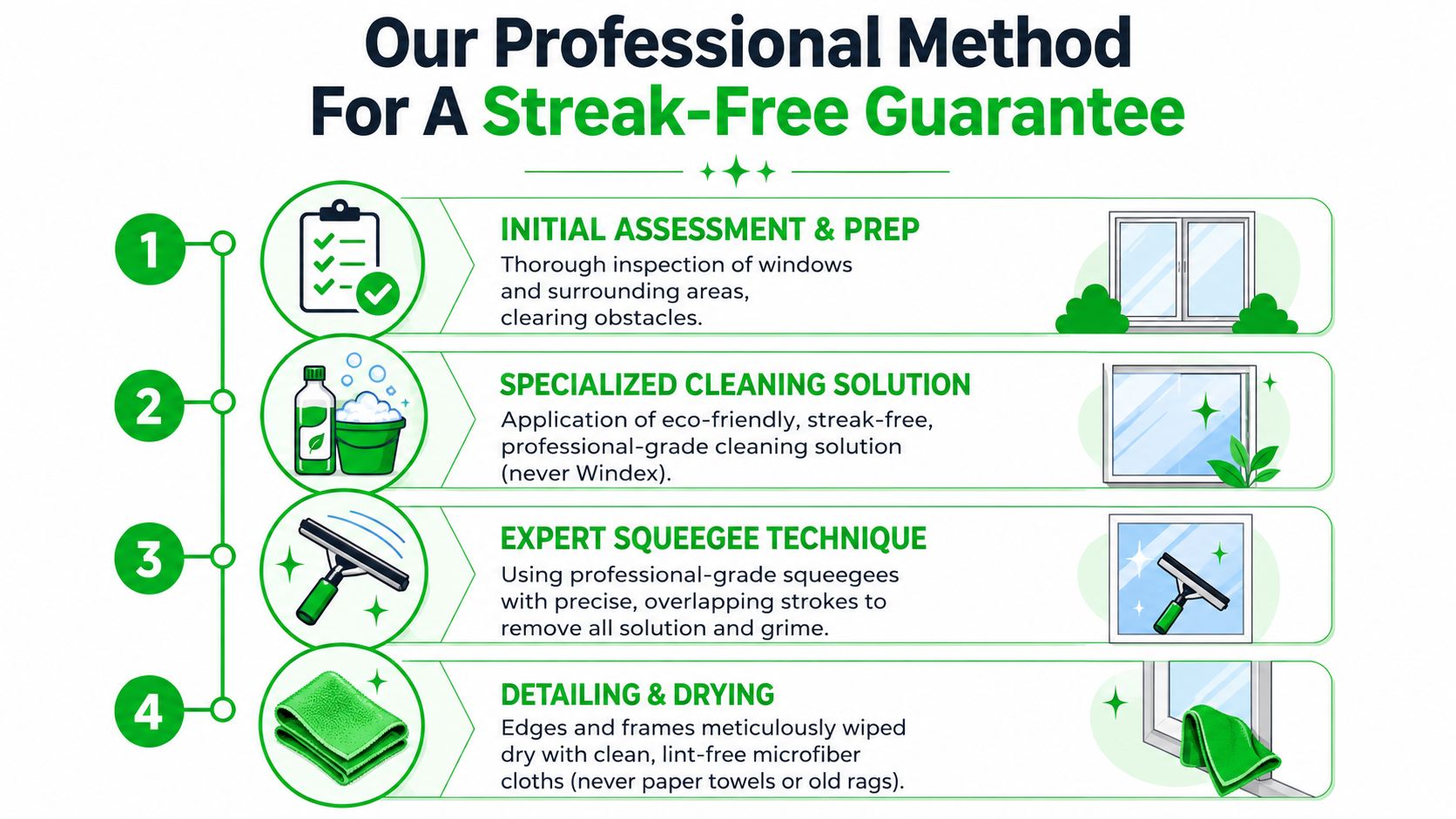
Our Professional Method For A Streak-Free Guarantee
In Flagstaff, a streak-free result starts long before the glass gets wet. High windows over stairwells, clerestory glass, deck-side panes, skylights, and screens packed with pine pollen all call for different tools and a different pace. Good work comes from matching the method to the window, the access, and the condition of the whole opening.
The first step is a careful inspection. We check how the glass can be reached, what shape the screens and tracks are in, where dust has collected, whether hard water or sprinkler overspray is present, and how to protect landscaping, trim, floors, and furnishings while we work. That tells us whether the job is straight maintenance or a more detailed service with extra screen, frame, and track cleaning.
Interior glass gets a squeegee finish
Inside the home, traditional squeegee work still gives the cleanest finish. We use controlled soap, proper strip washers, sharp rubber, and detail towels only where they belong, at the edges and corners. Rubbing an entire pane with towels usually leaves lint, haze, and drag marks that show up fast when the afternoon sun hits.
Technique matters even more on divided lights, French panes, and older glass with imperfect edges. Water control matters too. Floors, wood trim, drywall returns, and nearby furniture need to stay protected while the pane is cleaned properly.
For higher glass, access planning is part of the finish quality. This guide on the best way to clean high windows gives a good overview of how professionals handle height without sacrificing the result.
Exterior glass needs purified water and the right brush
Outside, Northern Arizona conditions change the process. Dust bonds to glass. Pollen sticks in corners. Monsoon residue and snowmelt spotting can bake onto panes if they sit too long. Standard hose water often dries with mineral marks, so exterior work often calls for purified water and the right brush for the glass and frame.
That method works especially well on larger homes with tall entry glass, steep lots, wrapped decks, rock beds, and rooflines that make ladder placement awkward or risky. In many cases, a water-fed pole lets us scrub and rinse from the ground or from a safer position, which reduces unnecessary contact with stucco, metal roofing, gutters, plantings, and painted surfaces.
Overhead glass needs its own plan. Homeowners budgeting for replacement or maintenance can get useful context from Skylights and roof window costs, especially on mountain homes with roof glazing that collects dust, snow residue, and pine debris differently than vertical windows.
A short video says more than a paragraph can:
We care for the whole window, not just the pane
A clean pane alone is not enough. If the screen goes back in dusty, the track is packed with grit, or the sill is left messy, the window still feels dirty.
- Screens removed and cleaned: Screens are taken out, cleaned separately, and reinstalled correctly so they fit and function the way they should.
- Tracks addressed: Loose debris, insect remains, and built-up grime in tracks and corners are cleared so the opening looks finished, not half-done.
- Frames and sills respected: Interior work includes water control and attention to trim, paint, flooring, and nearby furnishings.
- Property awareness: Ladders, poles, hoses, and tools should be handled carefully around stucco, woodwork, decks, plants, and outdoor furniture.
The standard is simple. The glass should look clean up close, the surrounding materials should be protected, and the whole window should feel cared for.
Solutions for Every Northern Arizona Property
Not every property has the same problem. A single-story home in town, a vacant cabin in Munds Park, and a commercial building with tall entry glass all require different planning, equipment, and timing. The mistake is assuming they can all be handled with the same crew setup.

Homes cabins and short-term rentals
Residential work in Northern Arizona often means large panes, divided lights, French panes, skylights, view windows, and tricky screen systems. Second homes add another layer because the owner may not be there when weather hits. Short-term rentals create the opposite challenge. They stay active, and owners want the property consistently guest-ready.
Mountain architecture also changes the access plan. Steep lots, wrapped decks, retaining walls, and high clerestory windows can turn a “simple” house into a detailed access job. If you're budgeting for roof glazing or planning maintenance around it, this guide to Skylights and roof window costs gives useful context on the types of overhead glass that often need specialized care.
Commercial buildings and difficult-access glass
Commercial and high-access work is where scope matters most. According to Clean D Windows' high-rise and commercial service overview, proposals should clearly spell out whether the job includes windows, frames, tracks, and skylights, because if those items aren't explicitly listed, they're often excluded. The same source notes that rope-descent or swing-stage high-rise work can service up to roughly 15 floors, which shows how different this work is from standard home service.
That has real consequences on local projects. A car dealership may care most about showroom glass and appearance during business hours. A hotel may need early scheduling and quiet setup. A campus or medical building may need a tighter safety and access plan. An atrium or high lobby may require lift equipment rather than ladders or poles.
If the proposal only names “window cleaning,” ask what happens to tracks, frames, screens, hard-water residue, stickers, paint specks, and skylights.
Post-construction and pre-listing cleanup
Construction cleanup is not maintenance cleaning. Paint, silicone, adhesive, stucco dust, and labels all require controlled removal. The wrong scraper, the wrong blade angle, or the wrong sequence can damage glass or leave a poor finish around new frames.
Pre-listing service has its own logic. Realtors and sellers usually need windows, screens, and entry glass to look crisp quickly because buyers notice light first. On a home with views, clean glass changes the showing.
Choosing Your Local Window Cleaning Partner
You don't have to be in this trade to spot the difference between a serious company and someone doing side work. The challenge is knowing what to ask before they're on your property with ladders, hoses, and tools.
The market itself is stable. The U.S. window cleaning industry was valued at $2.9 billion in 2024 and is projected to reach $3.2 billion by 2029, according to Pine Country Windows' industry overview. That steady demand is one reason established providers matter. People need this service regularly, so it pays to choose a company built for repeat work, not just one-off jobs.

What to ask before you book
A good estimate should answer practical questions, not just name a price.
| What to check | Why it matters |
|---|---|
| Safety training | High windows, ladders, roofs, and lift work require trained technicians and a clear approach to access. |
| Background checks | Homeowners should know who's entering the property. |
| Clear scope | You want to know whether screens, tracks, frames, and skylights are included. |
| Equipment match | The company should have a plan for tall glass, steep lots, and difficult architecture. |
| Communication | Scheduling, arrival windows, and changes should be handled clearly. |
If you're comparing online reviews, don't just count stars. Look for patterns in the comments. This HomeProBadge review guide is useful because it shows what to watch for in customer feedback beyond the rating itself.
Pricing should be understandable
Window cleaning prices vary for legitimate reasons. Window count matters, but so do size, accessibility, soil level, screen type, and whether the service includes details beyond the pane itself. A heavily soiled property that has sat through winter and monsoon season is a different job from a regularly maintained home.
Watch for vague estimates. If one bid sounds low, it may exclude time-consuming items the owner assumed were included. That's where misunderstandings start.
Local credibility counts
In Northern Arizona, local knowledge isn't a marketing slogan. It affects scheduling, weather judgment, road conditions, second-home coordination, and how crews work around snow, pollen, and monsoon cleanup. Membership in local business organizations, recognized industry affiliations, and a service guarantee all help, but the ultimate test is whether the company explains the work plainly and treats your home with respect.
For readers looking at service options in the area, this page on Flagstaff cleaning services shows the broader mix of maintenance work that often goes hand in hand with window care in mountain properties.
A trustworthy contractor makes the scope, access plan, and expectations clear before the first screen comes off.
Frequently Asked Questions
Do you clean screens every time
A professional service should. Screens hold a surprising amount of dust, pollen, and debris, and that material ends up right next to clean glass if it isn't addressed. We remove screens, clean them, and reinstall them properly because leaving dirty screens in place undercuts the whole job.
What if my house sits empty part of the year
That's common in Flagstaff and nearby communities. Vacant homes benefit from scheduled service before long closures and after winter or storm periods. The goal is to keep buildup from sitting on the glass, frames, and screens for months at a time.
Are monsoon rains enough to rinse windows clean
No. Around here, rain usually mixes with existing dust and dries into residue. After storms, many windows look worse, not better.
Can you handle tall or hard-to-reach windows
Yes, but the method has to match the access. Some windows are ideal for poles and purified water. Others require ladders, lift equipment, or more detailed hand work. The right company should explain the access plan instead of guessing on site.
Do you clean more than the glass
You should expect attention to the whole window area. That can include screens, tracks, frames, sills, and in some cases skylights or post-construction debris removal. Ask for the scope in writing so there's no confusion.
How often should a Flagstaff property be cleaned
That depends on exposure, occupancy, trees, road dust, and how much weather the home takes. Many owners do well with a recurring schedule tied to the seasons, while others need service before guest arrivals, listings, or seasonal openings.
What should I do before the crew arrives
Keep access clear around the windows if you can. Move fragile décor away from interior panes, secure pets, and let the company know about locked gates, alarm systems, or any glass you're concerned about. Good crews will handle the rest.
If your windows have picked up a season's worth of dust, storm residue, or winter grime, Pine Country Window Cleaning is a practical place to start. You can request an estimate, ask about recurring service for a primary or second home, and get a clear scope for everything from routine residential work to difficult-access commercial glass in Northern Arizona.