
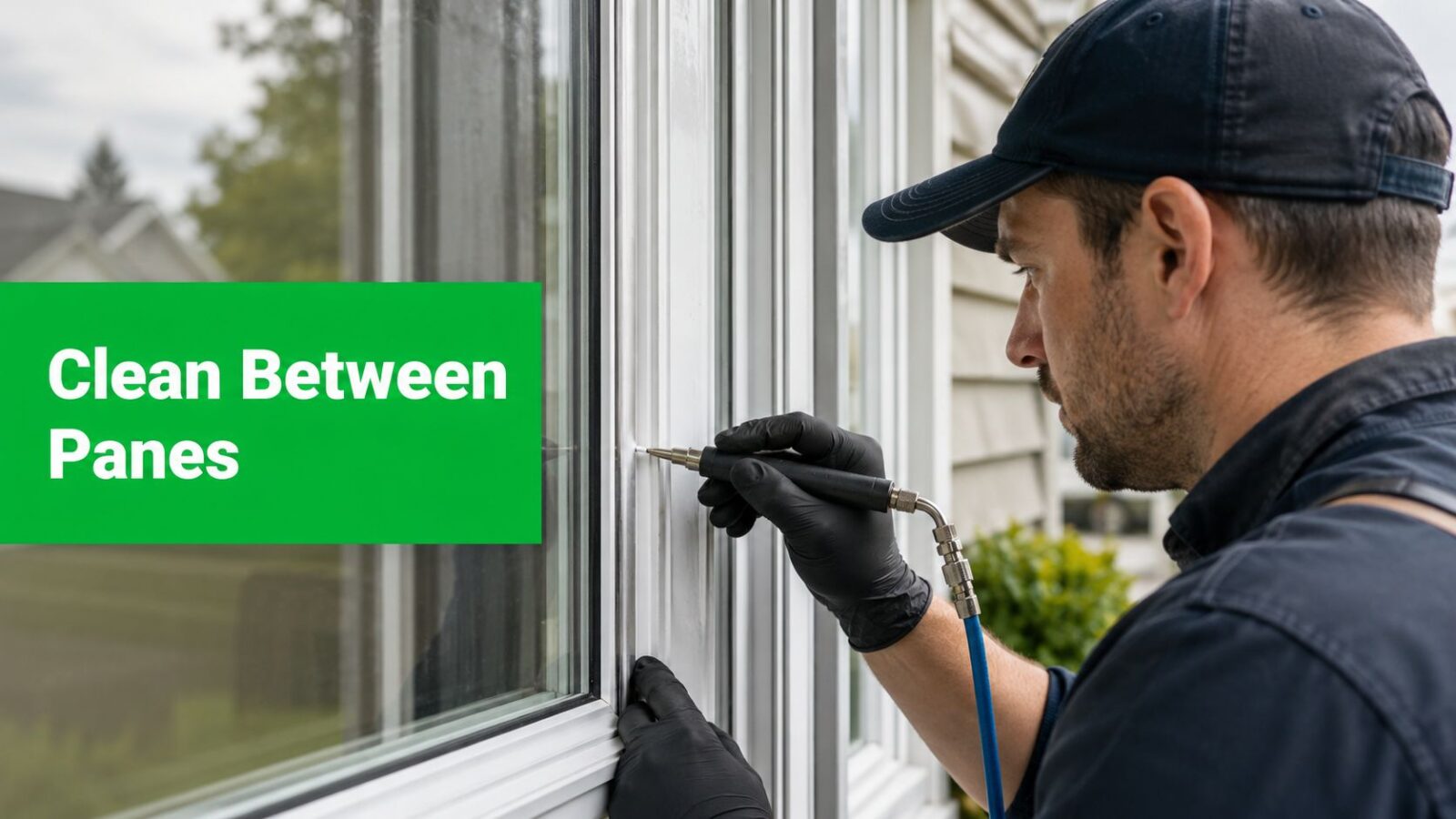
You wipe the inside glass. You clean the outside. The haze is still there.
That's the moment most homeowners start searching for how to clean between window panes, and it's also where a lot of bad advice starts. If the cloudiness sits between the panes of a double-pane window, you're usually not dealing with normal dirt. You're dealing with a window unit problem.
In Flagstaff, we see this all the time. Mountain weather, sun exposure, and temperature swings can make window issues show up fast. The important part is knowing what can be cleaned, what can't, and how to protect the window instead of making the damage worse.
Why Are My Windows Foggy on the Inside
You finish cleaning the glass, step back, and the cloudiness is still sitting in the window. In most homes, that points to a window problem, not a cleaning mistake.
If the haze wipes off with a cloth, you are dealing with surface residue. If both accessible sides are clean and the window still looks milky or streaked, the issue is usually inside the insulated glass unit. At that point, scrubbing harder does not help. It only wastes time and can lead homeowners toward risky DIY fixes that damage the sash, glass, or seals.
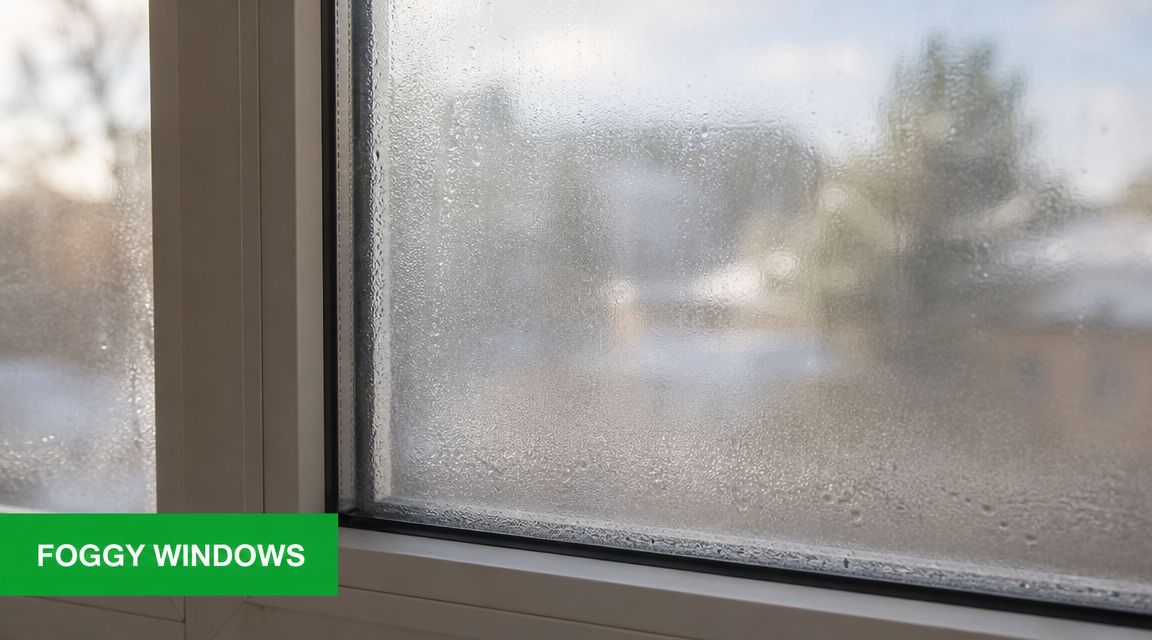
What you're usually seeing
Fog between panes usually means moisture has entered a space that was meant to stay closed. Homeowners often describe it as a dirty film that never quite goes away, especially in morning sun or when looking across the glass at an angle. That appearance is common with a failed seal because the problem sits inside the unit, where normal cleaning tools cannot reach.
In the field, this is one of the biggest points of confusion. Condensation on the room side of the glass can come from indoor humidity. Haze trapped between panes is different. It tells you the window needs diagnosis before anyone starts drilling holes, prying stops, or trying internet shortcuts.
Fog trapped between panes points to a failed sealed unit, not missed cleaning.
Surface issue or window issue
A quick check helps narrow it down:
- Wipes away with normal cleaning: dust, smoke film, fingerprints, pollen, or other residue on reachable glass
- Stays in place after both sides are cleaned: trapped moisture, mineral staining, or film inside a failed sealed unit
- Shows up more in certain light or weather: internal seal failure often becomes more obvious with sun, cold mornings, and changing temperatures
If you are also noticing drafts, aging frames, or several windows with the same symptoms, it helps to review broader signs for energy-efficient window upgrades to see whether one fogged unit is part of a larger window performance issue.
For glass that has visible spotting on the exterior surface, the solution is different. Removing hard water stains from windows addresses buildup you can reach and treat safely. It does not apply to haze sealed inside the unit.
The Truth About Sealed Window Panes
The phrase “between the panes” causes confusion because it sounds like there should be a way in. On a true insulated unit, there isn't.
A double-pane window is typically built as an insulated glass unit, often called an IGU. The panes are permanently sealed together around the perimeter, creating a closed airspace that helps the window insulate properly. That space isn't designed for routine cleaning, wiping, or washing.
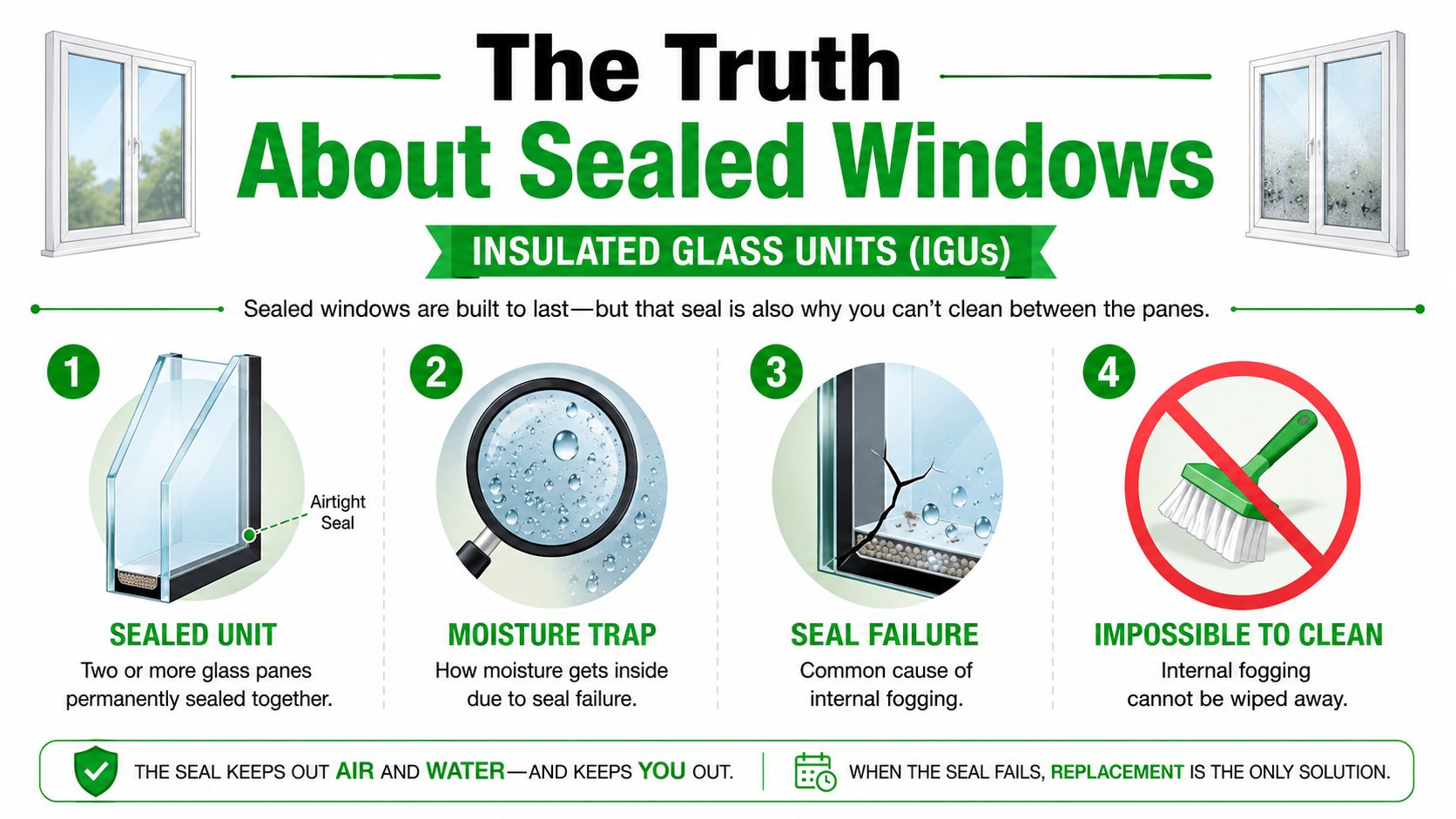
Why the fog appears
When that perimeter seal breaks down, moisture can enter the airspace. At that point, the technically correct fix usually isn't cleaning at all. Industry guidance says the IGU has lost its hermetic seal, and DIY methods may offer only temporary cosmetic relief without restoring the unit's insulating performance, according to this guide on double-pane window seal failure and cleaning limits.
That's the key shift in thinking. You're no longer deciding how to wash glass. You're deciding how to address a failed sealed unit.
What online hacks get wrong
The internet is full of “fixes” that sound clever and go badly in real homes.
Some methods suggest drilling into the unit, adding alcohol, inserting desiccants, or trying to dry the cavity out. Variations of those methods do show up in repair discussions, but they're workaround techniques, not true restoration. Done wrong, they can damage the seal further, affect appearance, and leave you with a window that still isn't performing the way it should.
Other hacks are even less realistic:
- Fish tank magnets: They don't solve moisture trapped in a sealed cavity.
- Spraying products into edges: That can migrate into seals and hardware.
- Heat guns or aggressive drying: Risky around glass, seals, and adjacent finishes.
- Trying to separate panes: That turns a repairable situation into a broken unit fast.
Practical rule: If you have to bypass the seal to “clean” the space, you're no longer cleaning. You're altering the window.
What homeowners should do instead
Use this decision check:
| What you notice | What it usually means |
|---|---|
| Film wipes off | Accessible surface contamination |
| Moisture won't wipe off | Internal cavity problem |
| Fog near spacer or edges | Seal failure is likely |
| Cloudiness returns after cleaning | The issue isn't on the surface |
A sealed unit can't be treated like a removable storm panel or an old single-pane sash. That distinction matters because the wrong DIY attempt can create broken glass, interior mess, and a more expensive project than the one you started with.
The Professional Approach to Window Clarity
Once you stop chasing the inaccessible space, the right approach becomes much more practical. A professional focuses on the glass that can be cleaned well, and on identifying when a separate glass repair or replacement specialist is needed.
That means restoring clarity on the accessible faces, cleaning frames and tracks so grit doesn't keep contaminating the glass, and making sure the screens aren't putting dust right back onto a clean window.
What a real cleaning workflow looks like
For accessible panes, professional guidance is straightforward. Start by removing loose particles from frames and edges, work from the top down, and dry immediately with a squeegee or lint-free microfiber. Applying solution to the cloth rather than flooding the glass helps keep residue out of seals and hardware, as outlined in Pella's guide to cleaning windows with a top-down low-residue method.
That's why professional crews don't treat window cleaning like a casual wipe-down. The order matters. The tools matter. The finish work matters.
Here's the workflow we trust on service calls:
- Frames and tracks first: Loose dirt at the edges turns into slurry if you wash glass before clearing it.
- Controlled water use: You don't soak the frame and hope for the best.
- Squeegee finish: This is how you get clear glass without lint and drag marks.
- Screen handling: Remove, clean, and reinstall so airflow doesn't carry dust back onto the pane.
For homeowners comparing service options, professional window cleaning services should include the full process, not just a quick pass over visible glass.
A short video can help show what a professional finish process looks like in practice.
The tools make the difference
A seasoned crew works with squeegees, extension poles, ladders, and pure-water brushes where appropriate. On taller or awkward homes, water-fed pole systems let technicians clean exterior glass safely from the ground while reducing residue. On detailed residential work, hand tools still matter for edges, corners, divided panes, and finish quality.
Pine Country Window Cleaning is one local option for that kind of work. The service includes removing screens, cleaning them, and reinstalling them, which matters more than most homeowners realize.
Clean screens are part of clean windows. If the screen stays dusty, the window won't stay clear for long.
The result isn't magic. It's a professional process aimed at the surfaces that can be restored, while being honest about the surfaces that can't.
More Than Clean Windows We Care for Your Home
A fogged insulated pane is frustrating enough. What homeowners remember just as much is how the crew treated the rest of the house while they worked around it.
Home service means access to finished floors, painted trim, landscaping, furniture, and older screens that can bend or tear if they are handled carelessly. Good window work protects those areas from the first step inside, especially when the window itself may need diagnosis instead of cleaning.
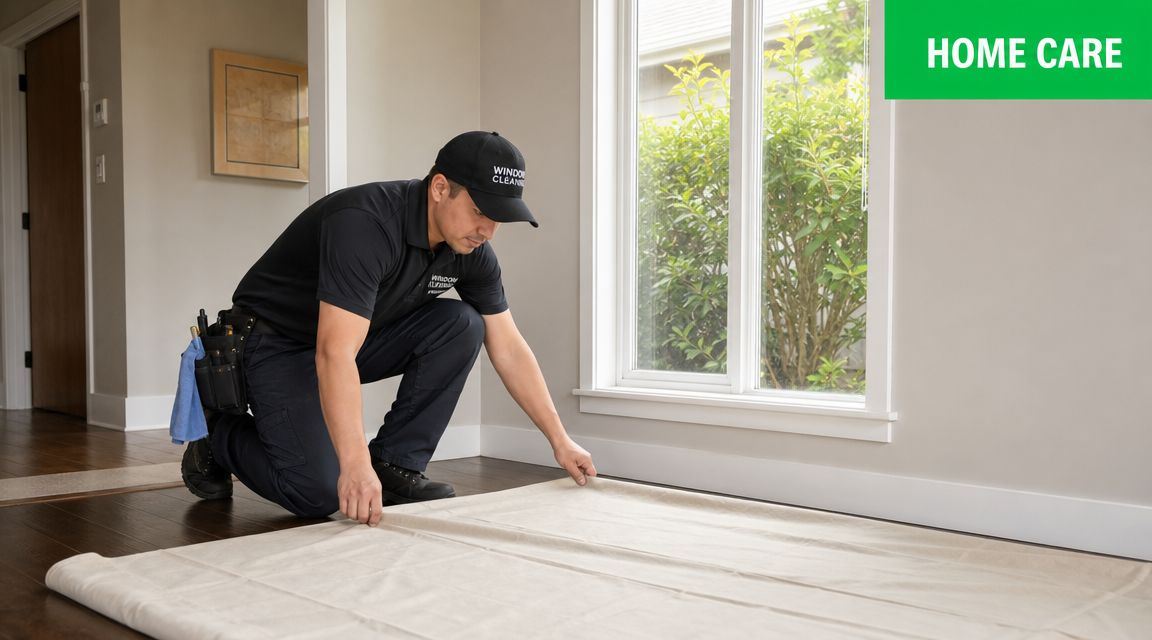
What careful service looks like
Inside the home, care shows up in plain, practical ways. Floors get covered. Furniture is given clearance before tools come through. Screens come out without twisting the frame, and they go back in square so they do not rattle or leave gaps.
Outside, the same standards apply. Ladder placement needs to protect siding and painted contact points. Tracks and frames need to be treated as finished parts of the home, not something to bang around while chasing the glass. If a unit has failed, the homeowner should hear that directly instead of being sold on a "cleaning" that cannot reach between sealed panes.
A careful company usually shows it in details like these:
- Drop cloths indoors: To protect flooring and nearby furnishings.
- Thoughtful ladder contact: To help prevent scuffs on paint and siding.
- Screen management: Remove, clean, inspect, and reinstall correctly.
- Clear communication: Let the homeowner know what was found and what wasn't fixable by cleaning.
Why local experience matters in Flagstaff
Flagstaff homes create their own set of service challenges. Some have large insulated units with high access points. Others are older homes, cabins, or rentals with mixed window styles, weathered frames, and screens that need a gentler touch. Pine pollen, dust, and seasonal debris can make glass look worse than it is, while seal failure creates haze that no cloth, spray, or scraper will solve.
That local experience helps crews sort out the difference quickly. A technician who works on these homes every week can tell whether the issue is surface buildup, hard water, screen dust, or a failed IGU that needs glass service. Homeowners looking for professional window cleaners in Flagstaff should expect that kind of honest evaluation, along with care for the home itself.
For readers who care about lower-waste household routines beyond window care, Fillaree's guide for sustainable cleaning is a useful resource for thinking more broadly about cleaning choices at home.
Your Next Steps for Foggy Windows in Flagstaff
You wipe the glass, step back, and the haze is still there. That usually means the problem is not on the surface you can reach. In Flagstaff, I see this often with double-pane units that have lost their seal. Homeowners start by looking for a way to clean between the panes, but the primary next step is to find out whether the glass needs repair or replacement.
A failed insulated glass unit cannot be restored with a spray bottle, a homemade tool, or by taking the window apart in place. Once that sealed space has been compromised, the question shifts from cleaning to diagnosis. In some cases, a glass company may recommend defogging or a limited repair. In many others, the lasting fix is IGU replacement so the window can insulate properly again.
A practical decision path helps:
- Clean the surfaces you can safely access. If the cloudiness stays put, the issue is likely inside the sealed unit.
- Get the window evaluated before trying a workaround. Drilling, prying apart panes, or forcing moisture out can damage the unit, the sash, or surrounding trim.
- Treat cleaning and glass repair as separate services. A window cleaner can restore the panes, tracks, and screens that are serviceable. Seal failure calls for glass repair or replacement.
- Have the rest of the windows cleaned and checked. One failed unit does not mean every window has the same problem.
Before hiring anyone, ask plain questions. Do they carry insurance for residential window work? Will they clean and reinstall screens correctly? Can they handle tall or difficult access without beating up paint, siding, or landscaping? Will they tell you directly when a window has a failed seal and cleaning will not fix it?
That last point matters.
A good service call should save you time and prevent expensive trial and error. Homeowners comparing professional window cleaners in Flagstaff should expect an honest assessment, careful work around the home, and a clear line between what can be cleaned and what needs a glass specialist.
You do not need a hack for foggy sealed glass. You need a careful inspection, proper cleaning where it helps, and a straight answer about repair when it does not.
If you're in Flagstaff or Northern Arizona and want an honest assessment of foggy windows, surface buildup, screen cleaning, or full-service window care, contact Pine Country Window Cleaning. We'll help you figure out what can be cleaned, what needs repair, and how to protect your home in the process.