

You bought the house for the glass as much as the square footage. Maybe it’s a wall of windows facing the pines. Maybe it’s a living room picture window that catches the Peaks at sunrise. Then the afternoon light hits, and all you see are dust trails, dried sprinkler spots, fingerprints, and that hazy film that makes a beautiful view look tired.
That’s where most homeowners get frustrated. They try a quick wipe, a spray bottle, and a paper towel, and the window somehow looks worse. In Flagstaff, that usually means the wrong method met the wrong climate. Dry air, intense sun, windblown grit, and mineral-heavy water punish shortcuts.
Good view window cleaning is not about rubbing harder. It’s about using the right tools, the right water, the right pressure, and the right sequence so the glass stays clear longer and the home is cared for properly while the work is being done.
The True View Behind Your Picture Windows
Large view windows do two jobs at once. They bring light into the home, and they frame the reason many people live in Northern Arizona in the first place. When the glass is smeared or spotted, the room feels dimmer and the outside looks farther away.
That’s why quick household shortcuts disappoint people so often. A large pane of glass shows every mistake. Uneven wiping leaves lines. Residue catches the sun. Paper products can leave lint. On a cold morning or warm afternoon, what looked acceptable from one angle suddenly shows every swirl from another.
Why big glass exposes bad technique
Picture windows are unforgiving because they don’t give you visual clutter to hide behind. A divided-light window can mask a small streak. A large uninterrupted pane can’t. Every pass shows. Every dry edge leaves a line.
That’s also why professional methods have become more important, not less. The global window cleaning services market reached $45.2 billion in 2022 and is projected to reach $68.7 billion by 2030, reflecting growing demand for professional maintenance rather than casual cleanup, according to window cleaning industry market statistics.
Clean glass changes the room before you move a single piece of furniture.
In homes with oversized windows, the goal isn’t just “clean enough.” The goal is clarity from couch distance and from arm’s length. Those are two very different standards, and the second one takes trade skill.
What a professional result actually means
A proper view window cleaning job means more than shining the center of the pane. It means the glass is cleaned with a method that controls water instead of smearing it around. It means screens come out, because dusty screens can make clean glass still look dull. It means tracks and sills aren’t left holding debris that blows right back onto the window.
It also means respecting the home. Drop cloths inside. Care around flooring and trim. Thoughtful ladder placement outside. Attention to landscaping, furniture, and screen tabs that can be bent or broken by rushed work.
David Kaminski started cleaning windows in Flagstaff in 1999, and that local perspective matters. Mountain homes with large glass aren’t generic houses, and they shouldn’t be treated with generic methods.
The Professional’s Toolkit for Streak-Free Results
A streak-free window starts long before the squeegee touches the glass. It starts with setup. On a professional job, screens come out first, get cleaned, and are set aside carefully so the glass, frames, sills, and tracks can be handled correctly from the beginning.
That one step solves a common homeowner problem. People clean the glass, leave a dusty screen in place, and then wonder why the window still looks muted. Clean glass behind a dirty screen still looks dirty.
The tools that matter
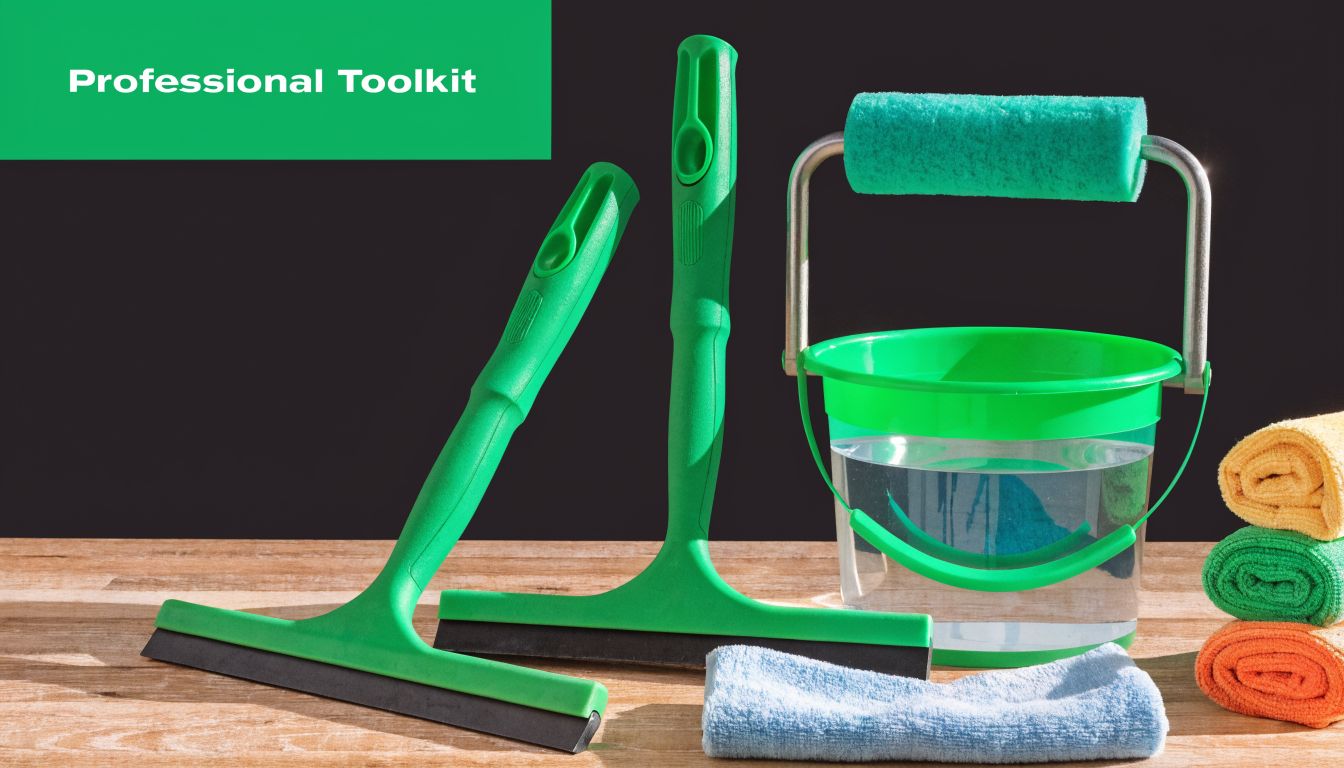
A professional toolkit is simple, but every piece has a job.
- Squeegee with quality rubber. This is the core tool. The rubber edge has to be straight, clean, and appropriate for the pane size. If the edge is nicked, it leaves a line every time.
- Washer or applicator sleeve. This puts cleaning solution on the glass evenly. A spray bottle can’t keep a large pane wet enough in dry air.
- Bucket with proper solution. A bucket gives the applicator enough solution to loosen grime and provide slip for the squeegee. That matters in Flagstaff, where glass can dry too fast.
- Microfiber detailing cloths. These are for edges, corners, and final touch-up. They are not the main cleaning method.
- Extension poles. These let a technician keep good body position and reach higher panes with control.
- Screen cleaning supplies. If the screen isn’t washed and reinstalled properly, the whole job feels incomplete.
For homeowners comparing methods, outside window cleaner guidance from Pine Country gives a useful overview of why professional tools outperform casual household products on exterior glass.
Why the bucket beats the spray bottle
A lot of DIY frustration comes from under-wetting the glass. On view windows, that creates drag. Drag makes the squeegee chatter or skip, and that leaves marks behind. A professional solution in a bucket keeps the glass wet enough to work cleanly across the full pane.
This matters even more in northern Arizona. The air is dry. Sun can hit one side of the window hard while the other side stays cool. A light mist from a spray bottle often flashes off before the pane is fully worked.
Practical rule: If the glass is drying before the squeegee pass is finished, the method is failing before the result is even visible.
The small tools that protect the result
Detail towels matter because edges hold extra water. If that water isn’t controlled, it creeps back onto the clean pane and leaves a fine line once it dries. Good technicians know where to touch and where not to touch. Over-detailing can create more smears than it fixes.
Screen handling matters for the same reason. Screens need to be removed carefully, cleaned, dried appropriately, and put back the way they belong. Bent frames, torn corners, and reversed screens are signs of rushed work.
A strong toolkit doesn’t just clean glass. It supports a complete service that respects the house from start to finish.
Mastering the Squeegee for Picture-Perfect Glass
The biggest difference between average window cleaning and professional view window cleaning is technique. Not chemicals. Not brand names. Technique.
Professionals don’t scrub a large pane and then hope a towel fixes the finish. They control the water with the squeegee so the glass clears evenly in one deliberate sequence.
Why straight pulls struggle on large panes
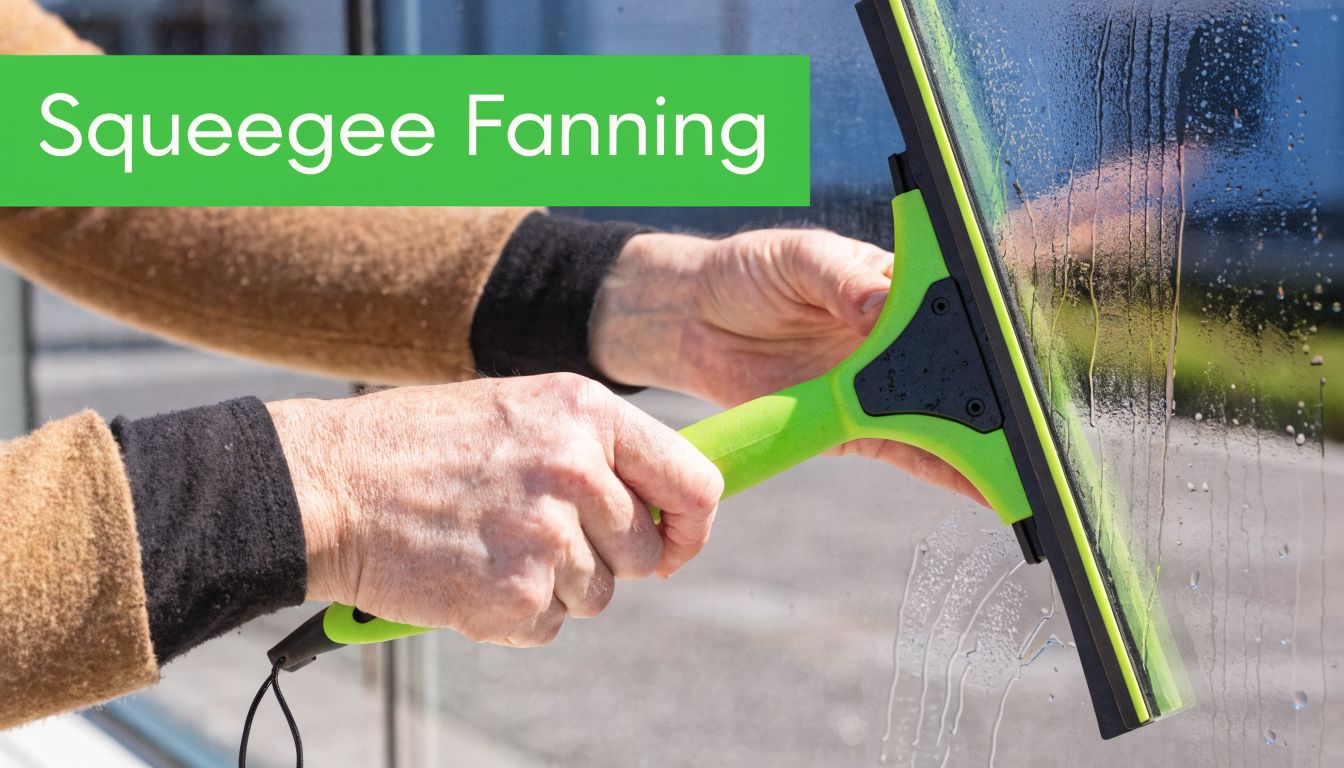
Straight pulls can work on smaller windows. On big picture glass, they often leave cleanup lines between passes unless the operator is very disciplined. That’s why pros rely on the fanning, or swivel, method.
According to JRacenstein’s guide to window cleaning techniques, the fanning method can be 30 to 50% faster than straight pulls once mastered, and professionals report 95% streak-free first-pass results with it.
The reason is simple. The squeegee stays in contact with the glass and keeps the water moving in a controlled pattern instead of creating a row of separate wet lanes that all need correction.
How the fanning method actually works
On a large residential pane, the process looks smooth because the setup is doing most of the work.
Wet the glass fully
The pane needs an even layer of solution. Dry pockets create drag and drag creates lines.Set the top edge first
A narrow clean strip at the top gives the squeegee a starting point.Lead with the corner
The rubber rides at an angle. The leading edge pushes solution away while the rest of the blade follows cleanly.Fan in overlapping passes
The motion is usually an S-pattern or a controlled arc. Each pass overlaps the previous one so no thin water bands are left behind.Finish with edge detail
Corners, bottom edges, and sill drips get wiped with a clean cloth.
The trick is pressure and angle, not force. Too much pressure makes the blade chatter. Too little leaves a film behind.
What professionals watch that homeowners usually don’t
A good window cleaner watches the top edge, the lead corner, and the water line all at once. If one goes wrong, the pane tells on you immediately.
Here’s what tends to break the result:
- Dry glass. The applicator didn’t leave enough solution.
- Bad blade edge. A tiny nick leaves a repeating line.
- Poor overlap. Thin trails stay behind and show after drying.
- Dirty sill or frame. Water picks up debris and drags it back onto the pane.
- Touching too much with the towel. Overworking the finish creates haze.
That’s why the final wipe is selective. The cloth is there to catch remaining edge moisture, not to “polish” the whole pane.
Home care is part of the technique
Inside work matters just as much as outside work. Large windows are often above wood floors, stone ledges, upholstery, or custom trim. A professional crew controls drips from the beginning instead of trying to fix them afterward.
That usually means:
- Drop cloth placement under the work area
- Careful screen removal so tabs and frames aren’t damaged
- Organized staging so screens go back to the correct openings
- Dry sill detailing before leaving the room
Later in the job, visual instruction helps more than words alone. This short demonstration shows the hand control and rhythm behind proper squeegee work.
Screens complete the view
A lot of companies treat screens like an add-on. They’re not. If you want a clear mountain view, the screen is part of the optical path. Dust, pollen, and fine debris on the mesh soften the entire view and reduce the brightness of the room.
That’s why screens should be removed, cleaned, and reinstalled as part of the service, not skipped because the glass already shines. Clean panes with neglected screens still don’t look finished.
Good squeegee work gives you clarity. Clean screens let you actually see it.
Safely Cleaning High and Hard-to-Reach Windows
Most homeowners don’t need help cleaning a bathroom mirror-height window. They need help when the glass is above a stairwell, over a steep roof line, tucked into an A-frame, or set high enough that one wrong move turns a home project into an emergency.
That’s the point where window cleaning stops being a chore and becomes access work.

Where DIY usually goes wrong
The danger usually isn’t the glass. It’s the setup. Homeowners place ladders on uneven ground, lean too far sideways, work above shrubs or rock beds, or try to clean one-handed while steadying themselves with the other.
That’s risky enough on a single-story home. On second-story windows, it gets worse fast. Add snow melt, pine needles, gravel, or sloped entries, and footing becomes unpredictable.
If you have to choose between reaching the glass and keeping three solid points of control, the window can wait.
The safer professional options
Professionals don’t solve every height problem with the same tool. That’s one of the biggest differences between a trained crew and a weekend attempt.
For many second-story windows, extension poles let a technician work from the ground or from a safer position. That reduces ladder time and improves consistency on repeated passes.
For high exterior glass with mineral issues, pure-water or deionized-water pole systems can be the right method. They scrub the pane with a brush and rinse it with purified water so fewer minerals are left behind on the surface. In a place like Flagstaff, where hard water is a real issue, that method can be especially useful on upper exterior glass.
When lifts are the right answer
Some windows just should not be approached with a standard ladder. Tall atriums, awkward setbacks, steep terrain, and large commercial façades call for equipment built for access and stability.
In those cases, in-house boom lifts, scissor lifts, and atrium lifts matter because they let technicians approach the glass correctly instead of improvising from a bad angle. Pine Country Window Cleaning uses in-house lift equipment, including a 95-ft atrium lift, for work that can’t be handled safely with ordinary ladder setups.
Safety is part of the service
Homeowners sometimes compare prices without comparing access plans. That’s a mistake. Cheap window cleaning on high glass often means someone is cutting corners on setup, training, or equipment.
A professional approach includes more than reaching the pane:
- Evaluating terrain before ladder or lift placement
- Choosing the least risky access method for each side of the home
- Protecting landscaping and hardscape during setup
- Working with trained technicians who understand height protocols
The clean window matters. Getting everyone home safely matters more.
Flagstaff Window Care and Seasonal Challenges
A generic window cleaning article won’t tell you much about living at elevation in northern Arizona. It won’t explain why one side of the house bakes in sun, another catches wind-driven dust, and exterior glass can spot up quickly from mineral-heavy water.
That local gap is real. As noted in a discussion of the content gap around high-altitude window care, most online guides don’t address how Flagstaff’s 7,000-foot elevation, dry climate, and intense UV exposure affect product behavior, cleaning schedules, and glass maintenance.
What the climate does to your glass
In Flagstaff, dirt doesn’t just land on windows. It gets baked on. Fine dust settles, morning moisture or sprinklers pin it in place, then sun dries it hard. If the pane is cleaned too late in direct sunlight or with too little solution, the residue can smear instead of releasing.
Hard water adds another layer. Mineral spotting often needs a different approach than loose dust. If you keep wiping deposits with basic methods, you can spend a lot of time moving the problem around without removing it. Homeowners dealing with that issue can get a more focused explanation in Pine Country’s guide on removing hard water stains from windows.
The seasonal rhythm locals recognize
Window care in Flagstaff usually follows the weather more than the calendar.
- Spring pollen dulls glass and screens fast.
- Dry windy stretches leave fine dust on broad panes and in tracks.
- Monsoon season can splash mud and debris onto lower windows.
- Winter buildup often becomes obvious only when low-angle sunlight hits the glass.
That’s why view window cleaning isn’t a one-size-fits-all chore here. A shaded cabin in Munds Park doesn’t behave like a sun-exposed home in a newer subdivision with hard irrigation water.
Frames and edges deserve attention too
Glass gets the attention, but frames, tracks, and surrounding materials shape the result. On aluminum-framed windows, neglected frame buildup can bleed back onto the pane during cleaning. Homeowners wanting frame-specific advice may find Auckland Window Services' cleaning tips useful because they focus on practical frame care rather than just the glass.
That said, frame cleaning has to match the local environment. In Flagstaff, dry debris in the tracks and sills often needs to be removed before wet cleaning starts. Otherwise, moisture turns loose dust into muddy residue that spreads into corners and onto freshly cleaned edges.
On mountain homes, the window isn’t just the pane. It’s the screen, the frame, the sill, and the conditions around all of it.
What works better in this climate
The best professional results here usually come from adjusting the method to the condition of the glass. Sometimes that means traditional squeegee work with careful timing. Sometimes it means purified water for upper exterior panes. Sometimes it means separating mineral removal from standard cleaning instead of pretending one pass will solve both.
That local judgment is what generic advice misses.
Deciding Between DIY and Professional Window Cleaning
Some windows are reasonable DIY projects. Some are not. The difference usually comes down to height, pane size, access, time, and your tolerance for streaks.
If you’ve got a few ground-floor panes in good shade and no hard water buildup, you can often handle them with proper tools and patience. If you’ve got large view windows, multiple stories, removable screens, and a house that shows every spot in the afternoon sun, the math changes.

A practical side-by-side comparison
| Factor | DIY Approach | Professional Service (Pine Country) |
|---|---|---|
| Equipment | Basic tools are easier to buy, but they usually don’t match pro-grade reach, rubber quality, or pure-water options. | Technicians arrive with the right squeegees, poles, ladders, screen-cleaning supplies, and access equipment for the job. |
| Time | You control the schedule, but large glass takes longer than most people expect, especially if you redo streaked panes. | The job is scheduled, completed, and you get your day back. |
| Safety | Ground-floor windows may be manageable. Higher glass, stairwells, and steep terrain raise the risk quickly. | Trained crews use safer access methods for hard-to-reach windows. |
| Result quality | Results depend on practice, weather, and tool quality. Many DIY jobs look fine until sunlight hits them. | Consistent finish on large panes, plus cleaned screens and detailed edges. |
| Home care | It’s easy to underestimate drips, screen handling, and ladder contact points. | A complete service includes careful setup, interior protection, and proper screen removal and reinstall. |
When DIY makes sense
DIY is usually reasonable when:
- The windows are low and easy to access
- The panes are modest in size
- There’s no stubborn mineral spotting
- You already own proper tools and know how to use them
When hiring out makes more sense
Professional service is often the better call when:
- The home has oversized picture windows
- The glass is above stairs, roofs, or uneven ground
- Screens need to be removed and cleaned throughout the home
- You own a second home or short-term rental and need reliable presentation
That last point matters more than many owners realize. For short-term rentals in resort markets like Flagstaff, there’s still no established playbook for the cleaning cadence and return on professional window care between guest stays, as noted in this overview of the short-term rental window cleaning gap. In practice, that means owners often guess wrong and either overdo it or wait too long.
Value is not the same as price
The cheapest route isn’t always the lowest-cost route once you count your time, rework, missed spots, and risk. That’s especially true when the windows are one of the home’s selling features.
If the view is the asset, the glass should support it.
Why Flagstaff Has Trusted Pine Country Since 1999
Window cleaning is a fragmented industry. The U.S. window washing industry is projected to reach $2.9 billion in 2024 and includes over 35,000 businesses, according to window washing industry data from Fish Window Cleaning. In a market like that, homeowners usually aren’t looking for just anyone with a ladder. They’re looking for reliability, experience, and a crew that respects the property.
That’s where local roots matter.
A local company has to live with its reputation
Flagstaff is a place where word gets around. If a company shows up late, leaves drips on hardwood, bends screens, or communicates poorly, homeowners remember. If a crew does careful work and treats the property like it matters, people remember that too.
David Kaminski has been in business here since 1999. That kind of longevity doesn’t happen by accident. It comes from doing the work well, communicating clearly, and understanding the homes, weather, and access challenges unique to this area.
What homeowners usually care about most
In my experience, local homeowners with large windows care about four things more than anything else:
- Respect for the home. Floors, trim, landscaping, furnishings, and screens should be handled carefully.
- Dependable communication. People want clear scheduling and clear expectations.
- Capability. A company needs to be able to handle both routine homes and difficult access.
- Confidence in the crew. Background-checked, OSHA-trained technicians matter when people are working around your home.
For homeowners who want a straightforward look at local residential and commercial service options, the Flagstaff window cleaning service page is a practical starting point.
Long-term trust in this business comes from the unglamorous things. Showing up. Doing careful work. Finishing completely. Fixing issues when needed.
The final standard
A clear window should look good from inside and outside. The screens should be back in place correctly. The sills should be dry. The crew should leave the property looking better, not just the glass.
That’s what people mean when they say they want professional window cleaning. They want a result they don’t have to think about after the truck pulls away.
If your view windows have gotten dull, spotted, or frustrating to maintain, Pine Country Window Cleaning can help you get the glass, screens, and details handled properly. Call for a free estimate or schedule online if you’d like a no-pressure way to get your Flagstaff home looking clear again.