

A guest checks in after a long drive, turns on the bathroom tap, and finds it dripping. The smoke detector in the hall gives a low-battery chirp before bedtime. These are small defects, but they can sour a stay, prompt a refund request, and leave the next booking at risk if nobody catches them in time.
Reliable vacation rental maintenance starts by treating every checkout as a property checkpoint. A written routine, a clear owner for each task, and seasonal planning for Northern Arizona conditions make it easier to fix problems before the next guest arrives.
Routine Maintenance Schedule for Every Vacation Rental
A cleaner resets the home, but the turnover also needs to produce a reliable record of its condition. Walk the property after every departure, test the items guests rely on, and note anything that needs repair. The manager or host should review the checklist before the next check-in, rather than assuming that a clean-looking room is a fully functional one.
| Task | Interval | Who Handles It |
|---|---|---|
| Condition check and fixture walk | After every guest departure | Cleaner with host sign-off |
| Test smoke and carbon-monoxide detectors | Monthly | Manager |
| Replace HVAC filter | About every 30 turnovers | Licensed HVAC technician |
| Deep-clean appliances | Every 20 stays | Cleaner or appliance service |
| Check under-sink plumbing and water heater | Quarterly | Host or plumber |
| Test locks, keypads and door hardware | Quarterly | Manager |
| Caulk and grout inspection in bathrooms | Yearly | Handyman or host |
The schedule should follow guest activity as well as calendar dates. A property handling 15 turnovers a month reaches the appliance-cleaning interval of 20 stays in about five to six weeks. A host who checks tasks only on a monthly calendar can miss that milestone, so keep a running count of stays and turnovers beside the date-based schedule.
Give each task one accountable owner. The cleaner can flag a slow drain or loose handle while resetting the room, but the host or manager should decide who will repair it and confirm completion. A licensed HVAC technician should handle filter work when the system or equipment requires professional service. For bathroom caulk and grout, record cracks or gaps and arrange a repair before water reaches the wall or subfloor.
A maintenance sheet needs room for more than a tick mark. Include the inspection date, the person who completed the task, any defect found, a dated photo where useful, and the action taken. If a repair can't be completed before check-in, record who will notify the guest and what alternative is available.
Practical rule: If a guest finds a problem that isn't on the sheet, add it before the next booking.
For a broader seasonal planning reference, owners can plan your rental's seasonal maintenance alongside this recurring interior schedule.
How to Run a Turnover Inspection
A guest may report a fault only after unpacking, but the turnover gives the host a chance to catch it before the next check-in. Use the same inspection order every time, and treat each stay as a maintenance checkpoint. An asset register for major systems and high-use items helps the host or manager track checks, defects, and follow-up. For additional planning context, see Oxmaint's short-term rental maintenance guidance.
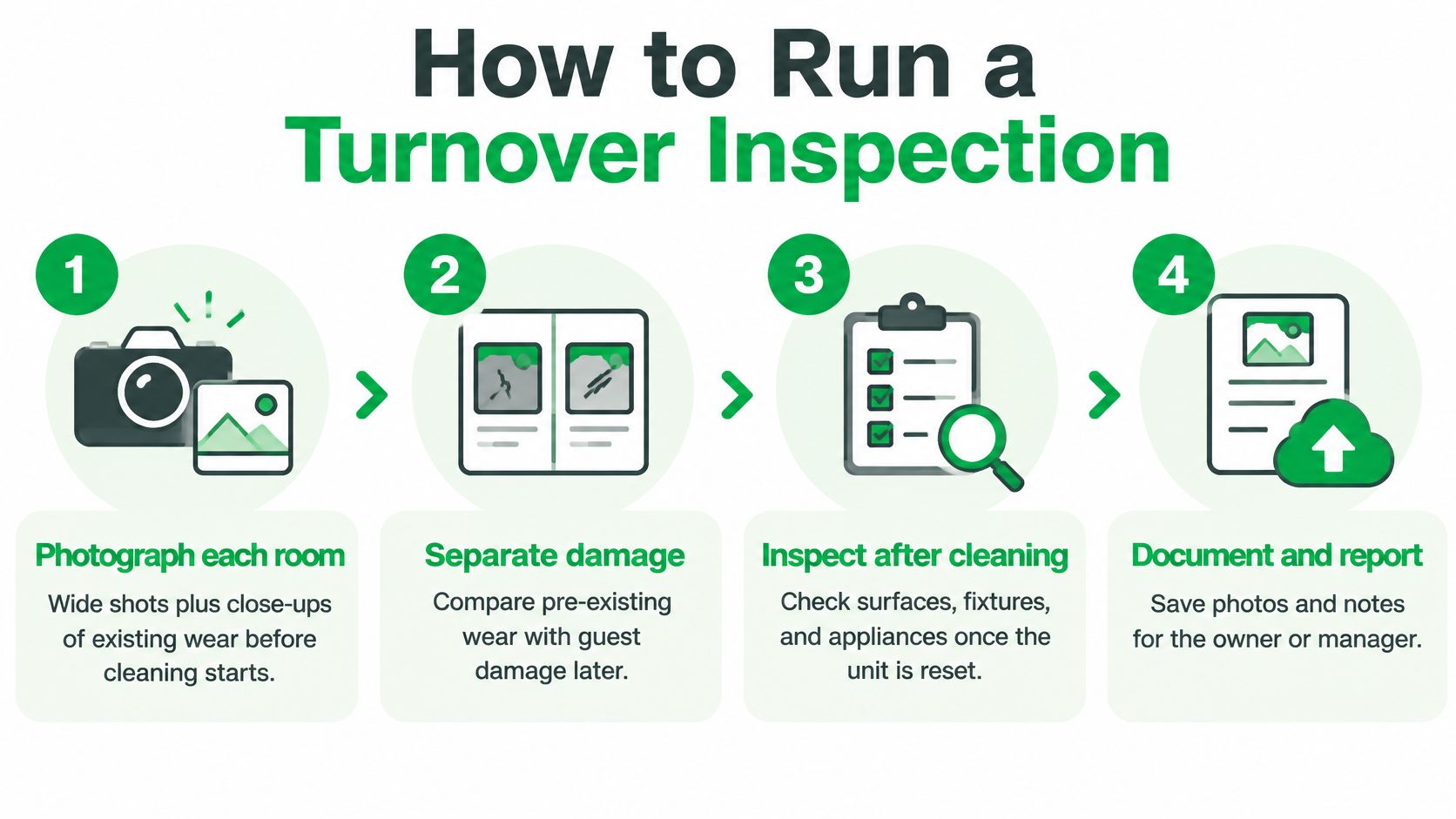
Photograph each room before cleaning starts. Take a wide shot of each room, then close-ups of visible wear, such as a chipped table edge or scuffed wall. Dated images help distinguish existing wear from damage found after a stay.
Test the smoke and carbon-monoxide detectors. Press each test button and record whether the unit responds. Note a low-battery warning or other fault; a detector that fails its test needs prompt attention.
Run the taps and flush the toilets. Look under sinks and around the water heater for moisture, stains, or active drips. Record the location so the host or manager can arrange a repair before a small leak damages a cabinet or disrupts a stay.
Check the thermostat and HVAC records. Confirm that the thermostat responds, then review the filter date and the running turnover count. The count helps identify when the next scheduled service is due, rather than relying on the calendar alone.
Test every door, window, lock, and keypad. Open and close each one, check that hardware latches, and make sure screens sit properly in their frames. Record intermittent keypad or lock faults so they can be resolved before an arriving guest is left without access.
Inspect appliances and likely leak points. Note error codes, clean accessible filters, and check behind the washer and refrigerator for water. For a recurring fault, record the appliance model and exact symptom so a service technician has useful details.
Walk the exterior. Test porch lights and look for water pooling, drainage flowing toward the foundation, or overflowing gutters. In Northern Arizona, include a check for accumulated pine needles and debris that could block drainage or add dry-season fire risk. Leave broader seasonal exterior work on its own schedule.
Log defects and assign a response. Attach a dated photo, name the person responsible, and record the expected repair lead time. Flag safety issues for same-day action instead of leaving them in a general maintenance queue.
The common misses are skipping before-cleaning photos, checking only rooms that appear to have been used, and recording a defect without assigning someone to resolve it. A completed inspection should leave a saved photo set, tested detectors, and a clear owner for every open repair.
Use the turnover to check the bedroom setup as well as the building. Owners can refer to hotel-quality comfort for overnight visitors when reviewing guest essentials. Cleaners should follow the same written reset routine for every turnover; a short-term rental cleaning checklist can help organize that reset.
Seasonal Exterior and Window Care for Mountain Rentals
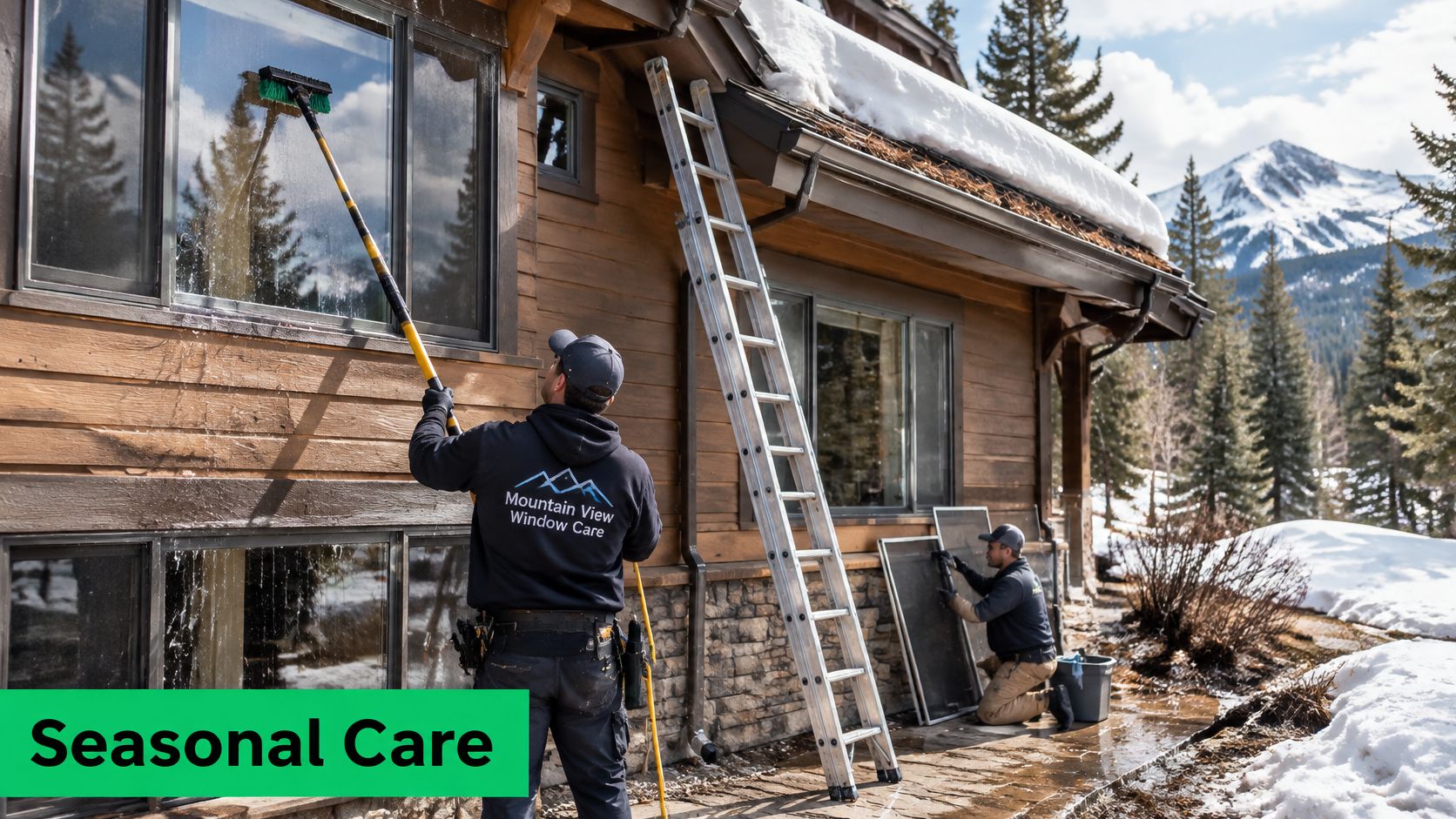
Every guest turnover is a chance to catch exterior problems before they affect the next stay. In Flagstaff and Munds Park, plan around winter snow and freezing, pine needles and dry-season fire risk, spring dust and pollen, and runoff from melting snow. Use a seasonal calendar, then adjust tasks to the property's exposure and booking schedule.
| Service | Best Timing | Why It Matters |
|---|---|---|
| Gutter and downspout clearing | Late fall, after leaf and needle drop | Blocked gutters can overflow onto decks and foundations |
| Pine needle cleanup | Late spring, before the dry summer | Needles add fuel during the dry season |
| Snow removal and walkway clearing | After each major snowfall | Keeps entries and parking accessible to guests |
| Pressure washing decks and steps | Spring, after dust and pollen | Removes grime that guests may notice on arrival |
| Pipe insulation and freeze check | Before the first hard freeze | Protects pipes during unoccupied weeks |
| Roof and drainage inspection | Fall and spring | Helps catch ice damage and runoff problems early |
In late fall, clear gutters and downspouts after needles drop, then check the roof before the first hard freeze. Arrange snow removal before winter bookings begin. After major snowfall, clear paths to the entry and parking area. In spring, wash decks, steps, and driveways after dust and pollen build up, and remove pine needles from the roofline and ground before the dry season. Keeping needles out of gutters and away from the property supports fire safety. Seasonal gutter maintenance should include downspouts, not just the visible gutter trough.
Before the first hard freeze, insulate exposed pipes and check freeze protection at homes that will sit empty. Inspect roof drainage in both fall and spring, and make sure runoff moves away from the foundation. These checks complement turnover inspections by focusing on seasonal wear and water movement outside the home.
Schedule window cleaning after spring dust and pollen, after pine season, and before peak bookings. Removing and cleaning screens separately helps clear the dust and debris guests see through the glass. Pine Country Window Cleaning's residential service includes outside and inside windows, removing, cleaning, and reinstalling bug screens, wiping inside and outside window frames, and wiping inside window sills.
Work at height requires suitable equipment and preparation. Keep crews clear of power lines, and use personnel trained to work with ladders and lifts. Pine Country Window Cleaning has boom lifts, scissor lifts, and a 95 ft. atrium lift for reaching challenging heights. The right access setup helps protect workers and limits the risk of damage to windows, siding, and landscaping.
Budgeting for Maintenance and Cleaning Costs
A 2023 analysis of U.S. Rental Housing Finance Survey public-use data estimated median annual maintenance and repair spending at $1,600 per unit for a U.S. rental property. It also found that maintenance and repairs represented 8.0% of annual rent receipts at the median property. Vacation rentals need a more structured plan because frequent guest turnover increases wear, inspections, and the cost of a failure between stays, according to the maintenance-cost analysis from RapidEye Inspections.
| Budget Line | Benchmark | Example |
|---|---|---|
| Repairs and maintenance reserve | 5% to 8% of gross rental revenue | Set aside a fixed share of each month's income |
| Turnover cleaning | $50 to $350 or more per turnover | 15 turnovers at $125 each equals $1,875 a month |
| Typical U.S. rental maintenance and repairs | $1,600 per unit per year | Benchmark for a typical rental, not a vacation rental |
| Maintenance share of rent receipts (median U.S. rental) | 8.0% | Compare your own spend against this share |
The reserve is for repairs and maintenance, not a substitute for tracking cleaning as its own recurring cost. For a worked example, 15 monthly turnovers at $125 each produce $1,875 in cleaning expense before repairs. Estimate your own cleaning line from the number of turns and the service scope rather than assuming it will sit neatly inside the maintenance reserve.
Split maintenance spending into routine, preventive, corrective, and emergency work. A Hong Kong hotel study reported a spending mix of 37% routine, 31% corrective, 21% preventive, and 11% emergency, with corrective expenditure about 48% higher than preventive expenditure; use it as a directional benchmark, not a forecast for a specific vacation rental, as described in the hotel maintenance study. Identify repeat corrective failures, estimate their annual repair and lost-booking exposure, then fund prevention when the combined repair, dispatch, and downtime cost exceeds scheduled service.
Triage by risk. First address life-safety systems, active leaks, heating or cooling failures, electrical hazards, and faulty locks. Next handle water damage, drainage, appliances, and exterior hazards. Cosmetic defects come after those essentials unless they create a safety concern.
Invoice price alone understates the cost of a failure. An HVAC breakdown during a peak booking can also mean refunds, relocation expense, a poor review, and vacancy. To spot whether the plan is improving operations, track emergency calls per 100 occupied nights and total maintenance cost per reservation each month. Owners who need to review exterior work as part of their cost plan can use this maintenance cost-reduction resource.
Book a Walkthrough Before Your Next Season
Before bookings fill the calendar, review last year's guest complaints and open defects. Use each turnover as a maintenance checkpoint: log what needs attention, assign an owner, and schedule exterior work around snow, pine needles, dust, and dry-season fire risk. A dated calendar helps prevent the work from slipping during busy periods.
A property walkthrough can turn a general exterior checklist into a plan for its windows and gutters. Pine Country Window Cleaning has served Northern Arizona since 1999 and describes its crews as background-checked and OSHA safety-trained. Its company information and service safety details describe the company and its services.
After a customer calls or schedules online, Pine Country staff come out to look at the home, building, or project. Ask what is included before scheduling: standard residential window cleaning includes removing, cleaning, and reinstalling bug screens, along with cleaning windows and wiping frames and inside sills. The company guarantees customer satisfaction and will visit the property to remedy a concern. Schedule online or call (928) 527-0671.
Pine Country offers window cleaning, gutter cleaning, pine needle cleanup, pressure washing, post-construction window cleaning, and seasonal snow removal. Set up a walkthrough before your next busy season to discuss which exterior jobs suit your rental.