
For standard offices and mixed-use buildings, commercial windows should usually be cleaned quarterly, or 4 times per year. High-visibility retail glass often needs monthly or bi-weekly service, ground-floor storefronts may need weekly cleaning, and high-rise exterior glass is commonly cleaned once or twice a year.
A facility manager usually notices the problem at the worst possible moment. Sunlight exposes haze on the lobby glass just before a client arrives, fingerprints gather around the entry doors, or a storefront window looks dull while customers pass by. The building may be well maintained, but dirty glass can make the whole property feel neglected.
The right answer to how often should commercial windows be cleaned depends on more than the calendar. Visibility, traffic, dust, pollution, weather, glass type, and the difference between interior and exterior surfaces all matter. Guidance for commercial properties consistently points to a practical rule: the more public-facing the glass and the heavier the exposure, the shorter the cleaning interval should be. (commercial window cleaning frequency guidance)
This isn't a cosmetic decision. A dependable schedule helps managers protect the appearance of the property, keep entrances welcoming, and prevent small maintenance issues from becoming recurring complaints. Professional crews use squeegees, ladders, extension poles, and pure-water brushes to reach glass safely and produce a consistent finish, rather than relying on household rags or spray bottles.
Why Timing Matters for Commercial Windows
A retail entrance can shape a customer's first impression within seconds. Lower panes, door glass, handles, and display windows show fingerprints, water spots, and road dust quickly. Even with clean floors and displays, hazy glass can make the business appear less cared for.
A hotel lobby faces a similar issue. Guests pass bright glass doors and large windows throughout the day, so a smudge at eye level stands out more than dust on an upper-floor pane. One property may therefore need different schedules for entrance glass, lobby windows, and less visible exterior surfaces.
For a standard office or mixed-use building, quarterly exterior cleaning, or 4 cleanings per year, is a practical baseline. Lobby, entrance, and other high-visibility glass may fit a monthly or bi-monthly schedule. Retail storefronts and ground-floor glass may need weekly or bi-weekly attention, while high-rise exterior faces are often cleaned once or twice yearly because access is more complex and costly. (commercial property cleaning intervals)
Practical rule: Schedule the glass people touch and inspect most often more frequently than glass they rarely see.
Northern Arizona conditions can shift those intervals. Flagstaff properties may collect windblown dust, pollen, and debris on exposed glass, particularly near active roads, open land, or construction. A sheltered office can stay presentable longer than a storefront facing traffic or a building bordered by dusty access roads. Screens also deserve attention because trapped dust can reduce the clean appearance even after the glass has been washed.
Professional care includes protecting the property during service. Pine Country Window Cleaning works with commercial facilities and homes using professional squeegees, ladders, poles, and pure-water brushes. Crews handle screens carefully and communicate about the work, helping managers avoid missed areas, unclear pricing, and unnecessary disruption.
How Commercial Window Cleaning Frequency Really Works
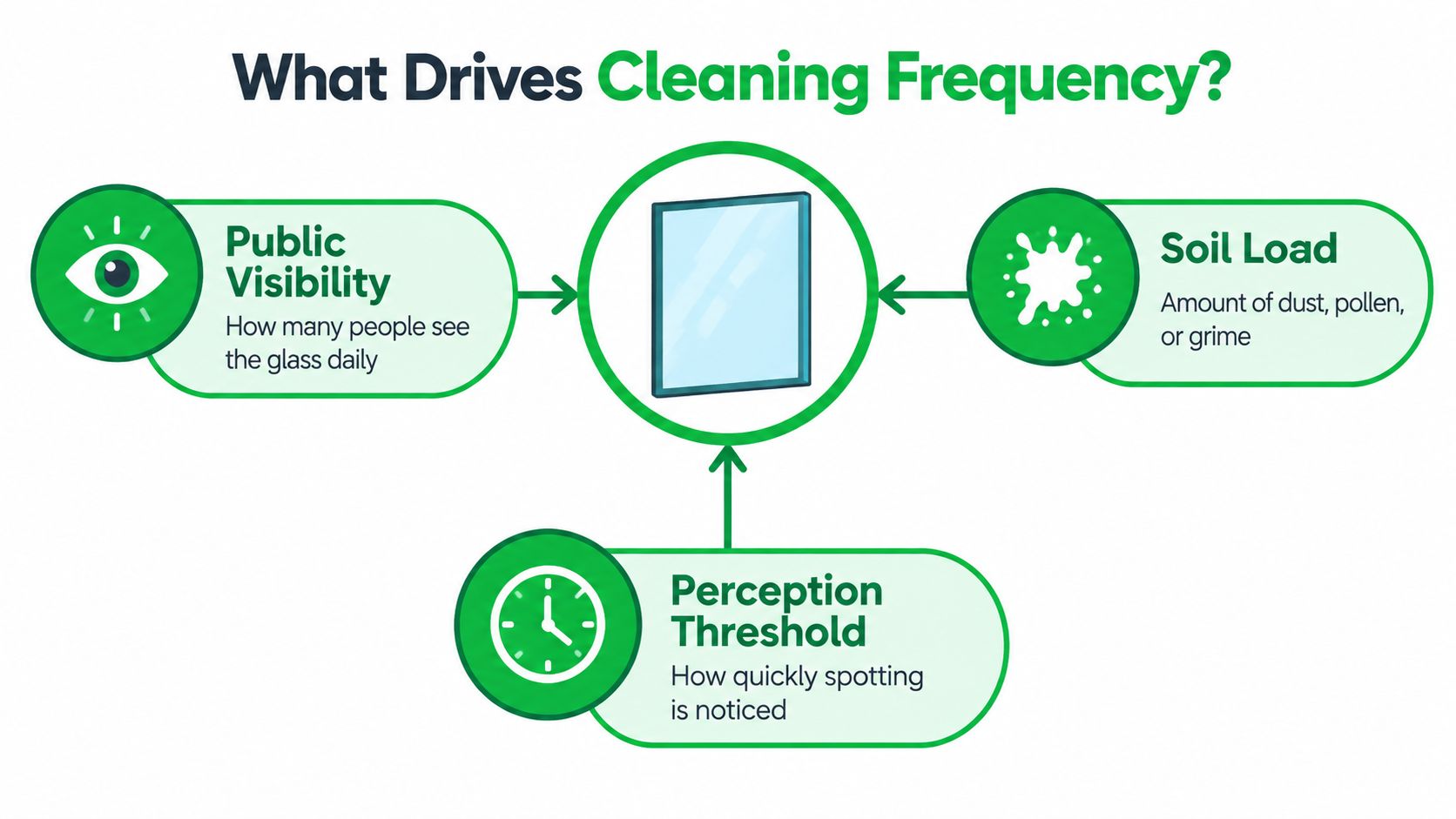
Commercial window frequency becomes easier to set when you evaluate three questions:
- How visible is the glass? A main entrance, showroom, lobby, and restaurant frontage receive immediate attention. Upper-floor glass may be less noticeable from the ground.
- How much soil reaches the surface? Dust, pollen, traffic residue, grease, rain minerals, and construction debris all shorten the useful life of a cleaning.
- How quickly does the building's appearance threshold get crossed? Some properties need glass to look immaculate every day. Others can tolerate a light film until the next planned service.
Think of the schedule like an oil change or an HVAC filter replacement. You don't choose the interval only by the equipment's age. You consider use, operating conditions, and the cost of waiting too long. Commercial windows work the same way. A low-traffic office in a sheltered setting may follow a longer maintenance cycle, while an entrance beside a busy street needs attention before the rest of the building.
The next distinction is just as important: exterior and interior glass don't get dirty for the same reasons. Exterior panes collect weather, dust, pollution, pollen, and mineral residue. Interior glass collects fingerprints, airborne dust, condensation film, and residue from nearby kitchens or high-touch areas. A building may need quarterly exterior service but more frequent cleaning for entrance doors and lobby partitions.
A useful planning method is to start with a property baseline, then adjust it for exposure. If the glass still looks clean at the planned interval, the calendar may be working. If haze, handprints, or sill dust appear long before the next appointment, shorten the interval for that zone rather than automatically increasing service everywhere.
The best schedule isn't the most frequent schedule. It's the one that keeps visible glass clean without treating every pane as if it has the same job.
This approach avoids two common mistakes. First, managers don't under-service high-impact areas because an upper-floor schedule looked adequate. Second, they don't overspend by cleaning sheltered, low-visibility glass as often as a busy entrance.
Recommended Cleaning Schedules by Building Type
The table below gives facility managers a practical starting point. Interior frequencies apply to the glass people see and touch inside the building, while exterior frequencies account for weather and environmental exposure.
| Building Type | Exterior Frequency | Interior Frequency |
|---|---|---|
| Standard office | Every 4 to 8 weeks for active commercial settings, or quarterly where exposure is lower | Quarterly or semi-annually |
| Retail storefront | Weekly to bi-weekly for ground-floor glass | Weekly for entrances and display glass |
| Restaurant | Monthly, bi-weekly, or weekly where grease and traffic are heavy | Monthly or more often around entrances and dining areas |
| Car dealership | Every 1 to 3 months, adjusted for exposure and showroom standards | Monthly or more often for showroom glass |
| Hotel | Quarterly baseline, with entrances and public glass on a tighter cycle | Monthly for lobbies and common areas |
| Medical building | Every 2 to 4 weeks for high-traffic facilities | Monthly for patient-facing areas |
| Campus or school | Semi-annually for lower-traffic buildings, with busy buildings on a shorter cycle | Quarterly for libraries, student centers, and common areas |
| High-rise property | Once or twice a year for exterior faces, with ground-floor glass serviced more often | Monthly for lobbies and entrances |
The every 4 to 8 weeks range for low-traffic retail stores and offices, and the every 2 to 4 weeks range for healthcare facilities and high-traffic retail, align with facilities-management guidance that ties service to occupancy and touchpoints. (facility manager's commercial window maintenance guide)
For offices, the main question is whether the property needs a polished public presentation or only routine upkeep. A professional office with frequent visitors may benefit from a shorter cycle around the entrance, while upper-level exterior windows can remain on a quarterly plan. Medical buildings deserve closer attention because patients and visitors notice entrance and lobby conditions quickly.
Hotels, dealerships, and campuses work best with zones. A dealership may schedule showroom glass separately from service-bay windows. A hotel may place lobby doors on a recurring service route while keeping upper exterior panes on a broader maintenance calendar. Campuses can prioritize student centers, libraries, and administration buildings instead of forcing every structure into one appointment.
Managers planning a new facility can also use broader commercial construction budgeting tips to account for access, maintenance requirements, and operating needs early. For properties with difficult exterior access, review the practical considerations of high-rise window cleaning services before finalizing the calendar.
Factors That Mean You Need More Frequent Cleaning
A building type gives you a starting point. Exposure decides whether that starting point holds.
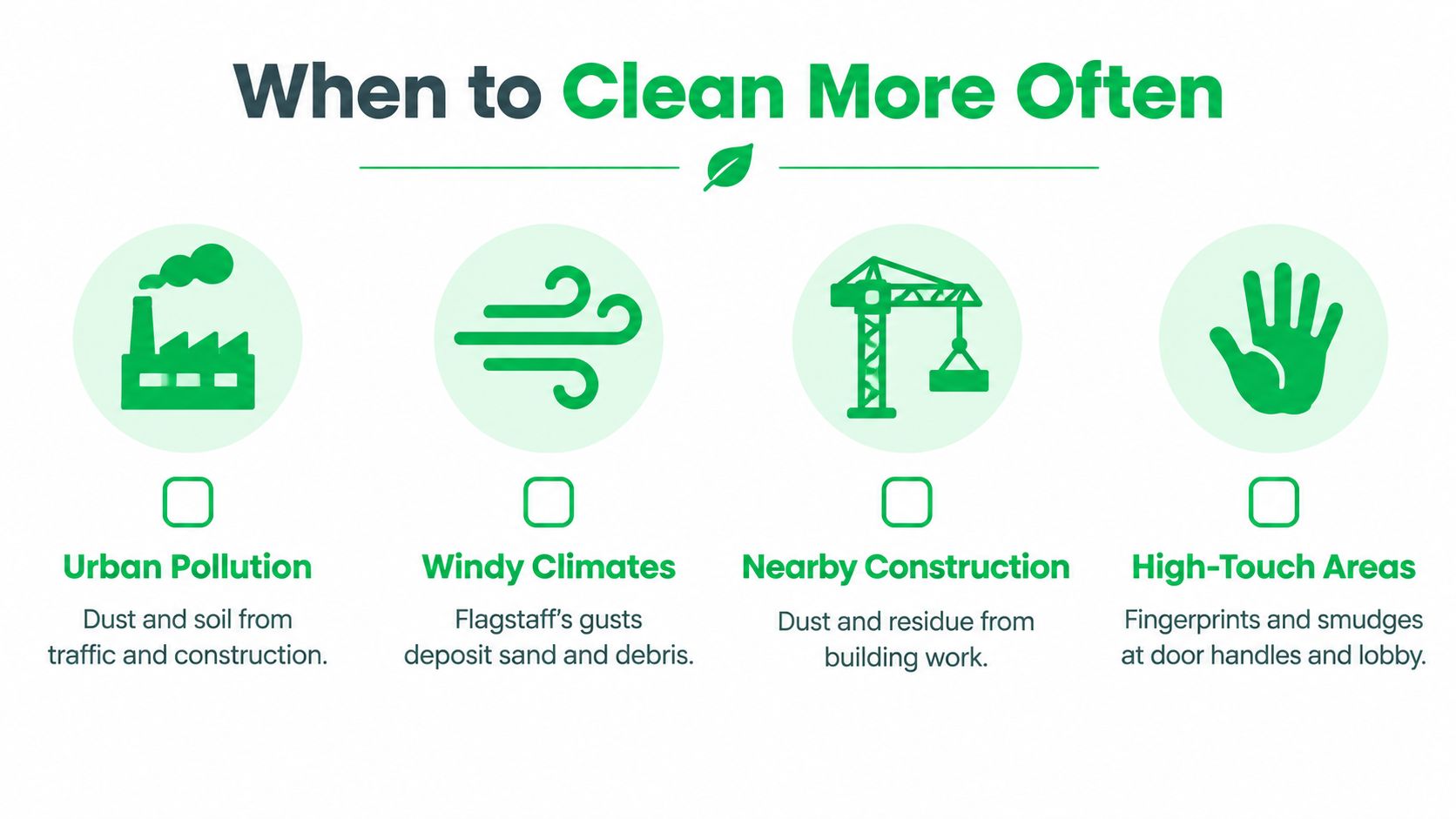
Urban pollution and road traffic leave a combination of dust, soot, and residue on exterior glass. Construction adds a separate layer of risk because airborne dust can settle quickly and leave stubborn deposits. Glass Association guidance says twice-per-year cleaning is generally sufficient for glazing exposed to standard urban dirt and atmospheric pollutants, but regions with heavier environmental contamination may require more frequent service. (Glass Association cleaning guidance)
Flagstaff managers should pay close attention to windy and dusty conditions. Gusts can move sand and fine debris onto lower panes, sills, screens, and door tracks. Seasonal pollen and nearby landscaping can also change how quickly glass loses clarity. Coastal properties face salt contamination, which is another reason exposure, not just building height, should guide the calendar.
Operational exposure matters just as much
Some windows get dirty because people use them. Entry doors, sidelights, lobby partitions, and lower panes collect fingerprints and smudges at hand height. Restaurants add airborne grease near kitchens and dining entrances. Dealerships and showrooms depend on clear glass to present vehicles and merchandise, so a light film can become a presentation problem before it becomes a structural maintenance problem.
Use these signs to decide whether to compress the baseline:
- Traffic and construction: Shorten the interval when road dust or nearby building work coats the glass before the next planned service.
- Public visibility: Prioritize storefronts, entrances, showrooms, and reception areas over hidden or lightly used panes.
- Seasonal conditions: Review the schedule during windy periods and high-pollen seasons instead of assuming last season's calendar still fits.
- Water exposure: Sprinklers, rain splash, and hard water can leave mineral deposits that need specialized attention. Managers dealing with stubborn residue can review this guidance on removing hard water stains from windows.
Glass material can affect the visual interval too. Guidance for commercial scheduling notes that untinted glass may need cleaning every 1 to 3 months, while low-E glass is often placed on a 4 to 6 month interval, with environment still influencing both recommendations. (commercial glass maintenance scheduling)
The practical test is simple. If a manager can see the soil from the parking lot, visitors can see it too. Shorten service for that elevation or zone instead of waiting for the entire property to reach the same condition.
Interior Glass and Screens Need Their Own Schedule
Exterior service doesn't answer the whole question. Interior glass follows a different pattern because people touch it, breathe near it, move carts beside it, and create indoor residue through normal operations.
Storefront interiors may need weekly cleaning, while medical facilities may need monthly attention and office interiors may fit a quarterly or semi-annual rhythm. (interior and exterior commercial window schedules) A lobby door can need service several times before an upper-floor office partition needs it once.
Match the inside to the activity
Start with touchpoints. Door glass, push plates, sidelights, reception windows, elevator-adjacent glass, and lobby partitions deserve a separate line on the maintenance plan. Conference rooms and atriums may need less frequent attention unless they receive heavy use or sit in a dusty part of the building.
Interior service also requires controlled methods. Professional technicians use squeegees where appropriate, extension poles for reach, and techniques that limit runoff around flooring, furniture, electronics, and finished surfaces. A pure-water brush system is especially useful for exterior work where the goal is to rinse contaminants away without leaving detergent residue.

Screens are part of the window system
Screens trap dust, pollen, and fine debris. If a crew cleans the glass but leaves dirty screens in place, the finished result can look muted as soon as the screens are reinstalled.
Multiple screen-cleaning guides recommend removing and cleaning screens at least twice a year, commonly in spring and fall. Dusty, windy, or coastal settings may justify quarterly screen cleaning instead. (screen cleaning frequency guidance)
Pine Country Window Cleaning removes, cleans, and reinstalls screens with every service. That process supports both homes and commercial properties because technicians can inspect the screen condition, clean the mesh separately, and return each screen to its proper opening. It also reflects a broader standard of care, the crew protects the customer's home or business instead of treating the glass as an isolated task.
Signs It Is Time to Clean and Sample Maintenance Calendars
A calendar should guide inspections, not replace them. If glass crosses the appearance threshold early, move the next service forward for the affected area.
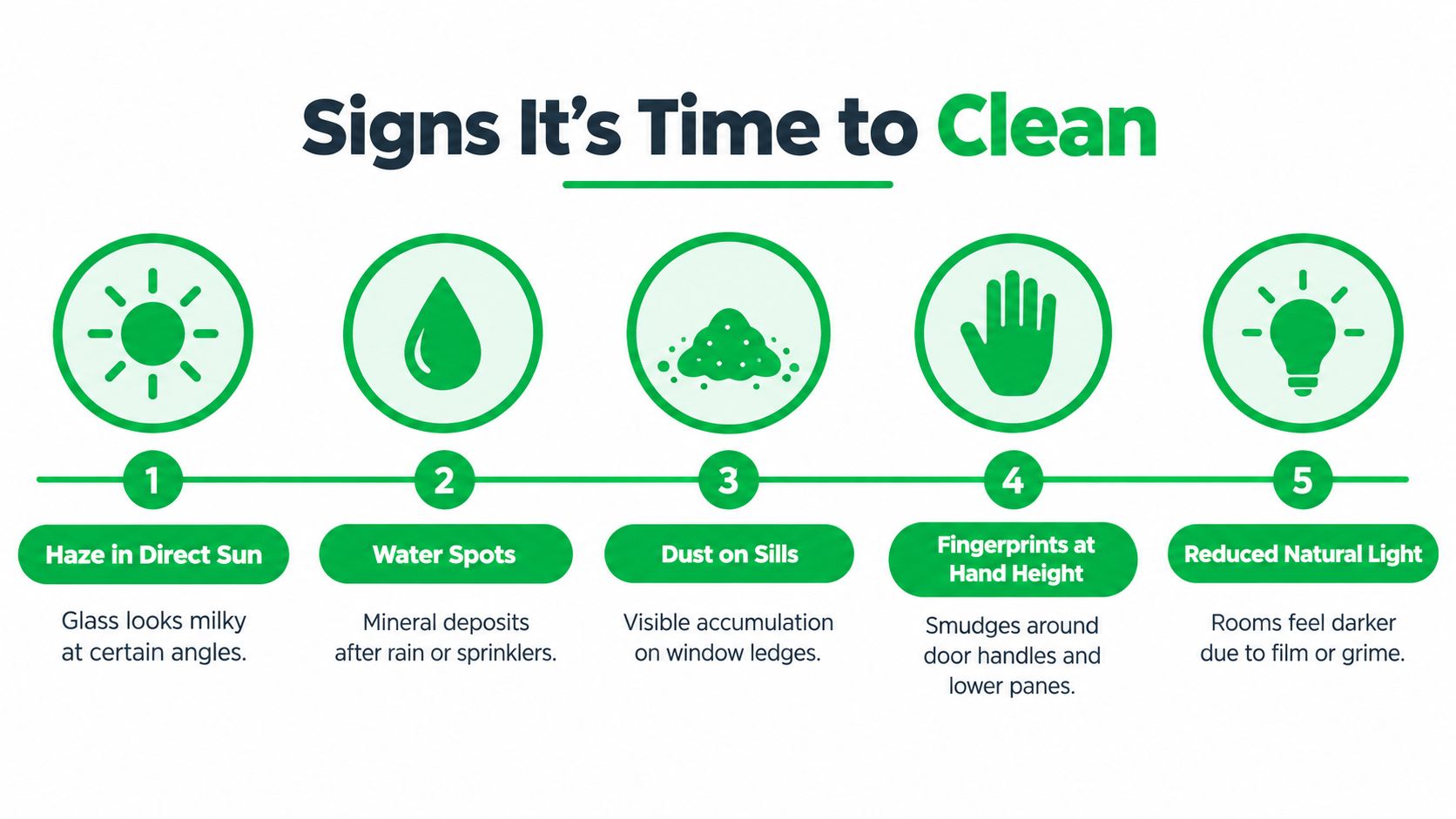
Look for these visual cues:
- Haze in direct sun: Glass looks milky when sunlight hits at an angle.
- Water spots: Rain or sprinklers leave mineral deposits.
- Dust on sills: Window ledges show visible accumulation.
- Fingerprints at hand height: Door handles and lower panes carry smudges.
- Reduced natural light: Rooms appear darker because film or grime covers the glass.
Three workable calendar examples
Standard office: Schedule exterior cleaning quarterly, with lobby doors and reception glass monthly or bi-monthly. Place interior office glass on a quarterly or semi-annual rotation, and include screen service at least twice yearly.
Retail storefront: Schedule ground-floor exterior glass weekly or bi-weekly, depending on traffic and visible soil. Clean interior display glass and entrance doors weekly, then coordinate screen service with the spring and fall maintenance cycle.
Hotel or campus: Keep broader exterior areas on a quarterly or semi-annual plan based on exposure and building use. Schedule hotel lobbies, campus libraries, student centers, and other public areas more often, with interior common-area service monthly or quarterly as conditions require.
These calendars become easier to manage when paired with related work. Schedule exterior glass after dusty construction or pressure washing, inspect sills when gutters and downspouts are serviced, and group screen care with seasonal property reviews. The exact sequence depends on the site, but the principle is consistent: avoid cleaning windows immediately before another maintenance task will soil them again.
Scheduling cue: If staff members mention dirty glass before the next appointment, record which elevation, room, or entrance they mean. Adjust that zone first.
A simple service log should note weather exposure, high-touch locations, screen condition, water spots, and the date of the next review. That gives the manager a defensible plan instead of a recurring guess.
Keep Your Property Bright With Professional Care in Flagstaff
A reliable commercial window schedule protects more than curb appeal. It keeps public spaces brighter, gives staff a clear maintenance routine, and helps managers notice problems before they become difficult to address. Professional cleaning also respects the building's finishes, landscaping, furnishings, access limits, and daily operations.
Pine Country Window Cleaning has served Northern Arizona since 1999 and was started by Flagstaff native David Kaminski. The company is Flagstaff's largest window cleaning company and works with homes, cabins, hotels, NAU facilities, dealerships, medical buildings, campuses, and high-rise properties. Its technicians are background-checked and OSHA safety-trained, with in-house boom lifts, scissor lifts, and a 95-ft atrium lift for challenging access.
The team uses professional squeegees, ladders, poles, and pure-water brushes. It removes, cleans, and reinstalls screens with every service, and the company emphasizes fast scheduling, clear pricing, respectful crews, and a 100% satisfaction guarantee. For managers who want broader property upkeep, related services include gutter and downspout cleaning, pressure washing, post-construction window cleaning, and seasonal snow removal.
For additional background on protecting commercial glazing and planning care, review this glass care guide from WipesBlog.com. When you're ready to turn the recommendations into a site-specific plan, explore commercial window cleaning services and discuss which areas need weekly, monthly, quarterly, or semi-annual attention.
Request a free estimate from Pine Country Window Cleaning and ask for a commercial schedule that separates entrances, interior glass, screens, upper-level exteriors, and high-exposure areas. Their Flagstaff team can build a practical maintenance plan around your property's traffic, access, and Northern Arizona conditions.