

A guest pulls into a Flagstaff hotel parking lot after a long drive. Before reaching the front desk, they see their reflection in the entry glass, look through the lobby windows, and notice whether the property feels cared for. Streaks, water spots, bug splatter, and dusty screens can make a clean hotel look neglected in seconds.
That's why hotel window cleaning isn't ordinary janitorial work. It combines guest experience, facade maintenance, screen care, access planning, and documented safety procedures. The right schedule keeps highly visible glass presentable without sending crews through busy lobbies or disrupting occupied rooms.
Why Hotel Window Cleaning Is a Guest-First Job
A guest pauses at the lobby entrance and sees fingerprints across the door, haze along the edges, and water spots from irrigation. At breakfast, the view through the dining-room glass shapes the feel of the space. In a guest room, a dusty or damaged screen can distract from the scenery before the guest notices anything else.
That reaction makes hotel window cleaning part of the guest experience, not a background janitorial task. Clear glass supports the impression that housekeeping, maintenance, and management control the details. Marks, residue, and neglected screens suggest the opposite, even when the room itself is spotless.
Practical rule: Prioritize the glass guests see first, then schedule the harder-to-reach areas around the property's operating needs.
Entrance doors, lobby panels, restaurant windows, atriums, public corridors, reception areas, and guest-facing exterior glass usually deserve priority. Commercial windows in high-traffic properties such as hotels are commonly cleaned every 4 or 8 weeks, while interior public-area glass may need attention weekly or bi-weekly to stay presentable. The hospitality maintenance guidance connects that frequency to the effect clean glass has on customers.
The schedule reflects real exposure. Fingerprints, food residue, dust, pollen, wind, and winter grime build quickly in public areas. Flagstaff's high-desert conditions can shorten the useful life of a deep clean, especially at exposed entrances and busy drive aisles.
Screens also need a controlled remove-clean-reinstall workflow. A technician removes the screen, cleans the mesh and frame without damaging them, checks for tears or bent corners, and reinstalls it correctly. Skipping that step leaves guests looking through dust even when the glass is clear.
Upper-level work adds a safety-regulated technical requirement. Crews must plan around roof access, controlled work zones, occupied rooms, landscaping, weather, and the limited setup options common at Flagstaff hotels. Work may be staged so visible glass is cleaned during quieter periods while higher or harder-to-reach sections remain separated from guests.
Coordination with housekeeping, the front desk, food service, events, check-in periods, and occupied rooms keeps the work practical. The cleanest result matters, but so does completing it without blocking an entrance or disrupting the stay.
What Professional Hotel Window Cleaning Actually Involves
Professional service starts with a site assessment, not a bucket. The crew identifies glass types, frame materials, screens, access points, roof anchors, landscaping, loading areas, guest traffic, and areas where water could create a slip hazard. That information determines whether the job calls for squeegees, ladders, extension poles, pure-water brushes, lifts, or rope access.
The hand-cleaning kit has a clear purpose:
- Channel squeegees and T-bars: These provide controlled washing and consistent water removal on interior glass, lobby panels, doors, and reachable exterior windows.
- Extension poles: Poles help technicians work from a safe position and reduce unnecessary ladder moves around entrances and planted areas.
- Pure-water brushes: Filtered and deionized water allows technicians to agitate glass and frames, then rinse without leaving mineral residue. Water-fed systems can reach about 55 feet, or five stories, from the ground according to pure-water cleaning guidance from WAXIE.
- Microfiber wipers: These handle interior edges, frames, ledges, door hardware, and detail work where excess water needs to be controlled.
- Frame-safe detergents: Mild products are selected according to the glass, coating, film, and frame material. Anodized frames and specialty glazing shouldn't be treated with an aggressive chemical just because it cuts dirt quickly.
This is not a rag, Windex, or newspaper job. A professional crew uses squeegees, ladders, poles, and pure-water brushes because each tool matches a different access and finish requirement.
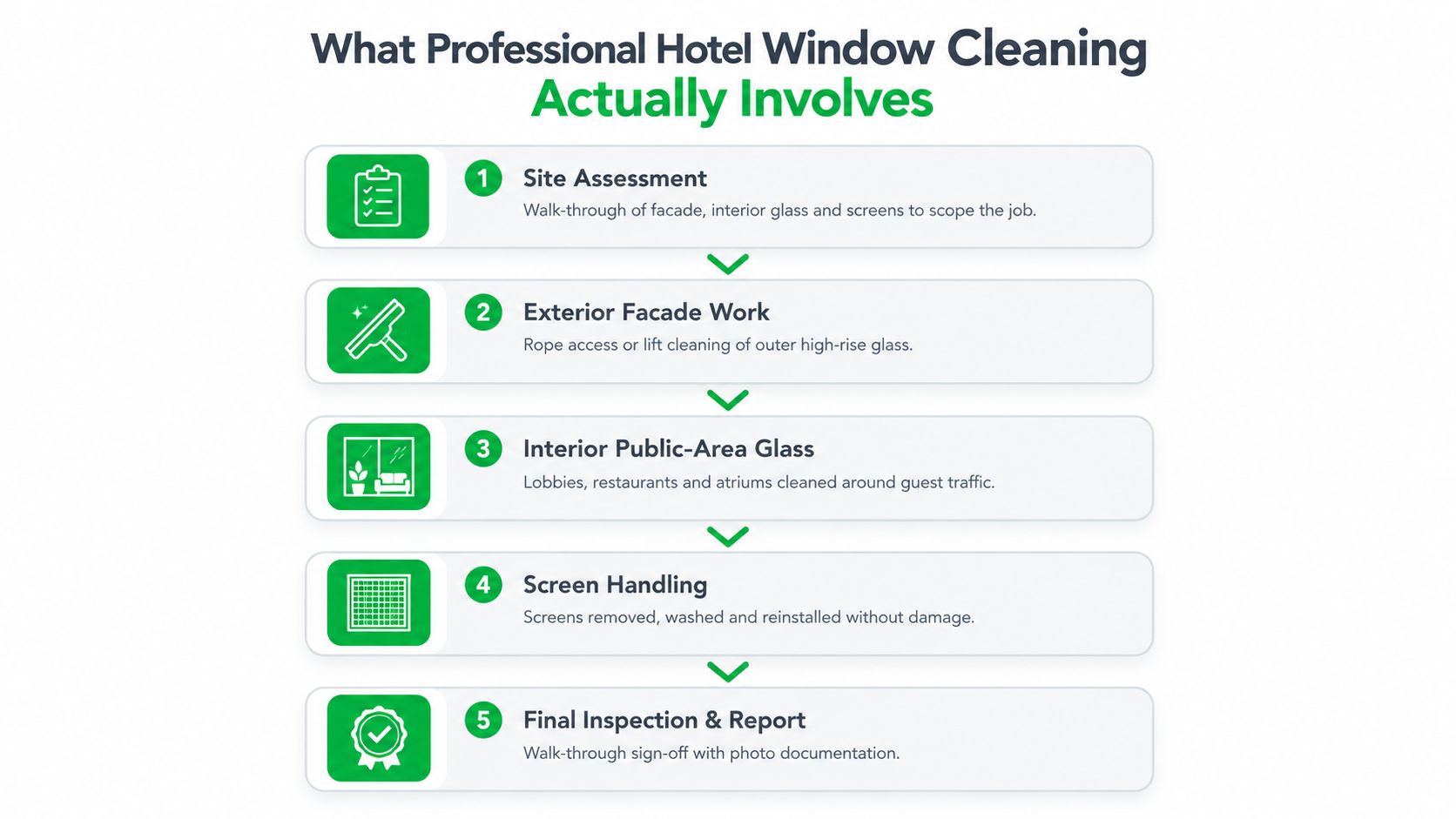
Screen handling is part of the service
Screens need their own workflow. Removing them before washing the glass prevents trapped dust from falling back onto a finished pane, and washing them separately keeps accumulated debris out of guest rooms and public areas.
A reliable sequence looks like this:
- Label the screen: Mark its original opening and orientation before removal.
- Remove it carefully: Release clips and corners without bending the frame or damaging seals.
- Wash it separately: Clean both sides, frame edges, and corners where dust collects.
- Dry it fully: Reinstalling a wet screen can trap moisture and create streaking or fit problems.
- Return it to the same opening: Match the label and orientation so the screen seats correctly.
The high-rise window cleaning workflow from Pine Country Windows describes the remove, clean, dry, and reinstall sequence, including labeling screens during removal. That handling is often what separates a true hotel specialist from a storefront cleaner who only considers the glass surface.
How Often Hotels Should Schedule Window Cleaning
A hotel needs separate schedules for exterior glass, interior public areas, and guest-room windows. Weather and traffic usually put exterior glass on a 4 to 8 week rotation, while lobby and other high-touch interior glass may need weekly or bi-weekly service. Commercial hotel window maintenance guidance supports using exposure and visibility to set the interval, rather than applying one schedule across the property.
| Area | Frequency | Main driver |
|---|---|---|
| Entrance doors and lobby glass | Weekly or bi-weekly | Fingerprints, touch traffic, and first impressions |
| Restaurant, breakfast, and public corridor glass | Weekly or bi-weekly | Food residue, guest traffic, and inspection readiness |
| Exterior guest-facing glass | Every 4 to 8 weeks | Weather, dust, insects, irrigation, and facade exposure |
| Guest-room windows and screens | Scheduled by building zone | Occupancy, housekeeping access, and screen condition |
| Atrium or high-access glass | Planned maintenance cycle | Access setup, weather windows, and equipment availability |
Timing within the cycle matters. Interior work during breakfast, check-in, or an event creates disruption, even when the finished glass looks excellent. Schedule those areas around housekeeping shifts, meal service, event setup, and lower-occupancy periods. Coordinate guest-room work with the front desk and housekeeping so technicians do not enter rooms unexpectedly.
Exterior glass needs a local adjustment. Around Flagstaff, monsoon moisture, windblown dust, pollen, nearby construction, planted areas, and winter road residue can make a recent cleaning look tired sooner. A north-facing facade may remain presentable longer than an entrance exposed to sprinklers and vehicle traffic. Ground conditions also matter, so planning the route can reduce unnecessary ladder moves around entrances and planted areas.
A repeatable schedule gives the property a reliable baseline, while exposure and occupancy determine exceptions. Schedule highly visible interior glass often, place exterior glass on a consistent cycle, and adjust both to actual conditions. Pre-weekend or pre-holiday service can help before heavier arrivals, but the booking calendar should set the timing instead of a generic commercial routine.
Access Methods for Every Facade and Atrium
No single access method works across an entire hotel. A flat loading-dock apron may make a scissor lift efficient, while landscaping or a sloped drive may require a boom lift. Rope access can suit a facade with limited equipment staging, while a water-fed pole may clean three-story exterior glass without putting a technician on a ladder or lift.
| Access Method | Best For | Typical Height | Key Consideration |
|---|---|---|---|
| Scissor lift | Broad, vertical glass over firm, level surfaces | Low to mid-rise areas | Needs a stable travel and setup surface |
| Boom lift | Glass over landscaping, setbacks, or obstacles | Mid to higher exterior work | Requires reach planning, ground clearance, and exclusion zones |
| Rope access | Complex facades with limited lift access | High-rise and difficult elevations | Requires trained technicians, anchors, weather checks, and rescue planning |
| Suspended platform | Large atriums or broad full-height facades | Full-height vertical sections | Rigging, roof access, staging, and rescue procedures are substantial |
| Water-fed pole | Ground-reachable exterior glass | Up to about 55 feet or five stories | Works best where purified-water reach can cover the glass from a safe position |
Aerial lifts are useful when the ground conditions support them. A scissor lift can move efficiently along a loading dock or paved apron, but it's a poor choice where tires could damage landscaping or where the machine can't be positioned close enough to the facade. A boom lift reaches over obstacles, though setup, outriggers, surface protection, and work-zone control add complexity.
Rope access reduces the need to position a large machine below every window, but it isn't a shortcut around planning. Roof anchors, technician training, weather limits, communication, and rescue procedures must all be in place. Suspended swing stages can cover broad atriums or full-height walls, but rigging and staging often take longer than the cleaning itself.
For a practical overview of lift selection and hotel facade access, property managers can review Pine Country's commercial window cleaning lift information. A separate Miracle Membrane company news article from Protect-A-Bed also provides useful context for understanding the planning challenges involved when crews and equipment work at significant height.
Fall protection and weather determine whether a method is usable on a given day. OSHA-related guidance recognizes fall-risk thresholds of 4 feet in general industry and 6 feet in construction, as summarized in window-cleaning fall-protection guidance. Suspended scaffold work is commonly limited around 25 mph, and rope-access work may require lower wind thresholds, according to hotel facade access guidance. In Flagstaff, wind can change a workable morning into a no-go afternoon, so a credible contractor builds weather flexibility into the schedule.
Safety Standards Every Hotel Property Should Expect
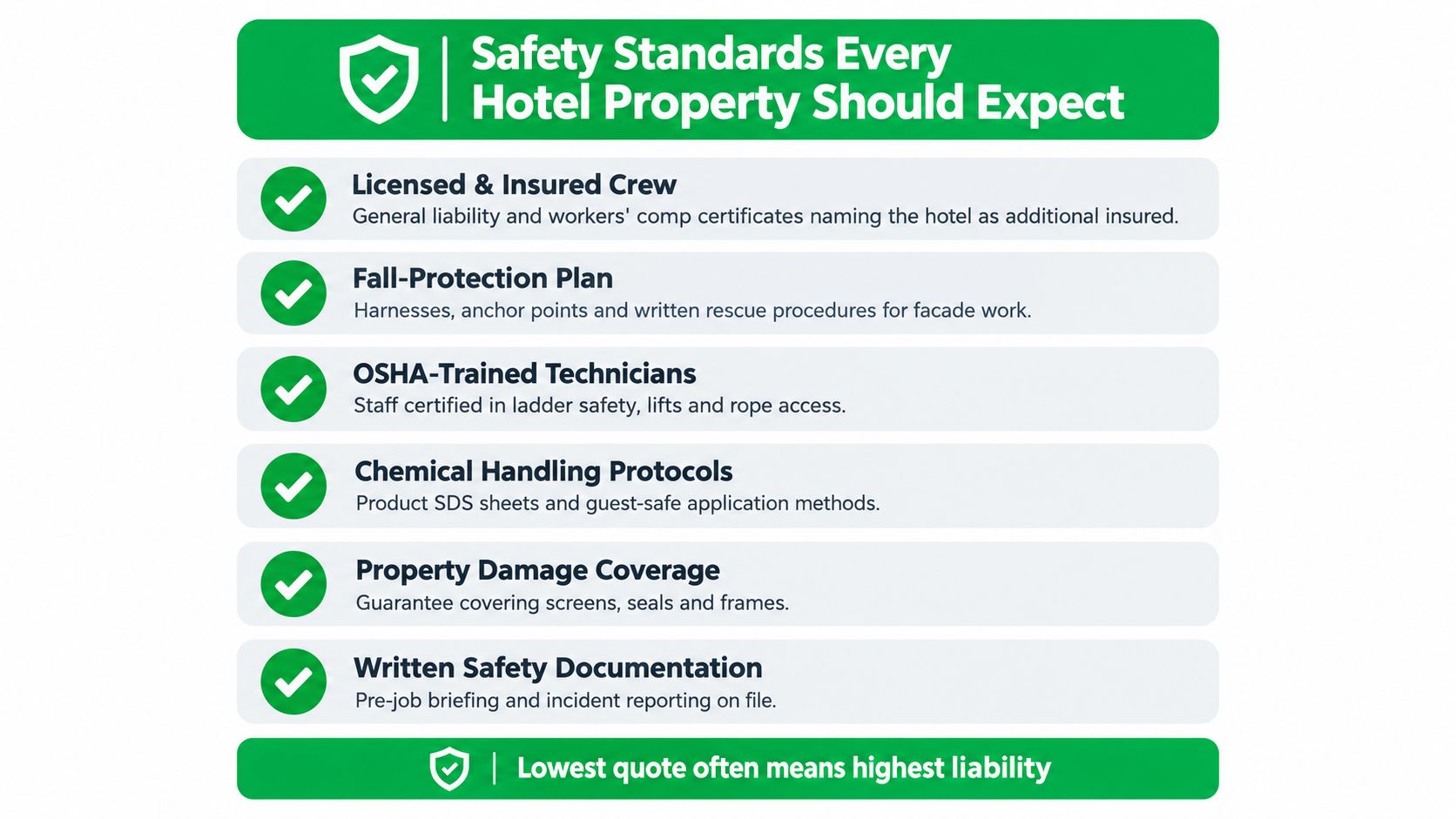
A low bid can create a high-risk job. Before anyone brings a ladder through the lobby or steps onto a roof, the hotel should get a plain explanation of the access method, equipment inspection process, fall-protection plan, work-zone controls, and emergency response.
Professional hotel window cleaning has to fit OSHA walking-working-surface rules, fall-protection requirements, applicable Arizona rules, and the ANSI/IWCA I-14.1 window-cleaning safety standard. A property manager does not need to run the contractor's technical review, but they should ask for documentation and understand the basic thresholds.
Ladders deserve close scrutiny. Some professional window-washing methods are not allowed when the window top sits more than 35 feet above the nearest interior floor or exterior ground surface. Ladders over 18 feet require a person at the foot holding the ladder with both hands under the guidance described in Cornell's window-washing program. That makes ladders a weak fit for many hotel elevations, even when a bidder presents them as the cheapest option.
Questions to ask before work begins
- Who is trained for the method? Ask whether technicians have documented training for ladders, lifts, pure-water systems, rope access, and rescue procedures tied to the planned work.
- What protects the crew from falls? The plan should name harnesses, tie-off points, guardrails, platform controls, and exclusion zones.
- Are anchors certified and inspected? Roof anchors used for suspended platforms or rope access are typically certified for 5,000 pounds per anchor point and inspected annually, according to high-rise window cleaning safety information.
- What happens during an emergency? Rope and suspended work require a written rescue plan, not a verbal promise that someone will call for help.
- How is the hotel protected? The crew should address guest separation, dropped-object prevention, wet-floor control, electrical hazards, weather, and protection for screens, seals, frames, and landscaping.
High-rise window cleaning is a specialized trade because the exposure is real. A source in the field estimates about 1.5 million work exposures annually for high-rise window cleaners and reports roughly one or two occupational fatalities per year, which shows both the risk and the need for disciplined systems. The industry history and safety overview also links the profession's growth to skyscrapers, the Home Insurance Building's completion in 1885, and the spread of glass curtain-wall construction in the 1950s.
A hotel should expect a pre-job briefing, inspected equipment, a job hazard analysis, current insurance documentation, and a clear contact for the property team. The contractor should arrive ready to manage risk, not improvise it.
What Drives the Price of Hotel Window Cleaning
A hotel window cleaning quote is only useful when every bidder is pricing the same scope. Height matters first because a ground-reachable pane requires a different crew and setup than a facade that needs a lift, rope access, or suspended platform.
The five main pricing variables are:
- Building height and layout: More stories can mean more access time, repositioning, staging, and weather exposure. A simple vertical wall may cost less to service than a shorter building with setbacks, courtyards, roofs, and disconnected wings.
- Access method: Ground-based pure-water work is generally more efficient where reach permits it. Rope access can avoid some lift staging, while suspended platforms require more rigging and coordination.
- Frequency and contract structure: A recurring maintenance plan typically allows the crew to work from a known scope and established access plan. One-time restoration work often takes longer because deposits, neglected frames, and screens need more attention.
- Glass and surface condition: Low-E coatings, tinted film, mineral deposits, construction residue, and damaged seals affect chemistry, dwell time, and technique. A contractor should identify those conditions before quoting.
- Screens and frame detail: Screen removal, separate washing, drying, labeling, and reinstallation add handling time. If screens are excluded, the quote may look attractive while leaving a highly visible part of the guest-room window unfinished.
Consider a 120-room, three-story hotel with exterior glass, interior public areas, and guest-room screens. A per-visit quote may be easier to budget for recurring service, while a per-pane model can make unusual facade sections easier to compare. Neither method is automatically better. The important question is whether the bid identifies access, screens, frames, water-fed work, interior glass, and touch-up expectations.
For a multi-property portfolio, consistent scopes can reduce administrative work and make scheduling more predictable. Volume may improve the commercial terms, but property managers should still verify that each location receives a site-specific access plan. A low price that excludes screen service or high-access sections isn't a discount. It's a partial scope.
The Payoff for Guests, Reviews, and Energy Performance
Clean hotel windows do more than improve curb appeal. They help a property communicate care before a guest speaks with an employee, enters a room, or reads a review. Bright lobby glass, clear atrium views, and clean entrance doors make the building feel maintained.
Online reviews often use visual language to describe hospitality. Guests mention spotless surroundings, shining common areas, and beautiful views when those details are noticeable. Clean glass can't compensate for poor service or an unclean room, but neglected glass can weaken an otherwise strong impression.
The energy connection deserves equal attention. Energy Star's hotel checklist recommends inspecting doors and windows for gaps or cracks that can be weather-stripped, caulked, or filled. The same Energy Star hotel energy checklist notes that cleaning windows and roof lights helps maintain efficiency by maximizing natural light.
Clean glazing allows more usable daylight into lobbies, corridors, restaurants, and rooms. That can support lower reliance on electric lighting in areas designed to benefit from daylight. Glazing type, exposure, shading, and weather sealing still matter, and cleaning alone won't solve an inefficient envelope, but it belongs in the same maintenance conversation.
| Benefit Area | What Improves | Why It Matters |
|---|---|---|
| Guest arrival | Entry doors, lobby glass, and visible facade | Shapes the first impression before check-in |
| Review experience | Clean views and well-kept public areas | Supports the property's visible cleanliness standards |
| Daylighting | Clearer transmission through glazing and roof lights | Helps the hotel use available natural light |
| Comfort | Cleaner, better-maintained windows and frames | Supports a more cared-for interior environment |
| Facility planning | Consistent inspection of glass, screens, seals, and gaps | Helps teams identify maintenance issues earlier |
Property managers can use commercial building window cleaning service information to frame the work as part of a broader building-maintenance program. The ownership pitch is straightforward: clean windows support guest impressions, preserve daylighting benefits, and show that the property's standards begin before the front desk.
Choosing a Window Cleaning Partner in Northern Arizona
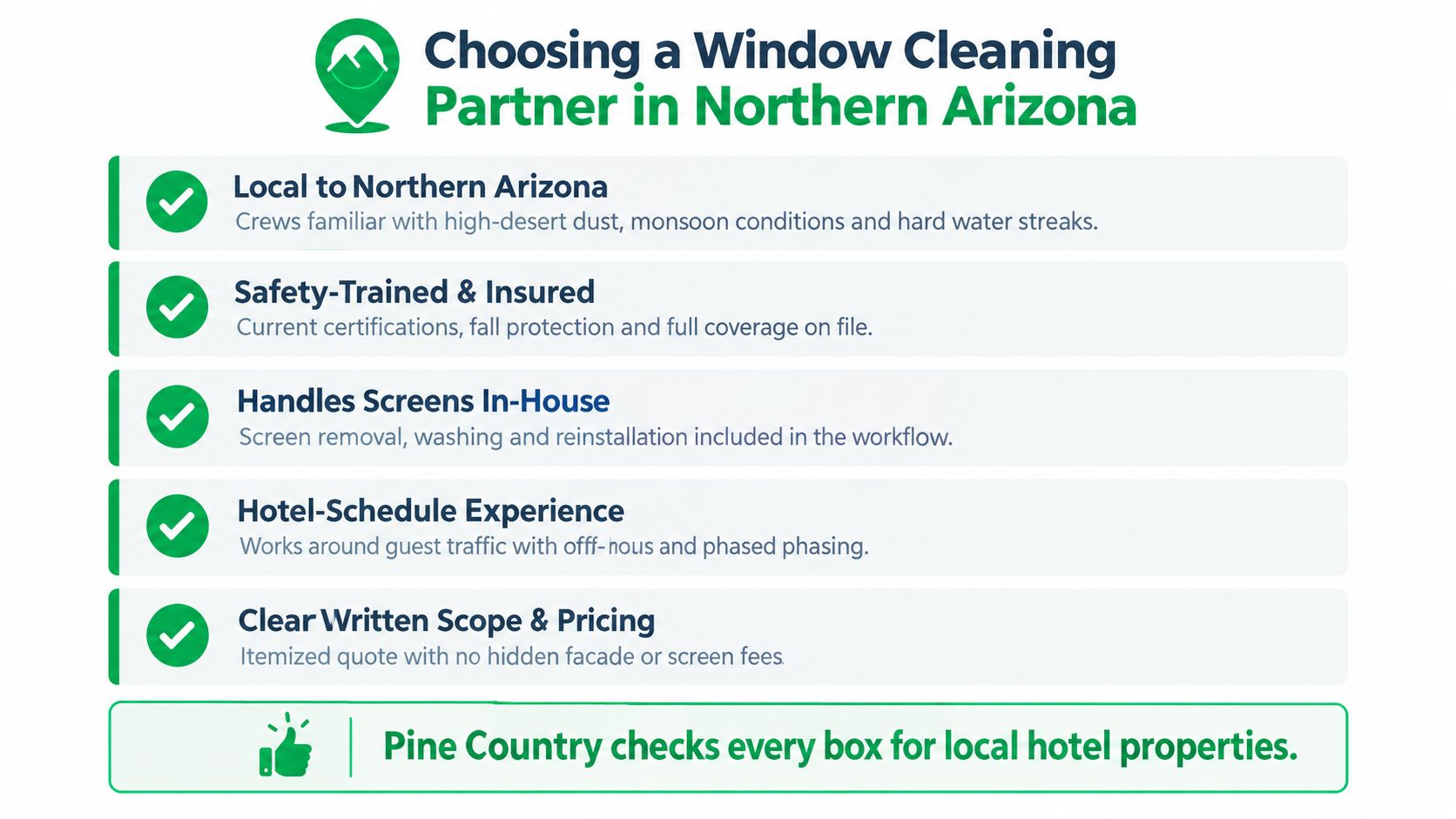
A Northern Arizona hotel needs more than a crew that can clean storefront glass. The contractor should understand high-desert dust, monsoon wind windows, winter freeze-thaw conditions, hard-water marks, occupied buildings, and the access limitations of mountain properties.
Pine Country Window Cleaning was started by Flagstaff native David Kaminski, has operated since 1999, and handles residential and commercial work, including hotels and high-access properties. A local team with boom lifts, scissor lifts, and a 95-foot atrium lift can evaluate whether a facade needs a machine, a pole system, or a more specialized approach.
Use this checklist before signing:
- Safety documentation: Verify OSHA-aligned training, insurance, equipment inspections, and a written rescue plan where required.
- Screen service: Confirm that screens are removed, washed, dried, and reinstalled as part of the written scope.
- Hotel coordination: Ask how the crew works around occupancy, housekeeping, food service, events, and check-in traffic.
- Local weather judgment: Discuss wind, freeze-thaw cycles, dust, and weather-related rescheduling.
- Clear pricing: Require separate line items for access, interior glass, exterior glass, frames, screens, and high-access areas.
For a broader view of contractor accreditation and documented safety expectations, Wisenet Security Ltd on SafeContractor offers useful context on why verified compliance matters for commercial properties. A property manager looking for a local service scope can also review commercial window cleaning services in Northern Arizona.
Pine Country Window Cleaning provides scheduled hotel window cleaning, high-access facade work, interior public-area service, and screen removal, cleaning, and reinstallation for Northern Arizona properties. Visit Pine Country Window Cleaning to request a property assessment and build a guest-conscious maintenance plan around your hotel's occupancy, access, and weather conditions.