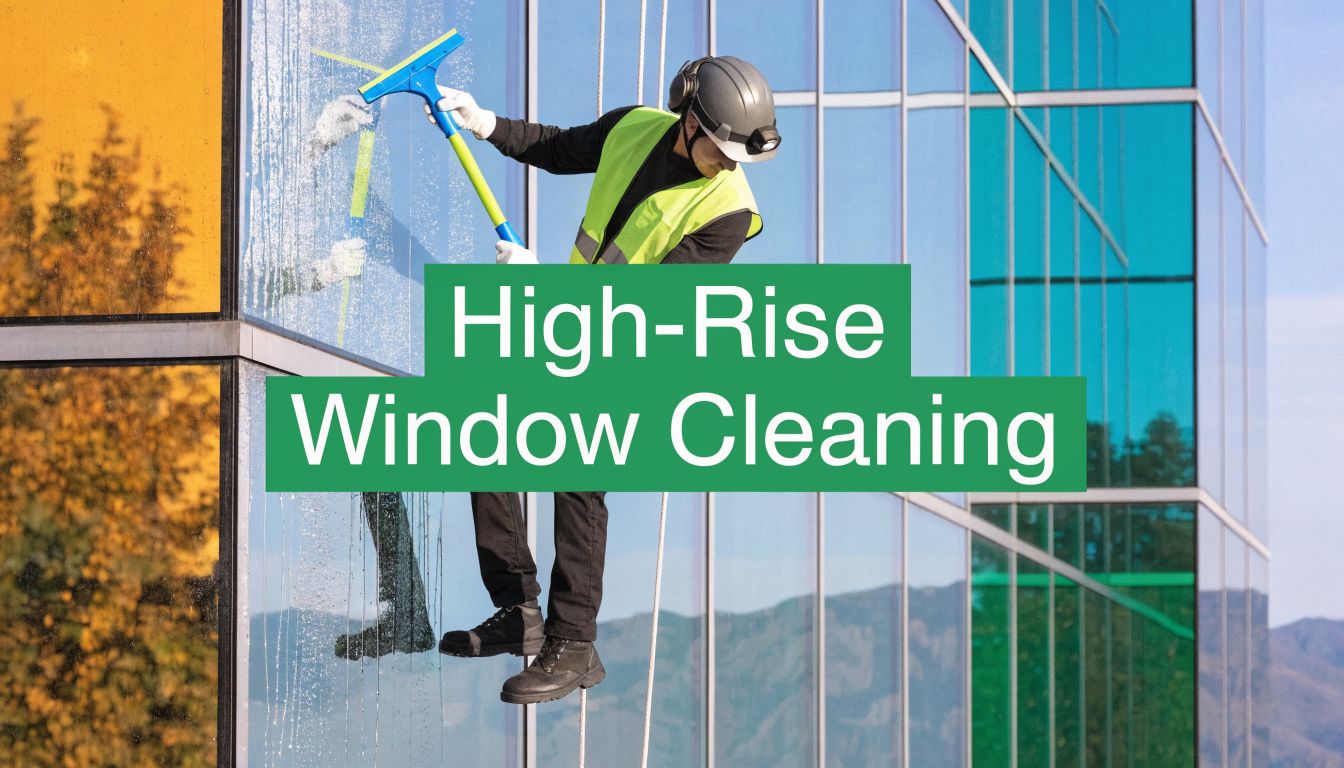
If you're responsible for a taller building in Flagstaff or anywhere in Northern Arizona, you already know the moment. You walk the property, look up, and the glass tells on you. Dust collects at the edges, storm residue dulls the facade, and the upper floors are impossible to judge from the ground until the sun hits them just right.
At that point, high rise window cleaning stops being a cosmetic chore. It becomes an operations decision. You need clean glass, but you also need the right access method, a crew that won't create liability for your property, and a schedule that works around weather, tenants, guests, pedestrians, and daily business.
In Northern Arizona, those decisions get sharper. Wind changes fast. Snow and monsoon patterns complicate planning. Campuses, hotels, medical buildings, retail centers, and multi-story commercial properties all come with different access problems. The right contractor understands that the work isn't just about making glass clear. It's about protecting your building, your people, and your reputation.
More Than Just Glass A Professional Approach
A lot of property owners first think about window cleaning when the building starts looking tired. Tenants notice. Guests notice. Prospective clients notice. Dirty upper glass makes a property feel less maintained, even when the rest of the site is in good shape.
That matters because high rise window cleaning isn't the same as basic pane-by-pane maintenance on a storefront or home. Rags, spray bottles, and improvised methods aren't built for height, access limits, or large-scale exterior glass. Professional crews use squeegees, ladders, extension poles, pure-water brushes, lifts, and suspended access systems because the work demands control, repeatability, and safe movement across the facade.
High rise window cleaning became a distinct profession after the first modern skyscraper, the 10-story Home Insurance Building was completed in Chicago in 1885, and the trade changed again in the 1950s when glass curtain walls made exterior access systems essential, as outlined in this history of window cleaning and the rise of modern building access.
Why the professional approach matters
For a property manager, clean windows do more than improve appearance.
- Tenant experience: Clean glass supports a better day-to-day impression of the property.
- Brand image: Hotels, office buildings, and retail centers rely on visual presentation.
- Maintenance visibility: Clean windows make it easier to spot seal issues, frame deterioration, and construction residue.
- Safer execution: Professional planning reduces unnecessary exposure at height.
Practical rule: If the building requires special access to reach the glass, you're no longer buying a cleaning task. You're buying a safety process.
In a market like Flagstaff, local knowledge also matters. Crews need to understand how mountain weather, seasonal debris, and access around active commercial sites affect timing and method selection. Property owners who want a broader look at what separates professional service from basic cleaning can review this guide to professional window cleaning in Flagstaff.
Reaching New Heights Common Cleaning Techniques
No single method works for every building. The right choice depends on height, facade shape, roof access, landscaping, pedestrian traffic, and how much disruption the site can tolerate. If a contractor proposes one method for every property, that usually means they're limited by equipment, not guided by what's safest and most efficient for your building.
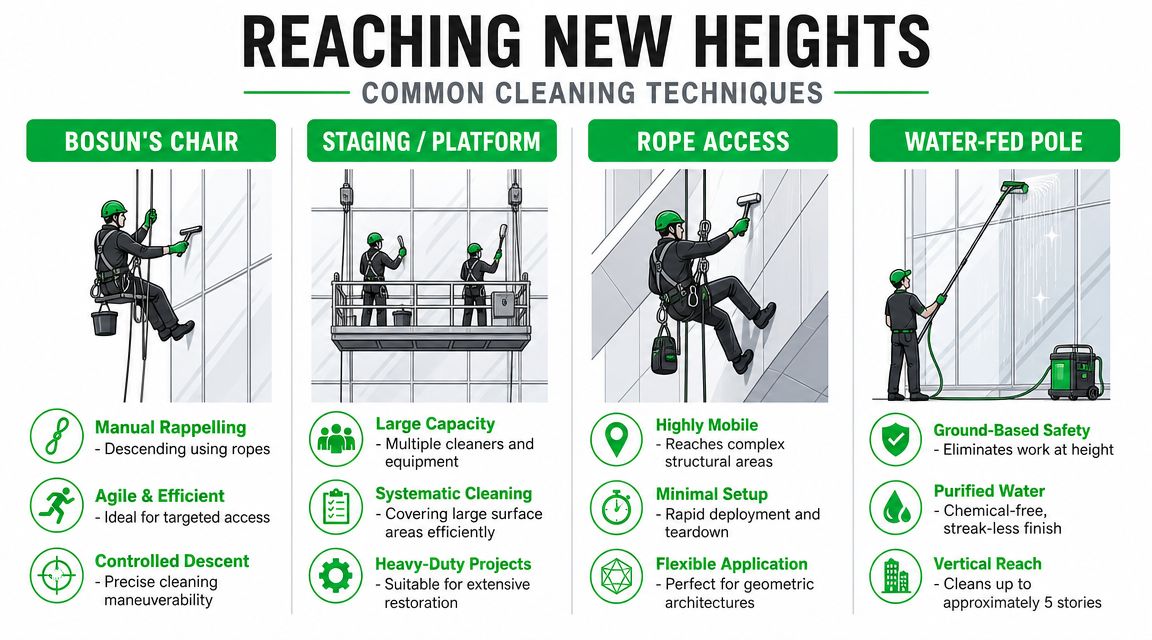
Industry guidance is clear that method selection is driven by height and safety. Water-fed poles are effective up to about 70–80 feet, and above that range the need for stability and fall-risk management typically shifts the job toward rope access, aerial work platforms, or BMUs, as explained in this commercial high-rise office window cleaning method guide.
Water-fed poles for lower and mid-height work
For the right building, pure-water pole systems are one of the cleanest and most efficient tools available. A ground-based technician uses a telescoping pole with a soft brush head and purified water that dries without spotting. This works especially well on accessible exterior glass where the facade is straightforward and the reach stays within practical control.
What works well:
- Ground-based access: The technician stays off the glass and off the roof.
- Fast routine maintenance: Good for frequent service on reachable elevations.
- Clean finish: Purified water helps reduce residue and spotting.
What doesn't:
- Too much height: Pole control drops off as reach increases.
- Wind exposure: Even a capable operator loses precision when the pole starts moving around.
- Complex architecture: Deep setbacks, overhangs, and recessed glass often require a different method.
Lifts and elevated work platforms
Boom lifts, scissor lifts, and specialty atrium lifts fill the gap between simple ground access and full suspended work. These are strong options for mid-rise buildings, interior atriums, hotels, dealerships, and campuses where the site has enough room for equipment placement and the ground conditions support stable setup.
Aerial access can be ideal when a crew needs a steady work position, room for tools, and repeatable movement along a facade. It's also useful when the building design makes rope descent awkward or when interior atrium glass can't be reached from the roof.
One local example is commercial window cleaning equipment used in Flagstaff, including lifts and access systems, where in-house tools such as a 95-foot atrium lift can make difficult interior or exterior glass more manageable without waiting on rental availability.
Rope access for height and flexibility
Rope access is often the right answer when the building is tall, the footprint is tight, or ground access is limited. A trained technician can move vertically with precision and reach facade sections that are difficult to serve with a lift. On the right structure, it's agile and efficient.
That doesn't mean it's simple. Rope access only works when roof conditions, anchors, descent paths, and rescue planning all line up. It's a technical system, not a shortcut.
| Method | Best fit | Main strength | Main limitation |
|---|---|---|---|
| Water-fed pole | Lower to mid-rise exterior glass | Ground-based safety and speed | Limited practical reach |
| Lift or EWP | Mid-rise, atriums, open-access sites | Stable working platform | Needs access space and setup room |
| Rope access | Tall buildings, tight sites, complex facades | Flexibility and minimal ground footprint | Depends on roof setup and strict safety controls |
The right method isn't the one a contractor prefers. It's the one your building's geometry allows safely.
Safety Above All Else OSHA and Best Practices
In high rise window cleaning, safety isn't a line item. It's the structure underneath every decision. Equipment choice, crew size, roof access, staging area, fall protection, pedestrian control, and weather calls all come back to one question. Can this work be done safely on this property, on this day, with this setup?
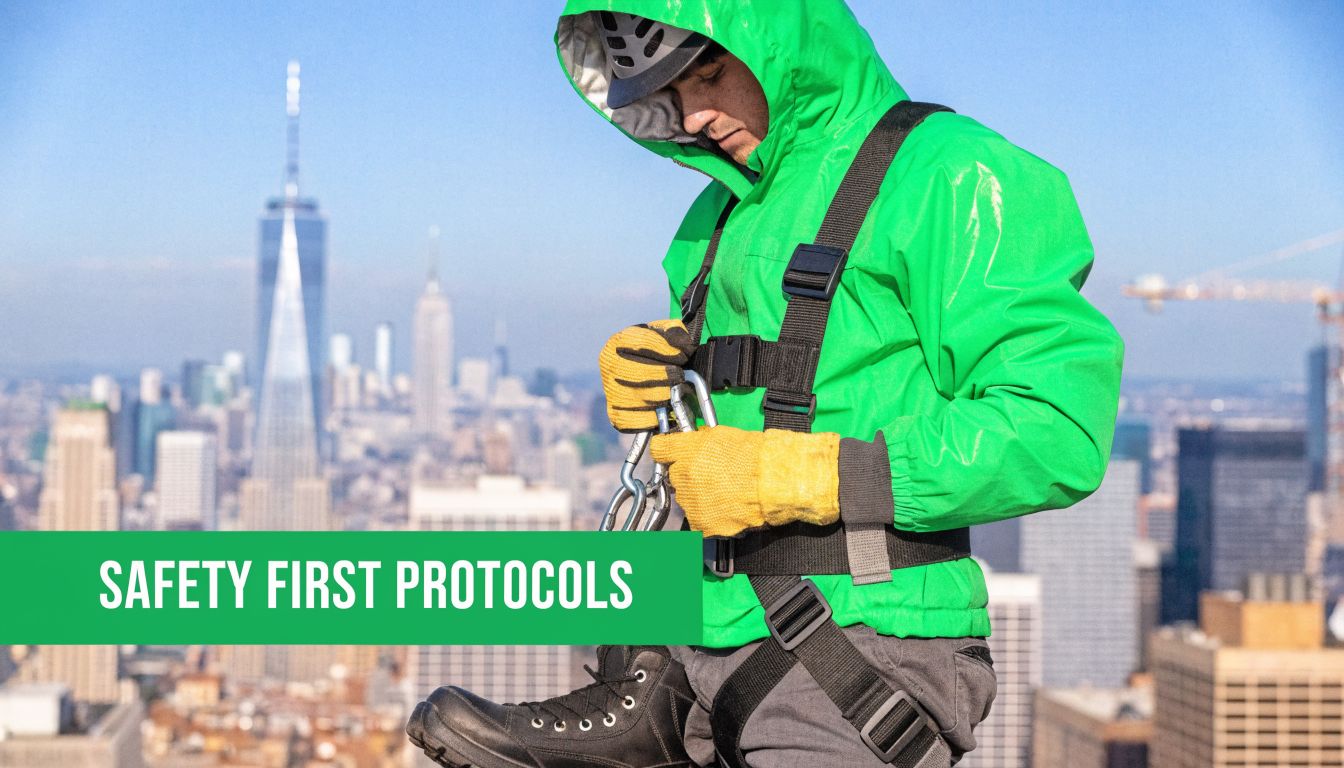
For building owners and facility managers, that means you shouldn't judge a contractor by confidence alone. The crew may look experienced, but experience doesn't replace documented systems. Ask how the company verifies anchors, inspects equipment, trains technicians, and controls the site below the work zone.
Anchors matter as much as harnesses
According to OSHA-aligned safety standards, rooftop anchor points for suspended access must be certified to withstand 5,000 lbs per worker, and those anchor systems require annual inspections by qualified personnel. That makes anchor integrity just as critical as the harness and the worker attached to it, as described in this high-rise window cleaning safety overview focused on anchor systems.
If a contractor can't clearly explain the anchor situation on your building, that's a serious problem. A weak, unverified, or poorly documented anchor affects the whole suspended system.
Ask questions like these:
- Anchor verification: Are the roof anchors certified for the intended access method?
- Inspection records: Can the company confirm current inspection status for the relevant equipment and systems?
- Crew qualifications: Are the technicians trained for the exact type of access being used?
- Site protection: How will they protect entry points, walkways, landscaping, and public areas below?
What good high rise planning looks like
A professional safety plan usually includes more than personal protective equipment. It also covers access routes, tie-off procedures, drop-zone control, communication between crew members, and contingency steps if conditions change during the job.
A careful contractor will sometimes delay work when conditions aren't right. That's not poor service. That's competent service.
A short field demonstration helps many property managers understand what proper setup should look like:
Your liability doesn't disappear when the crew arrives
Hiring a contractor doesn't remove your responsibility to vet them. If someone is working off your roof or over your sidewalks, you need confidence that the company has a real safety program and follows it consistently.
The cheapest quote often leaves out what you can't see from the ground. Inspection discipline. Training depth. Site control. Documentation. Those are the things that protect people and keep a routine maintenance project from becoming a major incident.
Decoding the Cost of High-Rise Window Cleaning
Most property owners ask the cost question first, and that makes sense. But with high rise window cleaning, price only makes sense after the access plan is defined. Two buildings with similar glass area can price very differently if one has easy lift access and the other requires roof work, protected walkways, tenant coordination, and narrow staging space.
The biggest cost drivers are usually method, labor time, and disruption management. The work itself may be straightforward. Reaching the work safely is what changes the quote.
What actually shapes the quote
A professional estimate usually reflects several building-specific factors:
- Height and facade shape: Straight vertical glass is simpler than setbacks, overhangs, or mixed materials.
- Access constraints: Courtyards, landscaping, parking patterns, and busy sidewalks can slow setup.
- Frequency: Regular service is often easier to plan than neglected glass with heavy buildup.
- Operational sensitivity: Hotels, medical sites, campuses, and retail centers may need tighter scheduling windows.
- Equipment needs: A lift, rope system, or specialized interior access tool changes both labor flow and site logistics.
Access method changes the economics
One of the most useful buyer-side insights is that the lowest hourly-looking option isn't always the lowest total-cost option. The access system can shorten the job, reduce disruption, or avoid expensive site complications.
According to industry guidance, aerial lifts can sometimes cut job time by around 25% on mid-rise buildings, while rope access can be more cost-effective for many buildings between 6 and 40 stories, especially when ground access is limited, as explained in this breakdown of high-rise window cleaning cost tradeoffs and access choices.
That doesn't mean lifts are always better for speed or ropes are always better for budget. It means the building decides. A lift may move fast on a site with open perimeter access. The same lift becomes inefficient if every move requires traffic control, repositioning, and protection around pedestrians or landscaping.
| Cost factor | Can raise cost when | Can improve value when |
|---|---|---|
| Lift access | Ground area is tight or active | The site allows stable, efficient movement |
| Rope access | Roof setup is complex | Ground access is limited and facade lines are favorable |
| Cleaning frequency | Glass is neglected for long periods | Regular cycles keep labor more predictable |
| Tenant coordination | Work must stop and start around operations | Scheduling is planned in advance |
Price per pane can be a misleading way to buy high rise window cleaning. Access complexity usually tells you more than simple window count.
If you want a baseline for how commercial quotes are built, this commercial window cleaning cost guide for Northern Arizona properties gives helpful local context. The most reliable quote is always a site-specific assessment, not a number copied from a different building type.
How to Choose Your High-Rise Cleaning Partner
A good hiring decision usually comes down to a few essential requirements. The contractor needs the right access capability, a documented safety process, enough staffing depth to stay reliable, and experience with buildings like yours. If any one of those is missing, the proposal can look fine on paper and still create problems once the work starts.
For Northern Arizona properties, weather planning belongs high on that list. One of the most overlooked risks in high rise work isn't the cleaning process itself. It's the delay cycle that follows weather changes or compliance issues. Professional contracts should address seasonality and contingency planning because missed cleaning cycles can affect tenant perception and curb appeal, especially for hotels and high-visibility properties, as noted in this guidance on difficult-to-reach high-rise windows and service delays.
Questions worth asking before you sign
Start with the operational basics.
What access methods do you own or regularly deploy? A company that only knows one setup will try to fit your building into that setup.
How do you handle weather delays?
In Flagstaff, timing matters. You want a clear rescheduling process, not vague promises.What training do your technicians have for work at height and lift operation?
The answer should be direct and specific.How do you protect pedestrians, guests, vehicles, and landscaping below the work area?
This tells you a lot about how the company thinks.
Signs of a contractor who is ready for your building
A qualified high rise provider should be able to show you more than a certificate and a smile.
- Insurance documentation: Ask for current proof of relevant coverage before work starts.
- Safety procedures: They should be able to describe setup, inspection, and site-control practices in plain language.
- Local building experience: Hotels, campuses, medical offices, and dealership glass all create different work conditions.
- Communication habits: You need updates when weather shifts, access changes, or the schedule needs adjustment.
Local reputation matters more than many owners realize
In service trades, online visibility can make unqualified companies look more established than they are. That's one reason property owners should cross-check what they see online with real vetting steps. If you're curious how legitimate local contractors build a visible presence without cutting corners, this guide from Circle Monkeys Web Design & SEO gives useful context on how strong home-service brands show up in local search.
Hire the company you can question comfortably. If they get evasive about access, safety, insurance, or delay planning, keep looking.
Flagstaffs Trusted Partner Pine Country Window Cleaning
Northern Arizona isn't an easy place to maintain glass year-round. Dust, snow, wind, construction activity, and seasonal swings all change how a job should be approached. That's why long-term local experience carries real weight. A contractor who already understands the region's building types and weather patterns can plan better from the start.
Pine Country Window Cleaning was started in 1999 by Flagstaff native David Kaminski. Over the years, the company has grown into Flagstaff's largest window cleaning company, serving homes, cabins, hotels, campuses, medical buildings, retail properties, dealerships, and taller commercial sites across the region. That history matters because high rise work gets easier when the crew already knows the local access realities, seasonal timing, and expectations of Northern Arizona property owners.
What practical experience looks like on site
This isn't a company built around a bucket and a spray bottle. The work is done with professional tools suited to the building, including squeegees, ladders, poles, pure-water brushes, boom lifts, scissor lifts, and a 95-foot atrium lift for challenging access conditions. For residential and lower-rise work, crews also remove screens, clean them, and reinstall them as part of the service.
The customer-care side matters too. Good window cleaning companies don't just clean the glass. They respect the property while they do it. That means clear communication, careful movement through the site, attention to landscaping and interior areas, and technicians who understand that they're working in someone's business, home, hotel, or managed facility.
Why specialization matters
The size of modern facades is one reason specialists are necessary. London's Shard has more than 11,000 glass panels, and one trade source says three cleaners can spend roughly 480 hours maintaining a 40-story building, which shows how resource-heavy this work becomes at scale, according to this look at skyscraper window cleaning past, present, and future.
That scale is why high rise window cleaning should never be treated like general janitorial work. It requires planning, access judgment, technical execution, and crews who know how to work safely without turning the property into a disruption zone.
Invest in a Clearer View for Your Property
High rise window cleaning is one of those services where the difference between acceptable and professional is huge. The right company doesn't just wash the glass. They choose the correct access method, protect the site, plan around weather, and carry out the work with a level of discipline that lowers risk for everyone involved.
For owners and managers in Flagstaff and across Northern Arizona, local knowledge adds another layer of value. A contractor who understands regional weather shifts, mountain conditions, active commercial properties, and varied building types can make better decisions before the first tool comes off the truck.
If your building needs routine exterior glass care, specialized high rise access, or a practical assessment of what method makes sense, it's worth treating that decision like the property-management issue it is. Good work protects curb appeal. Better work protects operations and liability too.
If you'd like a site-specific recommendation for your building, contact Pine Country Window Cleaning for a no-obligation estimate. A proper walkthrough can identify the safest access method, the likely scheduling windows for Northern Arizona conditions, and the most efficient way to keep your glass consistently clean.