
If you're comparing commercial window cleaning quotes right now, you're probably seeing exactly what most facility managers see. One company gives a short per-window number, another quotes by the hour, and a third wants to visit the property before saying anything firm. That can feel vague until you know what drives the price.
In practice, commercial window cleaning prices aren't arbitrary. They change because the work changes. A ground-level storefront in downtown Flagstaff is a different job from a medical office with awkward access, and both are different from a hotel, dealership, or multi-story building with lift work, safety planning, and scheduling constraints.
For Northern Arizona businesses, local conditions matter too. Wind, dust, pollen, snow residue, and large swings in weather all affect how often glass needs attention and how crews have to approach the work. The goal isn't just clean-looking glass for one day. It's safe access, consistent results, and a service plan that fits the building.
Understanding Your Commercial Window Cleaning Quote
A commercial quote usually lands on your desk when you're already balancing vendor schedules, property appearance, and budget pressure. You need the number to make sense. You also need to know what is included.
That confusion usually starts with one simple problem. Two quotes can describe completely different scopes while sounding similar on the surface. One may include exterior glass only. Another may include interior glass, screen removal, screen cleaning, and reinstalling screens. One may assume easy ladder access. Another may already account for poles, lift setup, or restricted access around entries and landscaping.
Why one quote feels clear and another doesn't
A useful quote tells you how the contractor is thinking about the job. It should reflect actual conditions on site, not a generic number pulled from a template. If the building has high atrium glass, deep overhangs, or windows above busy walkways, those factors need to show up somewhere in the pricing model.
Professional companies also aren't using rag-and-spray methods. On commercial properties, crews rely on squeegees, extension poles, ladders, and pure-water brush systems because those tools match the size and access demands of the work. The method affects labor time, finish quality, and safety.
Practical rule: If a quote doesn't clearly define the scope, it isn't really a price. It's a placeholder.
For businesses in Flagstaff, that clarity matters even more because many properties have a mix of glass types and access conditions on the same site. A storefront may have easy front elevation glass and much harder side or rear sections. An office building may look simple from the street and still require careful planning around entrances, awnings, or interior common areas.
Pine Country Window Cleaning has served Northern Arizona businesses since 1999, founded by Flagstaff native David Kaminski, and its commercial window cleaning services reflect that kind of site-specific quoting. The right quote should explain the work in plain terms, not make you guess what was left out.
How Professionals Price Commercial Window Cleaning Jobs
A facility manager in Flagstaff might compare two bids for what looks like the same building and find a wide gap. In practice, those bids may be based on two different pricing methods. One contractor is counting panes. Another is pricing crew time, access setup, and the equipment needed to clean the glass safely in mountain wind, cold mornings, or around active customer entrances.
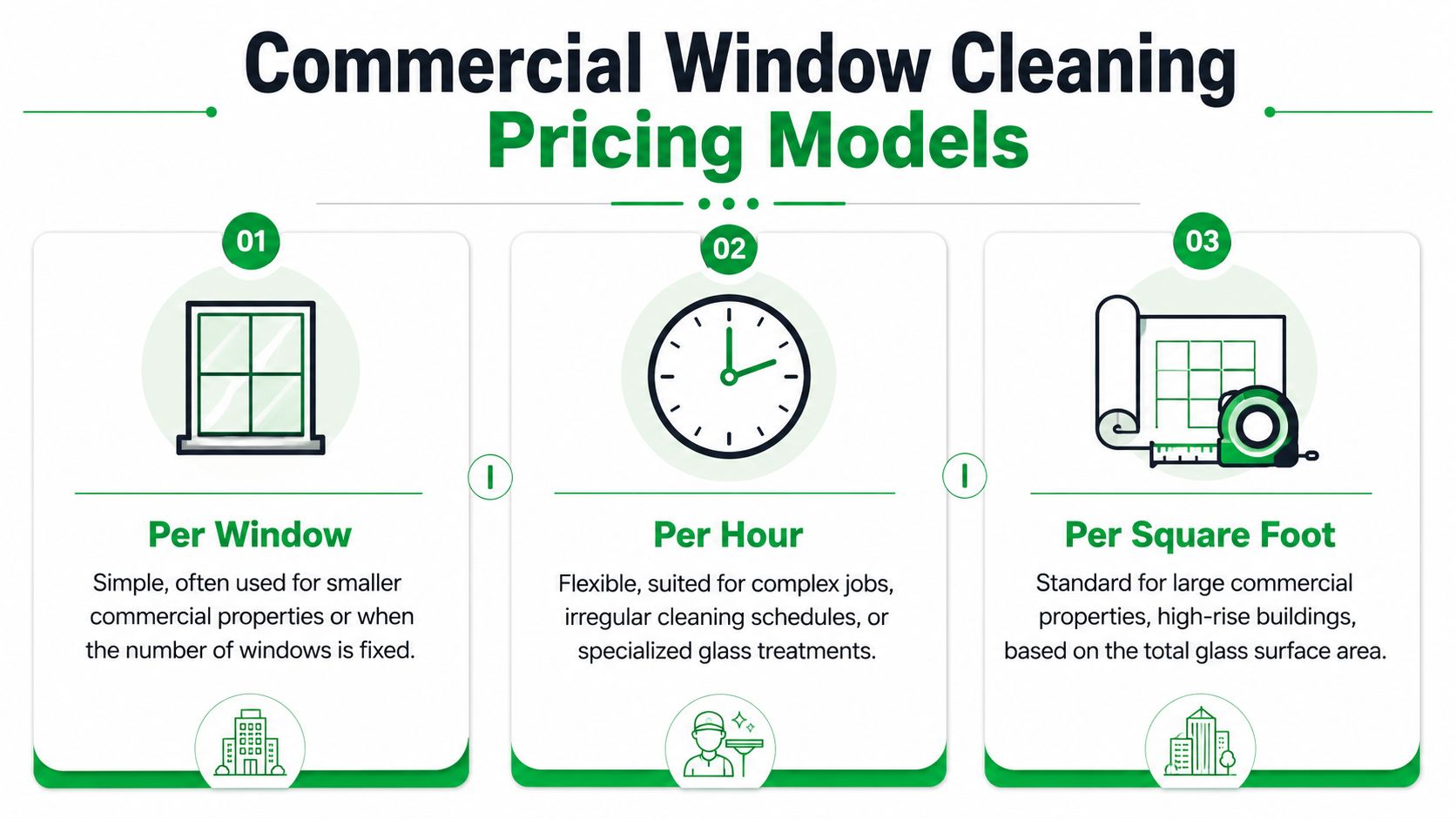
Commercial pricing usually falls into three models.
Per window pricing
Per window pricing works well on straightforward properties with consistent glass. A retail strip, bank branch, or small office building with standard panes is easy to count and easy to quote this way.
Earlier pricing references in this guide place commercial per-window rates in a common national range. The model itself is the bigger point. It works when each pane takes roughly similar time and the crew can move through the site without unusual setup.
In Northern Arizona, that simplicity can disappear fast. A storefront in Flagstaff may have front glass that is easy to service, plus side panels exposed to heavier dust, hard-water spotting, or tighter access near planters and outdoor seating. Once the windows stop being uniform, per-window pricing can understate the labor.
Hourly pricing
Hourly pricing is common when the work cannot be predicted cleanly from a pane count alone. That usually means the contractor expects setup time, access time, or detail work to drive the job more than the number of windows.
This is often the right fit for:
- Partial cleans on selected elevations
- Post-storm cleanup or heavy buildup
- Buildings with changing access conditions
- Interior glass that has to be worked around tenants, lobbies, or business hours
Facility managers sometimes dislike hourly billing because it feels less fixed. I understand that. But on the right property, hourly pricing is more honest than forcing a flat number onto a job with too many variables. If a building needs repeated ladder moves, detailed scraping, or coordination around customer traffic, time is the primary cost driver.
Per square foot or flat-rate project pricing
Larger commercial properties are often priced by square footage of glass or by a flat project rate. That approach fits buildings where the windows vary in size, the elevations are not simple to count, or access planning matters as much as the cleaning itself.
A hotel, dealership, medical campus, or multi-story office building usually lands here. So does any property that may require lift work, rope access planning, or a specialized crew. For that kind of job, a contractor may combine measured glass, site logistics, and equipment costs into one project number instead of trying to force everything into a per-window formula. Properties that need high-rise window cleaning services are a good example.
The pricing model should match the building. A one-story storefront in Sedona or Flagstaff should not be quoted the same way as a multi-level property with difficult access, winter weather exposure, and glass above pedestrian areas.
That is how professional estimators price jobs. They choose the method that best reflects labor, risk, equipment, and the conditions on site.
What Really Determines Your Window Cleaning Price
A facility manager in Flagstaff might compare two buildings with similar glass counts and wonder why one quote comes in much higher. The difference usually has nothing to do with guesswork. It comes down to access, risk, site logistics, and how much labor it takes to clean the glass safely without disrupting the property.

Height and access change the labor
Ground-level storefront glass is usually fast to service. A two-story office with deep setbacks, landscaping, awnings, or glass above walkways is slower. A taller property with limited staging space can take much longer even if the glass itself is not especially dirty.
That is because height changes the whole job. Crews spend more time setting ladders, controlling the work area, protecting pedestrians, and reaching glass safely. On upper elevations, the cleaning itself can be the quick part. Getting to the glass correctly is often what drives the price.
In Northern Arizona, weather affects access too. Wind in Flagstaff can shut down lift work or change the order of the job. Snow, ice, and cold mornings also affect safe setup on concrete, loading zones, and sloped entries.
Equipment affects cost before the first pane is cleaned
If a property can be cleaned from the ground with extension poles or a pure-water system, the quote usually stays more predictable. Once a job requires ladders, scissor lifts, boom lifts, or interior atrium equipment, the cost goes up for practical reasons.
Equipment changes all of the following:
- Setup and breakdown time
- Crew size and safety oversight
- Training requirements for high-access work
- Insurance exposure
- Production speed on buildings with difficult reach
Companies that own and maintain their equipment can usually schedule these projects with fewer surprises. If access equipment has to be rented for a specific day, the quote has to cover delivery windows, rental minimums, and the risk of weather delays.
Glass type and condition change production speed
A large showroom pane in good condition cleans quickly. Small divided panes do not. Neither do windows with adhesive residue, mineral buildup, oxidized frames, or years of neglected detailing around the edges.
Inexpensive quotes often fall apart at this point.
One contractor may be pricing a basic wipe-down of accessible glass. Another may be pricing the actual work required to leave the windows presentable, including frame detailing, screen handling, and extra time for first-time restoration work. Those are two very different scopes, even if the proposal headline says "window cleaning."
Screens are another common miss. On many commercial properties, dirty screens and dusty tracks make clean glass look unfinished. If screen removal, cleaning, and reinstallation are included, labor goes up, but the result looks complete.
A closer look at high-access methods helps show what goes into that work.
Scheduling and Northern Arizona logistics affect the quote
Frequency matters, but not for cosmetic reasons. A storefront cleaned on a regular route usually takes less time per visit than a property that waits until pollen, dust, hard water spots, and runoff have built up across the glass. First cleans and infrequent service almost always require more labor.
Location also matters in this market. Downtown Flagstaff has different constraints than an office park on the edge of town, a school campus with limited service hours, or a commercial site in Sedona with tight parking and heavy visitor traffic. Travel time, staging, weather windows, and coordination with your staff all affect how efficiently a crew can work.
For taller buildings and more complex access conditions, contractors experienced with high-rise window cleaning services usually price the work more accurately because they already understand the equipment, safety planning, and crew time the site requires.
Estimated Window Cleaning Costs for Flagstaff Businesses
A Flagstaff facility manager usually starts with one practical question. What should this cost before I spend time walking the property with a contractor?
The honest answer is a range, not a menu price. Commercial window cleaning is priced by scope and access. A ground-level storefront on a regular route may be budgeted very differently from a hotel with courtyard glass, wind exposure, and windows that require ladder or lift work. In Northern Arizona, pollen, dust, snow runoff, and mineral staining also change how much labor a crew needs to get the glass properly clean.
Earlier in this guide, we noted common national pricing approaches such as per-window, hourly, and project-based quoting. For Flagstaff businesses, those numbers are only a starting point. Local conditions matter more than national averages once you look at an actual site.
Sample budgeting table for common property types
| Business Type | Typical Scope | Estimated Price Range |
|---|---|---|
| Downtown storefront | Ground-level exterior glass, entry doors, possible interior glass | Usually at the low end of commercial pricing if access is simple and service is recurring |
| Two-story office building | Mixed-access glass, ladder or pole work, interior and exterior cleaning | Typically higher than storefront work because setup, ladder moves, and labor time increase |
| Car dealership or showroom | Large panes, showroom glass, customer-facing entrances, recurring service needs | Often quoted as a custom recurring service plan because pane size and appearance standards matter more than simple window count |
| Hotel, medical building, or large facility | Multi-area glass, variable access, scheduling around operations, possible lift work | Commonly priced as a site-specific project based on access method, crew size, and coordination needs |
These ranges stay broad for a reason. Two buildings with the same number of panes can price very differently.
I see this often with storefronts versus multi-use commercial buildings. A storefront on Route 66 may have fewer windows but take longer because of tight pedestrian traffic, parked vehicles, signage, and interior glass that has to be cleaned around customers. A larger office building may have more glass overall but better access, wider setbacks, and cleaner workflow for the crew. The labor follows the conditions, not just the count.
For taller or more complex properties, the quote usually shifts away from simple per-window math and toward production time, equipment, and risk control. That is especially true for commercial building window cleaning on hotels, medical offices, and multi-story facilities where water-fed poles, ladders, roof access planning, or lifts may be part of the job.
How to use these estimates without getting misled
Use sample pricing to pressure-test the quote, not to approve it.
A very low bid often means something has been left out. Interior glass may be excluded. Screens, tracks, or hard water removal may not be included. The contractor may also be assuming easy access when the site requires more setup, more safety planning, and more crew time.
When comparing bids, check the scope line by line:
- Glass included, exterior only or both sides
- Access method, ground work, ladders, poles, or lift service
- Condition of the glass, routine soil versus mineral buildup or construction debris
- Work around your operation, such as early hours, guest traffic, or restricted areas
That gives you a real budgeting tool for Flagstaff conditions instead of a number that falls apart once the crew gets on site.
How to Get an Accurate Quote and Reduce Your Costs
The fastest way to get a bad quote is to give incomplete information. The fastest way to get a useful one is to describe the building the way a crew will experience it on service day.
Start with the practical basics. Note whether you want exterior only or inside and outside. Mention any windows above awnings, over stairwells, behind shrubs, or in interior atriums. If there are screens, say so. If the property has post-construction dust, adhesive, or mineral buildup, say that too.
What helps a contractor quote correctly
A solid request usually includes a few simple details:
- Property type and layout so the contractor knows whether it's a storefront, office, hotel, campus building, or mixed-use site
- Access notes including locked areas, roof access limits, courtyard glass, or loading-zone restrictions
- Service timing such as early morning work, weekend access, or the need to avoid peak customer hours
Photos help. A site visit helps more when the building is large or unusual.
How businesses usually lower long-term cost
The cheapest approach is rarely the lowest one-time bid. It is usually a maintenance plan that keeps the work predictable. When glass is cleaned on a recurring schedule, crews spend less time recovering neglected surfaces and more time doing straightforward production work.
There are also operational savings in consistency. Your staff doesn't have to chase vendors, explain the building again, or deal with avoidable scope disputes each visit. A provider handling commercial building window cleaning can usually quote more accurately when the property stays on a repeat schedule and the scope remains stable.
One more point gets overlooked all the time. Window service isn't just glass service. When screens are removed, cleaned, and reinstalled as part of the job, the building presents better and the whole system works better. That kind of complete service protects the appearance you're paying for.
The Pine Country Difference for Northern Arizona Businesses
Northern Arizona buildings need a contractor that understands the region, not just the mechanics of a squeegee. Flagstaff weather, elevation, wind, seasonal debris, and mixed commercial architecture all affect how a job should be planned and staffed.
That local knowledge matters most on properties that don't fit a simple checklist. Hotels, medical facilities, campuses, dealerships, and taller buildings require more than clean glass technique. They require scheduling discipline, safe access planning, and crews who know how to work around active businesses without creating disruption.
What that looks like on a real commercial job
Since 1999, Pine Country Window Cleaning has built its commercial work around professional methods and full-site care. That means using squeegees, ladders, poles, and pure-water brushes, not shortcut methods that leave inconsistent results on large commercial glass. It also means treating the property carefully while handling the details that owners and facility managers notice, including screens.
The difference isn't one single feature. It's the combination of local experience, specialized equipment, OSHA safety training, and a service process built for Northern Arizona properties. A company that already understands the building types, weather patterns, and logistical quirks in this region can usually spot pricing issues before they become billing issues.
Clean windows matter. Predictable service, careful crews, and clear scope matter just as much.
For a facility manager, that's what a good vendor relationship should deliver. Not mystery pricing. Not avoidable callbacks. Just a quote that reflects the actual job and a crew that knows how to execute it.
Flagstaff Commercial Window Cleaning FAQs
Do you handle properties outside central Flagstaff
Yes, commercial service in Northern Arizona often includes businesses beyond the immediate downtown core. The key issue is access, routing, and scheduling efficiency, not whether the address is a few minutes farther out. If your property is in an outlying area such as Munds Park or another nearby market, mention that early so the quote reflects real travel and timing.
Can commercial window cleaning include post-construction cleanup
Yes, but post-construction glass should be identified up front. Construction dust, paint specks, adhesive, and debris change the labor and tools required. That kind of work needs a different plan than routine maintenance cleaning.
Do you clean large or unusual commercial buildings
Yes. Larger properties often need custom pricing because the work doesn't fit a simple per-window count. Hotels, medical buildings, campuses, dealerships, and buildings with atrium or lift-access glass are usually quoted as site-specific projects.
Are screens included on commercial jobs
If the building has removable screens, they should be discussed as part of scope. A complete service includes removing screens, cleaning them, and reinstalling them correctly, rather than treating them as an afterthought.
What should I have ready before requesting a quote
Have the property address, a rough description of the building type, whether you want exterior only or both sides, and any known access issues. Photos are helpful. A clear list of problem areas is even better because it reduces assumptions on both sides.
If you want a clear, site-specific quote for your business, contact Pine Country Window Cleaning. We serve Northern Arizona commercial properties with professional equipment, careful crews, and straightforward pricing that reflects the work required.