If you live in Flagstaff, Munds Park, Forest Highlands, or Pine Canyon, you already know what clean glass is up against here. Winter leaves behind grime and hard water spots. Spring brings pollen. Summer monsoons kick dust onto everything. Then the high-altitude sun lights up every streak you thought you could ignore.
That’s why hiring an aaa cleaning service in Northern Arizona shouldn’t be treated like hiring a random handyman. Cabins, custom homes, storefronts, hotels, and taller buildings all need different tools, different safety practices, and a crew that respects the property while they work.
Finding a Trusted Cleaning Partner in Northern Arizona
A common local scenario goes like this. Snow finally melts, the views come back, and then you notice the windows are wearing a whole season of debris. On a cabin in the pines, that often means screen buildup, pollen packed in the corners, and tracks full of dust. On a larger home, it can mean upper glass that is not safe to reach with a basic ladder.
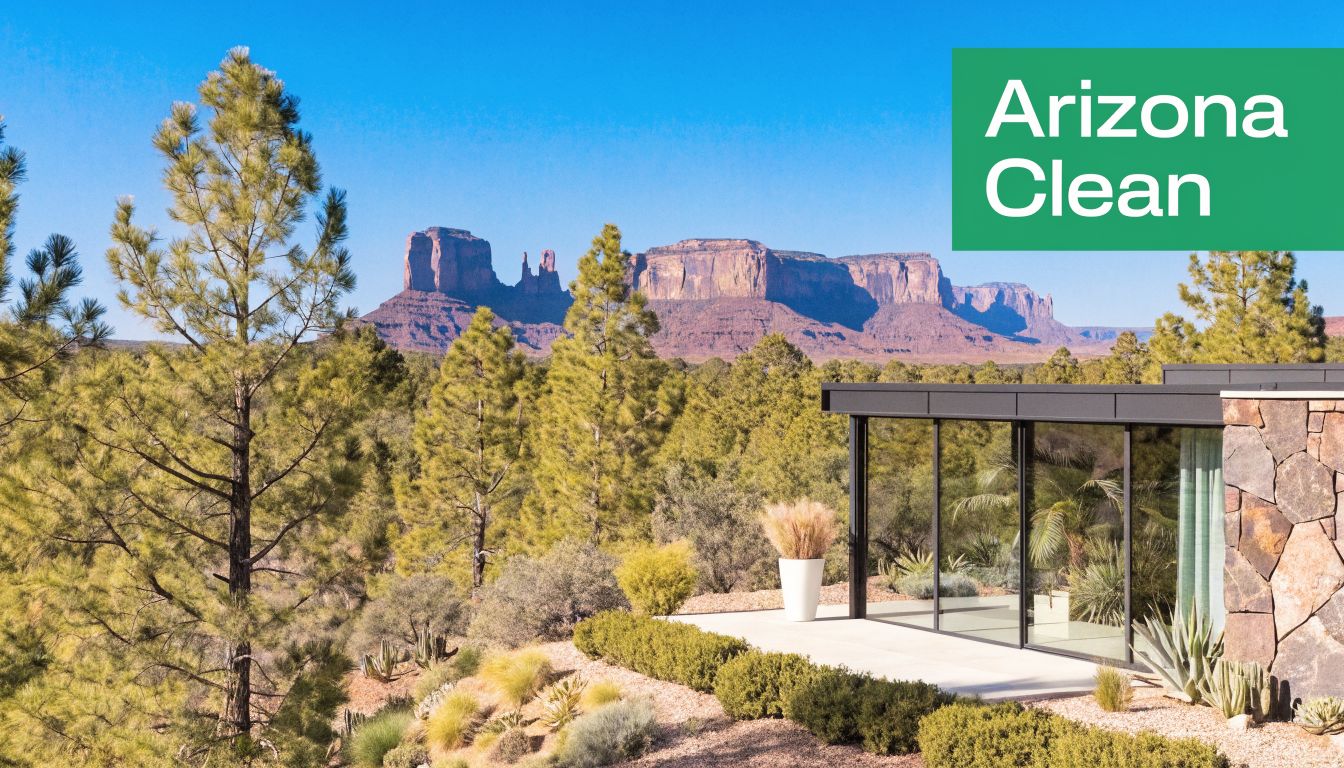
The cleaning industry is huge. The US janitorial services market is a $117 billion industry, which makes it even more important to sort professional specialists from the many general providers out there when you’re trusting someone with your home or building (industry size and revenue overview). Size doesn’t equal quality. In a market this big, the gap between a polished website and a capable field crew can be wide.
Local conditions change the standard
Northern Arizona isn’t a copy-and-paste market. A stucco home in town, a steep-roof cabin in Munds Park, and a multi-story commercial property all create different access issues. The work has to account for pine needles, snow runoff, mineral residue, windblown dust, and delicate landscaping around the home.
That’s why a real local provider pays attention to details before the work starts:
- Access planning matters because uneven ground, decks, and tall gables affect how technicians move safely.
- Screen care matters because dusty screens can make freshly cleaned glass look dirty again.
- Seasonal timing matters because cleaning right before pollen hits or right after a storm can change the result.
Practical rule: If a company talks only about price and never about your property type, access, or local conditions, keep looking.
A good first step is to compare providers that already handle the mix of work common in this area, from homes to commercial jobs, through a dedicated Flagstaff cleaning services page. You’re looking for signs of specialization, not just availability.
Experience shows up in the little things
A company that has worked here for decades usually sounds different. They know why a second-story window above a metal roof needs a different plan. They know screens need to be removed, cleaned, and reinstalled carefully. They know homeowners care just as much about protecting floors, trim, and landscaping as they do about streak-free glass.
That kind of judgment doesn’t come from national marketing copy. It comes from years of local work and a crew that understands Northern Arizona property care firsthand.
What Professional Cleaning Really Looks Like
Professional window cleaning starts with one simple fact. Rags, paper towels, and off-the-shelf spray bottles are not professional methods. They smear dirt around, leave lint behind, and often make sunlit glass look worse an hour later.
The standard tools are different. Professionals use squeegees, scrubbers, extension poles, ladders set correctly, and pure-water brushes when the glass and access call for them. Those tools produce a more uniform finish, especially on larger panes and higher exterior glass.
The method should match the window
Not every pane gets cleaned the same way. Interior glass often calls for close-detail hand work with a squeegee and careful edge finishing. Higher exterior windows may be better handled with a pure-water pole system that lets the technician clean safely from the ground. French panes, storm windows, skylights, and post-construction glass each need their own approach.
What doesn’t work is a one-method-fits-all crew.
- Squeegee work is the standard for clean detailing and controlled water use on most glass.
- Pure-water brushing helps on difficult exterior access and taller elevations where working from the ground is safer and more efficient.
- Proper poles and ladders let the crew reach awkward spots without leaning dangerously or dragging equipment across landscaping.
Good cleaners don’t just clean the glass. They manage water, protect surfaces, and leave the area looking untouched except for the result.
Care for the home is part of the job
A lot of homeowners judge the company before they ever judge the glass. That’s fair. If technicians bang ladders into siding, drip on wood floors, leave dirty screens leaning against stucco, or walk in without protecting the space, the service wasn’t professional.
Real care looks like this:
- Screens are removed carefully, not forced out.
- Screens are cleaned as part of the visit, because dirty mesh ruins the look of clean windows.
- Screens are reinstalled properly, with tabs, frames, and fit checked before the crew leaves.
- Floors, trim, and furnishings are protected when interior work is performed.
- Landscaping is respected when ladders, hoses, and poles are moved around the property.
The cleaning business is still mostly local, even though large franchise brands exist. That’s one reason it pays to hire a company with regional knowledge and a long track record in the area, rather than assuming a national brand automatically understands mountain homes, local weather, and local architecture (cleaning business market overview and local-provider context).
Northern Arizona homes often need more than glass cleaning
A serious exterior cleaning company usually handles related work that homeowners need in this climate. Gutters collect pine needles. Downspouts need to flow. Siding, patios, entryways, and driveways hold onto dust and seasonal buildup.
That doesn’t mean every company should do every service. It does mean the best crews understand how those needs connect.
If you manage customer service for a home service business, a useful outside reference is this guide to client communication best practices. Homeowners notice the same things every time. Clear arrival windows, updates when weather shifts the schedule, and fast follow-up after questions. Those habits separate organized crews from chaotic ones.
Essential Questions to Vet Your Cleaning Service
Most bad hires could’ve been avoided with better questions. Homeowners often ask, “How much?” first. A better first question is, “How do you operate?”

Commercial buyers are selective for the same reason. A 2024 survey found that only 8% of facility managers outsource all cleaning, which shows how carefully buyers choose trusted specialists for the work that matters most. That same cautious mindset makes sense for homeowners and property managers hiring an aaa cleaning service.
Ask about protection before performance
Before you talk about shine, ask about risk. The first layer of professionalism is whether the company protects you, your property, and the people doing the work.
Use questions like these:
- Are you fully insured and bonded? If something goes wrong on the property, you want clarity before the job starts.
- Are technicians background-checked? That matters when crews are working around homes, vacation properties, and occupied buildings.
- Are technicians OSHA safety-trained? If ladders, roofs, or elevated access are involved, this is not optional.
- Who is actually doing the work? Some companies sell the job well and then send whoever is available.
If a company gets vague when you ask about insurance, training, or who will be on site, assume the problem gets worse after you hire them.
Ask how they protect your property
A polished estimate means very little if the process on site is sloppy. Ask what the crew does around flooring, landscaping, furniture, screens, and entry points.
A strong answer should cover things such as:
| Question | What a solid answer sounds like |
|---|---|
| How do you protect interior areas | Shoe covers, towels or drop cloths, controlled water use |
| What happens with screens | Remove, clean, inspect, and reinstall |
| How do you avoid damage outside | Proper ladder placement, controlled hose routing, attention around plants and trim |
| What if I’m not satisfied | Clear re-clean or satisfaction policy |
Memberships and local credibility also tell you something. If a company participates in groups like the Flagstaff Chamber of Commerce or follows recognized industry standards through organizations such as the IWCA, that’s a positive sign. It doesn’t replace due diligence, but it does show they’re operating as a real business, not just chasing quick jobs.
Later in your screening, it can help to see what goes into how a professional cleaning business is established. Even though it’s written from the business side, it gives homeowners a useful sense of what trained operators, proper systems, and equipment investment look like.
A quick example of safe access and field technique is worth watching before you make a decision:
Ask what they don’t do
This is one of the best filters. Skilled contractors know their boundaries. They’ll tell you when a roof is too steep, when mineral staining needs restoration rather than routine cleaning, or when access requires specialized equipment instead of improvisation.
That honesty is valuable. The companies that promise every job with no caveats are often the ones taking shortcuts once they arrive.
Decoding Estimates and Spotting Red Flags
A professional estimate should tell you more than the final number. It should show that the company looked at the property, understood the access, and priced the work based on actual conditions.
For window cleaning, price usually changes with the number of panes, size of glass, screen count, level of buildup, ladder work, and access difficulty. For gutter cleaning, roofline complexity and debris load matter. For pressure washing, surface type, soil level, water control, and surrounding landscaping all affect the work.
What should be included
An estimate doesn’t need to be complicated, but it should be specific enough that both sides know what’s included.
Look for these details:
- Scope of work such as interior glass, exterior glass, screens, tracks, gutters, or pressure washing areas
- Access notes including upper-story work, steep terrain, limited gate access, or furniture that needs moving
- Scheduling terms so you know whether weather may affect timing
- Payment clarity with no surprise add-ons after the crew arrives
If the company offers digital scheduling, confirmations, and online estimate requests, that’s usually a good sign of organization. About 62% of service bookings now happen through mobile and online platforms, so an easy digital process is part of what customers reasonably expect from a modern service business.
The cheapest quote often hides the most risk
A very low bid can mean corners are about to be cut. Maybe screens won’t be cleaned. Maybe upper windows won’t be detailed properly. Maybe the company is pricing blind over the phone and planning to renegotiate on site. Maybe they don’t carry the right equipment and intend to “figure it out” when they arrive.
Here are common red flags:
- Phone-only pricing with no property review on a complex home or building
- Large cash deposits requested upfront for routine cleaning work
- Vague wording such as “windows cleaned” with no mention of screens or scope
- No written confirmation of what the crew will do
- Wildly lower pricing than every other estimate you received
Field note: A careful estimator asks questions that save time later. A careless one gives you a fast number and creates problems on the service day.
Documentation matters too. If you want to know what a basic proof-of-service format looks like, this cleaning service receipt template is a simple reference. You’re not looking for fancy paperwork. You’re looking for records that are clear, readable, and consistent.
The Right Equipment for Mountain Homes and High-Rises
Northern Arizona properties expose weak equipment fast. A basic extension ladder might be fine for a small section of glass on flat ground. It is not the answer for every A-frame cabin, every tall foyer window, or every commercial building with awkward setbacks.
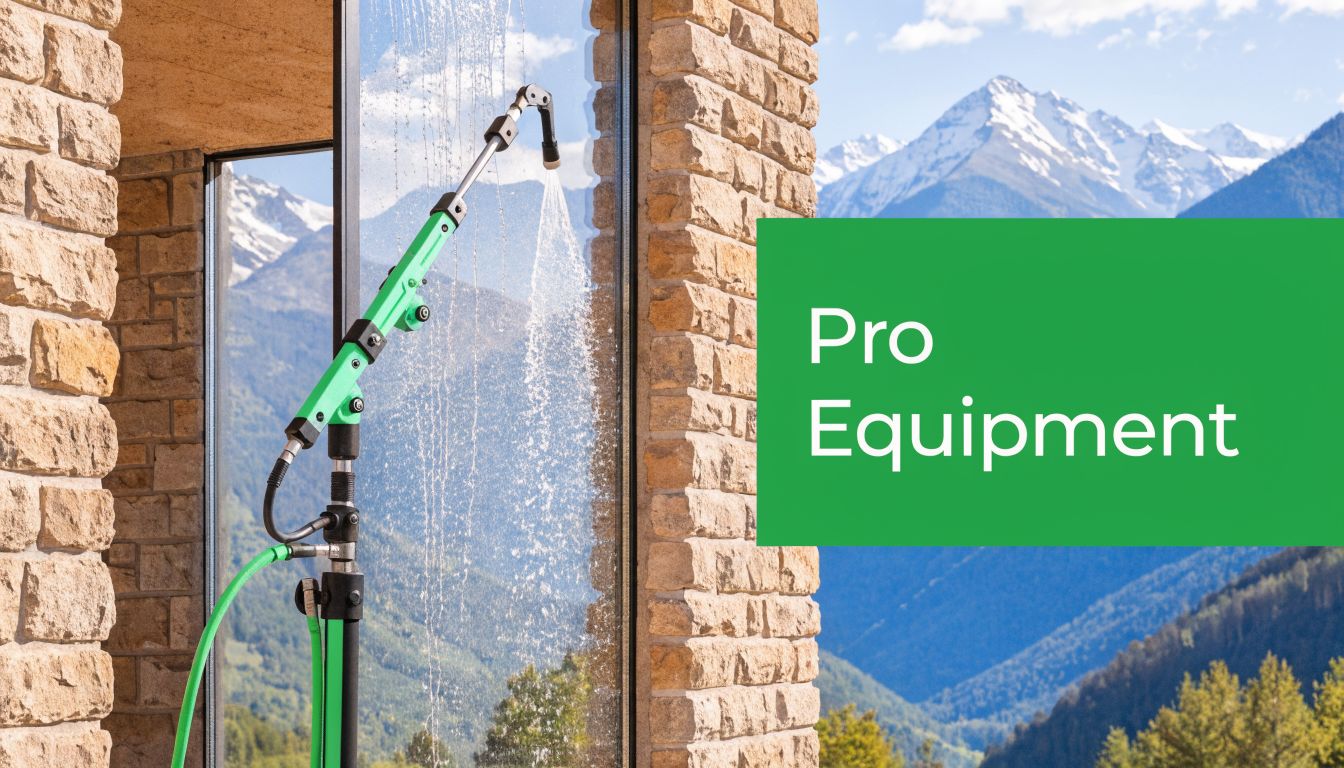
High-rise and specialty window work requires rigorous safety protocols, and OSHA-trained technicians with equipment such as boom lifts are a meaningful differentiator among the many janitorial businesses in the market. That matters when you’re hiring for anything beyond standard ground-level work.
Different properties need different access
Consider the range of buildings in this region:
- Cabins in wooded communities often have steep rooflines, decks, and tight exterior access.
- Custom homes may have large fixed panes above stairwells or entry atriums.
- Hotels, campuses, and commercial buildings can involve height, traffic management, and longer runs of glass.
- Storefronts and dealerships need efficient maintenance with minimal disruption to customers.
The right equipment follows the building, not the other way around.
What capable crews use
A serious provider invests in tools that solve access and safety problems cleanly.
| Property challenge | Equipment that often makes sense |
|---|---|
| High exterior glass reachable from grade | Water-fed poles with pure-water brushes |
| Narrow or awkward side access | Specialized ladders and pole systems |
| Large commercial facades | Scissor lifts or boom lifts |
| Tall interior atriums and entry glass | Atrium lift or comparable indoor access equipment |
That equipment isn’t just about reach. It changes quality and safety. A crew using the right lift can position correctly, work more carefully, and avoid the risky stretching and overreaching that lead to damage or injury.
On mountain properties, the best equipment often prevents the need for a risky shortcut.
If you’re comparing providers for upper-story work, this guide on cleaning high windows safely and effectively gives a useful look at why access strategy matters so much.
Equipment ownership matters
One more thing to ask. Does the company own and operate the equipment they rely on, or are they scrambling to rent something after the job is booked?
Owned equipment usually means better scheduling control, more consistent technician familiarity, and fewer last-minute surprises. That matters on larger projects and on homes where safe access has to be planned carefully from the start.
Your Printable Hiring Checklist
When homeowners feel stuck choosing an aaa cleaning service, it’s usually because every company sounds good on the phone. The checklist below helps you compare what actually matters once the crew shows up.
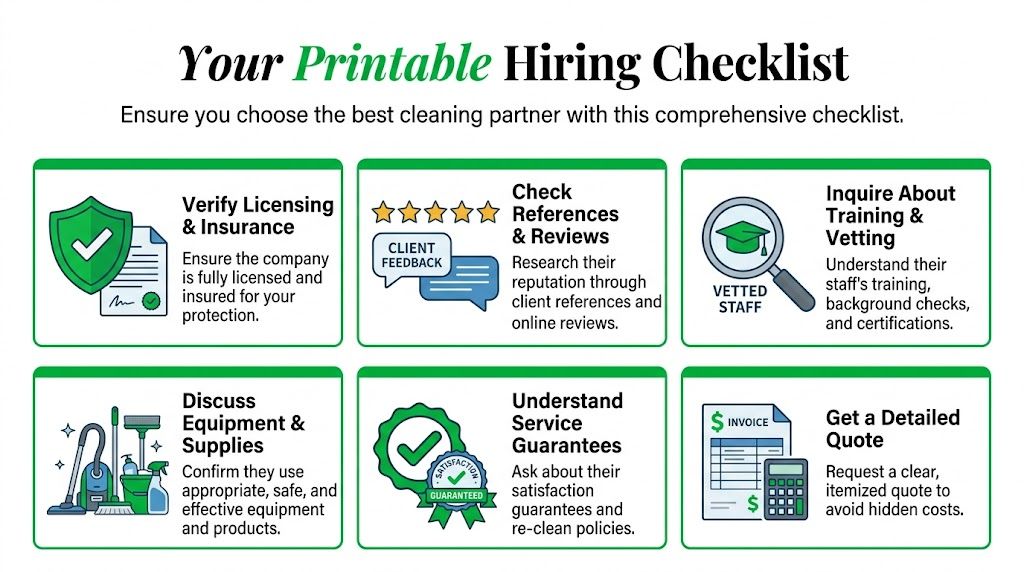
Keep this simple. Print it, save it, or run through it during estimate calls.
Hiring checklist for your Northern Arizona cleaning service
| Category | Check Point | Notes |
|---|---|---|
| Company Vetting | Confirmed the business is established locally | Ask how long they’ve served Northern Arizona and what property types they handle |
| Company Vetting | Read recent reviews carefully | Look for comments about reliability, communication, and respect for the home |
| Safety and Insurance | Verified insurance and bonding | Don’t rely on vague verbal assurances |
| Safety and Insurance | Asked whether technicians are background-checked and OSHA-trained | Especially important for occupied homes and elevated work |
| Equipment | Confirmed they use professional tools | Squeegees, poles, ladders, pure-water brushes, and proper access equipment where needed |
| Equipment | Asked how they handle high or difficult windows | The answer should be specific to your property |
| Service Details | Confirmed screens are removed, cleaned, and reinstalled | This makes a visible difference in the final result |
| Service Details | Asked how floors, furniture, trim, and landscaping are protected | A careful process matters as much as the glass itself |
| Estimate | Requested a written scope | Make sure interior, exterior, screens, and any extras are spelled out |
| Estimate | Reviewed access notes and scheduling expectations | Important for weather, gates, pets, and second homes |
| Communication | Checked whether scheduling and follow-up are organized | Clear confirmations reduce service-day problems |
| Satisfaction | Asked what happens if something is missed | A professional company should have a straightforward answer |
Use the checklist differently for different properties
A full-time residence and a short-term rental don’t have the same pressure points. Vacation homes often need access coordination. Rentals need tighter timing and cleaner communication between service dates. Commercial properties need safety planning and less disruption during business hours.
For rental and turnover planning, this short-term rental cleaning checklist is a practical companion. It helps owners and managers think beyond the glass and coordinate cleaning with the rest of the property workflow.
Here’s a fast final screen you can use when comparing bids:
- Choose the company that asks smart questions. That usually means they’re planning the work instead of winging it.
- Choose the company that explains its process clearly. Strong operators don’t hide behind vague language.
- Choose the company that respects the property in the details. Screens, tracks, landscaping, entry protection, and communication all count.
- Choose the company with equipment that fits the job. If your home or building needs specialty access, that cannot be improvised safely.
- Choose value, not just the lowest price. A lower bid can cost more when the result is incomplete or careless.
The right hire leaves you with clean glass, intact screens, no surprises, and no mess to fix after they leave.
If you want a no-pressure estimate from a local team that’s served Northern Arizona since 1999, Pine Country Window Cleaning is a strong place to start. They handle homes, cabins, storefronts, hotels, campus facilities, and high-access projects with professional equipment, OSHA-trained technicians, and the kind of customer care that matters in occupied homes and busy properties.