
You can stand on the porch after a windy week in Flagstaff and see it right away, the glass has a dull film, the siding looks tired, and the screens are carrying more dust than the windows ever should. That's the point where most homeowners stop thinking about a quick rinse and start thinking about a real exterior house cleaning visit, because the outside of the home is telling you it needs more than a cosmetic touch-up.
A careful service changes how the whole property looks, but it also changes how well the surfaces hold up. On older homes, that matters even more, since the U.S. Census Bureau reported that the median age of all owner-occupied homes reached 41 years in 2021 and that homes built before 1950 made up about 17% of the total, with owners of older homes spending a median of $1,800 per year on upkeep and $4,100 on all improvement work between 2019 and 2021, while about 27% reported exterior improvements during that period (U.S. Census Bureau). In a place like Northern Arizona, that kind of maintenance mindset isn't a luxury, it's part of owning the property well.
What Exterior House Cleaning Actually Covers
A homeowner usually notices the windows first. Then the eye catches the siding, the gutters, the deck boards, and the patio edges where grime collects after wind and weather push everything into seams and corners. A real exterior house cleaning visit doesn't treat those surfaces as one job. It treats them as related jobs that need different tools, pressure levels, and sequencing.
The home's outside has multiple jobs going on at once
The glass needs streak-free cleaning. The screens need to come off, get washed, and go back on clean, not dusted in place. Siding needs the right wash method so dirt comes off without forcing water where it doesn't belong. Gutters and downspouts need attention because they control where water goes, and decks and patios need cleaning that respects the material underfoot.
A good exterior cleaning job isn't defined by how wet everything gets. It's defined by what gets removed, what stays protected, and whether the home looks better without getting stressed in the process.
In Flagstaff, that distinction matters because the seasons throw different debris at a house. Spring brings pine pollen, summer storms push dust against glass and trim, fall leaves settle into corners, and winter leaves residue that hangs on in shaded areas and freeze-prone spots. When a crew treats the entire exterior as one surface, they miss the details that determine the final result.
The better way to think about it is system by system. Glass, screens, siding, gutters, decks, and patios each have their own finish, their own weak points, and their own cleanup needs. That's why a thorough visit feels coordinated instead of rushed, and why the best crews don't talk about “washing the outside” like it's a single switch they flip on arrival.
Windows, Screens, and the Glass That Frames Your Home
The window service should start before the glass gets touched
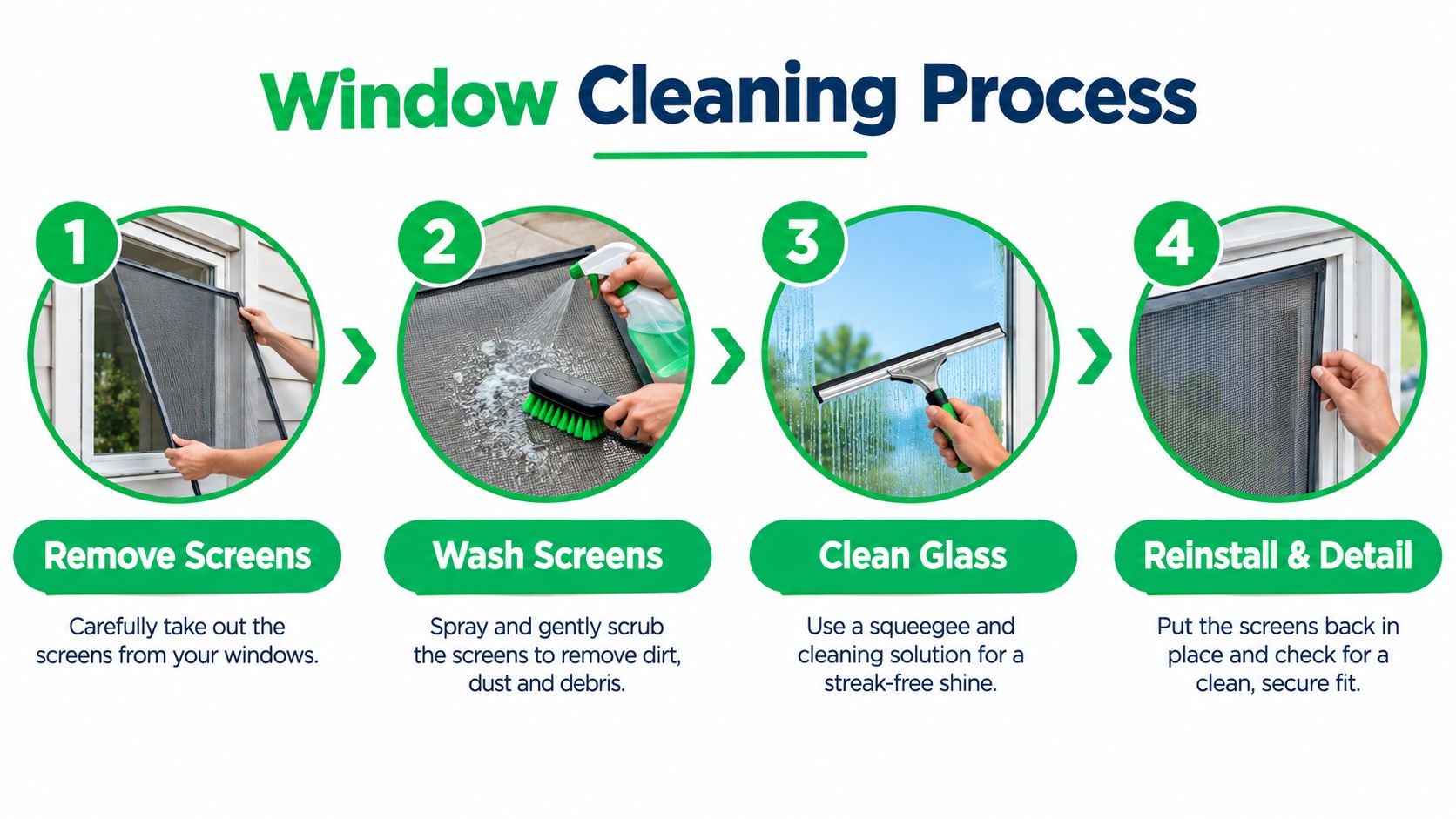
A proper window visit starts with the screens. They come out first, get washed outside, and go back in after the glass is finished. That order matters because a clean pane with a dusty screen above or beside it won't stay clean for long. Pine Country's published service descriptions say technicians remove screens, wash them thoroughly, and reinstall them as part of the service, which is exactly how that step should work in the field (screen service description).
The glass itself calls for the right access method. Professional squeegees and applicators handle the finish on reachable panes, while pure-water brushes and filtration systems let technicians clean high glass from the ground. Pine Country says its pure-water equipment can clean windows up to three stories high from the ground (pure-water equipment). On taller or awkward windows, ladders, lifts, or both come into play, depending on the site.
The details around the window matter as much as the pane
Frames, sills, and tracks collect grime too. If those areas are left dirty, the glass may look good for a day and then start looking tired again as dust moves back onto the surface. That's why a real service includes the edges, not just the center of the pane.
Cornell University's window-washing program shows how seriously height and access have to be treated, including ladder limits and inspection requirements for safer work (Cornell window washing program). That's the level of discipline a professional job depends on, especially on homes with tall gables, difficult rooflines, or second-story glass over landscaping.
A clean window isn't just about seeing through it. It's about the full system around it, screens, sills, frames, and access methods working together so the finish lasts and the home stays protected.
Siding, Decks, Gutters, and the Surfaces Around the Glass
The rest of the exterior asks for a different kind of judgment. Siding can usually tolerate cleaning, but the material decides how much force is safe. Vinyl wants a lighter touch than concrete. Wood needs care so the grain doesn't get scarred. Stucco needs enough cleaning power to release buildup without driving moisture into the finish.
Pressure is a tool, not a default setting
That's where careless work causes damage. Too much pressure can shove water behind siding, rough up wood, or leave obvious wand marks that only show up once the surface dries. A selective approach works better, one that combines soft-wash methods, squeegee work, pure-water glass cleaning, and targeted pressure where the surface can handle it. If you want a deeper look at a house-washing approach that respects the material, check the soft-wash exterior cleaning page.
Decks and patios deserve the same restraint. A quick rinse might clear loose dirt, but a real wash gets into algae, mildew, and the grime that settles into textured surfaces and board seams. That's where the difference between “looks better” and “actually cleaned” becomes obvious underfoot.
Gutters and downspouts are part of the same job, not an afterthought. When they're clogged, water has fewer places to go, and that can affect the roofline and the foundation. Pine Country's gutter cleaning page fits naturally into that maintenance picture, because the drainage system is part of exterior care whether the homeowner sees it from the curb or not.
For fascia and soffit areas, it helps to read a separate material-specific approach, and Top Cleaners fascia advice is a useful reference point for understanding how those edges should be treated. The common thread is simple. Each surface around the glass has its own limits, and lumping them together under one method is how damage happens.
Equipment and Methods That Define a Professional Job
A professional crew does not show up with a rag, a household spray bottle, and hope. The tools tell you how the work will go. Squeegees, extension poles, pure-water systems, ladders with proper footing, and lifts for hard-to-reach façades all produce different results, and they are not interchangeable.
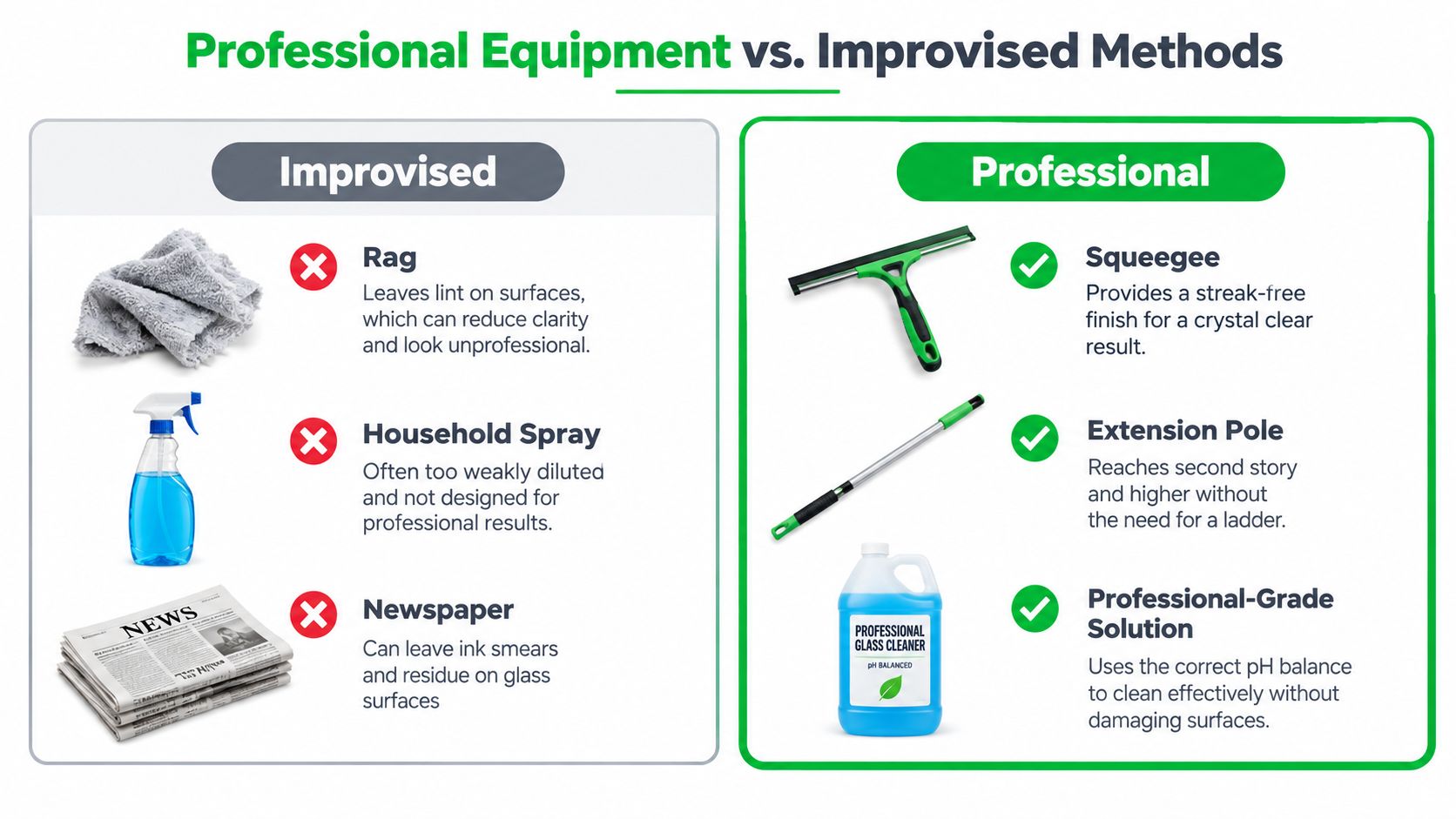
A good crew starts by reading the site. Access points get checked, drop cloths go down near entry areas, and the home gets protected before any cleaning begins. Screens, if they come out, are handled carefully. Ladders are set with attention to footing and surrounding surfaces. Pine Country says its technicians use drop cloths, towels on sills, and shoe covers to protect the home, which is the right standard for a careful visit. Its home protection practices page reflects that mindset.
A pure-water pole can do a lot from the ground, but it is not a shortcut. It is a controlled method that keeps heavy equipment off the siding when the window height allows it.
That matters in Flagstaff, where some homes have tall gables, multi-level glass, or awkward access near sloped grades. For a modest second-story pane, a pole or a properly set ladder may be the right call. For a high atrium or a very tall façade, crews need the right lift. Pine Country's in-house equipment list includes boom lifts, scissor lifts, and a 95-foot atrium lift, which shows the difference between a company that owns access tools and one that tries to improvise around them.
For broader exterior washing, the same logic applies to pressure versus soft washing. Our guide to pressure washing a house explains when the surface can tolerate it. The tool has to match the material, not the other way around.
Deck care has its own material rules, and the deck boards in Utah reference is a good reminder that board material dictates washing pressure. Some boards hold up well to a stronger rinse, while others need a gentler approach to avoid scarring or lifting the finish.
A professional job is defined by control. The right equipment gives the crew reach, but the right method gives the home a cleaner finish with less risk.
How Often to Schedule Exterior Cleaning in Northern Arizona
Flagstaff properties need a rhythm, not a one-time rescue. Spring pollen, summer dust, fall residue, and winter freeze-thaw all leave something behind, so the schedule has to follow the season instead of waiting for the house to look rough enough to notice. For most homes, a full exterior service twice a year is a practical baseline, with extra window-only visits for rental properties, high-traffic homes, or places that sit exposed to wind.
The calendar should follow the property, not just the weather
A cabin in Munds Park may need a different cadence than a year-round family house in town. Second-home owners often do better by staggering work around occupancy, so the property gets cleaned before guests arrive or after a period of vacancy when dust has had time to settle. That's especially useful for homes that sit closed up part of the year and then get used heavily all at once.
There's also a point where extra service makes sense even if the calendar says to wait. After a windstorm, before listing the property, or following nearby construction, the outside can pick up debris fast. At that point, the question isn't whether the house still “looks okay.” It's whether the buildup is starting to affect glass clarity, drainage, or surface wear.
If the windows are the first thing visitors see, don't wait until they've become the last thing you want to look at.
DIY work can help in between service visits, but it won't replace a full professional pass. A homeowner can rinse low siding or knock loose dust off a small patio. A trained crew brings access equipment, squeegee technique, screen handling, and runoff control that most DIY setups can't match. That's why a maintenance calendar wins over an occasional weekend cleanup.
DIY Versus Hiring a Local Professional
A homeowner with a hose and some time can handle light rinsing on first-floor siding or a small deck. That's fair, and it is often enough for spot cleanup between larger visits. The line gets drawn fast once the job climbs above one story, involves multiple panes, or touches gutters, screens, and access equipment.
What DIY handles well and where it starts to fall short
Here's the honest divide.
| Task | DIY Feasibility | Professional Advantage |
|---|---|---|
| Ground-level siding rinse | Good for light dust | Better control over runoff and finish |
| Small patio rinse | Reasonable | More effective on algae and buildup |
| First-floor exterior windows | Possible, but uneven | Squeegee finish and cleaner edges |
| Screens | Easy to damage | Removal, cleaning, and reinstallation as standard |
| Second-story windows | Risky | Safer reach and cleaner result |
| Gutters | Limited | Better access and drainage focus |
The most common DIY mistake is overusing pressure or choosing the wrong attachment for the surface. Water intrusion behind siding, scuffed wood, and streaked glass are all avoidable, but only if the person doing the work knows the limits of each material. Time matters too. What looks like a half-day project often turns into a full weekend once ladders, drying time, and touch-ups enter the picture.
A local pro brings habits that protect the house while the work is happening. Around Flagstaff, that means dealing with dust, windblown grit, and ladder placement on uneven ground without rushing the job. A careful window cleaner also knows how to remove screens, set them aside safely, and clean the glass without leaving slurry on sills or trim. Before you book anyone, ask specifically how they handle screens, runoff, and ladder placement.
For homeowners who want to understand the difference between light rinsing and a full exterior wash, the pressure washing a house guide is a useful place to compare methods and limits before work starts.
Screening a crew is mostly about the questions above, not about comparing websites.
The right conclusion is simple. DIY works for small touch-up jobs, while full exterior service belongs with a crew that knows where the risks start and how to work around them without cutting corners.
How a Good Crew Protects Your Home While They Work
A careful crew starts with the ground, not the glass. Around a Flagstaff home, that means watching for loose gravel, dry dust, and uneven spots before a ladder ever goes up. Good workers keep runoff headed away from planting beds and hardscapes, and they pay attention to where rinse water lands so it does not wash dirt into places that are hard to clean later.
That mindset matters on properties with slopes, narrow side yards, or delicate landscaping. A sloppy setup leaves tracks, puddles, and broken stems. A careful one works with the site, uses controlled rinsing, and checks the path before moving from one elevation to the next.
What to look for before you hire
- Runoff control: Ask how they handle rinse water near beds, walkways, and drains.
- Grounds awareness: Crews should place ladders and hoses where they will not crush plants or drag soil across stone.
- Site protection habits: Ask how they avoid leaving muddy footprints, pooled water, or debris around the foundation.
- Clear scheduling: Reliable arrival windows matter when you are coordinating pets, tenants, or a full household.
- Straight pricing: You should know what the visit includes before anyone starts work.
Those questions tell you a lot about how a crew operates. You are listening for signs that they respect the property, not just the glass. A team that talks clearly about runoff, access, and cleanup usually has a better process on site, and that shows in the final result.
Pine Country describes its technicians as background-checked and trained to understand they are guests in the customer's home, which is the right attitude for this kind of work (technician standards). That attitude shows up in how the crew moves through the property, how they protect the yard, and how they leave the space when the job is done.
The difference between two bids is often in those habits. One company cleans glass. Another protects the home while it cleans glass.
Choosing a Local Provider and What to Ask
A good exterior cleaning crew in Flagstaff earns trust before the first ladder comes off the truck. Pine pollen, monsoon dust, winter residue, and elevation all change how a job should be handled, so local experience matters. A crew that works here often knows when a dry clean is the better choice, when rinse water needs careful control, and when a ladder or lift is the safer move.

The right questions make the difference fast
Ask how long the company has been in business. Ask whether screen removal and reinstallation are part of the standard visit, not an afterthought. Ask what equipment they keep in-house, whether estimates are free, and how they handle a return visit if something is missed. Those questions show whether a crew works from a repeatable process or just talks well on the phone.
Pine Country has operated since 1999, is locally owned and operated, and serves homes, cabins, and larger commercial sites. That kind of track record matters because exterior work on windows, siding, gutters, and decks often turns on small judgment calls. A crew that understands local conditions is more likely to make the right call on access, rinsing, and cleanup.
For a structured way to approach those conversations, the 10 must-ask contractor questions are a useful guide for this kind of hire. You want to know who will arrive, what they will bring, and how they will treat the property before anyone steps inside the gate.
A careful exterior house cleaning service does more than make glass look clear. It treats windows, screens, siding, gutters, decks, and patios as one system, using the right tools and the right access methods for the job. If you are ready to set up that kind of care for your home, cabin, or rental, visit Pine Country Window Cleaning to request service and build a plan for Northern Arizona conditions.