
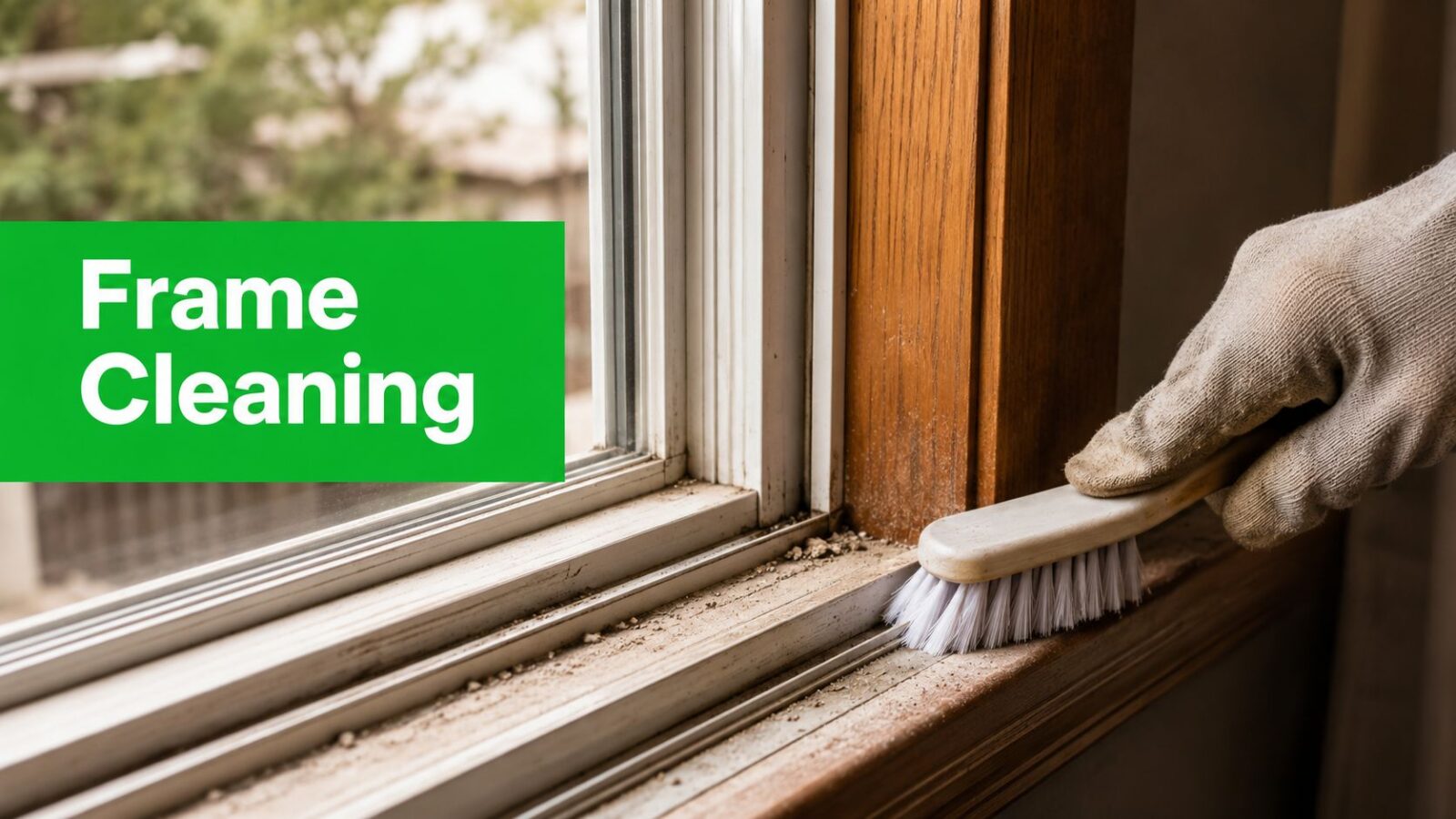
After a windy week in Flagstaff, the glass may still look clear from the street, but the frames tell a different story. Fine grit settles along the bottom rail, monsoon debris dries in the tracks, and snowmelt leaves a pale line where water pooled against the sill. That buildup isn't solved by cleaning the glass alone.
Window frame cleaning is its own job. It takes the right brush, controlled water, material-safe chemistry, and enough care to protect screens, seals, paint, flooring, and interior finishes. Pine Country Window Cleaning has served Northern Arizona since 1999, using squeegees, ladders, poles, pure-water brushes, and lift equipment rather than treating every window like a simple wipe-down.
Why Window Frame Cleaning Matters in Flagstaff
Flagstaff homes take a steady beating from dry wind, airborne dust, intense sun, summer monsoon moisture, and winter freeze-thaw conditions. Grit works into sash corners and sliding tracks, while organic debris can stay damp long enough to encourage mildew. Along the bottom rail, mineral residue remains after water evaporates, especially where snow or irrigation runoff repeatedly touches the frame.
The frame protects the moving parts around the glass. When dirt packs into a track, rollers have to push through it. When debris blocks drainage channels, water has fewer places to escape. When weatherstripping stays wet or coated with grit, it can lose its clean contact with the sash and allow drafts or moisture pathways to develop.
Practical rule: If the track feels gritty when the sash moves, the frame needs attention even if the glass looks spotless.
Glass-only service misses the working parts
A squeegee can leave the pane clear while dirt remains under the screen channel, inside the weep path, and around the seal. Those areas don't show from across the room, but they affect how the window operates and how easily a technician can identify failed caulk, cracked seals, corrosion, or damaged rollers.
Clean glass also supports daylighting. U.S. Department of Energy guidance says heat gain and loss through windows can account for up to 25 to 30 percent of a home's energy consumption, while industry information reports that dirt on glass can reduce visible light transmittance by up to 40 percent. Those figures apply to the broader window system, not just the frame, but they show why complete maintenance matters. The Department of Energy guidance and related industry data are summarized here.
Flagstaff conditions change the cleaning approach
A frame beside a shaded cabin in Munds Park won't soil exactly like a south-facing window in Pine Canyon. Dust may stay loose on one elevation and bake into a sun-exposed aluminum sill on another. A post-monsoon inspection should focus on organic material and blocked drainage, while a winter check should look for deposits and water sitting against the lower rail.
Brush loose debris away before adding water. That simple order prevents dry grit from becoming muddy paste inside the track and keeps the cleaning solution from carrying abrasive particles across the finish.
Cleaning Different Frame Materials the Right Way
Wood, vinyl, and aluminum don't respond the same way to scrubbing or chemicals. The safest approach starts with identifying the finish, checking a hidden area, and using the least aggressive method that removes the soil.
Wood deserves the most restraint. Use a pH-neutral cleaner, a soft detailing brush, and a damp microfiber sleeve. Keep water controlled, especially around joints and painted edges, then dry the frame and sill promptly. Bleach and abrasive powders can strip or roughen the finish, leaving the wood more exposed to moisture.
Vinyl handles ordinary soil well when paired with mild soap and a soft brush. Avoid bleach-heavy products, acetone, and other solvents. They can discolor, soften, or craze the surface. A plastic scraper may lift a stuck label or paint fleck, but metal blades can gouge the profile.
Aluminum often develops a chalky oxidation film rather than ordinary dirt. Start with a non-ammoniated, material-safe wash and a non-abrasive pad. Stubborn deposits may require a carefully selected mild acid product, but acid can pit or discolor a mill finish when left too long or used at the wrong strength. For a useful material-focused reference, see this guide to restore aluminium window appearance from Auckland Window and Door Services Limited.
Frame Material Cleaning Comparison
| Material | Safe Cleaners | Recommended Tools | Avoid | Call a Pro When |
|---|---|---|---|---|
| Wood | pH-neutral cleaner, controlled damp wash | Soft brush, microfiber sleeve | Bleach, abrasives, excess water | Finish is peeling, joints are swollen, or water enters the grain |
| Vinyl | Mild soap, diluted frame-safe solution | Soft brush, microfiber, plastic scraper | Acetone, strong solvents, aggressive bleach | Surface is sticky, crazed, discolored, or damaged |
| Aluminum | Non-ammoniated wash, carefully tested brightener | Soft brush, non-abrasive pad | Wire pads, harsh acid, abrasive compounds | Oxidation is widespread or the finish is pitted |
A homeowner can usually handle accessible interior vinyl with light soil. Risk rises quickly when a second-story frame requires leaning, when a finish is already failing, or when a product label doesn't clearly identify compatibility. Manufacturer warranty language may also limit unapproved chemicals, abrasive tools, or pressure washing. If removing the residue could remove the finish too, stop before escalating the chemistry.
The Professional Window Frame Cleaning Workflow
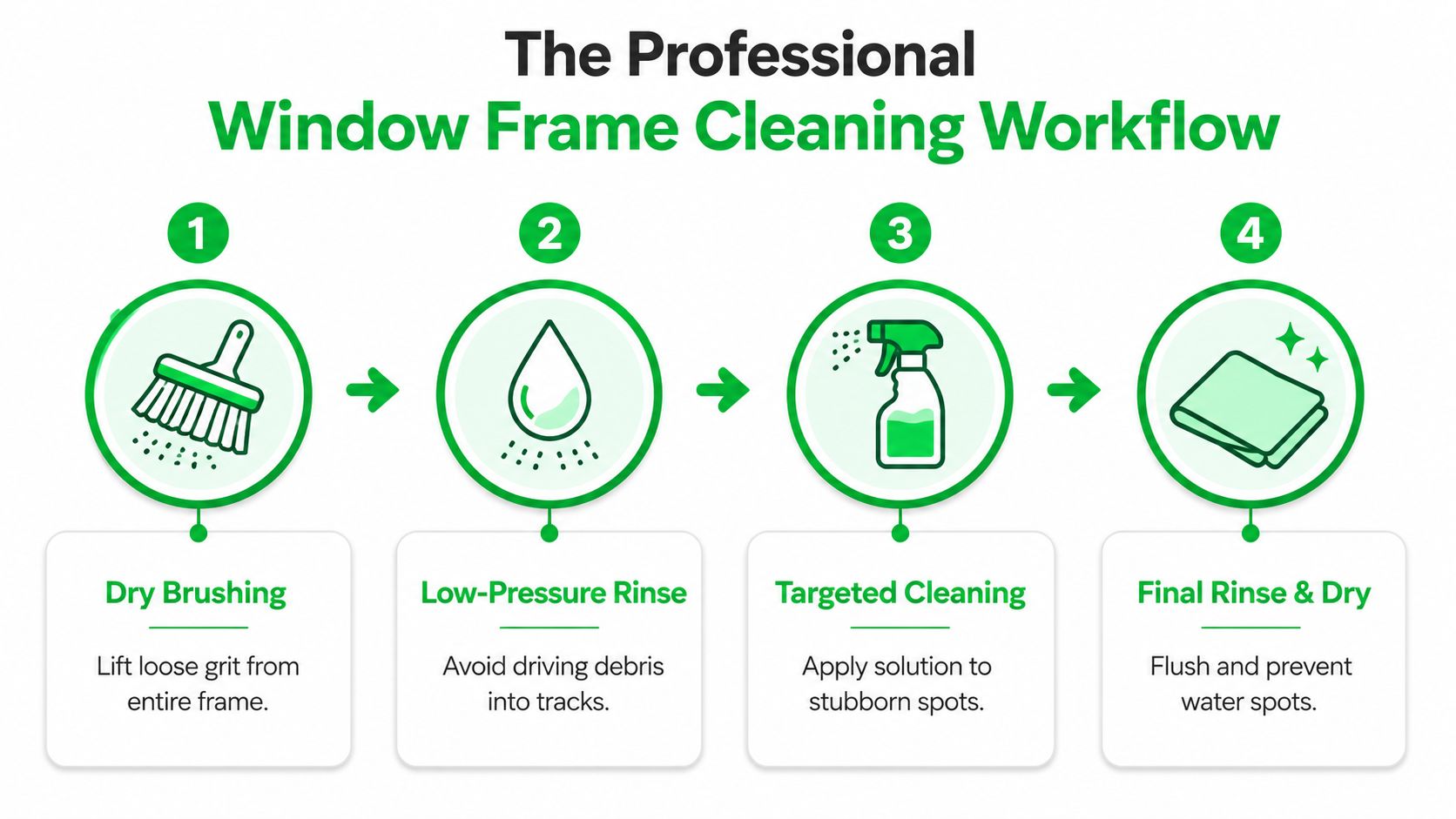
Professionals don't begin by flooding the glass. They protect the finished surfaces by working from dry soil to controlled moisture, from upper areas downward, and from cleaner sections toward dirtier tracks.
A dry brush or vacuum removes loose grit from the frame, sash edges, corners, and screen channel. This first pass matters in Flagstaff because windblown particles can be sharp enough to leave fine marks when dragged across a painted or anodized surface. After that, a low-pressure rinse loosens remaining soil without forcing it deeper into the track or behind weatherstripping.
The order prevents re-soiling
Tracks receive focused attention after the loose debris is gone. A crevice tool removes compacted material, a stiff nylon brush works the corners, and a dedicated track solution breaks down the residue. The track is then flushed and extracted rather than left with dirty water sitting at the ends.
Frame wiping depends on the material. Soft microfiber is appropriate for finished wood, a lambswool sleeve works well on many vinyl profiles, and a non-abrasive pad may be suitable for aluminum after testing. The technician keeps water away from vulnerable interior trim and watches for signs of failed caulk or a blocked weep path.
The glass comes later. Squeegee work at the end keeps drips from recontaminating the frame, while towel-drying the weatherstripping prevents moisture from wicking into corners. The final inspection includes the sill cap, track ends, screen channel, and drainage openings.
A clean frame should feel clean, not merely look clean. The sash should move without grinding, the seals should be dry, and water should have a clear exit path.
On taller homes, extension tools and water-fed poles reduce the need to work from a ladder at every opening. Water-fed systems send purified water through a brush head, and industry descriptions commonly place their working reach in the 25 to 60 foot range, depending on the setup. This overview of water-fed pole systems explains how crews clean elevated exterior glass from the ground. Actual safe height depends on the pole model. Manufacturer guidance lists different recommendations, including systems rated up to 33 feet, 52.5 feet, and 65 feet. Unger's product guidance makes clear that there isn't one universal pole limit.
Tools and Cleaners Worth Using and What to Avoid
A homeowner's tool kit should be small and deliberate. Soft-bristle detailing brushes reach corners without shredding seals, microfiber sleeves lift residue without leaving lint, and plastic putty knives can remove stuck material without the sharp edge of a metal blade. A narrow track vacuum, including a TrackMate-style attachment, helps remove dry grit before any solution is introduced.
For accessible windows, that combination is often enough for maintenance soil. Keep a pH-neutral frame soap nearby, use silicone-safe lubricant only where the window manufacturer permits it, and use soft detailing swabs around weep holes and tight corners. A basic window cleaning tools guide can help homeowners match tools to the task.
Home tools versus professional systems
A hose and sponge can rinse a frame, but ordinary water may leave mineral spotting as it dries. Professional crews use pure-water systems that remove dissolved minerals before delivery through a brush. This is especially useful on exterior frames and glass where wiping every droplet isn't practical.
Water-fed poles also improve reach and reduce ladder exposure on high windows. Longer pure-water systems can be engineered for substantial vertical work, with one technical document describing a maximum working height of 15 meters with one pole. The HighPure technical document shows why equipment selection must match the building and access conditions.
For brush selection, a purpose-built Neasden Hardware cleaning brush is the kind of narrow, soft-bristle tool that can help with jambs and profile edges. The exact brush still needs to match the frame finish and the soil.
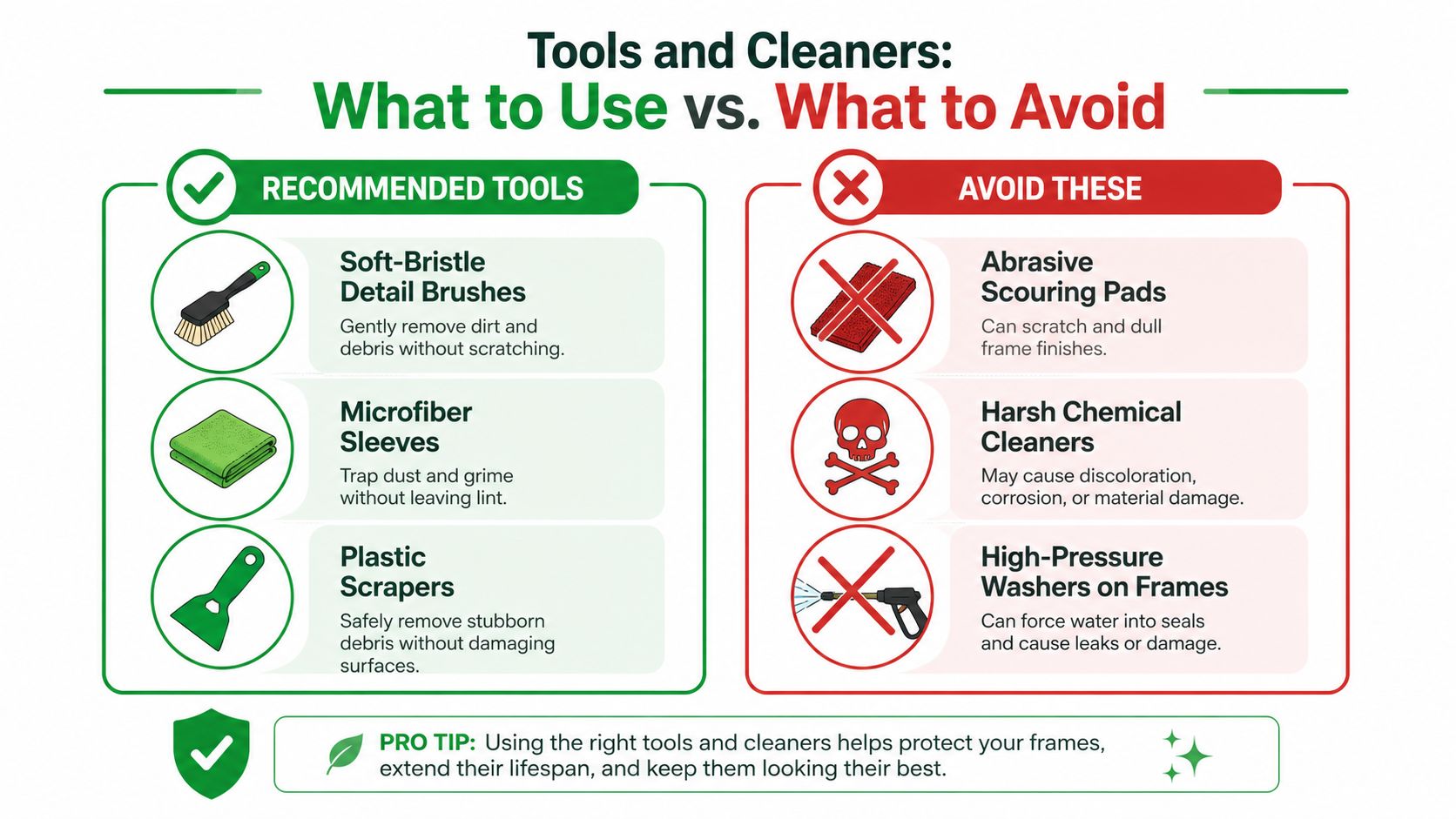
Keep abrasive scouring pads, wire brushes, magic erasers, pressure washers, ammonia-based glass cleaners, undiluted vinegar, bleach-heavy mold removers, and acetone away from uncertain surfaces. Pressure can force water behind weatherstripping, while aggressive chemistry can damage sealed wood or strip an anodized aluminum finish. If the only way to remove a mark is stronger pressure or a harsher product, professional assessment is safer than experimentation.
Troubleshooting Common Flagstaff Window Frame Problems
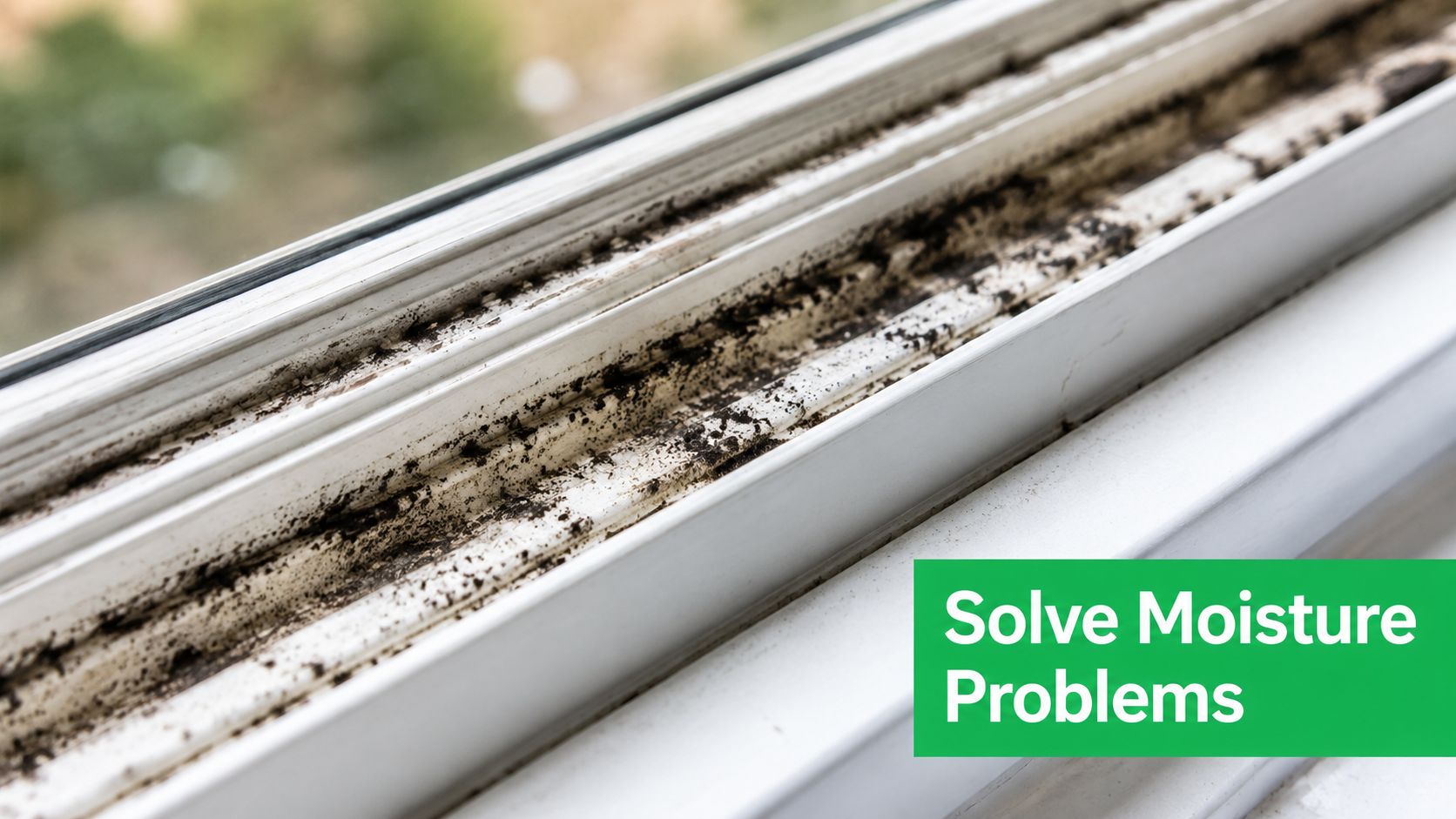
A white vinyl track can look clean from a distance while black growth sits under the sash. After a humid monsoon period, dust and organic debris may hold moisture in the channel. The practical response is to dry-brush first, remove the loosened material, apply a suitable hydrogen-peroxide-based cleaner, rinse in a controlled way, and confirm that drainage openings remain clear.
Stop and call a professional if the growth returns quickly, spreads into drywall or interior trim, or appears alongside soft wood, failed caulk, or persistent moisture. Cleaning the visible colony won't solve a water-management problem.
Aluminum deposits need patience
Sprinkler splash and snowmelt can leave chalky residue on aluminum. A non-acidic aluminum brightener and soft brush are a safer starting point than a wire pad, which can permanently mark the finish. Work a small test area, keep the solution controlled, and rinse before residue dries again.
More help with mineral buildup is available in this guide to removing hard-water stains from windows. If the streaking remains after gentle cleaning, the surface may be oxidized rather than just dirty. That distinction matters because aggressive scrubbing can remove finish without restoring the original appearance.
A different summer problem appears on vinyl frames that feel tacky or leave a sticky film under strong sun. Use a damp microfiber wipe and follow with a compatible UV-protectant dressing. Solvent-based cleaners are the wrong response because they can craze or soften vinyl.
This short video shows the kind of careful exterior access and tool control that frame work often requires:
When It Makes Sense to Call Pine Country Window Cleaning
DIY maintenance makes sense for an accessible interior frame with light dust. It becomes a different job when the opening is above a stairwell, the exterior is second story, the track has recurring mold, or the frame finish is already oxidizing. At that point, the cost of a damaged seal, scratched finish, torn screen, or fall can exceed the value of trying to save a service visit.
Pine Country Window Cleaning is a Flagstaff company founded by Flagstaff native David Kaminski and operating since 1999. The crew uses squeegees, ladders, water-fed poles, pure-water brushes, boom lifts, scissor lifts, and a 95-foot atrium lift for difficult access. Those tools let technicians match the method to the property instead of forcing a ladder onto every elevation.

What a complete visit should include
Screen handling is part of frame care. Pine Country removes screens, cleans both sides with soft-bristle brushes, rinses them, wipes the screen frames, and reinstalls them with each service. That process keeps loose grit from being pushed into the track and gives the technician a chance to notice bent frames, loose spline, torn mesh, or seating problems. Professional screen-cleaning guidance describes the same remove, brush, rinse, wipe, and reinstall sequence.
The service also includes attention to sills and frame surfaces rather than stopping at the pane. Customers can use Pine Country's Flagstaff window cleaning service for homes, cabins, commercial buildings, and other properties where height, access, or recurring maintenance makes self-service impractical.
Call when you see one of these conditions:
- Second-story exposure: You can't safely reach the exterior without leaning from a window or climbing beyond stable ladder access.
- Post-storm residue: Wind, monsoon debris, or snowmelt has packed the tracks and sills.
- Recurring biological growth: Mold or mildew returns after ordinary cleaning.
- Visible oxidation: Aluminum is chalky, streaked, or losing its finish.
- Preventive maintenance: You want frame, sill, screen, and glass care handled together on a regular schedule.
A professional visit isn't a luxury when it prevents avoidable damage. It's a way to keep the window system serviceable while protecting the home around it.
Your Year-Round Window Frame Care Plan
Flagstaff frame maintenance works better as a seasonal habit than a single exhausting cleanup. Use the local weather pattern to decide what deserves attention.
Late September is the right time for a post-monsoon deep inspection. Remove dust and organic debris from tracks, check that weep holes are open, and look for mold or residue under the lower sash. The work is easier before winter moisture and snow make the lower rails harder to access.
Before winter, inspect the bottom rails, caulk, and drainage paths. Snow load and repeated meltwater can expose failed seals or leave deposits where water sits. Keep exterior debris away from the sill so runoff can move away from the window.
Before summer, clear pollen and baked-on residue. South-facing frames deserve special attention because sun can harden deposits and make tacky vinyl residue more noticeable. A gentle rinse and dry brush can prevent a larger restoration job later.
Small commitments keep the buildup manageable
- Monthly: Lightly brush or wipe accessible frames and vacuum visible track debris.
- Quarterly: Inspect caulk, paint, weatherstripping, mildew, oxidation, and drainage openings.
- Seasonally: Check screens, sills, and exterior trim after major wind, monsoon, or snow events.
- As needed: Photograph changes so a spreading stain, crack, or softened joint is easier to recognize.
A full interior frame clean can take 10 to 20 minutes per window, and an eight-window job can take 90 to 160 minutes, according to a published workflow estimate. Heavily soiled tracks can roughly double that time. This interior frame-cleaning guide also emphasizes working dry to wet and from cleaner surfaces toward dirtier tracks to avoid re-soiling.
Keep a soft brush and microfiber near the windows you use most. For taller homes, cabins, rentals, or frames showing damage, schedule a professional inspection before the residue becomes a repair issue.
Pine Country Window Cleaning removes, cleans, and reinstalls screens while caring for window frames, sills, glass, and surrounding home finishes with the right ladders, poles, pure-water systems, and lift equipment. Visit Pine Country Window Cleaning to request a free estimate or schedule Flagstaff window frame cleaning for your home, cabin, rental, or commercial property.