

You step outside after a windy spring weekend in Flagstaff and see the familiar film of dust on the siding. Pine pollen has settled into the screens, monsoon grit is waiting in the gutter channels, and the skylights still carry hard-water spots from the last rinse. What looked like a quick Saturday cleanup has become a job involving the home's exterior, windows, interior surfaces, seals, and moisture points.
Mobile home cleaning works best when you treat it as recurring property care, not a one-time cosmetic project. Manufactured homes have many exposed surfaces and system interfaces, so cleaning overlaps with checking caulking, gutters, skirting, vents, filters, and window seals. The right approach is gentle, organized, and adapted to Northern Arizona's dust, UV exposure, pollen, hard water, and winter freezes.
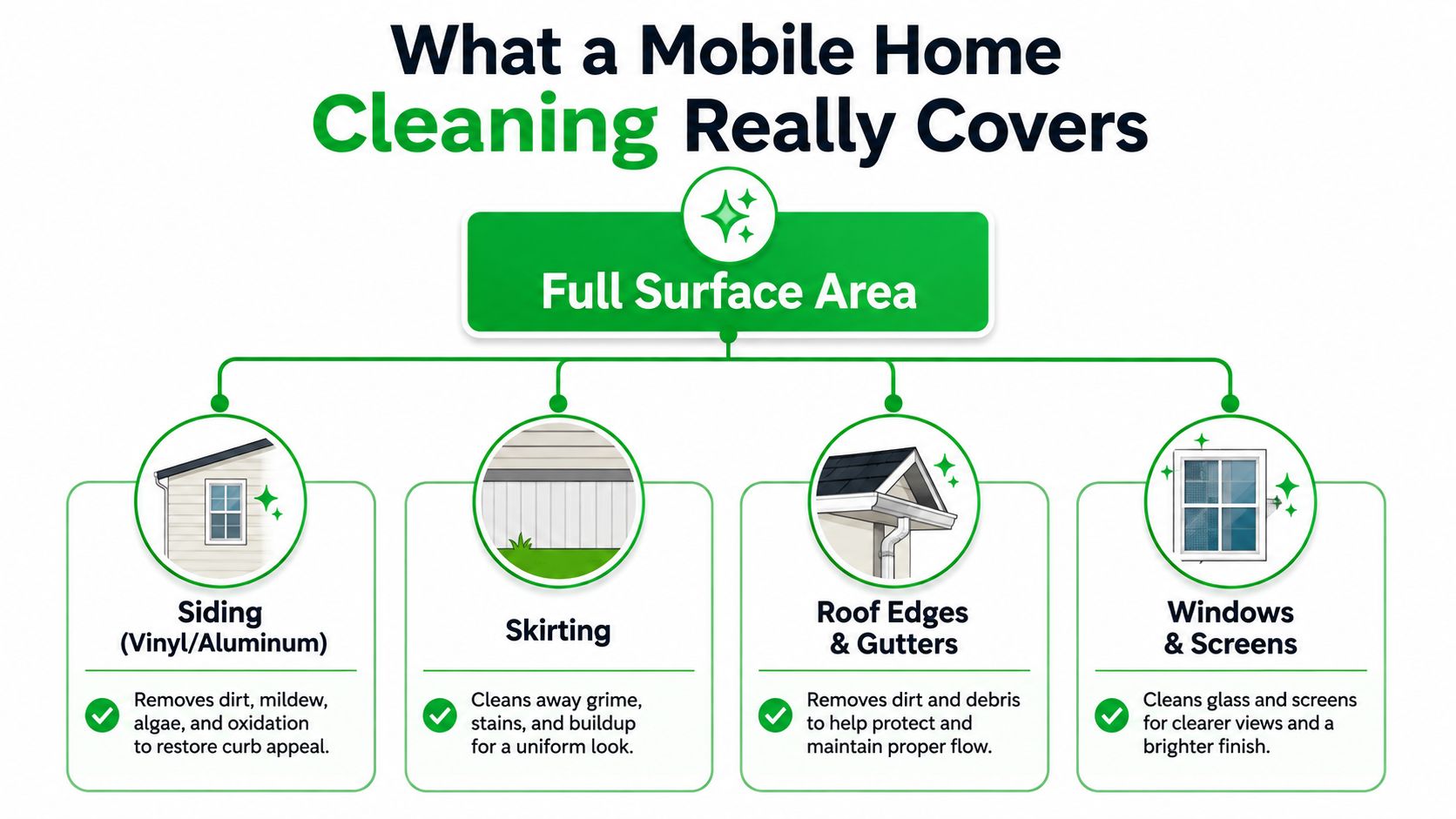
What a Mobile Home Cleaning Really Covers
That Flagstaff homeowner may start with a hose, but the siding is only the visible beginning. A complete manufactured-home cleaning can include vinyl or aluminum siding, skirting, roof edges, gutters, downspouts, windows, screens, interior walls, tubs, floors, vents, and HVAC returns. Each surface needs a different method, and rushing from one material to another with the same cleaner or spray pressure is how avoidable damage starts.
Manufactured homes often collect debris across more exposed transitions than a comparable site-built home. Skirting meets soil and gravel, siding meets window trim, utility penetrations interrupt exterior panels, and roof edges direct water toward gutters and seals. The home needs cleaning, but it also needs inspection while you work.
Start with the home envelope
Spring brings pine pollen and windblown dust. Summer storms push grit into siding textures and gutter channels. Strong UV exposure bakes mineral residue onto glass and trim, while winter freezes make cracked caulking and water trapped in seams more consequential.
A practical cleaning visit should look for:
- Siding and skirting: Remove dust, organic residue, mud, and cobwebs without forcing water behind panels.
- Roof edges and gutters: Clear debris and check whether water can move freely through downspouts.
- Windows and screens: Clean the glass, tracks, frames, and screens as separate surfaces.
- Interior systems: Address walls, tubs, floors, vents, filters, and areas where condensation or leaks may appear.
Manufactured-home care guidance commonly recommends water and detergent for vinyl siding, reserving a 1:3 chlorine bleach-to-water mix for mildew only. The same maintenance guidance recommends checking caulking, gutters, and heating filters regularly, with thorough interior cleaning at least every 12 to 18 months. This manufactured-home maintenance guidance also warns that clogged gutters can contribute to water damage and leaking, while abrasive cleaners can discolor fiberglass tubs and sinks.
For lower-toxicity product choices, a useful eco friendly all purpose cleaner guide can help you compare ingredients before putting a cleaner on vinyl walls, fiberglass, or painted trim. For a broader room-by-room service reference, see mobile-home house cleaning in Flagstaff.
Practical rule: If a cleaning task gives you a chance to spot a loose panel, failed caulk joint, blocked gutter, or damaged screen, it belongs on the maintenance calendar, not just the chore list.
Interior Cleaning Room by Room
Clean from high surfaces down, and move from the cleanest rooms toward the messiest ones. Start by dusting ceiling fans, vents, tops of cabinets, and wall corners. Then clean walls and fixtures, finish windowsills and tracks, and leave floors until the airborne dust has settled.
Kitchen and bathrooms
In the kitchen, degrease the range hood and backsplash with a mild detergent that won't leave a heavy film. Vinyl-wrapped cabinets respond better to a damp microfiber cloth and diluted cleaner than to solvent-heavy sprays. Rinse or wipe away residue, especially around cabinet edges where grease and dust form a sticky line.
Bathrooms need restraint. Fiberglass tubs, sinks, and shower surrounds can discolor or lose their finish when you use scouring powders, abrasive pads, or aggressive solvents. Use a nonabrasive bathroom cleaner, a soft sponge, and enough dwell time to loosen soap film. For mildew along caulking lines, clean the surface carefully, improve ventilation, and investigate recurring moisture instead of repeatedly masking the problem with stronger chemicals.
Run the ventilation fan during and after bathing, then inspect the fan cover and nearby ceiling. A dusty fan moves less air, which leaves condensation in the room longer.
Living areas and bedrooms
Low-pile carpet holds fine dust that can return to the room after careless dry dusting. Vacuum slowly along edges and under furniture, then damp-wipe vinyl plank floors with a product approved for that flooring. Avoid soaking seams or leaving standing water near wall edges.
In living areas, clean ceiling vents, window sills, tracks, and blinds in that order. Bedrooms need the same attention around closet tracks, blinds, ceiling fans, and furniture backs. If smoke or fireplace residue is present, use a surface-specific approach rather than spreading soot with a dry cloth. These soot removal cleaning methods offer useful guidance for distinguishing ordinary dust from smoke contamination.
Avoid ammonia-heavy sprays near HVAC returns. The goal is to remove dust, not send a strong chemical odor through the return system.
Keep the rhythm simple
After the deep clean, add three small checks to the routine:
- Caulking: Look around tubs, sinks, windows, and exterior-facing trim for cracks or separation.
- HVAC care: Check the heating filter and replace it when it's dirty or due according to the equipment guidance.
- Return vents: Vacuum the grille and surrounding wall without pushing debris into the duct opening.
For owners managing a second home or rental, a written short-term rental cleaning checklist keeps these less visible tasks from disappearing between guest turnovers.
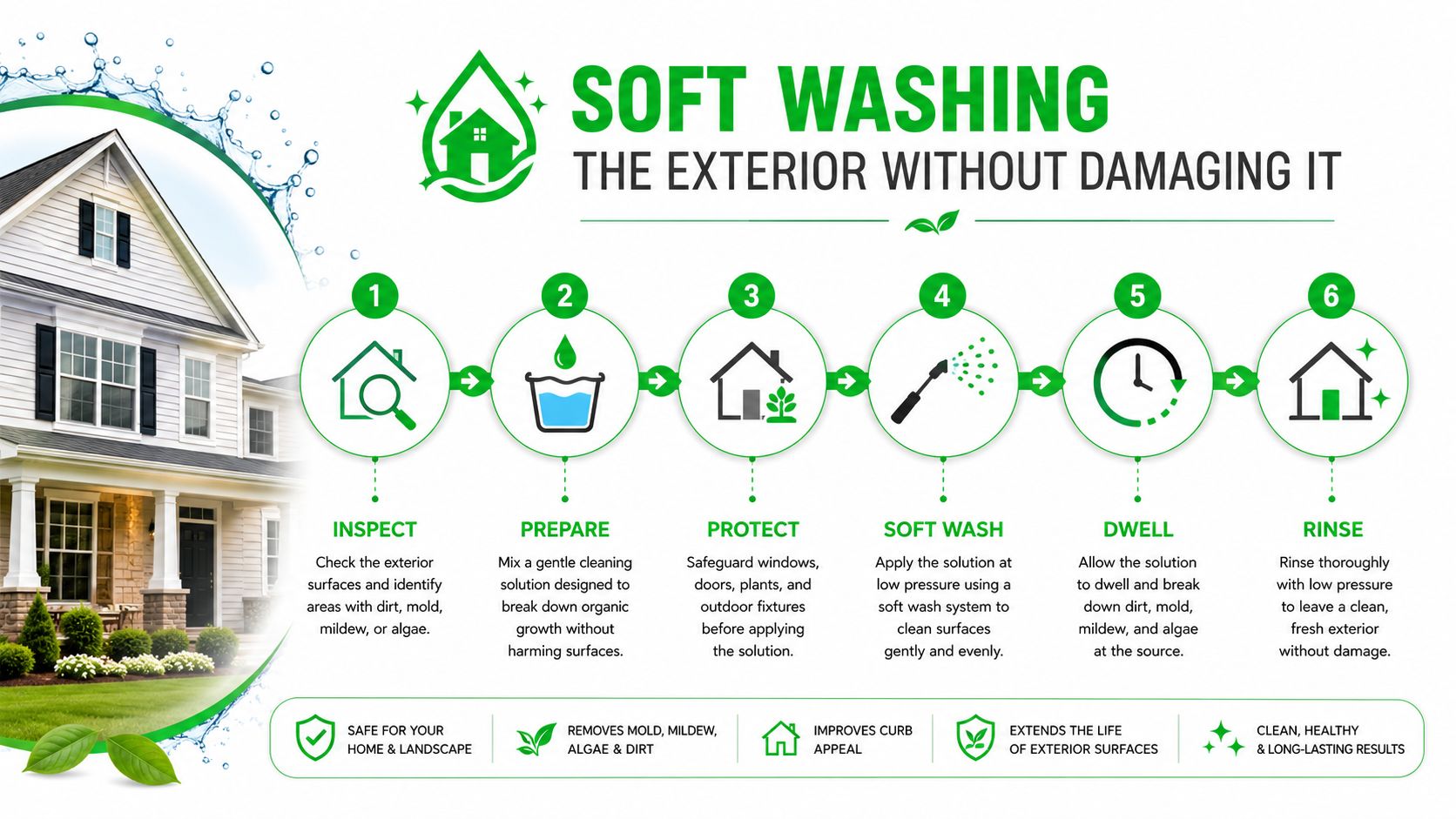
Soft Washing the Exterior Without Damaging It
The pressure-washer instinct is understandable. Siding looks dirty, the machine is available, and high pressure appears fast. On a manufactured home, that approach can force water behind panels, disturb seals, damage lightweight finishes, and drive moisture into seams around windows, doors, vents, and utility penetrations.
A controlled soft-wash process is safer because the detergent does more of the cleaning while the rinse removes loosened soil.
Prepare before applying solution
Close and seal windows and doors. Cover electrical fixtures, exterior outlets, vents, and anything that shouldn't receive runoff. Move planters and furniture away from the walls, and wet nearby vegetation when appropriate for the cleaning product being used.
Work in manageable 5–6 ft sections. Apply detergent from the bottom up so you can see where the solution has landed and reduce uneven drying. Keep the surface wet while the product works, but don't let it dry on glass, painted trim, or siding.
Use the mildew treatment selectively. Manufactured-home maintenance guidance commonly specifies a 1:3 chlorine bleach-to-water mix only for mildew, followed by a thorough rinse. Bleach isn't a general-purpose siding detergent, and unnecessary use increases the chance of damaging nearby plants, metals, or finishes.
Rinse with control
Rinse from the top down with a low-pressure fan tip. Keep the nozzle about 12–18 inches from the siding and use a wide 40-degree spray pattern, as described in this practical soft-wash workflow. The distance and fan pattern help lift residue without concentrating force at a seam or panel edge.
Skirting deserves its own pass. Remove leaves and debris along the base, wash the accessible face gently, and check the back side where damp soil and shade can support mildew. Keep skirting vents open and clear. Cracked, warped, or displaced panels won't be repaired by cleaning, so note those conditions separately.
Gutters and downspouts are functional components, not decorative trim. Clear pine needles, grit, and monsoon debris, then confirm that water exits away from the home. At roof edges, look for open seams and failing sealant, but don't walk a roof surface unless you have the proper training, equipment, and safe conditions. A focused resource on how to clean a roof safely can help you understand why roof access deserves more caution than a ground-level wash.
This mobile-home exterior cleaning service can be useful when the home has multiple elevations, fragile siding, difficult access, or gutters that require safe reach.
The video below demonstrates the controlled exterior-cleaning principle.
The finish matters less than the water path. A clean wall with blocked gutters or wet seams is not a completed maintenance job.
A Seasonal Schedule for Northern Arizona Homes
Northern Arizona homes need a calendar that follows exposure rather than convenience. Spring pollen can coat screens and north-facing siding. Early summer is a good time to remove accumulated winter dust before monsoon storms arrive. After monsoon season, gutters and downspouts deserve special attention because grit and organic debris can restrict flow.
Spring and early summer
Begin with a perimeter inspection. Look for cracked caulking, loose skirting, damaged screens, and dust lodged around window trim. Wash siding and skirting gently, then clean the windows after the heaviest pollen has settled.
Early summer is the right window for a more complete exterior pass. Clear roof-edge debris, check downspout discharge, and remove mineral residue from glass before UV exposure bakes it more firmly onto the surface.

Late summer through fall
After monsoon season, inspect the gutters again. Remove windblown grit, pine needles, and sediment from downspouts, then check for water marks beneath the gutter line. Wash the siding where storm spray has left a muddy film, but don't aim water into panel joints.
Late fall is the final useful exterior window before freezing conditions make wet work less forgiving. Clean the glass and screens, inspect seals, and address small caulking failures before water can enter and freeze in a seam.
Winter focus
Winter is mainly an interior season. Clean returns and ceiling vents, check the heating filter, inspect bathroom caulking, and watch for condensation around windows. Exterior checks should be limited to safe visual inspections after storms or freeze events.
Regardless of season, keep a repeating list for HVAC filter checks, smoke and carbon monoxide battery changes, screen inspection, and a walk-around for new caulking cracks. Maintenance guidance consistently treats window washing, siding, gutter care, and HVAC filter care as routine manufactured-home tasks, with spring and fall commonly recommended for seasonal work. The U.S. Census Bureau Manufactured Housing Survey provides the federal market context for the continuing role of manufactured homes in the housing stock.
Windows, Screens, and What a Professional Visit Looks Like
Window cleaning isn't a rag-and-spray wipe-down. On a manufactured home, the glass, frame, track, screen, and surrounding seal all collect different debris, especially when pine trees overhang the roof or north-facing windows stay shaded.
A professional visit starts with access and protection. Technicians move patio furniture or planters when needed, use drop cloths and boot covers, and work around the home rather than asking the homeowner to prepare every window. The crew should explain what it can reach from the ground, what requires poles, and where fragile seals or damaged screens need special handling.
The glass and screen workflow
Ground-floor glass can be finished with a professional squeegee method. Higher panes and skylights can often be cleaned from the ground with pure-water fed poles. A water-fed pole uses a telescoping pole, a brush, and purified water pumped through the pole, allowing the cleaner to scrub and rinse without standing on a ladder. This explanation of pure-water pole systems describes the method and why it reduces ladder use.
Screens should come out rather than being wiped in place. Each screen can be cleaned separately, the opening and tracks can be addressed, and the screen can then be reinstalled correctly. Professional screen-cleaning service descriptions document this removal, separate cleaning, and reinstall process, which prevents pollen and debris from remaining at the window opening.
What local service should feel like
For a Flagstaff or Munds Park homeowner, the practical benefit is consistency. A second-home owner in Forest Highlands, Pine Canyon, or Flagstaff Ranch may not be present for every visit. An Airbnb or VRBO host may need the glass and screens ready between stays without being on-site to supervise the work.
Pine Country Window Cleaning is Flagstaff's largest window cleaning company, started by Flagstaff native David Kaminski and in business since 1999. Its technicians are background-checked and OSHA-trained, and the company describes a 100% satisfaction guarantee, along with service for homes, cabins, rentals, and larger properties.
The local judgment matters. A crew that understands Flagstaff's pine pollen, hard water, high UV exposure, dust, and winter conditions can choose between a squeegee, pure-water pole, ladder, or lift based on the property rather than forcing one method onto every pane.
Safety, Mold, and When to Stay Off the Ladder
Manufactured-home sites often have uneven gravel, sloped pads, or soft soil after monsoon rain. A ladder that feels stable on one side of the home may shift when its feet cross different surfaces, and a wet roof edge or icy path changes the risk again.
Use ground-level tools whenever they provide a safe reach. Pure-water poles are appropriate for many higher windows, while a qualified professional may use a boom lift or scissor lift when the height, slope, or window layout makes ladder work unsuitable.
California Title 8 allows ladders for window cleaning only when the windows can't otherwise be cleaned safely and practically. It also says ladders shouldn't be used for windows requiring a fully extended extension ladder over 40 feet, and requires a second person to hold ladders over 18 feet of working length. The California ladder regulation is a useful safety benchmark even when you're working in Arizona.
Cornell's window-washing policy places exterior windows above 35 feet from the nearest ground surface beyond its permitted ladder-cleaning method. Its window-washing program also emphasizes stable, suitable ladders, secure footing, and minimizing movement.
Mold changes the job
After a leak, flood, or persistent condensation, don't start by spreading disinfectant. Wear an N95 respirator, gloves, and goggles, isolate the affected area, avoid dry sweeping, and dry the structure thoroughly. Authoritative mold-cleanup guidance emphasizes source control, isolation, protective equipment, and moisture removal.
Routine disinfectants aren't necessary for ordinary hard-surface cleaning, and stronger chemicals won't solve an active leak. If moisture continues, cleaning is the wrong first frame. Find and stop the water source, then decide whether controlled cleaning is appropriate or professional remediation is needed.
Putting Your Mobile Home Cleaning Plan Together
A workable plan has three tracks. Handle interior rooms in a high-to-low order, schedule exterior soft washing around pollen and monsoon debris, and treat windows and screens as their own skilled service rather than an afterthought.
This week
- Walk the perimeter: Note cracked caulking, loose skirting, blocked vents, gutter debris, and damaged screens.
- Refresh the interior: Clean returns and vents, check the heating filter, and inspect bathroom caulking.
- Choose safe DIY work: Keep ground-level dusting, gentle rinsing, and interior maintenance within your comfort level.
This season
- Schedule the difficult glass: Use squeegees, pure-water poles, or professional access equipment for windows that aren't safely reachable.
- Plan the exterior wash: Include siding, skirting, gutters, and downspouts, not just the most visible wall.
- Address moisture first: Don't clean over an active leak or recurring condensation problem.
This year
- Set recurring reminders: Include seasonal exterior care, screen inspection, HVAC checks, and a full interior cleaning rhythm.
- Keep records: Note damaged seals, gutter problems, and areas that need repair before the next freeze cycle.
- Use one local point of contact: A consistent crew can recognize changes in the home instead of treating every visit as a blank slate.

For a free estimate, call (928) 527-0671 or schedule online through Pine Country Window Cleaning. The team serves Flagstaff, Munds Park, Pine Canyon, Forest Highlands, Flagstaff Ranch, and surrounding Northern Arizona communities.
Pine Country Window Cleaning provides professional squeegee and pure-water window cleaning, screen removal and cleaning, screen reinstall, gutter care, and safe access for difficult glass. Visit Pine Country Window Cleaning to request a free estimate and build the window and screen portion of your mobile-home cleaning plan.