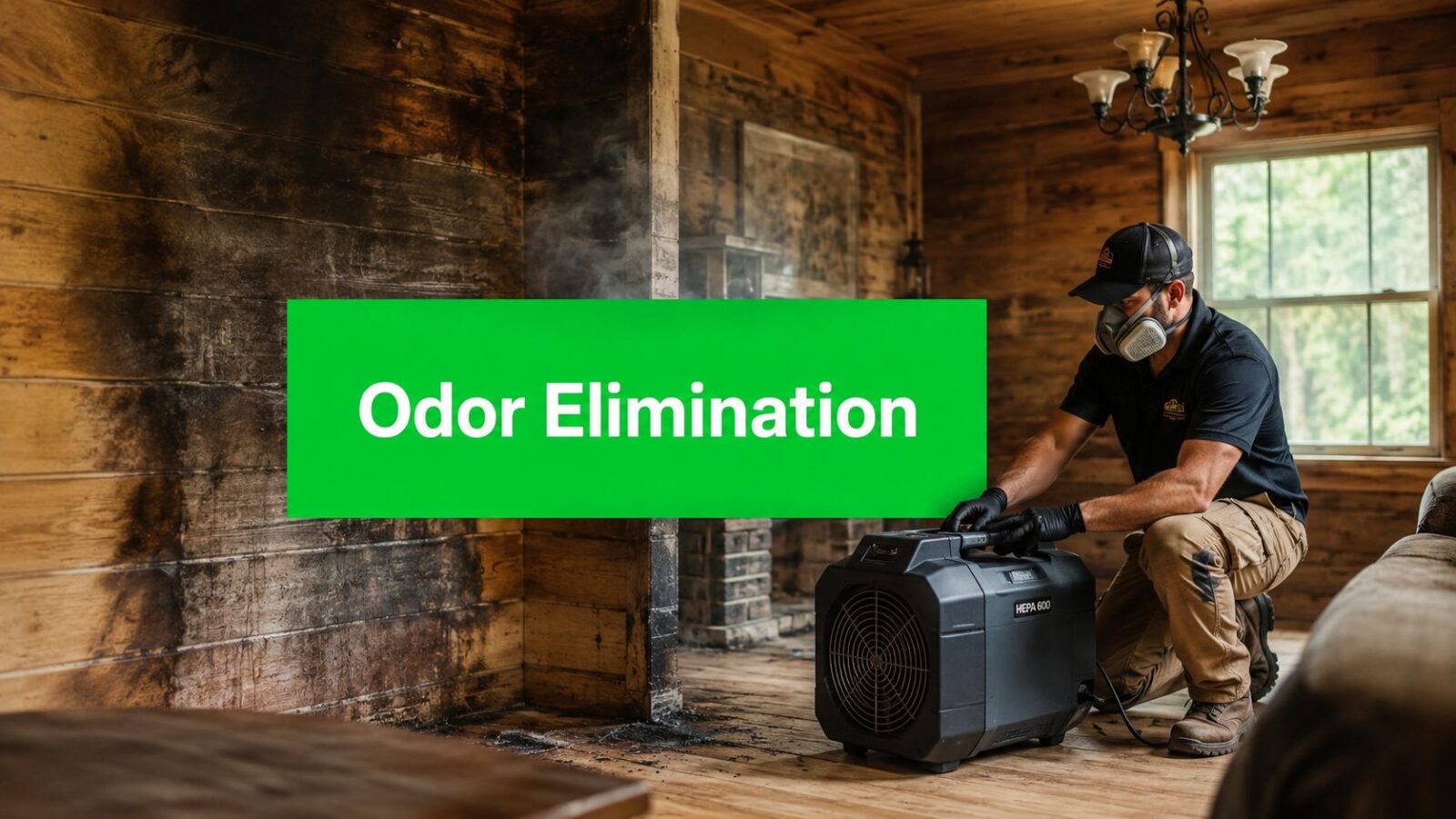
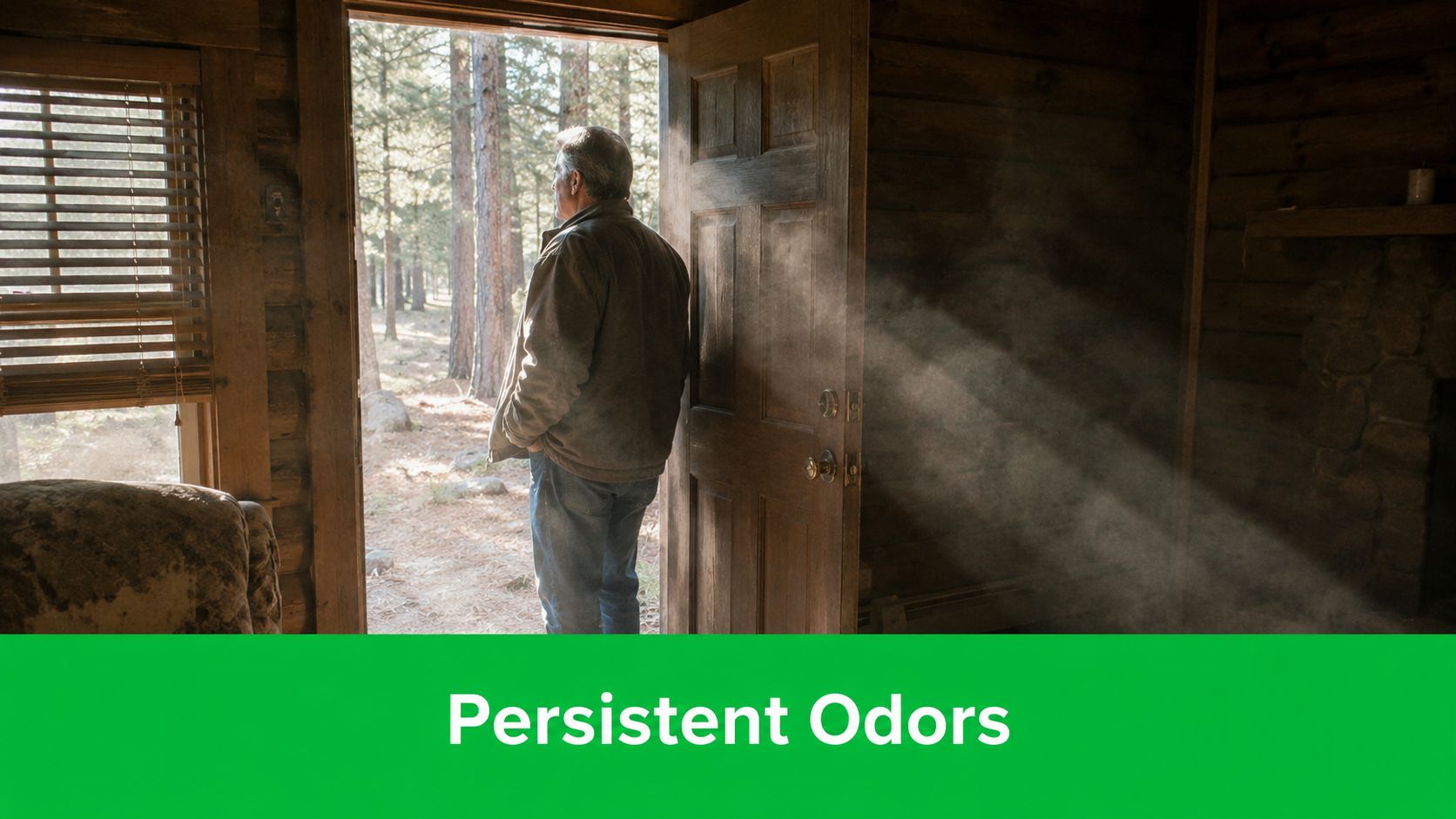
You open the door to your Flagstaff cabin after a long winter and notice the smell before you notice anything else. The rooms look orderly, the counters are clean, and the windows are clear, but the air feels stale, musty, or faintly smoky. A spray from the local hardware store may make the first breath seem better, yet the odor returns when the fragrance fades.
That's because persistent odor isn't usually a surface-cleaning problem. Smells can settle into carpet, upholstery, drywall, framing, subfloor, insulation, and HVAC pathways. A professional odor elimination service treats the property as a connected system, locating the source, treating affected materials, improving the air, and checking whether the result is completely neutral.
The Smell That Will Not Go Away
A cabin closed through winter often tells the story clearly. You walk from room to room and find no obvious spill, mold patch, or pile of dirty laundry. Still, the entry smells stale, the bedroom carries a damp textile odor, and the HVAC return seems to push the same smell back into the room.
That situation is different from dust or ordinary dirt. Dust sits on surfaces and can usually be removed with routine cleaning. Odor can remain in porous materials and hidden building components, so a clean-looking property may still have a contamination problem that needs investigation.
Why fragrance fails
Air freshener changes what your nose detects for a short time. It doesn't remove pet residue from a subfloor, smoke residue from fabric, or moisture feeding a musty odor behind a wall. In some properties, fragrance makes diagnosis harder because the technician has to separate the cover scent from the original problem.
A small kitchen fire creates the same challenge. The visible soot may be limited to one area, but smoke can travel through doorways, return-air pathways, cabinets, curtains, and soft furnishings. A rental after a pet accident can look spotless after mopping while urine odor remains below the finished flooring.
Practical rule: If the smell returns after the room has been cleaned and aired out, stop treating the air and start looking for the material or system holding the odor.
The same property-care standard applies to every service performed inside a home or business. A clean window in a smelly room is still a compromised space. That's why detailed work such as post-construction cleaning services and odor treatment should protect the entire property, not just the most visible surface.
For musty rooms, an HVAC inspection may be part of the answer. Homeowners who want background on air duct cleaning for musty odors can use that resource to understand why ductwork and air circulation deserve attention. The important point is simple: persistent odor is a property-health and maintenance issue, not a housekeeping failure.
What a Professional Odor Elimination Service Actually Does
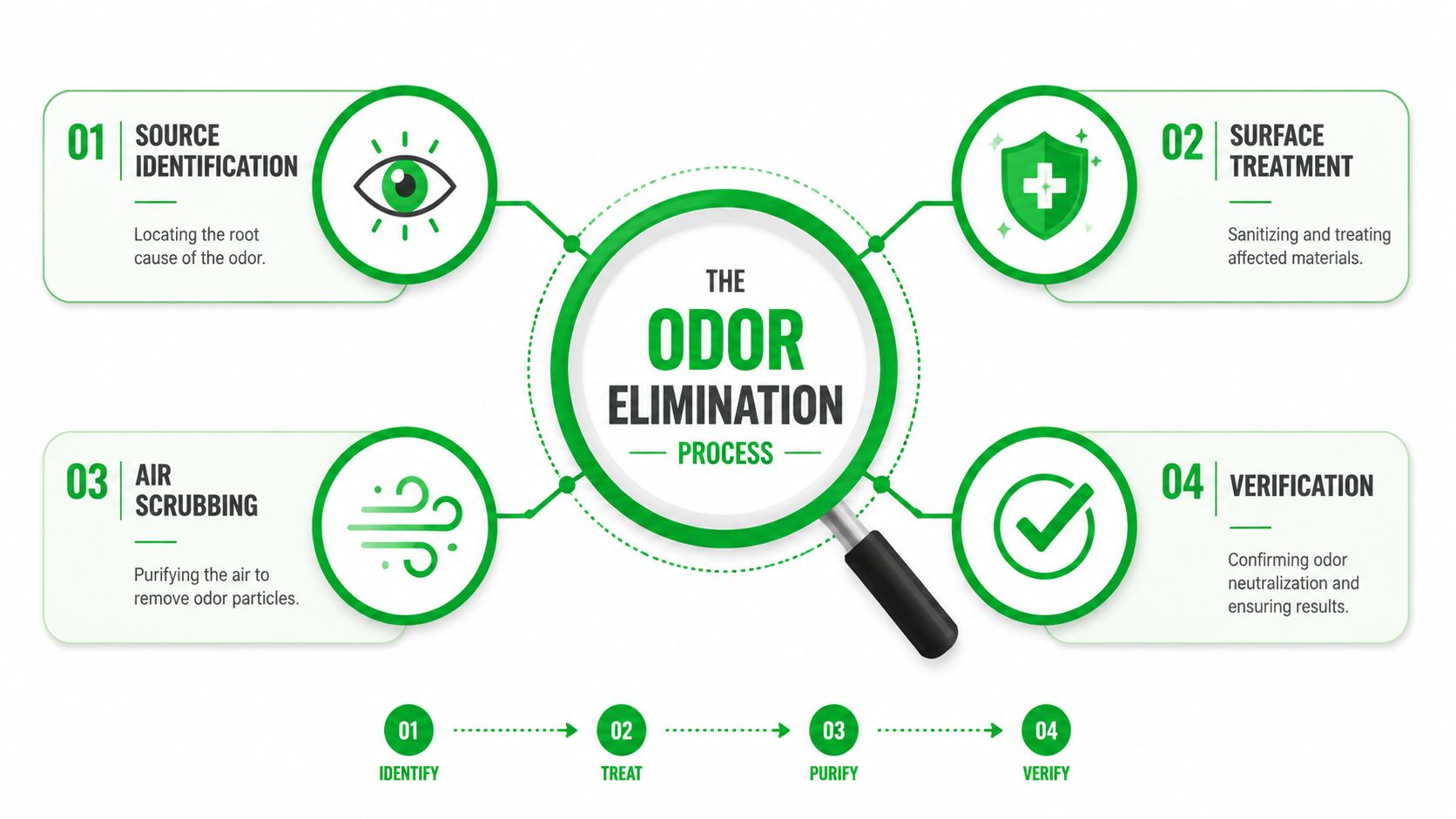
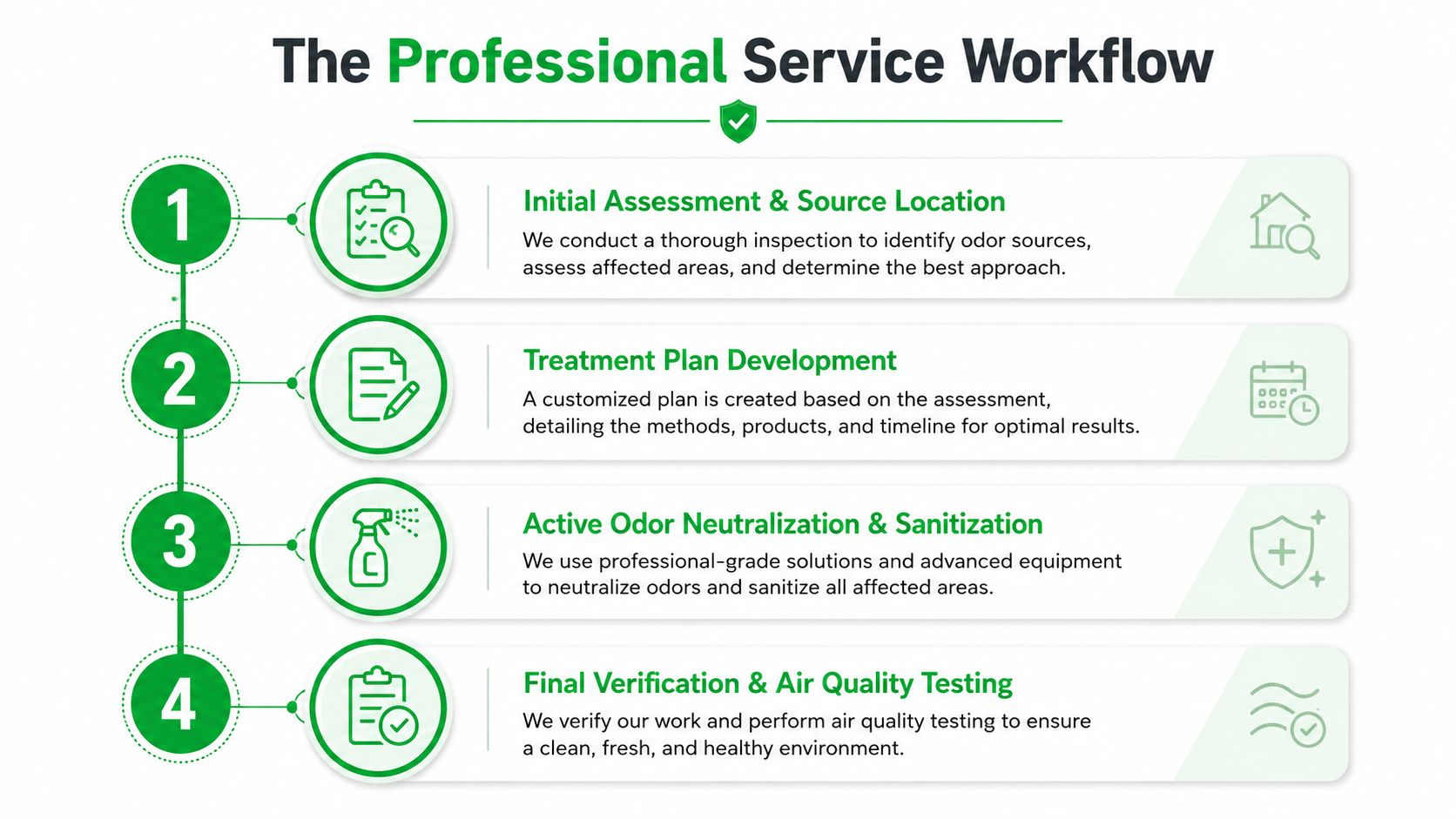
A professional odor elimination service follows a practical sequence. First, the technician identifies where the smell originates. Next, they remove or treat the contaminated material, clean surfaces that hold residue, and use air-treatment equipment where it helps. Finally, they verify the result instead of assuming that a pleasant fragrance means the job worked.
That differs from janitorial cleaning. Janitorial work removes visible soil, dust, grease, and routine debris. Odor remediation may include cleaning, but it also addresses invisible or embedded contamination that ordinary wiping cannot reach.
Three ways technicians approach odor
Masking adds a fragrance that competes with the original smell. It has a narrow role, but it isn't elimination.
Neutralization changes or captures odor-causing compounds. Activated carbon, for example, removes gaseous odorants through physical adsorption. ASHRAE guidance connects carbon performance to residence time, airflow, and bed depth, with recommended coconut-shell carbon residence times varying by duty level from about 0.03 to 0.14 seconds. The guidance also identifies more than 75% equipment efficiency as typical for light-duty mixed-air odor management. These figures come from ASHRAE HVAC guidance, and they explain why a small consumer purifier may struggle when airflow moves too quickly through too little carbon.
Source removal deals with the material or condition creating the odor. That may mean extracting a contaminated carpet, cleaning smoke residue, replacing saturated padding, correcting a drain problem, or addressing moisture before deodorizing.
Commercial odor control has evolved for the same reason. The Smithsonian's history of odor control describes how early personal-care products focused on talcum powder, while deodorants and antiperspirants later used bacterial inhibition and sweat reduction. Modern property remediation applies the broader principle to buildings: remove, interrupt, or capture the source instead of relying on perfume.
If you're researching household prevention before calling a specialist, this guide to how to banish musty smells at home offers useful source-focused basics. A professional should build on that logic with inspection, controlled equipment, material treatment, and verification.
The governing principle is straightforward: if the source isn't removed or treated, the odor will eventually return.
The Main Methods and Technologies Used Today
No single machine solves every odor. The correct tool depends on whether the problem is particulate smoke, gaseous odor, organic residue, active moisture, or contamination embedded in building materials.
Filtration and air treatment
HEPA air scrubbers capture airborne particles, including smoke residue and dust that can carry odor. Activated-carbon stages address gaseous odorants, but carbon isn't magic. Its performance depends on airflow, media depth, and contact time, as the ASHRAE guidance cited earlier makes clear.
Hydroxyl generators can support treatment in spaces that remain occupied, depending on the equipment and the job conditions. They're useful when a property can't be completely emptied, but they still don't replace cleaning, extraction, or moisture correction.
Methods that require control
Thermal fogging distributes a deodorizing agent into areas that ordinary wiping may miss. It can help with smoke and other embedded odors, but it requires careful preparation, product compatibility checks, and ventilation planning.
Ozone shock treatment is more restricted. It belongs in unoccupied spaces under controlled professional procedures, not as a casual solution for a home, cabin, or office with people or pets inside. EPA material summarized in this ozone guidance document states that ozone at or below public-health standards has little potential to remove many indoor contaminants and is generally ineffective against many odor-causing chemicals. The same evidence indicates that ozone may mask some body odor and can create by-products that are less odorous but potentially more toxic. CDC conclusions in that document also reject low-concentration ozone as a practical indoor-air-quality solution.
Ozone is a controlled remediation tool, not a substitute for source removal, ventilation, and filtration.
Material-level treatment
Enzymatic cleaners are appropriate for organic contamination such as pet urine, food residue, and some biological spills, provided the product reaches the affected material. Oxidizing cleaners can help with certain residues, but careless use may damage dyes, finishes, or fibers.
Sealants have a narrower purpose. When smoke odor remains in framing, subfloor, or other materials that can't reasonably be removed, a compatible odor-blocking coating may lock in the residue. Sealing over active moisture or untreated contamination only hides a future problem.
| Method | Best For | Occupied Space | Key Limitation |
|---|---|---|---|
| HEPA plus activated carbon | Airborne smoke particles and gaseous odors | Often suitable with proper setup | Performance depends on airflow and carbon contact time |
| Hydroxyl generator | Ongoing treatment where people may need access | Potentially, after professional assessment | Doesn't remove the source or saturated materials |
| Thermal fogger | Embedded smoke and difficult-to-reach odor areas | Generally requires controlled conditions | Needs product, surface, and ventilation planning |
| Ozone treatment | Severe odors in vacant spaces | No | EPA and CDC evidence limits its general indoor use |
| Enzymatic cleaner | Pet urine and organic residue | Usually, with product precautions | Must reach the contamination below the surface |
| Odor-blocking sealant | Residual odor in irreplaceable materials | After curing and ventilation requirements are met | Can conceal, rather than solve, untreated damage |
For additional smoke-focused preparation, these smoke odor removal tips for Florida properties are useful because they reinforce the need to clean residue and porous materials before depending on air treatment.
Common Odor Jobs and How Each One Differs
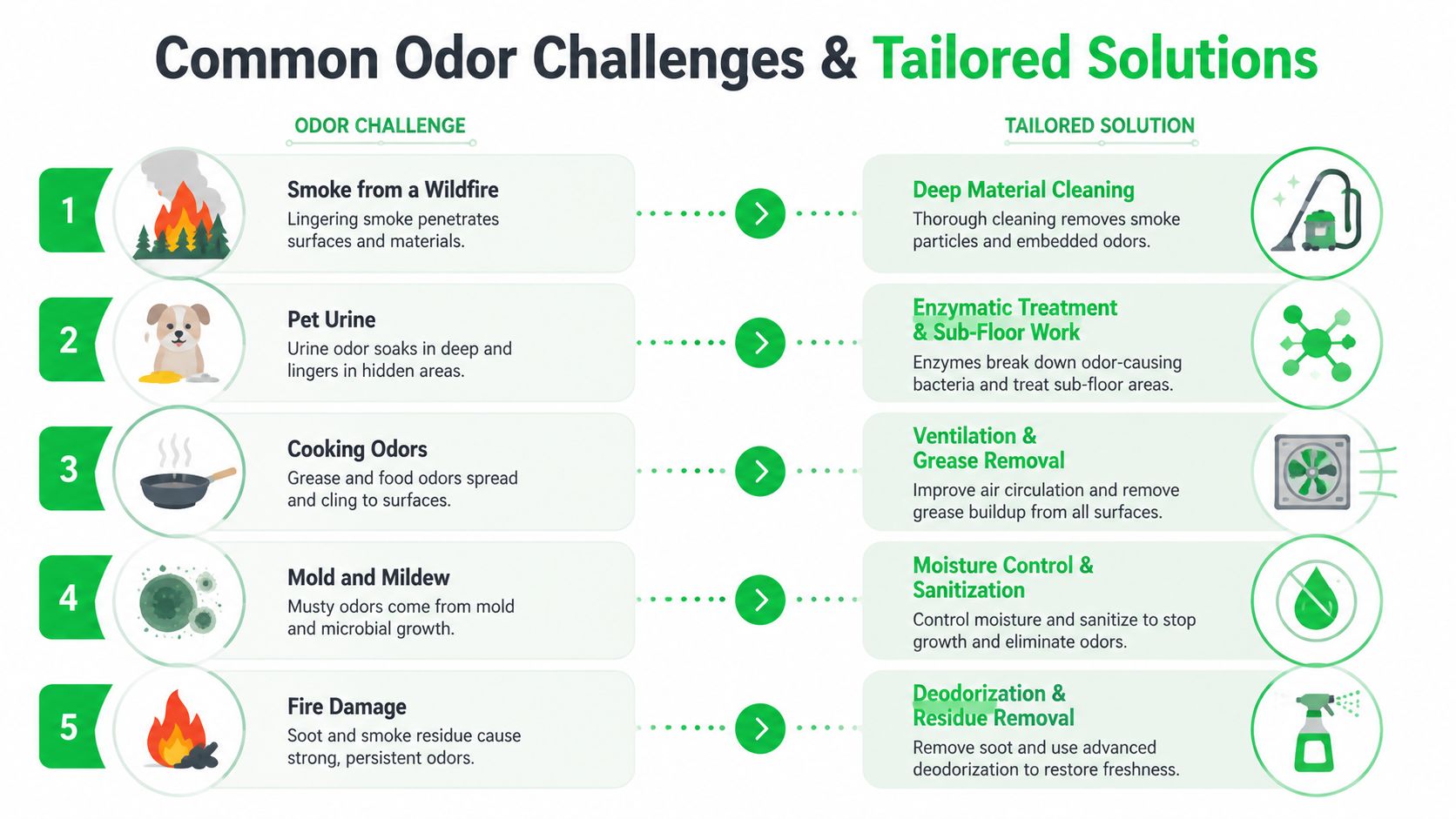
The odor tells you something, but it doesn't tell you the entire treatment plan. Smoke, pet urine, mold, sewage, and biohazard contamination each behave differently inside a building.
Smoke
Wildfire and structure smoke can settle on walls, ceilings, cabinets, textiles, insulation, and HVAC components. The visible residue may be light while the odor remains strong. Treatment usually combines source cleaning, sealed air scrubbing, HVAC attention, and carefully controlled deodorization. Using only a fragrance or running an ozone generator in an occupied room is the wrong response.
Pet and urine odor
Pet odor often concentrates in carpet backing, padding, baseboards, subfloor, and lower drywall. Surface spraying may improve the room briefly while leaving the deeper contamination untouched. A technician should determine how far the urine traveled, then use extraction, enzymatic treatment, removal, or sealing based on the affected materials.
Mold and mildew
A musty smell is a reason to investigate moisture, not a reason to start with deodorizer. Leaks, condensation, crawlspaces, wet insulation, and damp HVAC components can keep producing odor after the air has been treated. Deodorization should follow moisture correction and appropriate remediation.
Sewage and drain backups
Sewage is first a sanitation event and only secondarily an odor event. Porous materials may need removal, contaminated areas need proper cleaning and disinfection, and plumbing problems must be corrected. An air scrubber can support the work, but it can't make contaminated material safe by itself.
Biohazard scenes
Unattended deaths and other biohazard situations require trained, properly equipped remediation crews. The work may involve containment, regulated waste handling, documentation, and insurance coordination. This isn't a suitable DIY project or a routine cleaning call.
For properties where air movement or duct contamination is part of the problem, A/C duct cleaning may be one component of a larger plan. It shouldn't be treated as a universal answer, but it can matter when the HVAC system is distributing residual odor.
How the Service Process Actually Unfolds
A credible odor elimination service should feel organized before any equipment starts. The technician needs to explain what they found, what they'll treat, what they won't treat, and how they'll decide whether the result is acceptable.
Assessment and planning
The first visit should include a walkthrough, odor mapping, visual inspection, and moisture checks where mustiness or biological contamination is suspected. The provider should identify affected rooms, porous materials, HVAC concerns, occupancy restrictions, and any contents that need removal.
A written scope protects both sides. It should distinguish cleaning from replacement, explain whether the work is occupied or unoccupied, and identify conditions that could cause the odor to return.
Treatment
Treatment may include source removal, material cleaning, extraction, enzymatic application, sealing, and continuous air scrubbing with HEPA and carbon. Technicians should protect floors, furnishings, cabinetry, and finishes before moving equipment through the property.
The same care applies to screens and other removable components. Professional window-cleaning guidance recommends removing screens, cleaning them separately with gentle tools and low-pressure rinsing, then reinstalling them only after they're fully dry. 3M's screen-cleaning guidance and these screen-care instructions both emphasize protecting mesh and frames, rinsing away residue, and allowing complete drying.
Verification and follow-up
Verification should happen after treatment, ventilation, and safe re-entry conditions are met. The technician may use a structured sniff test, inspect treated materials, review air-treatment results, and ask the client to evaluate the space without heavy fragrance hiding the baseline.
A strong provider also supplies a written report and prevention recommendations. Ask what happens if odor returns, whether re-treatment terms are documented, and which unresolved building conditions remain outside the original scope.
Cost Ranges and When Hiring Makes Sense
A responsible provider shouldn't quote an odor job from a single sentence such as “the house smells musty.” The price depends on the affected area, the odor source, the saturation level, the materials involved, and whether the work overlaps with restoration.
A single-room pet odor problem may remain relatively contained if the contamination is limited to cleanable flooring and nearby surfaces. A whole-home smoke project can require treatment of walls, ceilings, contents, HVAC pathways, and soft goods. Mold and biohazard work can cost more because odor treatment becomes one part of a broader remediation process involving containment, removal, sanitation, and documentation.
What changes the estimate
- Square footage: More rooms require more inspection, equipment time, labor, and ventilation planning.
- Material saturation: Carpet padding, drywall, insulation, subfloor, and upholstery can turn a small-looking problem into a deeper restoration job.
- HVAC involvement: If odor has circulated through returns and supplies, the scope may include filter replacement, duct evaluation, or duct cleaning.
- Occupancy requirements: An unoccupied treatment has different preparation and re-entry requirements from an occupied-space approach.
- Contents handling: Drapes, mattresses, rugs, furniture, and stored belongings may need separate treatment or removal.
- Source correction: A leaking drain, wet crawlspace, or active mold condition must be corrected before deodorization can hold.
A low quote may cover little more than fragrance, a fan, and a short visit. A high quote may include demolition that hasn't been justified. Ask for the source, affected materials, equipment, labor, exclusions, and verification method in writing.
When DIY is reasonable
DIY makes sense for a small, recent stain or a lightly used litter area when the source is obvious and accessible. Professional help becomes the sensible choice when the smell returns after cleaning, involves porous materials, reaches HVAC components, follows smoke or water damage, or could affect a sale, rental turnover, or insurance claim.
The best quote isn't necessarily the cheapest. It's the one that explains why the odor persists and matches the treatment to the material holding it.
Flagstaff Specific Considerations and Care for Your Home
Flagstaff properties face odor conditions that generic national guides often overlook. High-altitude cabins, seasonal closures, wildfire smoke, dry indoor air, and cold winters can combine to concentrate smells in textiles and building materials.
Homes and cabins in Forest Highlands, Pine Canyon, Flagstaff Ranch, and Munds Park may sit closed for extended periods. When owners return, the first odor can come from a small hidden issue that had no chance to dissipate, such as a damp textile, a drain trap, stored firewood, pet residue, or smoke that entered during wildfire season.
Seasonal risks
Wildfire smoke can enter through normal ventilation, open doors, gaps, and HVAC systems. Even after outdoor conditions improve, smoke residue may remain on interior surfaces and soft goods. Winter closures create a different pattern. With limited air exchange, an existing odor becomes concentrated and easier to notice when the property is opened.
A local provider should ask how long the home was closed, whether the HVAC ran during smoke events, whether anyone entered during winter, and where the odor is strongest. Those answers help separate stale air from embedded contamination.
Full-property care matters
Odor work often involves moving through finished rooms, protecting floors, handling furnishings, and working around windows, screens, cabinetry, and mechanical systems. A technician who respects the property should leave it orderly, dry, and better protected than before the visit.
That standard is especially important after fire or smoke damage. Homeowners can review fire damage restoration services as part of a broader property-recovery plan, while remembering that odor treatment alone won't repair structural or moisture damage.
Background-checked, OSHA safety-trained technicians and clear communication matter when workers enter a second home or commercial property without the owner present. The local experience behind a company also matters. David Kaminski started his window-cleaning business in Phoenix in 1999 and later expanded to Flagstaff, according to his company profile on LinkedIn. That kind of established local connection supports the broader care standard homeowners expect from a property-care provider.
Common Questions and Your Next Step
How long does treatment take? It depends on the source, affected materials, ventilation, and whether restoration work is required. A specialist should provide a schedule after inspection.
Do I need to leave? Some treatments can occur in an occupied space, while ozone and certain intensive procedures require people, pets, and plants to leave until the provider confirms safe re-entry.
Will insurance cover it? Coverage depends on the policy and cause of loss. Smoke, fire, water, and biohazard claims should be documented before work begins.
How do I prevent the odor from returning? Correct moisture, remove contaminated materials, maintain HVAC components, ventilate appropriately, and avoid relying on fragrance as a permanent fix.
Pine Country Window Cleaning offers careful property services for Flagstaff homes, cabins, and businesses, with odor-related work approached through the same respect for floors, furnishings, screens, and finished surfaces. Visit Pine Country Window Cleaning to request a free estimate, discuss your property's odor concerns, and schedule service backed by a 100% satisfaction guarantee and local experience dating to 1999.