

You've probably seen it after a windy rain or a morning irrigation cycle, a clean pane turns cloudy, then dries with chalky white freckles that keep coming back. In Flagstaff, that's not just annoying, it's the local hard-water problem showing itself on glass, and the fastest way to beat it is to stop the mineral-rich water before it has a chance to dry. A solid prevention routine, plus the right equipment and timing, keeps the view clear far longer than repeated spot-cleaning ever will.
The Unmistakable Mark of Flagstaff Hard Water
A homeowner notices it first on the windows facing the yard. The glass looks fine when it's wet, then the sun hits it and the familiar white haze shows up again, often right where sprinklers or runoff reach the pane.
That pattern matters. Hard-water stains aren't dust, and they aren't ordinary dirt. They're mineral deposits left behind when water evaporates, which is why a surface can look clean for a moment and still dry into a ringed, chalky mess. If you want a solid overview of the mineral side of the problem, the guide to hard water facts is a useful reference point.
For Flagstaff and the surrounding Northern Arizona communities, the issue gets worse because the water, sun, and dry air all work together. The same window can get wet in the morning and look stained by lunch if the water sits long enough to dry. That's why prevention has to focus on source control and drying speed, not just cleanup.
Pine Country Window Cleaning has been dealing with this exact combination of conditions in Flagstaff since 1999, so the recurring pattern is familiar. When hard-water spots keep returning, the key question is usually not how to scrub harder, it's how to keep the minerals from bonding in the first place. If you're already comparing removal options, our hard water stain removal guide gives the cleanup side of the equation.
Why Northern Arizona Water Stains Windows So Easily
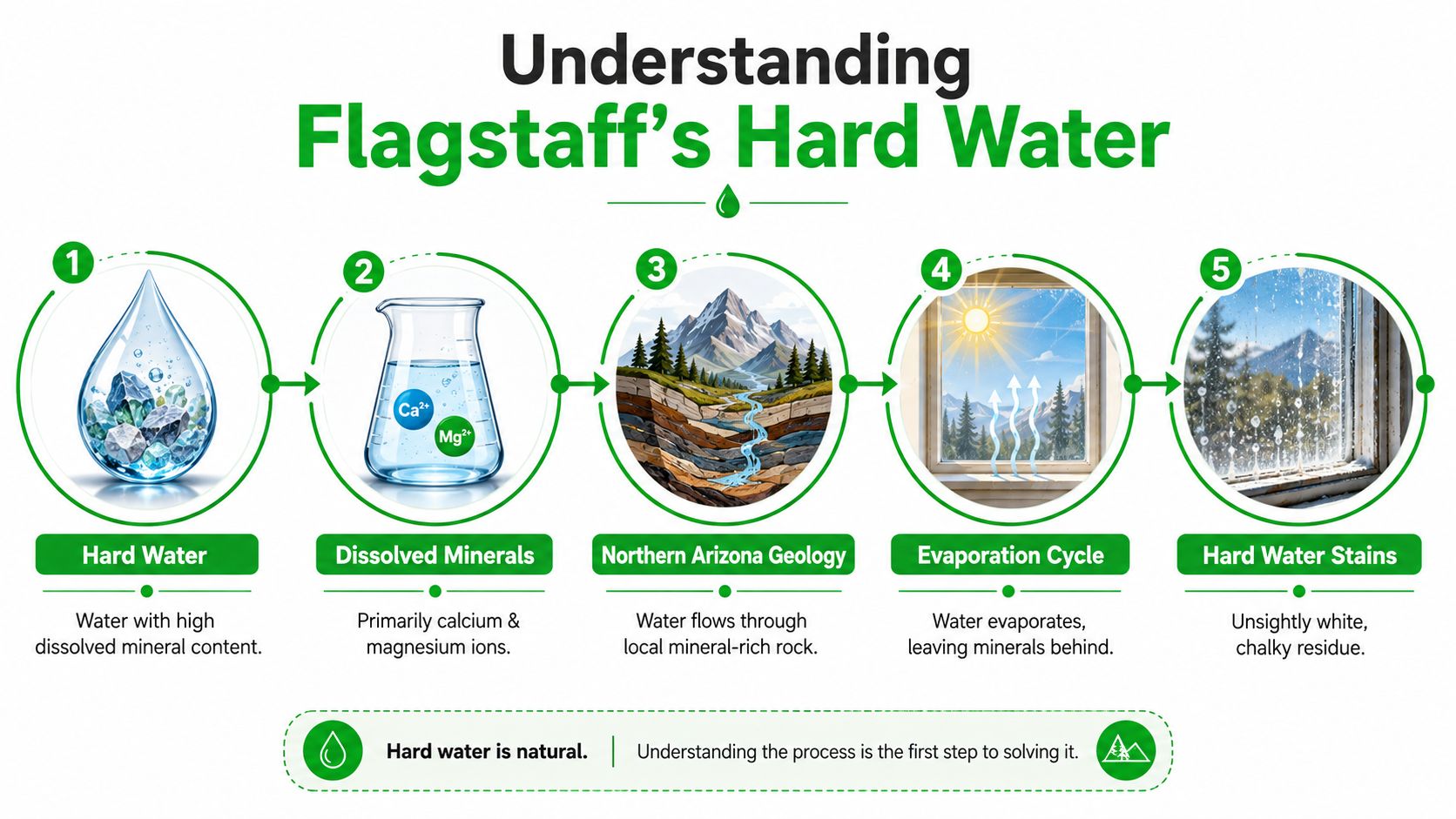
What's really on the glass
Hard water carries dissolved minerals, especially calcium and magnesium, and those minerals stay behind when the water evaporates. The result is a residue that behaves very differently from surface dust or pollen, because it's tied to the water itself rather than sitting loosely on top of the glass. Multiple sources identify water softeners as a source-level fix because they reduce those minerals before the water reaches the windows, which matters in homes where the supply itself is part of the problem G and S Window Cleaning.
That's why standard household cleaners often disappoint on stained glass. They can move the residue around, but they don't change the mineral load in the water or the speed at which the water dries. Once minerals have had time to sit and bond, the stain stops acting like a simple smudge.
Why Flagstaff makes it worse
Northern Arizona adds two accelerants, intense sun and very dry air. Water on a window doesn't linger long here, so there's less time to wipe it away before deposits form. The practical effect is simple, repeated wetting followed by fast evaporation leaves a much more visible mark than the same water would in a cooler, less arid place.
Practical rule: if the water dries, the minerals stay.
That's why a lot of DIY advice misses the main problem. Vinegar might help on light residue, but it doesn't solve recurring overspray, runoff, or hard-water irrigation hitting the same pane every week. Once stains become baked in, the glass usually needs a professional approach rather than another round of guesswork.
Your First Line of Defense Stopping Water at the Source

Start with an irrigation audit
The most effective prevention move is to find out why the glass is getting wet. In practice, that means running each irrigation zone while watching the windows, then adjusting heads, nozzles, and spray patterns until nothing reaches the glass. Seasonal shifts matter too, because a head that looked harmless in spring can drift just enough in summer to start misting a window.
That source-first approach is often more useful than adding another cleaner to the cabinet. Re-aiming sprinkler heads, using deflector caps, or switching certain areas to drip irrigation can cut repeated wetting at the root, and that's the part that matters most. If the water never lands on the pane, it never has a chance to dry into a stain.
Don't ignore runoff and roof drainage
Rainwater can cause the same problem if gutters, downspouts, or grading send water back toward the house. Keeping those systems maintained helps stop runoff from reaching the glass, especially around lower windows and corners where water pools. The same idea applies to how outdoor features, such as dense plantings, raised beds, and splashback from hardscape, can keep a window damp longer than homeowners expect.
Source control beats surface control. A coating can only do so much if irrigation keeps soaking the same window.
For homes where water quality itself is the issue, a softener can be part of the solution because it reduces the minerals before the water ever hits the exterior. If you want to compare that route with plumbing support, reliable San Antonio water softener services are an example of the kind of source-level fix homeowners often look at when mineral content is the primary cause. The core principle is the same, change the water before it reaches the glass.
A Proactive Cleaning Schedule That Actually Works
A good schedule doesn't replace source control, but it keeps small mineral marks from turning into permanent ones. In our climate, that's the difference between a window that stays presentable and one that starts looking etched every season.
Use tools that remove water, not smear it
Professional window cleaning relies on a squeegee and fast drying, not on dragging residue around the pane. The goal is simple, remove standing water immediately after the glass gets wet, because the minerals can't stay behind if the water never gets the chance to evaporate. That's also why pure-water systems are so effective, they rinse minerals away so there's nothing left to dry on the glass Glass Doctor.
For residential maintenance, one professional source recommends cleaning windows at least twice a year, then increasing to once a month during the rainy season so spots don't bake in YouTube. In Flagstaff, that monthly attention matters most when monsoon moisture, sprinklers, and bright sun all show up in the same week.
Build the routine around the season
A working schedule in Northern Arizona usually looks like this:
- Before monsoon season: check sprinkler aim, gutter flow, and any panes close to planted beds.
- During wetter stretches: inspect after rain or irrigation so fresh spots don't dry in place.
- After washing: dry the glass completely right away, since standing water is the trigger.
- When buildup starts returning quickly: move from occasional cleaning to a tighter maintenance cycle.
A few consumer habits work against this. Paper towels leave lint and tend to push minerals around, while many off-the-shelf sprays leave residue that can make future spotting worse. A consistent squeegee method, or a professional pure-water rinse, is cleaner because it finishes the job instead of feeding the next round of deposits.
For homeowners trying to set a service rhythm, our window cleaning schedule guide helps match maintenance to local conditions without overdoing it.
Using Protective Treatments and Hydrophobic Coatings
A protective coating can help, but it does not replace proper cleaning or stain removal. The glass has to be fully cleaned first, because sealing over mineral deposits can trap residue and lock the problem in place Atlas SolarTex.
What coatings can do
A hydrophobic treatment changes how water behaves on the glass. Instead of spreading into a film and drying across the whole pane, water beads up and rolls off more readily, which gives minerals less time to bond. That makes coatings useful on windows that still see occasional exposure after the irrigation and drainage problems have been corrected.
The trade-off is maintenance. Coatings wear with exposure, so field guides commonly recommend reapplication over time depending on conditions. More sun, more dust, and more water contact all mean more upkeep, so the coating should be treated as a maintenance layer, not a one-and-done fix.
What coatings can't do
They will not fix overspray that hits the same window every day. They also will not reverse etched glass or remove mineral buildup that has already bonded to the surface. If the water source is still active, the coating gets tested constantly, and repeated wetting can overwhelm it faster than many homeowners expect.
The strongest setup is usually layered. Stop or redirect the water first. Clean the glass properly. After that, a hydrophobic treatment can extend the time between cleanings and make new spotting easier to manage. For homeowners who want that work handled correctly, professional window cleaning services in Flagstaff can take care of the prep and apply the right protection for local conditions.
When to Trust Flagstaff's Window Cleaning Professionals
Some windows are worth handing off before the stains become a bigger repair problem. That's especially true for upper-story glass, panes with baked-on spotting, rental properties that need a dependable schedule, and homes where landscaping keeps throwing water at the same exposure points.

Why pro equipment changes the outcome
Professional pure-water systems are built to rinse minerals away instead of leaving them behind, which matters when you're trying to stop recurring spotting at the source. A properly trained crew can also work with ladders, poles, and specialty access equipment on harder-to-reach windows, then dry and detail the glass so it's ready for use without residue. In homes with screens, the full service should include removing the screens, cleaning them, and reinstalling them so trapped dirt doesn't undermine the finish.
That's also where a careful crew protects the property itself. Good service means watching landscaping, moving thoughtfully around delicate areas, and keeping communication clear so the work doesn't become a hassle for the homeowner or facility manager.
When experience matters most
Pine Country Window Cleaning has served Northern Arizona since 1999, and the company was started by Flagstaff native David Kaminski. For homeowners, cabin owners, and property managers who want help with recurring hard-water spotting, the service side matters as much as the cleaning side, because the right team knows how local water, sun, and irrigation habits interact.
If you're comparing options for routine service, window cleaning services should be evaluated on more than how shiny the glass looks the same day. Ask whether the crew is addressing the source of the stain, whether screens are handled as part of the visit, and whether the method removes water cleanly instead of spreading residue around. That's the standard that keeps windows clearer for longer.
If hard water stains keep coming back on your Flagstaff windows, Pine Country Window Cleaning can handle the source issues, the glass, and the screens in one visit. Visit Pine Country Window Cleaning to schedule service and get a professional plan for keeping mineral spotting under control.