
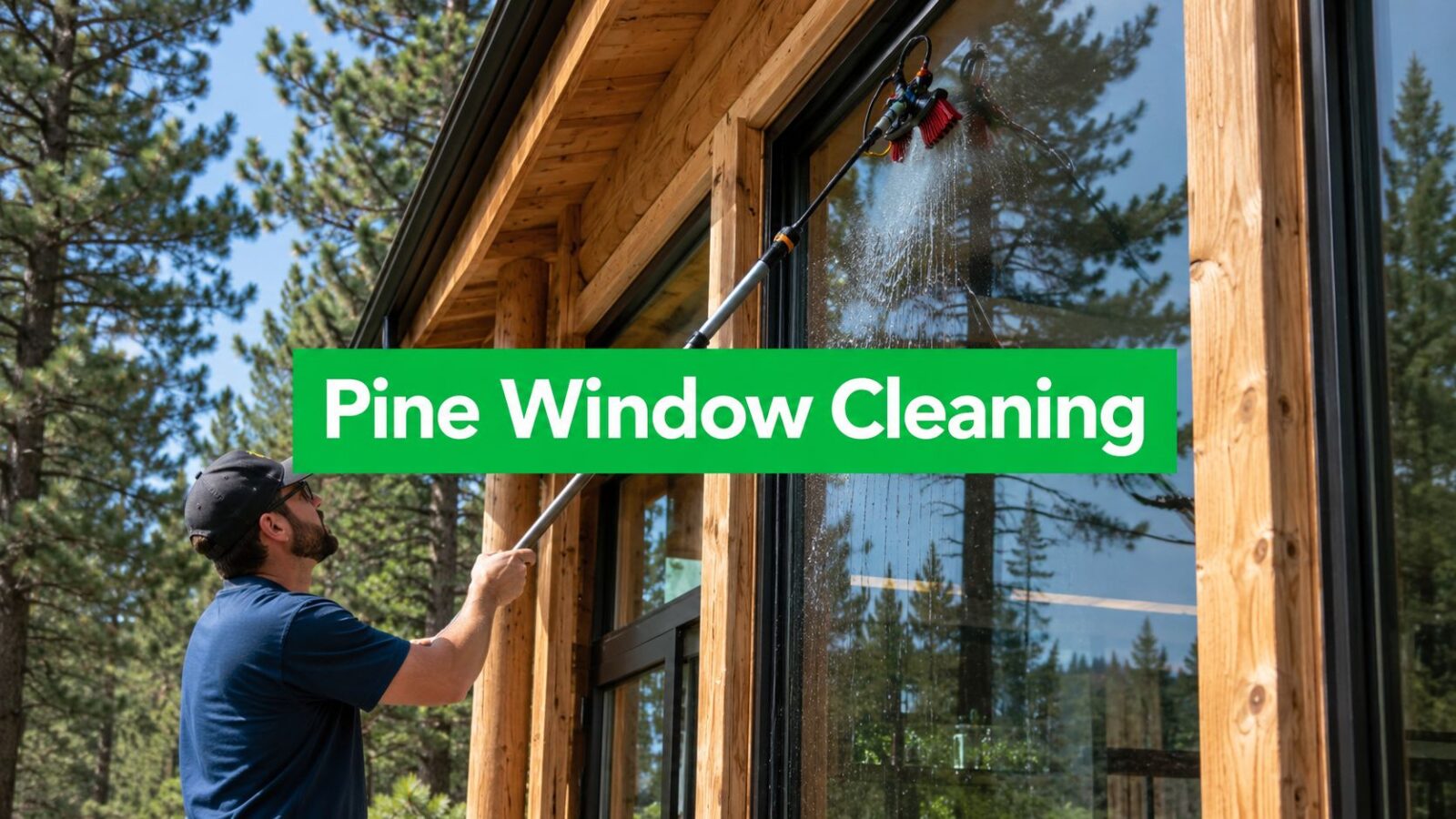
If you've got pine needles on the sill, pollen welded to the glass, and a few windows you'd rather not climb to reach, you're probably deciding between doing it yourself and calling a crew that does this all the time. In Flagstaff, that choice usually comes down to more than convenience. It's about access, safety, and whether the windows will still look clean after the first windy afternoon.
Pine window cleaning in Northern Arizona isn't a generic suburb service. It's a response to lodge-style ceilings, second homes that sit empty, hard water, and the kind of debris that builds up fast around tall pines and open lots. Pine Country Window Cleaning has been part of that work since 1999, and it's the largest window cleaning company in Flagstaff, built by Flagstaff native David Kaminski. That local background matters because the homes, cabins, and commercial buildings here don't clean up like cookie-cutter tract houses.
Why Pine Country Window Cleaning Is Built for Flagstaff Homes
A homeowner in Munds Park can walk the perimeter after a windy week and see it right away. Pine needles stick in the screen corners, dust clings to the lower panes, and the glass on the sunny side shows every streak from the last attempt to wipe it down. At that point, the question isn't whether the windows need attention. It's whether the job calls for a step stool, a ladder, or a professional crew.
Pine Country Window Cleaning is built around that exact kind of property. A cabin in Forest Highlands, a tall great room in Pine Canyon, and a second home that sat closed all winter all create different access problems, different debris, and different expectations for a finished result. A local company that works these jobs every week understands that the view isn't the only thing that matters, the frames, screens, sills, and hard-to-reach glass all need attention too.
The company's history is part of the credibility. Flagstaff native David Kaminski started Pine Country Window Cleaning in 1999, and the business has grown into Flagstaff's largest window cleaning operation. That doesn't just mean more trucks or more appointments on the calendar. It means the crew has spent years learning how high-country homes behave in wind, snow, sun, and pine-heavy neighborhoods.
Practical rule: if the windows are exposed to pine debris, a quick wipe rarely solves the problem. You need the right access method, the right sequence, and enough time to clean the parts most people skip.
That's the lens for the rest of the topic. Pine Country's work isn't about selling a cleaning, it's about handling Flagstaff conditions the way a local crew should, with the right tools, a thorough process, and respect for the home.
The Tools and Techniques a Real Professional Crew Uses
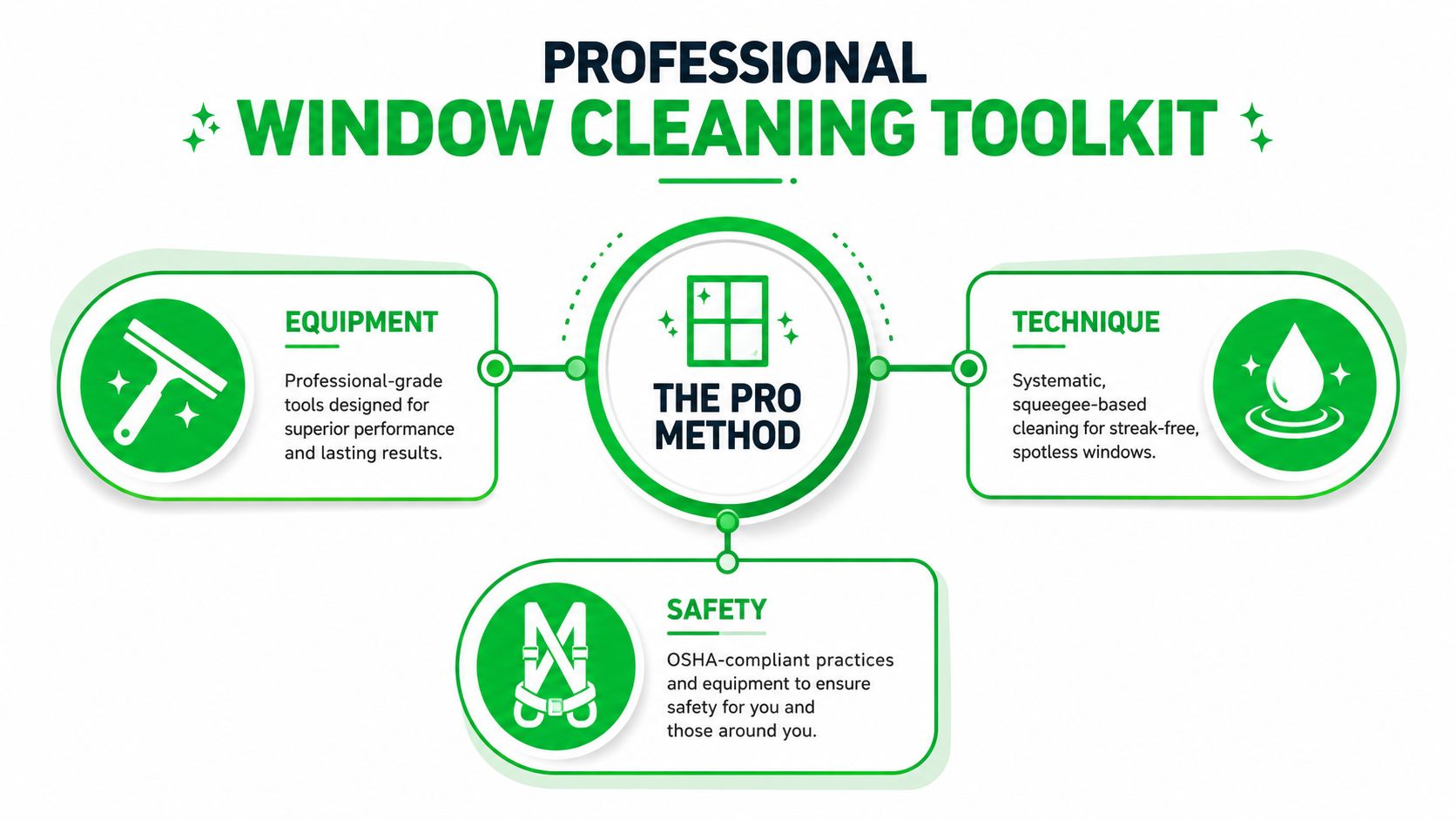
A real crew doesn't show up with paper towels and hope for the best. It shows up with squeegees, poles, ladders, screen tools, and the judgment to choose the right method for each pane. That matters in Flagstaff because a single-story home, a tall stairwell window, and a commercial atrium all demand different access and different cleaning angles.
Squeegees do the finishing work
For most glass, the squeegee is still the cleanest answer. Marvin's guidance on washing windows like the pros is straightforward, use smooth passes, overlap each pass a bit, and wipe the blade after each stroke so dirt doesn't ride back onto the pane. Andersen gives the same basic direction, start high, work downward in straight passes, and keep the blade angled so water goes where you want it. Those habits are why professional glass dries clear instead of hazy.
Pure-water poles come into play when a crew needs to reach high exterior glass safely from the ground. The brush loosens the grime, the purified water helps rinse without leaving mineral residue, and the pole lets the technician stay off the ladder on many jobs. That's useful on taller homes, but it's not a magic wand. If the window has heavy buildup, sticky residue, or detailed trim, the crew may still switch back to hand tools.
The difference between a pro and a shortcut is often what happens around the edges. A good technician cleans the frames, tracks, and hardware first, then moves to the pane so loosened dirt doesn't end up back on the glass, which lines up with guidance from the American Cleaning Institute on cleaning windows and Marvin's instructions for frame and sill prep.
Access tools change the job, not just the reach
Ladders are still part of the work, especially on homes with rooflines, alcoves, and places a pole can't clean well. For higher commercial work, boom lifts and scissor lifts come into play, and those aren't convenience items. They're access systems that let a crew clean tall glass safely and efficiently.
If you're comparing equipment options and want a deeper breakdown of what a legitimate setup looks like, the best professional window cleaning tools overview is a useful reference point.
A professional crew also thinks about screens as part of the system, not an afterthought. Remove them, wash them separately, let them dry, reinstall them correctly. That sequence keeps the final result cleaner and avoids trapping dust against newly washed glass.
The main thing to notice is this. The tools aren't the business, the method is. Good pine window cleaning uses the right equipment in the right order, so the work looks clean on the day of service and still holds up after the first dry breeze.
What Happens During a Typical Service Visit
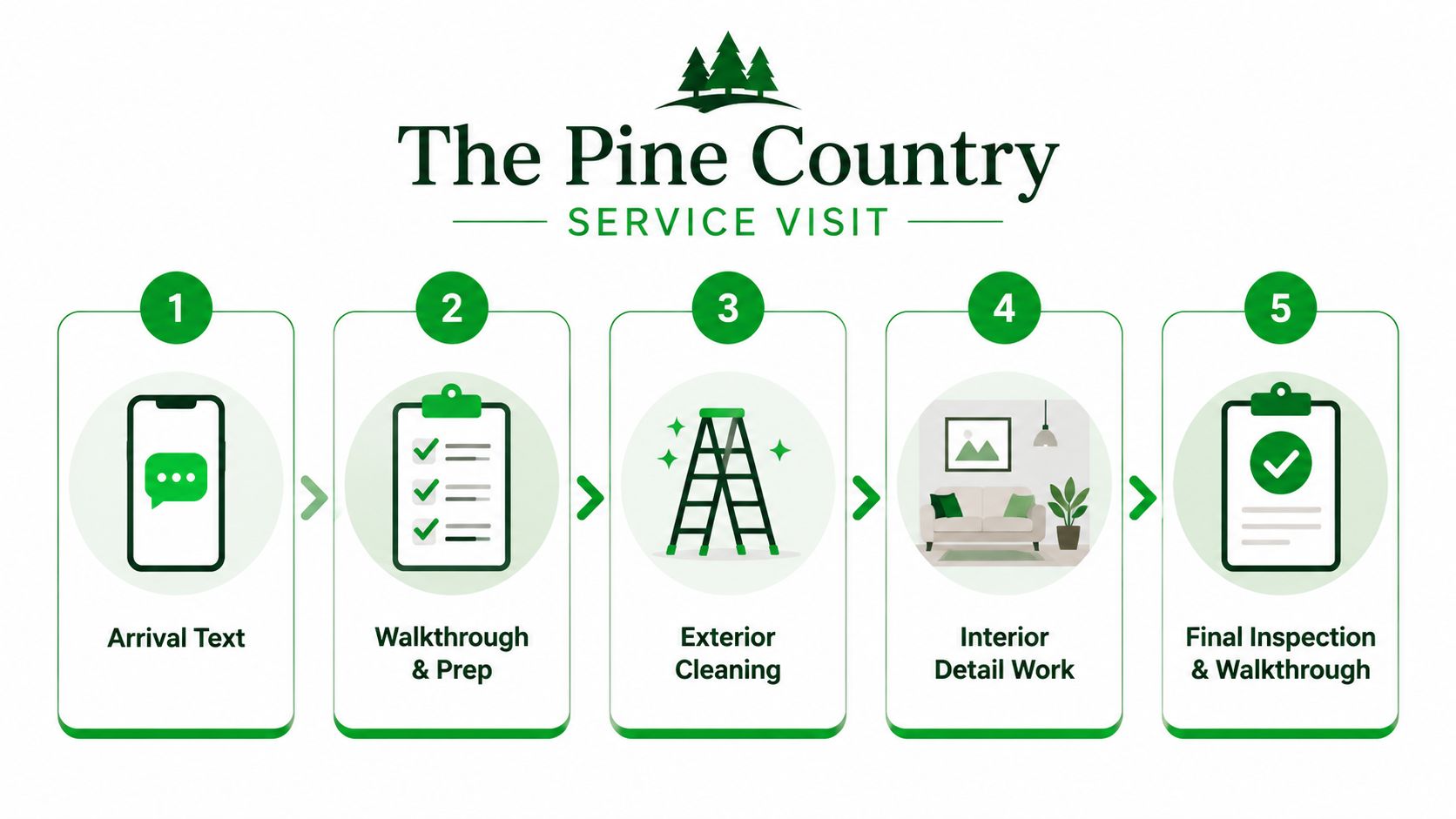
A clean visit starts before the first window gets touched. The office confirms arrival, the crew checks access points, and the technician doing the walkthrough looks for screens, fragile decor, and any window that needs special handling. That first few minutes set the tone for the rest of the appointment because a good cleaning job is really an order-of-operations job.
First contact and setup
Customers usually get an arrival text, then the crew walks the property or the building interior to confirm what's included. That matters on homes with multiple elevations, lots of panes, or enclosed porches where the outside and inside routes are different. A crew that hurries past this step tends to miss something, and missed windows are almost always the ones tucked above stairs or behind furniture.
Next comes preparation. Frames, sills, grids, tracks, and visible hardware get attention before the pane itself. That's not cosmetic busywork. Dirt moved from the trim to the glass just creates extra wiping and more chances for streaks, which is why professional guidance consistently puts edge work ahead of pane work.
Exterior and interior work happen differently
On the exterior, the crew may use ladders, poles, or pure-water brushes depending on the height and layout. On a standard residential job, the technician moves methodically from section to section instead of bouncing around the property. That reduces tool changes and keeps the cleaning pattern consistent.
Inside the house, the work gets more careful. Floors need protection, furniture stays out of the splash zone, and the technician watches for drips on wood trim, rugs, and soft finishes. A good cleaner doesn't just wipe the visible glass. The person finishes the corners, checks the edges, and makes sure the pane is clear from multiple angles before moving on.
There's also a professional standard for the finish. Andersen's guidance on window cleaning and Marvin's advice both point to the same habit, work systematically and don't leave moisture or residue around the blade path. That's what makes the difference between “looks okay” and “clean.”
A final walkthrough closes the visit. Screens are back in place, the windows are inspected again, and the customer gets a chance to point out anything that needs one more pass. That last step is where a thorough company earns trust, because the job isn't done until the home looks the way the customer expected.
Clean glass is the result. The process is what you're buying.
Why Screen Removal, Cleaning, and Reinstallation Matters Every Time
Dirty screens undo clean glass faster than most homeowners realize. If the screen is packed with pine dust or pollen, the next breeze pushes that material right back onto the window you just paid to have cleaned. That's why screen service shouldn't be treated like an upgrade, it should be part of the visit.
Andersen's guidance is clear, remove the insect screen first, clean it with a soft bristle brush and mild soapy water, let it dry, then reinstall it once the rest of the window is finished. That sequence makes practical sense. Screens clean better when they're handled separately, they dry properly off the glass, and the technician can inspect for damage while they're out of the frame.
Pine Country Window Cleaning treats screen removal, cleaning, and reinstallation as part of the standard service. That's important in pine country because the screens are often the first place you'll see buildup from needles, dust, and seasonal pollen. If a company skips screen work, the customer may still end up with hazy glass a day later and another appointment to fix what should've been handled the first time.
If you've ever looked at a freshly washed window and still seen a dull film, the screen was probably the issue. A clean screen improves airflow too, which matters in homes where the windows are opened seasonally or left cracked during mild weather.
For homeowners who want to understand how that service is handled in practice, the screen installation service page is worth a look because it shows how closely screen care is tied to the rest of the window.
Practical rule: a screen that goes back dirty is a shortcut, not a service.
The best crews don't separate the screen from the window in the customer's mind. They're one system. Glass, frame, mesh, and sill all influence how clean the result looks, and leaving one part dirty weakens the whole job.
Pricing, Estimates, and What Affects the Final Number
A fair window-cleaning price starts with the job itself, not with a generic quote over the phone. In this trade, labor is driven by access, height, condition, and the amount of detail a property needs. Industry summaries for the U.S. window washing market point to a typical residential visit in the normal maintenance range, which is useful context before a home's layout, ladder work, or heavy buildup changes the scope. More detail is in the U.S. window washing industry summary.
What changes the estimate
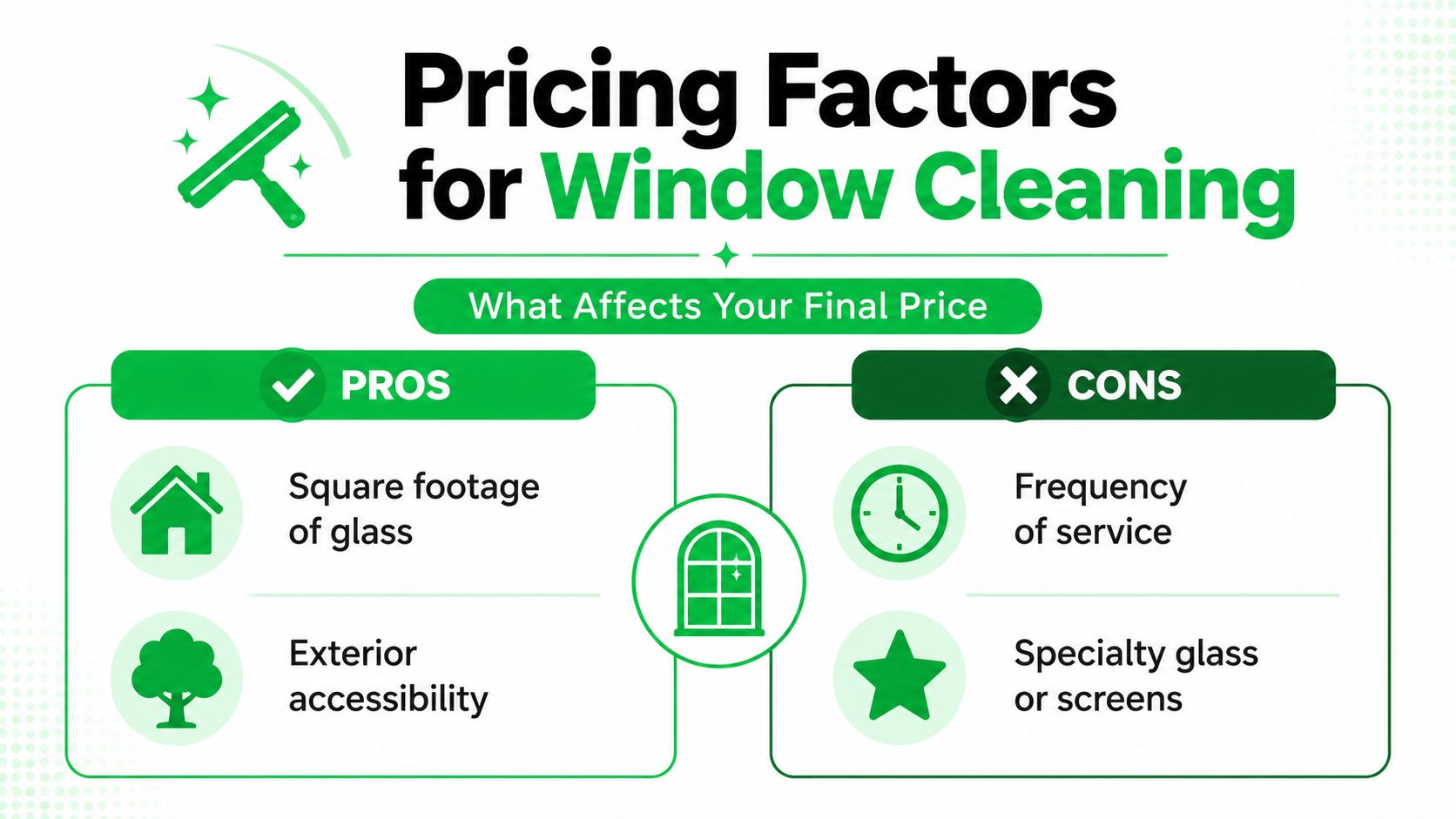
The main variables are straightforward. More glass takes more time. Harder access takes more time. Tall stairwell windows, specialty screens, and exterior panes that require ladders or pure-water poles all affect the final number. Homes with hard water staining, heavy pine debris, or windows that have been left alone for a long stretch usually need extra prep and detailing, and that work shows up in the quote.
A site visit removes most of the guesswork because the cleaner can see the glass, the access points, and the condition of the frames and screens. Pine Country Window Cleaning uses that estimate process so customers get a price tied to the actual property, not a rough guess. If you want to compare that against other exterior projects, you can find window replacement cost through Superior Home Improvement, since some homeowners decide whether to clean, repair, or replace after seeing the windows in person.
What should be included
A serious quote should spell out the work, not just the total. It should explain whether screens are included, whether the crew is handling interior and exterior glass, and which items count as add-ons. Pine Country also lays out the main cost drivers on its residential window cleaning pricing guide, which helps customers understand why one home prices differently from another.
The comparison that matters is clarity. Lower bids often leave out screen cleaning, frame detailing, or the time required to work upper panes safely. A fair estimate is usually the one that explains what the crew is doing and why the price fits the property, instead of hiding labor in the fine print.
Preparing for a Visit and Caring for Windows Between Services
A good prep day makes the appointment smoother for everyone. Move fragile items off the sills, clear furniture away from tall windows, and open gates or side yards so the crew can get to exterior glass without delays. If you've got pets, plan a secure room or crate, because open doors and active ladders don't mix well with curious animals.
That's especially true in homes with vaulted ceilings or stairwell windows. Anything sitting near the work area, houseplants, candles, framed photos, or decorative objects, should be pulled back before the crew starts. If you want a sense of how home styling near windows can affect the work zone, the compare energy-efficient blinds resource is helpful because it shows how window treatments and placement choices can affect access, light, and maintenance.
What helps after the visit
Leave the screens alone until they've had time to dry fully. If you reinstall or move them too quickly, you can trap moisture or smear dust back onto the glass. After that, the best maintenance is simple. Don't wait until every pane looks bad, because pine-country weather loads the windows unevenly and some sides of the house will need attention before others.
In Northern Arizona, seasonal debris can change the cleaning schedule. Wind events, pollen bursts, monsoon dust, and hard-water splashback from meltwater all change how quickly glass loses its clarity. Forest-adjacent properties and second homes tend to show that buildup faster because the windows sit untouched longer between visits.
The cleanest homes aren't the ones that never collect debris. They're the ones on a sensible service cycle.
If you own a cabin, manage a rental, or keep a second home closed part of the year, it also helps to pair window service with gutters or pressure washing when the exterior is collecting the same debris load. That keeps dirt from traveling from roofline to glass, which is a common pattern on wooded lots.
Trust Signals, Guarantees, and When to Call for Your Free Estimate
Pine Country Window Cleaning is not a handyman with a bucket and a guess. The company sends background-checked, OSHA safety-trained technicians, and that matters on tall ladders, steep roofs, and commercial glass where a shortcut can turn into a safety issue fast. It also has IWCA recognition, Flagstaff Chamber of Commerce membership, in-house boom and scissor lifts, including a 95-foot atrium lift, and a 100% satisfaction guarantee. For a homeowner or property manager, that points to a crew that is set up for routine service and difficult access work.
A real estate agent can use that kind of setup to get pre-listing glass handled without last-minute scrambling. A hotel, campus, or dealership manager can count on a crew that already has the access equipment to work larger properties efficiently. For a homeowner in Munds Park, Pine Canyon, Forest Highlands, Flagstaff Ranch, or near NAU facilities, it means the company can schedule the job around the property instead of asking the property to fit the crew.
If you are deciding whether to book, the usual questions are simple. How fast can they schedule. What areas do they serve. Can they handle screens, hard water, or taller glass. A professional estimate should answer those points clearly before anyone starts work, and it should show how the property will be priced in plain terms.
Residential Window Cleaning Cost Snapshot
| Metric | Value | Source |
|---|---|---|
| Average residential window cleaning job | $220 | IBISWorld U.S. window washing industry summary |
| Typical residential range per visit | $150 to $302 | IBISWorld U.S. window washing industry summary |
If your windows are holding pine needles, hard water, or a season's worth of mountain dust, Pine Country Window Cleaning can handle the glass, screens, frames, and access work without turning it into a project for you. Visit Pine Country Window Cleaning to request a free estimate and get a local crew that knows how Flagstaff homes need to be cleaned.