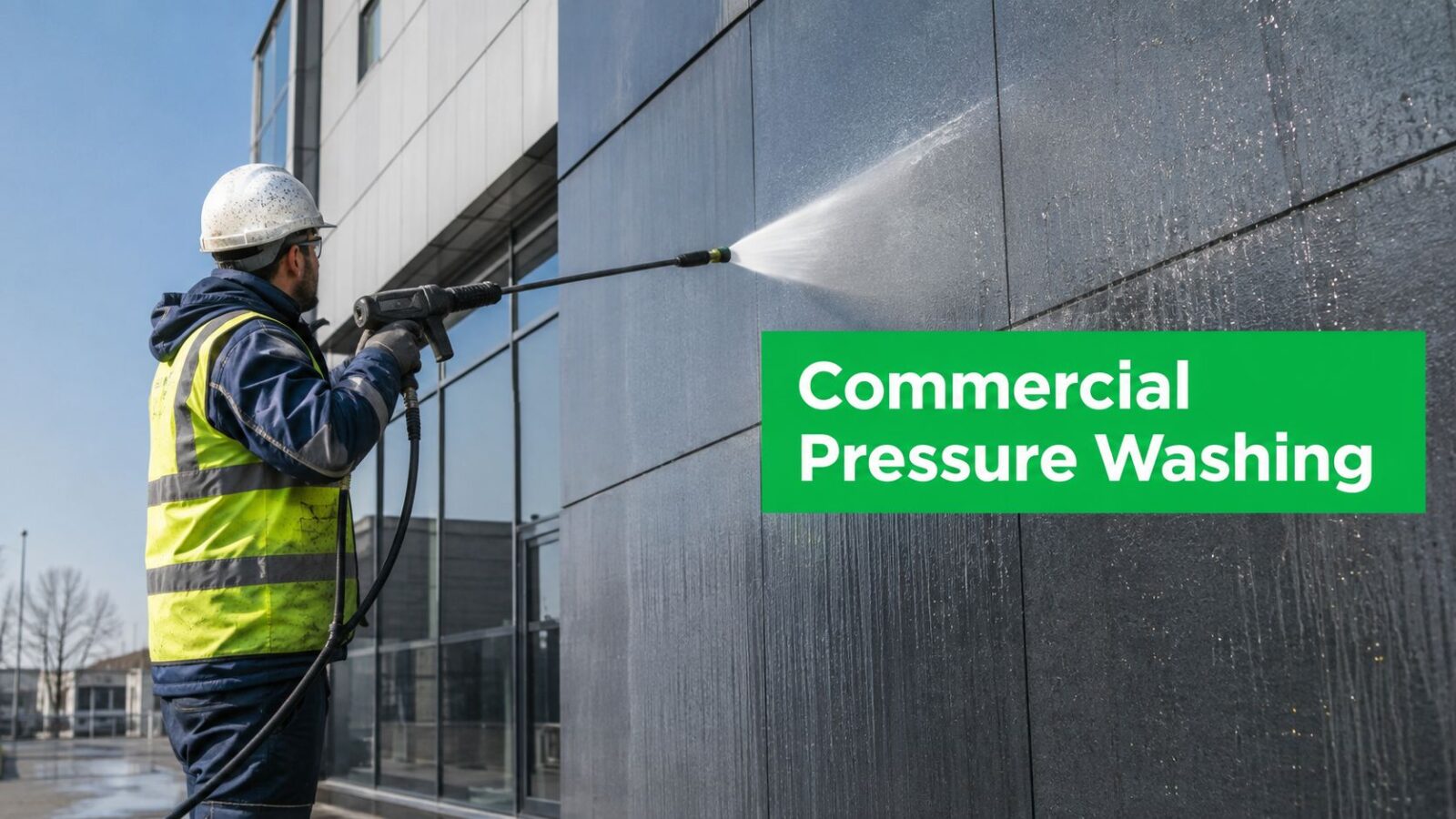
You're probably looking at a building that needs attention, not a shiny brochure promise. Maybe the sidewalks have gum and dark tracking lines, the loading area's holding onto grease, or the façade just looks tired enough that tenants are noticing before you do. Pressure washing commercial buildings solves more than appearance, because on a real property it affects safety, water handling, surface life, and how often you'll need to budget for exterior maintenance.
Commercial washing works best when you treat it like a planned building service, not a one-time blast of water. The right crew reads the surface, controls runoff, chooses chemistry carefully, and finishes with a walkthrough that tells you what changed and what still needs attention. That's the difference between a job that merely looks clean and one that fits the property.
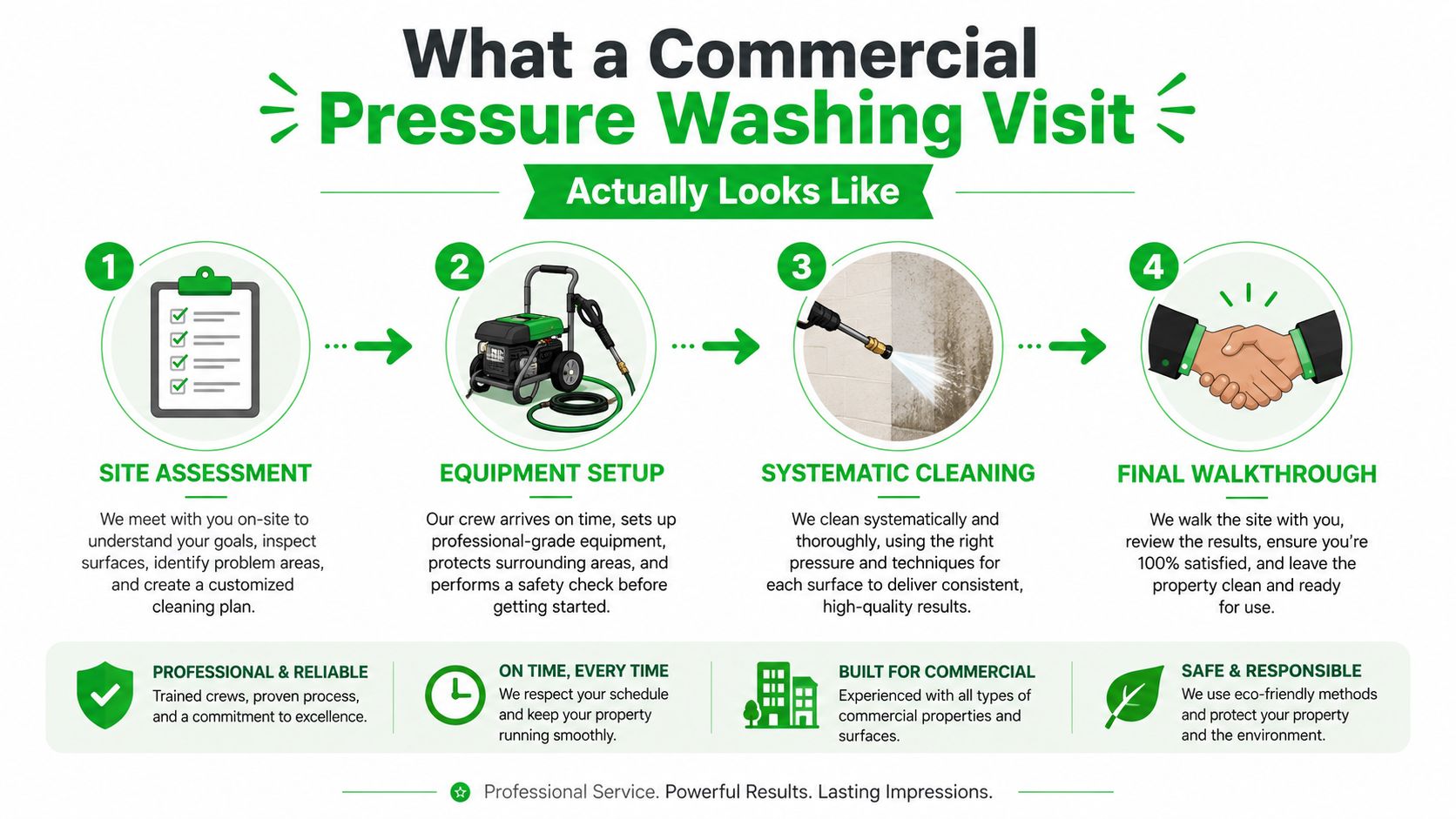
What a Commercial Pressure Washing Visit Actually Looks Like
You've already had the walkthrough with the vendor, and now the job is on the calendar. The morning of service usually starts with the crew leader checking access points, water supply, electrical hazards, and any areas that need protection before a hose ever uncoils. On a good site, the property manager gets a clear arrival time, a defined work zone, and a crew that doesn't force tenants or visitors to guess what's happening.
The work starts before the spraying does
The first pass is usually pre-treatment, not full-force cleaning. A qualified crew will spot-treat oil, gum, algae, or oxidized buildup so the main wash can do less damage and get more even results. That matters because a wandering wand on a dirty surface can leave stripes, and a strong machine doesn't fix poor preparation.
Practical rule: if the crew can't explain how they'll protect doors, landscaping, signage, and pedestrians, they're not ready to start.
What the clean-up phase should include
Once the surface is ready, the crew works in sections so rinse water, cleaner, and loosened soil stay controlled. You should see physical boundaries, warning signs, and equipment staged so hoses don't become trip hazards. A commercial job should feel organized, not improvised.
The last step is the final walkthrough. That's when the manager and crew leader inspect corners, shadowed areas, lower splash zones, and drains, then note any surfaces that need a second pass or a different method next time. The goal isn't just to see a brighter wall, it's to know the property was cleaned without creating a mess elsewhere.
Why Commercial Pressure Washing Is a Recurring Maintenance Market
A commercial building does not stay clean on its own. Dust, exhaust, irrigation stains, algae, gum, and handprints build up again because the property keeps working, traffic keeps moving, and weather keeps leaving residue behind. That is why pressure washing belongs in the same maintenance bucket as window cleaning, gutter service, and pavement care. A market overview shows that commercial washing is treated as a recurring service category, with demand tied to routine upkeep rather than one-time restoration.
What that scale means for your budget
That recurring demand changes how the job is priced and scheduled. Commercial washing is usually quoted by surface area, access, soil load, and the methods needed to protect nearby finishes, so the number you see on a proposal reflects more than just how dirty the wall looks. A simple storefront rinse and a multi-level building with tight access do not belong in the same pricing bucket.
For a property manager, the practical takeaway is straightforward. You are not buying a one-off blast of water. You are buying a maintenance interval that keeps the site readable to tenants, visitors, and inspectors without pushing the surfaces past what they can handle. A clean building can help boost your business's curb appeal, but the value comes from keeping the property on a predictable care schedule.
Where property managers usually go wrong
The most common mistake is waiting until the building looks neglected, then treating washing like an urgent repair. By that point, stains have had more time to set, runoff is harder to control, and scheduling becomes tighter because the property needs attention right away. The work still gets done, but the job often takes more coordination than it would have if it had been folded into routine maintenance.
A better approach is to treat pressure washing like an item on the building's normal care calendar. That means thinking about entrances, sidewalks, loading areas, walls, and drainage together, the same way you would review other exterior systems in a maintenance round. A commercial building maintenance checklist helps organize that broader view, because it keeps pressure washing tied to the rest of the property instead of isolated as a cosmetic fix.
The Nine Variables That Actually Drive Cleaning Results
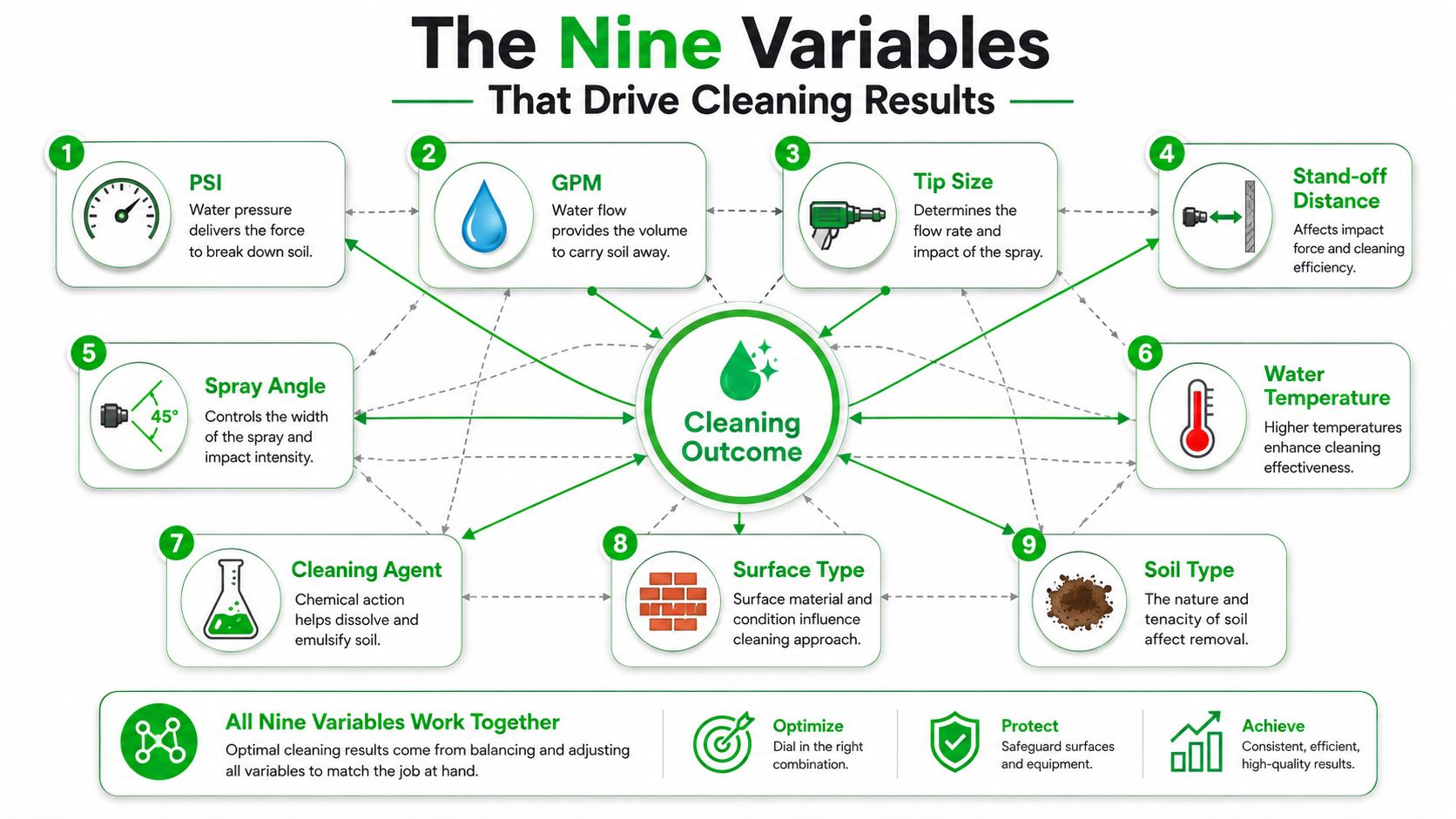
A lot of owners shop pressure washing like they're buying one number. That's a mistake. The Pressure Washing Contractors of America says effective cleaning depends on nine variables, PSI, GPM, tip size, stand-off distance and spray angle, nozzle type, chemical use, water temperature, abrasive media, and travel speed (PWCA guidance).
Think of pressure and flow as different jobs
PSI is the muscle, but GPM is the breath. High pressure without enough flow can carve channels through dirt without carrying it away, while a lower-pressure system with solid flow may rinse more evenly and finish faster. That's why two machines with the same pressure rating can behave very differently on the same wall.
Tip size, stand-off distance, and spray angle control how that force lands. A nozzle that's too tight can etch soft material, while a spray angle that's too wide may leave contaminants behind. Travel speed matters too, because moving too fast means the cleaner doesn't dwell long enough to work.
A vendor who only talks about PSI is giving you half the story.
Why chemistry and surface type matter just as much
Chemical use, water temperature, abrasive media, and soil type all shape the final result. Grease on concrete, algae on stucco, and road film on a garage deck each respond differently, even before the operator chooses a machine. That's why a high-PSI machine can still underperform if the nozzle, detergent, or pace doesn't match the surface.
One practical way to screen a contractor is to ask how they would change the setup for concrete versus painted metal. If the answer is just “turn it up,” keep looking.
Matching Pressure and Method to Each Commercial Surface
Commercial properties rarely fail as one uniform surface. A storefront entrance, a stucco wall, a concrete drive, and a sign cabinet each call for a different method, because the wrong approach on one area can create damage that was not there before. Independent industry guidance places production-grade commercial equipment in the roughly 3,000 to 5,000 PSI range, but the decision is how that pressure is matched with flow and chemistry.
A crew choosing between methods is usually doing the same kind of judgment call a property manager makes when deciding whether a roof leak is urgent or merely inconvenient. The surface, the soil, and the risk all have to be read together.
Concrete and parking areas want force, not abuse
For commercial concrete and parking areas, the practical range is often around 3,000 to 4,000 PSI with 4 to 8 GPM when the goal is to remove oil, gum, and embedded grime (commercial pressure washing guide). That range gives a contractor enough force to break up contamination and enough flow to carry it away instead of just moving it around. A qualified crew may still pre-treat stains, use a surface cleaner for even passes, and slow down in the dirtiest lanes where tires and dripping fluids have settled into the pores.
A parking lot is not cleaned like a sidewalk chalk mark. The job is closer to washing a cutting board after a messy prep shift, where the surface needs both agitation and rinse volume to come clean instead of just looking rinsed.
Facades need restraint, especially on fragile finishes
For stucco, EIFS, and painted surfaces, the safer approach is usually soft washing below 500 to 1,000 PSI with chemistry doing most of the work (commercial pressure washing guide). That lower-pressure method helps avoid etching, water intrusion, and paint failure. A one-setting-fits-all wash on these surfaces is how a cleaning job turns into a repainting problem.
Storefront glass frames, signage, and decorative trim need the same restraint. On those details, an experienced crew will often adjust nozzle choice, distance, and angle before changing machine output. For a manager, the plain-English takeaway is simple, delicate finishes fail from force long before they fail from dirt.
Pine Country Window Cleaning's eco-friendly pressure washing approach fits that kind of surface-by-surface decision-making, where the method changes with the material instead of treating every exterior the same.
The rule of thumb for mixed properties
Most commercial sites have both durable and delicate materials, so the crew should move area by area. Concrete may get a stronger pass, while the building skin gets a softer treatment and selective chemistry. If the operator does not change tactics from one surface to the next, the property carries the risk instead of the vendor.
That is the practical test to keep in mind. A good commercial wash plan is not about using the strongest setting available, it is about matching the cleaning method to the surface so each part of the property gets cleaned without creating a new repair job.
EPA, Stormwater, and Lead Compliance on Real Job Sites
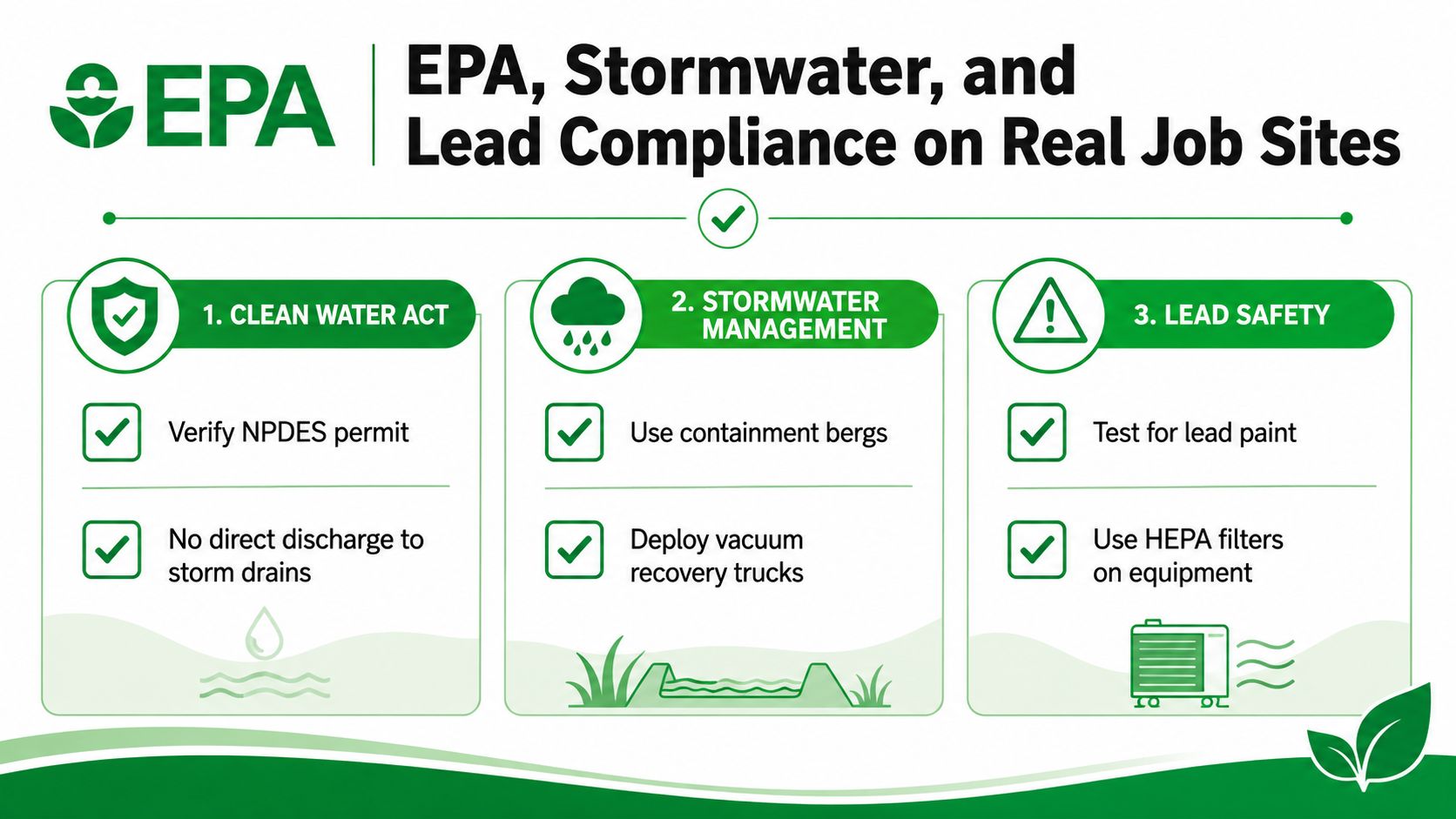
A crew can do a clean wash and still create a compliance problem if the wastewater ends up in the wrong place. A property-manager guide explains that the Clean Water Act and the NPDES program prohibit untreated wastewater from entering storm drains, retention ponds, or waterways, and it recommends containment berms, vacuum recovery systems, and written wastewater disposal records for each job (commercial property manager guide). For a manager, that means the wash plan is not just about appearance, it is part of the site's environmental controls.
What runoff control looks like on paved and grassy areas
On paved areas, King County guidance says that if soaps or detergents are used, wash water must be collected with a sump pump or wet vacuum, and the runoff and solids must be disposed of properly. If no soaps or detergents are used, the runoff still has to be screened, because leaving it unchecked can still send grime and debris toward the storm system (King County guidance).
On grassed areas, the same guidance says pressure washing should use sheet flow so the water spreads across the turf and infiltrates there instead of running toward pavement or a storm drain. That detail sounds small, but it decides whether a job stays on site or becomes a drainage issue. A wash that leaves the siding spotless can still be the wrong method if the runoff path is unmanaged.
Practical rule: the strongest cleaning setting is not always the right one. On many commercial sites, runoff control sets the limit before cleaning power does.
Lead and other surface hazards change the job
EPA RRP guidance says pressure washing is allowed, but it has to follow the same containment requirements used for other permitted work practices. The contractor must isolate the work area so dust, debris, and wastewater do not leave the area during the renovation, keep containment in place, and avoid blocking emergency egress (EPA RRP guidance). If a site has older coatings or suspect materials, the crew has to plan for that before the first pass, not after overspray or residue starts moving.
A formal exterior-cleaning code of practice defines pressure washing as water applied at pressures up to 20.7 MPa, 3,000 PSI, or 207 bar, and it says pressure cleaning asbestos cladding, fences, and roofs is illegal (ECIA code of practice). That is why a site walk matters. The operator has to know what the surface is, where the water will go, and whether the material can be cleaned without creating a hazard. If you are comparing vendors, it also helps to review their eco-friendly pressure washing approach alongside their cleanup plan, because environmental method and compliance are part of the same job. For pricing context, hourly and square foot cleaning fees can make sense only after the contractor explains how runoff, containment, and surface type will be handled.
Pricing Factors and What Drives a Fair Quote
A fair commercial pressure washing quote should read like a maintenance plan, not a guess. A property manager should be able to see what surfaces are being cleaned, what problems are being treated, and what the contractor is responsible for if runoff, access, or chemistry creates extra work. Square footage helps frame the job, but it never tells the whole story.
A building with one easy-access wall is a very different project from a stained facade with multiple levels, limited staging, and wastewater control. Height, access, contaminant load, and surface type all affect the labor mix. That is why a parking deck, service alley, or restaurant loading area usually takes more coordination than a straightforward sidewalk wash.
Wastewater handling changes the quote in the same way. If the site needs capture equipment, diversion, or extra cleanup, those tasks belong in the price. Very low bids often leave one of those pieces out, and the missing work usually shows up later as a problem on-site.
The main levers that move price
| Factor | Why It Matters | Cost Direction |
|---|---|---|
| Surface type | Concrete, stucco, metal, and painted finishes need different pressure and chemistry | More delicate or mixed surfaces usually increase cost |
| Square footage | Larger areas take more time, water, and labor coordination | Bigger area usually raises total price |
| Contaminant load | Oil, gum, algae, and buildup require more pre-treatment and dwell time | Heavier buildup pushes cost up |
| Height and access | Lifts, staging, and reach equipment add complexity | Harder access increases cost |
| Water and chemistry needs | Special detergents, hot water, or soft-wash systems change the process | More specialized work usually costs more |
| Wastewater handling | Capture and disposal take labor and equipment | Compliance work raises cost |
A practical way to check pricing is to compare how vendors describe scope. That is where hourly and square foot cleaning fees can help you sort labor-based pricing from area-based pricing, especially when a crew is estimating a job that mixes open paving, entrances, and detailed cleanup. For a local reference point on how scope gets framed, the pressure washing service cost page gives a useful comparison point without pretending every property should fit the same template.
What a solid quote should say
A good estimate names the surfaces, points out the problem areas, and says whether runoff control, chemistry, and access equipment are included. It should also state what is excluded. That matters because surprises usually live in the gaps between a low starting number and the work needed to finish the job correctly.
If a vendor cannot explain the price drivers in plain language, the quote probably was not built with enough care. Clear pricing should tell you what the crew is cleaning, what it is protecting, and what conditions could change the final scope.
How Often to Schedule Pressure Washing by Property Type
A useful cadence depends on who uses the building and what lands on it. Retail storefronts usually need more frequent attention because visibility matters every day, while office buildings can often stretch longer between full washes if the entrances stay clean. Medical and institutional facilities need a more conservative schedule because dirt, traffic, and first impressions all carry more weight.
A practical maintenance rhythm
- Retail storefronts: Schedule regular sidewalk and entrance cleaning more often than the full building skin, since customer-facing areas collect the fastest visible buildup.
- Hospitality properties: Clean exterior walk zones, entrances, and loading areas on a tighter cycle, because guest traffic notices grime quickly and service zones get dirty first.
- Office buildings: Plan periodic full washes, then spot-clean entrances and high-traffic areas between bigger service dates.
- Medical and institutional facilities: Prioritize consistent exterior cleaning of arrival zones, accessible walkways, and any area where appearance and safety overlap.
- Dealerships: Keep display fronts, walkways, and customer parking areas on a visible maintenance rhythm, because vehicle presentation is tied to the site image.
- Parking decks: Watch for tire film, spills, and winter residue, then schedule cleaning based on visible soil rather than a once-a-year rescue.
Northern Arizona changes the cadence. Monsoon dust, pine pollen, winter road film, and strong UV exposure all create a different buildup pattern than a humid coastal market. A building here may need a wash plan that tracks seasonal debris instead of only calendar quarters.
Practical rule: if your property looks fine from far away but the entrances and lower walls keep collecting grit, shorten the interval on the high-contact zones first.
For Flagstaff-area managers, that usually means a site walk before each season, then a targeted plan for entrances, walkways, and loading areas. If you're building a maintenance calendar, the next move is simple, get a local estimate and compare it against your actual traffic, exposure, and surface mix.
Pine Country Window Cleaning's Commercial Capabilities and Service Area
Pine Country Window Cleaning has served Northern Arizona since 1999, and the company is Flagstaff's largest window cleaning company, founded by Flagstaff native David Kaminski. That background matters here because the same field discipline used for windows, ladders, pure-water brushing, and careful site protection carries over into commercial pressure washing work. The company's technicians are background-checked and OSHA safety-trained, and the team works on properties that need both exterior cleaning and access planning.
What commercial managers can expect on site
Pine Country's in-house access equipment includes boom lifts, scissor lifts, and a 95-foot atrium lift, which helps the crew handle taller commercial properties without outsourcing the reach equipment. That matters on hotels, NAU facilities, dealerships, medical buildings, and high-rise properties, where access and safety planning drive the job as much as cleaning chemistry does. For a property manager, that means one vendor can handle the staging problem instead of handing it off to a separate lift company.
The company also offers a free estimate by phone or online, which makes the first step straightforward. If you're comparing providers, ask who will show up, what equipment they'll bring, how they'll handle runoff, and how they'll protect adjacent surfaces.
Why one local call can simplify the whole plan
Commercial exterior maintenance gets easier when the same team can evaluate windows, pressure washing, and other exterior tasks together. Pine Country Window Cleaning also handles gutter cleaning, downspout cleaning, post-construction window cleaning, and seasonal snow shoveling and removal, so a facility manager can coordinate more of the property's exterior needs through one local contact.
The three decisions that matter most are simple, what to clean, how often to clean it, and what compliance posture the job needs before water starts moving. If you want a local crew that understands commercial access, scheduling, and surface protection in Northern Arizona, visit Pine Country Window Cleaning and request a free estimate for your property.