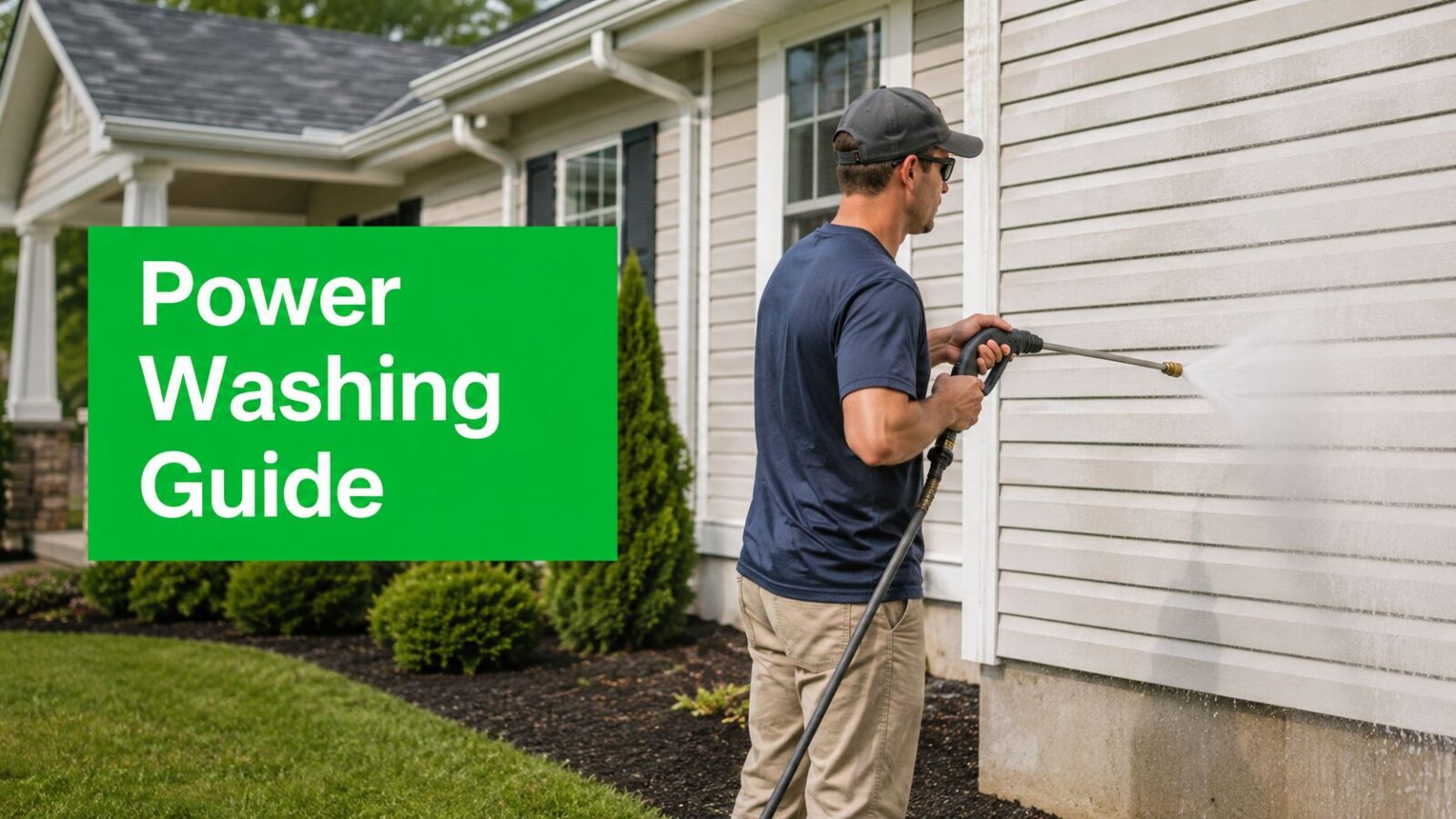
If you're standing in the driveway after a windy week in Flagstaff or Munds Park, looking at dusty siding, you already know the question. Not “Do I need cleaning,” but what kind of cleaning won't hurt the house. A good power washing house near me search should lead to a crew that understands local dust, stucco, pine pollen, and the difference between a quick blast and a careful exterior wash.
What Power Washing a House Near Me Really Covers
A homeowner usually notices it first on a north-facing wall, the garage door, or the soffits after a stretch of wind. The house still looks solid from the street, but the grime has started to sit in the texture, and every rinse with the garden hose barely changes it. That's where a real house wash earns its keep, because it's meant to remove buildup from the exterior, not just wet it down.
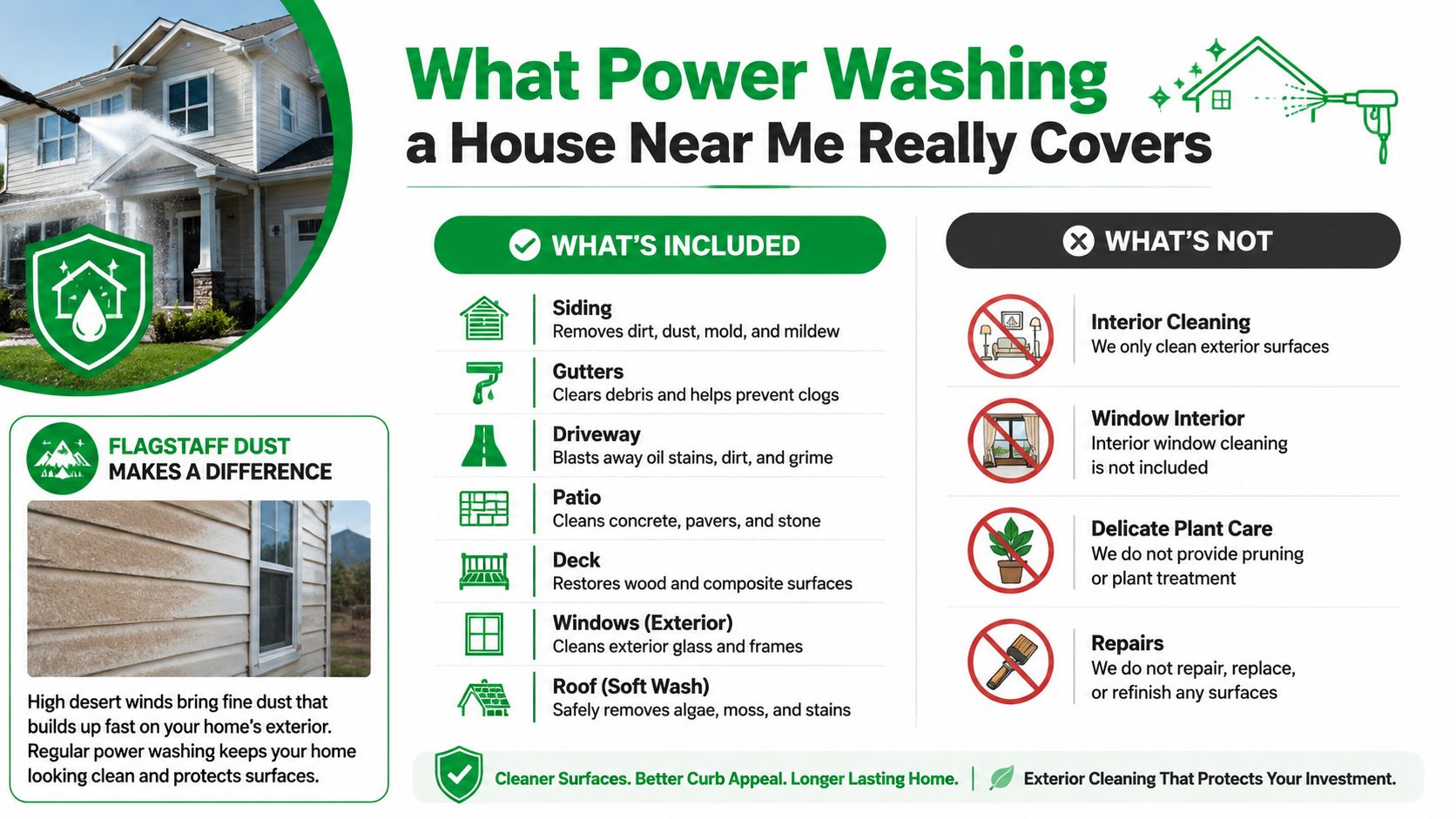
What gets cleaned in a standard visit
A typical house wash usually focuses on siding, soffits, eaves, exterior gutters, window frames, garage doors, and selected walkways. On many homes, that also means the visible parts of patios, decks, and driveway edges if they're part of the quote. The work is about restoring the outside envelope of the property, not polishing every surface to showroom condition.
The easiest way to think about it is garden hose versus firehose. A gentle wash uses chemistry and controlled rinsing to lift dirt. A hard blast uses force, which can help on concrete but becomes a problem fast on siding, trim, and older paint.
Practical rule: if a surface looks like it could peel, split, or leak, it needs a softer approach than raw pressure.
| What a Typical House Wash Includes | Usually Included | Usually Quoted Separately |
|---|---|---|
| Exterior siding and trim | Yes | |
| Soffits and eaves | Yes | |
| Exterior gutters | Yes | |
| Garage doors | Yes | |
| Exterior window frames | Yes | |
| Driveway or walkway touch-up | Sometimes | Often separate |
| Decks or patios | Sometimes | Often separate |
| Interior cleaning | Yes | |
| Interior windows | Yes | |
| Roof tile work | Yes |
Not every crew includes the same scope, and that matters in Northern Arizona where a cabin in Munds Park or a second home in Flagstaff may need more than a basic rinse. If a bid sounds vague, ask what's included in writing before anyone starts the pump.
Soft Wash Versus High Pressure and Why It Matters
The biggest mistake I see is homeowners assuming every exterior needs maximum pressure. That's fine for some concrete and masonry, but it's a bad default for siding, painted trim, and anything with age on it. The right question isn't “How powerful is the machine?” It's “How much pressure does this surface tolerate?”
The surface decides the method
General guidance puts vinyl siding around 1,200 to 2,000 PSI, wood siding around 1,200 to 1,500 PSI, and brick or concrete around 2,500 to 3,000 PSI in the right conditions, with a low-pressure detergent application first and a downward rinse afterward (Charlotte Observer). That's why a contractor who talks about one universal setting is usually guessing. On siding, too much force can lift paint, weaken caulk, or push water behind the cladding.
A soft wash works more like washing a car than blasting a driveway. The detergent loosens the dirt, then a controlled rinse removes it without chewing up the surface. If you want a plain-English comparison, Pine Country's own local explainer on the difference between methods is useful, and their pressure washing vs. power washing guide helps frame why the terms get mixed up so often.
What a careful crew does instead of cranking pressure
The better approach is selective, not dramatic. On many Flagstaff homes I've seen, that means starting at low pressure, testing a small area, and adjusting based on the siding, the age of the finish, and what the grime is. A crew that defaults to the highest setting usually hasn't spent enough time looking at the house.
For homeowners who want a deeper walkthrough of soft washing as a method, this soft wash house cleaning resource from Cultivate House Detailing gives a helpful overview of the logic behind low-pressure exterior care. It's the same principle professionals use when a home has oxidized siding, delicate trim, or a finish that shouldn't be stripped.
If the crew can't explain why they're choosing pressure for one wall and soft washing for another, keep asking questions.
How a Professional Crew Actually Washes Your Home
A crew pulling up to a cabin in Munds Park or a ranch home outside Flagstaff should start by reading the property, not reaching for the wand. The first pass on foot tells them where pine pollen has settled, where monsoon dust has packed into corners, whether stucco is weathered from elevation, and where overspray could reach vents, outlets, or a neighbor's fence. That prep is what keeps the wash controlled instead of turning it into a mess.
The sequence matters
Professionals usually work section by section, and they do not wet the whole house at once. They apply detergent to one wall, let it dwell just long enough to loosen the film without drying, then rinse from top to bottom so dirty runoff does not streak over already-cleaned surfaces (Homes and Gardens). On Northern Arizona homes, that rhythm matters because dry air can pull solution off a wall faster than a crew expects, especially on sunny exposures.
The spray pattern matters too. Good crews keep steady side-to-side motion and overlap passes so they do not leave striped bands behind (Homes and Gardens). The wand should stay angled downward, or roughly 45 degrees, so water is not driven upward under siding or trim. On older cabins with tired caulk lines, that angle is not a style choice, it is part of keeping water out of places it should not go.
What care looks like on the ground
Before the spray starts, a careful crew moves furniture, protects shrubs when needed, and checks outlets, lights, and outdoor fixtures. On some homes, that means hand-rinsing a tight corner instead of forcing a machine into it. On others, it means slowing down around painted trim, lattice, or a breezeway where runoff can pool and leave a dirty line if it is rushed.
Pine Country Window Cleaning offers pressure washing as one of its services for homes and businesses, and that same local care should show up in how the crew handles exterior surfaces, not just glass. A job done right leaves the house clean and leaves the property arranged the way it was found. If you are comparing options, their pressure washing service cost guide is a practical place to start because it helps set expectations before anyone arrives.
A straightforward visual makes the workflow easier to follow from arrival through final inspection.

What Power Washing a House Near Me Should Cost
The price makes more sense once you look at the job itself. A small ranch with open access, light buildup, and standard siding should not cost like a steep cabin with tight walkways and extra prep. In Flagstaff and Munds Park, the quote often moves with access, roofline height, pine pollen, monsoon dust, and how much handwork the exterior needs before the rinse even starts.
The main pricing drivers
National pricing data puts professional house pressure washing at about $0.10 to $0.50 per square foot, with an average project around $310 and many jobs landing in a $100 to $700 range depending on size and complexity (Angi). Another national guide says most home pressure-washing jobs fall between $212 and $448, with an average of $311 (HomeAdvisor). Story count matters too, with one-story homes generally estimated at $150 to $750, two-story homes at $400 to $1,400, and three-story homes at $700 to $1,800 (HomeAdvisor). On a mountain property, those ranges can climb if the crew needs more ladder time, longer hose runs, or extra care around aging stucco and trim.
The labor side matters just as much. Task-based pricing data says a house or driveway job usually takes 30 minutes to 3 hours, plus 15 to 30 minutes for setup and pack-up, and the hourly rate is about $52 per hour in the U.S. (HomeGuide). If a property is steep, crowded with landscaping, or awkward to reach, the crew is spending more time on safety and access before they ever clean a wall.
A simple way to sanity-check a quote
A quote that seems unusually low often leaves out part of the work. A quote that seems unusually high should explain what adds time, such as detached garages, porches, gutters, soffits, walkways, or exterior windows. The cleanest estimates list scope clearly, so you can compare one crew against another without guessing what is included.
| Typical House Washing Price Ranges by Size | Typical Price Range | Notes |
|---|---|---|
| Small single-story home | Often on the lower end of the national range | Easier access, less labor |
| One-story home | Range from HomeAdvisor | Common residential benchmark |
| Two-story home | Range from HomeAdvisor | More ladder work and time |
| Three-story home | Range from HomeAdvisor | More access risk and setup |
| Higher-complexity job | Often above the normal range | Steep lots, cabins, or add-ons |
For a more local cost framework, Pine Country's pressure washing service cost guide is worth a look before you book. It gives homeowners a steadier way to compare estimates instead of trying to decode a vague phone quote.
When Power Washing Is the Wrong Call for Your House
A careful contractor should sometimes say no to high pressure. That isn't a sales loss, it's a sign the person looked at the house. Older siding, brittle caulk, failed paint, and water-sensitive assemblies all change the answer.
Red flags on the exterior
The Home Depot warns that pressure washing can damage delicate surfaces, force water into gaps or cracks, and demands extra care around windows, outlets, shrubs, and roof overhangs (The Home Depot). TaskRabbit also notes that delicate surfaces such as wood, glass, and certain siding need care. That lines up with what I've seen on older Flagstaff homes, where a little oxidation or a hairline crack can turn into a bigger issue if someone sprays without thinking.
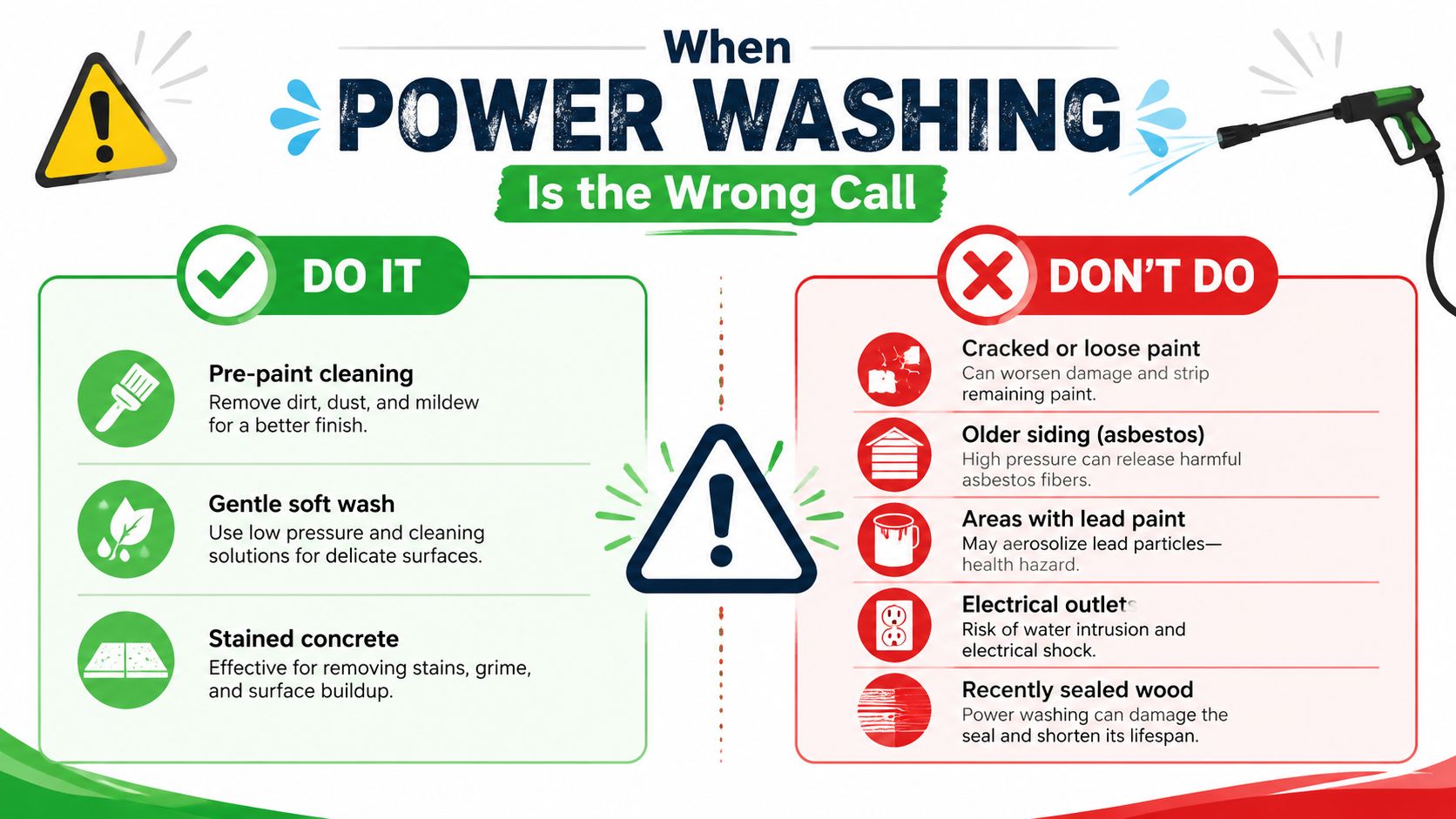
A house with flaking paint or fragile stucco may need soft washing, partial cleaning, or prep work before any stronger wash. In some cases, repainting first is the smarter move. A contractor who pushes ahead anyway is choosing speed over the structure.
Questions that expose the right mindset
Ask these on-site if the property looks old or sensitive.
- What method are you using on my siding? You want a direct answer, not a generic “we pressure wash everything.”
- Will you soft wash where the surface is delicate? That tells you whether the crew adjusts technique.
- What areas are excluded from the quote? This keeps surprises off the invoice.
- Would you refuse high pressure if you saw a risk? A good operator should answer yes without hesitation.
If the answers stay vague, stop there. A crew that can explain why they're changing methods probably cares about the house. A crew that can't explain the difference usually cares more about finishing fast.
Preparing Your Home and Vetting a Local Crew
The simplest prep saves the biggest headaches. Close the windows, move patio furniture, bring in mats and small decor, open gates, and clear the driveway so the crew can work without weaving around obstacles. If you know about a leak, a loose screen, or a plant that needs special care, point it out before the hose starts.
Prep the property before the truck arrives
This short list covers the usual basics.
- Close and latch windows: Prevent water from getting where it doesn't belong.
- Move lightweight furniture and decor: Keep breakables out of the spray zone.
- Clear vehicles from the driveway: Give the crew a clean work path.
- Open gates and note access issues: Save time at arrival.
- Identify delicate plants or known leaks: Those details change how the job gets handled.
The vetting side matters just as much. Ask for proof of insurance, ask what method they'll use on your siding, ask whether they soft wash by default, and ask what's included in writing. Best Pick Reports also flags common contractor problems such as no written contract, full upfront payment requests, and bids that are far below competitors, which are all worth treating as warning signs.
Ask for specifics, not promises
A local guide from Newline Painting's painters-near-me resource makes the same basic point about hiring exterior trade contractors, know what's included, verify the scope, and don't skip the documentation. That advice holds up here too. If the company won't put the work in writing, keep looking.
Pine Country Window Cleaning also staffs technicians who are background-checked and safety-trained, which is the kind of operational detail homeowners should ask about no matter who they hire. You're not just buying clean siding, you're allowing a crew onto your property. That deserves a straight answer about training, insurance, and scope.
Why Local Northern Arizona Knowledge Matters on This Job
Flagstaff and Munds Park aren't generic suburbs, and the houses don't age like they do in milder climates. Pine pollen coats north-facing walls, monsoon dust settles into stucco, and strong sun beats up finishes that can't take aggressive washing. In HOA communities and second-home neighborhoods, the margin for sloppy work gets even smaller.

Why the local workflow beats a generic route
A neighborhood crew already understands the homes, the access patterns, and the climate. That matters when you're handling a Pine Canyon listing, a Forest Highlands cabin, or a short-term rental that has to turn over fast between guests. It also matters on taller or harder-to-reach properties, where in-house equipment like boom lifts, scissor lifts, and a 95-foot atrium lift can make a safe, efficient difference.
Pine Country Window Cleaning has worked Northern Arizona properties since 1999, and that long run shows up in how the work gets scheduled and done. Their pressure washing service page is a useful reference if you want to see how exterior washing fits alongside window cleaning, gutters, and seasonal property care. A local team is usually better at spotting what the house needs before the water starts.
When you're ready to get the siding, soffits, and exterior surfaces handled the right way, Pine Country Window Cleaning can give you a free estimate, schedule the visit, and back the job with a 100% satisfaction guarantee. Visit Pine Country Window Cleaning to request service for your Flagstaff or Munds Park home, cabin, or rental property.