

The house is already half-packed, the spare room looks like a storage unit, and the first showing is suddenly a lot closer than it felt last month. In Flagstaff, that's usually when sellers realize the windows still need attention, the front walk is dusty from the last wind event, and the photos are going to capture every streak, shadow, and tired corner. Preparing home for sale works best when it starts early, stays practical, and treats light, cleanliness, and exterior presentation as real selling tools, not afterthoughts.
Why a 90-Day Plan Beats a Weekend Scramble
A Munds Park cabin owner once did what a lot of sellers do. He listed too early, assumed the place would “show fine,” then got low offers and pulled the listing. The problem was not just the decor or the price. The home looked rushed, and rushed homes tend to feel neglected.
Buyers do not read a house the way owners do. Owners know the roof was serviced last year, the slider sticks after winter, and the foggy pane is “probably nothing.” Buyers see unfinished work, then they start adding up future repairs and future hassle. When you are selling, that is the wrong impression to leave on the table. Market-timeline reporting based on National Association of Realtors data has shown that homes often spend a long stretch between listing and closing, so a last-minute scramble usually lands in the most visible part of the process, the part buyers photograph and remember. AmeriSave timeline breakdown
Why rushed prep shows up in the listing
Photos taken before the home is ready tend to lock in a weak first impression. Buyers notice dusty trim, tired lighting, and glass that dulls the room, especially in a mountain market where natural light has to work for every sale. If you are still repairing, cleaning, and staging while the listing is live, you are usually competing with your own unfinished house.
A listing should look settled, not frantic.
The strongest prep plans do not chase perfection. They clear away the things that trigger hesitation, then use the house's best features, like brightness, views, and clean exterior lines, to carry the marketing. That is why a longer runway usually beats trying to do everything in one exhausting weekend.
A practical timeline also helps you sort work by payoff. A window washing schedule, exterior wash work, and a few targeted repairs usually do more for buyer confidence than another round of rearranging furniture.
If you want a simple seasonal planning reference, a seasonal home maintenance checklist helps keep the work organized before the listing date gets close.
The 60-90 Day Countdown From Listing Day Backward
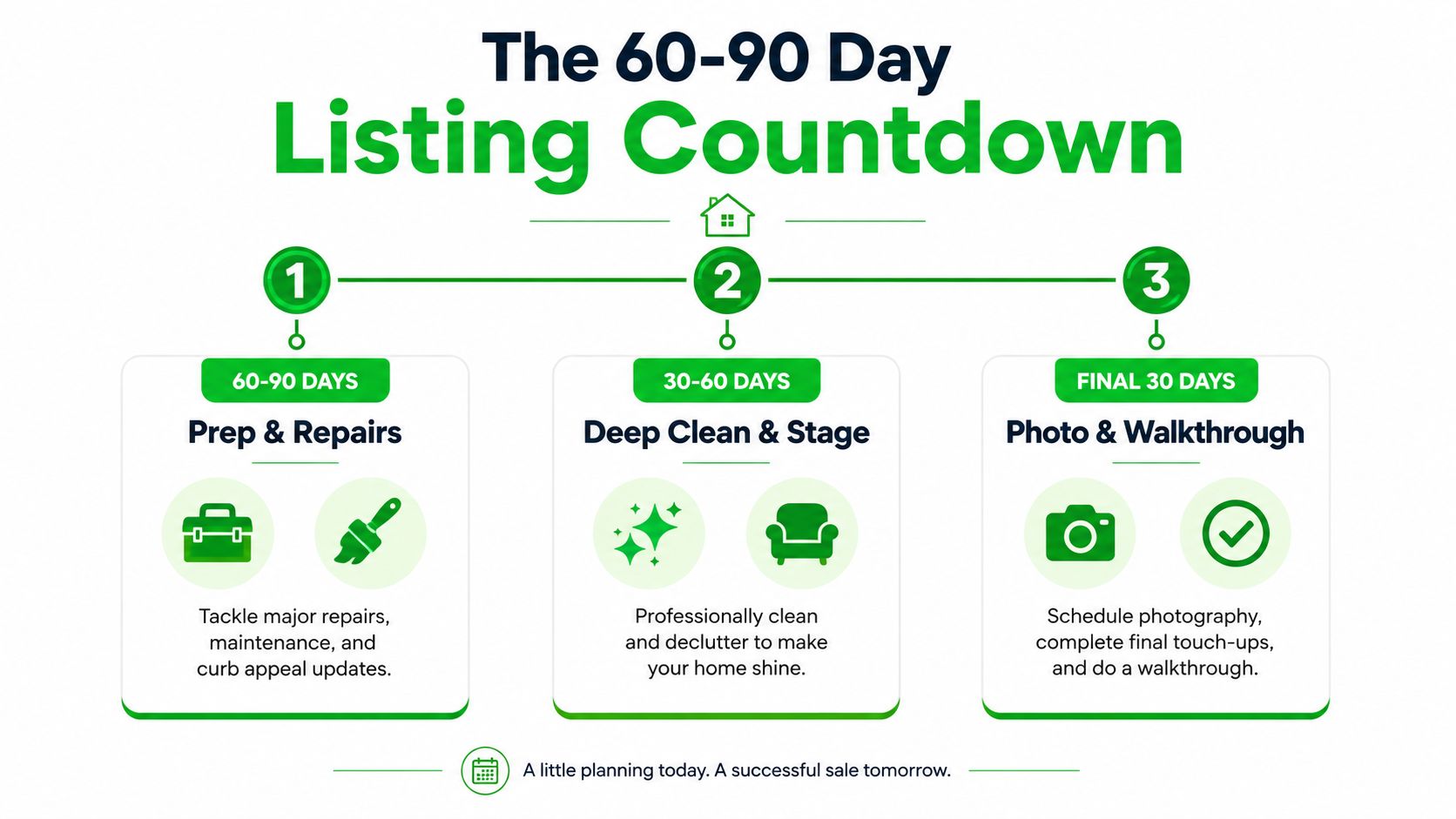
Start with the listing date and work backward. That keeps the work grounded in reality, which matters when contractors are booked, weather shifts fast, and some homes sit empty between guest stays or snowbird visits. A good 60 to 90 day pre-listing workflow begins with repairs and improvements, moves into decluttering and staging, and finishes with photography and final walkthroughs in the last 1 to 2 weeks, which matches Zillow's guidance on getting a house ready to sell (Zillow).
The first phase, 60 to 90 days out
This is the repair window. Pull permits if you need them, book inspections, and get bids before everyone else in town is trying to finish their own spring or fall listing prep. Major fixes go here, along with anything that could show up as a red flag later.
For owners in Pine Canyon, Forest Highlands, or Munds Park, this is also the right time to coordinate around travel, guests, and weather. If you wait until the final month, the schedule starts to fight back. When the calendar gets tight, it's easier to make bad calls, like patching over an issue that should've been disclosed or postponing a repair that buyers will notice immediately.
The middle phase, 30 to 60 days out
Decluttering, room-by-room cleaning, staging, and storage decisions take over. It's also the point where a seller should stop thinking like a resident and start thinking like a photographer. Every visible item competes with the architecture.
A useful place to keep your own list is the seasonal home maintenance checklist, because the work is easiest when it's grouped by systems and seasons instead of random chores.
The final phase, last 1 to 2 weeks
That's the photo, touch-up, and walkthrough window. Schedule the professional photography once the house is ready, not before. Then do the final sweep, confirm that paperwork is organized, and make sure the home still looks as good on a Tuesday morning as it did when you staged it on Saturday.
Priority Repairs That Actually Move Buyers
A pre-sale inspection is useful because it tells you what buyers are likely to find later. NAR's seller guidance explicitly recommends considering one, which is the right move when you'd rather handle problems before they become a point in negotiations (NAR seller guidance).
Fix the things that read as maintenance, not taste
In Flagstaff, the repairs that matter most are the ones that make a house look cared for. UV-baked trim, cracked caulk, foggy glass, sticky sliders, and tired exterior paint all send the same message, deferred maintenance. Buyers don't need a perfect house, but they do need confidence that the place has been looked after.
Roof edges, gutters, HVAC service, and the water heater matter because they connect directly to inspection language. If something is clearly near the end of its life, address it directly instead of hoping nobody notices. A house that photographs well but feels risky in person often gets parked in a buyer's “maybe” pile.
Use inspection logic before you spend on upgrades
That's why a seller should think in terms of triage, not renovation. A repaint might help if it fixes obvious wear, but it won't solve a failing window seal or an aging system. Buyers usually forgive cosmetic limits more easily than signs of neglect.
If you want a plain-English list of common inspection problems, Bulls Eye Repair tips for home buyers is a useful reference point because it helps sellers understand what tends to trigger concern before the front door even opens.
Handle the items that create doubt first, then leave the rest alone unless they're obvious in photos or during a walkthrough.
That approach saves money and keeps the listing story consistent. The goal is not to make every surface new. The goal is to make the home feel honest, clean, and structurally believable.
Deep Cleaning the Flagstaff Way
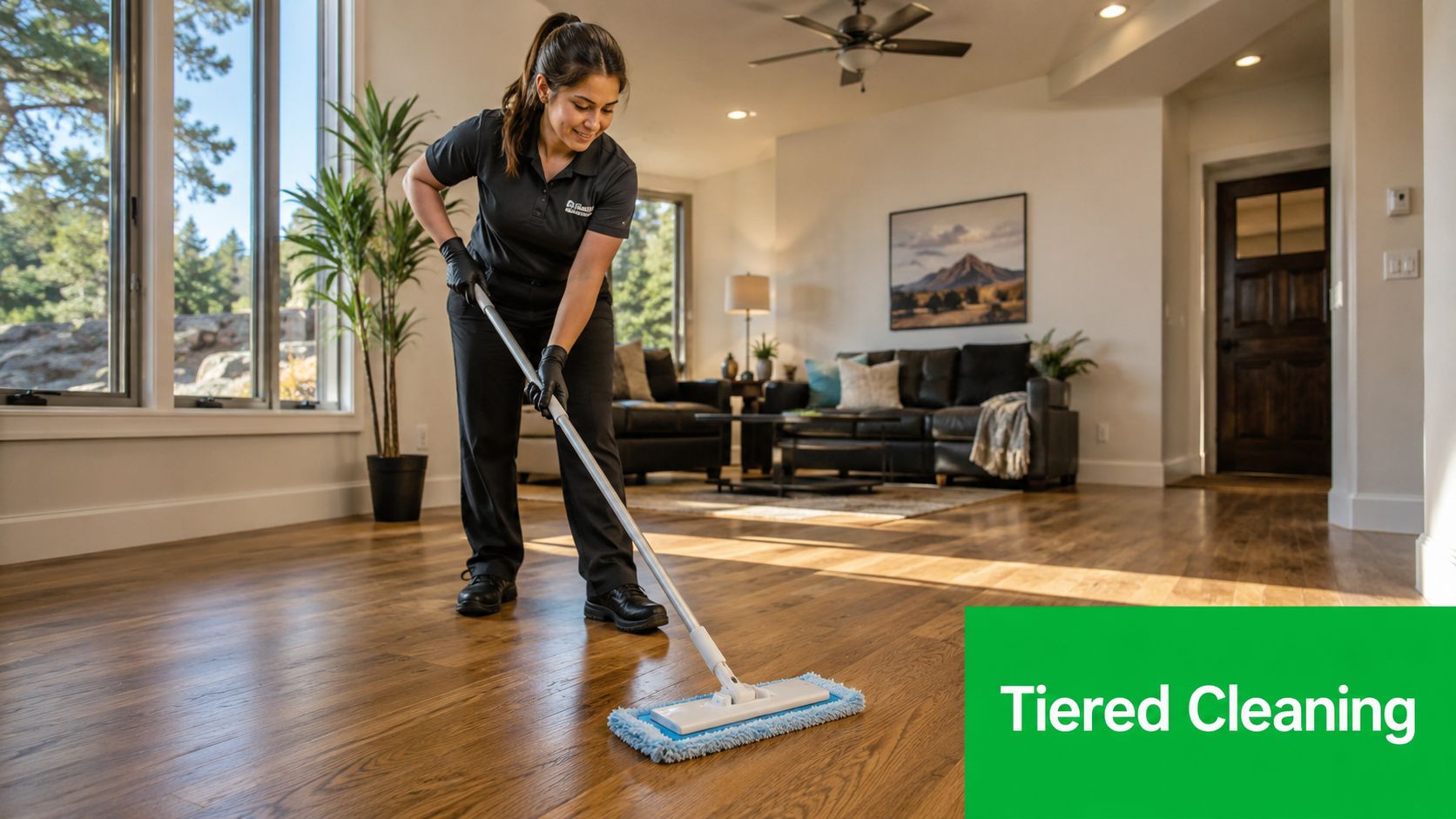
Deep cleaning isn't one chore here, it's a sequence. The house has to look bright in photos, clean in corners, and ready for people who'll notice more than you think. In this climate, that means dust control, glass work, exterior washdown, and careful treatment of screens and frames.
Start with the work you can do yourself
Inside, focus on the surfaces buyers touch and the edges they inspect, baseboards, cabinets, vents, appliances, bathrooms, and floors. Kitchens and baths should feel reset, not just wiped down. Carpets should be treated for traffic lanes, and grout should look clean enough that buyers don't start mentally pricing replacements.
Hire out the work that changes light
Professional glass cleaning earns its place in the prep plan. Squeegees, ladders, poles, and pure-water brushes give a cleaner result than the kind of quick pass the average homeowner can manage on their own, especially on upper panes and exterior glass. In Flagstaff, light is a selling feature. If the glass is streaked or dull, the room loses that advantage immediately.
A service like Pine Country Window Cleaning fits naturally here because it handles exterior glass, screens, and reinstallation as part of the visit, which matters when you're trying to protect the home while improving presentation. They also work carefully around the property, which is important when a seller has already packed valuables and wants the home treated with respect. For homeowners comparing cleaning options, the house cleaning Flagstaff page is a practical starting point.
Don't skip the outside wash
Exterior wash work changes listing photos in a way that interior polishing can't. Gutter clearing, siding rinse, driveway cleanup, and walkway washing all make the house read as maintained. In twilight photos, that polished exterior can carry the whole image set.
If you've ever wondered why a room felt better after the glass was cleaned, it's not subtle. Cleaner glass gives the home more daylight, and more daylight makes every other surface look intentional.
Staging That Works in Cabins and Family Homes
A Forest Highlands cabin can feel warm, spacious, and expensive, or it can feel crowded and lived-in in all the wrong ways. The difference is usually staging discipline, not furniture budget. Buyers respond when a home feels like they can move in without decoding someone else's life.
Use the 50 percent rule
According to the National Association of Realtors, 81% of buyers' agents say staging and preparation help buyers visualize a property as their future home, and staged homes sell for about 1% to 5% more than unstaged homes. A practical benchmark is to remove roughly 50% of visible items so rooms feel larger and easier to read (OpenDoor summary of NAR staging data).
That doesn't mean stripping every room bare. It means clearing counters, cutting down shelf clutter, and giving the eye room to move. In great rooms, lofts, and open kitchens, the visual noise matters more than people expect.
Keep the cabin feel without the cabin clutter
Mountain homes do well with a restrained look. One or two seasonal touches are enough. Too many throws, heavy scents, or extra decorative objects start to feel like you're trying too hard.
Scent matters, but subtlety matters more. Skip the heavy artificial fragrance. Buyers tend to trust fresh air, clean surfaces, and neutral rooms more than a room that smells like a candle store.
Show the room's job, not your life
A dining area should read as a dining area. A loft should read as usable space. A sitting room near a view should frame the window, not block it. That's true whether you're selling a compact east-side bungalow or a larger mountain property.
Keep the furniture where it supports the room's purpose, then take away whatever distracts from scale or light.
That simple shift does more for a showing than most decorative upgrades. Staging works when buyers stop noticing the seller and start imagining their own routine in the space.
Curb Appeal for High-Country Properties
In Flagstaff, curb appeal starts before the front door, and it is more than lawn care. Buyers notice pine needles, roof edges, snow readiness, weathered trim, and the first stretch of driveway before they ever get a sense of the floor plan. If the exterior looks tired, the house feels expensive to maintain.
Make the approach look managed
Clean the pine needles, trim back overgrowth that blocks the view, and keep the walkway clear. Fresh mulch helps, but only after the edges are tidy and the beds look intentional. Repaired fencing and painted trim send a better signal than a flashy new fixture that does not fix the bigger impression problem.
For homes with small front yards or limited planting space, a useful visual reference is the Guelph Deck Builders landscape guide, because it reinforces a simple idea, low-maintenance design usually reads better than busy landscaping when you are trying to sell.
Rightmove's seller guidance recommends washing windows, improving lighting, and keeping the exterior tidy, and that matches what buyers react to here. Bright glass, clean siding, and a clear entry read as maintenance, while dirt and streaking suggest work is waiting (Rightmove preparing your property).
Treat the first ten feet like the whole story
The front steps, porch, and entry path matter because buyers start making judgments before they are inside. Snow should be cleared for winter showings, not left for spring thaw. Branches that block mountain views should be trimmed back so the house can borrow the view instead of hiding it.
A clean approach also includes the glass. If exterior windows are streaked, buyers read that as deferred maintenance before they ever notice the interior. A visit that covers window washing, screen cleaning, and a full exterior rinse gives the front of the home a sharper finish, and a home inspection checklist from Pine Country Window Cleaning is a useful way to see how those details fit into a sensible prep order.
Get the paperwork in order
The admin side of selling is easy to ignore until a buyer asks for it. Gather deeds, surveys, manuals, warranties, and service records. AARP's home-sale checklist also recommends filling out the seller's disclosure accurately and moving valuables and important documents to safekeeping, which makes document readiness a real part of sale prep (AARP home-sale checklist).
That paper trail matters because buyers and lenders both use it to measure risk. Clean records reduce the chance that a small issue turns into a longer negotiation.
A simple exterior and documentation budget snapshot looks like this:
| Prep Tier | Share of Sale Price | Example on $400K Home |
|---|---|---|
| Typical pre-listing preparation | 1% to 3% | $4,000 to $12,000 |
That range comes from recent market-timeline reporting based on National Association of Realtors data, and it is useful because it reminds sellers that prep spending is usually small compared with the sale price.
Exterior work does not need to turn into a full remodel. In a dry, high-country market, clean glass, washed siding, tidy beds, and a front entry that looks cared for usually matter more than adding another decorative layer. When the house feels ready from the curb, buyers are more willing to trust the rest of it.
The Final Two Weeks Before the Listing Goes Live
The last two weeks are for removing doubt. By now, the house should be ready for photos, ready for showings, and ready for a buyer's second look without giving anyone a reason to hesitate. If something still reads as unfinished, that detail can stay alive in the listing photos long after the problem itself is gone.
Lock in the visual finish
Final exterior glass cleaning matters most here. A visit that includes screen removal, screen cleaning, reinstallation, gutter flush, and a rinse of driveways and walkways gives the photographer a cleaner frame to work with. If you are weighing front-yard presentation ideas, an ai front yard design tool can help you compare clean lines and simple landscaping before you spend money on anything permanent.
Professional photography should happen after the home has been fully reset. Rooms need to feel open, counters need to stay clear, bedding should look neat, and the light should read as natural as possible. That matters even more for twilight shots, because glowing interiors and clean exterior lines do a lot of the selling.
Walk the house like a buyer
Use a room-by-room final walkthrough with your agent. Open closets, check bulbs, test doors, and look for anything that still reads as unfinished. Keep pet supplies hidden, move personal items out of sight, and decide in advance what stays visible so there is no last-minute scramble.
Inspection-readiness belongs in this same pass. If your paperwork is organized and your disclosures are complete, the final stretch tends to stay calmer because fewer surprises surface once the buyer's team starts asking questions. A seller who wants one more layer of confidence can also review a pre-listing option like this home inspection service from Pine Country Window Cleaning, especially if there are old fixes, aging systems, or anything that could raise questions later.
Keep the last showings calm
Brief neighbors if the street is tight. Plan for kids and pets so the house stays quiet during showings. The day before a showing, the home should be clean, ventilated, and easy to walk through without bumping into daily life.
The NAR staging numbers still matter here. In the 2025 Profile of Home Staging, 82% of buyers' agents said staging made it easier to visualize a property as a future home, 49% of sellers' agents said staging reduced time on market, and 29% of agents saw staged homes receive a 1% to 10% increase in the dollar value offered (NAR 2025 Profile of Home Staging). That is the payoff for getting the final two weeks right, fewer objections, stronger offers, and a cleaner path to closing.
For Flagstaff and Munds Park sellers, the practical order is simple. Schedule the glass, screen, gutter, and exterior cleanup before you book photos, then walk the property with fresh eyes. If you want a crew that handles windows, screens, and exterior presentation with care for the home itself, visit Pine Country Window Cleaning and set up the pre-listing service before your listing date gets too close.