

You've got a window or shower door that looked fine in the morning, then the sun moved and every white spot showed up again. That's the part most homeowners hate, because it feels like the glass is clean for five minutes and then the mineral haze comes right back. In practice, the problem usually isn't just dirt, it's mineral deposit removal done without figuring out what landed on the surface in the first place.
The hard part is that the same glass can carry more than one kind of deposit. Some spots are loose enough to lift, some are bonded by hard water, and some have already started to change the surface. The wrong cleaner can make a shower door look better for a day and leave a coated window permanently damaged, which is why a surface-first approach matters more than a bottle-first approach. For a broader hard-water context, hard water scale solutions can help you understand why the source keeps feeding the stain.
Why Those Spots Keep Coming Back
A homeowner usually notices the problem the same way every time. The pane looks acceptable in the shade, then afternoon light hits it and the white dots, cloudy film, or chalky edge pattern show up again. On shower glass, the same thing happens after a wipe-down, because the surface dried but the mineral residue never really left.
The stain is only half the story
Mineral spots come back when the source water keeps leaving residue and the surface keeps holding onto it. On exterior glass, that often means hard water spray, irrigation mist, or runoff at the lower edge of the pane. On shower doors, it's repeated wetting and drying with minerals still in the water.
The important shift is this, not all white spots are equal. Some are calcium and lime scale, some are metal staining, and some are already fused into the glass surface. The treatment changes with each one, and that's why a homeowner can scrub the same panel three weekends in a row and still feel like nothing worked.
Practical rule: If the spot changes with moisture but doesn't lift with a gentle pass, treat it like a deposit diagnosis problem, not a scrubbing problem.
Most generic advice starts with vinegar, CLR, or a “just scrub harder” attitude. That's how people end up damaging glass they meant to save. The better move is to identify whether you're dealing with removable residue, stubborn scale, or a surface issue that needs professional handling.
Identifying the Deposit Before You Reach for a Cleaner
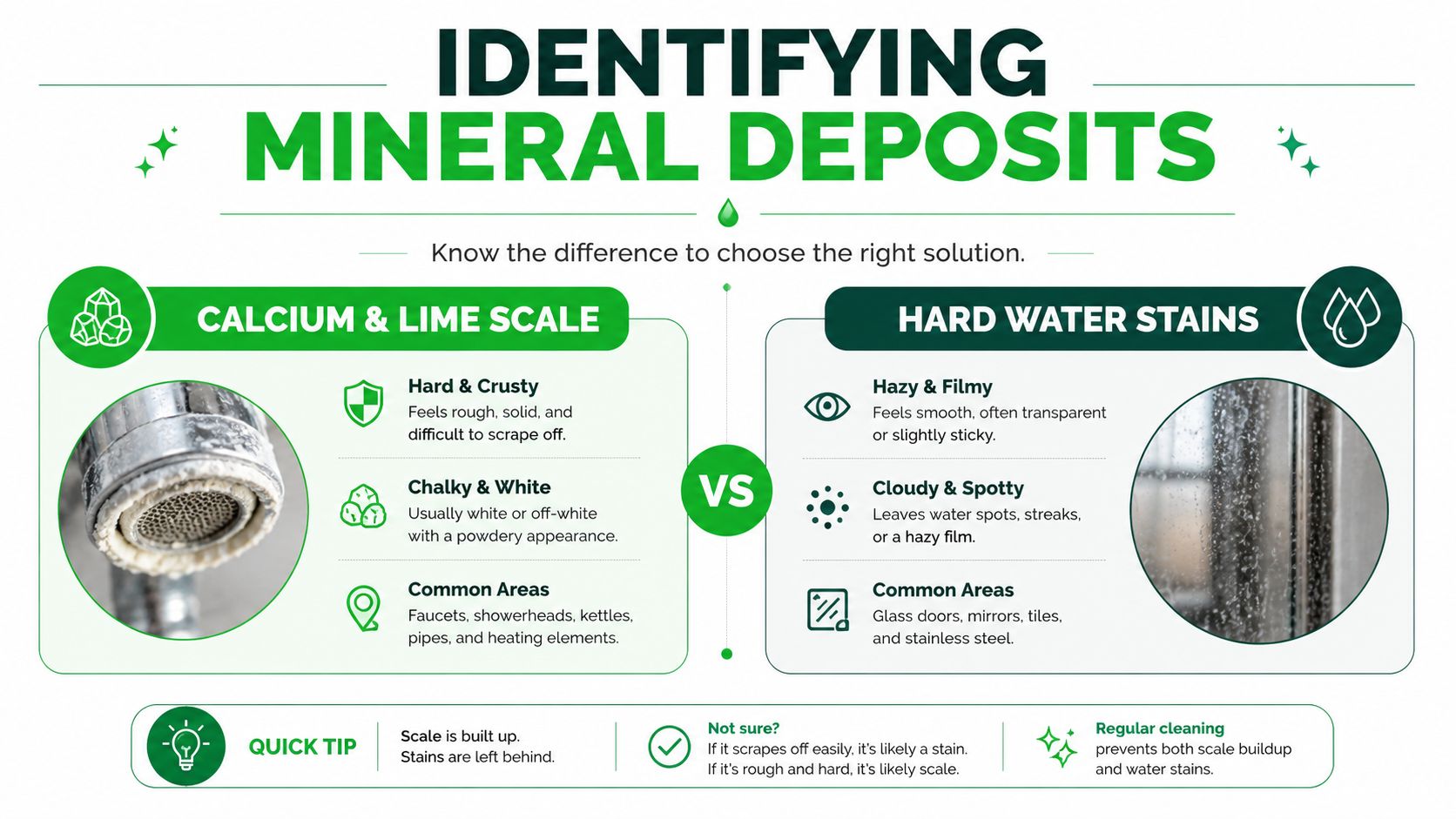
The three deposit types crews see most often in Northern Arizona aren't mystery stains. They're usually calcium and lime scale, iron or manganese staining, or a silica-related surface problem that behaves like etching. The location gives away a lot. Lower edges, drip lines, and sprinkler-hit panels usually point to water content, while full-pane spotting can mean repeated drying across the entire surface.
What the color and texture tell you
Calcium and lime scale usually look white, chalky, or crusty. Iron and manganese staining tends to read orange, brown, or rusty. If the glass feels rough or looks permanently dull even after cleaning, the surface may be altered rather than coated.
That's where substrate matters. Tempered shower glass, low-E coated panes, tinted auto glass, and painted wood or vinyl frames do not all tolerate the same chemistry. Efflorescence guides warn against acidic cleaners on polished stone, tile, and other sensitive materials, and the same caution applies around coatings and finishes when you're not sure what's on the surface. A useful household reference for deposit-specific treatment is the government cleaning guide with recipes for black manganese spots, hard-water marks, soap scum, and more stubborn mineral residue, including cream of tartar and hydrogen peroxide for manganese, vinegar and baking soda for hard-water marks, Calgon solution for soap scum, and trisodium phosphate for tougher residue (government cleaning guide).
If the stain is only on the surface, chemistry may help. If the glass is etched, the cleaner can't reverse that.
A good rule of thumb is simple, know the deposit type before you choose the method. If you can name the stain, you can usually decide whether it's a wipe-on project, a soak-and-brush job, or a call for a technician who works on coated glass every day.
Preparing the Glass So the Cleaner Can Actually Work
The cleanup starts before any descaler touches the pane. Dust, pollen, cobwebs, and grit sit on the glass and frame, and if you drag a pad or brush across that mess, you're grinding debris into the surface before the chemistry even gets a chance to work. That's how a simple removal job turns into a hazy pane with fine scratches under the residue.
The prep sequence that saves glass
Start by removing the screens and setting them aside so you can clean them properly. Then clear the tracks, wipe the frames and sills, and flush loose debris away with water. On a professional service visit, that keeps the cleaner focused on the deposit instead of fighting loose dirt at the edges.
A quick rinse matters more than people think. The mineral remover needs contact with the actual stain, not a film of dust sitting on top of it. That's why the crew at Pine Country handles the whole window assembly, not just the glass. The screen comes off, gets cleaned, and goes back on when the service is done, which is the right order if you want the window to stay cleaner longer.
You can use this same approach at home before any treatment:
- Remove loose debris first: Knock off dust and grit so you're not scrubbing it into the pane.
- Clear the tracks and weep holes: Standing residue at the frame edge keeps feeding new spotting.
- Wash the frame and sill: Cleaner glass won't stay clean if runoff keeps dragging grime back onto it.
For a tool-focused rundown that matches this prep style, see the company's guide to home window cleaning tools. It lines up with the way a real crew works, because the glass is only one part of the job.
The Two Paths to Mineral Deposit Removal
A shower door with light scale, a coated window pane on a sunny wall, and an exterior window with repeated spotting do not need the same fix. One path uses chemistry to break down the deposit. The other uses a professional wash with pure water, squeegees, and surface-safe scraping when the glass needs more than a household cleaner. The right choice depends on the mineral type and the surface, not on whatever bottle is closest to the sink.
What the timed chemical method looks like
For hard scale and mineral deposits, acidic or chelating descalers dissolve crystalline buildup. In industrial work, the sequence usually runs through application, dwell time, pH monitoring, neutralizing, and flushing, because the cleaner has to wet the deposit, work into it, disperse it, and dissolve part of it before the scale lets go. That is why complete wetting and enough dwell time matter if the goal is real removal, not just a cleaner-looking smear (descaling mechanism and sequence).
For household fixtures and glass, the process is shorter but follows the same logic. Spray the area, let it soak for 1 to 2 minutes, scrub with a stiff non-metallic brush, rinse thoroughly, then dry with a squeegee or lint-free cloth so the spots do not dry back onto the surface (professional hard-water cleaning steps). On a faucet or showerhead, a bagged cleaner method uses about 10 minutes of soaking, which gives the solution time to work without leaving residue behind.
The other path is the one crews use on windows. Pure-water brush systems lift loose minerals off exterior glass, and a clean squeegee pull removes the rinse water before it dries into another ring of spots. On stubborn buildup, a razor scraper used at the correct angle can lift scale without cutting the glass. That is a different job from wiping with a rag, and it is why spray-and-wipe routines often just move the deposit around.
| Factor | DIY Acid Paste | Professional Pure-Water Service |
|---|---|---|
| Best use | Smaller deposits that are still on the surface | Exterior glass, larger panes, repeated spotting |
| Main tools | Cleaner, non-metal brush, rinse water | Pure-water brush, squeegee, razor scraper where safe |
| Risk | Etching sensitive coatings or leaving rinse residue | Lower spotting when the rinse and finish are done correctly |
| Finish | Can work on the right deposit, can also leave streaks | Cleaner glass with less residue left to dry back on |
A lot of homeowners reach for vinegar because it feels mild, and on some household scale that instinct makes sense. The problem is surface compatibility, not just cleaning power. A kitchen-appliance process like vinegar methods for Keurig coffee makers is built for a plastic water path, not a coated pane, a sealed frame, or a hot wall of glass that can hold chemistry longer than expected.
For a glass-specific reference, the company's hard water stain removal page matches the kind of work crews deal with on real windows. The point is simple. Use the chemistry that fits the deposit, and do not test a strong cleaner on a surface that can be permanently marked by it.
Surface-Specific Tips That Prevent Costly Mistakes
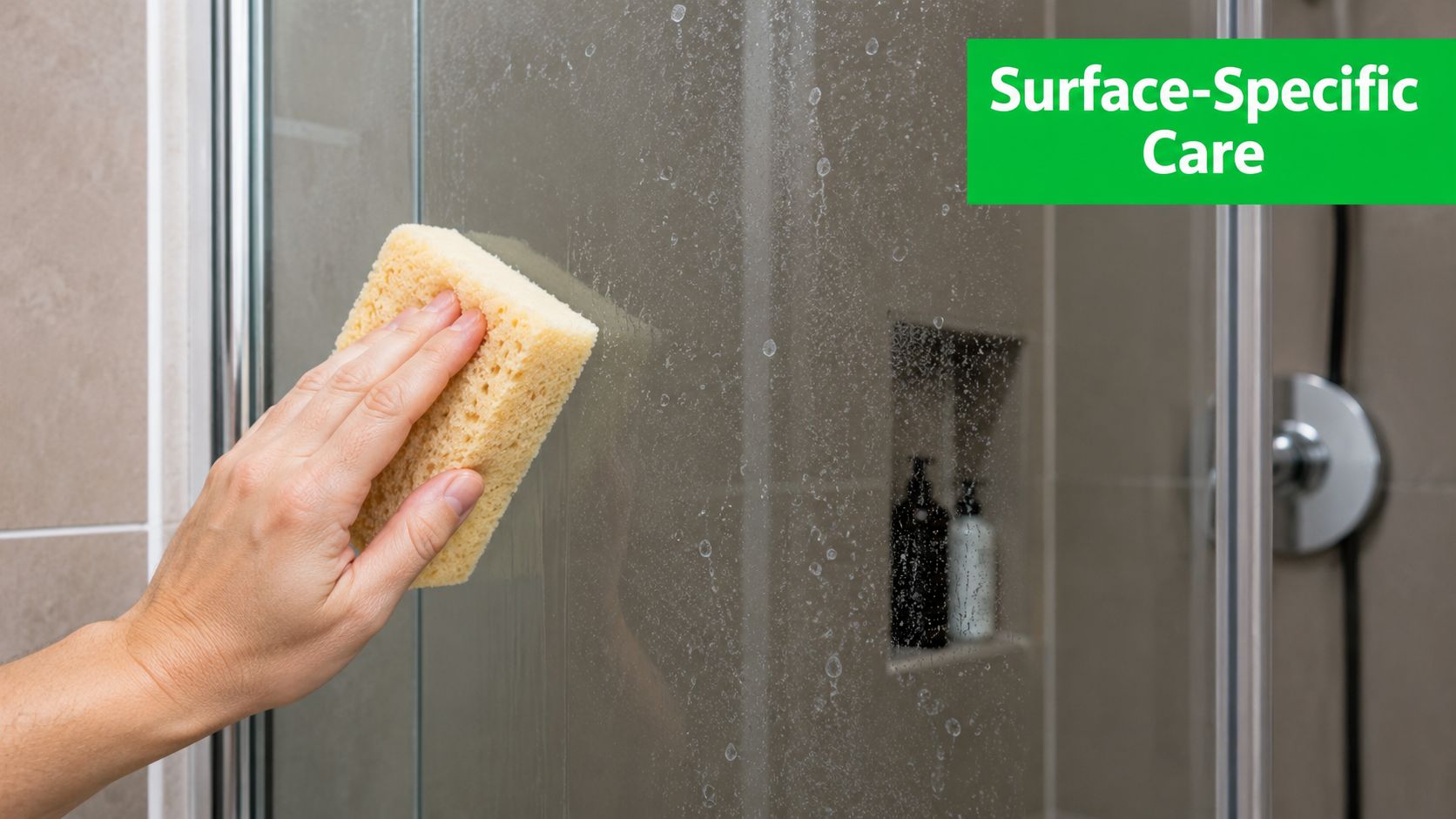
A cleaner can do the right job on one surface and wreck another. Tempered shower doors, coated window panes, painted frames, and auto glass all respond differently because the glass, the coating, the sealant, and the surrounding finish are not all built the same. Match the method to the material, and keep the tool choice just as tight as the chemistry.
Where people cause the most damage
On tempered shower glass, stay away from abrasives and anything that can catch on an edge or seal. Use a non-metal scrub pad, control the dwell time, and rinse fully. The pane may feel durable, but the hardware, sealant, and nearby finish usually are not. If old sealant is part of the problem, see our guide on silicone removal from glass.
On low-E and coated window panes, acidic descalers can damage the coating film. That coating affects how the pane performs, so treating it like ordinary glass can leave you with a permanent problem you did not have before you started. If you are unsure whether the glass is coated, slow down and verify it first instead of testing a strong cleaner on a full pane.
Painted wood and vinyl frames need the same discipline. A solution that is fine on glass can strip paint or chalk vinyl if it sits on the frame too long. Keep the chemistry on the mineral deposit, not on the finish.
Auto glass brings its own issues, since laminate construction, defroster lines, and tint films all change how a cleaner behaves. Strong acids are a poor fit there, and even a mild cleaner can cause more work if it creeps into a film edge or leaves residue around the frit band. If you want a windshield-specific cleanup routine, the guide at perfect windshield cleaning tips is worth comparing to what you are tempted to use at home.
The safest cleaner is the one that leaves the coating, the seal, and the finish looking untouched after the glass is clean.
A careful crew also protects the home while it works. That means keeping runoff under control, covering sills, and not leaving chemical residue behind on trim or flooring. Some homes need a gentler wash instead of a harsher chemical push, especially when the windows are large, coated, or tied to a visible living area where streaks show up right away.
When It Is Time to Call a Professional Window Cleaning Service
Some deposits are past the point where chemistry is enough. If the mineral stain has etched the glass, if the pane sits high enough to need ladders or lift equipment, or if the building has coatings you don't want to gamble with, a professional service makes more sense than another round of DIY. The job changes fast once the surface stops being a simple shower door and starts being a second-story window, a storefront, or a large facade.
The situations that justify handing it off
A trained crew has the right equipment for the job, and that matters. Pine Country Window Cleaning uses boom lifts, scissor lifts, a 95-foot atrium lift, and water-fed pole systems, which are the tools that let technicians reach difficult glass safely and efficiently. Their technicians are background-checked and OSHA safety-trained, which is the sort of detail a homeowner or property manager cares about when the work is happening around families, tenants, or customers.
That setup fits more than one scenario. A cabin owner in Forest Highlands may need a large exterior reset after weather and hard water marks build up. A property manager in Munds Park may need predictable service between turnover windows. A dealership, school, or medical building may need work done without shutting down access or leaving streaks where customers will see them first.
The practical upside is that the estimate is straightforward and the risk is low. Pine Country offers free estimates and a 100% satisfaction guarantee, which makes scheduling easier when the glass is visibly tired and the cleanup needs to happen soon. They've been serving Northern Arizona since 1999, and that long run shows up in the way crews handle large panes, seals, and the rest of the property around the glass. Their recognition by the International Window Cleaning Association also matters as a trust signal, especially for owners who care about safety and consistency.
If the glass is tall, coated, etched, or part of a busy property, the cheapest mistake is the one you avoid by calling in the right crew.
Keeping the Glass Clear Between Visits
The best prevention is boring, but it works. Squeegee shower doors after each use, dry window sills after storms, and address hard water at the source if the water supply is what keeps feeding the spots. That advice lines up with the deposit categories above, because you're either preventing fresh scale, reducing runoff, or stopping a stain from getting another chance to dry in place.
Recurring service helps homeowners who don't want to keep chasing the same problem. It's useful for cabins and second homes in Forest Highlands, Pine Canyon, Flagstaff Ranch, and Munds Park, and it fits short-term rental hosts in Flagstaff who need the glass to look ready between guests without guessing when the next hard-water mark will show up. The point isn't perfection, it's keeping the glass in a condition where sunlight doesn't reveal the same old residue every afternoon.
Clean glass lasts longer when the water source, the surface type, and the maintenance schedule all get treated as one problem.
If you want a crew that handles the glass, screens, and surrounding home with the same care every visit, Pine Country Window Cleaning can help. Since 1999, they've handled residential and commercial glass across Northern Arizona, and they keep the process simple with free estimates, dependable scheduling, and courteous technicians. Call (928) 527-0671 or visit Pine Country Window Cleaning to schedule service and get the mineral buildup off your glass the right way.