

By late winter in Flagstaff, most owners are looking at the same set of clues. Snow is finally pulling back from the shady side of the house. Pine needles are packed into gutters. South-facing paint looks tired. Window glass has a film of dust and pollen starting to build, and somewhere around a door trim or lower siding board, you notice a small gap that wasn't obvious in October.
That's how exterior trouble usually starts here. Not with one dramatic failure, but with a stack of seasonal hits that work together. High-altitude sun dries out sealants. Freeze-thaw opens small cracks. Spring debris holds moisture where it shouldn't sit. Then monsoon rain finds the weak spot.
In Flagstaff and Munds Park, exterior building maintenance works best when it follows the weather, not a generic calendar from somewhere with milder conditions. After more than two decades working around Northern Arizona properties, I can tell you this plainly: the buildings that stay sound are the ones that get inspected and maintained before each season punishes the last season's weak points.
Why Your Building Needs a Flagstaff Specific Plan
A maintenance checklist written for Phoenix, Denver, or the Midwest won't fully fit this mountain climate. Flagstaff buildings deal with a rough combination of intense UV exposure, heavy snow, spring pollen, summer monsoons, and repeated freeze-thaw movement. Each one affects a different part of the exterior envelope, and together they create problems that don't show up on a basic once-a-year chore list.

The economics behind this are bigger than commonly realized. The global exterior building services market is estimated to reach $250 billion in 2024, which shows how central maintenance is to property protection and safety across the built environment, according to Market Report Analytics on exterior building services. That number matters because it reflects a simple truth: owners everywhere keep spending on exteriors because deferred maintenance gets expensive fast.
What fails first in high-country conditions
In Northern Arizona, I watch the same trouble areas show up over and over:
- Roof edges and drainage paths get overloaded by snow, needles, and sudden runoff.
- Sealants around windows and doors dry out under strong sun, then open under cold movement.
- North-facing walls hold moisture longer and stay dirty longer.
- Wood trim, painted siding, and exposed fasteners take a beating from ultraviolet exposure and weather swings.
- Glass and screens collect dust, pollen, cobwebs, and hard mineral residue that make early damage harder to spot.
Generic maintenance tends to treat those as separate chores. A Flagstaff plan treats them as one system.
Practical rule: In this climate, cleaning is inspection, and inspection is prevention.
A seasonal approach gives owners a workable rhythm. Spring is for uncovering winter damage and getting surfaces clean enough to inspect. Summer is for drainage, coatings, and monsoon readiness. Fall is for sealing and winterizing. Winter is for snow load awareness, ice control, and safe access.
Commercial owners can also benefit from reviewing SaberTask facility management insights, especially if they're trying to organize recurring building tasks across multiple properties or vendor schedules. For a local example of how those recurring tasks translate into real service work, see this overview of commercial property maintenance in Flagstaff.
Spring Thaw and Renewal Checklist
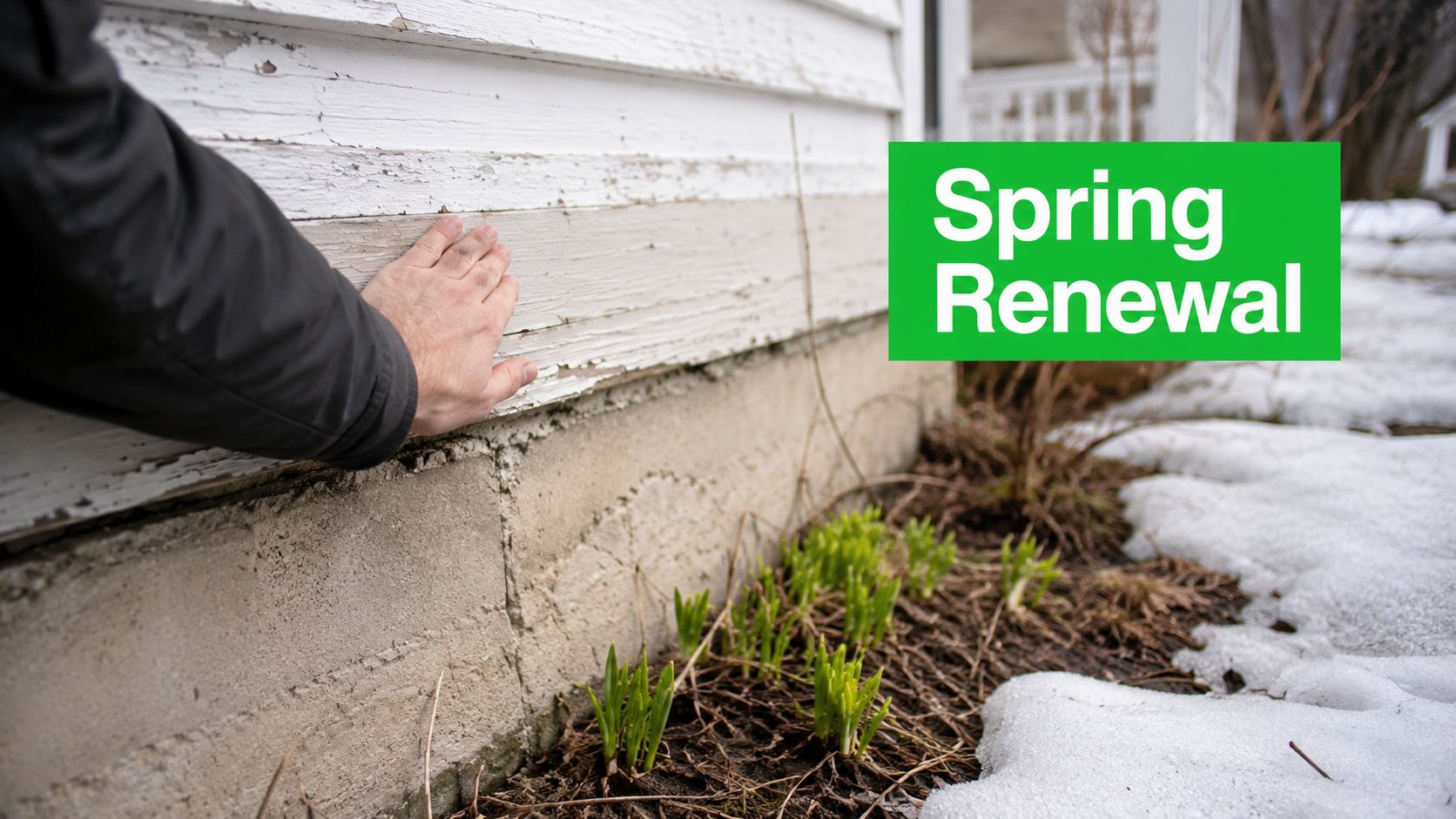
By late March in Flagstaff, the snowbanks are shrinking, daytime melt is running hard, and the building starts showing where winter worked on it. This is the inspection window I trust most. Problems are still fresh, surfaces are opening up, and you still have time to fix weak spots before summer rain starts pushing water into them.
Start with what winter left behind
Walk the property from the ground before you bring out a ladder. In our high-country climate, freeze-thaw damage often shows up in ordinary places first. A trim board swells at the bottom corner. Caulk opens at one upper window joint. Paint lets go on the south or west side where the sun has been hammering it all winter.
Pay special attention to areas where snow sat longest or where runoff crosses the building. I look for bent gutter sections, loose downspout straps, splash marks on lower siding, darkened wood near grade, and fasteners backing out of trim. On shaded elevations, check for damp residue, early mildew, and debris packed against base transitions.
A good spring round usually moves in this order:
Roof edges and drainage points
Snowmelt carries needles, cones, and grit into gutters, valleys, and outlet drops. If discharge points are slow, water backs up under shingles, spills behind fascia, or dumps too much water beside the foundation.Window and door openings
Seasonal movement shows up at corners and joints first. Look for brittle sealant, small gaps at trim lines, and staining below sills that suggests repeated wetting.Lower wall sections and ground contact areas
Snowpack, mud splash, and buried organic debris keep these sections wet longer than owners expect. That is where rot and coating failure often start.
Clean enough to see the real condition
Spring cleaning in Flagstaff is inspection work. Pine pollen, windblown dust, mineral film, cobwebs, and winter grime hide the exact defects you need to find. Until the surface is clean, it is easy to miss failed glazing, screen damage, paint loss at edges, or water staining that tracks back to a leak path.
Glass deserves more attention than it usually gets. Dirty windows are not just an appearance problem. They make it harder to spot failed seals, frame movement, and moisture marks at corners and sill lines.
The same goes for screens and frames. If screens stay in place year-round, they trap pollen and fine debris against the exterior side of the glass and hide frame condition. Spring is the right time to remove them, wash them properly, inspect the corners and mesh, then reinstall them square so they do not rub or rattle later.
If the drainage system still has winter debris in it, schedule a professional gutter cleaning service in Flagstaff before the first strong runoff cycle. That one task often exposes loose hangers, poor slope, and overflow staining you could not see when everything was packed with needles.
What to repair now
Do not wait for summer storms to test spring damage. Close up the building while conditions are dry enough to work and before UV exposure hardens already-failing materials even more.
Use this priority list:
| Area | What to look for | Why it matters |
|---|---|---|
| Window trim | Open joints, brittle caulk, soft wood | Water gets behind trim fast during wind-driven rain |
| Siding | Cracks, warped boards, peeling finish | Sun and moisture widen the failure and raise repair cost |
| Gutters | Packed needles, loose hangers, bad slope | Overflow stains walls and drops water where it should not go |
| Exterior doors | Light at edges, failed weather seals | Meltwater and drafts work through the opening |
The goal in spring is simple. Get the building clean, get eyes on every weak point, and fix the small failures while they are still small. In Flagstaff, that timing matters. A loose joint in April can turn into stained sheathing, swollen trim, or interior leakage by the time monsoon season arrives.
Summer Sun and Monsoon Readiness
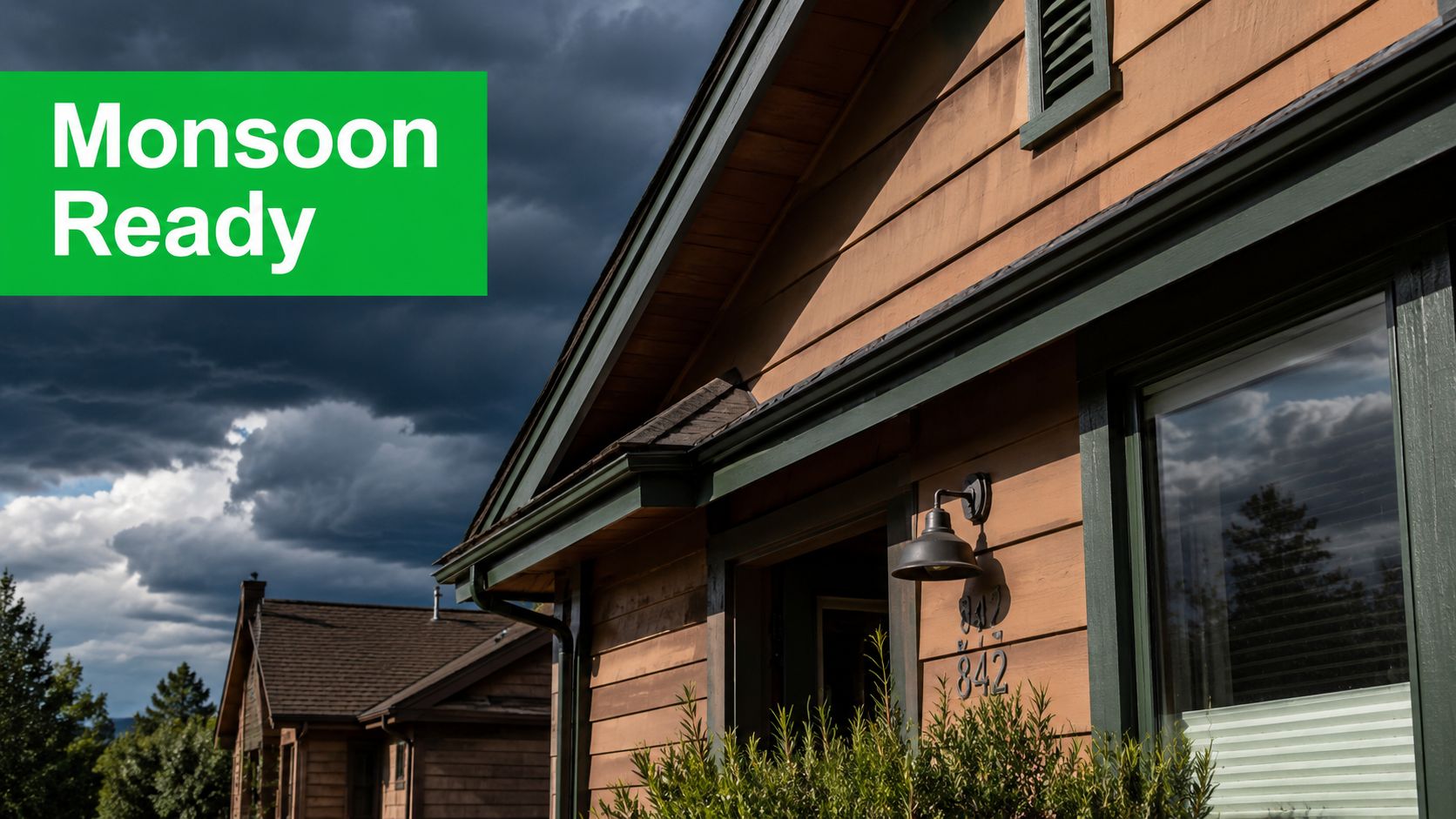
Summer in Flagstaff damages exteriors in two different ways. First the high sun bakes finishes, sealants, and exposed materials. Then the monsoon tests every weak seam, clogged gutter, and neglected wall.
Focus on water before the first big storm
If I had to pick one summer priority, it would be drainage. Monsoon rain exposes lazy maintenance immediately. Water should move off the roof, through the gutters, down the downspouts, and away from the structure without spilling behind fascia or soaking the base of the wall.
A smart monsoon-prep round includes:
- Clearing gutters and downspouts before storm season starts
- Checking discharge points so runoff moves away from walkways and foundations
- Flushing hidden blockages that can hold water after a light test but fail in a hard downpour
- Looking under roof edges for staining that suggests prior overflow
For owners who want that work handled professionally, Flagstaff gutter cleaning service fits directly into summer exterior prep.
The shady side needs its own schedule
North-facing elevations are a different animal in our climate. They dry slower, hold grime longer, and often grow mildew or algae before the sunny sides show any problem at all. Climate-adapted scheduling is critical; in environments with distinct wet and dry seasons, north-facing shaded surfaces demand quarterly mold and mildew inspections as they exhibit 3x higher biological growth rates than sun-exposed areas, according to Rimkus guidance on facade maintenance.
That doesn't mean every wall needs the same treatment. It means owners should stop assuming the whole building weathers evenly.
Here's a practical comparison:
| Surface | Typical summer issue | Better response |
|---|---|---|
| South and west elevations | UV breakdown of paint and sealant | Inspect coatings and recaulk weak joints |
| North-facing walls | Persistent grime and biological growth | Wash gently and inspect more often |
| Wood trim | Drying, checking, finish wear | Recoat before cracks deepen |
| Metal components | Oxidation, fastener staining | Clean and inspect for early corrosion |
Sun-exposed walls usually fail from drying and movement. Shaded walls usually fail from moisture staying put too long.
Pressure washing has to match the surface
Pressure washing helps when it removes grime, pollen residue, mildew, and buildup that trap moisture against siding or masonry. It causes damage when the operator treats every material the same. High pressure against aging paint, soft wood, window seals, or delicate trim can force water where it doesn't belong.
The right approach changes with the building. Some surfaces need a gentler wash with the correct nozzle and stand-off distance. Others need scrubbing, rinsing, and spot treatment rather than brute force. Summer is also the time to inspect painted surfaces and sealant lines because they're your first defense against both UV and the next rain event.
A good rule for Flagstaff properties is simple. If a wall faces north, sits under tree cover, or stays shaded for long parts of the day, don't wait for visible staining to become heavy. Check it early, clean it correctly, and keep it from becoming a moisture-management problem.
Autumn Integrity Checks Before the Freeze
Fall is the last clean window to tighten up the building envelope before snow and ice start working on every weak point. This isn't the season for guesswork. It's the season for a systematic inspection.
Use a professional inspection mindset
A strong exterior maintenance program includes a scheduled visual review, not just reacting to leaks after they show up inside. A globally accepted methodology for exterior maintenance requires annual professional visual inspections, a practice with a 90% success rate in detecting early-stage water ingress and structural issues before catastrophic failure occurs, based on Calgary building exterior visual assessment best practices.
That standard fits Flagstaff well because early-stage moisture problems are exactly what freeze-thaw turns into expensive repairs.
Walk the envelope in a fixed order
Don't bounce around the property. Follow the same sequence every time so you don't miss transitions.
Roof edge to gutter line
Look for loose fasteners, separated joints, sagging sections, and anything that could trap the first snowmelt.Windows and doors
Check perimeter sealant, glazing lines you can safely view from the ground, and trim connections where movement often shows up first.Utility penetrations and vents
Any line passing through the exterior deserves a look. Gaps at these points are common and often overlooked.Lower wall areas and foundation transitions
Search for staining, splashing, crumbling finish, or dark areas that suggest repeated wetting.
What deserves repair before winter
Some fall defects can wait. Others shouldn't.
Use this simple triage:
| Condition | Wait or act | Reason |
|---|---|---|
| Small paint wear on a protected area | Often wait | Mostly a finish issue if the substrate is sound |
| Open caulk joint at a window or door | Act now | Water can enter and freeze inside the assembly |
| Gutter packed with needles after leaf drop | Act now | Ice dams and overflow become much more likely |
| Minor surface grime | Usually wait | Not urgent unless it's hiding moisture problems |
One point gets missed all the time in pine country. The final gutter cleaning should happen after most of the needles and leaves have come down, not too early. If you clean in early fall and walk away, the system can still be packed by the time the first hard freeze arrives.
A gap that looks harmless in October can become a soaked wall cavity by January.
For cabins, rentals, and second homes, autumn also calls for a close look at door sweeps, thresholds, and exposed wood trim. Buildings that sit empty for stretches need tighter exterior control because there may be nobody inside to catch the first sign of a leak.
Winter Safety and Snow Management
Winter maintenance in Flagstaff isn't mostly about appearance. It's about load, drainage, and safe access. Snow on a roof, ice at an eave, and packed drifts across walkways create different risks, and each one needs a different response.

Know when snow becomes a building problem
Not every snowfall requires roof intervention. The trouble starts when repeated storms stack weight on low-slope areas, create uneven drifting, or block drainage paths that need to function during a warm-up. Flat and low-pitch commercial roofs are especially vulnerable, but steep residential roofs can also develop dangerous edge buildup and ice dams.
Watch for these warning signs:
- Doors that suddenly bind after heavy accumulation near certain walls
- New interior stains near roof edges or valleys
- Visible sagging or uneven snow depth on low-slope roof sections
- Large icicle formation at eaves, which often points to poor meltwater control
- Blocked exits and buried utility access points
DIY roof clearing is where owners get hurt and roofs get damaged. Shovels, boots, and ladder work on snow-covered surfaces create a bad combination. If the roof needs clearing, use trained crews with proper equipment and a plan for where the snow will go.
Ice dam control starts before the leak
Ice dams form when meltwater can't drain properly and refreezes at cold edges. Once that ridge forms, water can work backward under roofing materials and into the structure. In practice, prevention usually comes down to three things: drainage paths that are open, roof edges that aren't overloaded with debris, and attic conditions that aren't encouraging uneven melt.
For standing seam metal systems, some owners also research snow retention devices so snow releases more predictably instead of sliding in heavy sheets. If you're comparing hardware, High-quality Snow Defender 7500 is one example of the kind of product category worth reviewing with a qualified roofing professional.
Here's a useful visual on winter access and snow handling:
Prioritize people before aesthetics
A clean-looking property doesn't matter if the walkway is slick and the emergency exit is blocked. Winter exterior maintenance should give first attention to pedestrian routes, entrances, loading areas, and any place runoff refreezes overnight.
For homes, that means front walks, steps, side gates, and paths to propane, electrical, or service access. For commercial properties, it means public entries, ADA routes, rear delivery zones, and all marked exits. Snow piled in the wrong place can create its own problem when daytime melt runs across a path and freezes again after dark.
If a property needs recurring route clearing during storms, Flagstaff snow removal support is the kind of local service owners often line up before the season gets busy. Winter works better when the plan is in place before the first major storm, not after the second one.
Choosing Your Flagstaff Maintenance Partner
The right maintenance company does more than wash surfaces or clear debris. They help you protect the building without creating new problems through rushed work, poor communication, or the wrong tools.
What to ask before anyone touches your property
Start local. A contractor who works year-round in Flagstaff understands snow loading, pine pollen, monsoon timing, freeze-thaw damage, and the quirks of second homes and mountain cabins. That local familiarity shows up in scheduling, equipment choices, and how carefully crews work around landscaping, decks, screens, and access issues.
Then ask practical questions:
- Are the technicians trained for exterior access and jobsite safety?
- Is the company insured for the kind of work being performed?
- Do they document conditions before and after service?
- Do they use the right tools for glass, gutters, siding, and seasonal access work?
- How do they protect screens, trim, plants, and entry areas while they work?
If you manage multiple properties or want cleaner records, it helps to understand how field teams document projects. Good documentation reduces confusion about pre-existing damage, completed work, and recurring trouble spots.
Environmental questions matter here
In Northern Arizona, runoff and soil exposure aren't abstract concerns. Ask what cleaning agents a contractor uses, where rinse water goes, and whether the process protects nearby landscaping and stormwater paths. Asking contractors about their use of non-toxic, low-VOC cleaning agents is a key green building practice that prevents mildew residue discoloration without contaminating storm water systems or ground soil, a critical concern near sensitive watersheds, as noted in Waldman Engineering's green building maintenance guidance.
That question does two things. It protects the site, and it tells you whether the contractor thinks beyond the immediate job.
Good exterior crews leave more than clean glass behind. They leave the property orderly, the screens fitted correctly, the access points secure, and the owner clear on what needs attention next.
What dependable service looks like in practice
For homeowners and facility managers, consistency matters more than flashy promises. You want a company that shows up when scheduled, communicates clearly, respects the property, and understands that maintenance work happens around families, tenants, guests, and staff.
That's also where company history counts. A local operation founded by people who know the area tends to understand the stakes better. Pine Country Window Cleaning was started in 1999 by Flagstaff native David Kaminski, and that long local presence matters because mountain properties reward careful, repeatable work. Customers also notice the basics: crews who care for the home, remove screens carefully, clean them, reinstall them properly, and don't treat the house like a jobsite they can rush through.
If your home, cabin, storefront, hotel, or commercial building needs a practical seasonal plan, contact Pine Country Window Cleaning. They handle exterior window cleaning, screen cleaning and reinstallation, gutter cleaning, pressure washing, and seasonal snow work with the kind of care Flagstaff properties require.