
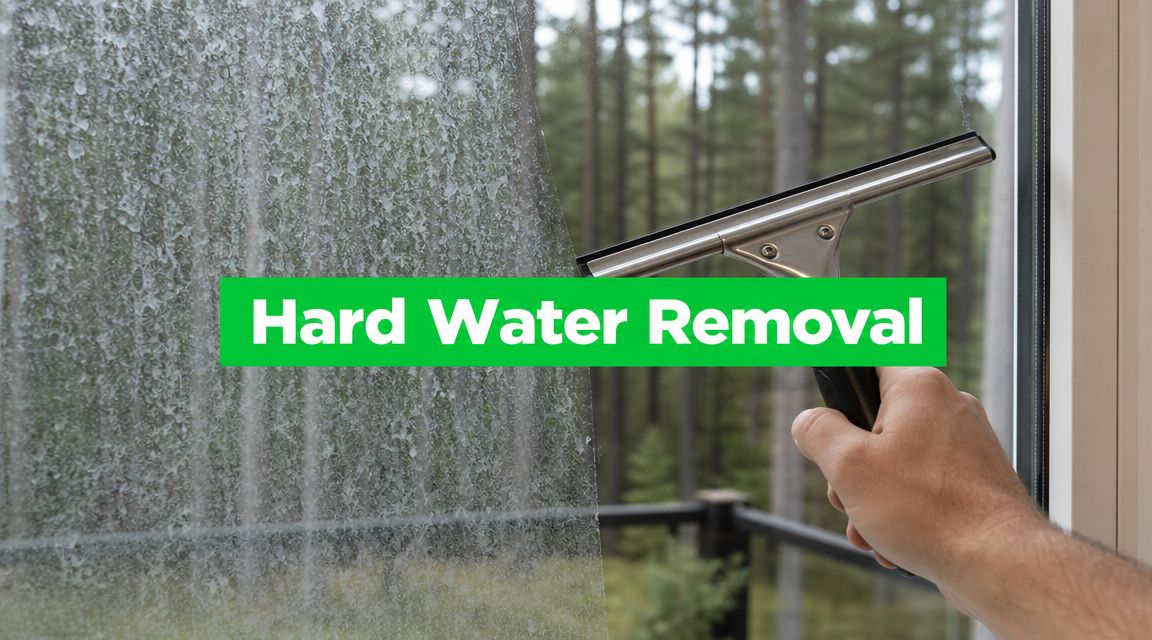
If you're standing inside your Flagstaff home and the view looks dull even after you've cleaned the glass, you're probably not looking at dirt. You're looking at minerals. That chalky film, those dried drip marks, and the cloudy patches that seem welded onto the pane are classic hard water problems, and they behave very differently from dust, pollen, or fingerprints.
Up here in Northern Arizona, that matters. Homes, cabins, storefronts, and rental properties all deal with mineral spotting from sprinklers, hose overspray, shower glass, and repeated rinse-and-dry cycles. Some stains are still in the DIY stage. Others have crossed into restoration territory, where more scrubbing only makes things worse.
The Real Reason Your Windows Look Hazy in Flagstaff
A lot of homeowners notice the problem the same way. The light is good, the mountains are out, and the glass still looks cloudy. You wipe it again and nothing changes. The haze stays put because it isn't sitting on the glass like ordinary grime.
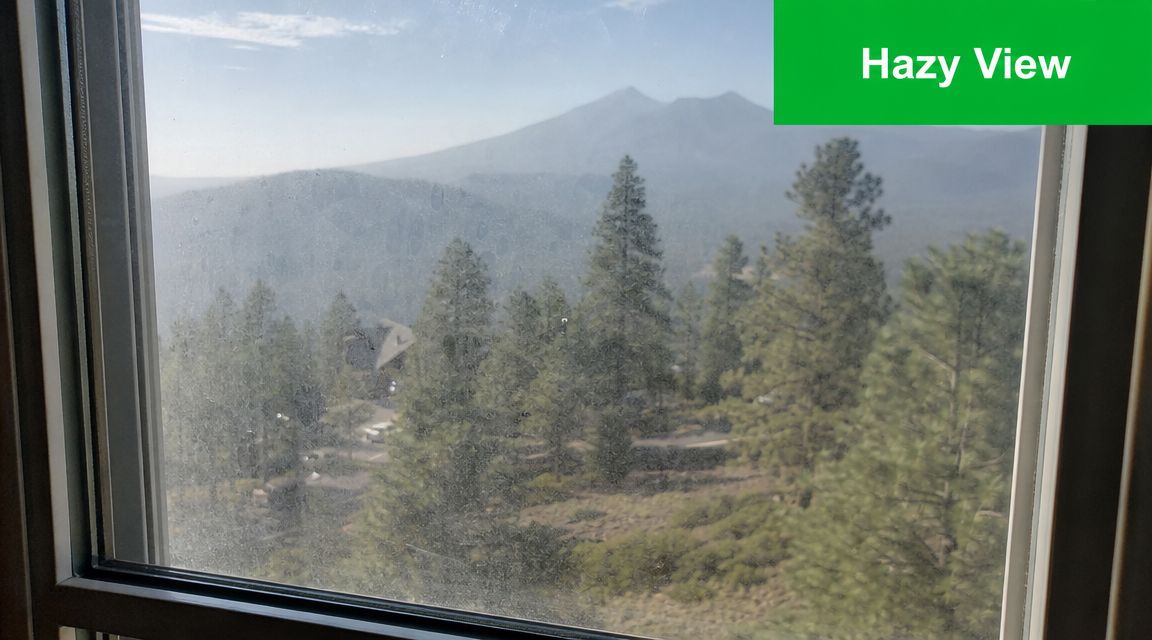
What hard water stains actually are
Hard water stains are mineral deposits. The U.S. Geological Survey defines hard water as water with high dissolved calcium and magnesium, and that white film appears after those minerals are left behind as water evaporates, as explained in the USGS overview of water hardness.
That distinction matters because dirt and minerals don't respond the same way. Dust usually lifts with the right washer, solution, and squeegee work. Mineral residue often needs dwell time, the right chemistry, and a more careful decision about whether the glass is still cleanable or already damaged.
Why this shows up so often in Northern Arizona
Flagstaff properties deal with a mix of sun, dry air, irrigation overspray, and surfaces that stay exposed for long stretches. Water lands on the glass, dries fast, and leaves deposits behind. Then another round lands on top of the first one. Over time, those spots turn into a film.
The same thing happens on coffee equipment, faucets, shower doors, and anything else exposed to mineral-rich water. If you want a non-window example, this guide to coffee maker maintenance shows the same core issue in a different setting. The mineral source changes very little. The surface just changes.
Hard water stain removal starts with the right diagnosis. If you treat mineral scale like routine dirt, you'll waste time and may damage the glass.
Local experience matters
In Flagstaff, window care isn't just about making glass look clear for a day. It's about protecting the view, the frame, the screens, and the condition of the window over time. That's especially true on homes with irrigation near picture windows, cabins with seasonal occupancy, and rentals where water spots sit too long between cleanings.
Pine Country Window Cleaning was started by Flagstaff native David Kaminski in 1999, and local experience makes a difference on jobs like these. Sometimes the haze isn't even on the outside surface. If the cloudiness is trapped inside insulated glass, that's a different problem entirely, and this article on how to clean between window panes helps explain that distinction.
Assessing the Damage Your Guide to Stain Severity
Before you try to remove anything, figure out what stage you're dealing with. That's the difference between a quick cleanup and a scratched pane.
The reason this matters at a larger scale is simple. Hard water stain removal isn't a niche annoyance. One market report valued the global hard-water-stain-remover market at USD 3.12 billion in 2024, with North America at USD 1.02 billion, according to DataIntelo's hard water stain remover market report. Property owners keep paying for this problem because mineral buildup keeps coming back.
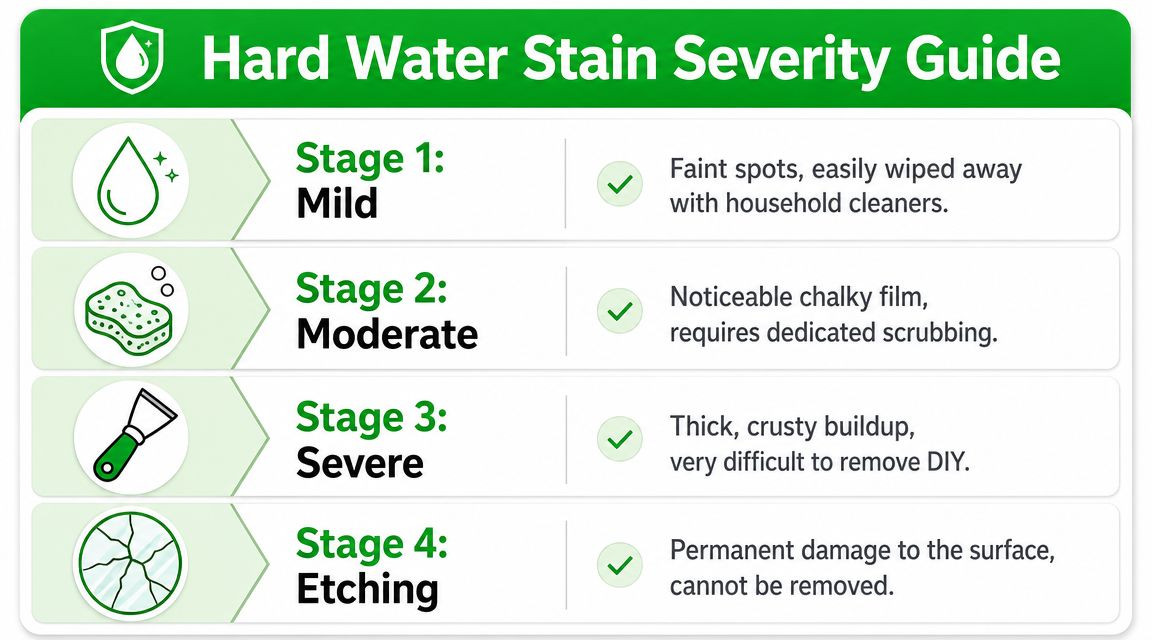
Stage 1 and Stage 2
Stage 1 means fresh spotting. You see individual dots or faint rings. The surface still feels mostly smooth, and the marks haven't merged into a solid film. On exterior glass, this often comes from recent sprinkler contact or rinse water that dried in the sun.
Stage 2 is buildup. The spots start joining together. Instead of isolated marks, you get a chalky layer or a cloudy patch that changes how light moves through the pane. You can often feel the drag when you run a damp microfiber cloth across it.
Stage 3 and Stage 4
Stage 3 is severe scale. The buildup looks thicker and more established. It may appear crusty at the edges, especially near repeated drip lines, metal frames, or bottom corners where water lingers. This is the stage where many homeowners start reaching for aggressive powders and abrasive pads. That's usually when damage starts.
Stage 4 is etching. At that point, you may remove some surface deposit and still see ghosting, dullness, or a pitted appearance in the same area. The glass doesn't just look dirty. It looks injured.
Practical rule: If a stain lightens but the glass still looks scarred, you're no longer dealing with simple removal.
A quick self-check
Use this short test before you scrub:
- Look at the edges: If the stain is heaviest where water repeatedly runs or dries, it's likely mineral-related.
- Feel the surface: A rough or grabby feel usually points to deposit sitting on top of the glass.
- Change the angle: View the pane from the side in morning or late-day light. Etching often shows up more clearly at an angle.
- Test a small corner: If a gentle cleaner improves one small spot, you may still be in DIY territory.
Safe DIY Solutions for Light Stains
If your glass is in the light-to-moderate range, keep the process simple and controlled. The best DIY approach isn't a random mix from under the sink. It's a mild acid treatment with time to work.
The basic method that makes sense
A practical workflow for light to moderate staining on glass is to spray an equal-parts white vinegar and distilled water solution, keep the surface wet for 10 to 15 minutes, scrub with a non-abrasive sponge, then rinse with distilled water so you don't put more minerals back on the glass, as outlined in this hard water stain cleaning guide.
That last step is often underestimated. If you rinse with mineral-heavy water and let it air dry, you can recreate the same problem you just worked to remove.
How to work safely on glass
Use a spray bottle, a soft sponge or microfiber applicator, and clean distilled water for the rinse. Work in shade if you can. If the vinegar solution dries too fast, re-wet the area so it keeps working on the deposit.
Don't attack the stain with pressure first. Let the solution do the loosening. Then use light, even scrubbing and rinse thoroughly.
If you're forcing the stain off with muscle, you're probably using the wrong method or you're past the DIY stage.
DIY hard water stain solutions by surface
| Surface | Recommended DIY Solution | Important Note |
|---|---|---|
| Glass windows | Equal-parts white vinegar and distilled water | Keep the area wet, then rinse with distilled water and dry |
| Shower glass | Same vinegar and distilled water mix | Test a corner first and don't use abrasive pads |
| Chrome fixtures | Light application of the same mix on a soft cloth | Rinse promptly and dry to prevent fresh spotting |
| Painted or delicate surrounding trim | Avoid direct saturation | Apply carefully so runoff doesn't sit on nearby finishes |
What not to use
A lot of failed hard water stain removal starts with the wrong tool, not the wrong intention.
- Abrasive powders: They can haze glass and leave fine scratching.
- Steel wool on glass: Even when people mean well, this can create damage that looks worse in direct sun.
- Harsh scraping: Mineral deposits don't justify careless blade work.
- Random bathroom chemicals: Some products are too aggressive for nearby finishes, seals, and frames.
For exterior glass, homeowners also make the mistake of using household methods that spread residue instead of removing it cleanly. If you want a better overview of what actually works outside, this article on the best outside window cleaner is worth reading.
Know when to stop
DIY makes sense when the stain is light, recent, and clearly improving. It doesn't make sense when each round of scrubbing produces only tiny gains and more risk. That's the point where patience becomes expensive.
Why Professional Equipment Outperforms Household Tools
Household cleaning tools struggle with hard water because they aren't built to control water, pressure, reach, or residue. On mineral-stained glass, that shortcoming shows up fast.
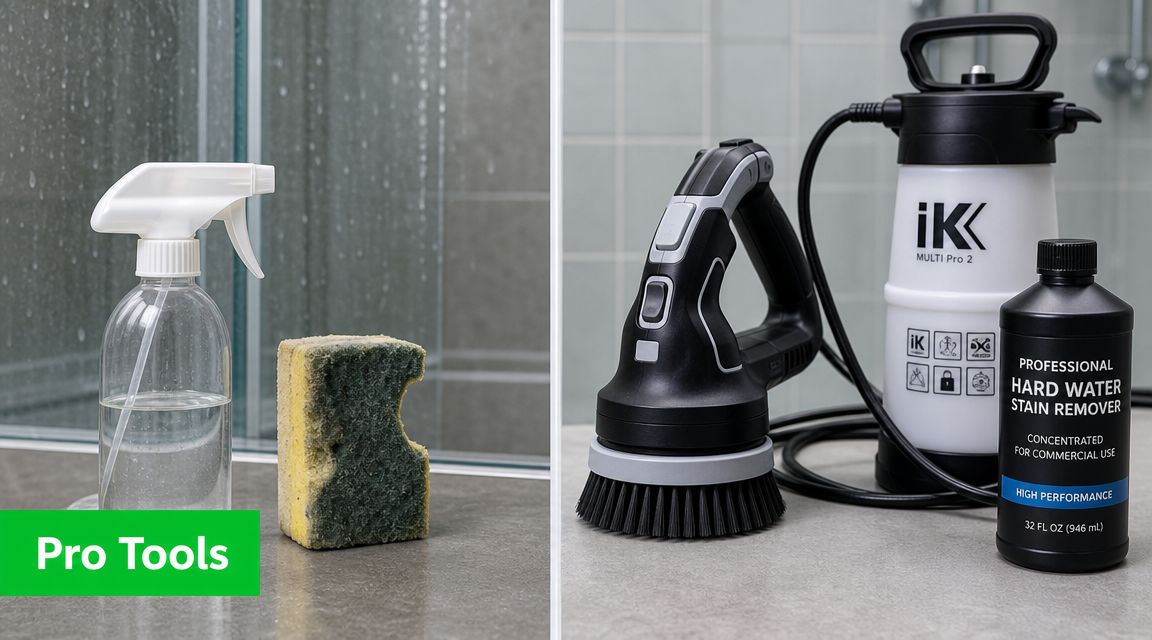
Why pros don't rely on household glass-cleaning habits
A rag moves water around. A paper towel leaves lint. Consumer spray cleaners often flash off too quickly on warm glass and can leave their own residue behind. That's why professional window cleaners use applicators, squeegees, extension poles, ladders, lifts, and purified rinse systems instead of household shortcuts.
A proper squeegee removes solution from the glass rather than spreading it thin and hoping it evaporates clean. On exterior windows especially, control is everything. You want the contamination off the pane, not redistributed across it.
The tools that change the result
Professional crews match the tool to the condition and access of the window.
- Squeegees and washers: These give even coverage and controlled removal.
- Extension poles: They help reach high panes without unsafe improvisation.
- Pure-water-fed brushes: Purified water helps rinse away loosened contaminants without adding fresh mineral residue.
- Ladders and lift equipment: These allow proper angle and access on tall homes, atriums, storefronts, and commercial buildings.
If you're curious how commercial setups differ from homeowner gear, this overview of commercial window cleaning equipment gives a useful breakdown.
Why pure water matters
On mineral-prone glass, a clean rinse matters as much as the scrub. Pure-water systems are effective because they don't leave the same dissolved solids behind that create spotting in the first place. That's a major advantage on exterior maintenance routes, large homes, and buildings with lots of sun exposure.
The principle is similar to other maintenance work where pressure, flow, and the right equipment outperform improvised fixes. If you've ever dealt with blocked drain lines, the comparison makes sense in this article on learn about hydro jetting from EZ Plumbing. The right professional system doesn't just work faster. It solves the problem more cleanly.
Service is more than the glass
Good window service also includes caring for the rest of the home. Screens should be removed, cleaned, and reinstalled correctly. Frames and sills need attention. Ladders, hoses, poles, and shoes need to be managed carefully around landscaping, siding, flooring, and furnishings.
Pine Country Window Cleaning handles that full process as part of the service. On hard water jobs, that matters because the window rarely exists in isolation. The surrounding surfaces need protection too.
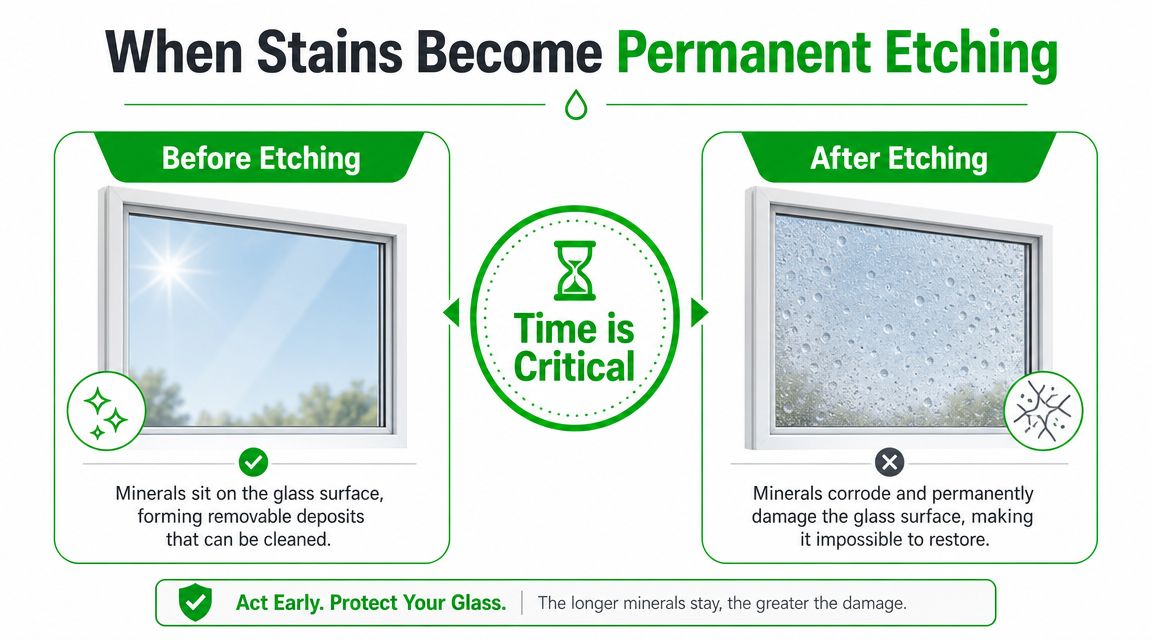
When Stains Become Permanent Etching
Some hard water stains can be dissolved. Others have sat so long that the glass itself has changed. That's the line most homeowners don't see until it's too late.
What etching looks like in real life
Etched glass often shows a dull, dead-looking patch that doesn't match the surrounding pane, even after cleaning. In angled light, it can look pitted or lightly frosted. Homeowners sometimes describe it as "still dirty," but the problem isn't leftover residue. The surface has been altered.
A common example is a sprinkler hitting the same lower corner of a window for a long time. The deposit builds, bakes in, and eventually leaves lasting damage.
Why more scrubbing can backfire
Professional guidance notes a real threshold where stains are no longer cleanable and require restoration. Mild stains may come off by hand, while tougher buildup may need mechanical buffing or other aggressive methods. That same guidance also warns that repeated abrasion can scratch glass, as described in this professional hard water stain removal guide.
That means DIY persistence can create two problems at once. The minerals stay, and the pane picks up fresh scratches from bad tools or too much pressure.
A short video helps show what that progression can look like in practice:
Once the glass is etched, cleaning chemistry won't restore a smooth factory surface. At that point, you're evaluating restoration or replacement.
What professionals do differently
When a pane has crossed into restoration territory, the work becomes more selective. A pro may test the glass, determine whether the problem is still surface contamination, and decide whether polishing has a realistic chance of improvement. That decision has to account for visibility, location, cost, and risk.
Professional restoration can involve polishing compounds, controlled buffing, and methodical spot testing. It isn't the same as household scrubbing, and it shouldn't be guessed at on a large picture window or expensive glass package.
The decision that saves money
The smartest move is often stopping early. If the stain isn't responding to gentle methods, don't keep escalating with rougher tools. Have the glass assessed while restoration is still on the table.
The Pine Country Promise Prevention and Professional Care
Hard water stain removal gets expensive when deposits sit too long. Prevention is cheaper, safer, and easier on the glass.
Habits that help in Flagstaff homes
A few simple practices make a real difference:
- Dry problem areas early: Shower glass, lower panes near sprinklers, and windows under roof drips should not stay wet and dry repeatedly without attention.
- Watch irrigation patterns: If a sprinkler is tagging the same window, the stain will keep returning until the water path changes.
- Schedule maintenance before buildup hardens: Regular service is easier on glass than occasional rescue work.
- Pay attention to second homes and rentals: Empty properties often let spotting bake in for too long.
What careful service should look like
Good care isn't rushed. Crews should protect the home, work safely, and leave the property in better condition than they found it. That includes handling screens properly, keeping tools controlled around landscaping and interior finishes, and communicating clearly about what can be cleaned versus what may already be etched.
Flagstaff homeowners and property managers also need a company that understands the local mix of cabins, custom homes, storefront glass, campus buildings, and mountain weather. Experience matters because access, exposure, and stain severity vary from one property to the next.
A long-term view
Pine Country has been serving Northern Arizona since 1999, and that kind of longevity usually comes from doing the basics well. Show up. Respect the property. Clean the screens. Use the right equipment. Be honest about what the glass needs.
That's the true value in professional hard water stain removal. It isn't just getting the window cleaner today. It's preventing avoidable damage, preserving the view, and giving the homeowner a clear answer when a stain can be removed and when it can't.
If your windows, shower glass, or storefront panes still look cloudy after repeated cleaning, it's time for a professional assessment. Pine Country Window Cleaning serves Flagstaff and Northern Arizona with careful window cleaning, screen cleaning and reinstallation, and practical guidance on whether hard water stains can be removed or whether the glass needs restoration.