
If you're the person responsible for a hotel, dealership, medical office, campus building, or multi-tenant property, window cleaning rarely shows up as a simple task. It lands on your desk as a mix of appearance, safety, scheduling, and budget. The glass needs to look clean, but the fundamental question is how to get there without tying up staff, creating access problems, or taking on risk your team wasn't built to handle.
That's where commercial window cleaning equipment matters. Not as a shopping list, but as an operations system. The right tools change who can do the work, how fast they can do it, which windows are realistically reachable, and what kind of liability sits on your side of the table.
Facility managers often choose between three options: buy equipment, rent equipment, or hire a specialist. The right answer depends on building height, glass type, frequency of service, and whether your team is set up for work at heights. If you want to understand how pros think through those decisions, structured resources like practical training for aspiring window cleaners help show how much of this trade depends on technique, not just gear.
Your Guide to Professional Commercial Window Cleaning
A common scenario in Northern Arizona goes like this. A property manager walks the site after a windy week, sees dust on exterior glass, fingerprints in entry areas, and upper panes that tenants definitely notice. The ground-level windows look manageable. The higher sections don't.
In that moment, many professionals realize commercial window cleaning equipment isn't one thing. A storefront route uses one setup. A campus hall uses another. A tall atrium or hotel facade calls for a very different plan.
What facility managers usually need to balance
The decision usually comes down to four pressures at the same time:
- Appearance standards: Clean glass affects first impressions for guests, patients, customers, and tenants.
- Access limits: Some windows are easy from the ground. Others sit over landscaping, signage, canopies, or interior architectural features.
- Safety exposure: Working at height changes the job completely.
- Budget control: The cheapest-looking option upfront can become the expensive one after labor, rentals, delays, and rework.
Clean windows are visible. Access mistakes are also visible, just in a much more expensive way.
Professional service also involves more than the glass itself. On many jobs, crews remove screens, clean screens, and reinstall them correctly as part of the work. That matters because a clean pane behind a dusty screen still looks neglected.
What a workable plan looks like
A practical equipment strategy starts with a simple question: what are you maintaining? A one-story retail strip might need hand tools, poles, and regular route service. A mid-rise office may justify a purified water system. A high-access property may require lifts, specialized fall protection, and operators who work with that equipment every week.
That's the lens to use for the rest of this guide. Not “what tools exist,” but “what tool solves which building problem, at what level of cost, speed, and risk.”
The Professional's Toolkit Hand Tools and Techniques
Before anyone talks about lifts or robotics, the trade starts with hand tools. On storefront glass, lobby entrances, partition glass, and first-floor exteriors, skilled use of basic equipment still decides whether the finish looks sharp or streaky.

The core tools pros rely on
A professional window cleaning kit usually includes:
- Squeegees: This is the finishing tool, not an accessory. Pros choose channel length based on pane size and use replaceable rubber because edge condition directly affects the result.
- Applicators and scrubbers: These carry water or cleaning solution across the glass and loosen soil before the squeegee pass.
- Scrapers: Used carefully for construction debris, paint flecks, tape residue, or stubborn contamination when the glass allows it.
- Extension poles: These extend safe reach for higher panes and awkward angles without automatically moving to ladder work.
- Detail towels: Used for edges, frames, and any touch-up work around corners and seals.
- Buckets and holsters: They sound basic, but workflow matters. Good crews organize tools so technicians aren't climbing up and down or walking back and forth for every pane.
Why technique matters more than people expect
A lot of property owners have seen someone “clean a window” and assume the difference between amateur and professional work is just effort. It isn't. It's control.
Pros pay attention to blade angle, pressure, overlap, edge detailing, and how water moves across the pane. They also know when to switch methods. Greasy residue near restaurant vents, adhesive from construction, and mineral spotting don't all respond to the same approach.
Practical rule: The right hand tool in the wrong hands creates callbacks. The right technique saves more time than a bigger equipment budget.
Where hand tools still earn their keep
Even on larger commercial accounts, hand tools remain essential for:
- Storefront routes with frequent service intervals
- Interior glass in offices, lobbies, and medical spaces
- Detail work around mullions, frames, and tight corners
- Screen service, where crews remove screens, clean them, then reinstall them properly
- Spot treatment for areas that need more than a pure-water rinse
This is also where customer care shows up. Good crews protect floors, work around foot traffic, watch for doorways and entry points, and leave the surrounding area as orderly as they found it. Professionalism on commercial glass isn't just the finish. It's how the work is carried out around staff, guests, and the public.
Reaching New Heights with Water Fed Pole Systems
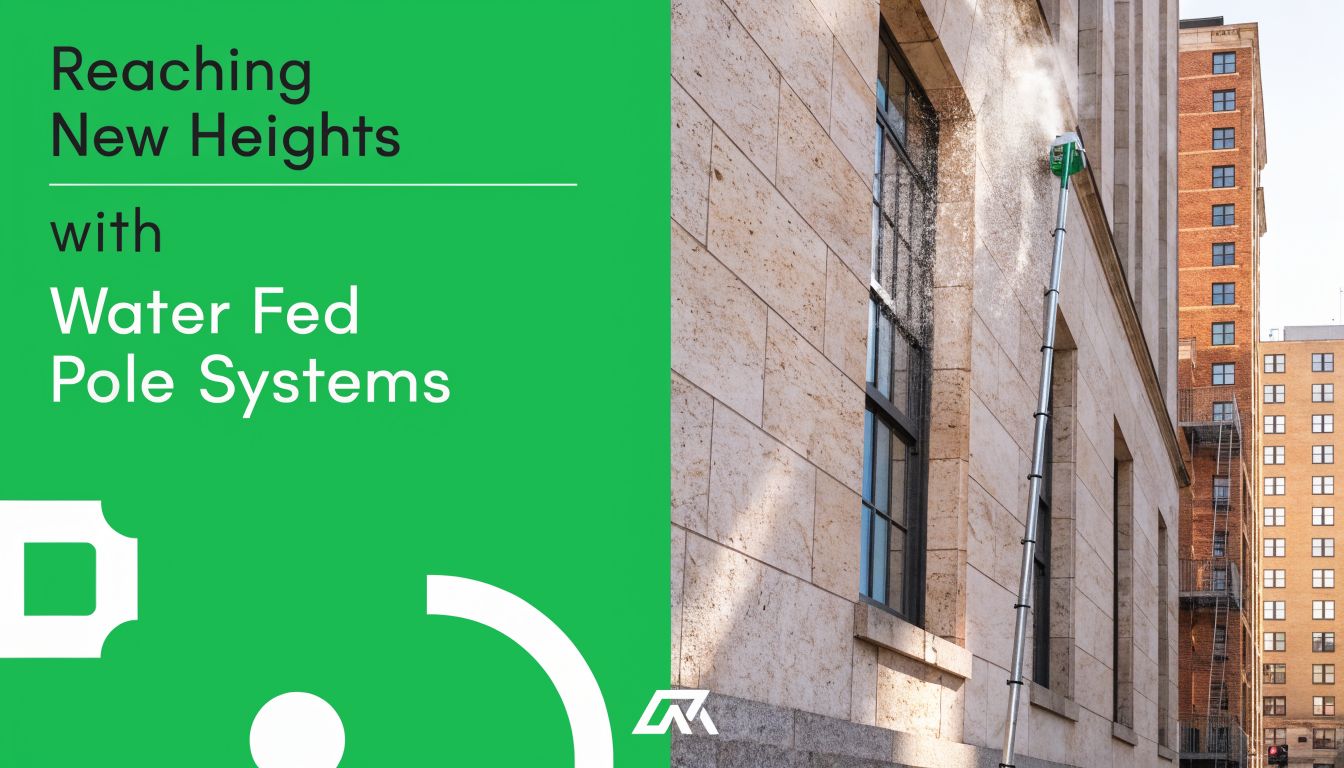
A common facility problem looks like this. The building is too tall for routine ladder work, too spread out to justify a lift every visit, and too visible to let upper glass stay dirty between annual access jobs. That is the point where a water-fed pole system often gives the best return for regular exterior cleaning.
Why purified water changes the economics
The system works because the water is purified to very low mineral content. In practical terms, that means the rinse water can dry clear instead of leaving spotting behind. This technical overview of water-fed pole systems explains that point and reports faster production than ladder-and-squeegee work, along with fewer ladder-related accidents.
For a facility manager, that matters less as a chemistry lesson and more as an operations question. If a crew can clean from the ground, setup time drops, repositioning slows the job less, and routine service becomes easier to schedule without disrupting entrances, walkways, or tenant activity.
Purified water works like a final rinse in a dishwasher. If minerals stay in the water, they stay on the glass.
What you are actually buying
A commercial water-fed setup is a small system, not a single tool. It usually includes:
- a purification unit
- a pump and battery or powered delivery system
- hoses and a hose reel
- a lightweight telescoping pole
- a brush head built for the glass and frame type
That equipment lets technicians scrub and rinse upper exterior glass from the ground on many low-rise and mid-rise buildings. In the right setting, that can cover several stories without bringing in heavier access equipment on every visit.
The ROI question is straightforward. A purchase can make sense for an in-house team with frequent exterior glass across multiple buildings and staff who can maintain filters, test water quality, and train on technique. Renting can work for short-term needs or one-off projects. Hiring a provider is often the lower-risk choice when the property needs results but does not need to own filtration equipment, replacement parts, storage space, and crew training. If you are comparing service models, this page on spotless window cleaner services gives a useful example of how pure-water cleaning fits into recurring maintenance.
Where the confusion usually starts
A water-fed pole is often mistaken for a brush on an extension pole. The brush is only the delivery point. The engine behind it is the filtration system and the operator's rinse technique. If the water is not pure enough, or if the glass is not rinsed correctly, spotting shows up and the method gets blamed for an operator error.
The second point of confusion is scope. Water-fed poles are strong on routine exterior maintenance, especially broad facades with repeat service. They do not replace every other method. Adhesive, heavy mineral buildup, post-construction debris, interior glass, and detailed edge work can still require hand tools and closer contact.
That trade-off is why experienced crews mix methods instead of forcing one system onto every pane.
For many properties, the value is simple. Water-fed poles reduce the amount of climbing, shorten regular service visits, and lower the number of times a manager has to approve more expensive access equipment for standard upper-window cleaning.
Mastering High Access Lifts Scaffolding and Rope Access
A facility manager usually feels the cost of access equipment before seeing the glass get cleaned. A lift arrives with delivery fees, a sidewalk or loading area gets tied up, and the job now depends on operators, spotters, site control, and weather. That is why high-access work should be evaluated as an access decision first and a cleaning decision second.
Why high-access work is a different category
Once a crew leaves the ground, the question changes from "What tool cleans this glass well?" to "What is the safest, lowest-disruption way to put a trained worker in front of it?" OSHA's fall protection standards for general industry and powered platforms show how seriously regulators treat work at height because the risk profile changes fast for tasks performed at height. See OSHA's requirements for walking-working surfaces and fall protection and powered platforms for building maintenance.
For budgeting, that means the cheapest daily rental is often not the lowest-cost option. A machine that looks affordable on paper can become expensive if it needs repeated repositioning, extra traffic control, after-hours scheduling, or a larger crew to work around site constraints.
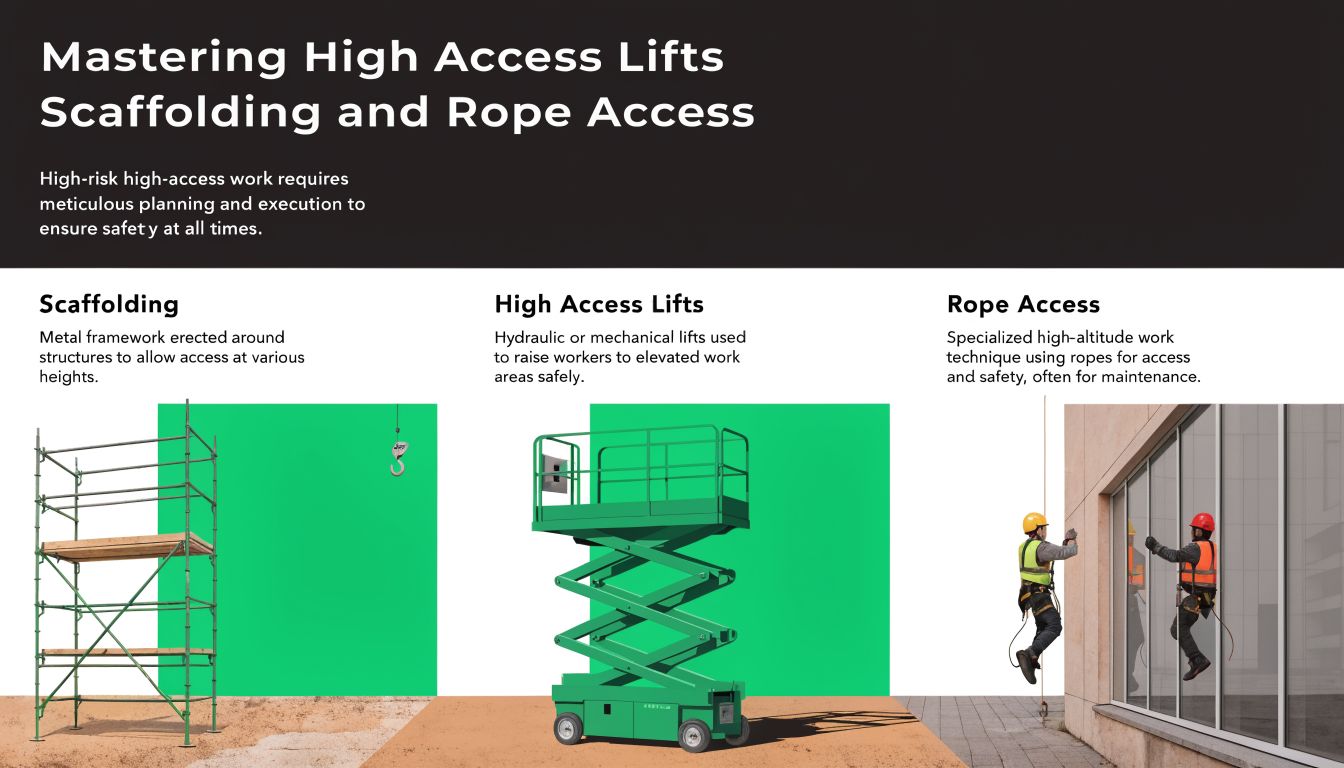
Comparing the main access methods
A useful way to compare access methods is to ask one simple question first. Are you paying for reach, for stability, or for time on the glass?
| Access method | Best fit | Main advantage | Main limitation |
|---|---|---|---|
| Scissor lift | Flat-surface vertical access | Stable up-and-down positioning | Limited reach over obstacles |
| Boom lift | Buildings with setbacks, canopies, landscaping, or signs | Can reach up and over | Needs space and planning |
| Atrium lift | Tall interior spaces and narrow access points | Useful for glass in lobbies and atriums | Specialized use case |
| Rope access | Very tall structures with appropriate anchor conditions | Reaches surfaces machinery may not | Requires highly specialized crews |
A scissor lift works like a straight ladder with a much larger footprint and better stability. If the glass is directly above a clean, level surface, it can be efficient and predictable. If the building has planters, stairs, low roofs, or a fountain in the way, productivity drops because the machine cannot reach around obstacles.
Boom lifts cost more to mobilize, but they often save time on buildings with canopies, signage, and setbacks. Facility teams sometimes focus on rental price and miss the bigger operating question: how many setups will the crew need before they can finish the elevation?
How to choose the right method
Start with the building, not the machine. Measure where the equipment can sit, what it has to reach over, whether the surface can support the load, and how pedestrians, tenants, or patients will move through the area while work is underway.
Interior work needs the same discipline. Atrium lifts are useful in hotels, hospitals, campuses, and civic buildings where the glass is high but indoor access is tight. Floor loading, turning radius, door clearances, and occupied-space scheduling all affect whether the job stays efficient or turns into an expensive slow move.
For upper-level glass, canopies, and irregular facades, high rise window cleaning services show what a planned access approach looks like on commercial properties.
Where scaffolding and rope access fit
Scaffolding makes sense when crews need a stable work zone over a larger area or when window cleaning is happening alongside facade repair, caulking, or other building-envelope work. The trade-off is time and disruption. Setup, permits, site protection, and tenant coordination can outweigh the value for a shorter glass-only project.
Rope access is different. It can reach areas that lifts cannot approach, but it is a specialist method, not a substitute for general maintenance staffing. Anchor points, rescue planning, certification, weather limits, and building-specific engineering all affect whether it is appropriate. For a facility manager, rope access is usually a hire decision, not a buy decision.
A good rule is simple. If your team would need to buy the equipment, train for infrequent use, maintain certifications, and carry the liability for a task that happens only a few times a year, owning the access method rarely produces the best return.
That is where ROI becomes clearer. Repeated, predictable work on accessible elevations may justify equipment ownership for a large in-house program. Infrequent high-access work usually favors renting with trained operators or hiring a specialist provider because you avoid storage, transport, inspection, training, and underused capital. If you are also reviewing chemical compatibility for glass, frames, and surrounding surfaces on these projects, this reference on professional cleaning chemicals is a useful companion.
The common mistake is choosing a machine by maximum height alone. Height gets you into the conversation. Reach, setup space, safety controls, and labor hours decide the cost.
Essential Support Gear Detergents and Safety Equipment
The visible tools get most of the attention. The supporting gear is what keeps the work controlled, repeatable, and safe.
A professional commercial setup includes more than poles, squeegees, and lifts. Crews also need the right detergents for hand-cleaning situations, pressure washing or pre-rinse equipment where appropriate, hose management, signage, drop protection, PPE, and a plan for how the public moves through the site while work is underway.
Detergents and pre-cleaning tools
Pure water is excellent for many exterior applications, but it isn't the answer to every contaminant. Grease, adhesive residue, post-construction debris, and traffic film often need a separate cleaning step before the final glass detailing.
If you're reviewing how professionals evaluate products for surfaces and residue, this guide to professional cleaning chemicals is a useful reference point. In practice, crews should choose products that match the surface, the soil load, and the surrounding environment. The wrong chemical can create extra detailing, affect nearby materials, or leave residue that attracts new dirt.
Support gear may also include pressure washers for surrounding hardscape or facade prep when the site needs more than glass cleaning alone. That can be helpful on entries, walkways, and areas where dust and runoff affect the final appearance.
The PPE and site-control side
For work at height, safety gear isn't a box to check. It's a working system. That usually includes harnesses, lanyards, anchors, hard hats, gloves when appropriate, non-slip footwear, and clear jobsite controls for the people below.
A clean result doesn't matter if the route to that result exposes your staff or the public to unnecessary risk.
Use a simple checklist:
- Fall protection: Harnesses and connection equipment have to match the task and the access method.
- Footing and movement: Footwear and ladder or lift practices matter because many problems start before anyone touches the glass.
- Public protection: Cones, signage, and controlled work zones matter on sidewalks, entryways, and occupied facilities.
- Tool containment: Buckets, belts, hoses, and hand tools need to be managed so nothing swings, drops, or creates trip hazards.
Good safety practice looks routine from the outside. That's the point. The crew has already solved the problems before the public notices the work.
This support system is also where experienced companies protect the property itself. Floors get covered when needed. Screens are handled carefully. Frames, landscaping, and nearby finishes are respected. For facility managers, that operational discipline often matters as much as the glass finish.
Calculating the Value A Buyer's Checklist for Cost and ROI
A facility manager approves a new cleaning system, the equipment arrives, and six months later it is still parked in storage more often than it is on the glass. That is the ROI mistake to avoid.
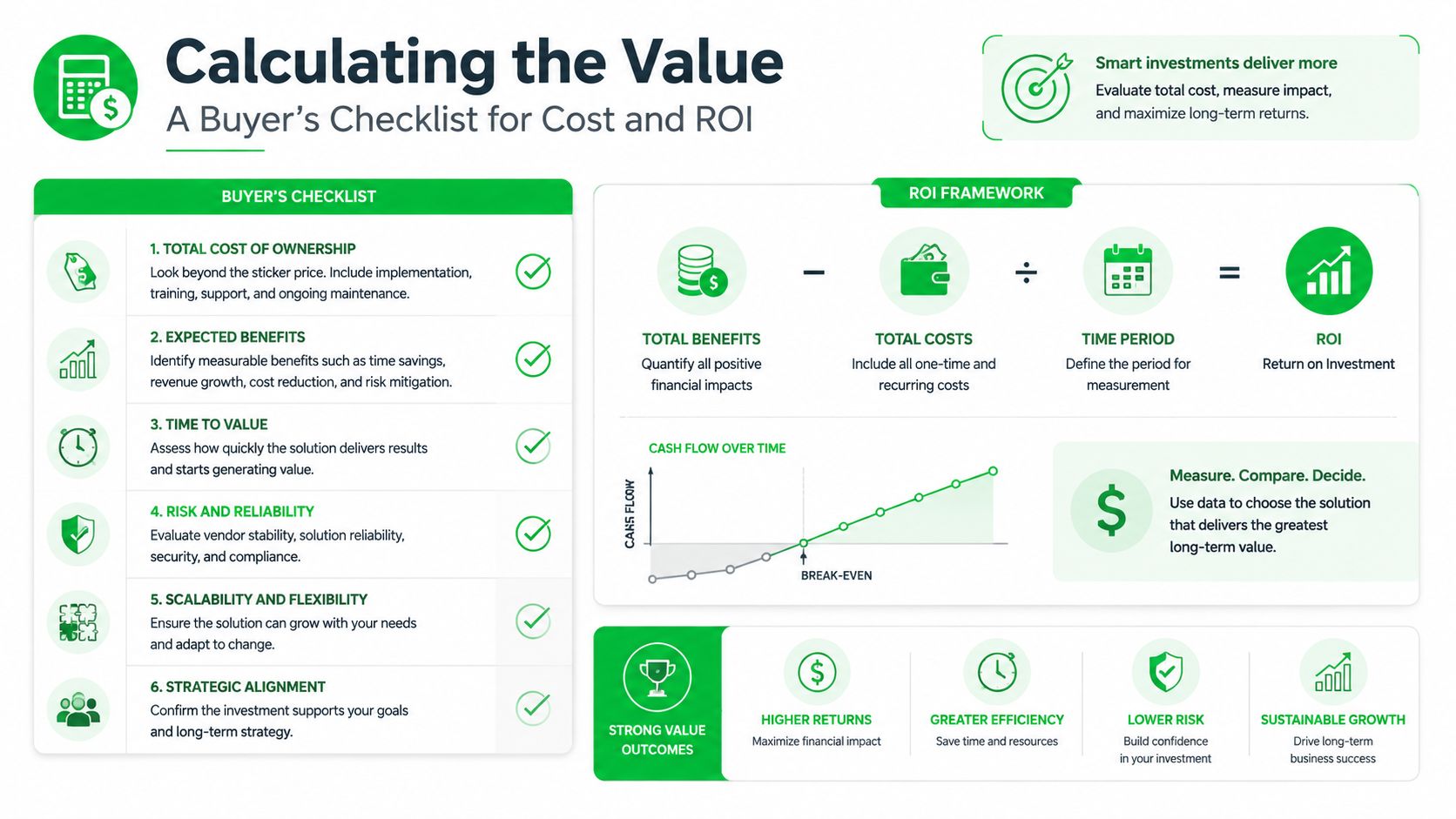
Window cleaning equipment should be judged like any other capital purchase. The question is not whether the tool can do the job. The question is whether it will do the job often enough, safely enough, and with enough consistency to lower your total operating cost.
A water-fed pole system is a good example. On the surface, it looks like a simple productivity purchase. In practice, the value depends on building height, frequency, water access, storage, staff training, and how often your team can use it without losing time to setup or site restrictions. A lift follows the same logic, but with more cost tied to transport, inspections, operator readiness, and scheduling.
Start with the building, not the catalog
The cleanest buying process starts with your actual workload. A squeegee, pure-water system, and lift are like three different trucks in a fleet. Each can be the right choice, but only if the route matches the vehicle.
Ask these questions before you price equipment:
- Height and access pattern: Are the same elevations being cleaned each cycle, or does access change from property to property?
- Cleaning frequency: Will the equipment be used weekly, monthly, seasonally, or only when appearance complaints build up?
- Site constraints: Do landscaping, pedestrian traffic, loading zones, awnings, or interior finishes slow setup?
- Labor reality: Who will operate the equipment, and can that person stay practiced enough to work efficiently?
- Equipment care: Who handles storage, filter changes, battery charging, repairs, inspections, and transport?
- Insurance and liability: What risk stays with your organization once the gear is owned and operated in-house?
Those answers usually narrow the decision quickly.
Buy, rent, or hire
Most ROI decisions come down to utilization. If the equipment works often on similar buildings, ownership can make sense. If the work is occasional or technically awkward, the lower invoice is not always the lower cost.
| Option | Usually makes sense when | Watch out for |
|---|---|---|
| Buy | You have recurring work on similar properties and staff who will use the equipment regularly | Idle equipment, repair costs, training drift, and insurance exposure |
| Rent | You need specialized access a few times a year | Limited availability, delivery timing, and crews who are unfamiliar with the machine |
| Hire a provider | The work varies by height, layout, and timing, or it could disrupt tenants and visitors | Need to confirm scope, response times, safety planning, and site communication |
For managers reviewing insurance exposure around owned gear, Coverage Axis tool and equipment programs are a useful example of the type of coverage questions to evaluate before making a purchase decision.
If your properties need recurring exterior glass care across different elevations and layouts, comparing in-house ownership to a commercial building window cleaning service gives you a clearer operating baseline.
The costs buyers miss
Underuse is the biggest one.
A system that saves time on paper can still lose money if it comes out only a few times a quarter. The purchase price is only the visible part of the cost. The less visible part includes training refreshers, maintenance, replacement parts, inspections, storage space, supervision, and the time spent rearranging work when weather or access conditions change.
Administrative drag matters too. Once the equipment is yours, your team also owns planning, documentation, and accountability. That can be reasonable for a large campus with repeatable routes. It is much harder to justify for a mixed property portfolio where every site has different access conditions.
Buyer's filter: Ownership works best when the work is frequent, predictable, and similar from one service cycle to the next. If the work is varied, infrequent, or high-consequence when something goes wrong, a specialist often costs less over a full year.
That is the full ROI calculation. You are not only buying tools. You are deciding whether to add an in-house window cleaning operation, with all the labor, safety, scheduling, and oversight that comes with it.
In House Operations vs Hiring a Professional Provider
A facility manager usually reaches a critical decision point after the first pricing exercise. The poles, brushes, pure water system, lift access, training time, insurance review, and scheduling coverage can all look manageable on separate lines. Put them together, and window cleaning starts to look less like a maintenance task and more like a small specialty operation inside your existing one.
That distinction matters.
Running the work in house can pay off when you have a large property or campus, repeatable routes, and enough cleaning frequency to keep both equipment and staff in regular use. In that setting, ownership spreads fixed costs across many service visits. Staff stay practiced. Procedures become routine. The work is easier to supervise because access conditions do not change much from one cycle to the next.
The picture changes on mixed portfolios or buildings with occasional high-access needs. A team may handle ground-level glass well, then hit a wall when upper elevations, screen removal, tenant traffic, weather delays, or lift coordination enter the job. The result is familiar: equipment sits in storage, rentals fill the gaps, and supervisors spend time solving a window cleaning problem that was supposed to save time.
What a professional provider changes
A professional provider is not just bringing labor. The provider is bringing a working system that already includes technician training, method selection, equipment maintenance, job planning, and safety controls.
That changes the ROI math.
Instead of paying to build capacity you may use unevenly, you are paying for access to capacity when you need it. For many facility managers, that is the cleaner comparison. You can budget a service scope. You do not have to absorb the full cost of ownership, proficiency loss between service cycles, or the risk of assigning occasional high-consequence work to a team whose main job is something else.
There is also a practical advantage in how specialists choose methods. A good provider can shift between hand work, water fed poles, lifts, scaffolding, or rope access based on the site, not based on whatever equipment you already own and need to justify. That flexibility often protects both quality and labor efficiency.
The local trust factor still matters
Technical skill is only part of the job. Occupied properties need crews who can work around entrances, protect floors and finishes, communicate with staff, and leave the area orderly when they are done.
Flagstaff properties often require that mix of trade skill and local familiarity. Founded by Flagstaff native David Kaminski and in business since 1999, Pine Country Window Cleaning handles residential and commercial work with OSHA safety-trained technicians, in-house access equipment, and routine tasks such as removing screens, cleaning screens, and reinstalling them during service. For many managers, that is easier to budget than building the same capability internally, and easier to trust because responsibility stays with one specialized provider.
The best choice depends on frequency, building complexity, and risk tolerance. If your glass is cleaned often on similar buildings, in-house operations may make financial sense. If access varies, service is periodic, or safety oversight would pull managers away from core work, hiring a professional provider usually produces the better return over a full year.
If you're weighing whether to buy equipment, rent access gear, or hand the job to a trained crew, Pine Country Window Cleaning can help you compare the practical options for your property. A clear scope, realistic access plan, and dependable service schedule usually save more time and trouble than chasing the lowest short-term number.