
A lot of projects look finished before the glass is finished. The trim is in. The paint is dry. The floors are down. Then sunlight hits the windows, and every sticker shadow, paint speck, drywall haze, and line of adhesive shows up at once.
That's the moment post construction window cleaning matters. It isn't a touch-up. It's the final step that lets the property look the way it was meant to look, without risking damage to brand-new glass, fresh paint, stone, screens, or flooring.
The Final Polish Your New Build Deserves
A new build can look finished right up until the morning light hits the glass. Then the leftovers from the job show themselves all at once. Dust fused to the pane, tape lines at the edges, adhesive smears, overspray, and grit packed into the tracks. On a final walk-through, that is what people see.
That last stage affects more than appearance. Builders want a clean handoff. Owners want the home to feel complete. Property managers want to avoid delays caused by callbacks, scratched glass claims, or residue that should have been handled before move-in.
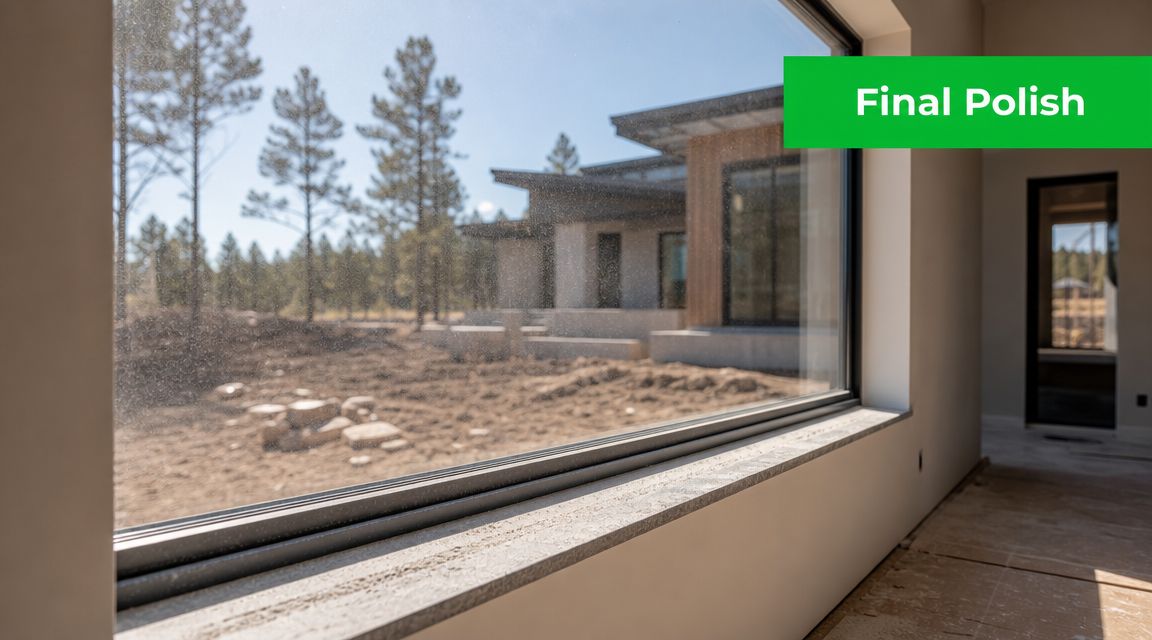
Post construction window cleaning is a specialty service. Standard maintenance cleaning deals with routine soil. Post-construction work deals with jobsite residue and the risk that comes with removing it from brand-new glass, frames, and surrounding finishes. In Flagstaff, fine dust and dry conditions make that risk easier to underestimate, especially when debris has been sitting on the surface through the final phases of a project.
The first thing many owners notice is paint or sticker residue. The bigger concern is often the grit they do not see. If that debris gets dragged across the glass with the wrong pad, towel, or scraper, the result can be permanent scratching. A quick cleanup can turn into a replacement issue, and that can hold up a closeout or create an argument over who caused the damage.
Professional post-construction crews use the right mix of applicators, squeegees, extension poles, ladders, pure-water systems, and surface-specific removal methods because the goal is property protection as much as clarity. For anyone comparing providers, it helps to review broader effective window washing solutions and then ask a more important question for a new build. Does the company handle construction residue safely, or do they only clean maintenance glass?
Flagstaff homes add their own challenges. Fresh wood floors, stained trim, stone sills, custom screens, and high windows all need protection while the glass is being detailed. That is why construction dust cleaning for finished homes and remodels should be planned as a specialized service, not added at the end like a quick touch-up.
At Pine Country Window Cleaning, founder David Kaminski has been serving Northern Arizona since 1999. That experience shows up in the way the work is organized. Screens are removed, cleaned, and reinstalled properly. Interior finishes are respected. The glass has to look right from every angle, without leaving behind damage that was not there when the project wrapped up.
What Post-Construction Cleaning Really Involves
Many people assume post construction window cleaning is just a standard service with extra elbow grease. It isn't. It's closer to careful surface restoration, where the cleaner has to identify what's on the glass, what's bonded to the frame, what can be removed safely, and what needs a slower approach.
Before the first pane is cleaned, surrounding finishes should be protected. New paint, freshly installed flooring, custom counters, wood trim, and stone all need to stay clean and unmarked while debris is being removed from the window assembly.
What's actually on the glass
A standard maintenance visit mostly deals with pollen, routine dirt, water spots, and fingerprints. A post-construction job deals with a different category of contamination.
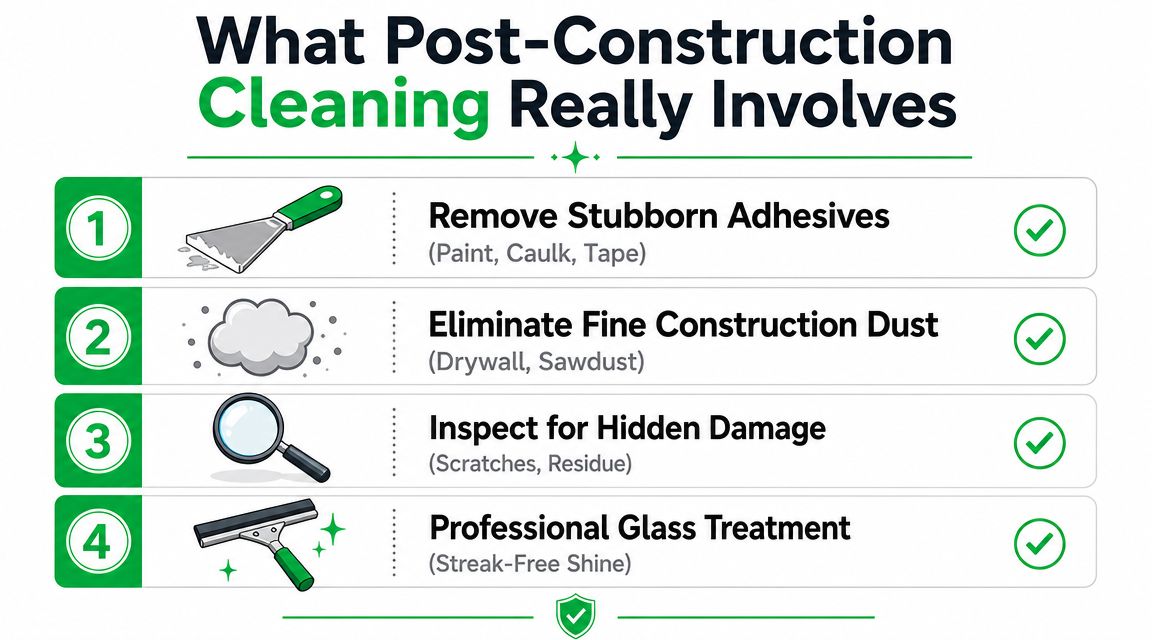
Common jobsite residue includes stickers, adhesive transfer, plaster, stucco, tape residue, paint, dirt, and construction dust on both the glass and the frames.
Some of that debris lifts easily once it's softened. Some of it doesn't. Silicone smears, caulk residue, overspray, hardened adhesive, and embedded grit all require judgment. The wrong tool or the wrong sequence can turn a cleanup task into a glass replacement problem.
Why technique matters more than effort
A lot of damage happens when someone sees residue and thinks the answer is more pressure. Industry guidance warns never to blade dry glass and to test in a low corner first because construction grit can scratch or break the pane. Even tempered glass can be vulnerable if the wrong technique is used, especially with expensive custom windows or low-E coatings, according to this post-construction training guidance.
That warning changes the whole approach. A professional doesn't start by scraping everything in sight. A professional starts by reducing risk.
- Identify the residue first. Paint specks, adhesive smears, drywall dust, and masonry debris don't respond the same way.
- Remove loose particles before contact cleaning. If the grit stays on the pane, it can be dragged across the surface.
- Check coatings and edge conditions. Some glass and some residue combinations call for a more conservative method.
- Know when to stop. If residue appears fused, if the pane has delicate coatings, or if the surface doesn't react safely, it's time to slow down and reassess.
For homeowners dealing with remodel dust or builders trying to close out a project, that's the point where specialized help matters most. If you're dealing with fine renovation debris throughout the home, this related page on construction dust cleaning gives a useful picture of how cleanup needs to be handled beyond the glass alone.
What doesn't work
Quick wipe-downs don't work. Dry scraping doesn't work. Rushing the windows before the site is ready doesn't work.
What does work is a methodical process, clean tools, proper lubrication, and patience. On post-construction glass, speed is usually where mistakes begin.
Our Professional Techniques for Flawless Results
Post-construction window cleaning is where training and restraint matter most. Standard maintenance cleaning is built around soil, fingerprints, and weather film. Post-construction cleaning deals with abrasive debris, cured adhesive, paint overspray, silicone, masonry dust, and glass that may already be vulnerable if another trade left grit behind.
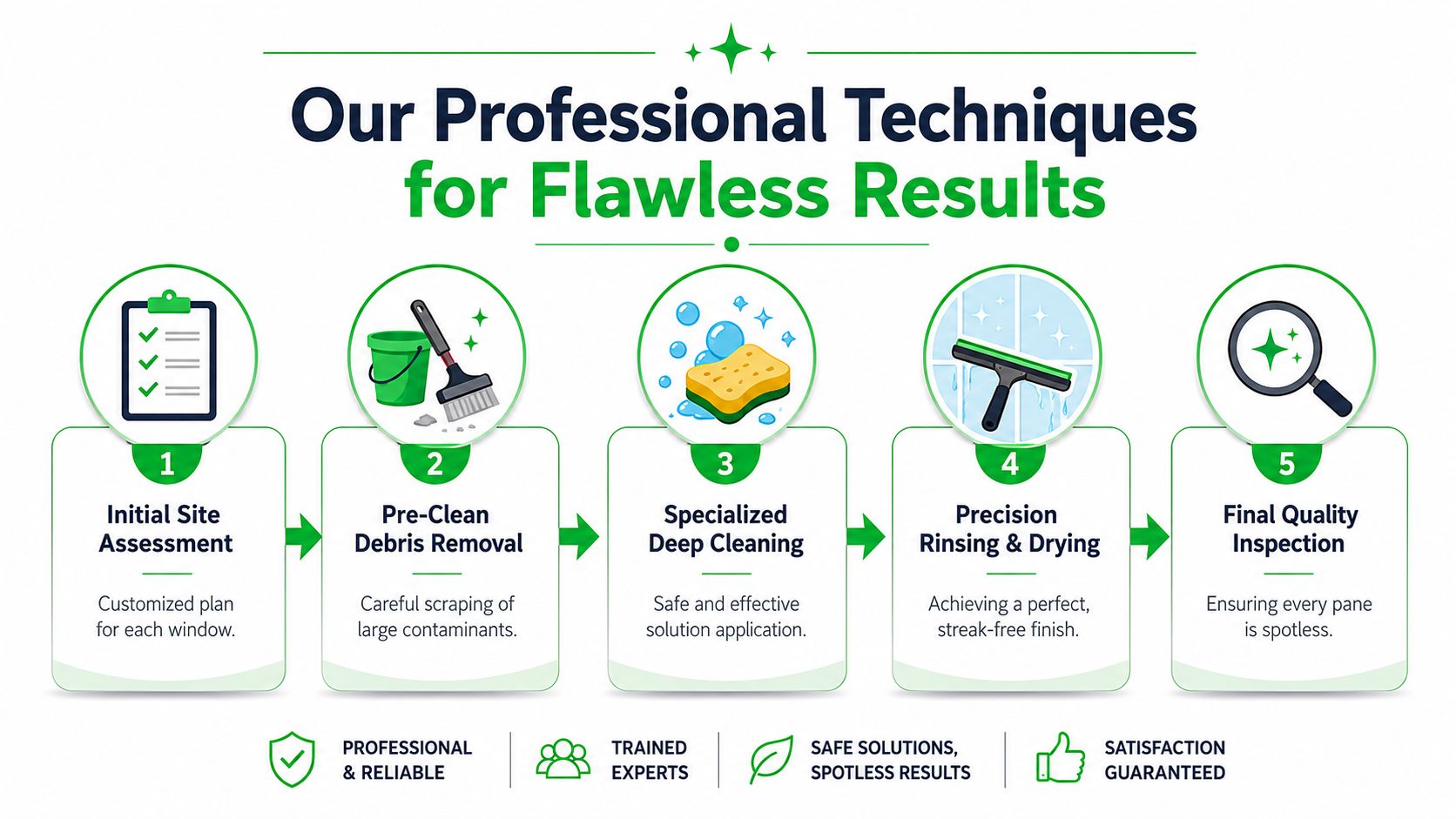
That difference changes the method from the first minute on site. Every window gets checked for residue type, frame condition, screen condition, access, and any sign that the pane needs a more conservative approach. On a new build or remodel, one bad decision can scratch a pane, trigger a replacement delay, and hold up turnover.
That is what separates a specialized crew from a general cleaner. If you're curious how operators learn the trade at a business level, this guide on how to establish a cleaning company is useful background. Field judgment is the harder part to build, and it only comes from doing this work carefully, on many different sites, under many different conditions.
The sequence that protects the glass
The order of operations matters as much as the tools. Loose debris gets removed first. Then the glass is pre-washed to soften bonded material and carry away fine particles before any detailed contact work begins.
Residue removal comes next, and this is the stage where poor technique causes damage. Some material releases with dwell time and agitation from a scrubber. Some requires a specialty scraper used only when the glass condition, blade condition, angle, lubrication, and residue type all line up safely. Other spots call for approved solvents, extra rinse cycles, and patience.
After residue is off the pane, the glass still is not done. Post-construction windows often need repeated wash-and-squeegee cycles because contamination hides in gasket edges, frame corners, and top seals, then runs back onto the glass during the next pass.
How the work is done on site
On a real job, the work starts with debris control around the whole opening, not just the center of the pane. Sills, tracks, and frame edges collect the grit that causes scratches later. If that material stays in place, it gets dragged into the glass during cleaning or falls back down once the window is wet.
Then the crew works the residue by type. Paint specks behave differently than sticker glue. Drywall dust behaves differently than mortar haze. Good post-construction cleaning is a series of small decisions, not one aggressive pass with a blade.
I tell crews to slow down when the surface gives mixed signals. If residue looks fused, if the pane has a coating that needs caution, or if the glass is reacting poorly, the right move is to change methods before damage starts. Speed helps on route work. On construction cleanup, speed is where expensive mistakes begin.
Then comes the finishing work. Applicators lay down solution evenly. Squeegees pull it off cleanly. Edge detailing removes the fine moisture line and leftover debris that often shows up later when sunlight hits the glass at an angle.
Exterior work and hard-to-reach glass
Exterior post-construction cleaning adds another layer of judgment because access affects the cleaning method. Pure-water-fed poles are useful on larger exterior runs where a spot-free rinse helps remove dust without leaving mineral residue. They are not the answer for every type of post-construction residue, but they can reduce unnecessary ladder work and improve consistency on the right surfaces.
Height changes the process, too. Upper-story windows, atriums, and awkward rooflines call for a different setup, more planning, and tighter control around landscaping, finished surfaces, and pedestrian areas. This guide on how to clean high windows gives a practical look at why access decisions matter before anyone starts cleaning.
A provider like Pine Country Window Cleaning handles post-construction window cleaning alongside routine residential and commercial work, using in-house equipment and site-specific methods instead of forcing every property into the same system.
Screens, tracks, and the details that decide whether the job feels finished
Customers notice the glass first. They notice the missed details the next morning.
Dusty screens, packed tracks, adhesive left in the corners, and dirty frame edges can make clean glass look unfinished. On post-construction work, those details matter because they keep shedding debris back onto the window after the crew leaves.
A strong final pass includes:
- Careful screen handling. Remove, clean, inspect, and reinstall without bending frames or damaging clips.
- Track cleaning where buildup is present. Construction debris settles low and hides in channels.
- Frame and edge wipe-downs. Fine dust collects where the eye catches it later.
- Final inspection in changing light. Some residue only appears from one angle or at one time of day.
The best post-construction result is simple. The glass looks clear, the surrounding parts look finished, and nobody has to worry that the cleanup itself created a scratch problem.
Advanced Equipment and Uncompromising Safety
Access is where many post-construction jobs go wrong. The cleaning may be straightforward at eye level, but tall entry glass, clerestory windows, atriums, commercial storefronts, and steep exterior elevations change the risk immediately.
A serious provider needs more than a basic ladder setup. The equipment has to match the property, the surface conditions, and the stage of construction.
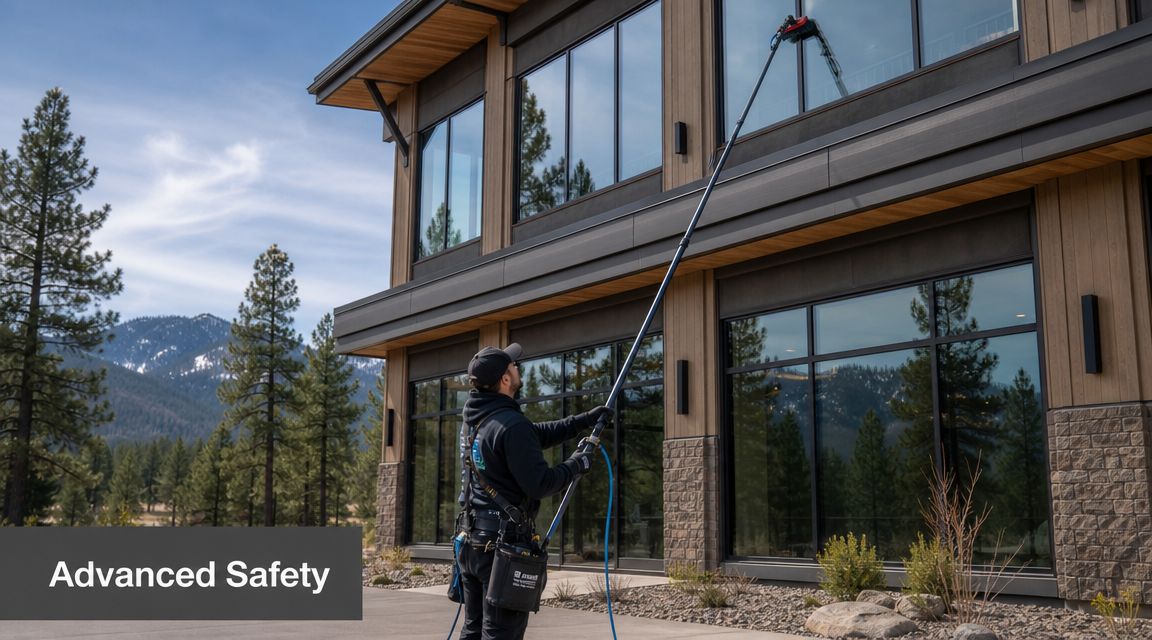
Why in-house equipment matters
When a company has its own access equipment, planning gets tighter and execution gets better. Scissor lifts, boom lifts, telescopic poles, pure-water systems, and even a 95-foot atrium lift let crews solve access problems without improvising on site.
That matters in Flagstaff, where property types vary a lot. One day it's a custom home with view glass and tight landscaping. The next day it's a hotel entry, a medical office, a dealership, or a campus building with difficult interior height. Different structures call for different tools, and the wrong access method can create unnecessary risk for both the crew and the property.
Safety protects more than the worker
Customers often think of safety as a labor issue. It is, but it's also a property protection issue. Technicians who are OSHA safety-trained and used to fall protection protocols are less likely to rush, overreach, drag equipment across finished surfaces, or make bad decisions under pressure.
That kind of discipline matters around new stucco, finished concrete, decorative stone, fresh landscaping, and recently sealed floors. Good crews don't just reach the glass. They move through the site cleanly and deliberately.
The right equipment does two jobs at once. It reaches difficult glass and reduces the chance of avoidable property damage.
This short video gives a good sense of how professional access work looks in the field.
What clients should ask before hiring
If the project includes high glass, delicate finishes, or active closeout work, ask direct questions.
- Who provides the access equipment. In-house capability usually means better planning and fewer delays.
- How crews are trained. Safety training and background checks matter when workers are inside homes and on commercial sites.
- How the property is protected. Ask how floors, trim, landscaping, and adjacent surfaces are handled.
- What happens if conditions change. Construction sites shift fast. A professional should be able to adapt without taking shortcuts.
The safest companies tend to be the calmest on site. They don't force a method that doesn't fit. They choose the access plan that keeps the crew stable and the property protected.
Planning Your Project Timelines and Costs
A project can look finished and still be the wrong day to clean the glass.
I see this on closeout schedules all the time. The builder wants sharp windows for turnover photos, the owner wants the dust gone, and one more trade is still coming back for touch-ups. If the timing is off, the glass gets cleaned, marked up again, and everyone pays for work twice or risks a rushed scrape on brand-new panes.
Why the price is higher
Post-construction window cleaning costs more because it is slower, riskier, and less forgiving than routine service.
Data from 2024 showed that the U.S. window washing industry generated about $2.9 billion, with standard cleaning often running around $45 to $75 per hour. That same industry overview also notes that post-construction work is typically priced higher because of the added labor and tools involved in removing paint, adhesive, and other jobsite residue in the broader window washing industry overview.
In the field, the difference is easy to see. Standard window cleaning is mostly soil removal. Post-construction cleaning means identifying what is stuck to the glass, choosing a method that will not scratch it, protecting nearby finishes, and working more slowly around frames, tracks, sealants, and newly completed surfaces. On some projects, access also takes longer than the cleaning itself.
The main cost drivers are usually straightforward:
- Residue severity. Fine dust is one thing. Paint overspray, silicone, stucco splash, and hardened adhesive are another.
- Glass type and condition. Large panes, divided lights, low-E coatings, tempered glass, and damaged fabrication debris all change the method.
- Access difficulty. High glass, narrow side yards, fresh landscaping, and furnished interiors add labor and setup time.
- Project readiness. If punch-list work is still active, return visits or partial cleans can push the total up.
For homeowners trying to budget ahead, our guide to Flagstaff residential window cleaning cost gives a practical starting point.
When to schedule the work
The best time for post-construction window cleaning is late in the project, after the dust and touch-up work have slowed down, but before final handover leaves no room to correct problems.
That timing matters for two reasons. First, cleaning too early often leads to recontamination from painters, electricians, flooring crews, countertop installers, or HVAC startup dust. Second, cleaning at the very last minute can create delays if we find residue that needs extra time, damaged screens, blocked access, or glass that should not be scraped.
A good rule is simple.
Schedule the window cleaning after heavy dust-producing work is finished and access is clear, but with enough cushion to address surprises before turnover.
On custom homes and commercial jobs in Flagstaff, weather can also affect the plan. Wind moves fine dust back onto glass fast, especially on exposed sites. Mud, pollen, and runoff around the exterior can slow access, even when the building itself looks ready inside.
A simple way to judge readiness
A site is usually ready when protective films can come off, ladders or lifts can reach the glass without crossing active trades, and both sides of the windows can be cleaned without fresh work happening nearby.
If any of that is still in question, waiting often protects the budget better than forcing the appointment. One well-timed visit usually costs less than a rushed clean followed by a return trip.
Flagstaff Post-Construction Cleaning FAQs
Can I remove paint specks from new windows myself
Maybe, but that's the wrong first question. The better question is whether you know what the specks are, what kind of glass you have, and whether any grit is sitting between your tool and the surface. If you don't know those answers, stop before you scrape. New glass can be damaged faster than generally expected.
Do you clean screens during post-construction service
Yes. Screens collect construction dust just like frames and tracks do. If they aren't removed, cleaned, and reinstalled properly, clean glass can still look dull from inside the home.
Is post construction window cleaning only for large commercial jobs
No. It applies to remodels, custom homes, additions, tenant improvements, storefronts, hotels, and larger commercial projects. The size changes the logistics. The core issue stays the same. Construction residue needs a different method than ordinary maintenance dirt.
What if other trades are still coming back to the property
That usually means it's worth checking the schedule again before doing a final clean. Painters, electricians, flooring crews, and punch-list teams can all leave fresh dust or marks behind. A well-timed visit protects your budget and avoids duplicate work.
Are high windows and atrium glass part of the same service
They can be, but only if the provider has the right access equipment and training. High glass after construction isn't just a reach problem. It's an access, safety, and property-protection problem.
How do I know if a company is set up for this kind of work
Ask what tools they use, how they protect surrounding finishes, whether they clean screens and detailing areas, and how they handle delicate or questionable glass. If the answer sounds like routine house cleaning with a different price, keep looking.
Does Flagstaff weather affect scheduling
Yes. Wind, dust, snow conditions, and shifting temperatures can all affect timing, especially on exterior elevations. A local crew should be able to tell you whether the job should proceed, be split into phases, or be moved to protect the result.
If you need help with post-construction glass, high windows, screens, or final project cleanup, Pine Country Window Cleaning is a practical place to start. You can request an estimate, talk through timing with your builder or property manager, and get a plan that protects the glass, the finishes, and the work you've already invested in.