
A Flagstaff snow morning usually starts the same way. You open the door at first light, cold air rolls in, and the driveway has disappeared under wet, packed snow. If it's a cabin, the slope is slick before anyone's had coffee. If it's a storefront or office, the first problem isn't convenience. It's access, footing, and whether employees, guests, or delivery drivers can even get in safely.
That's where local winter planning separates itself from generic advice. Snow removal in Northern Arizona isn't just about pushing snow from point A to point B. Flagstaff's elevation, overnight freeze cycles, shaded lots, steep driveways, and cabin roofs all create problems that don't show up in flat, milder markets. A method that works for a suburban driveway in another state often fails here.
Nationally, this is a major industry. In the United States, the snowplowing services industry commanded a market size of $22.9 billion in 2026, supported by 112,000 active businesses operating nationwide, according to IBISWorld's U.S. snowplowing services industry overview. But scale doesn't equal fit. In Flagstaff, what matters is whether the crew understands mountain access, frozen runoff, narrow cabin roads, and commercial timing before doors open.
Introduction to Winter Snow Removal Services
A buried driveway is annoying. A buried commercial entrance is a liability problem. A buried cabin access road can strand people for hours longer than they planned.
That's why winter snow removal services in Flagstaff need to be treated as operational support, not an afterthought. A homeowner in town may need a driveway and front walk cleared before work. A second-home owner in Munds Park may need the approach opened before arriving after dark. A hotel, campus building, dealership, or medical office needs entrances, walk paths, and parking areas handled in the right order so people aren't stepping onto ice while the lot is still being pushed.
Generic DIY methods usually break down fast in these conditions. A shovel works for light cleanup, but it's slow on heavy berms left by street plows. Store-bought melt product gets overused all the time, especially on shaded concrete. And when a storm comes in overnight, individuals often lack the equipment, labor, or timing to restore access before the day starts.
Practical rule: In Flagstaff, the hardest part often isn't the snowfall itself. It's the compacted layer underneath and the refreeze that follows if snow sits too long.
Cabins and commercial sites have different risk profiles, but the same core need. Get access restored early, stack snow where it won't block sightlines or drainage, and keep people off untreated walking surfaces.
What Winter Snow Removal Services Include
Professional service should cover more than a quick plow pass. On a real Flagstaff property, snow work is a sequence of tasks that have to happen in the right order.
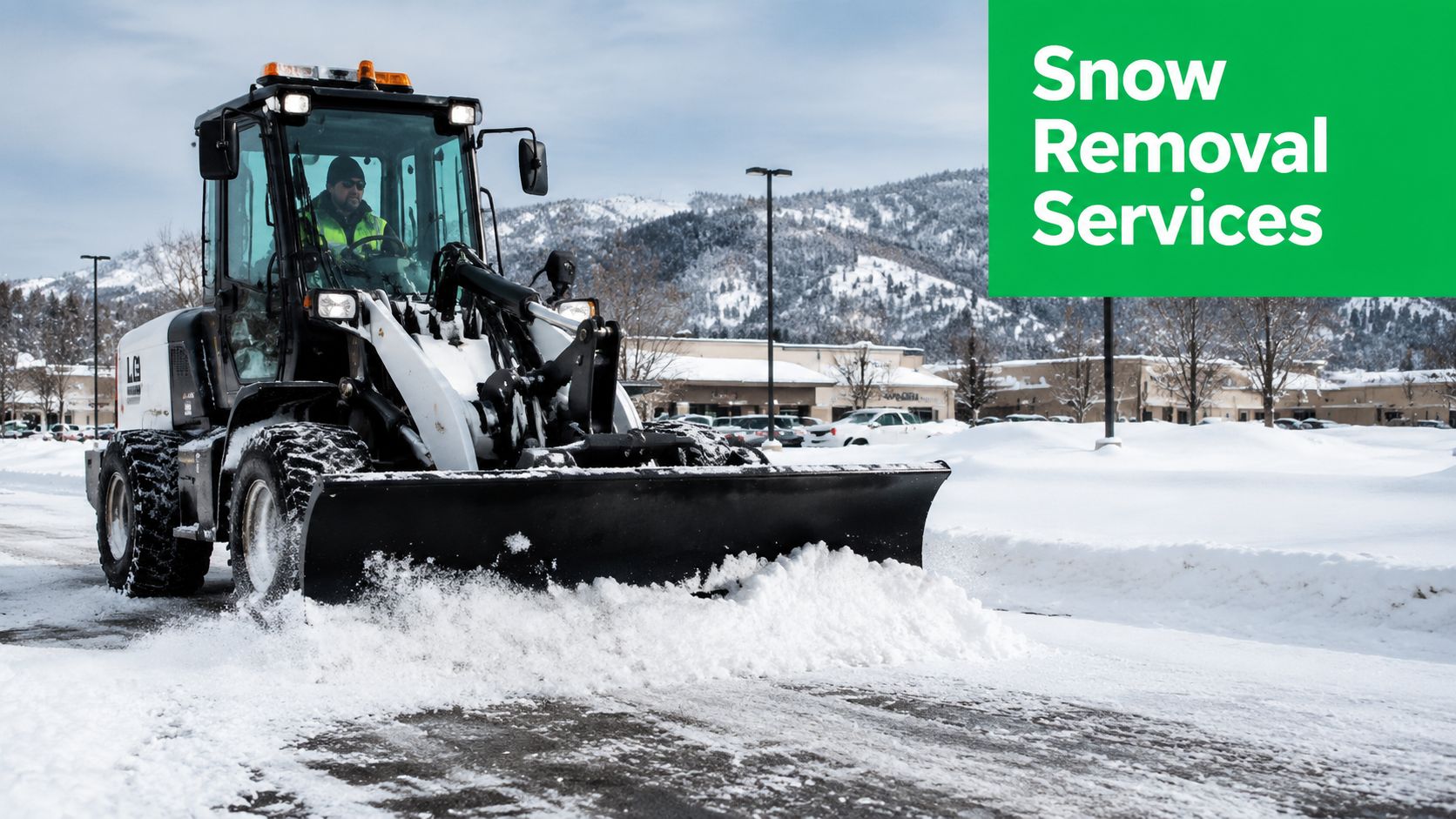
Homeowners looking at Flagstaff snow removal options often assume the main issue is the driveway. On mountain homes and cabins, that's only part of it. Front steps, walkways, garage aprons, side gates, decks, and roof edges can all become trouble spots during the same storm.
Core services that actually matter
Most reliable winter snow removal services include these categories:
- Driveway plowing and clearing helps restore vehicle access first. On steep or curved Flagstaff driveways, the operator also has to think about where the snow gets stacked so meltwater doesn't refreeze across the tire path later.
- Walkway and sidewalk clearing protects the places where slips happen fastest. Crews usually hand-clear these tighter areas because plow equipment can't work close to doorways, steps, and narrow side approaches without risking damage.
- Parking lot clearing is about traffic flow, not just snow depth. Commercial lots need entry lanes, parking rows, pedestrian routes, and loading areas opened in a practical sequence.
- De-icing application handles the layer the plow can't solve. Packed snow, overnight sheen ice, and shaded corners all need treatment after clearing.
- Roof snow removal becomes relevant on some cabins, covered entries, and structures with known drift zones. The goal isn't cosmetic. It's reducing heavy buildup over vulnerable areas and limiting slide-off hazards above entry points.
- Emergency storm response covers the properties that can't wait for a standard route. Hotels, medical sites, retail entries, and occupied cabins often need faster intervention than a basic residential stop.
How the work gets sequenced
The sequencing matters more than most customers realize. A crew shouldn't clear a front walk first if the plow is about to bury it again when opening the driveway. Likewise, there's no point applying de-icer too early if active snow is still falling hard enough to cover the treatment.
A solid storm response usually looks like this:
- Open the main access route so vehicles can enter or exit.
- Push or relocate bulk snow to designated stacking zones.
- Hand-clear pedestrian areas near entrances, stairs, and tight pathways.
- Treat known ice zones such as north-facing concrete, shaded ramps, and gutter discharge areas.
- Return if needed when ongoing snowfall or refreeze changes conditions.
On cabins, the entry sequence should protect the path people actually use, not the path that's easiest for a machine to reach.
Cabin work versus commercial work
A cabin outside the main urban core often needs narrow-access planning, careful backing, and attention to propane access, wood piles, and roof runoff zones. Commercial properties need cleaner route logic. Keep customer entrances open, preserve visibility near drive aisles, and avoid piling snow where it blocks ADA paths, signage, or corner sightlines.
What doesn't work is one-pass thinking. Snow removal done well is never just plowing. It's access management, safety management, and site-specific judgment.
Common Service Models and Pricing
Customers usually choose between per-storm pricing and a seasonal flat-rate contract. Both can work. The right choice depends on how often the property needs access, how much uncertainty the owner can tolerate, and whether the site is a primary residence, a second home, or a commercial property with fixed operating hours.

For homeowners comparing seasonal snow removal pricing, the biggest mistake is choosing only by the lowest advertised number. Pricing structure changes who carries the storm risk. That matters in a place where one winter can be manageable and the next can be relentless.
Per-storm versus seasonal contracts
According to Level Green's overview of seasonal snow removal contracts, seasonal snow removal contracts typically cost $300–$700 for residential properties, cover unlimited visits, and commonly use a 2-inch trigger depth. The same source notes that per-event service can run $75–$200.
Here's the practical difference:
| Model | Best fit | Trade-off |
|---|---|---|
| Per-storm | Owners who use the property occasionally or want to pay only when service is needed | Costs can stack up in active winters, and scheduling pressure can be worse during major storms |
| Seasonal flat-rate | Primary homes, rentals, and properties that must stay accessible through the season | You pay for predictability, even in lighter winters |
A per-storm setup sounds cheaper until storms come back-to-back and the property needs repeated visits. A seasonal contract can feel expensive in a mild stretch, but it removes a lot of guesswork for owners who can't afford to be snowed in.
A short visual comparison helps:
How contractors build pricing
Pricing isn't random. Contractors build it around labor, truck time, equipment wear, travel, de-icer use, and how much standby capacity they need during overnight events. Seasonal agreements are typically based on long-term snowfall expectations, then balanced so the contractor can absorb busy periods without renegotiating every storm.
A typical residential clause might read more or less like this in plain English:
Service begins when snowfall reaches the agreed trigger depth. Provider clears the driveway and designated walk areas. Return visits during the contract period are included under the seasonal agreement.
That trigger depth matters. If the contract says service starts at a certain accumulation, the customer shouldn't expect dispatch for dustings below that threshold unless the agreement also covers ice-only visits or special call-outs.
Which model fits Flagstaff properties
For a full-time home or a vacation rental with guest turnover, seasonal is usually easier to manage. For a second home that sits empty for long stretches, per-storm can make sense if the owner accepts more variability.
Commercial sites need a different lens. The issue isn't just cost. It's whether the lot, entrances, and walking paths are usable before the day starts. If they aren't, the cheapest contract becomes the most expensive one in practice.
Equipment and Safety Practices
The equipment on site tells you a lot about the quality of the service. So does the way the crew uses it. Good snow work comes from matching the tool to the surface, then following a routine that protects people, pavement, and structures.
What equipment should be on the job
A wide commercial lot needs different hardware than a steep cabin driveway. That sounds obvious, but a lot of poor outcomes come from trying to force one setup onto every property.
Common tools include:
- Truck-mounted plows for drive lanes, open parking areas, and longer residential approaches
- Snow blowers or skid-steer attachments where snow has to be moved, not just pushed
- Hand shovels with ergonomic handles for stairs, entries, and tight walk paths
- Spreaders for de-icer application after clearing
- Roof rakes and roof-edge tools for controlled snow removal on selected structures
According to Housecall Pro's snow removal pricing guide, professional pricing includes labor time, overhead, equipment costs, and profit margin, with hourly rates ranging from $40 to $100 depending on storm severity and equipment complexity. That pricing range makes sense when you see what the work requires. A hand crew on stairs is one job. A plow truck plus de-icing pass on a commercial site before opening is another.
Safety practices that separate pros from rushed crews
The best crews work like they expect conditions to change while they're on site, because they often do. A lot cleared at dawn can glaze over later if runoff crosses it and temperatures stay down.
Key safety habits include:
- Pre-shift equipment checks so plows, lights, hydraulic functions, and spreaders are ready before dispatch
- Site hazard review for curbs, low walls, drain covers, decorative edges, and overhead snow slide zones
- Early-morning readiness because access problems get worse when people arrive before the site is clear
- Material discipline so de-icer is applied where it helps, not dumped everywhere
The safest site isn't the one that looks scraped bare. It's the one where people can predict their footing and move through the property without crossing hidden ice.
What owners and managers should do before the storm
Professionals still need a workable site. Homeowners and facility managers can make service faster and safer by doing a few simple things ahead of time:
- Mark edges and obstacles on gravel drives, curbs, and narrow transitions.
- Move vehicles early if they block the clearing path.
- Identify priority areas such as the main entry, dumpster pad, loading door, or propane access.
- Point out drainage problems so snow doesn't get stacked where melt will run back across the drive.
For Flagstaff cabins, one of the biggest issues is hidden edge definition after the first storms. For commercial properties, it's timing. Once tire traffic compacts snow in active lanes, the cleanup gets slower and more hazardous.
Hiring Checklist and Questions for Contractors
Most snow removal problems start before the first storm. They start when a property owner hires a contractor based on a quick quote and never asks how the work will get done.
You don't need a complicated procurement process for a house or cabin, but you do need to know whether the contractor has the basics covered. Commercial managers need even more clarity because a bad winter vendor creates service failures, tenant complaints, and injury exposure in a hurry.
What to verify before you sign
Start with the fundamentals:
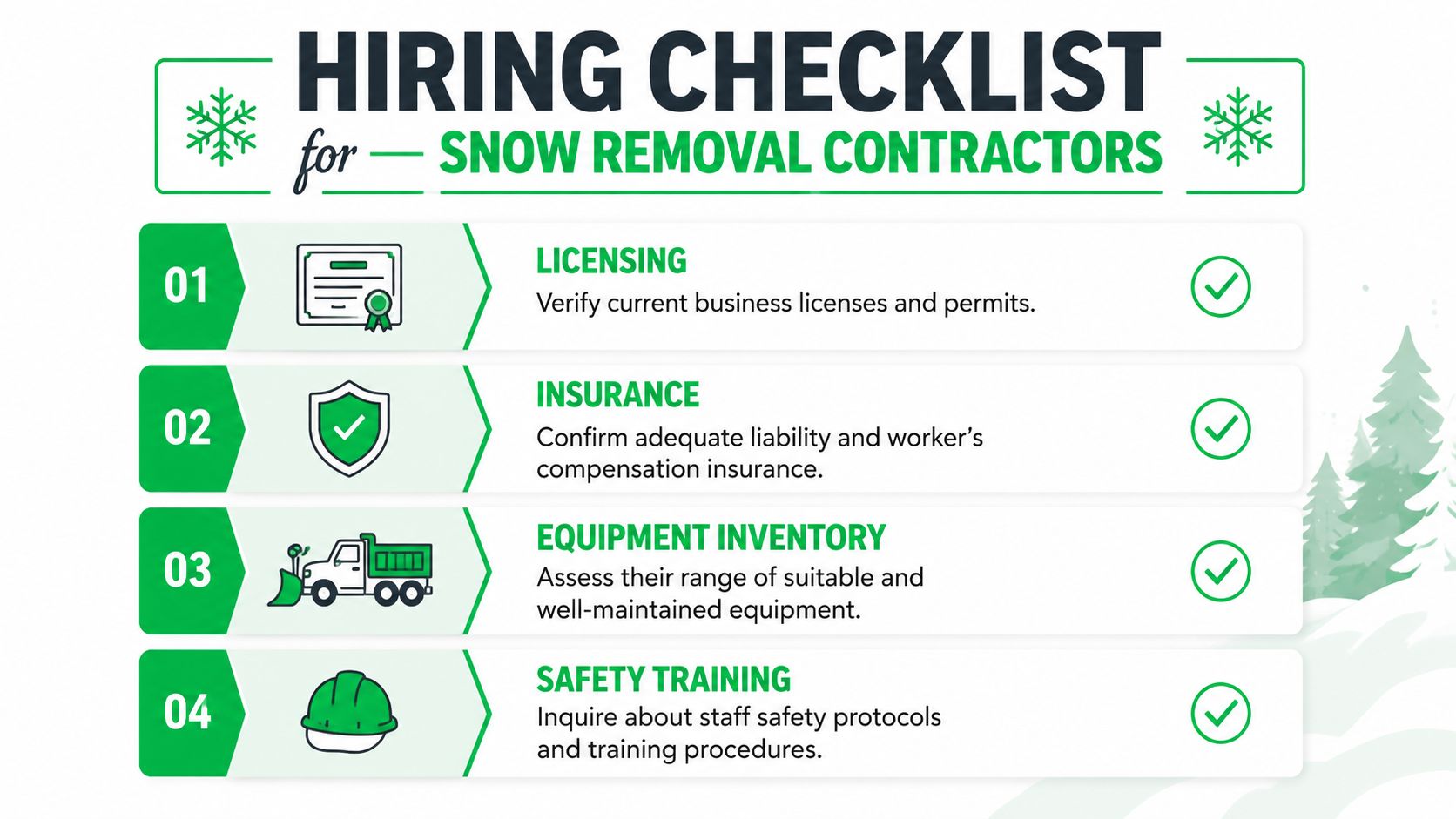
- Licensing and business standing matter because fly-by-night operators show up every winter.
- Insurance coverage matters because snow work carries real property and injury risk.
- Equipment inventory matters because one truck and one shovel crew won't support multiple large routes during a heavy event.
- Safety training matters because rushed winter labor makes mistakes around vehicles, steps, curbs, and entrances.
That checklist is straightforward. The harder part is confirming the contractor can still deliver when the whole town needs service at once.
Questions that expose weak operations
Ask direct questions and listen for specific answers.
What triggers service on my property?
If the answer is vague, the contract probably will be too.What areas are included, and what areas are excluded?
That's how you avoid finding out later that the front walk was included but the side entry wasn't.What happens if equipment breaks during a storm?
A serious contractor has a backup plan, not just hope.How do you handle heavy overnight storms when multiple properties need service before opening?
This tells you whether they route strategically or react.What de-icer do you apply, and where do you avoid using it?
Material choice should reflect the surface, traffic level, and surrounding property features.Do you document service times and conditions?
Commercial managers especially need this answered clearly.
Ask who does the work, not just what the company promises. Crews, route capacity, and backup equipment matter more than polished wording in a quote.
How to compare estimates the right way
Don't compare bids line by line unless the scopes match. One estimate may include walkways, entry treatments, and return visits. Another may be only a single plow pass with no ice control.
Use this filter:
| Checkpoint | Why it matters |
|---|---|
| Trigger depth | Defines when service starts |
| Response timing | Tells you whether access will be restored when you need it |
| Included areas | Prevents disputes about stairs, walks, side doors, or loading zones |
| Ice treatment terms | Clarifies whether de-icing is included or extra |
| Storm follow-up | Matters when snow keeps falling or refreeze develops |
For Flagstaff cabin owners, ask whether the contractor is comfortable with narrow roads, sloped drives, and properties that may be vacant when service is needed. For commercial sites, ask how they prioritize pedestrian paths relative to traffic lanes. The answer should fit your operation, not their convenience.
Seasonal Planning Tips for Flagstaff Properties
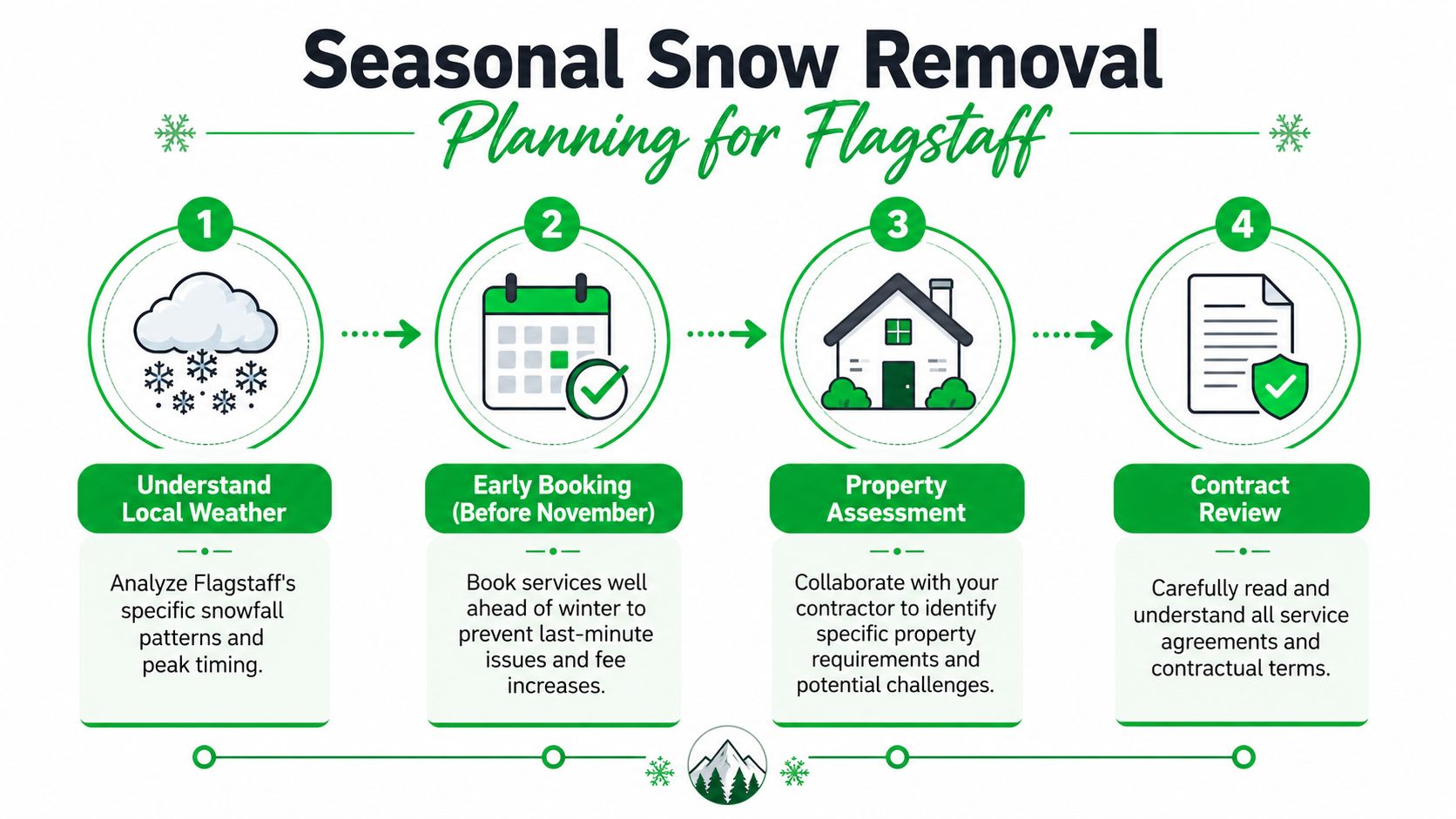
The best snow plan starts before the first serious storm. Waiting until the forecast turns ugly puts you at the back of the line, especially if you own a cabin, manage a large site, or need recurring service through the season.
A strong winter plan should also connect to the rest of your property maintenance. Many owners benefit from using a broader seasonal home maintenance checklist so snow response, drainage, gutters, and visibility issues don't get handled in isolation.
A practical season-long roadmap
For Flagstaff homes, cabins, and commercial properties, the most reliable approach is to work through winter in phases.
Before the season
- Walk the property and identify trouble spots.
- Decide what must stay open first.
- Confirm where snow can be stacked without blocking sightlines, doors, or drainage.
At contract time
- Match the service model to how the property is used.
- Confirm trigger depth, included areas, and ice treatment terms.
- Make sure the contractor has gate codes, access instructions, and the right contact sequence.
During the season
- Reassess after the first bigger storm.
- Adjust stacking areas if piles are affecting parking, runoff, or visibility.
- Update priorities if occupancy or business patterns change.
At the end of the season
- Review what worked and what didn't.
- Note recurring refreeze zones, roof slide areas, and access bottlenecks.
- Carry those notes into next winter instead of starting from zero.
Flagstaff-specific planning decisions
Cabins need a different plan than full-time homes. If the property sits empty, you need to think ahead about arrival access, roof drift concerns, and whether a plowed-in apron could leave you stuck after a long drive in. If the cabin is used as a rental, turnover timing matters. Guests don't care that the storm was overnight. They care whether they can get in.
Commercial properties need coordination between snow operations and business flow. A retail site may need the front row and main entrance handled first. A medical office may need the most direct patient walkway prioritized. A campus or multifamily site may need multiple access paths treated before traffic peaks.
If you only plan for where the snow goes on day one, you'll create problems by storm three.
Pair snow work with related upkeep
One thing national guides often miss is how connected winter tasks are in Flagstaff. Snow piles melt. Gutters overflow. Roof edges drip onto walks. Window glass stays dirty longer when screens and frames hold seasonal grime.
That's why property owners should think in systems:
- Drainage and downspouts affect where meltwater turns back into ice.
- Roof condition affects slide-off and drip lines over entries.
- Walkway visibility affects where people step when surfaces are partially covered.
- Windows and screens matter too, especially on cabins and commercial storefronts that need clear light and appearance through winter conditions.
Professional window cleaning should never be reduced to a rag, Windex, or newspaper. Serious companies use squeegees, ladders, poles, and pure-water brushes, and they should treat the home with care while they work. Screen handling matters every time. The standard should be to remove screens, clean screens, and reinstall them with every service. On homes and cabins, that attention to detail helps keep the property functioning well across the whole season, not just on the day the snow gets moved.
What to Expect from a Professional Provider
DIY snow work has its place. If you're home, physically able, and dealing with a light event, you may be able to keep up with a shovel and some spot treatment. That falls apart when the snowfall is heavy, the driveway is long or steep, the property is vacant, or the site has public-facing liability.
A professional provider should bring consistency first. That means clear scheduling communication, a defined scope, and crews who know the difference between “snow is moved” and “the property is usable.” Those are not the same thing.
The service standard should look like this
A serious company should provide:
- Clear arrival expectations based on route and trigger terms
- Crews equipped for the actual site, not just a generic driveway
- Attention to property protection around edges, landscaping, steps, and access points
- Follow-through after the initial push when refreeze or continued snowfall changes conditions
For mixed-service properties, bundled maintenance also matters. Many Flagstaff owners need winter support that doesn't stop at snow. They may need gutters cleared so runoff doesn't freeze over entries. They may need windows cleaned so cabins, retail storefronts, and commercial buildings stay presentable through the season.
Care for the customer and the home
The best local providers set themselves apart. They don't just show up with tools. They communicate well, protect the home, and handle details without being told twice.
That standard matters in winter and beyond. On the window cleaning side, a professional crew should use squeegees, ladders, poles, and pure-water brushes, not shortcuts that belong in a DIY article. They should also remove screens, clean them, and reinstall them with every service. That's part of caring for the customer's home, not an optional add-on.
In Flagstaff, Pine Country Window Cleaning has been in business since 1999 and was started by Flagstaff native David Kaminski. It's also Flagstaff's largest window cleaning company. Those details matter because year-round exterior service in this town depends on local experience, equipment readiness, and knowing how to treat both homes and commercial properties with respect.
Conclusion
In Flagstaff, winter access problems don't stay small for long. A buried driveway turns into a traction issue. A wet walkway turns into ice. A delayed parking lot clearing turns into an operations problem before the business day starts.
The right winter snow removal services solve those issues with planning, route logic, proper equipment, and site-specific judgment. If you own a cabin, manage a storefront, or oversee a larger facility, don't wait for the next storm to find out where the weak spots are. Get the scope, timing, and contractor fit sorted out ahead of time.
If you want dependable help from a local team that understands Flagstaff properties year-round, contact Pine Country Window Cleaning for a free estimate. They've served Northern Arizona since 1999 and handle snow removal, window cleaning, gutters, and related exterior maintenance with the kind of care homeowners and facility managers notice.