

The afternoon sun hits your living-room glass, and suddenly you can see everything left behind by the last storm. There's grit along the sill, spotting outside, and a dusty screen between you and the view. You're ready to book a cleaner, but one estimate includes screens and interior glass while another gives you a price without asking about access.
Choosing window cleaners in Flagstaff, AZ, means checking more than the pane count. Snow, smoke, monsoon residue, equipment, and care around your home all affect what the crew should do and what a fair quote should cover.
Flagstaff Window Cleaner Checklist at a Glance
Before booking, ask how the crew will handle your glass, screens, and access conditions. Request written answers with the estimate. Specific details help you compare providers and spot gaps before the work begins.
Provider checklist: good signs and red flags
| Criterion | What good looks like | Red flag |
|---|---|---|
| Local service area | Crew regularly serves Flagstaff, Munds Park, Forest Highlands, Pine Canyon, or Flagstaff Ranch | Accepts any address but cannot describe relevant local work |
| Equipment | Names ladders, water-fed poles, pure-water brushes, boom lifts, or scissor lifts as appropriate | Says only that it uses the best equipment |
| Crew credentials | Confirms background checks, OSHA safety training, and technician insurance in writing | Won't confirm training or insurance |
| Screen handling | Explains whether screens are removed, cleaned, and reinstalled, and includes that work in the scope | Leaves screens off or excludes reinstallation without saying so |
| Written quote | Separates pane count, access method, frames, screens, and add-ons | Gives a firm verbal price without inspecting the property or reviewing photos |
| Satisfaction guarantee | Provides a written guarantee and explains its re-clean policy | Offers only a verbal promise |
| Scheduling | Gives a service window and arrival notice | Provides no date range or notice of changes |
Judge the answers, not the sales pitch
Require a written answer to all seven checks before you book. Any red flag is a reason to pause and ask for clarification; if the provider cannot resolve it clearly, keep looking. This is a practical screening recommendation, not an industry certification.
Check that the proposed equipment suits your home. A water-fed pole may reach some upper windows from the ground, while a lift or ladder may be needed for other access points. The right setup depends on the property, not just the company's equipment list. Ask who is responsible for the work and request confirmation of the relevant insurance and training.
Pine Country is one local company to compare. Its company information describes service in Northern Arizona since 1999, and credits Flagstaff native David Kaminski with starting the business. Ask the company the same questions you ask other providers, including how it accounts for access and the condition of the glass.
Practical rule: A trustworthy estimate explains the work clearly before you agree to it.
The conversation also shows how the crew handles details in your home. Mention a sticking screen, delicate landscaping, pets, or a room that will be unavailable. Ask the provider to record those details in the job notes so the crew knows what to expect when it arrives.
Service Areas and Property Types Flagstaff Crews Handle
Snow, smoke, and monsoon debris can change what a property needs from one visit to the next. Before booking, describe the building, its access points, and any timing limits. A fair quote should reflect the work and access required, not pane count alone.
Property types and what to confirm before booking
| Property type | Access challenge | Confirm before booking |
|---|---|---|
| Single-family home in Flagstaff | Upper panes and ladder placement near landscaping | Interior and exterior scope, plus screen handling |
| Cabin or second home in Munds Park, Forest Highlands, or Pine Canyon | Vacancy and seasonal debris | Condition check and key arrangements |
| Short-term rental on Airbnb or VRBO | Guest turnover and presentation | Service slots between stays |
| Hotel or campus building, including NAU | Occupied floors and equipment scheduling | Equipment type, reach, and work hours |
| Car dealership or retail storefront | Large, visible glass fronts | Cleaning frequency and interior versus exterior scope |
| Medical or office building | Occupied hours and restricted access | Insurance certificates and access documentation |
| Post-construction or pre-listing home | Dust, labels, sealant, and paint | Whether frames and sills are included |
Flagstaff had 76,831 residents in the 2020 Census, according to the U.S. Census Bureau's city profile. When requesting a quote, give the crew enough detail to assess access, screens, and the condition of each property rather than relying on a general description.
Professional access matters as much as the cleaning method.
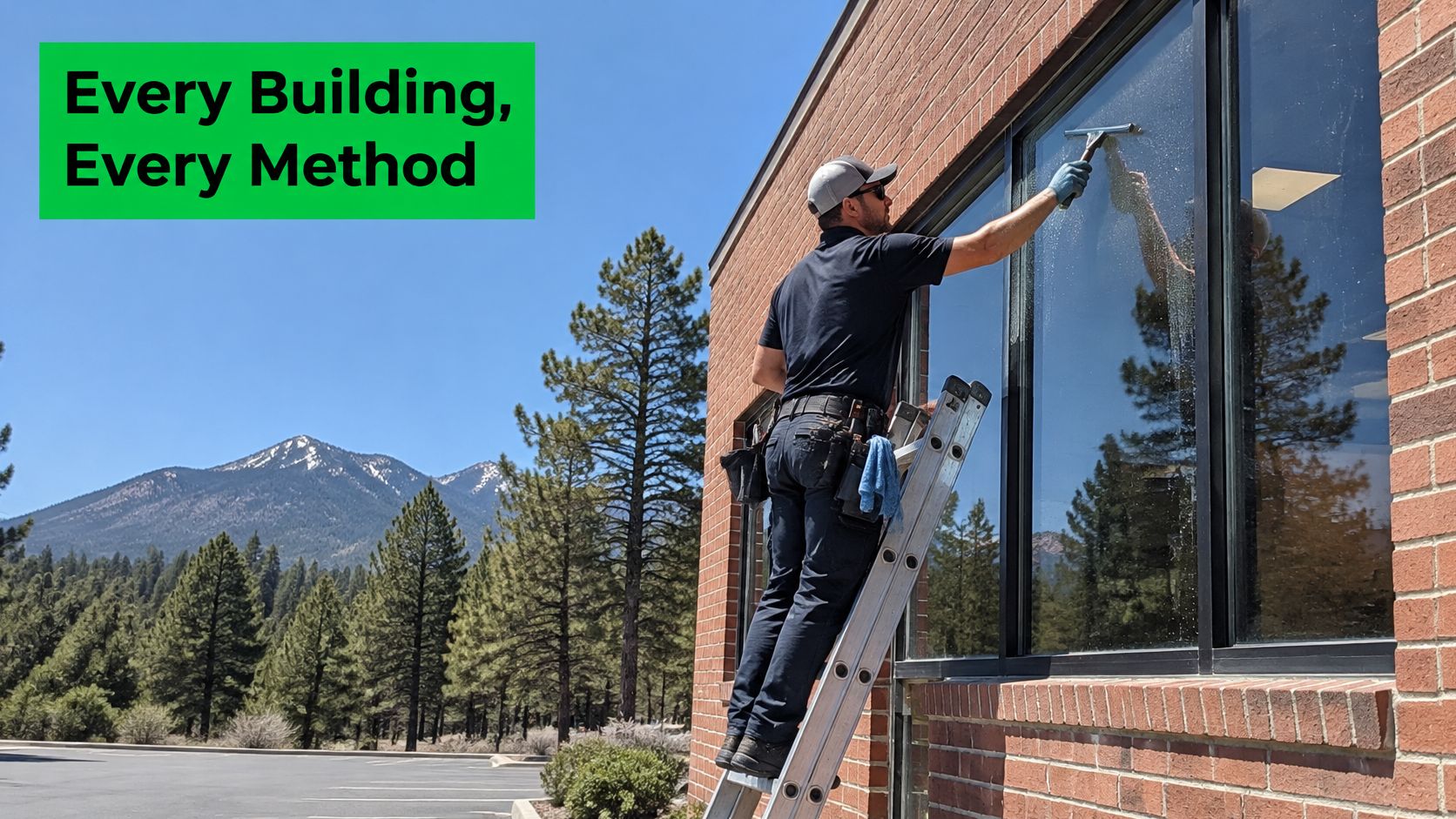
The same glass, different job conditions
Use these situations to prepare booking details, not as reports of completed customer jobs:
- Munds Park cabin: After a long vacancy or snowfall, ask whether the crew can check the glass and access conditions before setting the service scope.
- Airbnb or VRBO rental: Arrange access after checkout and coordinate timing with the turnover team.
- NAU campus building: Confirm which rooms are occupied and who approves equipment placement.
- Dealership storefront: Separate customer-facing exterior panes from showroom work around vehicles and staff.
Travel and access can affect scheduling. Nearby in-town appointments may fit a compact route, while dispersed cabin stops take more coordination. A home in Pine Canyon or Forest Highlands is not automatically difficult to service, but a locked gate or unavailable contact can delay the visit.
Ask whether the crew regularly handles your property type and neighborhood, and explain any seasonal access concerns when requesting an estimate.
Which Cleaning Method Fits Each Window Type
Flagstaff's changing conditions affect the method as much as the glass does. Snow and wind can limit exterior access, while smoke residue or monsoon dust may call for a different rinse and finish. The technician should consider the pane's reach, surrounding surfaces, residue, and working space before choosing equipment.
A water-fed pole uses a brush to loosen soil on exterior glass and frames, then rinses the surface. Pine Country's pure-water equipment description describes deionized water for rinsing. Because water quality can vary, ask the provider what treatment method it uses and whether it can share measured total dissolved solids (TDS) readings.
A squeegee gives the technician control over the finish on interior panes and accessible storefront glass, where excess water can affect floors, displays, or nearby furnishings. The right method depends on the surface and site, not just the type of property.
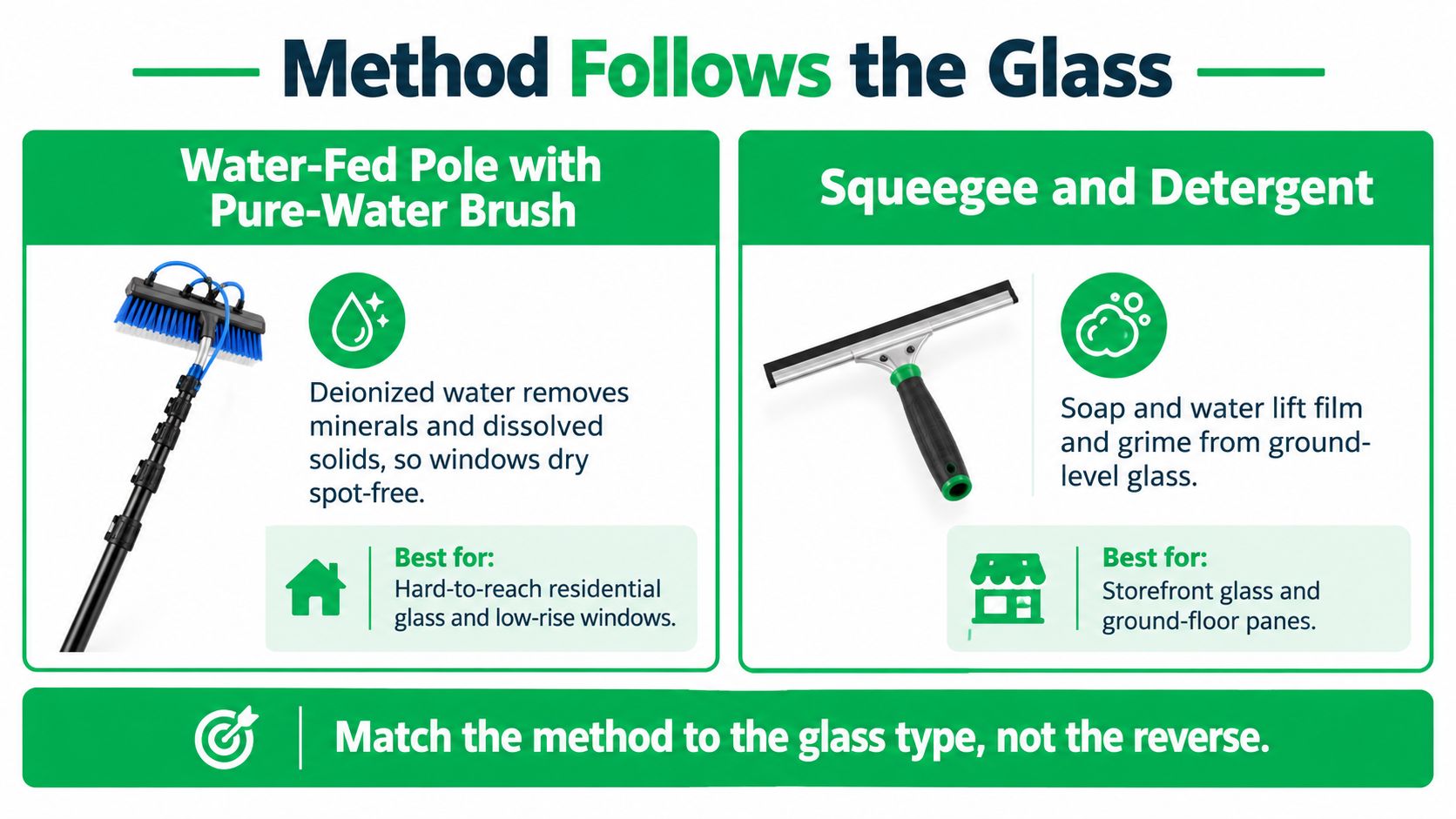
| Method | Best use | Main limit |
|---|---|---|
| Squeegee and professional cleaning solution | Interior glass and accessible storefronts | Requires controlled access and water handling |
| Water-fed pole | Exterior panes reachable from a suitable ground position | Angles and obstructions can restrict contact |
| Pure-water brush and rinse | Exterior glass and frame washing | Isn't a universal treatment for bonded residue |
| Ladder-supported work | Mid-height panes and awkward corners | Needs suitable footing and safe positioning |
| Boom or scissor lift | Tall walls and complex commercial glazing | Requires access planning and trained operation |
Choose for the surface, not the package name
A whisk and a stand mixer both help prepare batter, but they suit different jobs. Window-cleaning tools also have specific uses. A pole works when its brush can reach the glass at a useful angle; a squeegee is often the more controlled choice indoors.
After construction, request an inspection before anyone brushes the glass or treats labels, paint, or sealant. Those materials may need targeted handling, and a routine maintenance pass may not remove them safely or completely. Smoke film and monsoon dust can also change what the technician needs to address.
Pure-water service is useful for some exterior panes, but not every window needs it. Ask which areas call for a brush-and-rinse method and which are better cleaned traditionally.
Ask about water stewardship
The City of Flagstaff's Water Conservation Program says it has helped customers reduce water use by 50% since 1988 and reports average residential use of about 84 gallons per person per day.
For a hotel, campus, dealership, or vacation home, ask how much water the visit is expected to use, where runoff will go, and whether a lower-water method suits the glass. Saving water only helps if the rinse still removes residue; an inadequate rinse can mean another visit.
How High-Rise and Atrium Windows Get Reached Safely
At a Flagstaff hotel, a tall glazed atrium may call for a lift, rope access, or another method, depending on the glass layout and where equipment can safely operate. Controlled access matters more than maximum lift height. OSHA's aerial-lift safety guidance calls for trained operators, equipment used and maintained according to manufacturer instructions, working safety devices, and compliance with load limits.
For aerial lifts, the guidance requires at least 10 feet of clearance from energized overhead lines up to 50 kV. Greater clearance is required for higher voltages. It also calls for a body harness or restraining belt with a lanyard attached to the boom or basket to reduce ejection risk. A tall machine does not replace these controls.
A photograph of a cleaner at height cannot show whether that access system suits a particular building.

What the site survey should document
Before work begins, the provider should assess the glass and the work area. Ask for a site-specific plan that covers:
- Glass layout: Glazing height, horizontal reach, recessed areas, and obstructions.
- Equipment positions: Landing zones, approach routes, ground bearing capacity, and available working space.
- Surrounding hazards: Overhead utilities, wind exposure, pedestrian routes, and vehicle movements.
- Operating limits: Equipment capacity, manufacturer restrictions, and emergency or rescue procedures.
For an atrium, the right lift depends on its rated capacity, platform geometry, access route, and the surface where it will stand. A machine that fits one part of the building may not reach another. If it cannot enter the space or operate on the available surface, a different access method may be needed.
Efficient work means reaching the assigned glass with safe, deliberate movements. Fewer repositionings can help, but only when the equipment fits the site and the work.
Ask the provider where equipment will stand, how pedestrian routes will be managed, and what happens if work must stop.
Documents to request before signing
Request evidence of operator training, pre-use inspections, pedestrian and vehicle exclusion zones, and a written access plan for the property. For ladders and other working surfaces, OSHA's fall-protection standards page identifies relevant requirements and the ANSI/IWCA window-cleaning safety guide.
Use the high-rise window-cleaning service information to start the scope discussion, then ask for a plan suited to your building. Occupied lobbies, entrances, and loading areas need specific coordination.
Best Months to Book Window Cleaning in Flagstaff
A clear fall day can be a good time to clean, but the right booking window depends on snow, smoke, monsoon dust, and whether a crew can reach the glass safely. Use this seasonal guide as a starting point, then adjust for conditions at your property.
| Window | Months | Main residue | Best service |
|---|---|---|---|
| Pre-winter | Late September to November | Needles, leaves, dust, and pre-snow grime | Full interior and exterior clean before heavy snow |
| Winter | December to February | Snow, slush, road grit, and salt splash | Post-storm inspection and cleaning on mild days |
| Snowmelt and spring | March to May | Grit, roof debris, and mineral spots | Priority exterior cleaning after snow exposure |
| Summer and monsoon | June to September | Pollen, monsoon dust, and storm-water spots | Event-based cleaning after storms and smoke episodes |
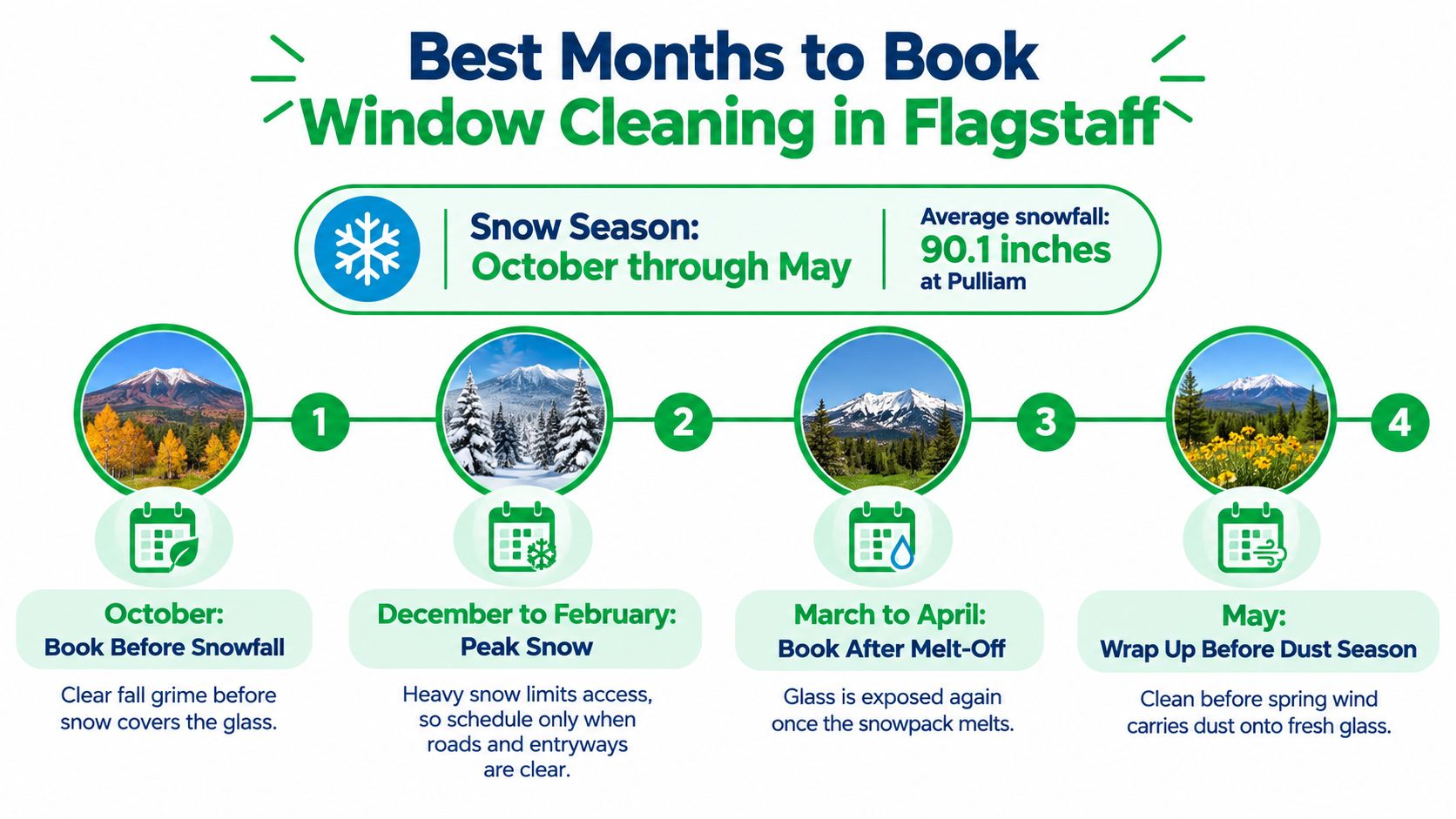
Flagstaff's snow season makes access and melt-off more useful scheduling guides than a fixed date. The National Weather Service's Flagstaff office provides local weather information, but conditions at the home determine whether a crew can work safely and whether water will drain without freezing.
The infographic showing the best months to book window cleaning services in Flagstaff during the snow season offers a quick seasonal reference.
Add event checks to the calendar
Smoke can leave fine particulate film on glass. During foggy or damp periods, condensation may make existing deposits more noticeable. Monsoon storms can also leave dust and mineral-bearing water marks, even when the last cleaning was recent.
Inspect after a strong storm or smoke episode instead of relying only on a routine interval. If the glass still looks clear, service may not be needed yet. If residue is visible, ask whether an exterior-only visit will address it.
Scheduling insight: Set a routine interval, then check the glass after unusually harsh conditions.
Use this seasonal window-cleaning guidance when planning, while leaving room to reschedule for weather. Winter cleaning is best reserved for days with clear access and conditions that allow water to drain without rapid freezing.
This video can help start a conversation about arranging professional service.
For cabins and short-term rentals, arrange an inspection after major snowfall, even if the property is unoccupied. Check the glass, frames, sills, and drainage before deciding what needs cleaning.
What a Fair Window Cleaning Quote Includes
A quote is a scope of work, not just a per-pane rate. An upper-story home can require more setup than a ground-access cabin with a similar amount of glass. Comparing counts alone misses the work needed to reach and finish those windows.
Quote factors and the question to ask
| Quote factor | How it changes the price | Question to ask |
|---|---|---|
| Pane count and size | More or larger panes require more work | Is every pane counted, including skylights? |
| Height and access | Ladder, pole, or lift setup adds labor | Which method is quoted for each area? |
| Interior versus exterior | Separate passes and indoor preparation | Is interior glass included? |
| Screen removal, cleaning, and reinstall | Requires handling and cleaning labor | Are screens included in the base price? |
| Frames, sills, and tracks | Adds detail work | Which surfaces are in scope? |
| Add-on services | Separate tasks require separate pricing | Are gutters, downspouts, pressure washing, and snow removal itemized? |
| Post-construction residue | May require specialized treatment and additional passes | Is an on-site inspection needed? |
| Recurring schedule | Predictable routing may allow different per-visit pricing | What are the cancellation and rescheduling terms? |
Get an estimate based on visible conditions
Request a free estimate after an inspection or a sufficiently detailed photo review. Photos should show the whole elevation, difficult corners, screens, and nearby obstacles, not just a close-up of a clean-looking pane.
The written quote should separate interior and exterior glass, frames and sills, screen service, and optional work. Use the residential window-cleaning cost guide to frame those questions rather than expecting a universal rate.
A firm price before anyone has seen the property is a warning sign. A preliminary range can be useful, but the provider should explain what remains unverified.
Put care for the home into the scope
Ask how the crew will protect furnishings, manage indoor water, avoid planting beds, and establish stable ladder footing. Discuss access through gates and rooms before technicians arrive, especially if pets or guests will be present.
At Pine Country, screens are removed, cleaned, and reinstalled with every service. Ask how existing screen damage is documented and who checks that each screen is seated properly before departure.
Also confirm where exterior rinse water will go. Property protection means planning the working area, not just avoiding an obvious spill.
Compare bids by what the crew will complete and how it will reach the glass, not by the lowest number beside “windows.”
Before signing, get the return-visit policy, payment terms, and recurring-service cancellation conditions in writing. Don't assume a maintenance agreement guarantees lower pricing or unrestricted rescheduling.
Confirm the Quote and Book Your First Visit
Before booking, answer these questions: Does the provider regularly serve your area and property type? Does its method fit your glass? Does its access plan address the risks of raised or commercial work?
If an answer remains vague, ask for clarification before reserving the visit. Your written agreement should resolve the uncertainties that could otherwise become arrival-day surprises.
Turn the estimate into a workable appointment
- Shortlist providers using the checklist. Compare their written answers, paying particular attention to unresolved red flags.
- Request an itemized quote. Keep interior and exterior work, frames, screens, and add-ons distinguishable so you can compare equivalent scopes.
- Confirm the service terms. Record screen handling, the arrival window, notification arrangements, and the satisfaction guarantee.
- Book and retain the paperwork. Save the quote with the appointment confirmation and provide access instructions to whoever will meet the crew.
Choose a pre-winter or spring appointment according to the property's condition, then use the event checks described above when weather changes the need. Don't book a rigid recurring schedule until the provider understands your exposure and occupancy.
Pine Country is one local option to evaluate through this process. Its broader property-care services include gutter and downspout cleaning, pressure washing, and seasonal snow removal, which may help when coordinating maintenance. Ask it to confirm training, insurance, guarantee coverage, and scheduling terms in writing, just as you would with another crew.
Clear communication is part of the service. You should know what will be cleaned, how your home will be protected, and whom to contact if something needs attention afterward.
Pine Country Window Cleaning offers residential and commercial glass cleaning with screen removal, cleaning, and reinstallation, plus related exterior-maintenance services. Visit Pine Country Window Cleaning to request a free estimate, describe your access concerns, and arrange a service window suited to your property and Flagstaff's weather.