

Your Year-Round Guide to Flagstaff Property Care
Owning property in Flagstaff means living with real seasonal swings. One month you're brushing pine pollen off the deck, the next you're watching snow pile up along roof edges, and before long the monsoon dust starts sticking to every exterior surface. A generic property maintenance checklist won't help much when Northern Arizona weather keeps changing the kind of stress your home or building takes.
That's the problem with most standard checklists. They treat windows as a lightly important annual chore, even though the National Association of Home Inspectors indicates that windows in regions with high UV exposure, heavy snow loads, or significant temperature fluctuations need cleaning and inspection every 3 to 4 months, while over 85% of popular checklists still say little more than wash windows annually without regional adaptation, according to Buildium's property maintenance checklist guide. In Flagstaff, that gap matters.
This guide is built for the way property behaves here. It reflects over 25 years of hands-on work in Flagstaff and Northern Arizona, with attention to pine needle buildup, snow management, post-construction cleanup, and the kind of window and exterior care that protects seals, drainage, and curb appeal. If you manage a home, a cabin, a rental, or a commercial site, this is the kind of practical planning that keeps small issues from turning into expensive ones.
If you also manage rentals, this broader guide to essential rental property care is a useful companion. For now, let's get straight to the list.
1. Professional Window Cleaning with Squeegees and Pure-Water Brushes
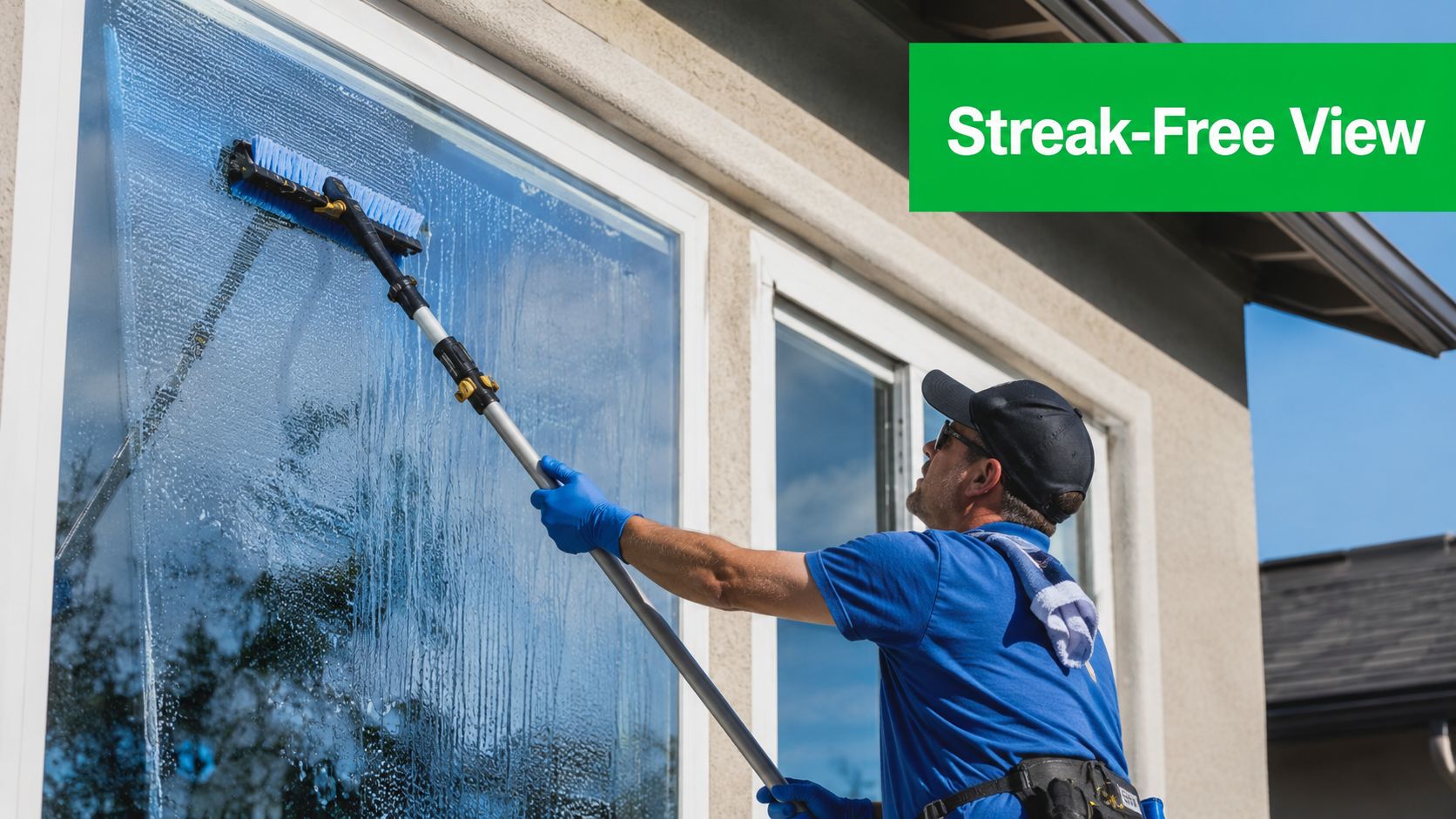
In Flagstaff, window cleaning isn't cosmetic. It's part of inspection, and inspection is prevention. That's especially true in spring, when surfaces need to be cleaned well enough to reveal winter wear, failed seals, hard water buildup, and frame issues before they spread, as explained in Pine Country's overview of exterior building maintenance in Flagstaff.
Professional cleaning means using the right tools. That's squeegees, ladders, poles, and pure-water brushes. It does not mean wiping glass with a rag, spraying household cleaner, or dragging grit across the pane and hoping for the best.
Why pro tools matter here
Northern Arizona throws a lot at glass. Windblown dust, pollen, mineral spotting, tree sap, and snow residue all behave differently. A professional crew can adjust the method to the glass, the height, the surrounding landscaping, and the access points without damaging trim, screens, or sealant.
Pine Country Window Cleaning has been doing that work since 1999. The company was started by Flagstaff native David Kaminski, and over the years the process has stayed professional and simple. Remove the screens, clean the screens, clean the glass properly, and reinstall everything carefully so the home looks right and functions the way it should.
Practical rule: If the glass is too dirty to inspect, it's too dirty to ignore.
A few things work well for homeowners and managers here:
- Book spring and fall service: That schedule catches winter residue and summer dust before they sit too long on the glass.
- Ask for full screen service: Clean screens improve airflow, visibility, and overall finish. Pine Country removes, cleans, and reinstalls screens with every service.
- Flag problem windows early: If a pane fogs, sticks, drafts, or shows mineral staining, tell the crew before they start so they can inspect it closely.
For commercial sites, off-peak scheduling usually causes the least disruption. For homes, the biggest gain is peace of mind. Clean windows look better, but the main benefit is catching trouble before it gets expensive.
2. Gutter Cleaning and Downspout Maintenance

Most property owners think about gutters only when they overflow. By then, the water has usually already washed over fascia, splashed onto windows, soaked siding, or pooled near the foundation. In Flagstaff, pine needles make that cycle happen faster than people expect.
This is one area where a property maintenance checklist needs to connect the dots. The Environmental Protection Agency found that 60% of residential water damage claims stem from improper drainage and neglected gutter-system maintenance, a point highlighted in Limble's discussion of property maintenance workflows. Gutters, downspouts, and windows aren't separate chores. They are one water-shedding system.
Treat drainage as one system
When downspouts clog, roof runoff has to go somewhere else. It spills over gutter edges, streaks glass, wets trim, and can back up around entry points. If you clean the windows but ignore the gutter line above them, you've only fixed the symptom.
That's why coordinated service works better than scattered service calls. Pine Country handles this kind of seasonal work every year, and their guidance on seasonal gutter maintenance lines up with what we see locally. Spring and fall are the key checkpoints, especially around heavy needle drop and before winter storms.
Dirty gutters often announce themselves on the windows first. Water marks on upper panes and grime trails below the roof edge usually mean it's time to look up.
A practical approach looks like this:
- Clean before and after heavy debris seasons: Pine needles don't wait for a neat annual schedule.
- Check discharge away from the structure: Downspouts should carry water well out from the foundation area.
- Bundle gutter and window service: It's more efficient, and it gives you a clearer picture of how runoff is affecting the building exterior.
Commercial properties benefit from the same logic. Facilities at NAU, retail sites, and larger residential communities all get better results when crews treat roof drainage and window condition as related maintenance, not isolated line items. If you want a broader exterior perspective, this guide to roof and gutter cleaning adds useful context.
3. Post-Construction Window Cleaning
New construction always looks finished from a distance before it is clean. Step closer and you'll usually find dust in the tracks, adhesive on the glass, paint specks, silicone smears, stickers, and fine debris that can scratch a pane if somebody cleans it the wrong way.
That last part is where people get into trouble. Post-construction glass needs a different approach than routine maintenance glass. Fresh caulking, new frames, and leftover jobsite debris all demand patience and the right tools.
What gets missed after the build
Builders, owners, and project managers are often focused on punch-list items, final inspections, and turnover deadlines. Windows become the last thing on the schedule, even though they're one of the first things a buyer, tenant, or guest notices. That's why post-build cleanup should happen near the end, after dust-producing trades are done.
Pine Country handles this kind of work for local builders, commercial projects, and residential developments, and their post-construction cleaning services are built around that final-stage detail work. It's not just about shine. It's about removing residue without scratching new glass or disturbing adjacent finishes.
Here's what experienced crews usually watch for:
- Adhesive and label residue: This needs controlled removal, not aggressive scraping by someone in a hurry.
- Fine construction dust: It settles into tracks, frames, screens, and sill corners.
- Sealant overspray: If it's left in place, it makes new windows look older than they are.
A real local example is easy to picture. A new custom home in Pine Canyon may be structurally complete and beautifully finished, but if the glass still carries drywall dust and silicone haze, the whole property feels unfinished. The same goes for commercial turnover. NAU-related work, medical offices, and hospitality projects all need clean presentation before occupancy.
Clean the windows after the last dusty trade leaves, not before. Otherwise you'll pay for the same job twice.
Good post-construction service also helps with records. If you're documenting final condition for warranty or owner handoff, clean glass and clean frames make defects much easier to spot.
4. Seasonal Snow Shoveling and Snow Removal
Snow is part of life in Flagstaff. The mistake is treating it like a one-time inconvenience instead of an ongoing maintenance category. Heavy accumulation changes how people enter a property, how meltwater drains, and how much stress roof edges, gutters, and walkways take.
For year-round residents, that means staying ahead of storms. For second-home owners, it means having a plan before you leave town. A cabin that sits untouched after repeated snowfall can become hard to access and harder to inspect when a problem starts.
Where snow causes the most trouble
Walkways and entries are the obvious priority because they affect safety first. But the hidden issues often start around rooflines, gutter edges, and shaded areas where refreeze happens overnight. Packed snow at an entry can turn into slick ice. Snow left against garage fronts, decks, and lower windows can keep moisture in contact with materials longer than it should.
What works in Northern Arizona is prompt, repeated clearing. Not one big cleanup after a storm cycle is over. If snow is building in layers, the property needs attention in layers too.
A practical winter plan should include:
- Entry access first: Front walks, steps, and drive approaches matter most for safety and usability.
- Drainage awareness: Snow piled in the wrong spot can redirect meltwater toward the building.
- Roof edge observation: If you see uneven melt patterns or buildup at the eaves, inspect the gutter line and surrounding drainage once conditions are safe.
For owners in Munds Park, Forest Highlands, and Pine Canyon, a standing winter service arrangement is usually smarter than waiting until the driveway is buried. The same goes for commercial properties. Hotels, campus buildings, and storefronts can't afford blocked entrances or delayed access.
Snow removal also pairs well with gutter maintenance. If autumn debris stayed in the gutter system, winter snowmelt has fewer places to go, and that's when ice and overflow start affecting fascia, siding, and windows. In this climate, snow work isn't just shoveling. It's part of exterior preservation.
5. Pressure Washing for Exterior Surfaces
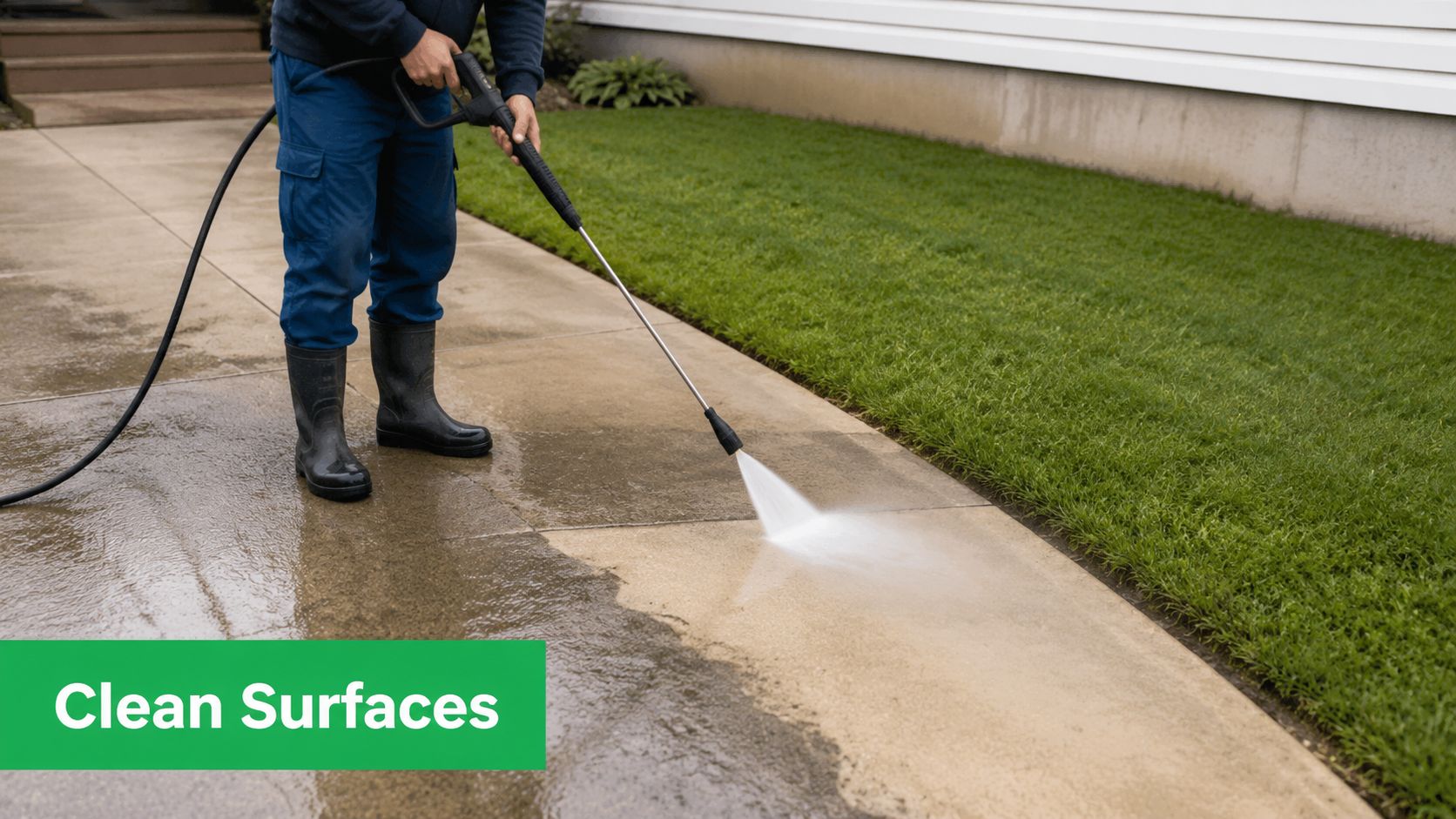
Pressure washing works well in Flagstaff when it's controlled. Used carelessly, it can gouge wood, scar painted surfaces, force water behind trim, and leave you with more repairs than you started with. Used correctly, it clears away the dirt, algae, residue, and weather staining that make a property look neglected and age faster.
This is one of those services that pays off most when it's sequenced properly. If you wash concrete, siding, decks, and walkways before window cleaning, you don't throw fresh grime back onto clean glass.
Match the method to the surface
Not every exterior should get the same pressure or nozzle. Older homes, stained decks, painted trim, and softer materials all need a lighter hand. That's where experience matters more than raw equipment.
If you're comparing methods, Pine Country's explanation of power washing and pressure washing differences is useful because it focuses on choosing the right approach, not just blasting away dirt. A medical office walkway, a dealership frontage, and a wood deck in Forest Highlands all need different treatment.
A smart service order usually looks like this:
- Start with hardscapes and exterior buildup: Walkways, patios, entry pads, and retaining areas often hold the heaviest grime.
- Adjust for age and material: Older siding and wood surfaces need lower pressure and more care.
- Finish with windows: That final step removes any misting, spotting, or splash residue from the earlier work.
For pre-listing prep, this makes a visible difference quickly. A home in Flagstaff Ranch with clean concrete, washed siding, and clear glass photographs better and shows better. For commercial property, it's even more practical. Dirt around entrances and storefront glass changes how people read the whole operation.
High pressure isn't the goal. Clean surfaces without damage is the goal.
Pressure washing belongs on a serious property maintenance checklist because dirt isn't just visual. Buildup traps moisture, highlights neglect, and hides failing areas that need repair.
6. High-Rise and Commercial Building Window Cleaning
Commercial window cleaning is a different trade than residential route work. Once you add multiple stories, atriums, access restrictions, foot traffic, and tenant schedules, the work becomes part logistics, part safety management, and part presentation.
That's why commercial owners and facility managers should be careful about who they hire. A crew that does fine on a one-story house may not be prepared for lifts, staging, communication with on-site staff, or the pace required for a hotel, campus building, or medical property.
Equipment and planning matter
Pine Country handles this work with in-house equipment, including boom lifts, scissor lifts, and a 95-foot atrium lift. That matters because the company isn't depending on last-minute rentals to reach difficult glass or interior atrium spaces. On larger sites, that control helps scheduling and safety.
This short video gives a sense of the access and scale involved:
For commercial properties, the best results usually come from recurring service instead of occasional emergency cleanups. Hotels need a reliable first impression. Medical buildings need clean, orderly presentation. Car dealerships need glass that doesn't undermine the vehicles on display. NAU facilities need crews who can work around active campus use.
A solid commercial plan usually includes:
- Off-peak scheduling: Early hours or lower-traffic windows reduce disruption.
- Site coordination: Facility managers should confirm access points, locked areas, and pedestrian flow.
- Maintenance records: Keep documentation of service dates and observed issues for building files.
This kind of window cleaning also protects the building envelope. Dirty upper glass, neglected frames, and runoff marks often point to larger maintenance issues nearby. On a commercial site, appearance is part of operations. Clean glass tells visitors, tenants, students, and customers that the property is cared for.
7. Regular Window Maintenance for Cabins and Seasonal Properties
Seasonal homes age differently than occupied homes. When nobody's there for stretches of time, dirt sits longer, screens collect debris without anyone noticing, and small exterior issues can go from harmless to expensive before the owner comes back.
That's especially true around Flagstaff, Munds Park, Forest Highlands, and Pine Canyon. Cabins and second homes often sit under trees, take full sun at altitude, and go through strong seasonal shifts without regular eyes on them.
Empty properties still need active care
A cabin doesn't stop collecting dust, sap, pollen, and storm residue just because the owner isn't in town. In fact, those properties usually need more disciplined scheduling because nobody is around to notice the early warning signs. Dirty windows can hide failed seals. Packed debris near frames can hold moisture. Neglected screens can sag or come loose.
What works best is a standing maintenance routine that matches actual use. For a summer-use cabin, clean before arrival season and again before winter. For a short-term rental, schedule around guest turnover patterns and high-visibility dates.
A workable checklist for second homes often includes:
- Pre-arrival service: Make sure the property is guest-ready or owner-ready before peak use.
- Season-change visits: Spring and fall are the natural points for inspection and cleaning.
- Photo documentation: Especially helpful when owners are out of town and need condition updates.
A Munds Park owner, for example, may not realize tree residue and dust have reduced visibility and airflow until a holiday weekend arrives. By then, every outdoor task feels urgent. Regular service avoids that rush and keeps the property in better shape year-round.
For vacation rentals, this also affects reviews and guest experience. People notice the view first. If the windows are dull, the screens are dusty, and the exterior feels neglected, the stay starts on the wrong foot.
8. Screen Service with Professional Removal, Cleaning, and Reinstallation
A lot of companies treat screens as an afterthought. That's a mistake. In Flagstaff, screens catch dust, pollen, pine debris, and fine grit, and if they stay dirty, they cut airflow, dull the view, and make freshly cleaned windows look half finished.
Professional screen service should be part of the job, not an extra somebody remembers to mention at the end. Pine Country removes screens, cleans them, and reinstalls them with every service. That's one of the clearest signs a crew is taking care of the home, not just hurrying through the visible glass.
Why screens deserve real attention
Screens are light, but they're easy to bend, tear, or reinstall poorly. Once they're misaligned, they rattle, gap, or stop fitting the way they should. On homes that rely on spring and fall ventilation, that matters.
Clean screens also change the quality of the whole room. You get better light, better airflow, and a truer view of the pines, peaks, or neighborhood around you. If you've ever had the windows cleaned without the screens being handled properly, you know how unfinished that result feels.
Here's what to prioritize:
- Include screens every time: If the crew leaves dirty screens in place, the job isn't complete.
- Ask for condition notes: Bent corners, loose mesh, and fit issues should be pointed out before they worsen.
- Time service before open-window seasons: That makes the home more comfortable right when you want fresh air.
For families, screens support pest control and ventilation. For rentals, they help guests open windows confidently. For commercial buildings with operable windows, proper reinstallation also affects security and function.
A clean window behind a dusty screen still looks dirty from inside the house.
This is also where customer care shows up in a practical way. Taking screens out carefully, cleaning them properly, and putting them back the right way tells a homeowner their property is being respected.
9. Property Care Communication and Customer Satisfaction Guarantee
A good property maintenance checklist isn't only about tasks. It's about communication. Owners need to know what was done, what was noticed, what should be scheduled next, and what needs attention before the next season hits.
That matters even more in Northern Arizona because conditions change quickly. A property can look fine from the driveway while gutters are packed, upper windows are streaked from overflow, or screens are carrying enough debris to cut airflow. If the service team doesn't communicate, the owner stays in the dark.
What good service actually looks like
Good communication is simple. Confirm the schedule. Arrive when promised. Explain any access needs. Point out concerns clearly. Follow up if something needs additional work. That sounds basic, but it's the difference between reliable maintenance and constant guesswork.
Pine Country has been in business since 1999, and that kind of longevity usually comes down to consistency. People remember whether a company respected their home, handled concerns promptly, and stood behind the work. They also remember whether technicians were careful around landscaping, furnishings, trim, and entry points.
A practical owner-service relationship should include:
- Clear scheduling: Especially before spring cleanup, monsoon season, and winter storms.
- Specific observations: If a technician sees a drainage issue, damaged screen, or suspicious seal, the owner should hear about it.
- Standing service options: Recurring maintenance keeps seasonal tasks from getting missed.
For commercial managers, this means fewer surprises. For homeowners, it means less chasing and less wondering whether the job was done right. A satisfaction guarantee also matters, but only if the company is responsive when a concern comes up.
Local work is personal. When technicians care for the property the way they'd want their own place handled, you can see it in the details. Gates get closed. Screens go back straight. Furnishings stay protected. That's not marketing language. That's what respectful service looks like.
10. Pre-Listing and Real Estate Property Preparation
When a property is about to hit the market, owners often focus on paint, staging, and landscaping first. All of that matters. But if the windows are streaked, the gutters are packed, and the exterior hardscapes are dirty, buyers feel neglect before they consciously identify it.
That's why pre-listing cleanup should be coordinated, not piecemeal. Clean glass, clean screens, clear gutters, and washed exterior surfaces make the property feel maintained from the first showing photo through the final walkthrough.
Focus on what buyers notice immediately
Windows affect both interior and exterior impressions. From outside, dirty glass flattens the look of the house. From inside, it dims light and weakens views. In a place like Flagstaff, where views and natural light are part of the appeal, that's a real loss.
The most effective pre-listing plan usually includes a short service window before photography and showings:
- Schedule close to listing date: Enough time to prepare, but not so early that dust and weather undo the work.
- Bundle exterior services: Window cleaning, gutter cleaning, and pressure washing create a stronger combined result.
- Photograph right after service: Clean surfaces help listing photos feel sharper and more inviting.
A real estate agent showing a home in Forest Highlands or Flagstaff Ranch wants the exterior to support the asking price, not raise maintenance questions. The same goes for commercial leasing. Clean storefront glass and well-kept entries tell prospects the property has been managed, not merely occupied.
For developers and builders, final presentation is just as important. Freshly completed properties need clean, professional turnover. For homeowners, pre-listing service is one of the simplest ways to improve first impressions without major renovation.
10-Point Property Maintenance Comparison
| Service | Implementation complexity | Resource requirements | Expected outcomes | Ideal use cases | Key advantages |
|---|---|---|---|---|---|
| Professional Window Cleaning (Squeegees & Pure-Water) | Medium, skilled technique for streak-free finish | Commercial squeegees, pure-water poles, ladders, trained technicians | Streak-free, mineral-deposit-free glass; preserved window integrity | Residential and mid-height properties wanting best visual results | Superior clarity, extends window life, safe high-reach access |
| Gutter Cleaning & Downspout Maintenance | Low–Medium, routine but requires safe access | Ladders/ lifts, debris removal tools, inspection of downspouts | Unblocked drainage; reduced water pooling and foundation risk | Pine-tree–heavy properties; preventative maintenance | Prevents water damage and mold; protects foundation |
| Post-Construction Window Cleaning | High, delicate cleaning to avoid new-material damage | Specialized tools, careful handling, experienced crew | Removal of dust, sealant and coatings; ready-for-occupancy windows | New builds, renovations, pre-occupancy preparation | Protects new installations and improves first impressions |
| Seasonal Snow Shoveling & Snow Removal | Medium, seasonal demand and rapid response | Snow removal tools, safety gear, trained technicians | Cleared roofs/walkways; reduced ice dams and structural load | Flagstaff winter properties, second homes, commercial sites | Enhances safety, prevents ice-dam and roof damage |
| Pressure Washing (Exterior Surfaces) | Medium, requires correct pressure settings | Pressure washers with adjustable nozzles, experienced operators | Restored surfaces, removed mold/algae, improved curb appeal | Siding, decks, walkways, pre-listing prep | Restores appearance, prevents material deterioration |
| High-Rise & Commercial Window Cleaning | High, complex logistics and strict safety protocols | Boom/scissor/atrium lifts, OSHA-trained teams, scheduling coordination | Clean façades at height; minimal business disruption | Multi-story commercial buildings, hotels, medical facilities | Safe, equipment-equipped service for complex architectures |
| Regular Window Maintenance (Cabins & Seasonal Properties) | Low–Medium, requires scheduling and access coordination | Recurring service plans, screen handling, remote coordination | Consistent guest-ready condition; reduced weathering | Vacation homes, cabins, seasonal rentals | Maintains property value and guest satisfaction year-round |
| Screen Service (Removal, Cleaning, Reinstallation) | Low, adds time but straightforward | Safe removal tools, cleaning supplies, inspection skills | Clean, functional screens; improved airflow and pest prevention | Any property with operable window screens | Preserves screen life, improves ventilation and security |
| Property Care Communication & Satisfaction Guarantee | Low, process and responsiveness focus | Scheduling systems, customer service, documentation practices | Clear expectations, rapid issue resolution, documented results | Ongoing maintenance customers, commercial managers | Peace of mind, transparent pricing, reliable communication |
| Pre-Listing & Real Estate Property Preparation | Medium, coordinated, time-sensitive work | Combined services (windows, gutters, pressure wash), quick turnaround | Enhanced curb appeal; faster sales/leases; better listing photos | Sellers, agents, property managers preparing listings | Increases perceived value and accelerates market readiness |
Partner with Flagstaff's Most Trusted Maintenance Pro
A real property maintenance checklist in Flagstaff has to reflect the climate you live in. That means snow, pine needles, high UV exposure, dust, seasonal vacancy, and the constant wear that comes from four distinct seasons at elevation. If your checklist only says clean the windows once a year and clean the gutters when you remember, it isn't built for Northern Arizona.
The better approach is preventive and local. Clean windows so you can inspect seals, frames, and runoff patterns. Keep gutters and downspouts clear so water moves away from the structure instead of onto siding and glass. Handle screens as part of the service, not as an optional extra. Plan for snow before storms stack up. Treat post-construction cleanup and pre-listing prep as technical work that affects how the property performs and presents.
Some owners can handle a few tasks themselves. Many can't, or shouldn't. Ladder work, roofline access, upper-story glass, lift work, snow clearing, and delicate post-construction window cleaning all require the right equipment and a crew that knows how to use it safely. In this area, experience matters because the conditions are different from Phoenix, Albuquerque, or a generic national checklist.
Pine Country Window Cleaning has been part of that local maintenance picture since 1999. The company was founded by Flagstaff native David Kaminski, and it provides window cleaning, gutter and downspout cleaning, pressure washing, post-construction window cleaning, and seasonal snow shoveling and removal for homes, cabins, and commercial properties across Northern Arizona. Just as important, the crew removes screens, cleans them, and reinstalls them with every service, and that kind of detail says a lot about how a company treats a home.
If you're trying to stay ahead of maintenance, don't wait for a leak, a blocked entry, or a property that suddenly looks tired right before guests or buyers arrive. Build a schedule around the way Flagstaff weather works. Keep records. Address small issues early. Use professionals when the work calls for safety training, specialized tools, or a sharper eye.
If you're organizing a move alongside property prep, this checklist to get organised for your UK house move may help with the logistics on that side.
For owners and managers who want one local company to handle recurring exterior care, Pine Country Window Cleaning is one relevant option.
If your home, cabin, rental, or commercial property needs dependable exterior care in Northern Arizona, contact Pine Country Window Cleaning for a free estimate. They've served Flagstaff since 1999 and can help you build a practical maintenance schedule for windows, gutters, screens, pressure washing, post-construction cleanup, and winter snow service.