
You’ve got the keys, the mountain air feels perfect, and the views make every room look like a postcard. Then the practical questions start. How often do windows need service at this elevation? What does optional club membership mean for owners? Which maintenance jobs can wait, and which ones become expensive if you ignore them through one snowy season?
That’s where pine canyon club flagstaff az gets different from many luxury communities. It isn’t just a golf address. It’s a high-elevation residential setting with a distinct rhythm, shaped by weather, forest conditions, private-club expectations, and homes built to capture views through large panes of glass.
Many real estate pages stop at lifestyle. Homeowners need more than that. They need to know how the neighborhood works day to day, what ownership decisions matter, and why mountain maintenance has to be handled with a different standard than valley maintenance.
If you’re buying, settling in, or managing a second home, this guide helps translate the community into plain language. It also addresses the upkeep questions that owners often search for after move-in, especially around glass, screens, gutters, and seasonal exterior care. For homeowners who want a service area overview, this local page on Pine Canyon in Flagstaff is a useful starting point: https://www.pinecountrywindows.com/pine-canyon-flagstaff/
Introduction to Pine Canyon Club Flagstaff AZ
A Pine Canyon home can feel effortless when you’re inside. Floor-to-ceiling glass frames the trees. Covered decks invite long evenings. The architecture blends into the mountain setting so well that people sometimes forget the house is working hard against snow, pollen, sun, and pine debris all at once.
That’s why first-time owners often get tripped up. Standard home-care advice doesn’t fully apply here. A cabin in a forested, high-altitude neighborhood behaves differently than a house in a lower, drier, less snowy market.
Why owners need a mountain-specific approach
In Pine Canyon, your home sits inside an environment that rewards prevention. Small issues don’t always look urgent at first. A little debris in a gutter, a dusty screen, or a faint mineral film on view windows can seem minor. In mountain conditions, those “small” items tend to stack up.
Think of the house like a performance vehicle on a steep road. It may look sturdy and calm, but it needs the right maintenance schedule for the terrain it drives on.
Owners usually need clarity in four areas:
- Community fit: How private, active, or club-centered the neighborhood feels
- Property value context: What kind of buyer is drawn to Pine Canyon homes
- Ownership structure: What’s optional, what’s required, and what costs belong in the budget
- Seasonal upkeep: Which exterior tasks protect appearance and prevent avoidable wear
Practical rule: In mountain communities, the view is part of the property. Protecting glass, screens, and drainage systems isn’t cosmetic. It’s basic home stewardship.
What daily life really asks of a homeowner
Some residents live here full time. Others come and go with the seasons. That difference matters. A full-time owner may notice buildup, leaks, or screen damage early. A second-home owner often returns to weeks or months of accumulated pollen, water spotting, or storm debris.
That’s why Pine Canyon ownership works best when lifestyle planning and maintenance planning happen together. If you understand both, the community becomes easier to enjoy and much easier to protect.
Community Profile and Key Amenities
Pine Canyon stands out because it combines private-club living with a true mountain setting inside Flagstaff. It isn’t a generic golf subdivision placed onto flat land. The natural environment shapes the experience.
According to Wander With Wonder, Pine Canyon is a 620-acre master-planned golf community located adjacent to the Coconino National Forest, anchored by a Jay Morrish-designed, 18-hole championship golf course stretching 7,272 yards at 7,000 feet elevation (Wander With Wonder).
What makes the setting distinct
The first thing many people notice is how the golf course sits within the forest rather than fighting it. Broad fairways run through stands of ponderosa pine, so the course doesn’t read like a manicured island. It feels more like a mountain route with polished edges.
That location matters for homeowners too. Living next to the forest changes more than scenery. It affects light, shade, debris patterns, and how quickly exterior surfaces show the season.
A few features shape the neighborhood’s identity:
- Forest adjacency: Homes and fairways draw much of their character from the Coconino setting.
- High-altitude design: The golf course and homes sit in mountain conditions, not a resort climate.
- City-limits rarity: Pine Canyon is noted as the only golf course development within Flagstaff city limits.
- Optional club participation: Owners can live in the gated community without being forced into club or clubhouse membership.
The clubhouse and lifestyle center
The clubhouse isn’t a side feature. It’s a central part of how the community operates. Verified descriptions note a 35,000 square foot clubhouse and a long list of member amenities, including dining, spa and fitness offerings, tennis, swimming, and family-centered gathering spaces.
That size tells you something important about Pine Canyon. This isn’t a place built around one hobby. Golf may anchor the identity, but the community was also designed for households that want social space, wellness amenities, and year-round family use.
Pine Canyon works best for owners who want mountain privacy without feeling isolated from activity.
How the golf course influences residential living
Even non-golfers feel the effect of the course layout. Course-facing homes gain open sightlines. Homes tucked deeper into trees may feel more secluded. Some buyers want the social energy near activity centers. Others prefer a quieter edge with more forest presence.
The course itself is also memorable for its selective use of water. Verified descriptions note water hazards on only a handful of holes, which makes those moments stand out more dramatically than they would on a heavily water-shaped course.
For homeowners, the takeaway is simple. Pine Canyon blends scenic calm with private-club infrastructure. It gives residents a mountain setting with organized amenities, but without requiring every owner to build life around golf.
Real Estate Market in Pine Canyon Club
Buyers usually don’t look at Pine Canyon as a purely transactional purchase. They’re comparing lifestyle patterns. Some want a primary residence with club access nearby. Others want a second home that feels tucked away but still connected to services and recreation.
That difference affects how people evaluate homes. One buyer may prioritize walkability to amenities. Another may care more about privacy, deck orientation, and how much glass captures the surrounding pines.
The broader Flagstaff luxury picture
The market context matters because Pine Canyon sits inside a luxury segment that has been moving upward. One verified data point states that Flagstaff saw a 15% surge in luxury real estate prices with a median home value exceeding $1.2 million, driven by high-altitude amenities and mountain living demand (Pine Canyon HOA FAQ PDF).
For a buyer, that doesn’t mean every Pine Canyon property behaves the same way. It means the community is operating inside a market where mountain living carries real pricing power.
What buyers usually pay attention to
In Pine Canyon, value often comes from combinations rather than single features. A home with strong architecture but limited outdoor usability may compete against a simpler home with better lot positioning. A dramatic wall of glass may impress on day one, but an experienced buyer also asks how that glass will be maintained through snow and pollen season.
Common value drivers include:
- View orientation: Golf, forest, and peak views influence how the home feels from inside.
- Privacy level: Some owners want visibility and proximity. Others want a more sheltered lot.
- Outdoor function: Covered patios, balconies, and sheltered entries matter in changing weather.
- Maintenance exposure: More glass, more elevation exposure, and more surrounding trees often mean more upkeep.
A practical lens for second-home owners
If you won’t be in residence year-round, think beyond finishes. Ask how the house behaves while empty. Large windows, complex rooflines, and heavily treed lots can all add beauty, but they also increase the need for routine observation and exterior care.
That’s especially true in a community where the visual standard is high. A home can still be structurally fine and look neglected if windows haze over, screens collect dust, or drainage systems fill with debris.
Buyers in Pine Canyon aren’t just buying square footage. They’re buying a maintenance environment along with the view.
A smart purchase decision here includes a simple question: can you comfortably support the care schedule the property will need? If buyers answer truthfully, they usually choose more confidently.
HOA Responsibilities and Membership Options
One of the easiest points to misunderstand in Pine Canyon is the difference between owning in the community and joining the club at a specific level. Those aren’t the same decision.
Verified community information notes that Pine Canyon is unusual in the area because residential owners can live there without mandatory golf club or clubhouse membership. That flexibility is attractive, but it also means buyers should read governing documents carefully and separate HOA responsibilities from club privileges.
HOA duties and everyday ownership
An HOA typically focuses on community standards, common-area expectations, and compliance with architectural or exterior rules. In a neighborhood like Pine Canyon, owners should expect close attention to appearance and upkeep because the overall setting depends on consistency.
If you’re new to community governance, this overview of HOA Board Member Responsibilities gives helpful context for how boards generally think about maintenance standards, enforcement, budgeting, and owner communication.
For homeowners, the practical point is simple. Even when club membership is optional, exterior care usually isn’t optional in spirit. Mountain debris, snow effects, and visible window neglect can affect how a property fits the neighborhood standard.
Membership comparison
Verified membership details describe two primary tiers. Here’s the clearest side-by-side view.
| Tier | Initiation Fee (Refundable/Non-refundable) | Monthly Dues | Amenities |
|---|---|---|---|
| Summit | $300,000 refundable or $150,000 non-refundable | $1,500 | Full club access, unlimited golf access, family benefits, priority reservations and tee times |
| Alpine | $110,000 refundable or $55,000 non-refundable | $680 | Clubhouse, Camp Pine Canyon, tennis, spa, fitness, with limited golf access at standard per-round rates |
These membership figures come from Best Flagstaff Homes.
How to choose between Summit and Alpine
The right tier depends less on prestige and more on your actual pattern of use.
- Choose Summit if: Golf is central to how you plan to use the community, and priority access matters to your household.
- Choose Alpine if: You care more about social, fitness, spa, and family amenities than regular golf play.
- Pause before joining either if: You’re still learning how often you’ll be in residence and which amenities you’ll really use.
Some buyers join immediately because they already know Pine Canyon fits their routine. Others rent, visit, or spend a season in the home first so they can make a cleaner decision.
A membership should match your calendar, not your aspiration. The wrong tier often comes from buying the lifestyle you imagine instead of the one you’ll actually use.
That same principle applies to maintenance budgeting. Owners often focus on initiation fees and dues first, then realize later that a mountain home also needs a recurring exterior-care plan.
Seasonal Home Maintenance for Flagstaff Properties
Mountain homes don’t reward neglect. They reward timing.
At Pine Canyon’s elevation, routine exterior care has to work with weather, not against it. Verified information notes that at 7,000 feet elevation the reduced air density accelerates water evaporation and UV exposure, increasing mineral deposits and frame oxidation and necessitating more frequent window and gutter maintenance (Golf Course Gurus).
That sounds technical, but the homeowner version is easier to understand. Water dries differently. Sun hits harder. Surfaces age faster. Glass shows buildup sooner.
Why altitude changes the maintenance schedule
Think about your windshield after a highway trip. Bugs, dust, glare, and dried residue make the glass look tired faster than you expect. Pine Canyon windows go through something similar, except they face it day after day from snowmelt, pollen, sun, and airborne debris.
The same logic applies to gutters and downspouts. If water can’t move cleanly before a freeze, small drainage issues can turn into winter headaches.
Late fall jobs that matter most
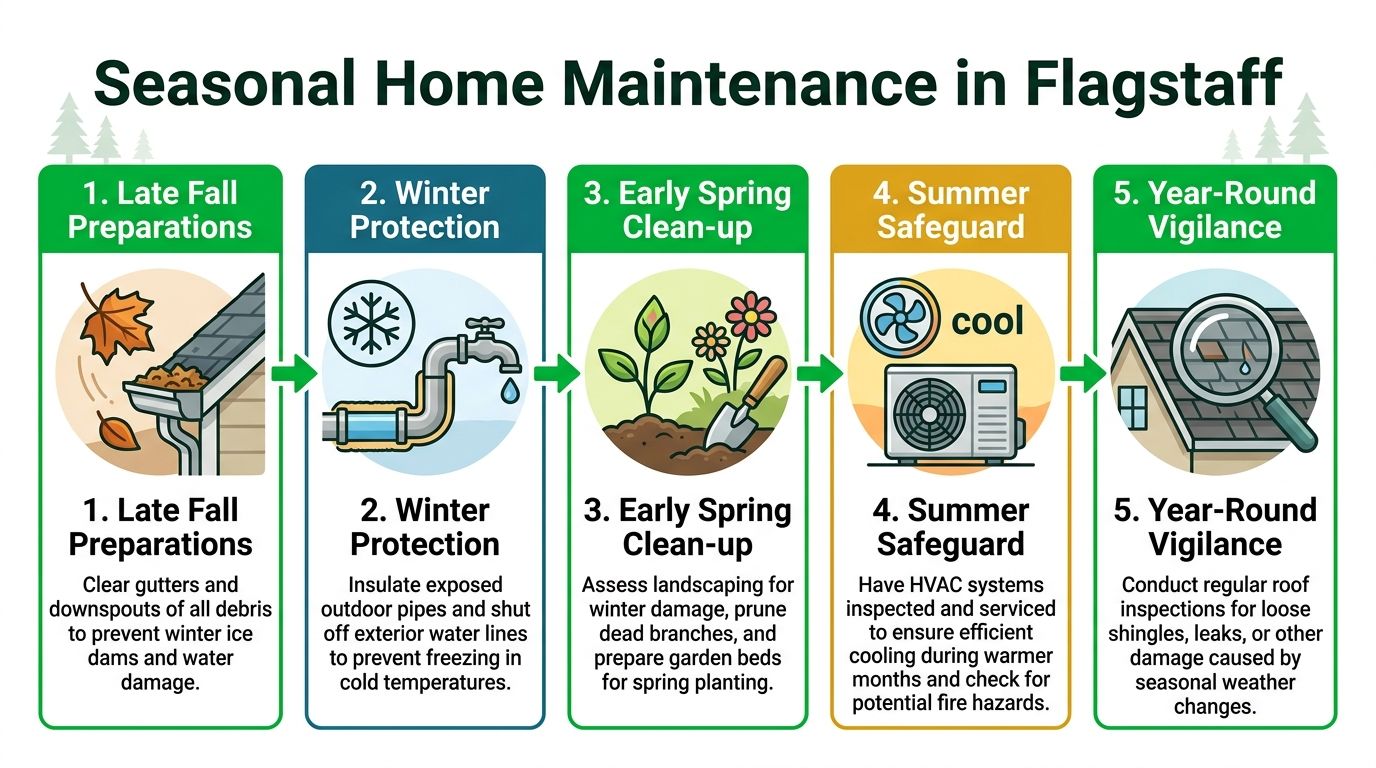
Late fall is where many avoidable winter problems begin. You want drainage paths clear, vulnerable exterior water points addressed, and glass checked before snow limits access.
Focus on these first:
- Clear gutters and downspouts: Pine needles and roof debris don’t look serious until meltwater tries to move through them.
- Inspect exposed glass edges and frames: If mineral residue and oxidation are already visible, winter weather won’t improve them.
- Check screens before storms settle in: Bent or dirty screens trap debris and reduce clarity even when the glass behind them is clean.
- Look at roof transitions and skylights: Snow tends to expose weak points around complex roof features.
For roof-specific concerns, many owners also consult a local Flagstaff roofing company when snow load, flashing condition, or ice-related wear needs a closer look.
Winter protection without risky shortcuts
Winter care is where homeowners can get into trouble by rushing. High ladders, icy ground, and steep rooflines don’t forgive mistakes.
A safer winter checklist usually includes:
- Monitor accumulation from the ground first. Binoculars and visual checks are better than climbing onto snowy surfaces.
- Watch drainage exits during thaw periods. If meltwater isn’t moving, the blockage needs attention.
- Keep walkways and entries manageable. Access matters for both safety and emergency response.
- Avoid ad hoc window cleaning in freezing conditions. Wrong timing can leave residue or create slip hazards around the home.
Snow season isn’t the time to become your own roof and ladder specialist. The costliest mistake is often the “quick check” that turns into a fall or a damaged surface.
Spring cleanup after pollen and thaw
Spring in Pine Canyon can make a home look older than it is. Pollen settles on screens, tracks, frames, and glass. Thaw cycles reveal what winter left behind.
This is the season for a full reset.
Glass and screen care
Professional service at this stage should go beyond the pane itself. Good exterior window care includes screen removal, screen cleaning, and reinstalling screens so the final result is clear from inside and out. If screens stay dirty, owners often think the glass wasn’t cleaned well when the issue is the layer in front of it.
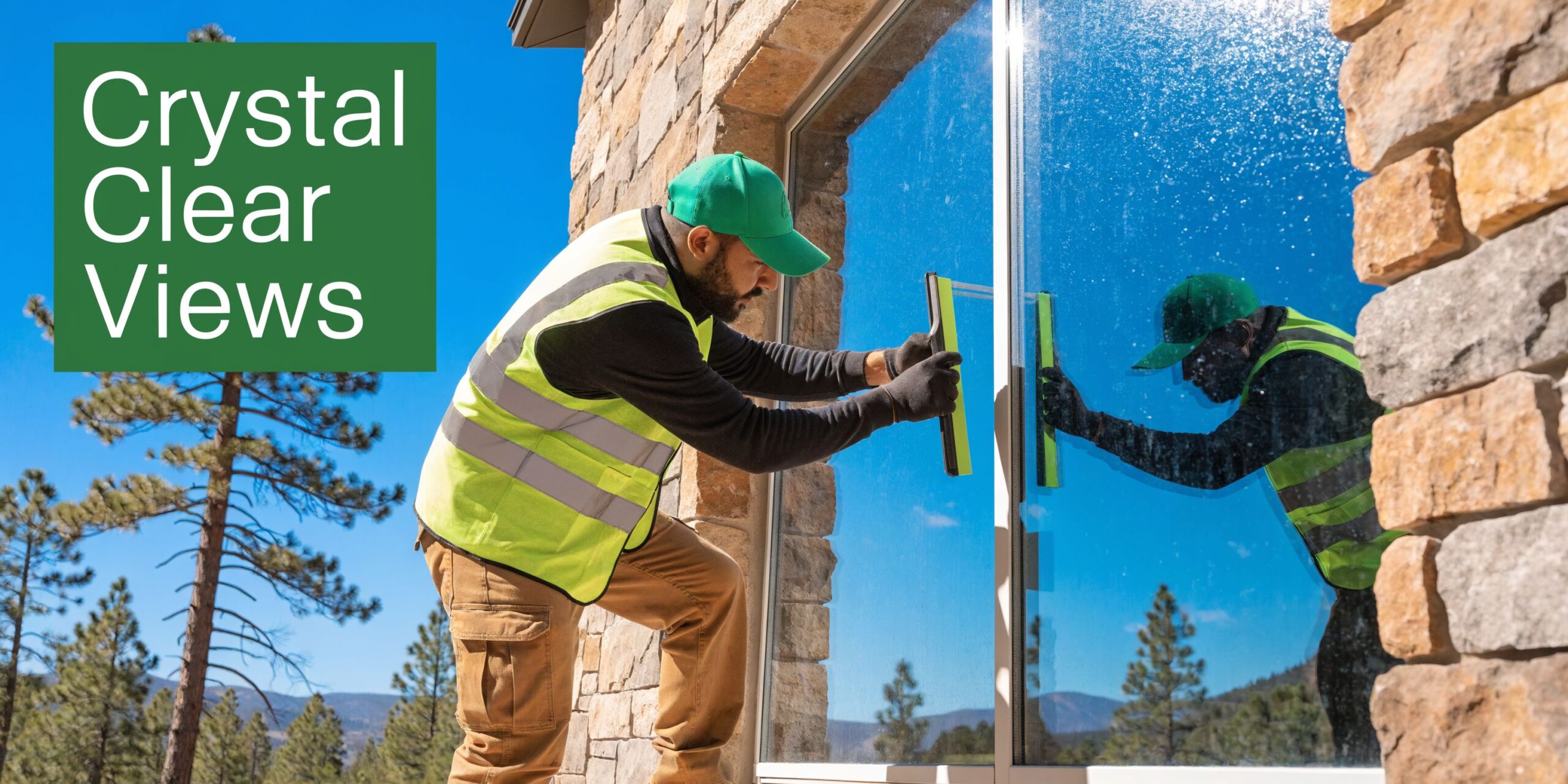
For mountain homes with tall entries, stacked windows, or hard-to-reach panes, technicians usually rely on squeegees, ladders, extension poles, and pure-water brushes, not household spray-and-wipe methods.
Drainage follow-up
Gutters that survived winter still need a spring check. Fine debris can stay packed in corners, valleys, and downspout openings even after the biggest storms are over. If you need a service overview, this local gutter cleaning page is a practical reference: https://www.pinecountrywindows.com/gutter-cleaning/
Summer and year-round vigilance
Summer is when UV wear becomes easier to see. Frames can look chalkier. Seals may show age. Glass can develop more visible spotting after seasonal storms and irrigation overspray.
Year-round habits that help most include:
- Schedule recurring exterior inspections: Don’t wait until a holiday visit or listing appointment.
- Check high-exposure windows more often: South- and west-facing glass usually tells the story first.
- Treat screens as part of the system: They filter debris and affect appearance more than people realize.
- Match tools to the home: Multi-story mountain homes often need poles, ladders, and lift-capable planning, not improvised equipment.
A simple rule works well here. If a surface protects the view, moves water, or catches mountain debris, put it on a regular calendar. Pine Canyon homes stay beautiful when owners treat maintenance as part of ownership, not as an occasional rescue job.
Tailored Services from Pine Country Window Cleaning
Some Pine Canyon homes can be maintained with a light seasonal routine. Others need a professional setup because the architecture is taller, the glass is larger, or access is more complex.
Verified information tied to Pine Canyon ownership notes that homeowners deal with over 100 inches of annual snow, heavy pine pollen, and high-altitude UV, and that these conditions call for specialized equipment and seasonal service protocols (Pine Canyon AZ).
What professional service looks like on mountain homes
A proper service plan in Pine Canyon usually includes more than wiping visible glass. Large homes often need a sequence: access setup, safe ladder or pole work, squeegee detailing, screen removal, screen cleaning, and careful reinstall.
That level of detail matters because the house itself is part of the experience. If one upper pane is streaked, a balcony door is dusty, or a screen goes back in crooked, the whole elevation can look off.
Pine Country Window Cleaning has served Northern Arizona since 1999 and handles residential and commercial work using in-house equipment such as boom lifts, scissor lifts, and a 95-foot atrium lift. The company also notes background-checked, OSHA safety-trained technicians and offers service details for local homeowners at https://www.pinecountrywindows.com/cleaning-services-flagstaff/
Why customer care matters as much as tools
On luxury homes, technique and house manners go together. Homeowners usually care about three things beyond the final shine:
- Respect for the property: Careful movement around decks, trim, and landscaping
- Complete screen handling: Removing, cleaning, and reinstalling screens each visit
- Reliable communication: Clear scheduling, arrival windows, and follow-up when weather shifts the plan
That’s especially important for second-home owners who may not be on site. They need confidence that the crew understands both the home and the local conditions.
Clean glass is only part of the job. The full job is leaving the home orderly, protected, and ready to enjoy.
A short video can help homeowners understand what professional exterior service looks like in practice.
Where these services fit in a yearly plan
For Pine Canyon owners, professional help tends to be most useful in a few predictable moments:
- Pre-winter preparation: When gutters, glass, and access points need attention before storms
- Spring reset: After pollen, snow, and thaw leave visible buildup
- Pre-listing or pre-arrival service: Before owners return, host guests, or photograph the property
- Post-construction cleanup: When new builds or remodels leave residue on glass and frames
That’s the service gap many neighborhood profiles skip. They explain how attractive Pine Canyon is, but not how owners keep these homes looking the way they were designed to look.
Conclusion and Moving Forward
Pine Canyon combines mountain beauty, private-club amenities, and high expectations for how homes should live and look. That mix is exactly why the community appeals to so many buyers. It’s also why ownership here works best when you think beyond the purchase.
A clear understanding of the neighborhood helps with the lifestyle side. A clear maintenance rhythm protects the property side. Both matter.
If you own in pine canyon club flagstaff az, the simplest next move is to look at your home through three lenses. What protects the view, what moves water safely, and what shows seasonal wear first. Those are usually the systems that need regular attention.
Owners who stay ahead of glass care, screen service, drainage, and seasonal inspection tend to avoid the scramble that comes after a storm cycle or a long vacancy. Mountain homes stay easier to enjoy when upkeep is planned, not postponed.
If you want help building a practical care schedule for your Pine Canyon home, contact Pine Country Window Cleaning for an estimate and a clear plan for windows, screens, gutters, and seasonal exterior maintenance.