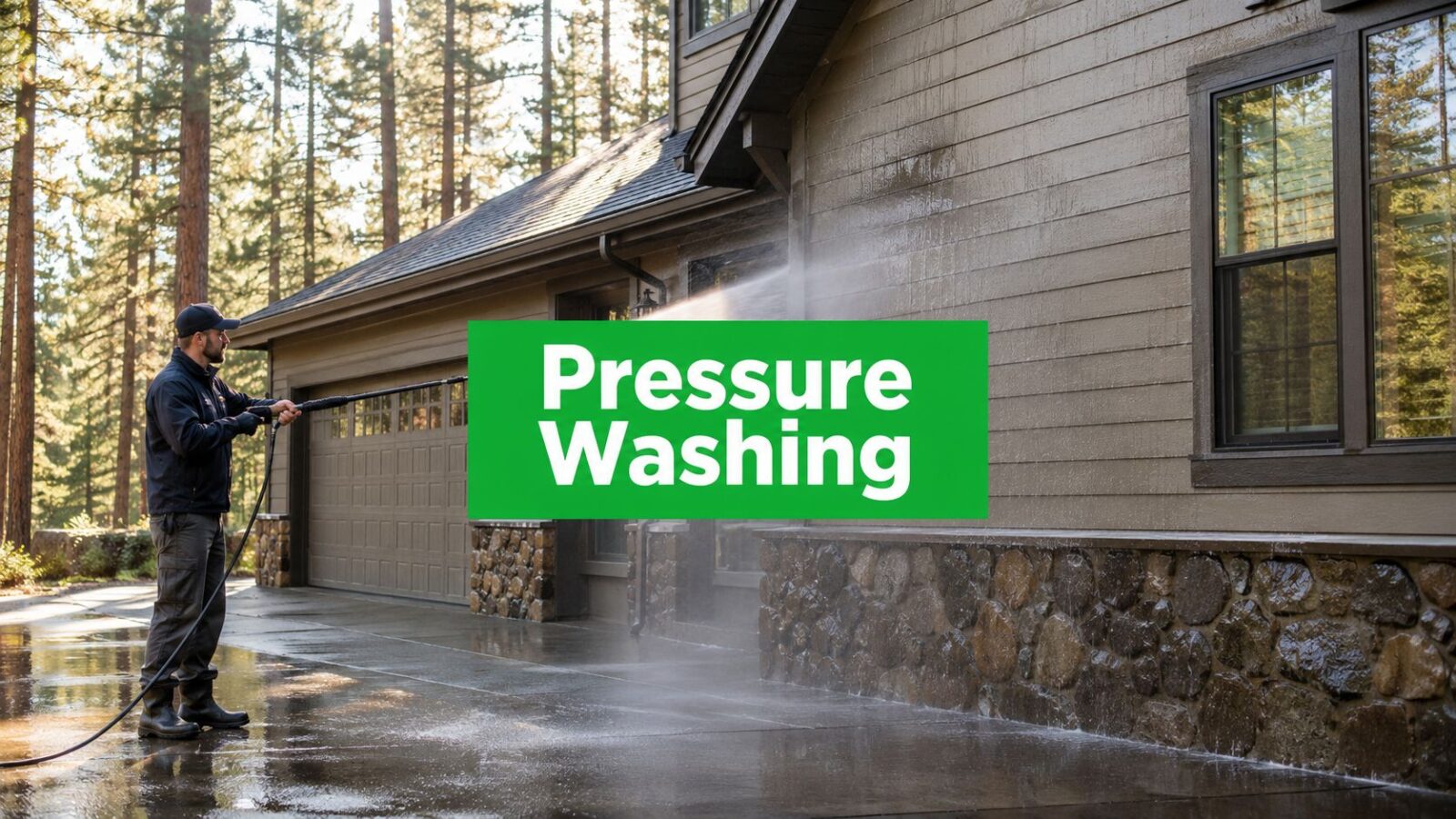
Spring in Flagstaff has a way of showing up on your house before you notice it in your calendar. Pine pollen settles into trim lines, dust clings to siding, winter grime hangs on in shaded spots, and wood-sided homes start looking tired even when they're structurally sound. A home can be well cared for and still look dingy from the street.
That's where a professional house pressure washing service makes a real difference. Done correctly, it doesn't just brighten the exterior. It removes buildup that can shorten the life of finishes, stain siding, and make a home look older than it is. Done incorrectly, though, it can scar wood, crack vinyl, and push water where it doesn't belong.
In Northern Arizona, method matters as much as effort. A concrete driveway and a wood-sided cabin don't get cleaned the same way, and homeowners who understand that usually avoid the most expensive mistakes.
Renew Your Home's Curb Appeal in Flagstaff
A lot of Flagstaff homes lose curb appeal gradually. You see a little dust after a windy week, some pollen after the pines start shedding, and darker streaks where runoff dries along siding and trim. Then one day you pull into the driveway and the whole exterior looks flat.
That's usually the moment homeowners start searching for a house pressure washing service. The right service restores color, sharpens the look of paint and siding, and helps the home feel maintained again. It's part appearance, part preservation.
Curb appeal also works as a system, not a single task. Clean siding looks better when the entry, gutters, and surrounding surfaces aren't dragging down the overall impression. If you're thinking broadly about exterior appearance, FenceScape's curb appeal guide gives a useful homeowner-level view of how different outdoor elements work together.
What homeowners in Flagstaff usually need
Most local homes don't need brute force. They need the correct cleaning approach for dust, organic staining, and seasonal buildup.
- Wood-sided cabins need restraint: Older wood can be stripped or furred up by aggressive pressure.
- Stucco needs technique: It holds dirt differently than smooth siding and can show streaking if the wash pattern is careless.
- Trim, soffits, and shaded walls need attention: Those are the spots where grime tends to linger.
- The full exterior matters: Many homeowners combine siding cleaning with related exterior work such as gutter cleaning and pressure washing.
Clean exteriors don't happen because someone used more force. They happen because someone matched the method to the surface.
A good cleaning should leave your home looking refreshed, not stressed. That's the standard worth holding.
What a Professional House Washing Service Includes
A professional wash is more than spraying water at the wall. The job starts before the machine is even running. Good crews walk the property, note fragile areas, look for loose siding or trim, identify electrical fixtures, and pay attention to landscaping, furniture, and anything else that could be affected by runoff or overspray.
That early walkthrough tells you a lot about the company. If a crew skips straight to setup, they're treating your home like a generic surface instead of an actual property with vulnerable materials and details.
The prep work that protects the home
Before washing begins, the crew should make the site safer and easier to work on.
- Protecting plants and outdoor items: Delicate landscaping gets pre-rinsed or shielded as needed, and furniture, grills, and decor are moved or covered.
- Checking doors, windows, and outlets: Openings need to be secure, and exposed electrical points need attention before any water is introduced.
- Creating access: Hoses, ladders, poles, and other tools should be set so technicians can work deliberately instead of dragging equipment through beds and against walls.
This is also where professionalism shows up in the small things. Homes should be treated carefully, not like a jobsite where speed is the only priority.
The wash sequence that actually works
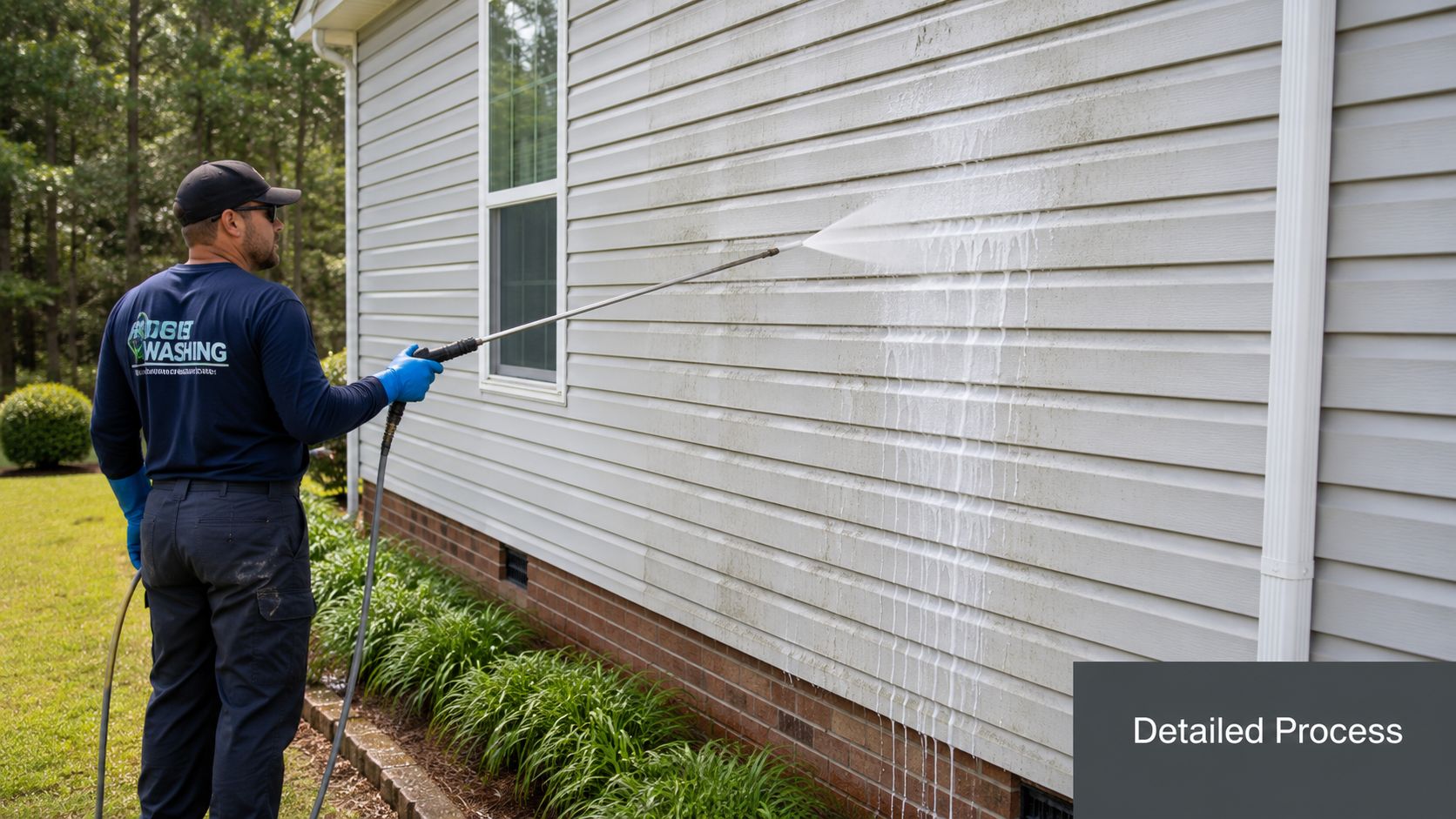
Technique matters because siding doesn't forgive mistakes. One proven workflow is explained in this house washing method demonstration: the optimal technical workflow for house pressure washing involves a soft wash application, applying detergent from the bottom up to prevent streaking, then rinsing with a 40-degree nozzle from the top down using even back-and-forth strokes while maintaining a minimum distance of 12 inches from the surface.
That bottom-up application keeps detergents from running over dry areas and leaving visible streaks. The top-down rinse matters for a second reason. It helps keep water from being driven up under siding laps where it can sit unnoticed.
Practical rule: If someone cleans house siding the same way they clean a driveway, they're using the wrong mindset.
What homeowners should notice during the job
A well-run service feels controlled. You should see steady nozzle movement, measured distance from the wall, and technicians adjusting for trim, fixtures, corners, and older materials. Fast, erratic passes usually leave behind zebra-striping, missed areas, or damage.
Professional exterior cleaning also overlaps with window care. That means respecting screens, trim, and surrounding finishes while the work is being done, not treating them as obstacles.
Soft Wash vs High-Pressure Washing for Flagstaff Homes
This is the decision that protects or endangers the house. Many homeowners hear “pressure washing” and assume more pressure means a better result. For residential exteriors, that's often backwards.
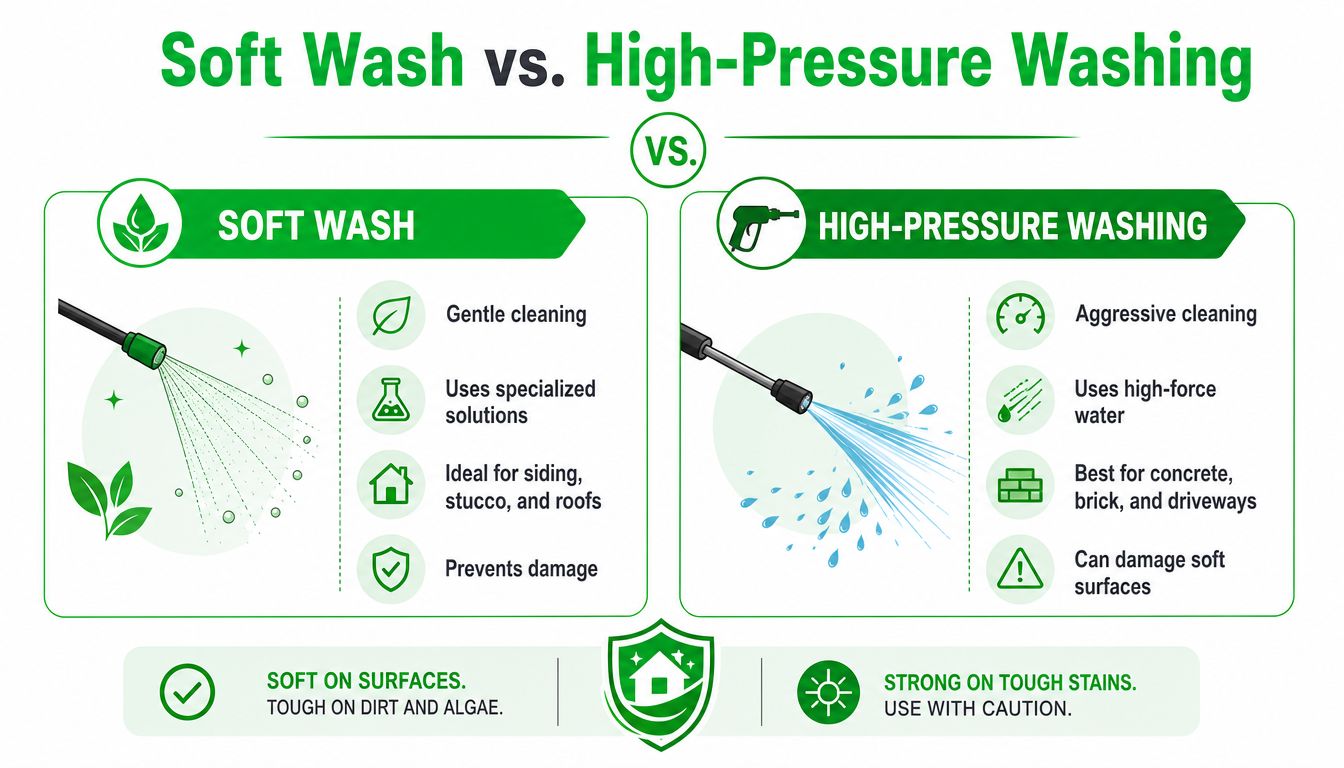
Soft washing relies on cleaning solutions and low pressure to do the work. High-pressure washing relies mainly on force. Each method has a place, but they're not interchangeable.
Why this matters more in Northern Arizona
Flagstaff homes aren't all built the same. Some have stucco. Some have vinyl. Many cabins and custom homes have wood siding or aging exterior finishes that won't tolerate abuse.
The distinction is often missed, yet Thumbtack's pressure washing overview notes that low-pressure methods are 30% more effective at removing organic mold from delicate surfaces like stucco and aged wood without causing surface degradation. That matters for homeowners trying to clean mildew-prone shaded walls without chewing up the surface in the process.
For most house siding, soft washing is the safer default. For hardscape like some driveways or dense masonry, higher pressure can make sense when used correctly.
Soft washing compared with high-pressure washing
| Feature | Soft Washing | High-Pressure Washing |
|---|---|---|
| Primary cleaning action | Cleaning solution plus low pressure | Forceful water impact |
| Best fit | Siding, stucco, painted surfaces, aged wood, trim | Concrete, some brick, tougher flatwork |
| Risk to delicate exteriors | Lower when handled properly | Higher, especially on wood and vinyl |
| Mold and organic growth | Better suited to treating and removing it | Can remove surface grime without fully addressing growth |
| Water intrusion risk | Lower when rinsed correctly | Higher if water is forced behind siding |
| Typical residential use | Usually the right choice for house exteriors | Better reserved for harder surfaces |
A local example helps. A wood-sided cabin in Munds Park may look rugged, but the siding can still be vulnerable. A strong spray can lift paint edges, raise wood grain, and leave lap joints wet inside. The wall may look cleaner for a week and be worse off after that.
Later in the process, it helps to see the difference in action:
What to ask before you hire
If you're getting estimates, ask direct questions.
- Which surfaces get soft washed: If the answer is vague, that's a warning sign.
- How do you handle wood siding and stucco: Those materials need a specific plan, not a generic one.
- What areas do you clean with higher pressure: A good provider can explain where force is appropriate and where it isn't.
- Can I review your service approach: One local option homeowners can look at is A-1 pressure washing, which helps show how exterior pressure washing services are presented for residential properties.
The safest exterior cleaning crews aren't timid. They're selective.
That's the difference. They know where pressure works, and where pressure becomes the problem.
The Real Cost of Pressure Washing in Northern Arizona
Homeowners usually want a straight answer on price first, and that's fair. Nationally, Housecall Pro's pricing guide reports that in 2026, typical U.S. house washing ranges from $250 to $800, residential appointments average $275–$425 per job, and experienced operators target $100–$150 in gross revenue per hour.
Those numbers are a starting point, not an instant quote for a Flagstaff property. Northern Arizona homes vary a lot in layout, access, and siding type. A one-story tract home with smooth access is a different job than a cabin with decks, trees close to the structure, and weathered wood on multiple elevations.
What drives the quote up or down
A realistic estimate usually depends on the property, not just the clock.
- Size of the home: More wall area means more labor, more solution, and more setup.
- Siding material: Stucco, painted wood, and aged surfaces often require slower, more careful work than easier exteriors.
- Height and access: Multi-story walls, steep grades, and tight side yards change the equipment and labor involved.
- Level of buildup: Dust is one thing. Heavy staining, runoff lines, cobweb buildup, and neglected areas take longer to correct.
Cheap pricing can hide expensive shortcuts
The lowest quote often assumes a rushed process. That can mean little prep, weak protection for plants and fixtures, and one-method-fits-all cleaning. On a driveway, that might just leave a few dirty spots. On a house, it can leave marks, damage, or water where you don't want it.
There's also the DIY angle. Renting equipment sounds simple until you factor in travel, detergent choice, setup time, ladder risk, and the possibility of using the wrong nozzle or too much pressure. If the result is streaking, gouged wood, or water intrusion around trim, the “savings” disappear fast.
A fair quote should reflect judgment, setup, protection, cleaning skill, and the condition of the home, not just spray time.
If you want a local price reference before scheduling, a useful place to start is this page on pressure washing service cost. It helps frame what homeowners should expect when comparing estimates.
Preparing Your Home and What to Expect After
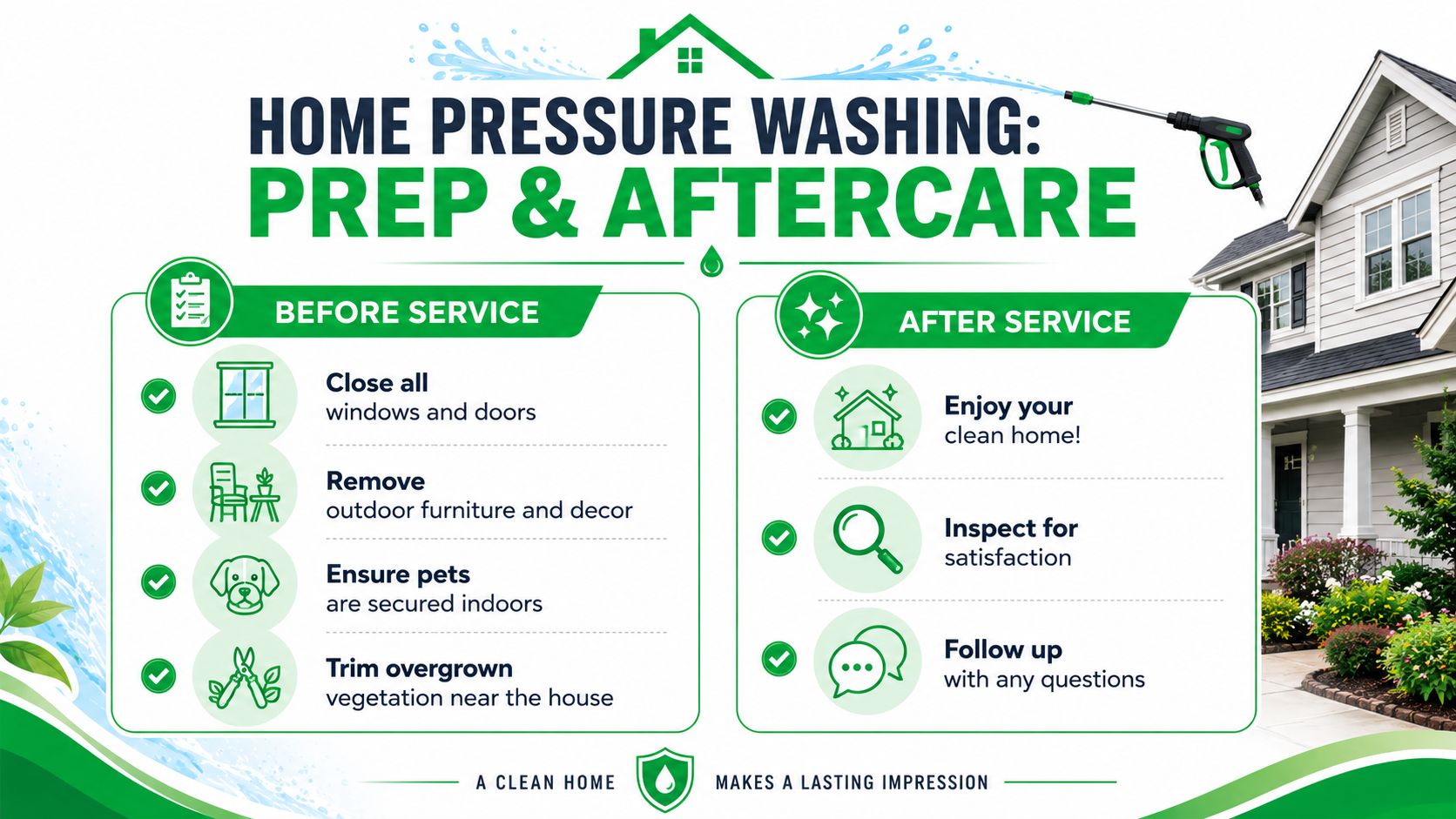
Service day goes better when the home is ready before the crew arrives. Most of the prep is simple, and it saves time while reducing the chance of avoidable issues. If you've ever had exterior work done by a careful crew, you know the best results come when the homeowner and technician are working from the same assumptions.
Before the crew arrives
A few practical steps make the wash smoother.
- Close and lock windows and doors: That reduces the chance of water getting into the home.
- Move vehicles away from the work area: Crews need space for hoses, ladders, and safe movement around the exterior.
- Clear patios, decks, and entry areas: Planters, furniture, grills, doormats, and decor are easier to protect when they're already out of the way.
- Secure pets indoors: Gates opening and hoses moving around the property create too many variables for animals.
- Mention existing issues: Loose trim, failing caulk, old window seals, or damaged siding should be pointed out before washing starts.
What the home should look like after
A proper result isn't just “less dirty.” The finish should look even. Dust film should be gone. Trim lines should look sharper. Heavily exposed sides of the home should no longer look darker than protected sides because of buildup alone.
You may also notice details that are easy to miss until they're clean. Siding color reads more accurately. Entry areas feel brighter. Outdoor light fixtures, trim corners, and soffits stop looking neglected.
Good house washing should look natural after it's done. The home should look cared for, not blasted.
A quick aftercare mindset
Once the service is complete, walk the home with fresh eyes.
- Check the obvious sightlines: Front elevation, entry, garage face, and the side most visible from the street.
- Look at corners and lower sections: Those spots collect grime and are often where rushed work shows up.
- Ask questions promptly: If anything needs attention, it's easier to address while the details of the job are still fresh.
Professional crews should welcome that review. Clear communication after the work is part of the service, not an inconvenience.
Vetting Your Provider for Safety and Professionalism
Hiring the right company matters more than finding the lowest number on an estimate. A house exterior has too many vulnerable parts for guesswork. Siding, paint, trim, windows, screens, light fixtures, and landscaping can all be affected by poor technique.
The technical side alone should make homeowners careful. Black+Decker's PSI guidance states that for safe and effective house pressure washing, a pressure washer operating between 1,300 and 2,000 PSI is generally required, and exceeding that on a house exterior can etch softer materials like painted wood or crack vinyl siding. If a provider can't speak clearly about pressure ranges and surface limits, they shouldn't be washing your home.
Questions worth asking before booking
Use the estimate process to screen for professionalism.
- Are you licensed and insured: Homeowners need liability protection if something goes wrong.
- How are technicians trained: Safety training matters when ladders, hoses, chemicals, and electrical areas are involved.
- What methods do you use on house siding: You want a clear answer, not “we pressure wash everything.”
- How do you protect windows, landscaping, and surrounding surfaces: Good providers think beyond the wall itself.
Signs of a careful operator
Professionalism usually shows up in behavior before the work starts.
| Sign | What it tells you |
|---|---|
| Clear written estimate | They understand scope and aren't pricing blindly |
| Specific explanation of methods | They know the difference between surfaces |
| Attention to prep and protection | They're thinking about your property, not just the cleaning task |
| Responsive communication | They're likely to handle scheduling and follow-up well |
| Respectful on-site conduct | They understand they're working at someone's home |
There's also a simple gut check. If someone talks only about power, speed, and getting it done fast, that's usually the wrong emphasis for a house. Force is easy. Judgment is harder.
A reliable provider should be able to explain what they'll clean, how they'll clean it, what they'll avoid, and why. If they can't, keep looking.
Why Pine Country is Flagstaff's Trusted Exterior Cleaning Choice
A Flagstaff house can look tired fast. Pine pollen sticks to trim and siding, spring dust settles into textured surfaces, and winter grime hangs on in shaded areas. Cleaning that buildup safely takes more than a strong machine. It takes the right method for the material in front of you.
Deep roots and a property-care mindset
Pine Country Window Cleaning has served Flagstaff since 1999, with long experience around Northern Arizona homes, weather, and building styles. That matters here. A crew that regularly works on mountain homes, wood trim, painted siding, and cabin exteriors is more likely to choose a safe process instead of reaching for pressure first.
That local judgment is a real part of the value. In Flagstaff, one house may handle a stronger rinse on masonry while the next needs a soft wash approach on painted wood or older finishes. Treating every exterior the same is how damage happens.
A careful company usually shows it in every service
Good exterior cleaning habits tend to carry across the whole property. Pine Country emphasizes trained technicians, screened employees, and professional-grade tools. That says a lot about how the work is approached.
Window cleaning is a good example. Crews who handle glass, frames, and screens carefully usually bring that same discipline to siding, soffits, trim, and other exterior surfaces. They pay attention to runoff, overspray, fragile areas, and finish protection. Homeowners benefit from that mindset, especially on custom homes, second homes, and wood-sided cabins where replacement and repainting costs add up quickly.
The method matters as much as the result.
Why that approach fits Flagstaff homes
Flagstaff homeowners often need more than a basic wash. They need a company that understands local buildup and knows where high pressure belongs and where it does not. That distinction gets overlooked all the time, especially on homes with painted surfaces, older materials, or stained wood.
A trusted provider should leave the house cleaner without creating new problems. That means protecting finishes, avoiding etched wood and blown seals around windows, and choosing soft washing where it is the safer fit.
If your siding, trim, soffits, or exterior surfaces are carrying pollen, dust, and weather staining, contact Pine Country Window Cleaning for a free, no-obligation estimate. The goal is straightforward. Clean the home thoroughly, use the right method for each surface, and protect the property while the work is being done.