

You're standing in the yard after a Flagstaff storm, looking at a gutter that appears mostly clear from the ground. Then snowmelt runs over the edge, darkens the fascia, and leaves a muddy pool beside the foundation. By the time you notice the problem, the original clog may be gone, but the moisture damage has already started.
That's why gutter cleaning frequency can't be reduced to a generic reminder on the calendar. Northern Arizona properties deal with ponderosa pine needles, monsoon debris, windblown grit, cottonwood fluff, and freeze-thaw weather. A home in an open Flagstaff neighborhood doesn't carry the same maintenance load as a cabin in Munds Park surrounded by conifers.
Why Gutter Cleaning Frequency Matters More Than You Think
A Flagstaff homeowner may skip a late-fall cleaning because the gutters look serviceable in October. After most leaves have dropped, though, the remaining needles and roof grit can compact into a dense layer at the downspout opening. Winter moisture then freezes inside the restricted channel, while spring melt sends water toward the fascia instead of through the drainage system.
That chain often starts with a small blockage. Overflow wets siding and fascia, trapped moisture contributes to rot, and runoff can collect near the foundation. In colder weather, debris that holds water near the roof edge can also contribute to ice buildup. When spring arrives, the same gutter may appear to work during light rain while failing under concentrated snowmelt.
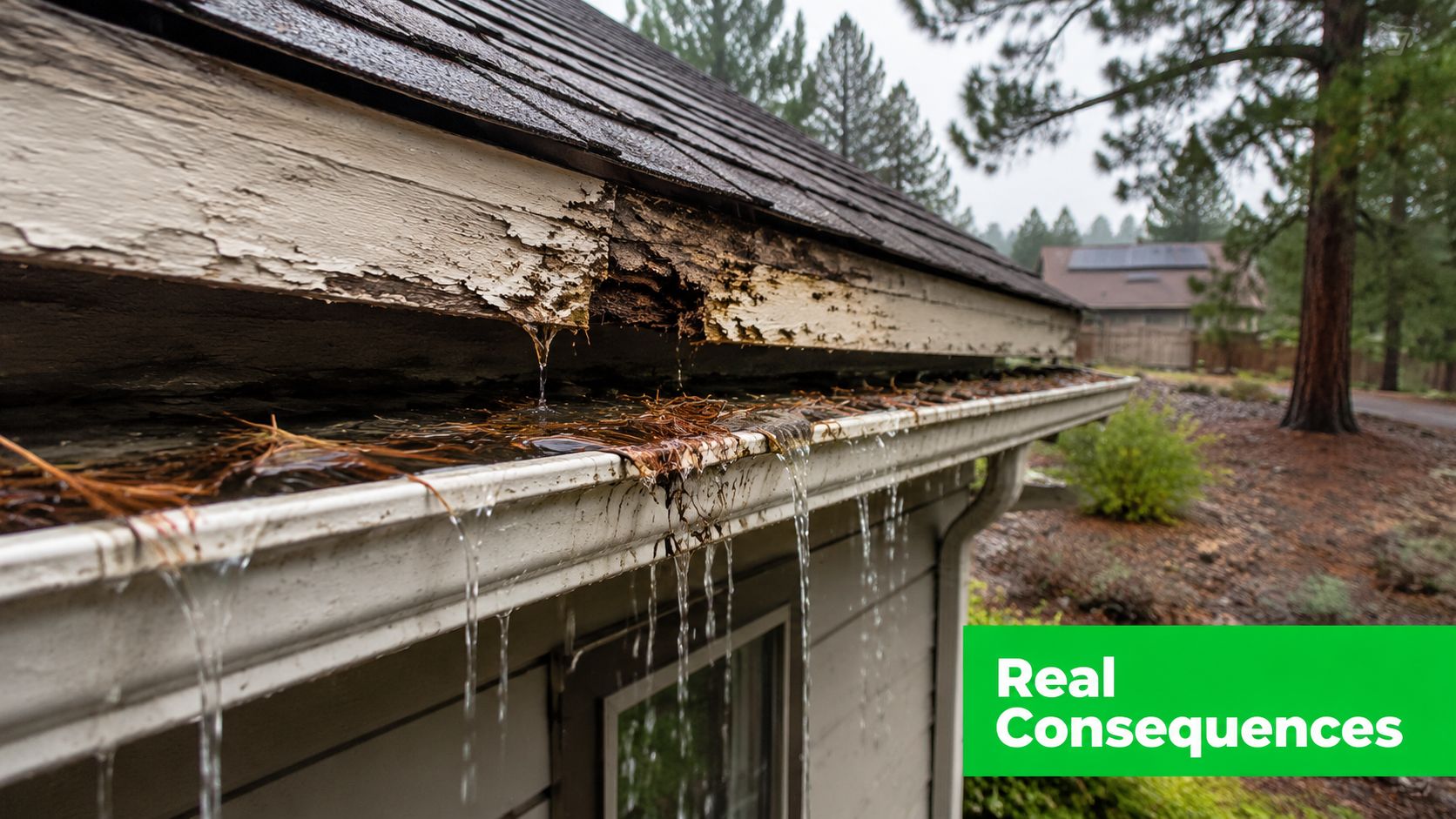
The cost of routine service is easier to understand when compared with the consequences of neglect. A 2026 industry summary places the average U.S. gutter-cleaning cost at $168, with a reported range of $119 to $234, while water-damage insurance claims connected with neglected gutters were reported at $11,605 to $14,000 (industry cost and damage summary). Those figures don't predict what any particular Flagstaff repair will cost, but they show why preventive maintenance deserves a place in a property budget.
Local rule: A gutter is part of the home's water-management system, not a decorative roof trim. Clean it according to the debris and weather it actually receives.
National guidance commonly uses twice-yearly service as a residential baseline. A 2026 state-by-state guide, however, reports recommended intervals ranging from once per year in arid western states to four times per year in heavily forested regions, with 17 states classified as Very High risk and needing three to four annual cleanings (gutter cleaning frequency by state). Northern Arizona's high-desert setting doesn't automatically mean low maintenance. Pine cover, elevation, storm exposure, and roof design can raise the workload quickly.
For a practical overview of the system and its maintenance needs, homeowners can also review this gutter cleaning guide. Flagstaff residents who want a local service reference can find details about gutter cleaning in Northern Arizona.
Key Factors That Determine Your Gutter Cleaning Schedule
The right schedule begins with the property, not the neighbor's calendar. Two houses a short drive apart can receive very different amounts of organic debris and runoff.
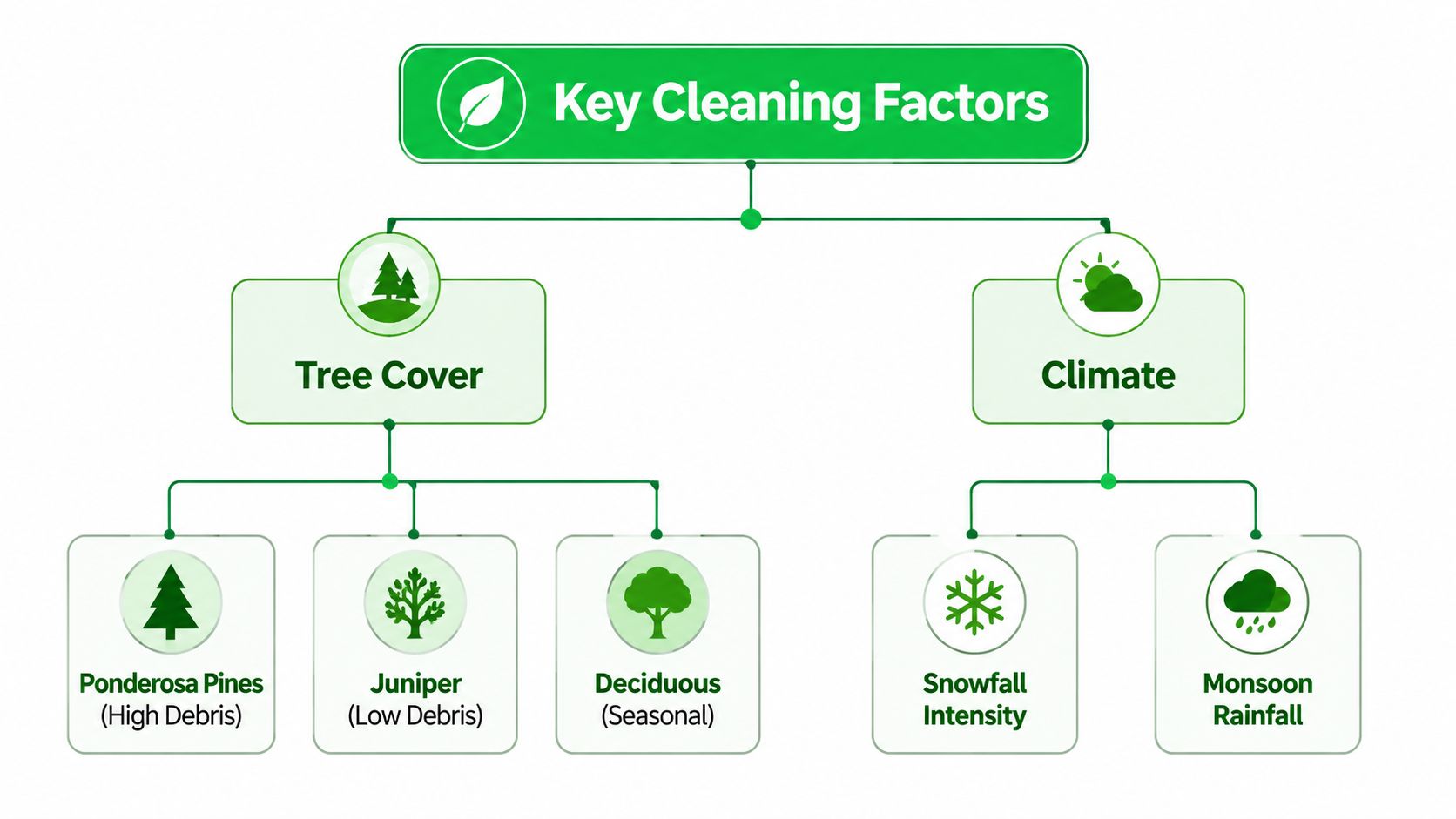
Tree cover changes the workload
Ponderosa pine needles are the main troublemaker on many Flagstaff-area properties. They fall across extended periods and can interlock into mats that resist ordinary rainfall. Juniper generally creates a lighter debris load, while deciduous trees create a concentrated seasonal rush when leaves, seed pods, blossoms, and fine material enter the gutter together.
A cabin in Munds Park surrounded by conifers needs a different plan from an open-lot home in Flagstaff Ranch. Forest Highlands and Pine Canyon properties may also require closer observation where mature trees overhang rooflines. The important detail is not whether trees are nearby, but whether branches extend over the roof and where the downspouts collect debris.
Roof and gutter design affect flow
A steep roof can deliver runoff and loose material into the gutter quickly. Long gutter runs create more places for debris to settle, while poorly pitched sections can retain water even when the channel isn't visibly full. Internal gutters and parapet systems deserve particular caution because a blockage may remain hidden until water reaches an interior building surface.
The route beneath the downspout matters, too. A clean channel can't protect the structure if the outlet is blocked or if discharge lands beside the foundation. Maintenance guidance commonly recommends directing downspouts roughly 4 to 6 feet from the building (seasonal gutter maintenance guidance).
Microclimate and exposure fill the gaps
Elevation-driven weather changes the timing of inspections. Wind can carry needles and sediment from neighboring lots, while monsoon storms can deposit fresh branches, grit, and leaf material after a scheduled visit. Unpaved roads and nearby construction add fine dust that settles into wet organic matter and forms a heavier deposit.
A useful property assessment asks:
- What overhangs the roof? Note pine, deciduous, and juniper cover separately.
- Where does water collect? Identify valleys, low-slope sections, long runs, and internal drains.
- What reaches the roof? Consider wind, nearby building work, exposed lots, and storm paths.
- What happens below the outlet? Confirm runoff moves away from the foundation rather than pooling beside it.
For an average home, twice-yearly cleaning remains a sound baseline. Tree-dense or storm-exposed properties should move toward a three-to-four-month interval, with additional checks after severe weather.
Recommended Seasonal Gutter Cleaning Calendar for Northern Arizona
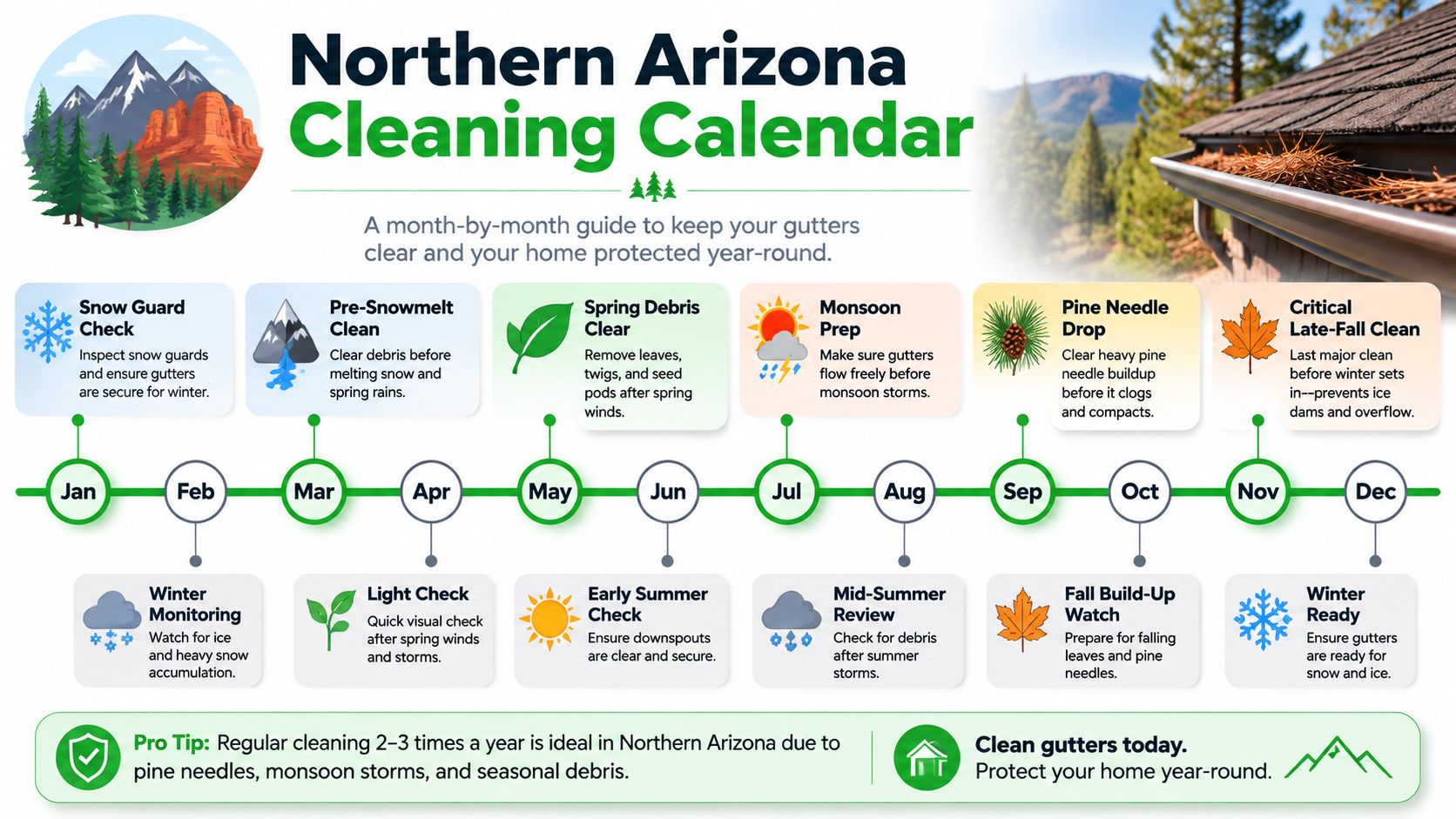
Northern Arizona's calendar works best when it follows debris cycles and weather windows. The two primary service periods are late spring and late fall, but properties with heavy pine cover need additional checkpoints.
Late winter and spring
A March inspection can identify packed material before snowmelt reaches its strongest flow. The goal isn't to climb onto a roof in unsafe conditions. From the ground, check for overflow marks, sagging, and downspout discharge. Once conditions allow, clear sediment, pollen, blossoms, and material compacted during the colder months.
Late spring service should follow the main spring debris period. The exact timing varies by property, but the cleaning should leave the system ready for runoff and the approach of monsoon weather. This seasonal gutter maintenance resource can help homeowners organize recurring service around Northern Arizona conditions.
Summer and monsoon season
July and August storms can rapidly redeposit debris, especially on homes beneath trees or near exposed, windy terrain. A property that was cleaned in late spring may still need a ground-level check after a strong storm. Look at downspout outlets, scan for branches hanging over the gutter edge, and watch for water overshooting the channel.
Heavy tree cover justifies a midsummer cleaning rather than relying only on spring and fall visits. On less wooded homes, a post-storm inspection may be enough unless it reveals restricted flow or fresh damage.
Late fall and early winter
The main fall cleaning belongs after most leaves have fallen and before the first hard freeze. Local guidance often places that practical window in late October or November (late-fall gutter cleaning timing). Remove leaf piles, pine needles, seed pods, and roof sediment before they can hold water through freezing weather.
For a heavily wooded property, an early-winter checkpoint can catch the final needle drop and storm debris. Don't treat the calendar date as more important than conditions. If leaves are still falling heavily, schedule after the drop. If a hard freeze is approaching, prioritize safe inspection and professional service.
| Seasonal window | Main task | What to inspect |
|---|---|---|
| March | Pre-snowmelt check or cleaning when safe | Packed debris, blocked outlets, winter damage |
| Late spring | Clear spring debris | Pollen, blossoms, sediment, fascia staining |
| July to August | Monsoon inspection | Fresh branches, grit, overflow, downspout flow |
| September | Tree-cover review | Pine needle accumulation and storm deposits |
| Late October to November | Critical late-fall cleaning | Leaf drop, compacted mats, loose hangers, leaks |
How Different Property Types Affect Cleaning Frequency
Property type changes both the amount of debris entering the system and the consequences of a missed visit. A small open-lot home may have visible, accessible gutters. A cabin, commercial building, or second home can hide problems across multiple rooflines.
| Property Type | Setting | Recommended Frequency | Key Concerns |
|---|---|---|---|
| Open-lot single-family home | Limited overhanging trees | Annual inspection and cleaning, adjusted after weather | Windblown grit, bird activity, isolated downspout blockage |
| Wooded single-family home | Forest Highlands, Pine Canyon, or similar tree cover | Twice yearly at minimum, with more frequent checks when debris builds quickly | Pine needles, leaf mats, roof valleys, fascia moisture |
| Cabin | Munds Park and dense conifer settings | Every three to four months | Year-round needles, snowmelt, limited owner oversight |
| Second home or short-term rental | Flagstaff, Pine Canyon, Forest Highlands, or remote property | Scheduled service with inspections between visits | Problems can continue unnoticed, storm debris, guest reports may miss roofline issues |
| Commercial or multi-unit building | Long runs, multiple elevations, hotels, campuses, and retail sites | Semiannual service at minimum, with quarterly or more frequent inspection for complex systems | Internal gutters, parapets, flat-roof drainage, choke points, access planning |
A single-family home in Forest Highlands may need more attention than a larger property in Flagstaff Ranch if its roof sits beneath dense ponderosa cover. Conversely, a commercial building with little tree cover may still need frequent inspections because a long run or internal drain can conceal a localized failure.
Commercial systems deserve a separate plan. Flat-roof sections, parapet walls, and internal gutters can retain water where a ground-level walkaround won't reveal the problem. Facility managers can review commercial gutter cleaning services when access, scheduling, and documentation matter across multiple structures.
Second-home owners should arrange service rather than waiting for a seasonal visit. A local inspection after a strong storm can identify overflow or damage before moisture reaches interior finishes.
Warning Signs Your Gutters Need Immediate Attention
Scheduled maintenance prevents many problems, but gutters can fail between visits. A short ground-level inspection during or after rain often tells you whether the system is moving water correctly.
Start with the outside
Watch the roofline during rainfall rather than checking only on a dry day. Water should enter the channel and leave through the downspout without sheeting over the front edge or spilling from a joint.
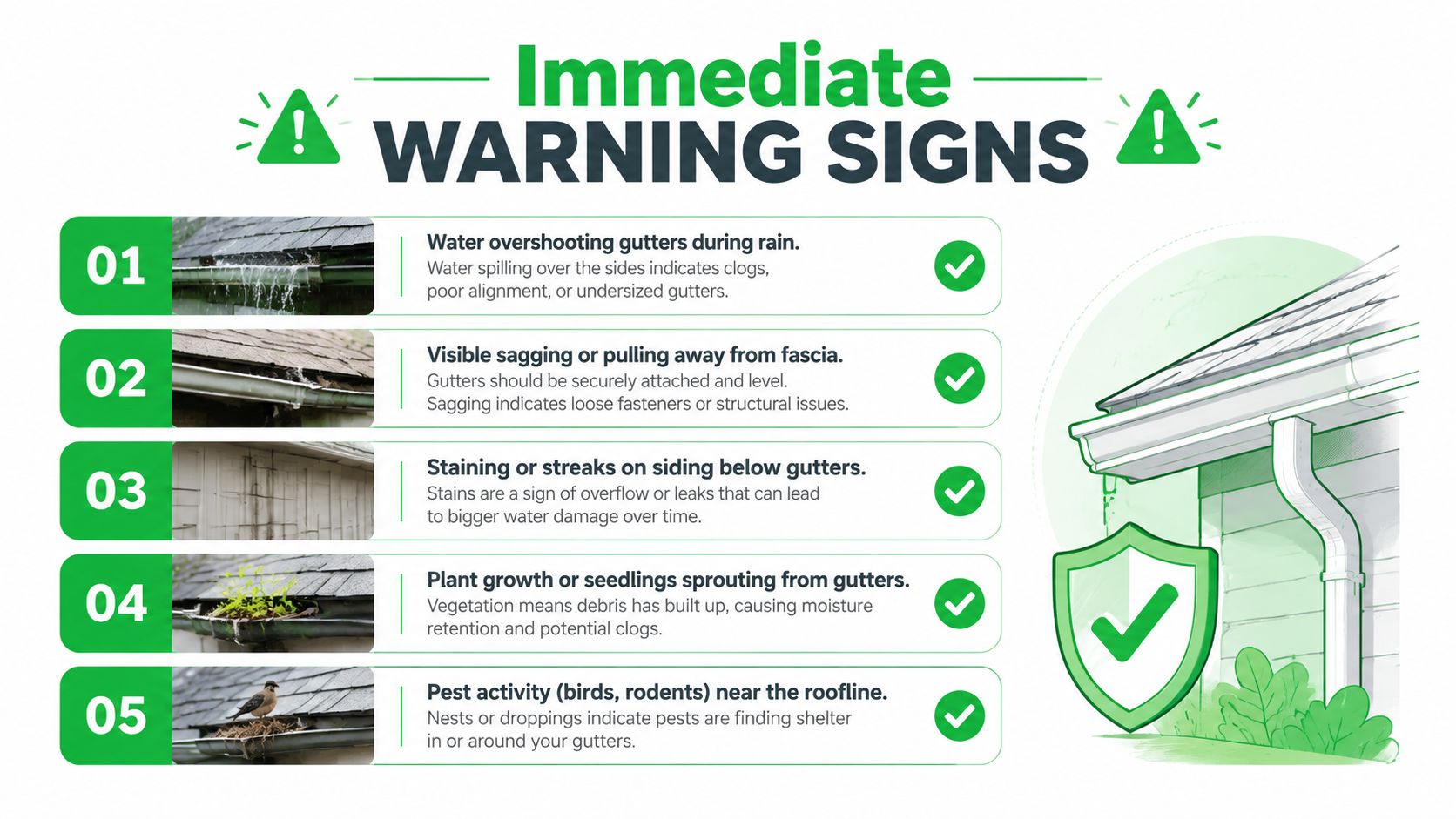
Check for these visible cues:
- Overflowing water: A steady sheet over the edge points to a blocked channel, restricted downspout, or drainage capacity problem.
- Sagging sections: A gutter pulling away from the fascia may be carrying trapped debris or water.
- Stains and streaks: Dark marks on siding, fascia, or soffits indicate repeated wetting below the gutter line.
- Plant growth: Seedlings or green growth mean organic material has remained in the channel long enough to support it.
- Pest activity: Birds and rodents near the roofline may be using packed debris as nesting material.
A useful explanation of overflow causes, including the relationship between debris and restricted discharge, appears in this guide to why gutters overflow in Dublin. The climate differs from Flagstaff, but the drainage principles still apply.
Check the discharge point
Downspouts deserve their own checkpoint. During rain, confirm that water exits freely and travels roughly 4 to 6 feet away from the foundation (gutter maintenance checklist). Slow discharge, gurgling, or a wet patch beside the outlet can indicate an obstruction below the visible gutter.
Interior clues deserve prompt attention. Basement moisture, ceiling stains near exterior walls, and musty odors may come from several sources, but they warrant inspection when they appear alongside exterior overflow. In winter, look for ice buildup at the roof edge, recurring icicles, or damp areas that follow the gutter line. Don't assume every winter moisture problem comes from the roof itself, but don't ignore the gutter system either.
Do Gutter Guards Really Reduce Cleaning Frequency
Gutter guards can reduce the amount of large debris entering a channel, but they don't create a maintenance-free roof drainage system. Mainstream guidance says protection systems may stretch cleaning intervals to once every one to two years, or even 18 to 24 months, while still requiring inspection and surface clearing (gutter guard maintenance guidance).
That longer interval works best when the guard matches the property. Broad leaves are easier for many designs to shed than fine pine needles, pollen, roof grit, or storm-driven sediment. In Flagstaff, Pine Canyon, Forest Highlands, and Munds Park, needles can collect on top of a guard or lodge at edges, valleys, and downspout openings.
What guards solve
A properly fitted mesh or micro-mesh system can limit leaf entry and reduce the volume of material that must be removed from the gutter floor. It may make routine cleaning less frequent, especially on a property with moderate tree cover and limited storm exposure.
What guards don't solve
Guards still need surface clearing, inspection, and occasional flow testing. Monsoon winds can place branches and debris across the guard, while fine material can settle through small openings or accumulate along the system's upper edge. Poor installation, damaged sections, or an unsuitable design can also create false confidence.
The practical trade-off is simple. Guards may lengthen the service interval, but pine-heavy or storm-prone properties should continue with regular checks. If water flows slowly, debris remains on the surface, or the system overflows, the guard hasn't removed the need for attention.
Professional Gutter Cleaning and Protecting Your Northern Arizona Home
Use three decisions to set your plan: tree density, property design, and seasonal exposure. Start with twice-yearly service for an average home, move toward every three to four months under dense pine cover, and add post-storm inspections where monsoon debris or wind creates sudden blockages.
Professional service adds more than debris removal. A thorough visit should include downspout flushing, inspection of fascia and hangers, attention to hard-to-reach sections, and a clear note about early damage. Pine Country Window Cleaning has served Flagstaff and Northern Arizona since 1999, and its broader home-care approach includes respectful treatment of the property, screen removal, screen cleaning, and screen reinstallation with every window service. The company was started by Flagstaff native David Kaminski and uses professional equipment such as squeegees, ladders, poles, pure-water brushes, and access equipment for challenging buildings.
For homeowners, cabin owners, and property managers, recurring scheduling removes guesswork. It also helps protect the home while keeping the maintenance process courteous, organized, and clean.
Pine Country Window Cleaning provides gutter and downspout cleaning for Flagstaff-area homes, cabins, commercial properties, and second homes, with service plans built around tree cover and Northern Arizona weather. Visit Pine Country Window Cleaning to request a free estimate and set up a gutter maintenance schedule before the next major debris or snowmelt cycle.