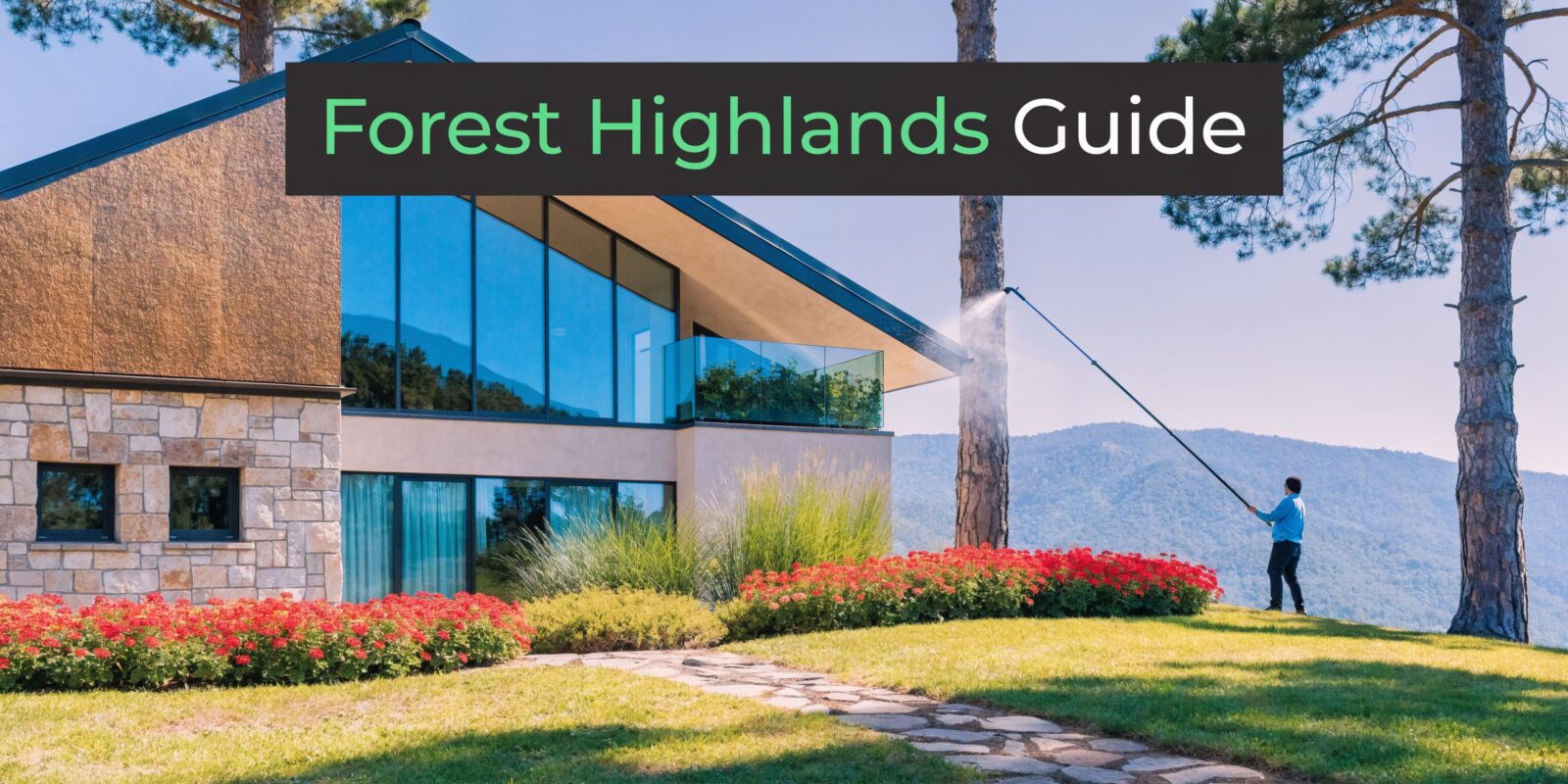
If you own a home in forest highlands, you already know the pattern. You arrive for a long weekend or send guests up for a stay, and the house still looks beautiful from the driveway. Then the light hits the glass. Pollen has softened the view. Mineral spotting shows up on the big panes facing the trees. Needles have gathered in roof valleys and gutters. Nothing looks neglected, exactly. It just doesn’t look cared for at the level the property deserves.
That’s the gap most articles miss. They talk about golf, the setting, and the lifestyle. They rarely talk about what it takes to keep a luxury home clean, protected, and ready to use in a high-country environment where weather, trees, and elevation are always working on the exterior.
A forest highlands property needs more than occasional cleaning. It needs a maintenance approach that fits second-home ownership, custom architecture, and Northern Arizona conditions. That’s where good planning matters. So does having a local crew that understands access, timing, and how to work around a home carefully.
Your Home in the Pines The Beauty and Challenge of Forest Highlands
Forest Highlands was built for people who want privacy, mountain air, and a home that feels tucked into the woods without giving up comfort. Established in 1987, it’s Flagstaff’s largest private master-planned community, known for the Canyon and Meadow courses. The Canyon course is par 71 and 7,001 yards according to the supporting community content, but daily life there is about far more than golf. Existing content focuses heavily on the courses and offers little practical advice for the community’s 200+ luxury residences dealing with 100+ inches of annual snow, pine pollen, and wildfire ash in the Flagstaff area (supporting reference).
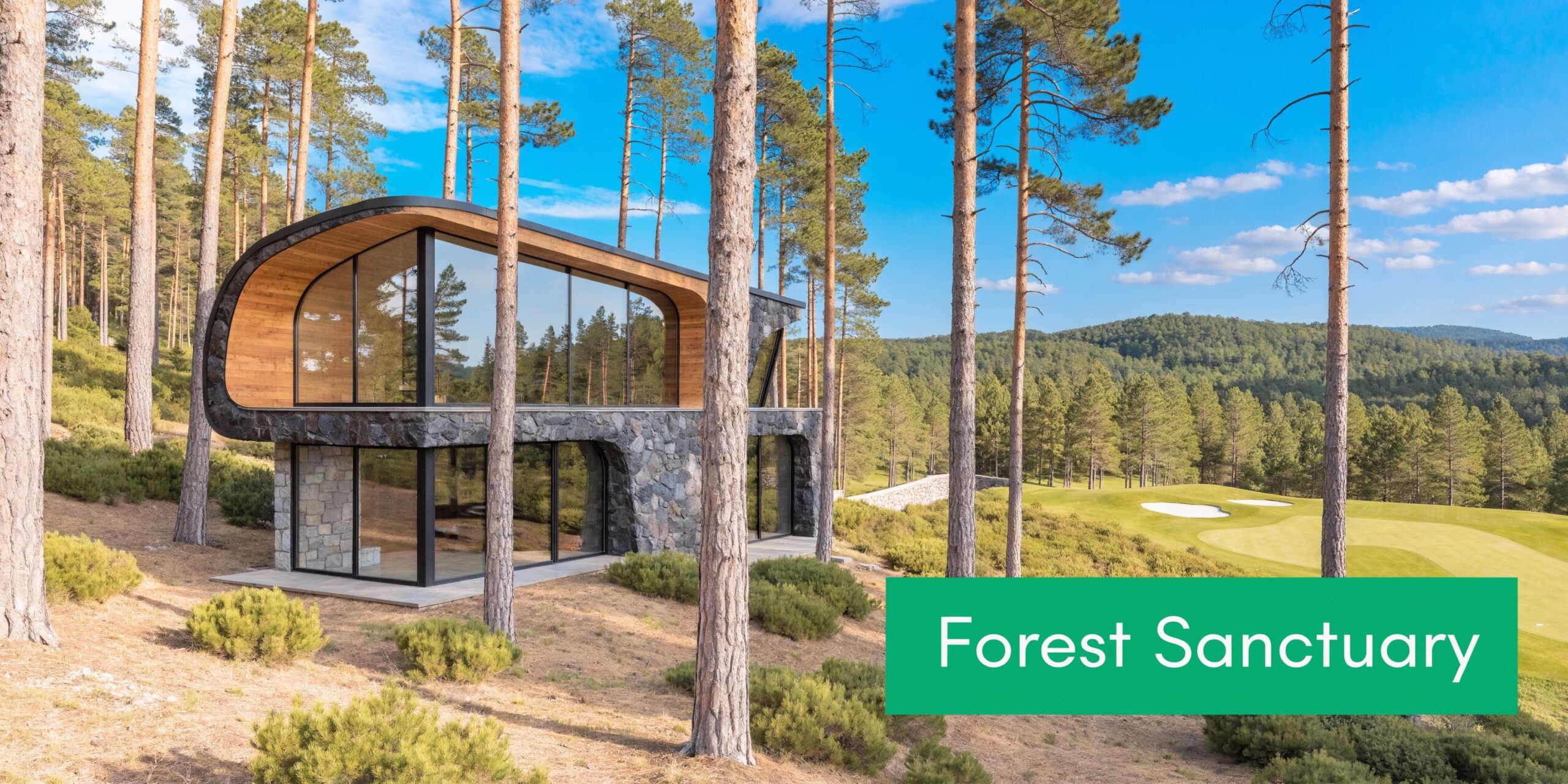
The appeal is obvious. Tall pines. Quiet roads. Big windows framing fairways, forest, and changing weather. Many homes are second homes, which means owners often arrive expecting everything to feel turnkey.
What owners notice first
The first issue usually isn’t structural. It’s visual.
Glass loses clarity gradually in this neighborhood. Screens collect fine dust. Pollen settles into tracks and corners. Gutters hold debris longer than people expect because the tree canopy keeps feeding them.
A home can be secure and still not be guest-ready.
Practical rule: In forest highlands, the view is part of the property. If the glass is dirty, the home feels less maintained even when everything else is in order.
Why this catches second-home owners off guard
If you live full time in town, you notice the buildup in stages. If you use the house seasonally, you often see it all at once. That’s why maintenance in this community works better when it’s scheduled instead of reactive.
Owners also have a different threshold here. These aren’t standard tract homes with a few easy windows and a short gutter line. They’re custom homes in the trees, and small exterior issues show up fast on premium materials and large expanses of glass.
Why Forest Highlands Requires a Different Approach to Maintenance
Forest Highlands isn’t just “in the mountains.” It has a specific mix of elevation, forest cover, and community standards that changes how exterior maintenance should be done. Generic annual service usually isn’t enough, and generic methods often create more problems than they solve.
The community was established in 1987 and is Flagstaff’s largest private master-planned community with two championship golf courses. It has also maintained national Firewise recognition for over 20 years through proactive fuel removal and tree thinning in partnership with the Highlands Fire District, which says a lot about the environment residents live in and actively manage (community background).
Elevation changes the wear pattern
At high elevation, surfaces take a beating in a different way than they do in lower desert markets or suburban neighborhoods. Sun exposure is harsher. Moisture behaves differently. Temperature swings stress seals, finishes, and exposed exterior surfaces.
That matters because cleaning isn’t only about appearance. The wrong interval lets buildup sit on glass, frames, tracks, and trim longer than it should.
The forest creates nonstop debris
Ponderosa pines are part of what makes forest highlands special. They’re also the reason maintenance never really pauses.
Debris doesn’t show up in one form. It rotates through the year:
- Needles collect on rooflines, in valleys, and inside gutters.
- Pollen coats glass, screens, decks, and ledges.
- Sap sticks to windows and catches more dust.
- Organic matter settles into corners where moisture hangs around longer.
Community standards raise the bar
This is a highly managed neighborhood, and that affects service expectations. Homeowners want work done cleanly, safely, and without damage to landscaping, stonework, stain finishes, or custom metal details.
That means maintenance plans should account for:
- Arrival windows and access needs for homes that may be vacant
- Careful ladder and equipment placement on premium surfaces
- Quiet, orderly work habits that fit a gated residential setting
- Detailed communication before and after service
Homes in forest highlands reward precision. The same features that make them attractive also make rushed work obvious.
A lot of owners have already learned this the hard way. A basic cleaner might wipe the glass and leave the screens dusty, skip the tracks, or ignore the buildup that’s starting along frames and sills. That may be enough in another neighborhood. It usually isn’t enough here.
Common Window and Gutter Problems We Solve
At 6,926 feet, properties in Forest Highlands deal with accelerated weathering from intense UV radiation and mineral-rich precipitation that leaves stubborn water spots. Large-diameter ponderosa pines also produce a constant stream of needles, pollen, and sap that accumulates on windows and in gutters, which is why properties there need more frequent specialized cleaning cycles (supporting property profile).
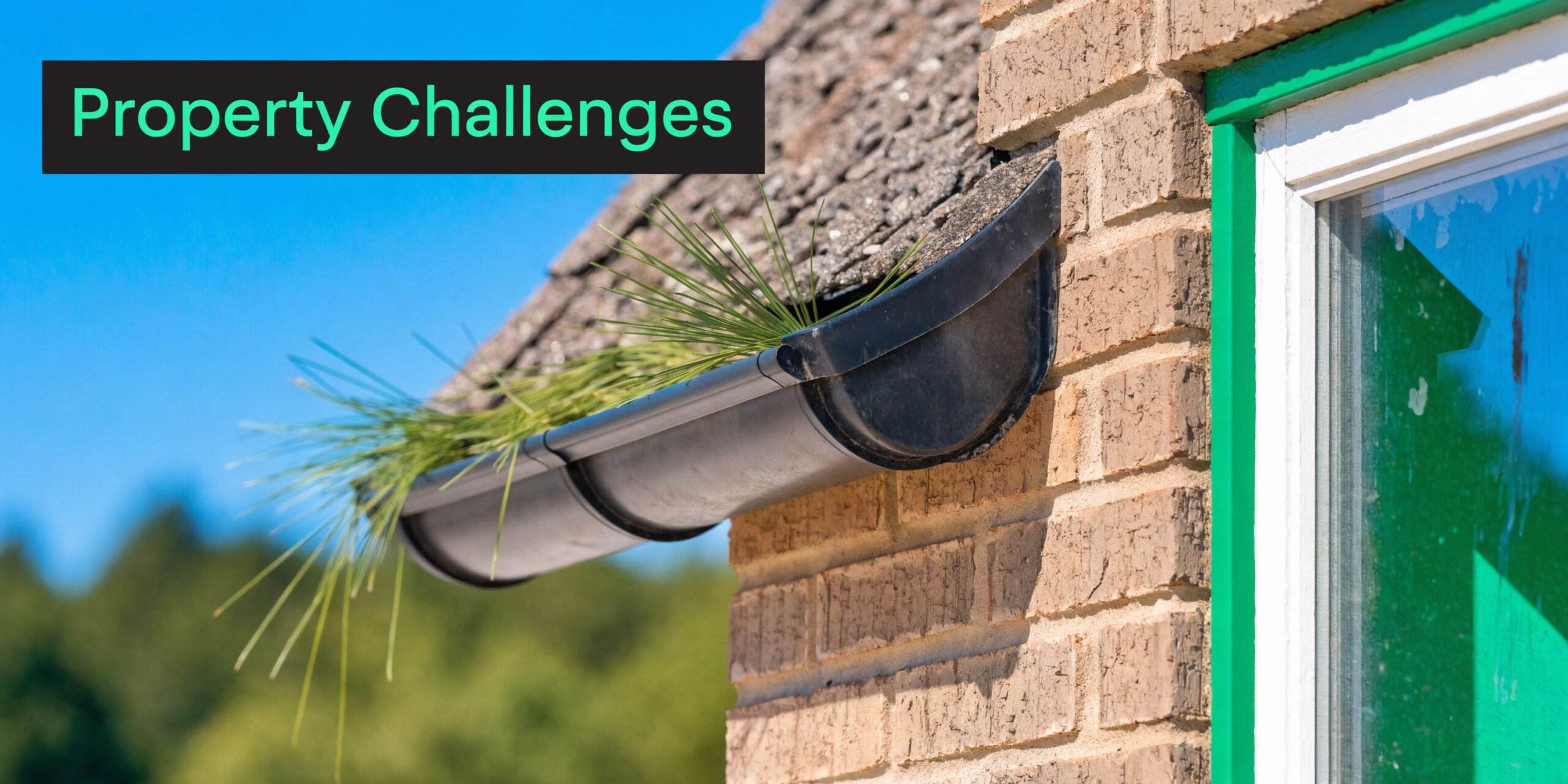
Those conditions create a few repeat problems on luxury homes, and they tend to show up on the same vulnerable areas over and over.
Window issues that don’t respond to casual cleaning
Some glass just needs a routine wash. Other glass has bonded mineral spotting, sticky residue from sap, or grime packed into edges and tracks. That’s common on homes that sit for stretches between visits.
The most frequent issues look like this:
- Hard water spotting on view windows. This is common after precipitation dries on glass and leaves mineral residue behind.
- Pine sap on exterior panes and frames. Sap attracts airborne dust and turns light buildup into stubborn grime.
- Yellow pollen film on screens and sills. Owners often notice this when sunlight hits the glass at an angle.
- Cloudy-looking glass that’s dirty screens. If screens aren’t removed and cleaned separately, the whole window still looks dull.
Gutter trouble starts quietly
Gutters rarely announce a problem early. They usually look acceptable from the ground until the first heavy flow shows where water is backing up.
That’s why regular gutter cleaning matters more in forest highlands than it does in neighborhoods with less canopy cover.
A few warning signs deserve attention:
| Problem | What you’ll see | Why it matters |
|---|---|---|
| Needle-packed gutters | Debris sitting below the roof edge | Water can overflow onto fascia and siding |
| Slow downspouts | Water draining late or unevenly | Debris is often packed deeper in the line |
| Overflow at corners | Staining or runoff where sections meet | Corner buildup tends to form hidden clogs |
| Winter edge buildup | Moisture hanging where drainage should clear | Poor drainage can leave ice in the wrong places |
If a gutter is full of pine needles, it’s not just a gutter problem. It becomes a roof edge, fascia, siding, and drainage problem.
What doesn’t work
A quick blow-off from the ground doesn’t finish the job. It may move surface debris, but it won’t remove packed material from troughs or downspouts. The same goes for wiping a few windows by hand and calling it done. On custom homes with large panes and screens, that approach leaves behind the buildup owners still notice from inside.
The Pine Country Method for Pristine Forest Highlands Homes
Professional window cleaning in forest highlands should protect the home while improving the finish. That means using the right tools, the right sequence, and enough time on site to do the details well.
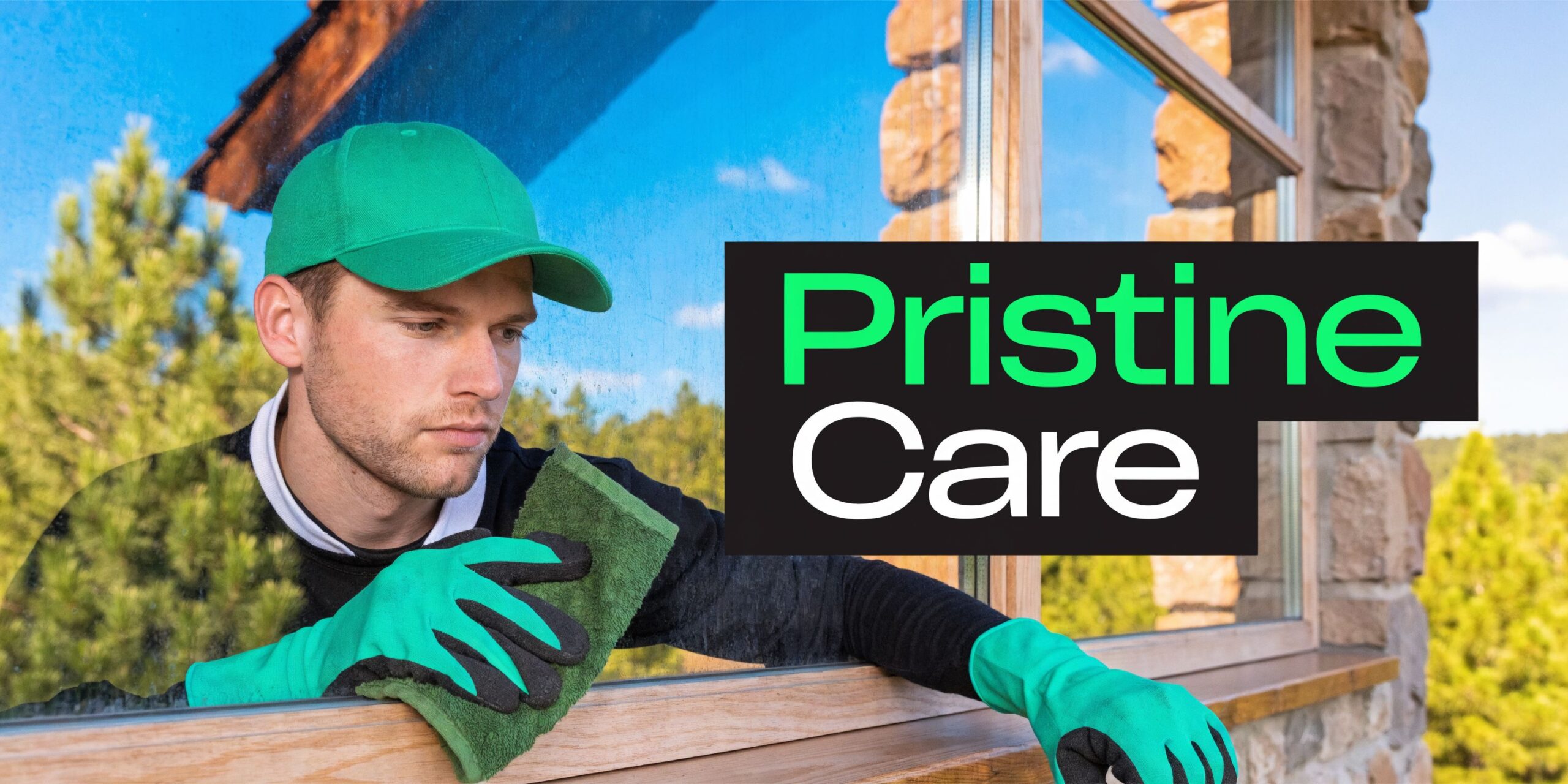
Pine Country Window Cleaning has served Flagstaff since 1999, was started by Flagstaff native David Kaminski, and works with in-house equipment that includes boom lifts, scissor lifts, and a 95-ft atrium lift for difficult access. The company also removes screens, cleans them, and reinstalls them with every service, which matters on homes where dirty screens can make clean glass still look hazy.
Tools that fit high-end homes
This isn’t rag-and-spray work. It shouldn’t be.
For exterior glass, professional crews typically use a mix of squeegees, water-fed poles, pure-water brushes, extension poles, ladders, and lift access depending on the window layout. Each tool solves a different problem.
- Squeegees are still the standard for detailed finish work on accessible glass.
- Pure-water brush systems are useful for exterior rinsing where spot-free drying matters.
- Extension poles reduce unnecessary ladder moves on medium-height sections.
- Boom lifts and atrium lifts handle steep, high, or architecturally awkward areas more safely than overreaching from ladders.
The sequence matters
A careful crew doesn’t just clean the center of the pane and move on. The order of work affects the result.
A good service visit usually includes:
- Access check and protection setup so walkways, landscaping, and entry areas stay clean.
- Screen removal done carefully to avoid bent frames or torn corners.
- Screen cleaning separate from the glass, not a quick dust-off in place.
- Glass cleaning with the right method for the pane and access point.
- Track and sill attention where dirt, bugs, and organic residue collect.
- Screen reinstallation so the window goes back together correctly.
A streak-free pane doesn’t feel complete if the screen is dusty and the track is still packed with debris.
What owners should avoid
The wrong shortcuts create most of the frustration we see. Household spray cleaners, paper products, and random spot-cleaning often leave residue, lint, and inconsistent results. They also encourage people to work from unsafe positions around tall windows, stairwells, and sloped exterior grades.
For second-home owners, the bigger issue is inconsistency. If different people touch the house every visit and nobody follows the same process, the results drift. The glass may be decent one month and disappointing the next. The answer isn’t more touch-ups. It’s a repeatable professional method.
A Year-Round Maintenance Calendar for Your Property
The easiest way to keep a forest highlands home looking ready is to think in seasons, not emergencies. Snow, pollen, monsoon moisture, and fall debris each leave a different kind of mess behind. If you wait until the house looks bad, you’re already behind.
This visual is a useful starting point for seasonal planning.
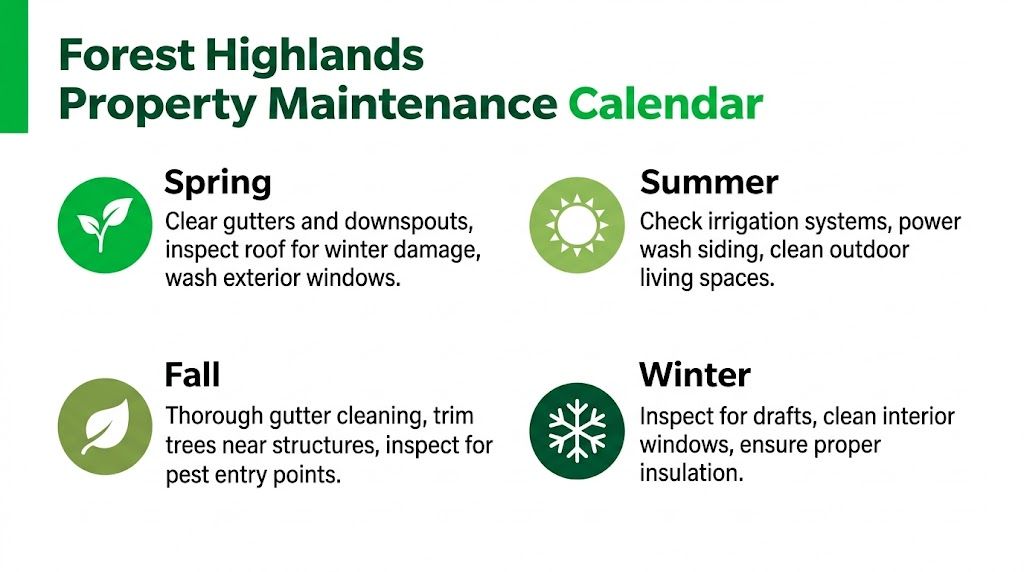
If you like a written planning tool, this preventive maintenance schedule template is a helpful way to organize recurring property tasks across vendors and seasons.
Spring reset
Winter leaves behind residue, trapped debris, and glass that often needs a full refresh.
Focus on:
- Exterior window cleaning after winter grime and spotting
- Screen cleaning and reinstall checks before heavier use
- Gutter and downspout clearing so spring runoff drains correctly
Spring is also a good time to review how often your property really needs service. For many owners, this guide on how often windows should be cleaned helps set a realistic schedule based on occupancy, trees, and exposure.
Summer protection
Summer use goes up. So does outdoor living.
This is the season for checking the details owners and guests notice first:
| Season task | Why it matters |
|---|---|
| Window touch-up service | Restores clarity after early pollen and dust |
| Patio and entry cleaning | Improves the arrival experience |
| Gutter check before storms | Confirms drainage paths are open |
If the home is used for family visits or rentals, summer is where consistency pays off. A planned visit before occupancy is much easier than a rushed cleanup between arrivals.
Fall cleanup
Fall is when needles start winning if nobody stays ahead of them.
Priority items include:
- Thorough gutter cleaning
- Roofline debris removal where accessible
- Window cleaning before lower winter sun highlights every mark
- Entry and exterior touch-up work before weather turns
Winter interior focus
Exterior conditions can narrow access windows, but the house still benefits from care.
Good winter tasks include:
- Interior window cleaning
- Spot checks on moisture-prone areas
- Service planning for the first spring opening
Owners who maintain homes remotely do best with a recurring calendar, not one-off appointments. It reduces surprises and keeps the property presentable even when no one is in town.
Safety Access and What to Expect with Your Service
Forest Highlands homes aren’t simple from a service standpoint. The terrain, architecture, and site layout all affect how a crew can work safely and efficiently. The community’s development standards require detailed topographic surveys and exterior plans because the terrain has significant elevation changes, and for service providers that translates into complex home profiles, varied elevations, and non-standard layouts that need on-site assessment and specialized lift planning (development standards reference).
Why a fast phone quote often misses the mark
A flat quote without seeing the property can be misleading for both sides. Two homes may have similar square footage and completely different service demands.
What changes the scope?
- Steep driveways or narrow access points
- Multiple rooflines and walk-out lower levels
- Large fixed glass above entries or stairwells
- Delicate hardscape or plantings around ladder paths
- Detached structures that add travel and setup time
That’s why serious contractors prefer an on-site visit for custom homes. It leads to cleaner pricing and fewer surprises.
What a careful crew evaluates
Before the work starts, a trained team should look at more than just the windows.
A proper assessment includes:
- Access routes for ladders, poles, and lift equipment
- Surface protection needs around stone, stain-grade wood, and landscaping
- Window count and type, including divided panes, fixed glass, and hard-to-reach sections
- Gutter conditions and downspout access if exterior drainage is part of the visit
On challenging homes, safety planning is part of the service. It’s not overhead. It’s how damage and accidents are avoided.
What you should expect operationally
For second-home owners, communication matters as much as technique. You should know when the crew is coming, how entry or gate access will work, and what was completed before the team leaves.
The best service experiences in forest highlands feel calm and organized. No guesswork. No improvised access decisions on site. No avoidable scuffs, bent screens, or muddy footprints left behind.
Frequently Asked Questions for Forest Highlands Homeowners
Can service be scheduled while we’re out of town
Yes, as long as access and scope are clear in advance. Many second-home owners prefer that. The important part is having gate instructions, exterior access details, and any alarm or screen notes handled before the appointment.
For homes with guests, rental turnovers, or property managers involved, scheduling works best when everyone agrees on a service window and the priorities for that visit.
Is professional window cleaning really different from what a housekeeper or landscaper can do
Usually, yes. The difference isn’t just labor. It’s tools, safety, and process.
Housekeepers typically focus on interior surfaces. While visible debris may be cleared outdoors, window glass, screens, tracks, and high access points require specialized equipment and technique. On forest highlands homes, that difference shows up quickly on large panes, higher-set glass, and debris-heavy gutters.
Do screens really need to come out every time
If you want the windows to look finished, they usually do. Dirty screens cast a haze over clean glass. They also hold pollen and dust that can blow right back onto the window area.
That’s why screen removal, cleaning, and proper reinstallation is part of a higher-standard service, not an add-on detail.
How often should a forest highlands home be serviced
It depends on tree coverage, occupancy, exposure, and how particular you are about the view. Homes used often, surrounded by pines, or prepared regularly for guests usually need a more active schedule than homes in less exposed settings.
A practical plan is better than a fixed rule. Some owners need recurring exterior attention. Others mainly need seasonal service timed around arrivals and weather.
What should I do before the crew arrives
Keep it simple:
- Ensure access to needed gates or coordinate entry
- Move fragile décor from window areas if needed
- Share any concerns about pets, alarms, or delicate features
- Point out problem spots like sap, hard water, or overflow areas
A short pre-visit conversation usually prevents the issues that cause delays.
Partner with a Local Expert Who Understands Your Home
A forest highlands home isn’t hard to maintain because it’s poorly built. It’s hard to maintain because it sits in a beautiful, demanding environment. Trees, snow, sun, elevation, and custom architecture all put pressure on the exterior. That calls for a property care plan that’s thoughtful, consistent, and suited to how the home is used.
It also helps to coordinate maintenance with other qualified local trades. If tree canopy management is part of protecting access, roofs, and gutters, working with an ISA Certified Arborist can be a smart complement to regular exterior cleaning.
For owners comparing service options, this overview of cleaning services in Flagstaff is a practical place to start. The right fit is a company that understands high-country homes, respects the property, and communicates clearly when you’re in town and when you’re not.
If you want a reliable plan for your forest highlands home, contact Pine Country Window Cleaning for a free, no-obligation on-site estimate. We’ve been serving Flagstaff since 1999, and we understand what it takes to keep mountain properties clean, protected, and ready when you arrive.