
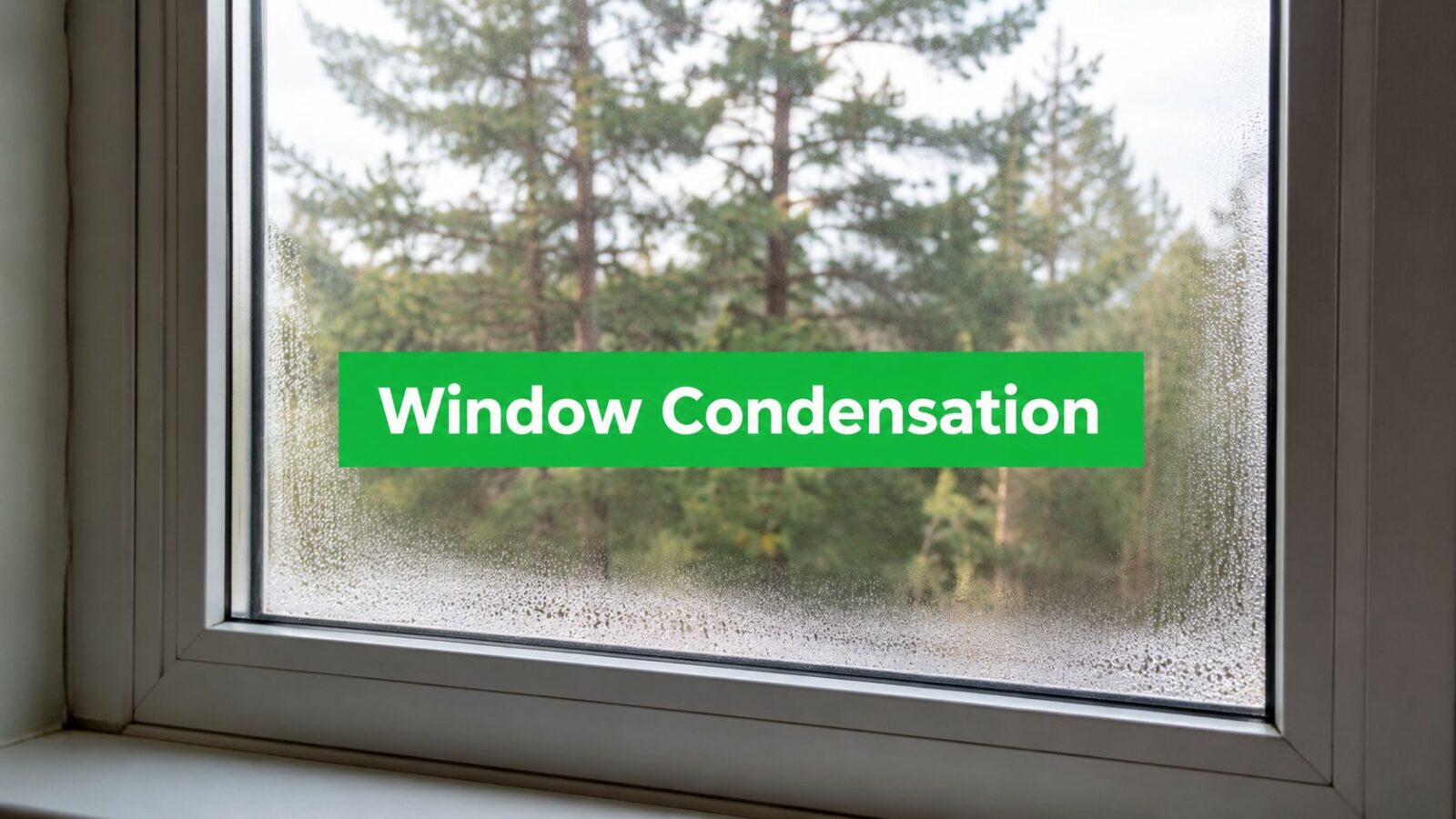
You walk over to the window, wipe the glass from the inside, then step outside and try again. The haze is still there. In some spots it looks like fog. In others it looks milky, streaked, or dotted with moisture. At that point most homeowners stop thinking about cleaning and start wondering if the whole window is going bad.
That reaction is justified. In Northern Arizona, this is a common problem in homes, cabins, rentals, and second properties. The frustrating part is that the glass can look dirty even when the surfaces are clean, and no amount of normal maintenance will touch what's trapped inside the unit.
That Hazy Fog You Can't Wipe Away
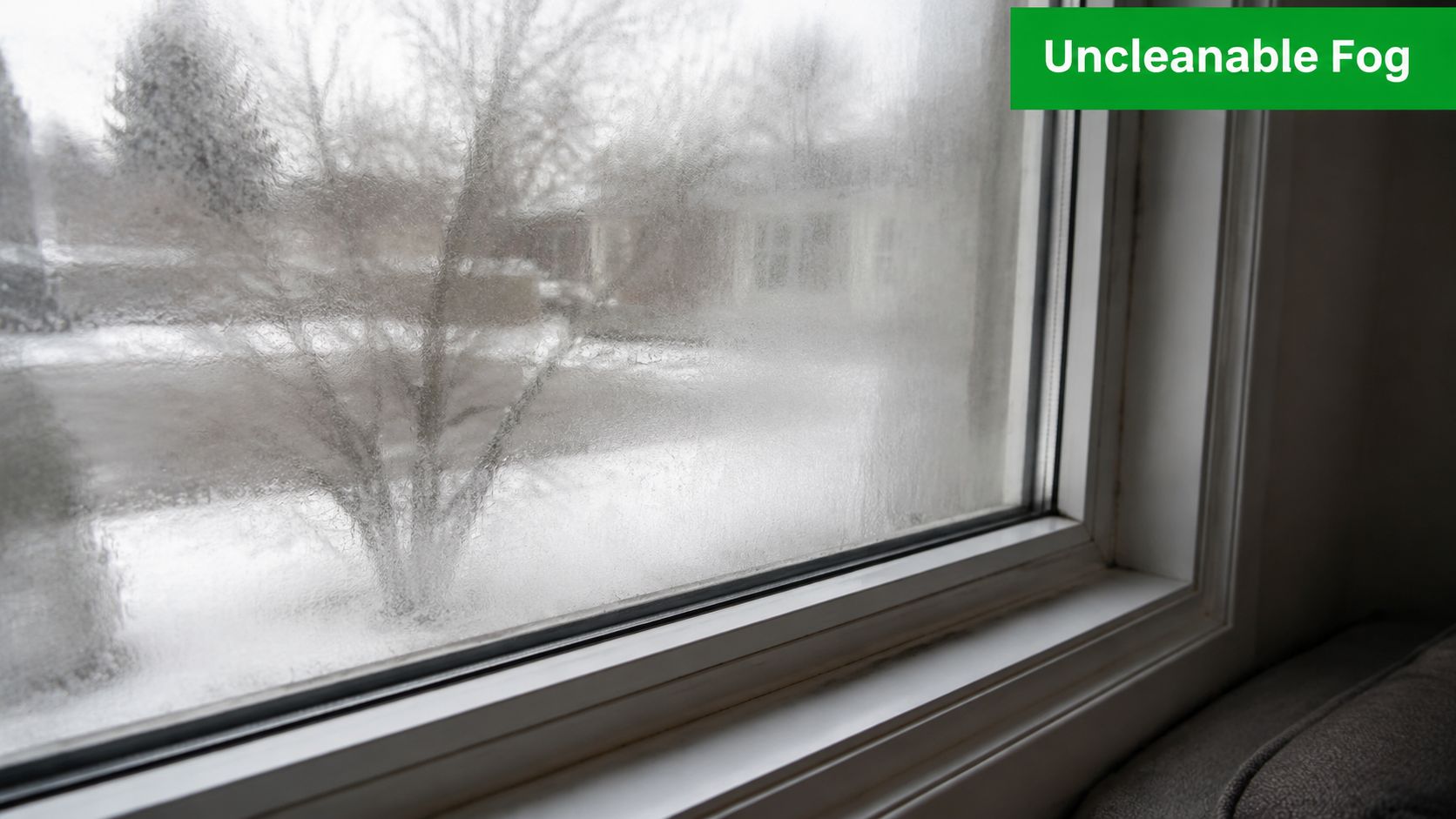
The first thing to know is simple. Condensation between window panes is not a surface-cleaning problem. If the fog won't wipe off from either side, the moisture is trapped inside the sealed glass unit.
That's very different from ordinary bathroom or kitchen condensation. Surface moisture forms on the room side or outside face of the glass and can be removed. Moisture between panes is physically inaccessible, which is why homeowners often feel stuck. They can see the problem every day, but they can't reach it.
What homeowners in Flagstaff and Munds Park usually notice
In residential buildings in Northern Arizona, including Flagstaff and Munds Park, interstitial condensation is strongly correlated with the failure of the IGU seal, which typically begins after 15–20 years of service; once the seal degrades, water vapor from the exterior air infiltrates the cavity and condenses on the cooler inner pane when indoor heating raises the humidity, creating visible moisture that cannot be removed by surface cleaning and requires IGU replacement, as noted by Pine Country Window Cleaning.
That local pattern shows up in all kinds of properties:
- Cabins that sit closed up for stretches and then get heated quickly when owners arrive
- Primary homes with older double-pane windows that have been through years of freeze-thaw cycles
- Second homes and rentals where the problem goes unnoticed until the haze becomes obvious in direct sun
Practical rule: If you clean both sides and the cloudiness stays put, you're not dealing with dirt. You're looking at a failed glass unit.
Homeowners sometimes search for ways to clean inside the glass because the issue looks cosmetic at first. If that's where you are, this guide on how to clean between window panes helps explain why the problem isn't reachable in a sealed unit.
Climate does matter, but the remedy depends on where the moisture is forming. For a different example, Fixes for condensation in South Florida homes are helpful when moisture problems are tied to humid building conditions rather than a failed insulated glass unit. That distinction matters because the right fix starts with the right diagnosis.
Why Your Double-Pane Window Is Failing
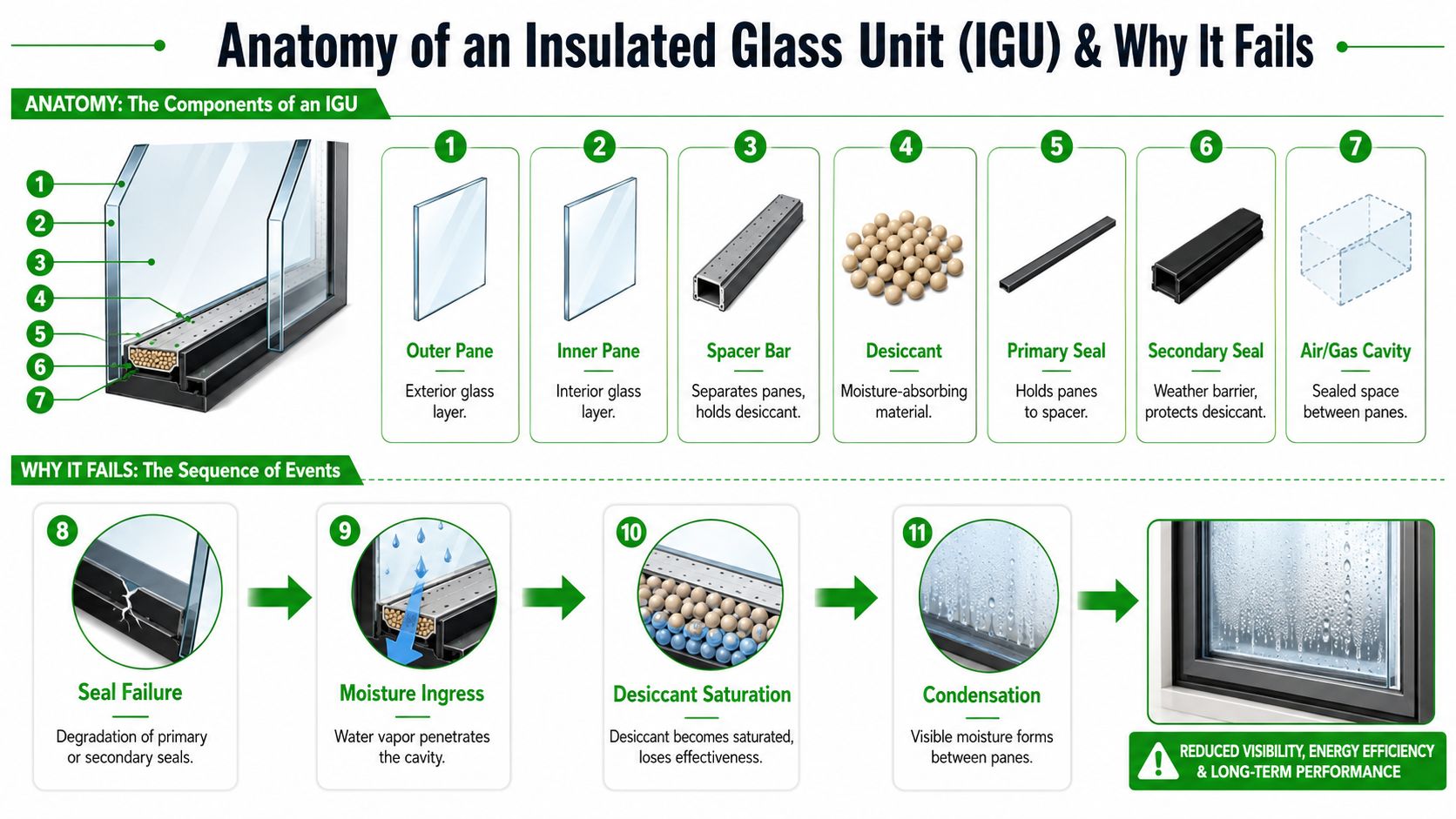
A failed double-pane window usually starts at the edge, not in the middle where you see the fog. The glass unit, or insulated glass unit (IGU), depends on a tight perimeter seal to keep the space between the panes dry and insulating. Once that seal begins to break down, the unit starts losing performance long before the haze becomes obvious.
An IGU is built from two panes of glass, a spacer system, perimeter sealants, and an airspace that often includes argon gas. That gas helps slow heat transfer. If you want a plain-language breakdown of why that matters, Superior Home Improvement on window efficiency gives useful context.
What actually breaks down
In the field, I rarely see these failures happen all at once. The usual pattern is slower and more frustrating. UV exposure, temperature swings, frame movement, and age wear down the seal around the glass. Small leaks let moisture enter the cavity. The desiccant inside the spacer can absorb only so much before fogging starts to show up.
At that point, four things are usually happening:
- The perimeter seal is weakening or already breached.
- Moisture is entering the space between the panes.
- The desiccant is no longer keeping that space dry.
- Argon gas has likely escaped, reducing insulation value.
This matters for comfort as much as appearance. Homeowners often focus on the cloudy look first, but a failed IGU also allows more heat loss in winter and more solar heat gain in summer.
Why clearing the glass is not a true repair
The haze may seem to improve for a few hours or a few days. That can happen when temperatures change or the sun heats the unit. The seal has still failed.
Drilling, wiping, or venting the space might change the appearance for a while, but those approaches do not restore the sealed construction the window was built with. They do not replace spent desiccant, and they do not return the gas fill under factory conditions. That is why the long-term fix is usually glass replacement, not cosmetic treatment.
A window can stay in the opening for years after seal failure, but it is no longer performing like an intact insulated unit.
In high-altitude areas, this distinction is even more important. Around Flagstaff, I prefer to confirm suspected seal failure with a visual inspection and, when needed, thermal imaging to spot temperature irregularities around the unit before homeowners spend money on the wrong fix. That kind of proactive check fits well with a broader Flagstaff seasonal home maintenance checklist, especially for second homes and older windows that do not get watched closely year-round.
A failed IGU works like a sealed cooler with a bad lid. Once outside air is getting in, performance drops and the original condition is gone. The question is not whether the fog can be hidden. The question is whether the glass unit is worth replacing now, before energy loss and visibility get worse.
Flagstaff's Climate and Your Window Seals
Northern Arizona is rough on windows in a way many generic articles miss. In Flagstaff and nearby mountain communities, the same window can face hard sun during the day, then freezing temperatures at night. Those swings repeatedly stress glass, spacers, sealants, and sash materials.
Over time, that movement matters. Materials expand and contract at different rates. The window may still look fine from across the yard, but the edge seal has been working through years of motion.
Why altitude changes the equation
For double-glazed windows in high-altitude locations like Flagstaff (7,000 ft elevation), the lower atmospheric pressure increases the rate of moisture migration through micro-fissures in degraded IGU seals, making interstitial condensation more prevalent. Studies show over 30% of failed IGUs in Mountain West homes exhibit this issue due to the combined thermal and pressure effect, as described in this Flagstaff window service profile.
That helps explain why homeowners here sometimes see window seal issues that seem to arrive suddenly. In reality, the seal may have been weakening for a long time. The climate exposes the failure faster.
What this looks like in real homes
A few local patterns come up again and again:
- South- and west-facing windows take intense sun, then cool rapidly after sunset.
- Cabins and second homes often cycle between unoccupied periods and quick reheating.
- Older insulated units tend to show haze first in rooms with the biggest temperature swings.
The same seal that might limp along longer at lower elevation often gives up sooner in a mountain climate.
If you maintain a second home or seasonal property, a broader inspection routine helps catch these issues before they become obvious from the driveway. This Flagstaff seasonal home maintenance checklist is a useful starting point for owners who want to stay ahead of weather-related wear.
Why local diagnosis matters
A homeowner in a mild climate may get generic advice that doesn't fit what happens here. In Northern Arizona, altitude, dry air, cold nights, strong sun, and seasonal occupancy all shape how windows age. That's why the same foggy-glass symptom can show up sooner, spread faster, or appear more aggressively in mountain properties than people expect.
Can You Fix Condensation Between Window Panes
You notice the haze on a cold Flagstaff morning, grab glass cleaner, and scrub both sides. Nothing changes. That usually means the moisture is trapped inside the insulated glass unit, and surface cleaning will not fix it.
The straight answer is yes, you can fix it, but the right repair depends on what failed. If the frame and sash are still in good shape, replacing the insulated glass unit is often the best value. If the window also has frame damage, poor operation, air leakage, or water intrusion, full window replacement usually makes more sense.
What actually works, and what wastes money
Homeowners often ask about defogging services that drill small holes or vent the glass. Those methods may reduce the visible haze for a while, but they do not restore the original sealed unit. You still have a failed window assembly with reduced insulating performance, which matters even more in a high-altitude climate where nights cool off fast.
Here is the trade-off in plain terms:
- Cleaning the glass helps confirm whether the moisture is on the surface or between panes
- Defogging or venting may improve appearance temporarily, but it does not rebuild the seal
- Exterior caulking or resealing can help only if the problem is around the frame, not inside the glass unit
- IGU replacement addresses a failed sealed glass unit while keeping a sound frame in place
- Full window replacement is the better call when the whole window is worn out
If you want a real repair, focus on performance, not just visibility.
Glass-only replacement vs. full window replacement
A fogged unit does not automatically mean you need a full tear-out. In many homes, the glass can be replaced without replacing the entire window. Home Makeover NJ discusses this same distinction, and it lines up with what we see in the field.
Choose IGU replacement when the frame is solid, the sash still operates correctly, and the failure is limited to the sealed glass.
Choose full replacement when you also have rotten wood, warped vinyl, broken hardware, chronic drafts, water staining, or visible frame movement.
That distinction matters because the cheapest bid is not always the lowest total cost. A temporary cosmetic service can leave you paying twice. First for the short-lived fix, then again for the proper repair.
Window Condensation Solutions A Reality Check
| Solution | Typical Cost | Effectiveness | Our Recommendation |
|---|---|---|---|
| Wiping interior and exterior glass | Varies | Only helps if moisture is on the surface | Good for diagnosis, not for trapped condensation |
| DIY defogging or drilled-hole venting | Varies | Cosmetic at best | Not recommended for long-term performance |
| Exterior resealing only | Varies | Limited if moisture is already inside the IGU | Only useful when seal failure has not progressed into the unit |
| IGU replacement | Varies | Restores the failed glass assembly without replacing a sound frame | Best option when frame and sash are still in good condition |
| Full window replacement | Varies | Appropriate when frame, sash, operation, or surrounding condition is poor | Use when the whole assembly is compromised |
A practical way to decide
Start with a close inspection of the whole window, not just the fogged glass. Check whether the sash opens and locks properly, whether the frame is square, and whether there are signs of water damage around the unit. In Northern Arizona, I also pay close attention to sun-exposed elevations and windows in second homes, because those are the units that often show hidden problems first.
If you are not sure whether the haze is trapped inside the unit or just heavy buildup on the glass, a professional residential window cleaning service can help confirm what is cosmetic and what is a seal failure.
It is also smart to act before moisture leads to stained trim, damaged finishes, or indoor air-quality concerns. If condensation problems are contributing to damp conditions elsewhere in the home, this guide to preventing property mould issues is a useful reference.
One more point. Check the warranty before authorizing replacement work. Some manufacturers provide seal-failure coverage, and that can change the cost equation quite a bit.
Proactive Diagnosis and Protecting Your Investment
By the time you can see fog, the failure is already well developed. That's why proactive diagnosis matters, especially in high-altitude homes, cabins, and second properties where windows may go months without close inspection.
Infrared thermal imaging is one of the best tools for catching trouble early. It helps identify temperature differences that can point to a compromised unit before the glass turns visibly cloudy.

Why IR imaging matters in Northern Arizona
Infrared (IR) thermal imaging can be used to proactively detect seal failures before visible condensation occurs, a critical preventative measure in high-altitude climates like Northern Arizona where rapid temperature swings accelerate seal degradation. This is especially useful for pre-listing assessments and managing second homes, according to InterNACHI's overview of condensation in double-paned windows.
That makes IR imaging especially useful for:
- Second-home owners who want to spot weak units before seasonal visits
- Property managers responsible for multiple buildings or rental cabins
- Pre-listing sellers who want fewer surprises during buyer inspections
Field advice: If several windows are the same age and exposure, one visible failure often means other units deserve a closer look.
Care for the whole window system
Good window care isn't just about the glass. Screens, tracks, frames, and access points all affect how a property looks and how carefully the work gets done. Professional crews should handle screens gently, remove them properly, clean them, and reinstall them correctly instead of treating them like an afterthought.
The same goes for cleaning methods. Professional window service relies on tools such as squeegees, ladders, poles, and pure-water brushes, not casual spray-bottle methods that don't match the needs of taller homes, cabins, storefronts, and hard-to-reach glass.
For homeowners thinking broadly about indoor moisture management, this article on preventing property mould issues adds useful context. It doesn't replace window diagnosis, but it does help separate sealed-unit failure from other building moisture concerns.
A good residential maintenance plan also helps you spot changing glass clarity, damaged screens, failed seals, and weather-related wear before they become larger headaches. This overview of residential window cleaning services in Flagstaff shows the kind of full-property approach that keeps windows and surrounding components in better shape.
A short visual explanation can make the diagnostic side easier to understand:
Why proactive service saves hassle
Most homeowners don't mind replacing a failed IGU when they know exactly what's wrong. What they hate is uncertainty. They don't want to guess whether the issue is dirt, humidity, a leak, or a bad window. Proactive inspection removes that guesswork and helps you plan repairs on your schedule instead of reacting after the fog becomes impossible to ignore.
Your Next Steps for Clear Windows in Flagstaff
You clean the glass, step back, and the haze is still there. On a cold Flagstaff morning, that usually points to a failed insulated glass unit, not a housekeeping issue.
The next move is to confirm what can be saved. Many homes only need the glass unit replaced, which keeps a sound frame and sash in place and holds the cost down. Older windows, damaged frames, and units with repeated seal problems often justify full replacement instead. The right answer depends on condition, access, and whether the window is worth reinvesting in.
Start with a practical check:
- Clean both accessible sides of the glass to confirm the cloudiness is trapped between the panes
- Make a list of affected windows and note whether they face the same direction or get the same sun exposure
- Pull any warranty paperwork before authorizing work
- Book a professional inspection if the fog is permanent, spreading, or paired with visible distortion
A good inspection should do more than glance at the glass. In high-altitude areas like Flagstaff, Munds Park, Pine Canyon, Forest Highlands, and Flagstaff Ranch, I prefer a closer diagnostic approach that includes checking for failed seals, frame condition, sash fit, and temperature irregularities with IR thermal imaging. Thermal imaging does not replace hands-on inspection, but it helps identify weak spots and hidden temperature differences that generic advice misses, especially in homes exposed to strong UV, winter cold, and freeze-thaw swings.

Why local experience counts
Northern Arizona windows age differently than windows in milder climates. High elevation, sharp temperature changes, intense sun, and snow season all put more stress on seals and glazing systems. A local technician who works on these homes every week can usually tell the difference between a unit that needs glass replacement now and a window assembly that is already on borrowed time.
That matters because homeowners are not just buying clearer glass. They are trying to avoid wasted money, repeat service calls, and the frustration of fixing the wrong problem first.
Flagstaff native David Kaminski started Pine Country Window Cleaning in 1999, and the company has grown by staying reliable, careful, and honest about what a window needs. That includes safe access for hard-to-reach glass, careful screen handling, and straightforward recommendations when a cloudy unit needs more than cleaning.
If your windows look cloudy and you are tired of guessing, get them evaluated properly. A clear diagnosis gives you a realistic repair path, helps you protect good frames, and lets you deal with failed glass before the problem spreads to more units.