
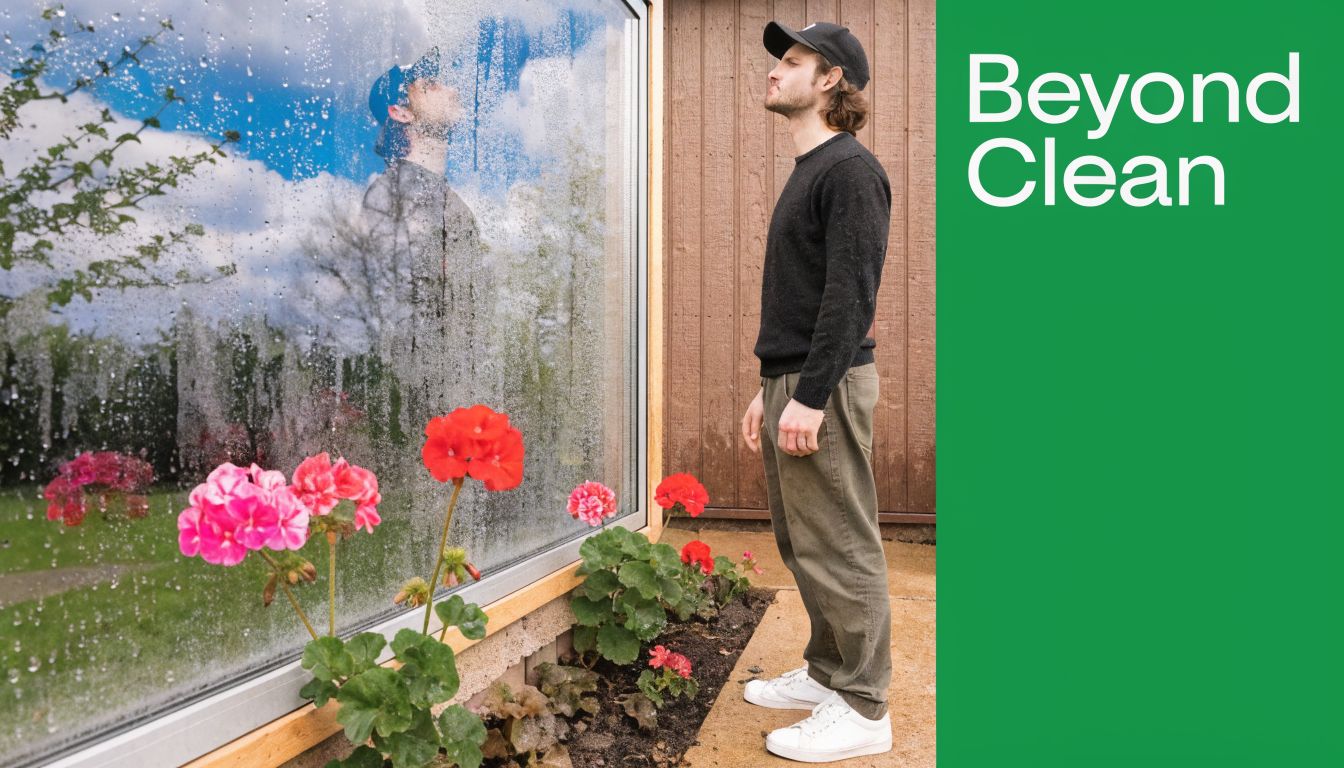
You usually notice an average cleaner after they leave. The glass still has smears when the afternoon sun hits it. A screen is leaning crooked against the wall. Mud got tracked across a patio. A flower bed near the front windows looks stepped on. The job got done, technically, but the property feels handled, not cared for.
That gap is what people mean when they start looking for an above and beyond cleaning service. They aren’t asking for fluff. They’re asking for a crew that understands the work, protects the home, and leaves everything in better order than they found it.
In Flagstaff, that difference matters more than it does in a lot of places. Our windows deal with pine pollen, wind, dust, snow, and hard water. Our homes sit on slopes, in pines, on cinder drives, and behind landscaping that can be damaged by a careless ladder set. A cleaner who follows a generic playbook can create problems fast.
I’ve been around this work long enough to know that clean glass is only part of the job. The ultimate standard is whether the company respects your property, communicates clearly, works safely, and handles details the homeowner shouldn’t have to chase down later.
More Than Just Clean The Meaning of a True Service Partner
A homeowner calls because the windows “were cleaned” a few weeks ago, but they don’t look clean. That usually means one of three things happened. The glass got a quick wipe instead of a proper wash. The screens stayed dirty, so every breeze pushed dust right back onto the windows. Or the crew rushed through the exterior and ignored the tracks, frames, and sills that make the whole job feel unfinished.
That’s the difference between a cleaner and a service partner. A cleaner shows up to complete a task. A service partner looks at the property as a whole and asks what needs to happen so the result lasts, the home stays protected, and the customer doesn’t have to supervise every step.
What homeowners usually mean when they say they want better
Clients don’t call and say, “I need a higher operational standard.” They say things like:
- “Last time they left streaks.” The problem wasn’t effort alone. It was method.
- “They never touched the screens.” Dirty screens can undo good glass work.
- “I had to point out missed panes.” That means there wasn’t a real quality check.
- “I was nervous the whole time.” That usually comes down to communication, safety, or both.
A true above and beyond cleaning service removes that uncertainty. You know who’s coming. You know what’s included. You know how they’ll access difficult areas. And when they leave, the property looks cared for, not just processed.
An average job makes the windows look cleaner for the moment. A professional job makes the whole property feel maintained.
Care is visible in the small things
You can see the difference in how screens are handled, how ladders are set, how hoses and poles move through landscaping, and whether the crew notices a loose frame or a problem area before the owner has to mention it. That kind of attentiveness isn’t extra. It’s the standard you should expect when you hire people to work around expensive glass, trim, paint, stone, and plantings.
In a place like Flagstaff, where weather and terrain make window care more demanding, “good enough” work doesn’t hold up for long.
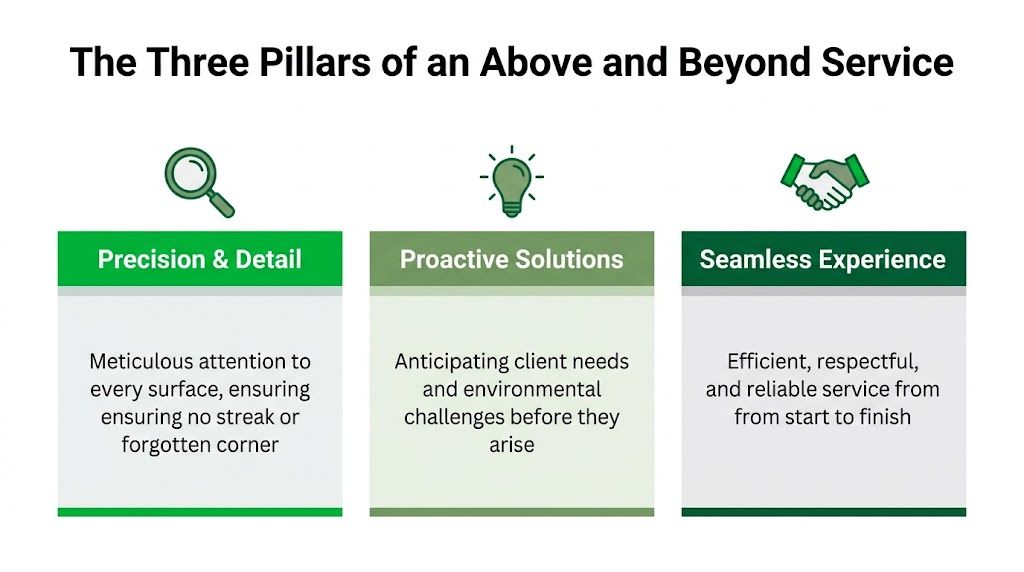
The Three Pillars of an Above and Beyond Service
The phrase sounds nice, but it only means something if you can break it into standards you can check. In real-world service work, I look at three things. Professional people. Proven processes. Powerful promises. If one of those is missing, the job usually falls short somewhere.
Professional people
The tools matter, but the technician matters more. A strong crew doesn’t just know how to clean glass. They know how to move through a property without creating risk.
That shows up in a few practical ways:
- Respect for the home: They don’t drag hoses through shrubs, lean screens where they can bend, or leave tracks and sills full of loosened debris.
- Composure on site: They communicate clearly, show up prepared, and don’t improvise access in ways that make owners uneasy.
- Training and judgment: They know when a ladder is the wrong choice, when a pole is safer, and when a lift is the only responsible option.
A company can advertise excellent service all day long. If the people on site aren’t disciplined, courteous, and consistent, the promise falls apart fast.
Proven processes
The gap gets obvious. Homeowners can usually tell when a company is using a casual method instead of a professional one, even if they don’t know the names of the tools.
Professional window cleaning is not spraying glass and rubbing it around with household products. It’s a process. The glass is assessed. The right tool is chosen for the pane, the soil load, and the access challenge. Screens are removed, cleaned, and reinstalled properly. Frames, tracks, and sills are addressed as part of the overall result.
A real process also means the company works the same way every time, not differently depending on who happened to show up that day.
What solid process looks like
- Correct tool selection: Squeegees, extension poles, water-fed systems, ladders, and lifts each have their place.
- Complete scope of work: The crew doesn’t treat screens like an afterthought. They remove them, clean them, and reinstall them with care.
- Property protection: Entry points, landscaping, trim, and hardscape all get considered before work begins.
- Quality check before departure: The company doesn’t rely on the client to discover what was missed.
Practical rule: If a company can’t explain its process in plain language, there probably isn’t a reliable process behind the quote.
Powerful promises
Good intentions aren’t enough. Service becomes trustworthy when the business side is strong. That includes being properly licensed and insured, setting expectations clearly, and standing behind the finished work.
Many “cheap” services reveal their trade-off. The price looks attractive, but the client ends up absorbing the uncertainty. If something goes wrong, communication gets thin. If a detail was missed, the guarantee is fuzzy. If access is complicated, nobody wants to put the plan in writing.
A real service partner does the opposite.
| Pillar | What it means on site | What goes wrong without it |
|---|---|---|
| Professional people | Courteous, trained technicians who respect the property | Sloppy behavior, rushed work, preventable damage |
| Proven processes | Repeatable methods using professional equipment | Inconsistent results, streaks, missed details |
| Powerful promises | Clear communication, insurance, accountability | Confusion, finger-pointing, weak follow-up |
The best companies don’t rely on charm or slogans. They reduce risk for the customer. That’s what people are really buying when they choose an above and beyond cleaning service.
The Science Behind a Professional Streak-Free Shine
Clean glass isn’t just about effort. It’s about residue control. Most disappointing window jobs come down to one issue. Something got left behind.
That “something” can be soap residue, minerals in the water, lint from a towel, loosened pollen, or oils spread thinly across the surface instead of removed. When sunlight hits the glass at an angle, all of it shows up.
Why professional methods outperform household methods
Household glass cleaning often pushes contamination around rather than fully removing it. It can look acceptable from one angle and terrible from another. On interior mirrors or a single small pane, that may be tolerable. On exterior windows exposed to dust, pollen, and hard water, it isn’t.
Professional work relies on controlled water, proper agitation, clean rubber, and technique. The goal is simple. Lift contamination off the glass, remove it completely, and leave behind nothing that attracts new soil quickly.
The two most important systems are the squeegee method and the pure-water method. Each has a place. A trained technician knows when to use which.
The role of pure water
Pure-water fed pole systems use filtration to remove the dissolved minerals that normally dry as spots on glass. According to the International Window Cleaning Association, these systems produce water with 0 Total Dissolved Solids (TDS), eliminate the need for detergents, and can keep windows cleaner for up to 30% longer than traditional soap-and-squeegee methods because the surface resists new dirt accumulation better when it dries without residue (IWCA on pure-water cleaning).
That matters in Northern Arizona because exterior glass gets hammered by airborne debris. If the rinse water leaves minerals behind, dust has something to cling to almost immediately. If the water dries pure, the result stays cleaner longer.
If you want a simple parallel from another surface-care context, this overview of a perfect deionized water wash does a good job explaining why mineral-free water changes the final finish. The principle is the same. Spot-free drying starts with removing what ordinary water leaves behind.
Why the squeegee still matters
Pure water isn’t the answer for every pane. Interior glass, detail work, and certain types of buildup still call for a professional squeegee in trained hands. The tool looks simple. It isn’t.
Rubber hardness, edge condition, channel length, soap mix, angle, and pressure all affect the result. A technician has to control the path of water across the pane, keep the rubber edge clean, and finish without leaving trails at the edges or lower corners. On divided panes or older windows with delicate seals and uneven frames, technique matters even more.
A squeegee doesn’t make someone a professional any more than a scalpel makes someone a surgeon. The result comes from training and repetition.
Screens are part of the window, not an extra
One of the biggest shortcuts in the industry is treating screens as optional. They aren’t. If the screen is dusty, packed with pollen, or coated with fine grime, it will keep affecting the glass after the window itself is cleaned.
A complete service includes:
- Careful removal: Screens should come out without twisting frames or scraping adjacent surfaces.
- Screen cleaning: The mesh needs a method that clears dust and buildup without damaging tension or frame corners.
- Correct reinstallation: A screen put back poorly rattles, bows, or sits unevenly.
The same standard applies to tracks and sills. If debris gets loosened during cleaning and left behind, the customer notices. Good work means the whole opening looks maintained when the job is done.
Timing and conditions matter
Wind, direct sun, temperature swings, and heavy pollen days all change how a crew should work. Glass cleaned in poor conditions can flash dry too quickly or pick up fresh debris before the final pass is complete. That’s one reason scheduling matters. If you’re trying to decide the right season for your property, this guide on the best time to clean windows is worth reading.
There isn’t one magic method for every home. There is, however, a professional standard. Use the right system for the glass, remove residue completely, include the screens, and leave the window assembly clean as a whole.
Why Northern Arizona Demands a Specialized Cleaning Approach
A crew can clean a pane perfectly at 8:00 in the morning and still lose the finish by 8:20 if the wind comes up, pollen is drifting, and the sun hits hot glass on the west side. That happens in Flagstaff. It does not happen the same way in lower, milder markets, and that is why generic cleaning advice falls short here.
A real above and beyond service in Northern Arizona starts with local conditions. Glass at 7,000 feet deals with stronger sun, wider temperature swings, spring pollen, monsoon dust, and winter access problems. Each one changes the method, the timing, or the equipment.

The local grime is different
Pine pollen is one of the biggest examples. It is not just loose yellow dust. On the wrong day, it mixes with moisture and leaves a film that drags, smears, and clings to screen mesh and frame edges. Fine windblown dust adds another layer, especially on homes near open ground, construction zones, and cinder-heavy driveways.
That buildup changes how the glass should be washed.
If grit is not rinsed away first, every tool that touches the pane carries scratching risk. If a technician rushes the detailing work, residue stays at the edges and shows up again as soon as the light changes. In this climate, good results come from controlling debris before the finish work starts.
Access in mountain properties changes everything
A lot of homes in Flagstaff, Munds Park, and the surrounding area were not built on flat, open lots. Some sit on slopes. Some are tucked into dense pines. Some have windows above lower rooflines, over rock gardens, or next to surfaces that punish careless ladder placement.
That affects every part of the job. Equipment choice, setup area, fall protection, hose routing, and where a technician can safely move all have to be planned before the first window is touched. Reduced footing, uneven grades, and thin mountain air are real working conditions here, especially on larger homes or multi-story properties.
What specialized service looks like in practice
A qualified local company should be able to explain the access plan in plain language and match the method to the property.
- High or awkward glass: Water-fed poles, extension tools, ladders, boom lifts, and interior lift access each fit different types of windows.
- Property protection: Ladder feet, corner protection, careful hose management, and organized screen staging prevent damage to siding, trim, decks, and hard surfaces.
- Weather adjustments: Wind, cold glass, direct afternoon sun, and incoming storms can change both the sequence and the pace of the work.
I have seen plenty of jobs where the right tool was not the fastest option, but it was the safer one and the one that protected the property. That is the trade-off experienced crews make.
Local scheduling should match local conditions
Northern Arizona properties do not all follow the same schedule. A pine-covered home may need service after heavy spring pollen. A vacation property may need attention before guest season. A storefront may need more frequent exterior glass work because wind and foot traffic make buildup obvious fast.
For homeowners and managers trying to set a realistic service interval, this guide on how often windows should be cleaned gives a useful starting point.
A company that understands Flagstaff reads more than the window count. It reads exposure, tree cover, slope, access, weather patterns, and how the property is used through the year. That is what specialized local service looks like.
Your Homeowner and Property Manager Vetting Checklist
Most companies sound good on the phone. That’s why homeowners and property managers need a checklist. Not a vague sense. A checklist.
The right questions expose the difference between a company with a real operating standard and one that mostly relies on confidence and a low price. This matters for year-round residences, second homes, storefronts, campuses, hotels, and short-term rentals.
Start with safety and accountability
Before you ask how they clean, ask how they manage risk. If a company gets defensive about these questions, keep looking.
- Insurance and bonding: Ask if they’re insured and bonded, and whether they can explain what that means for your property.
- Safety training: Ask what formal safety training technicians receive for ladders, high access, and jobsite setup.
- Access planning: Ask how they handle difficult elevations, steep grades, or unusual architectural features.
- On-site conduct: Ask whether crews are identifiable, trained, and expected to protect landscaping and finishes.
Then ask about process, not just price
A quote without a defined scope is where a lot of disappointment starts. “Window cleaning” can mean very different things from one company to another.
Ask these process questions:
- Are screens included? They should remove, clean, and reinstall them, not leave them as a separate surprise.
- What tools do they use? Listen for professional methods like squeegees, poles, and pure-water systems, not household shortcuts.
- Do they handle tracks, sills, and frames? The full opening should look cared for.
- How do they inspect the work? You want a built-in quality check before the crew leaves.
For homeowners comparing local options, reviewing established cleaning services in Flagstaff can help you see which companies define their scope clearly and which stay vague.
The Above and Beyond Vetting Checklist
| Category | Question to Ask | Red Flag if They Say… |
|---|---|---|
| Safety | Are your technicians trained for ladder and high-access work? | “We’ve been doing it long enough. We just know what to do.” |
| Insurance | Are you insured and bonded for this kind of work? | “We’ve never had a problem.” |
| Scope | Does your service include screen removal, cleaning, and reinstallation? | “We can leave the screens if you want.” |
| Equipment | Do you use pure-water systems, professional squeegees, poles, or lift equipment when needed? | “We usually just bring basic supplies.” |
| Property care | How do you protect landscaping, trim, and outdoor furniture during the job? | “We just work around it.” |
| Quality control | Who checks the work before the crew leaves? | “If you see anything later, let us know.” |
| Communication | What happens if weather or access conditions change the plan? | “We’ll figure it out when we get there.” |
| Guarantee | If something was missed, how do you handle it? | “It depends.” |
What to listen for: Specific language. Good companies describe methods, scope, and follow-up clearly because they already have a system.
A note for short-term rental owners
Short-term rental owners have a different problem. Reliability affects reviews, turnovers, and guest experience. Timing matters, but so does product choice.
For vacation rentals, eco-friendly cleaning has become a much bigger issue. 2025 data shows a 40% growth in eco-cleaning queries for vacation rentals, and 65% of VRBO hosts report guest complaints about chemical residues left by conventional cleaning services (vacation-rental eco-cleaning data). If you manage an Airbnb or VRBO, ask directly what products the company uses around guest spaces and whether they understand quick-turn scheduling.
A good vendor for a short-term rental should be able to answer these without hesitation:
- Can you keep a schedule tied to check-ins and check-outs?
- Do your products leave noticeable residue or odor?
- Can you communicate quickly if weather affects exterior work?
- How do you handle rush service without cutting corners?
Cheap quotes usually hide one of three omissions
When a price comes in far below the others, one of these is often happening:
- The scope is thinner than it sounds. Screens, tracks, or difficult access may not be included.
- The equipment isn’t adequate. The company may be planning to “make do” instead of using the proper system.
- The risk got shifted to you. Weak insurance, weak training, or weak guarantees don’t show up on the estimate line, but they matter when something goes sideways.
Vetting isn’t about being difficult. It’s how you protect your home, your tenants, your guests, and your time.
The Pine Country Proof Local Expertise Since 1999
Flagstaff owners don’t need polished slogans. They need evidence that a company can handle the kind of work this area requires. That means difficult access, changing weather, large homes, commercial buildings, post-construction debris, and tight scheduling windows.
Pine Country Window Cleaning has been serving Northern Arizona since 1999, and that longevity matters because local experience changes judgment on site. A company that has worked through Flagstaff seasons learns quickly that the challenge isn’t only the glass. It’s access, timing, safety, and consistency.

Where local experience shows up
Take a tall atrium or an awkward commercial facade. That isn’t the kind of project where you want a crew learning as they go. It takes planning, proper lift access, and technicians who understand how to work methodically at height.
That’s one reason formal safety training matters so much. The CDC reports that falls from ladders account for nearly 80% of fall-related fatalities among service workers, which is why OSHA 1910.23 compliance and real training are not optional in professional field work (CDC ladder fall prevention information).
Examples of what capable service looks like
On a post-construction home, the challenge is restraint. New glass can carry debris, labels, dust, and construction residue that need careful handling. The crew has to clean thoroughly without scratching or rushing fragile new finishes around the property.
On a vacation rental in a place like Munds Park, the challenge is dependability. Owners and managers need the work done on schedule, the screens back in place, and the property ready for arriving guests without drama.
On a large commercial or campus building, the challenge is scale and logistics. Access, public visibility, and timing all have to be managed while keeping the worksite orderly and safe.
What separates experience from improvisation
A seasoned local company tends to do a few things consistently:
- It plans access before arriving with the wrong equipment.
- It understands how Flagstaff weather changes the workday.
- It builds quality around repeatable methods, not individual heroics.
- It treats the property with the same care whether it’s a cabin, storefront, hotel, or campus building.
That’s the kind of proof owners should look for. Not broad promises. Specific capability. Time in the field. Safe execution. Complete service. Respect for the home and the people who use it.
Invest in Clarity and Peace of Mind
When people hear “above and beyond cleaning service,” they sometimes assume it means paying extra for polish. In practice, it means paying for fewer problems. Better methods. Safer access. Clearer communication. More complete work.
That’s a smart investment in any market, but especially in Northern Arizona where the climate and terrain punish careless service. Clean windows matter. So do protected screens, intact landscaping, safe high-access work, and a crew that leaves the property in order.
For homes, rentals, and managed buildings, product choice also matters more than many owners realize. Using plant-based, certified organic cleaning solutions can reduce indoor VOCs by up to 90% while still delivering microbial kill performance comparable to traditional chemicals, which helps lower respiratory irritation risk and supports greener cleaning expectations (green cleaning details). That’s not a marketing flourish. It’s a practical quality and comfort issue.
If you’re also thinking about the broader appearance of your glass, trim, and overall curb appeal, this article on how a glass company can make your home feel luxurious offers a useful design-focused perspective.
The right company doesn’t just make windows look better for a day. It helps the property feel maintained, protected, and ready for the people who live in it, manage it, or visit it.
If you want clear windows, careful workmanship, and a crew that respects your home or building, contact Pine Country Window Cleaning for a free, no-obligation estimate. We serve Flagstaff and Northern Arizona with reliable scheduling, professional equipment, and the kind of property care that should come standard.