

Stop reaching for a rag, a bottle of Windex, and a sheet of newspaper. That habit is why so many inside windows look hazy again ten minutes later, because the problem usually isn't “not enough product,” it's uncontrolled moisture. When cleaner sits too long, creeps to the edges, or gets smeared around instead of removed cleanly, it dries into the film you can see from across the room.
In Flagstaff, that failure shows up all the time. Summer monsoons push dust through open windows, winter wood stoves leave a faint greasy residue, and hard-water mist from irrigation can leave mineral ghosts that a casual spray-and-wipe routine won't beat. The fix is the same craft pros use on exterior glass, controlled water, clean rubber, and a dry finish that doesn't leave anything behind.

Why Your Inside Windows Keep Looking Smudged
Smears are usually a moisture problem
Inside glass gets blamed for being “dirty,” but most recurring smudges come from how the water behaves on the pane. If the solution is sprayed heavy, wiped unevenly, or left to evaporate on its own, it dries as a visible edge line or a cloudy film. That's why a cleaner bottle can make the problem worse when the actual issue is coverage and removal, not chemistry.
Routine care guidance from a major cleaning manufacturer says interior and exterior window surfaces should be cleaned about every two months, while other maintenance guidance recommends interior windows be wiped weekly or every 1 to 2 weeks to keep grime from building up and streaking (Kärcher's window cleaning guidance). That cadence makes sense in real homes. Kitchens, baths, and dusty rooms load glass faster than a quiet bedroom, so a one-size-fits-all spray habit misses the mark.
Practical rule: if the pane gets wet, it has to be removed evenly or it will dry ugly.
Flagstaff throws three different problems at the same pane
A cabin in the pines doesn't age like a townhome near a busy road. Monsoon dust lands on the glass, stove film clings to the surface, and hard-water residue can leave pale marks that feel like ghost streaks even after a wipe. Those are different contaminants, but they all punish sloppy moisture control in the same way.
A controlled-water approach solves more of that than a stronger bottle does. Put the solution where you want it, pull it off cleanly, and don't let it air-dry in patches. That's the core of how to clean the inside of a window the right way, and it's the same reason pros treat interior glass like a precision job instead of a quick wipe.
For a broader homeowner reference on related moisture problems, the foggy window repair guide is useful when the issue looks like clouding but may be condensation or seal trouble instead of surface dirt.
The Tools That Actually Beat Streaks

The kit is simple, the details matter
A working set starts with a quality squeegee in the 8- to 12-inch range, a fresh rubber channel, a washable microfiber applicator, a sturdy bucket, a controlled-mist bottle, and a drop cloth. The rubber is the blade. If it's nicked or rolled, it drags and leaves marks that look like you missed a spot, when really the edge failed.
A mild cleaner and clean water are enough for most interior panes. In hard-water areas, distilled or filtered water helps keep fresh spotting from forming as the pane dries. On specialty glass, the point is compatibility, not brute force, which matches architectural-glass guidance that favors clean water, a mild non-abrasive solution, and immediate removal with a squeegee (Proper Procedures for Cleaning Architectural Glass Products).
Use the lightest cleaner that gets the job done. Stronger doesn't mean cleaner on glass.
What to skip
Skip Windex-style ammoniated sprays when you want a crisp finish on interior glass, because the wrong residue can attract dust and make the next cleaning come sooner. Skip paper towels, too, because they shred on textured panes and leave lint behind. Newspaper still gets mentioned in old advice, but it's a bad habit masquerading as a trick, and it puts ink and fibers where you don't want them.
A professional option in our market is a classic squeegee setup, and Pine Country Window Cleaning's interior work also uses a controlled-water method with floor protection and shoe covers when the job calls for it. That matters because the tool in your hand shapes the result more than the label on the bottle.
Window cleaning tools for homeowners
The Technique Pros Use on Interior Glass

Start by laying a drop cloth under the opening and clearing the sill. That gives drips somewhere harmless to land, and it keeps the wall, trim, and floor out of the splash zone. On interior glass, the goal is calm control, not volume.
Mist the applicator, not the pane. That keeps the wash on the tool where you can manage it, instead of flooding the glass and chasing runoff across the frame. Work a manageable section from top to bottom with overlapping passes so the whole surface stays evenly wet long enough to be cleaned, but not so wet that it starts drying in patches.
Then pull the squeegee in controlled, overlapping strokes. A horizontal pass across the top gives you a clean starting line, and the following pulls down the pane clear the field without reworking dirty water back into the finish. Wipe the rubber channel with a clean microfiber cloth between passes so grit doesn't ride along and score the next stroke.
After that, detail the edges with a dry, folded cloth, using a fresh edge rather than dragging the same side around the frame. That last bit matters more than most DIY advice admits. The visible halo around a bad cleaning job usually forms where leftover moisture was allowed to sit and evaporate on its own.
Before the room settles, give the edges one more look from an angle. Side light shows what straight-on viewing hides, especially in dry Northern Arizona homes where streaks show up hard in the afternoon sun.
If you want a visual on the motion itself, this short clip is worth watching after you've seen the sequence in print.
Caring for Screens, Sills, and Surrounding Surfaces
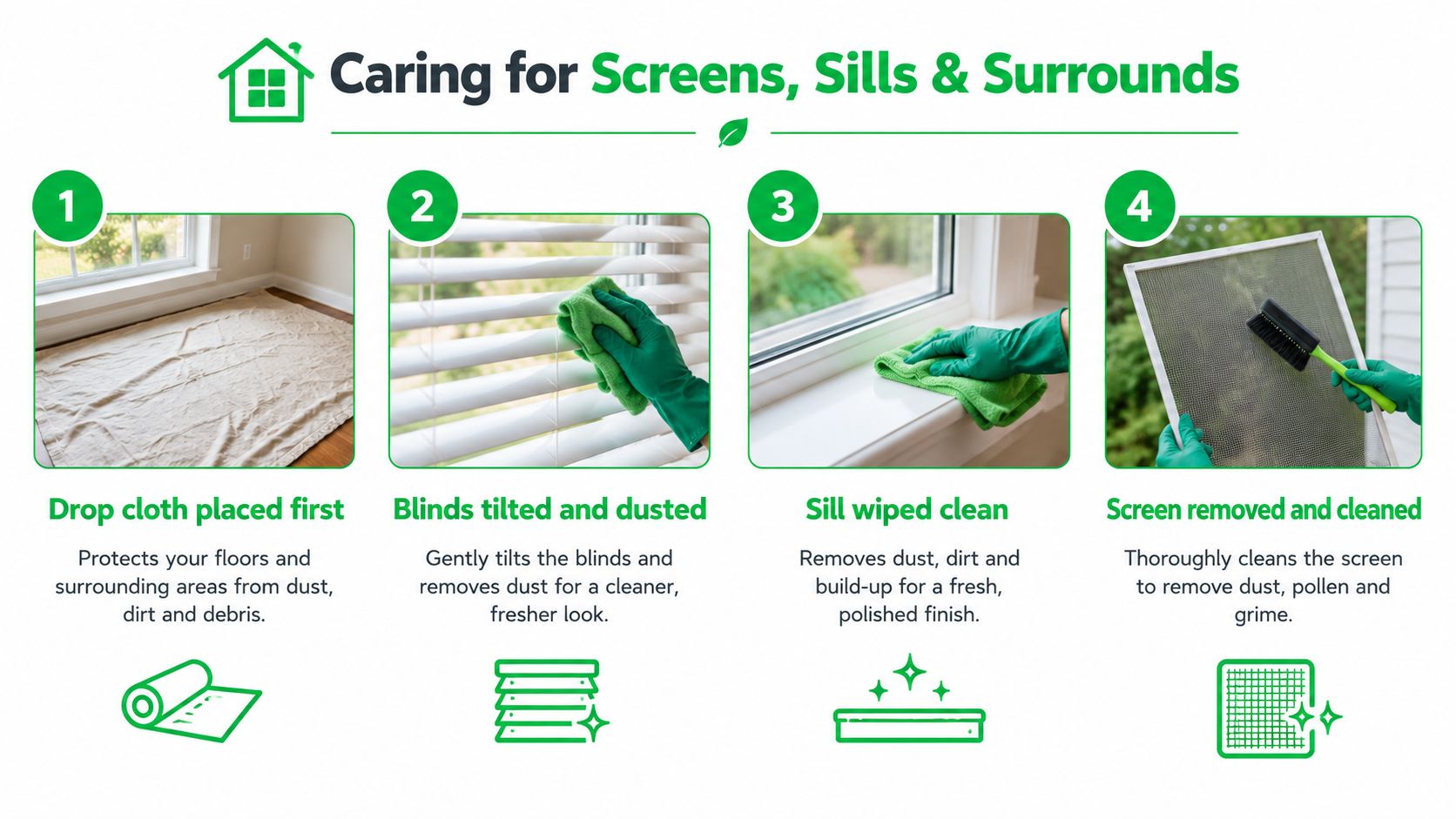
A real service call doesn't start with glass. It starts with protection, and that usually means a drop cloth on the floor before anything else moves. If blinds are hanging in the way, they get tilted open and dusted before the first drop of water ever hits the window.
Then the screen comes out carefully, not muscled out. A flat tool helps release the frame without bending it, and the screen gets washed separately on a flat surface with a mild solution, then rinsed lightly and left to dry before it goes back in. That keeps dirty water from falling onto clean glass after the fact.
The sill and track get treated like part of the opening, not an afterthought. Loose debris gets vacuumed, the corners get brushed, and the ledge gets wiped dry so grit isn't left behind to work loose later. That's the difference between a window that looks clean for a day and one that stays clean longer.
A damaged screen can turn a good cleaning into a mediocre one fast, because torn mesh and bent frames keep collecting dust and pollen. If a porch or window screen needs repair before cleaning will hold, Cross Breeze Screens' window screen repair service is a practical place to look for that kind of fix.
For homeowners who like to keep screens in their own rotation, screen cleaning guidance from Pine Country Window Cleaning lines up with what works in the field. Clean screens, dry sills, and dust-free tracks keep the opening from re-smudging the glass the next morning.
Reading the Glass Before You Clean It
Not every cloudy window is dirty
A quick diagnosis saves time and saves glass. Summer monsoons can leave a fine dust film, wood stoves and fireplaces can leave a greasy residue, and hard-water spray can leave mineral spotting that ordinary soap won't touch. If you attack all three with the same swipe, you waste effort and usually leave something behind.
There's also the seal question. If moisture is trapped between panes in an insulated glass unit, cleaning either side won't remove it. If the haze wipes away on the room side, it's surface condensation or grime, not seal failure.
A fast way to separate surface grime from a real unit problem
Clean a small corner thoroughly, let it dry, and look again. If the mark disappears, you're dealing with surface contamination or condensation. If the moisture sits there between panes after cleaning, the unit needs repair or replacement, not another round with a bottle.
| What You See | Likely Cause | What to Do |
|---|---|---|
| Light haze that wipes off with a dry cloth | Interior condensation or loose surface film | Dry the glass fully, then clean the pane and manage room moisture |
| Chalky spots that stay after washing | Hard-water residue | Use the right cleaner for mineral buildup, then dry the edge carefully |
| Fog or moisture that remains between panes | Seal failure in an insulated glass unit | Cleaning won't fix it, inspect for repair or replacement |
| Greasy smear near a stove or fireplace room | Combustion residue | Use a mild cleaner matched to the contaminant, then squeegee clean |
Matching the method to the contaminant is the difference between a fast job and an endless one. That's true in cabins, rentals, and family homes alike.
When It Pays to Hand It Off
Interior glass looks harmless until you're leaning across furniture, balancing near a stairwell, or trying to clean a tall foyer pane with a ladder inside the house. Add hardwood floors, kids, pets, and blinds in the way, and a simple job turns into a damage risk fast. Safety and control matter just as much as the finish.
A trained crew brings OSHA safety practices, proper ladders and stabilizers, and background-checked techs who know how to work around floors, seals, screens, and furniture. For high or awkward glass, that matters more than most homeowners expect, especially in Flagstaff cabins and multi-story homes where access gets awkward quickly. The tools and judgment reduce the chance of a dropped ladder, a wet floor, or a scratched sill.
A professional inside-window service also makes sense when you want the whole opening handled at once. Pine Country Window Cleaning has been serving Flagstaff since 1999, and its inside-window service includes the kind of careful floor and furniture protection that keeps the work inside the house from turning into a cleanup project of its own. For readers comparing options, the company's professional window cleaning page is a straightforward place to see how that service is set up.
If you want the inside of your windows cleaned with the same controlled-water method used on real jobs, Pine Country Window Cleaning handles that work across Flagstaff and Northern Arizona. They clean inside windows, protect floors and furniture, and take care of screens as part of the visit, so you're not left with dust drifting back onto the glass. Visit Pine Country Window Cleaning to schedule service or ask for a free estimate.