

You go outside after a hard rain, look up, and see water spilling over the front gutter instead of disappearing into the downspout. In Flagstaff and Munds Park, that usually isn't just a little leaf pile. It's often a mat of pine needles in the trough, packed debris in the elbow, or a drainage problem farther down the line that keeps coming back every storm.
That's why most gutter cleaning how to articles feel incomplete. They tell you how to scoop leaves out of the top, but they don't spend enough time on the part that decides whether the system works. Water has to make it from the roof edge, through the trough, down the spout, through the elbows, and away from the house. If one part of that path fails, the whole system fails.
Why Clean Gutters Matter Before You Climb a Ladder
You notice the problem during a storm. Water jumps the front gutter, runs behind the fascia, and drips near the entry instead of exiting through the downspout. On a lot of Flagstaff and Munds Park homes, that overflow started higher up with pine needles in the trough, but it keeps happening because the restriction is lower in the path. A packed elbow, a crushed downspout, a loose outlet, or a gutter run with poor slope will send water right back over the edge.
That is why cleaning matters before you ever set a ladder. The goal is not just to remove what you can see from the top. The goal is to restore flow from the roof edge to the discharge point and confirm water is getting away from the house. If you want a broader homeowner overview, healthy gutter systems explained is a useful companion read.
In pine country, wet debris gets heavy fast. Needles weave together, trap grit, and form a dense mat that holds water in the trough. Once that happens, the symptoms spread. You see staining at the fascia line, splash marks at siding corners, and water dropping too close to the foundation because the downspout never carried the load.
I see the same DIY mistake over and over. Someone scoops out the visible debris, calls the gutter clean, and never checks whether the downspout and elbows are passing water. The next storm proves otherwise.
That lower drainage path is where repeat clogs usually live. The trough may look open from above, but if the outlet is choked with needles, the first elbow is packed tight, or the run has lost pitch, the system still fails. Cleaning only the top section is like clearing one lane of a clogged drain line and expecting full flow.
There is also a safety reason to diagnose first. If the house is two stories, the ground is uneven, the roof edge sits above a walkout, or the gutters are mounted where you would have to lean off the ladder to reach them, DIY has crossed into fall-protection territory. That is common on Northern Arizona cabins with sloped lots, tall decks, and narrow side yards. At that point, staying on the ground is the smart call, not the timid one.
Regular service is easier than repairing rot, repainting trim, or correcting water at the foundation. Keep the maintenance baseline noted elsewhere in this article, then tighten that schedule if your roof sits under pines or your downspouts have a history of backing up.
If access is awkward or you already suspect the clog is below the outlet, hiring a local gutter cleaning service in Flagstaff often makes more sense than finding out halfway up the ladder that the problem is deeper in the system.
What to Gather and How to Set Up Safely
The right tools make this job cleaner. The right setup keeps it from becoming dangerous.
What belongs in your kit
Bring the basics before you leave the ground:
- Thick gloves to protect your hands from sharp metal edges, shingle grit, and decomposing debris.
- A plastic gutter scoop instead of a metal garden trowel. Plastic is less likely to gouge the trough.
- A bucket with a hook or a debris bag so you're not dropping wet sludge onto walkways and shrubs.
- A garden hose with a spray nozzle for flushing and testing flow.
- A plumber's snake for blockages that don't clear with water.
- Safety glasses when you flush. Dirty splashback is common.
- A ladder stabilizer so the ladder doesn't press directly against the gutter.
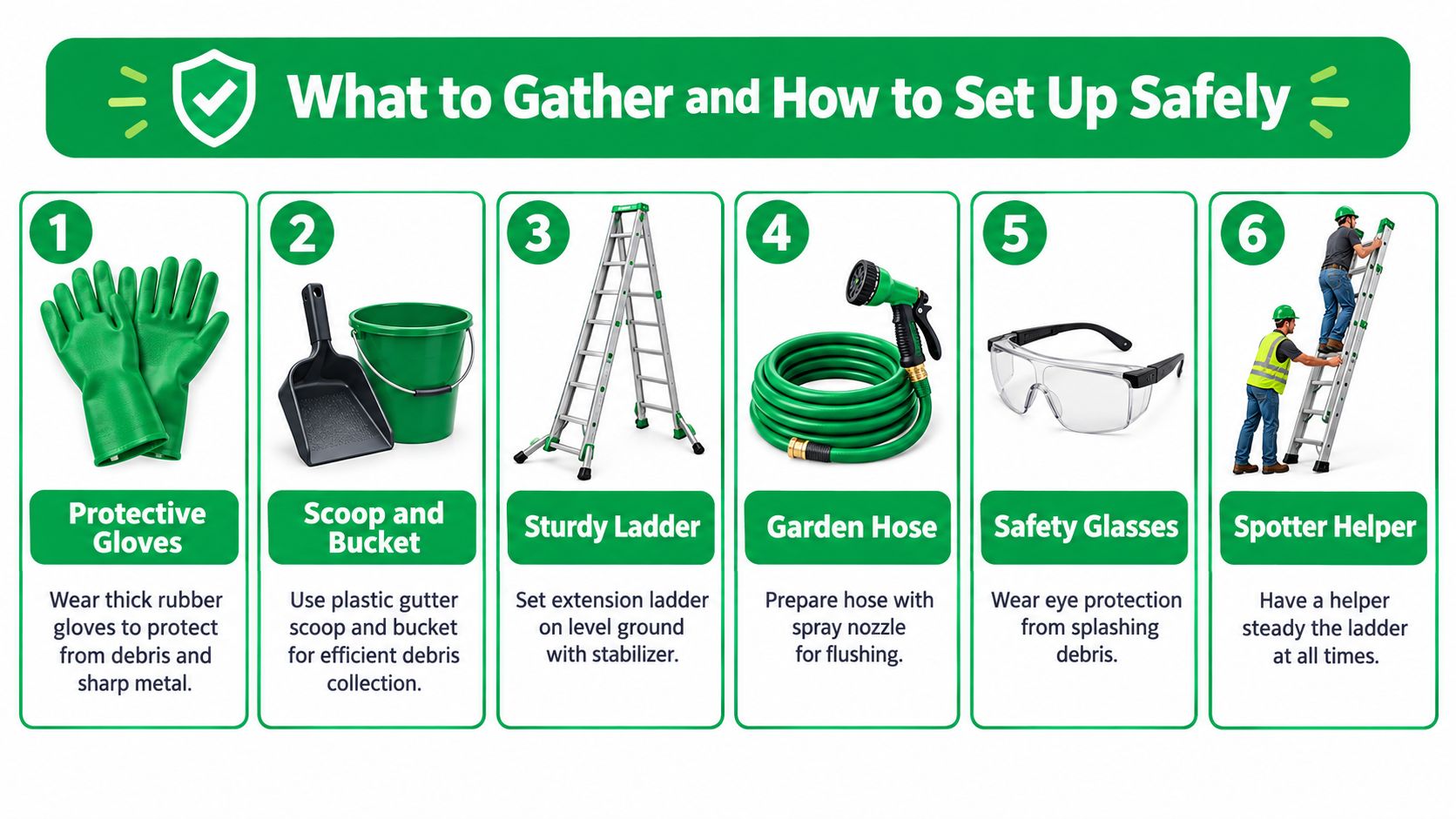
A helper on the ground is a smart addition. Even if they never touch the ladder, they can steady the area, move hoses, and keep you from rushing.
Ladder setup that actually matters
The most important part of gutter cleaning how to is still ladder discipline. Multiple summaries citing CPSC and NEISS data report roughly 500,000 emergency-room visits and 300 deaths annually from ladder falls in the U.S., with one source stating about 97% of those incidents happen during residential use, as summarized in this guide on the dangers of DIY gutter cleaning.
Use these essentials:
- Set the ladder on firm, level ground. Don't trust loose gravel, soft soil, or decorative rock that shifts.
- Follow the 4-to-1 rule. OSHA-style extension ladder setup calls for the base to sit 1 foot out for every 4 feet of working height, and the ladder rails should extend at least 3 feet above the roof or gutter edge, as explained in this ladder safety reference for gutter work.
- Keep three points of contact when climbing.
- Reposition instead of reaching. Side-reaching is where people get into trouble fast.
Don't lean your belt buckle past the ladder rail. If the next handful of debris is out of reach, climb down and move the ladder.
When ground tools help and when they don't
A telescoping wand can help with light rinsing on easy sections. It can reduce ladder time, and that matters. But it also has a limit. If the downspout is partially blocked, a ground flush may clean the visible trough while leaving the problem in place. If you're weighing that tradeoff, these ladder free gutter cleaning methods are worth reviewing with a realistic eye.
How to Remove Debris and Flush Gutters the Right Way
Good cleaning has an order. Skip the order and you usually make more mess, push debris into the outlet, or miss the early signs of a bigger drainage issue.

Start at the downspout side
A practical method used in the field is to remove bulk debris by hand or with a scoop starting near the downspout and working toward the high point, then flush from the far end back toward the downspout, according to this step-by-step homeowner gutter cleaning guide.
That start point matters. If you begin at the high end and shove wet debris downhill, you can pack the outlet opening before you even test water flow.
Use a simple sequence:
- Scoop out the heavy stuff first. Pine needles, seed pods, roof grit, and roof moss clumps all come out before water goes in.
- Drop debris into a bucket as you go. It saves cleanup and protects landscaping.
- Leave the outlet visible. Don't bury the downspout opening with the pile you just moved.
Watch the hardware while you clean
This is the best time to spot trouble that a rinse won't fix.
Check for:
- Loose hangers that let the gutter sag
- Separated seams where water can leak before it reaches the outlet
- Bent sections that hold standing water
- Fastener movement in fascia boards that have seen repeated wetting
If a section rocks when you touch it, don't ignore that. Even a perfectly clean gutter won't drain well if the section has lost its pitch.
A gutter can look clear from below and still fail because one low spot keeps water trapped after every storm.
Flush with purpose, not just pressure
Once the bulk debris is out, flush from the far end back toward the downspout. You're not just rinsing dirt. You're running a test. The water should move steadily, and you should see it discharge cleanly at the bottom.
Listen while you work. A healthy downspout usually gives you smooth flow. Gurgling, backing up, or water rising in the trough points to a partial blockage lower down.
This short walkthrough shows the basic cleaning loop in action:
Protect the house while you flush. Keep the spray angle controlled near siding, painted trim, and flower beds. Muddy roof grit can stain light surfaces if you blast it everywhere.
One more practical point. Don't try to clean an extra two feet by leaning. Climb down, move the ladder, and keep working in short sections. It's slower by the minute, but faster than dealing with a damaged gutter or a bad fall.
How to Clear Downspouts and Fix Common Drainage Problems
Most repeat clogs aren't in the open trough. They're in the transition points. The top of the downspout, the first elbow, the lower elbow, the underground tie-in, or a section of gutter that never had proper pitch after seasonal movement.
Read the symptoms correctly
If you flush the gutter and water sits in place, ask what kind of failure you're seeing.
| Symptom | Likely issue | First move |
|---|---|---|
| Water stands in one section | Sag or poor slope | Check hangers and pitch |
| Water rises near outlet | Partial downspout blockage | Clear top of downspout |
| Overflow at elbow | Packed debris in bend | Remove clog at elbow |
| Good top flow, poor discharge below | Lower blockage or buried tie-in issue | Test lower exit and drain path |
Several DIY guides mention checking for standing water and blasting the top of the downspout, but many stop there. That leaves out the hidden failures that keep coming back, especially after freeze-thaw movement or heavy pine load. Northern Arizona homes tend to fool people.
Clear the vertical path before blaming the gutter
Start with the simplest checks.
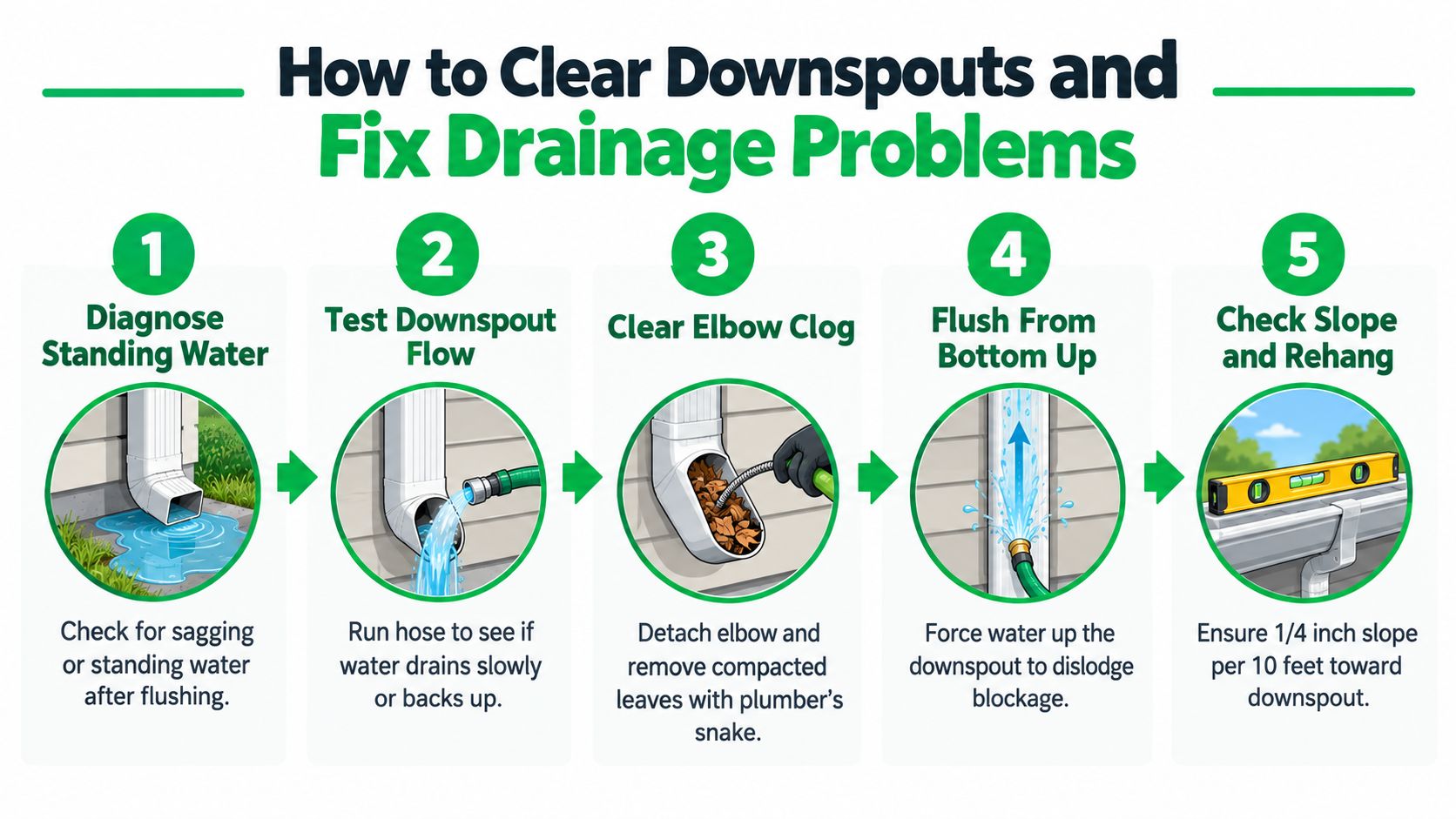
- Look into the top opening. Packed pine needles often bridge right below the outlet.
- Run the hose into the downspout. If water backs up quickly, the clog is close.
- Snake the downspout. A plumber's snake works well on compacted debris.
- Disassemble the elbow if needed. The first bend is a common choke point.
If the downspout still won't clear, check where it exits. Some homes discharge onto a splash block. Others tie into an underground line. That lower path can hold sediment, roots, or compacted organic matter that no top-down rinse will solve.
For a more detailed local walkthrough on that specific problem, this guide on how to clean gutter downspouts gets into the vertical run and discharge testing.
Decision rule: If water leaves the gutter slowly, the problem is usually in the downspout path. If water never leaves a section of trough, the problem is often slope or support.
A lot of coastal prep advice also applies here when you're thinking about discharge routes and drain repairs, even if the weather pattern is different. This piece on hurricane season gutter prep is useful for understanding how drain failures below the gutter create bigger overflow problems.
Know when the fix is no longer cleaning
Stop troubleshooting as a cleaning project when you find any of these:
- Repeated standing water in the same span after debris removal
- Loose or missing hangers
- Separated seams
- Visible fascia damage
- An underground drain that won't accept flow
At that point, you're no longer just doing gutter cleaning how to. You're diagnosing a support, alignment, or drain-line problem.
When to Stay on the Ground and Call Pine Country Window Cleaning
Some gutter jobs are reasonable for a careful homeowner. Others cross the line quickly.
Easy-access gutters versus high-risk buildings
A simple, single-story run with firm ground and clear ladder placement is one category. A steep cabin roof, a tall two-story section over rock landscaping, or a commercial edge with awkward access is another.
OSHA requires fall protection for construction work exposed to drops of more than 6 feet, as outlined in this summary of OSHA standards applicable to gutter safety on job sites. Homeowners aren't operating under job-site rules the same way, but the risk doesn't care who owns the ladder.

The line gets clearer if you ask a few blunt questions:
- Can you set the ladder on level ground without improvising?
- Can you reach the work without leaning sideways?
- Can you verify the downspout discharge from top to bottom?
- Are you working near a steep roof edge, second story, or constrained side yard?
If any answer is no, staying on the ground is usually the right call.
What professional help changes
On taller or more complicated properties, the value isn't just labor. It's access, inspection quality, and safety systems. Pine Country Window Cleaning handles gutter cleaning and downspout cleaning on Northern Arizona homes and buildings, including difficult access sections where verifying water discharge matters as much as removing debris.
The company has been in business since 1999, started by Flagstaff native David Kaminski, and it's known locally as Flagstaff's largest window cleaning company. The window side of the work is done professionally with squeegees, ladders, poles, and pure-water brushes, not household spray bottles and rags. With every service, screens are removed, cleaned, and reinstalled. Independent homeowner guidance for screen care follows that same remove, clean on a flat surface with mild soap and a soft brush, dry completely, and reinstall securely process, as described in this window screen cleaning guide.
The safest gutter cleaning job is the one where nobody has to stretch, guess, or force access that the building clearly doesn't give.
For cabins, multi-story homes, storefronts, hotels, campus buildings, and awkward rooflines, equipment and trained access methods make a real difference.
Keeping Gutters Clear Year Round With Less Effort
A lot of repeat gutter trouble starts after the trough looks clean.
Around Flagstaff, I see the same pattern all the time. Needles get scooped out, the gutter gets rinsed, and the next hard rain still sends water over the front because the restriction is lower in the drainage path. A partly plugged elbow, a downspout packed tight at the bottom, or a section with poor pitch will keep causing backups no matter how tidy the top of the gutter looks.
The lower system deserves the habit, not just the trough.
A maintenance rhythm that actually reduces work
Stick with the spring and fall baseline covered earlier, then add short checks after wind, monsoon runoff, or a freeze-thaw stretch. Those checks do not need to turn into a full cleaning. The goal is to confirm that water enters the downspout, passes the elbows, and exits away from the house without spilling at seams or standing in the channel.
A simple routine works well:
- Watch one downspout discharge during a hose test. If flow starts strong and then slows, the clog is often in an elbow or at the bottom outlet.
- Look for water marks under gutter joints and at the fascia. Staining tells you where water is escaping instead of draining.
- Check for standing water after the flush. That usually points to slope problems or a hanger section pulling loose.
- Trim reachable branch tips over the roof edge. Less pine straw in the system means fewer packed outlets.
- Be realistic about gutter guards. They cut debris load on some homes, but fine needles still collect and need inspection.
If you want a local schedule to follow, this guide to seasonal gutter maintenance lays out a practical routine.
The check that prevents repeat clogs
Start at the exit point and work backward.
If the bottom elbow is buried in needles or the splash block area is packed with mud, water has nowhere to go. If the downspout clears but the gutter still holds water, check pitch before assuming more flushing will fix it. On many Northern Arizona cabins, especially older ones with long runs and fewer hangers, slope drift is what keeps bringing the problem back.
Stop the DIY job when access stops being simple. Steep roof edges, second-story sections, icy ground, loose gravel around ladder feet, and narrow side yards are where routine maintenance turns into a fall-protection problem. At that point, Pine Country Window Cleaning can handle the cleaning, downspout clearing, and flow check without forcing a risky ladder setup.