

If you're standing in the yard looking up at gutters packed with pine needles, you're in the same spot a lot of Flagstaff homeowners hit every year. Water isn't moving the way it should, the downspout may or may not be open, and you don't want to drag out a ladder just to find out the clog is buried three sections away.
That hesitation is smart. Gutter cleaning without a ladder isn't just about convenience. It's about reducing the riskiest part of the job while still getting water to move where it's supposed to.
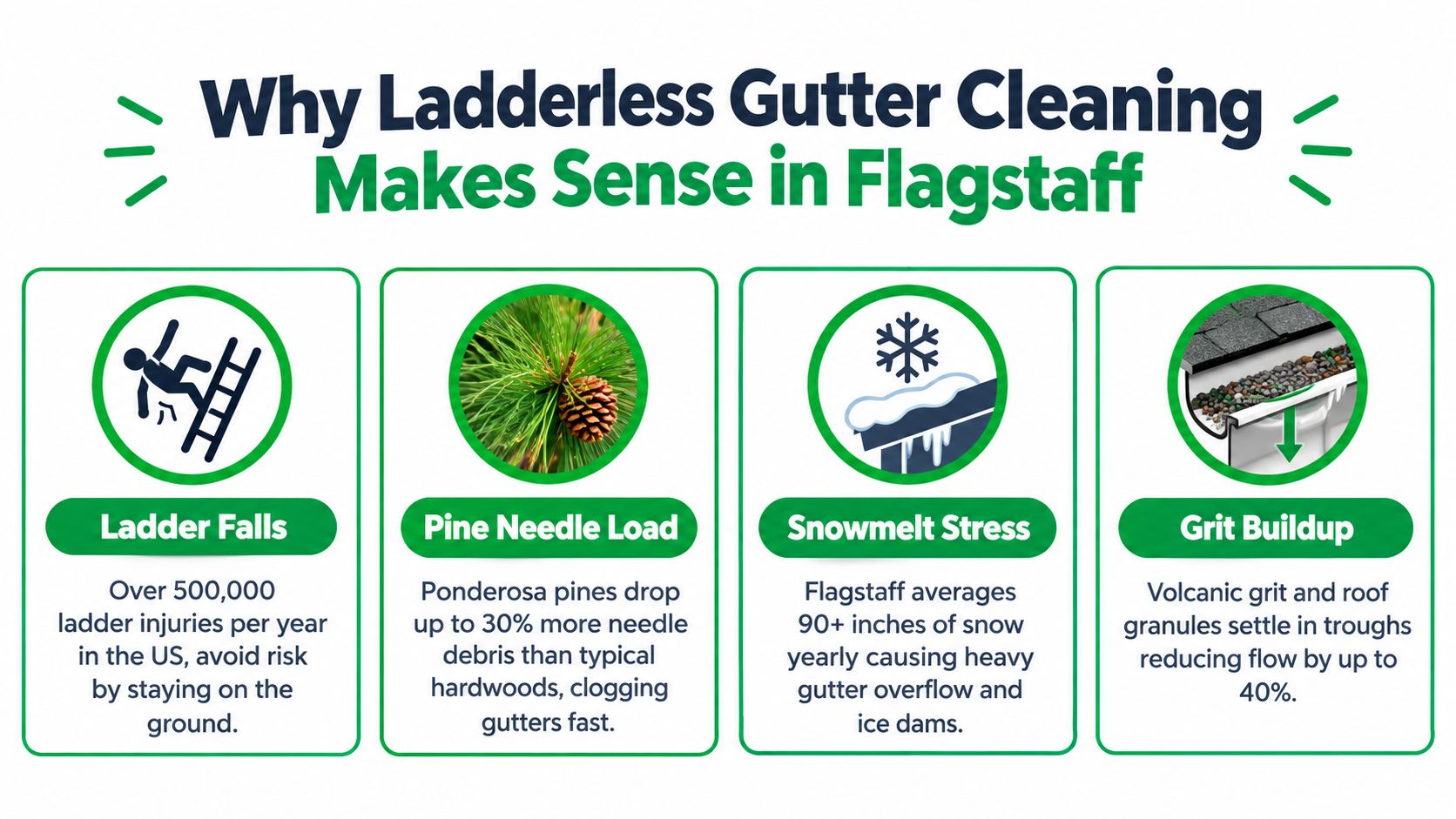
Why Cleaning Gutters Without a Ladder Makes Sense in Flagstaff
A common local pattern goes like this. Needles build up through dry stretches, then snowmelt or a rain event turns that loose layer into a heavy mat. From the ground, the gutter can look only partly dirty. In reality, the outlet is often packed, the elbow is starting to choke, and water is one storm away from pouring over the edge.
That's why staying on the ground makes sense first. The U.S. Consumer Product Safety Commission has reported more than 500,000 ladder injuries treated each year, about 164,000 emergency-room visits, and over 300 deaths annually according to this ladder accident overview tied to gutter cleaning safety. For this kind of maintenance, avoiding the ladder removes the biggest hazard most homeowners introduce into the job.
What makes Flagstaff different
Pine country creates its own mess. Needles don't behave like broad leaves. They tangle, mat together, and bridge over outlets. Add roof grit and leftover snow-season residue, and you get a clog that can look shallow from below but still block flow hard.
Ground-based cleaning is often the right starting move for that exact reason. You can work the whole run without repeated climbs and repositioning, and you can do it with a safety-first approach that lines up with practical ladder safety requirements for home maintenance.
Practical rule: If the job can be done effectively from the lawn, patio, or driveway, that's usually the smarter first option.
Respect for the house matters too
This kind of work isn't only about debris. It's also about how the work gets done around the home. Good service means protecting siding, walkways, landscaping, and anything below the roofline while you clear and flush.
That same care matters across exterior maintenance. On window jobs, professional crews should handle the home with the same attention, including removing screens, cleaning screens, and reinstalling them with every service. That detail says a lot about how a company treats the property as a whole.
Tools That Let You Stay on the Ground and Still Reach the Gutter
A lot of Flagstaff gutters look clear from the yard and still fail the first hard runoff. Pine needles are the reason. They sit light on top, then knit together over outlet holes, while snowmelt grit settles underneath and turns the bottom of the trough into sludge. That is why tool choice matters so much when you are staying off a ladder.
The goal is not just reaching the gutter line. The goal is pulling out the stuff that blocks flow, then checking from the ground whether the downspout is carrying water or still packed inside.
The tool families that actually matter
Telescoping poles do most of the work. With the right head attached, they let you pull pine needles, drag out cones and twigs, and open the area around the outlet before you add water. Materials and attachment styles vary, and this overview of a telescoping gutter-cleaning pole gives a good basic breakdown. For routine cleanup on standard one-story homes and many accessible two-story sections, a pole is usually the first tool I would grab.
Leaf blower gutter kits have a narrow lane. They work on dry, loose debris. They do not work well on damp pine mats or on gutters with that sandy snow-season grit packed underneath. In those conditions, the blower often clears the surface and leaves the blockage that matters.
Pressure washer or hose wands are best used after the bulk debris is gone. They help expose hidden low spots and can show whether water is hanging up before the downspout. Used too soon, they shove needles and grit straight into the outlet and create a tighter clog than the one you started with.
Gutter vacuums with long-reach poles make sense for heavy, wet buildup you want to remove cleanly. They are slower than a simple pole setup, but they do a better job when the gutter bottom has turned into composted muck instead of loose debris.
If you're already thinking about the outside of the house as a full maintenance system, this guide on professional window cleaning for your home is a useful companion read because it treats exterior care as connected work rather than isolated chores.
Choosing Your Ladderless Gutter Tool
| Tool Type | Best For | Reach and Limit |
|---|---|---|
| Telescoping pole with scoop or hook | Pine needles, light debris, regular maintenance | Good fit for many residential rooflines. Harder to confirm hidden clogs unless you follow with a flow test. |
| Curved hose or spray wand | Final flushing, checking flow, breaking up wet sections | Good for restoring movement. Can push debris deeper if used before dry removal. |
| Leaf blower gutter kit | Dry, loose debris on easy-access runs | Fast in the right conditions. Poor on wet mats, grit, and outlet clogs. |
| Gutter vacuum with long poles | Wet buildup, gritty sludge, debris you want captured | Effective from the ground. Better for heavier cleanup than basic DIY tools. |
| Gutter robot | Long straight runs where ladder time needs to be brief | Still needs a ladder for placement and retrieval. One product source notes up to 50 feet of communication range between robot and remote in this overview of gutter cleaning robots. |
What works best in real Flagstaff conditions
For most homes here, the dependable setup is simple. Start with a telescoping pole. Use water second.
That sequence handles our local debris better because pine needles usually need to be lifted and pulled before they will move. Once the bulk is out, a controlled rinse shows the truth. If water backs up, spills over one section, or trickles weakly out of the downspout, the gutter is not clear yet no matter how clean the top edge looks from below.
A good ground-level verification test is to flush one short section at a time and watch the downspout exit. You want a steady stream, not a delayed burp followed by brown grit and needle clumps. That delayed release is common in Flagstaff homes with hidden elbow clogs.
Pine Country Window Cleaning provides gutter and downspout cleaning and can use in-house lift equipment for harder-to-reach areas when ground-only access is not enough. That is a practical option when the eaves are awkward, the gutters are extra high, or the clog is buried past what a pole and rinse can confirm from below.
How to Clean Gutters From the Ground Without Missing Spots
A common Flagstaff miss looks like this. The pine needles are gone from the top edge, so the gutter appears clean from the yard, then the first snowmelt sends brown grit over one corner because a packed outlet or elbow never cleared. Ground cleaning works well here, but only if you clean for flow and verify flow before calling it done.
Start with stable footing and short working zones. Shift every few feet instead of trying to reach half the run from one spot. Long poles make people lazy. That is when the tool head loses contact with the debris, the angle gets sloppy, and hidden clogs stay put.
Use the right sequence
The order matters more than the tool.
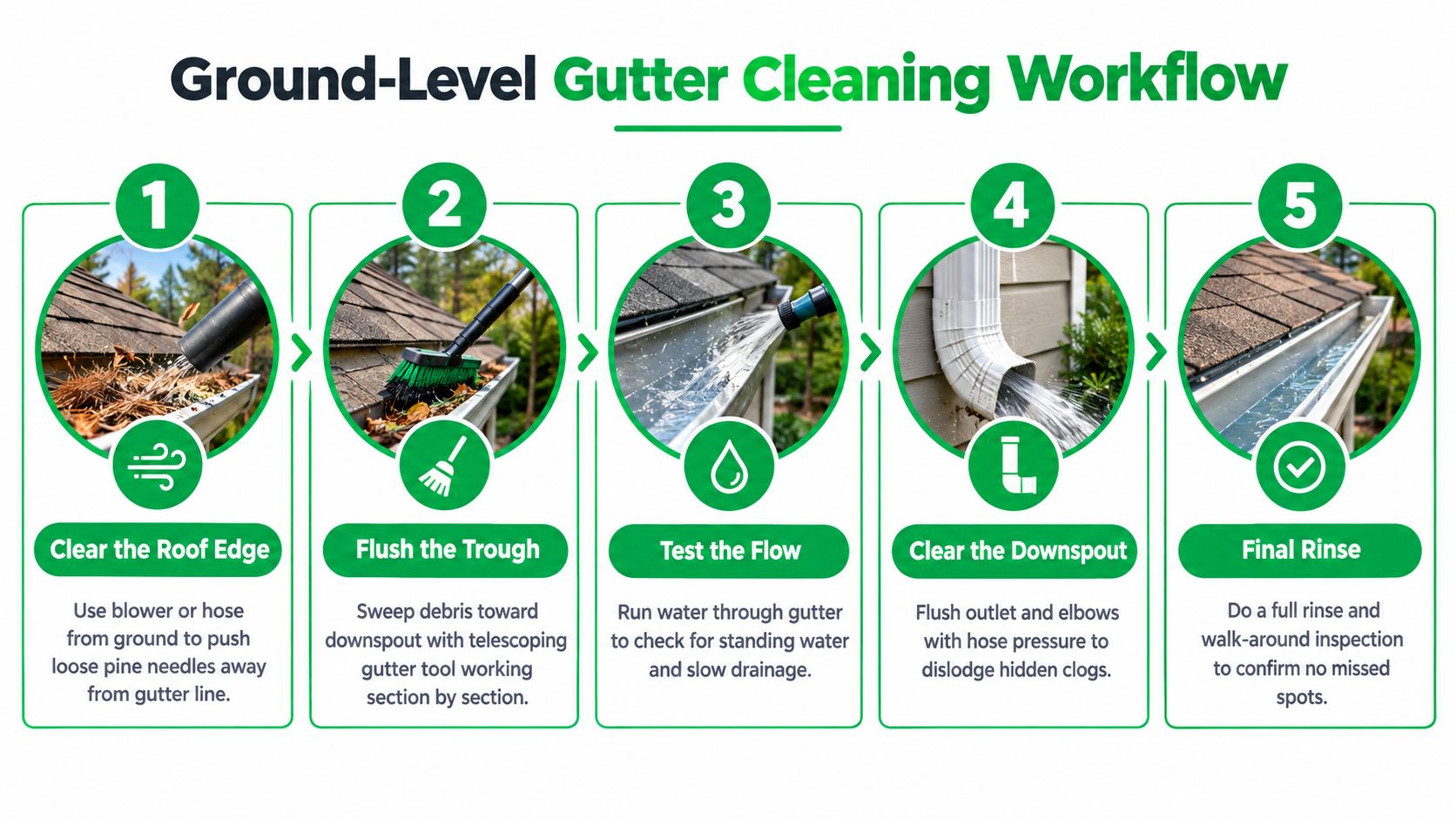
On homes under pines, I get better results by opening the drain path first, then pulling the bulk debris toward it in short passes. If you start in the middle and shove everything at a blocked outlet, you pack the mess tighter. Wet needles, seed bits, and that gritty wash left behind by snowmelt will lock together fast.
Use this sequence:
- Clear the outlet zone first. Open the area around the downspout hole so loosened material has somewhere to move.
- Start at the far end of the run. Pull debris toward the outlet, following the gutter's natural drain direction.
- Work in short pulls. A few feet at a time gives better control than trying to drag an entire run.
- Remove the bulk before rinsing. Water helps with the final cleanout, but it also turns loose pine debris into a heavy mat if you use it too early.
- Test each section with a short flush. Watch for smooth movement, not a delayed surge of brown water and needles.
- Make a second pass at corners and outlets. Those are the spots that usually hold packed grit underneath the visible layer.
That last step is where many ground-only cleanings fall short. The surface looks better, but compacted material stays in the low spots or right at the outlet throat. In Flagstaff, that is often a mix of pine needles on top and fine grit underneath.
Dry debris is easier to pull cleanly. After a dry day or two, needle mats usually lift in sections instead of tearing apart and leaving sludge behind.
Pole handling makes a difference
Keep the pole at a slight angle back toward you so you can feel what the head is catching. Too vertical, and you are just poking blind. A controlled pull tells you more. You can feel the difference between loose needles, a gravelly patch, and a packed outlet.
Move your feet often.
That small habit prevents missed sections and keeps your shoulders out of a bad position. It also helps you line up under problem areas like inside corners, upper elbows, and places where the gutter run sags a little.
A quick visual demonstration can help if you haven't used this style of method before.
What people miss most often
Ground cleaning misses usually show up in the same few places:
- The outlet opening. It gets capped with needles and roof grit even when the rest of the trough looks open.
- The first elbow below the gutter. Debris drops, turns, and jams there.
- Low sections in the run. Sediment settles in the same spots that already drain poorly.
- Behind hanger brackets or guards. Material catches there and stays hidden from the yard.
- The verification flush. A gutter is not clear until water moves through it without backing up or hesitating.
Use one simple ground test before you assume the job is finished. Flush a short section with a controlled stream and watch the downspout exit at the same time if possible. You want a steady discharge right away. If water pauses, burps out clumps, or spills over a section before the downspout picks up, there is still a blockage somewhere in the run or elbow.
That test matters in Flagstaff because our clogs are often layered. Needles make the bridge. Snowmelt grit seals it. From the ground, the gutter can look clean and still fail on the next storm.
Making Sure Downspouts Are Actually Clear
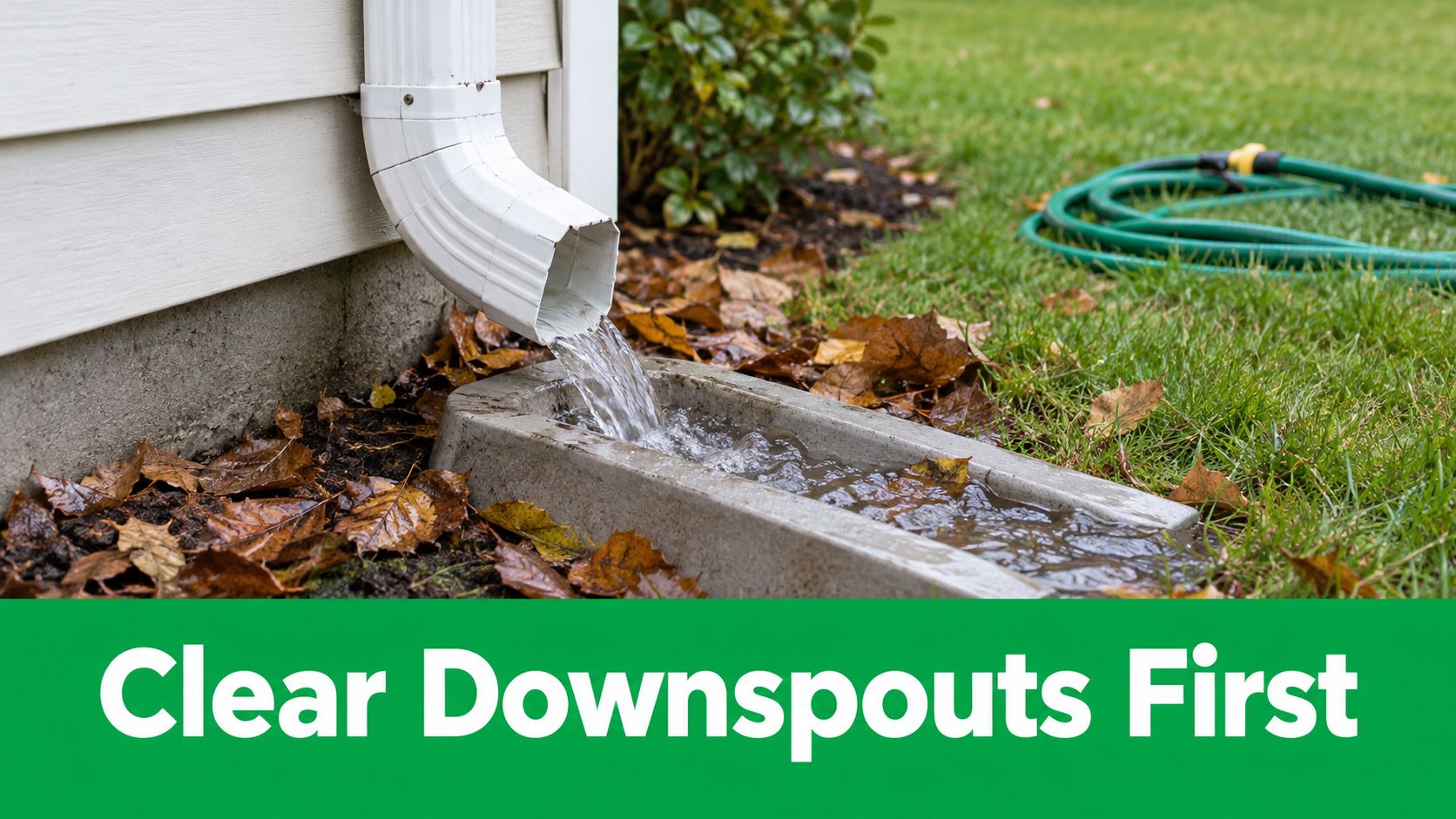
A clean-looking gutter can still fail if the downspout is packed. That's the hidden problem on a lot of Flagstaff homes. Needles, seed pods, and shingle grit move through the open trough fairly well, then get funneled into a much smaller outlet and jam at elbows or underground bends, as explained in this guide on why downspouts keep clogging.
Ground-level checks that tell the truth
Use water as your test, not appearance. After you clear the trough, flush the system and watch what happens at the base.
Look for these signs:
- Strong discharge at the bottom. Water should exit steadily, not dribble.
- Overflow near the top elbow. If water backs up and spills there, that indicates a clog, according to this gutter maintenance guide.
- Standing water in the run. Slow movement often points to either a clog or poor pitch.
- Visible trouble during rain. Watching from the ground during or right after rain is one of the easiest verification methods.
That same maintenance source says gutters should slope about 1/4 inch per 10 feet toward the downspout, which gives you a useful threshold when water keeps hanging in the trough instead of draining through.
Two simple ways to locate the blockage
Tap the downspout as you go. The sound often changes where packed debris is sitting, especially near bends.
Then flush again. If the water stalls, backs up, or exits weakly, the clog is still there no matter how clean the gutter lip looks from the driveway. For a deeper walkthrough on clearing those trouble points, this guide on how to clean gutter downspouts is worth keeping handy.
If the debris includes a lot of roof granules, it's smart to understand whether that material is just normal wash-off or a roofing issue. This article on signs of granular loss on shingles gives useful context before you assume the gutter is the only problem.
When Ground Level Methods Are Not Enough and Calling a Pro Is Safer
Ground-based cleaning has limits. The method works best when the gutter is low enough to reach cleanly, the debris is manageable, and you can confirm results from the ground. One source notes that these methods work best for single-story gutters at about 10 feet or lower, while compacted debris, hidden outlet clogs, and limited inspection can make the result incomplete, as discussed in this article on when ladder-free cleaning may not be enough.
When to stop and reassess
If any of these show up, it's time to pause:
- The roofline is steep or multi-story. Reach may be possible on paper, but control often isn't.
- The debris is packed tight. Pine mats mixed with grit don't always release from below.
- You suspect damage. From the ground, you may not be able to verify seams, sagging sections, or loose hangers.
- The outlet remains slow after flushing. That usually means the problem is deeper than surface debris.
A ladder-free approach lowers fall exposure. It doesn't guarantee a complete job when the clog is hidden or the gutter itself may be damaged.
Why height changes the risk fast
A documented OSHA fatality report shows how ordinary this work can look right before it turns catastrophic. On February 17, 2019, an employee cleaning and repairing gutters on a two-story home using a 32-foot extension ladder fell and died from head trauma, according to the OSHA accident detail report.
That's the dividing line. A simple home task becomes a height-exposure problem the moment inspection, repair, or placement demands more than controlled ground work.
For property owners comparing service expectations in other markets, this page on Santa Barbara gutter cleaning is a good example of how exterior cleaning companies frame routine maintenance. In Flagstaff, the stakes are different because pine debris, weather swings, and snow-related buildup push the job toward heavier clogs and harder access.
What capable professional service should include
On taller or more complex homes, the safer solution is a crew that can reach the area without improvising. In Flagstaff, that matters on cabins, custom homes, hotels, and buildings with awkward entries or high sections.
The local benchmark matters here. Flagstaff native David Kaminski started the company in 1999, and the team has grown into Flagstaff's largest window cleaning company. Their technicians are background-checked, OSHA safety-trained, and equipped with boom lifts, scissor lifts, and a 95-foot atrium lift for work that shouldn't be forced from a ladder. They also care for the home the way good exterior crews should, including removing screens, cleaning screens, and reinstalling them with every service.

Keeping Flagstaff Gutters Flowing Year Round With Less Effort
A lot of Flagstaff gutter problems start with a gutter that looked fine last month. Then pine needles mat down, snowmelt washes roof grit into the trough, and a downspout that was partly restricted turns into a full blockage right when the next storm hits. The easiest fix is to keep buildup light enough that ground cleaning still works.
A simple schedule does that better than one big cleanup after the system is already packed. This seasonal gutter maintenance guide lines up with what works here: check in spring and fall, then add an extra look after heavy pine shed or after winter starts breaking loose.
A simple local rhythm
Use a routine that matches Flagstaff conditions:
- Spring check: Clear out the grit, cone pieces, and roof granules that wash down during thaw cycles.
- Early fall cleanup: Get ahead of pine drop before cold nights turn damp debris into a heavy mat.
- Late fall look: On pine-heavy lots, one pass often is not enough.
- After big weather swings: Check again after a hard rain, wet snow, or rapid melt.
The goal is simple. Keep debris from compacting so your ground tools can still move it, and use the tap-and-flush test described above during spring and fall checks instead of assuming the downspouts are open.
Whole-property upkeep matters too. Gutters affect drainage at entries, splashback on siding, and how much runoff ends up near the foundation. Pine Country Window Cleaning handles gutter and downspout cleaning along with window cleaning, pressure washing, and seasonal exterior maintenance for Flagstaff homes, cabins, storefronts, and larger properties. If the gutters are packed tight, the roofline is too high to reach safely from the ground, or the clogs keep coming back in the same spots, bringing in a local crew is often the safer call.